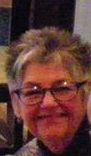
Ramona Koval's parents were Holocaust survivors who fled their homeland and settled in Melbourne. As a child, Koval learned little about their lives - only snippets from traumatic tales of destruction and escape. But she always suspected that the man who raised her was not her biological father.
One day in the 1990s, long after her mother's death, she decides she must know the truth. A phone call leads to a photograph in the mail, then tea with strangers. Before long Koval is interrogating a nursing-home patient, meeting a horse whisperer in tropical Queensland, journeying to rural Poland, learning other languages and dealing with Kafkaesque bureaucracy, all in the hope of finding an answer.
A quest for identity recounted with Koval's customary humour, Bloodhound takes hold of the reader andnever lets go. It is a moving story of the terrible cost of war and of family secrets.
Ramona Koval is a Melbourne writer, journalist, broadcaster and editor. From 2006 to 2011 she presented Radio National’s Book Show, and she has written for Age and the Australian. She is the author of By the A Reader's Guide to Life, and Searching For My Father.
'The line of questioning to which she subjects herself reminds me less of her gracious interviews and more of Helen Garner’s steady self-analysis…In Bloodhound, Koval is hunter and prey to truths that taunt and console.' Australian
‘She’s a shining presence in the world of literature, here in Australia and right across the globe…Her voice is always recognisable, invigorating, familiar to us and greatly loved.’ Helen Garner
‘Irresistible…generous, warm and fearless.’ Kerryn Goldsworthy
‘Her [Koval] accessibly written forays into the science of DNA and familial lineages, and what makes us who we are, is beautifully intertwined with her meditations on identity and belonging…Readers too will be deeply shocked by the atrocities outlined in Bloodhound. Such shock, however, is an important reminder that history should never be forgotten, and that books like Bloodhound should continue being written for generations to come.’Books & Publishing
‘Written in the same jaunty, crisp but personal voice that made her so beloved as a broadcaster.’ Booktopia Buzz
‘Koval has penned a moving story of her quest for identity amid family secrets.’ Australian Jewish News
'Bloodhound is at its most gripping when it explicitly pits the child's prerogative to know her origins against everybody else's right to forget or remain forever ignorant…By book's end Koval has, in effect, synthesised and absorbed these stories into one story, her story, such that she claims an ownership of and a place in them that was, for this reader at least, fascinating but also somewhat disquieting.’ Sydney Morning Herald
‘Koval follows a fascinating scent. She makes us complicit in her pursuit of the past, as she tries to answer "what am I?”...This is a story which will resonate.’ Southland Times
Ramona Koval has made long interviews with significant writers her signature. She is familiar to ABC Radio audiences through her long and varied career on air. Listeners will remember her as the presenter of the RN Drive program and as the morning presenter on Melbourne’s 3LO (now 774 ABC Melbourne) through the late 1980s and early 1990s.
She became a fixture in the literary world after joining ABC Radio National’s Books and Writing in 1994. Ramona now presents The Book Show, introduced by ABC Radio National in 2006 to consolidate its various book programs.
A writer herself, Ramona has published several books, including a novel, Samovar, and a cookbook Jewish Cooking, Jewish Cooks. She has written for many newspapers and international journals, and her interviews have been published in book form. Her latest collection of Radio National interviews is Tasting Life Twice: Conversations with Remarkable Writers, published by ABC Books.
Raw and powerful memoir. Koval finds herself confronted by the realisation that she really cannot be the child of her father at his 80th birthday celebrations. But where most children of difficult parents entertain the fantasy that the may be adopted or illegitimate at some time in their lives, in Koval's case, it may be true. Spurred on by her sudden, passionate epiphany, Koval determines to seek out her real father and determine her true parentage once and for all. What follows is a difficult journey which forces her to acknowledge her beloved mother's flaws, and to confront the pain that her father has caused her by leaving their family for his mistress so many years before. Her mother went to her grave (following a battle with cancer which Koval nursed her through) without revealing her secrets. This memoir explores the ethics of dredging up the past, while acknowledging the absolute right of a child to know her true history. Complicating the hunt is the fact that both parents were survivors of Auschwitz who escaped Poland to find a new life in Australia. Koval's journey takes her all over the world searching for clues, from the rainforests of QLD to Poland itself. A fascinating read that will no doubt confront many readers (Koval's portrayal of her 'father' is brutally forthright and even a little callous in places) and leave them wondering when the answers are simply not as clear-cut as we would like. But that's life, and that's family. Sometimes the most difficult mysteries to solve are also the most important.
I struggled with this book. I enjoyed the first half but struggled with the second half which I experienced as fractured, frenetic and lost… yet I “get” that was somewhat the nature of the writer’s search to confirm who her father was and to find out more of her mother’s story. It’s also not lost on me that many children of holocaust survivors struggle to piece together the details of their predecessor’s lives and I don’t want to minimise that. For some reason (which I’m not clear about) I lost connection with the writer. 5/10.
After hearing author, Ramona Koval on the radio, it was a joy to read this book with her voice in my head.
Knowing our ancestors through our parents is the gift of culture and heritage. But, what happens after traumatic events, surviving the Holocaust and moving continents?
This was a moving and enlightening read. Perfect for Morher’s Day.
This book was beautifully written and I love that she traced her family over many decades, however it felt a bit indulgent and wasn’t as fascinating for me as it clearly was for her.
You can definitely feel and read Koval's career or literary background in this book. Her thirst for answers, searching in every nook and cranny, and not leaving any stone unturned. Even stones that have nothing to do with anything at all.
It isn't just her quest to find out who her father is, it is also the search for answers in her parents, and would be parents past. Learning about their personal journeys before, during and after the Holocaust.
The way people, who have lived through the Holocaust, differentiate between Holocaust survivors and Holocaust refugees. Most importantly how each one of them has changed, due to the traumatic experiences in the time of mass extermination and expulsion of Jews and other persona non-grata before and during World War II.
The psychological trauma, post traumatic stress and emotional scars are there, but the layer of silence they have laid upon themselves, makes healing almost impossible. Then again can you ever forget, forgive or heal from the reality of the Holocaust?
Regardless of whether they have learnt to survive under the most dire and brutal of circumstances or survived outside of the concentration camps, their experiences have changed them forever. The chapters describing the need of survivors to talk after their release from the camps, and then the inability to do so, is just so poignant. Like open-mouthed screams of silence.
I can honestly say I have come away with a lot from this personal journey. Koval presents her personal experience with a strong mixture of historical fact, witness statements, court documents and autobiographical excerpts. I have made a list of books to read, mentioned and quoted from by Koval in Bloodhound.
Kudos to her for pointing the finger at Poland. For some reason their part in the atrocities, always seems to be downplayed, as just being the country where they built concentration camps. The fact that Poland helped the Nazi's to kill almost all their Jewish population barring a few survivors, and then had the audacity to murder all but a few of the survivors returning from the camps. No, that doesn't get a enough attention at all.
Although I completely understand her journey and her obsession, and yes I do believe it had become an obsession, I am not sure she completely understood the implications for herself and those around her. Changing the family dynamics by changing what was previously assumed to be the truth about her parentage, and that of her sister.
When she goes deeper into the origins of her DNA ancestry, it has a slight tinge of elitism, which to be fair she does acknowledge. Other than satisfying a base curiosity those results are merely a distraction in her actual pursuit of the truth.
In the end I wonder if the lack of result or confirmation of the truth, whatever that truth may be, is exactly what Koval wanted to achieve. Perhaps not knowing and dwelling on possible scenarios is better than having to accept a truth and reality she would rather not accept. I received a copy of this book, courtesy of the publisher, via Edelweiss.
This could have been a good essay or radio piece, but was rambling and disjointed as a book. Koval's search for her real father is motivated by hints and suggestions that seem very vague, but mostly by an underlying dislike of her supposed father. The writing is unfocussed and the story drifts along in a bunch of different directions without really pulling things together. There's some interesting stuff about memory and trauma in there, but the overall framework of the book really doesn't work.
Frustrating reading but not as frustrating as the author's search for her biological father after years of reflecting that she did not look anything like her sister nor like her father. She was relentless in her search and some of her ventures to possible relatives sound positively Dickensian. What a pity her mother took her secrets to her early grave.
This book details the quest of Ramona Koval to find her biological father. Ramona is the daughter of Polish Holocaust survivors and she searches through family stories traversing the physical journey her parents made from the Shtetle in Poland through Germany and Paris arriving in Melbourne, Australia as the final destination.
I enjoyed this journalist's account of her investigation into her family history as she undertook it pragmatically through verbal, written and even geographical sources. Unfortunately, I did find it a little tedious towards the end as it became clear she would not have a final answer as to her paternity given circumstances, namely, her putative father's death before she could request DNA testing. I found her discussion of the philosophical meaning of identity and origins at the end, too simplistic and oddly discomforting as she had spent so many years fixated on her quest for paternal certainty. On the whole a solid 3 stars.
I found the narrator and her existential crisis a bit hard to identify with and disagreed with the emphasis she placed on the importance of blood relationship - though I suppose I should have realised that we'd have differing views on what makes a family, given the title. When she started musing about the characteristics she might have inherited from a thousands' year dead corpse dug out of an ice block, I almost put the book down and was equally irritated when she bemoaned "losing" the sister she'd been raised with in place of an ex-addict blood brother. Her voice is charming if indulgent, eloquent if snobbish. Overall, I would have enjoyed this more as an essay as there was a lot of unnecessary meandering and melodrama.
How odd to be reading this straight after 'The Rosie Project'. Both books involve a woman's search for her real father. Koval's story just happens to be true. And unlike the fluff of Rosie, this is a powerful and poetic story that intertwines themes of war, identity, religion, culture, with the story of the search.
I liked the author's honesty in the quest to find her father---but the quest---and the narrative seemed to lose steam about half way through the book. 6.5/10
Australian journalist and writer Ramona Koval, the child of Holocaust survivors from Poland, is at her father's 80th birthday party when she decides to pursue and explore the difficult terrain of her true paternity. This leads her on an inconclusive, but interesting quest into her family's past. This book explores a lot of compelling ideas, in particular, the painful experience of encouraging Holocaust survivors, most of whom probably have serious untreated post-traumatic stress disorder, to relive their past. This inevitably leads to the issues that plague many biographies and autobiographies - the crash at the intersection of history and memory. Other themes are raised here too - our seemingly ingrained need for belonging and to know where we come from; the question of who has custody of the past; and whether family secrets should remain just that. However, there were faults with this book for me that outweighed the strengths. The core question at the heart of the story is that of Koval's paternity, but we never find out absolutely that this is even an issue. This hypothesis is based on strange memories, tidbits of information from friends of her mother's, and a perceived difference in physicality, rather than any sound scientific evidence (why not find some way of testing her alleged father's DNA and settle the story where it began?). I also found it difficult to understand why despite Koval's thorough research and reading of Holocaust survivor's testimonies, that she admittedly found so traumatising, why she was such a harsh critic of her own parents behaviour and attitude to the past - particularly her father. The writing isn't well structured and meanders a bit at times too. Ultimately, a bit disappointing.
Ramona Koval always suspected that the man who raised her was not her biological father. At 45 years of age she embarks on a journey to find out the true story of her parentage, a journey that would take over a decade and many twists and turns.
Her parents are both survivors of the Holocaust. Ramona's mother died before she could share her story, and before she formulated the questions for her identity, and her relationship with her father was always fraught.
This memoir has been likened to a detective novel and I have to agree. Ramona shares her many false starts and searches for leads, and is very honest about her emotional reactions. Her acerbic wit made me laugh out loud a few times. This is a memoir about the way that the past shapes future generations, that to know who we are we need to know what came before. In her own words:
"We need our stories: they are the way we learn about the world, and the way we pass on what we learn to those who come after us. We are always looking for a plausible story, one that might fit the meagre facts, as they do in courts of law--never really able to know the whole truth but finding the most likely explanation, the most convincing thread."
This memoir shows how life is a mystery, that no matter how hard we want to search for the truth, sometimes we just have to accept that life doesn't give us a neatly packaged ending and the most important thing is for each of us to understand our own story. For Ramona to understand her parents, it means to understand what they were hewn from: the way that their survival from the Holocaust made them who they are, and how this has in turn shaped Ramona's story.
Romana Koval herself describes her journey through her searching to know and understand the background of her family as a winding course. Her parents are survivors of the Holocaust from Poland and settle in Melbourne, Australia. At her father’s 80th birthday party she reflects on how little she looks like him and how little she likes him and so commences her search to find out whether he is her biological father or not. While her mother died a lot early, Romana also pursues what she can and feels betrayed that her mother didn’t share the details of her past. Her research and quest is determined and obsessive. She travels to far North Queensland and overseas to Poland and Germany as part of her research. She investigates in person, through the writings of others (published books as well as court transcripts and letters) and you-tube postings, the experiences of Holocaust survivors during the war and after. Her starting point is to understand who she is but the quest takes her beyond that and she tells the stories which have been part of the lives of the many, many people she has pursued along the way. At times, her story is confused and emotional, meandering and yet moving. Writing this review is difficult. At times I really didn't want to keep reading…but I did. The pursuit of truth at any cost can be fraught with problems and open up a can of worms for others. At the end I was pleased I had finished and Romana’s reflections about her own journey were insightful.
Thank you to Netgalley and publisher, Text Publishing for providing me with an ebook copy of this book to read and review.
I read this very quickly, so it was obviously quite easy to read and carried me along. Anyone who is a keen explorer of family history will relate to Koval's story. It does become all consuming, and when it relates directly to your parentage, I can imagine the desire to understand where you come from and who you are related to and how it all came about is quite obsessive, especially when time is ticking away, and your mother, who could have enlightened you and is at the centre of the mystery, is already in her grave. For Koval the quest spans more than 10 years, marked as her apparent father marks off the years of his 80s with parties and repetitive dad jokes. Sometimes she runs into dead ends and possibilities that cannot be brought to a satisfactory resolution. The family background stories that come from the holocaust have a demonstrable influence on the path her own life takes. While the story of trying to establish who her biological father was is clearly a mystery, the mystery of why and how her mother behaved as she did is equally absorbing. Her efforts to try and understand it all, and how it all fits together, and trying to put her obsession into perspective is honestly and humorously retold, with an understandable level of bemusement. This is the record of her efforts, as inconclusive as they may be, but a story of her exploration through the shadows of her family.
This is the story of Ramona Koval's search for the truth about who her biological father is. I was not familiar with Ms. Koval prior to reading the book, as I'm an American. She is a well-known public radio figure in Australia.
Ms. Koval always felt different in her family, and had wondered from a young age about whether her father was truly her biological father. After a couple of events in her adult life, she began to investigate. She tried to go about this in a way that was kind and respectful to all involved, especially trying not to let her father or certain other people know what she was doing.
I enjoyed hearing about how she went about her research, but some could find this tedious. Ultimately, the truth is not revealed - she does not find out for certain who her biological father is, though she does determine that she and her sister have different fathers.
Ultimately, I was left unsatisfied because the story was not wrapped up tidily. I also felt she could have perhaps been better off developing this as a longform piece that would have skipped over some of the more mundane aspects of her investigation, and would have appealed to a broader audience.
This entire review has been hidden because of spoilers.
Currently I've been reading a number of memoirs, looking at the techniques used.I've always admired Ramona Koval as an ABC radio arts journalist as she draws intriguing stories out of her subjects.
Even if a family history does not provide the desired answers, the actual quest can be structured as a satisfying tale for the reader who may not be familiar with that world.
Koval's DNA research techniques are interesting in Bloodhound but this historical detective story has many hypothetical links ,time jumps and the context is not always explained.
A memoir is expected to be only a slice of life, so the author is entitled to decide what she will leave out, but this search for cultural identity might have been more appropriate as a radio feature. However, the candid slices of family life are interestingly portrayed and it takes courage to write about parents from an adult viewpoint.. Bloodhound could be of interest for those wondering how to write about family histories when many answers are missing.
I read this book after attending a talk by given by the author, Ramona Koval, at a Melbourne Writer's Festival event last year. Ramona's discussion of the events leading up to her writing the story piqued my interest. I'm always intrigued by stories of people who search for knowledge of their family background, and of the amazing things they find. Unfortunately, probably most of the interesting aspects of the book were covered by Ramona in her talk, and there were quite a few tedious chapters of her search, which ultimately had an un satisfying conclusion. I think she dealt respectfully with all those involved in her search, however I felt a little sympathy for her 'father', who although he sounded quite boorish, may have been quite as hurt by the knowledge that she was not his biological daughter as she was relieved that he was not her father.
This entire review has been hidden because of spoilers.
I really wanted to like this book more than I did. Ramona Koval is an Australian writer and journalist whom I very much admire, but I felt that she just didn’t manage to make her quest to find out more about her past as interesting and as absorbing to the reader as it obviously was to herself. The child of Holocaust survivors, she discovers that perhaps her father isn’t actually her biological father and sets out to discover the truth about her paternity, and at the same time, her Polish identity. It’s a quest that is completely understandable, but she comes across as being very self-obsessed about her own feelings and reactions and careless about the effect of her discoveries on other members of the family. The book meanders rather and could have had a far tighter and more concise narrative flow. An interesting story, certainly, but overall rather tedious.
The authors' search for information on her biological father starts when she believes she doesn't look like him or have a connection with him. Her Mother and Father don't talk much about their experiences during WWII, and she finds out bit by bit who her father might be. Or does it? Her Father, or how the author writes of him, is loathsome. But then again, the people she believes just might be her biological father are just as loathsome. Very disjointed book. A journey that the author felt she must take to find her roots but there is nothing that appeals to me as a reader to find out the "truth". The author rambles, and I'm convinced that because her parents were Holocaust survivors,that was used as an end to sell the book. Disappointing.
Ramona Koval, an Australian writer delves into her family history to try and find out who her father was. She had always suspected that the father she grew up knowing was not her real father, but has never been able to question her parents about it. Her mother died when Ramona was in her early twenties, and her father dissolves into tears when questioned about the past. Her parents were both Holocaust survivors and did not want to talk about their history. Ramona talks to old family friends, tracks down people who may or may not be related to her and eventually turns to the history of the Holocaust and the places her parents came from. A fascinating book, and one I found hard to put down. Recommended especially for those who are familiar with Ramona Koval.
An engrossing read. I finished it in two sessions. Documents Ramona's struggle to find out if the father she had known was actually her biological father, and if not, who he might be. Taking us through a trip to Poland, to Queensland to investigate a possible brother, through the process of DNA testing, to interviews with her mother's old friends and workmates, we discover a complex scenario with many possibilities. It is a book of great honesty, she states how she felt at her father's funeral that they should 'fill up the grave so he never gets out'. It is written in a discursive style a la Helen Garner, a style I am very inclined towards. It feels as if she is spinning the story verbally, over a pot of tea. I loved it.
A strange book in some ways. It kind of didn't go anywhere. It was really odd how she just assumed her dad was not her dad. And really strange that she just assumed this particular other man was her dad without any evidence. And also that she actually went around telling people that this man was probably her father including his sons. And went to Poland also proclaiming the story without any evidence. And The story meandered over 20 years without really getting anywhere. Interesting but just a bit strange.
Broad ranging in its aspects. Tragic, dramatic as Ramona tries to find her own history from the ashes of World War II Poland to the settlement of Jew's in Australia. I enjoyed the DNA section and the evidence of various cultural groups through Europe to the Silk Road and beyond. As a genealogist of many years I can relate to the brick walls and spelling errors that can frustrate research. Glad the writing style moved as the text evolved.
Interesting but the author seems to make a lot of assumptions regarding her parentage. Whilst not Jewish my parents were taken by force to Germany as laborers in the early part of the war. Consequently my mother was unable to find her family after the war so I can sympathize with the author's need and drive for information regarding her roots.
I ditched this book after ten pages. I thought it was sloppy and badly written. The author seemed to assume because her parents were Holocaust survivors and she had a family secret to unload, her story would automatically be interesting. A series of disconnected, mildly interesting anecdotes doesn't equal a book.
A fascinating and confronting memoir about how where (and who) we come from shapes so much of our identity and sense of self....it can be a shock to lift up a carpet and see how much has been swept under there. Ramona Koval writes beautifully and this is a compelling tale where you feel like you're finding out everything with her.
Ramona Koval is such a good writer and this book really flowed. Her exploration into her personal heritage resonated with me. I also felt her anguish about the implications of what she uncovered. I was also fascinated with her desire to reconnect with her Polish heritage.
Documents an obsession of the author to locate her biological father. It seems she has delayed publishing her story until many potential biological forebears and other older relatives have died. This personal story seems to lack a more general appeal. Competently written .