What do you think?
Rate this book


June 28, 1389: Six hundred years before Serbian leader Slobodan Milosevic called for the repression of the Albanian majority in Kosovo, there took place, on the Field of the Blackbirds, a battle shrouded in legend. A coalition of Serbs, Albanian Catholics, Bosnians, and Romanians confronted and were defeated by the invading Ottoman army of the Sultan Murad. This battle established the Muslim foothold in Europe and became the centerpiece of Serbian nationalist ideology, justifying the campaign of ethnic cleansing of Albanian Kosovars that the world witnessed with horror at the end of the past century.
In this eloquent and timely reflection on war, memory, and the destiny of two peoples, Ismail Kadare explores in fiction the legend and the consequences of that defeat. Elegy for Kosovo is a heartfelt yet clear-eyed lament for a land riven by hatreds as old as the Homeric epics and as young as the latest news broadcast.
70 pages, Kindle Edition
First published January 1, 1998


"These tales bring to mind the Greek tragedies," [the Great Lady] said in a low voice. “They are of the same diamond dust, the same seed."
"What are these Greek tragedies?" the lord of the castle asked.
She sighed deeply and said that they were perhaps the greatest wealth of mankind. A simple treasure chest, like the one in which any feudal lord hides his gold coins…"
"But Kadare, of all writers, was uniquely well placed to express in fiction the contradictions facing his people in the post-cold war world. Instead he has chosen to continue the old game, throwing in his lot with those who see the Balkans as a cauldron of atavistic hatreds while claiming favored status for his own tribe. In the long run, this does the Albanians no favors."
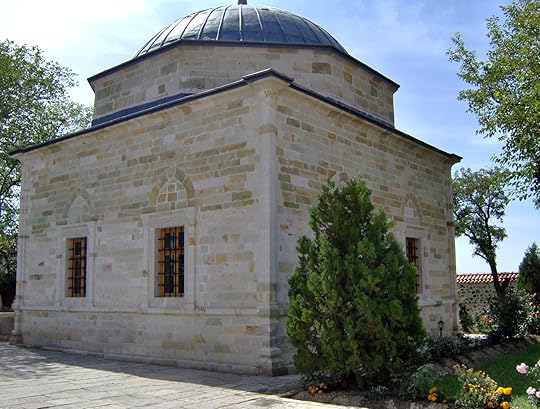

And the Balkans, instead of trying to build something together, attacked each other again like beasts freed from their iron chains. Their songs were as wild as their weapons. And the prophecies and proclamations were terrible. "For seven hundred years I shall burn your towers! You dogs! For seven hundred years I shall cut you down!" the minstrels sang. And what they declared in their songs was inevitably done, and what was done was then added to their songs, as poison is added to poison.
I know this is a crazed suspicion, and yet, in this nonexistence in which I am, I beg you: Finally grant me oblivion, my Lord! Make them remove my blood from these cold plains. And not just the leaden vessel, but make them dig up the earth around where my tent stood, where drops of my blood spattered the ground. O Lord, hear my prayer! Take away all the mud around here, for even a few drops of blood are enough to hold all the memory of the world.