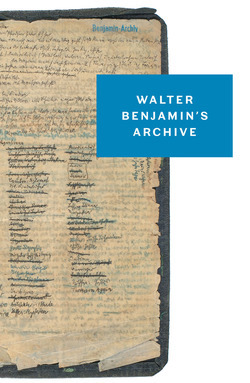
This book is pretty fascinating and gives a great insight into Benjamin's way of working and being. I don't think anything in it is that surprising if you've read his writings though so better to start there obviously.
Next part is not a review, just some random notes (but to be fair, so is the book/archive):
A) Benjamin kept a list of everything he read. I'd already decided to try and do that for this year via here but maybe it would have inspired me if I hadn't. By 1939 it numbered up to 1712. Between 1917 and 1939, 1250 items so about 57 a year and just over one a week. So reading a book a week is officially a Benjamin level of respectable reading.
I didn't realise he wrote on education so will search those out. The free school community from May 1911, two part Teaching and evaluation may-july 1913, school reform, a cultural movement 1912, moral education 1913, aims and methods of the student pedagogic groups at the universities if the German Reich, 1914, erotic education 1914.
"Types of knowledge...
III Teachable knowledge
Its most significant form of appearance is banality"
Peasant basis of toy manufacture. Primitive forms and for the child, the appeal of being able to see the total construction and imagine how it was made. The toys M has are not like that so should I make some/find some.The knitted monkey I am making is half like that.
'The gift of perceiving similarities is, in fact, nothing but a weak remnant of the old compulsion to become similar and to behave mimetically.'
Copying/similar seems earliest. When I moved my fingers in a wave motion, M tried to copy from around 3 months. But seeing difference sometimes seems easier than seeing similarity, eg in disproportionately scaled images or mathematics more generally. But maybe the generalisation that arises from difference is just more noticeable. Difference is more conscious because similar is more primitive/natural?
Benjamin collated the linguistic expressions etc of his son Stefan from 1918-32. Also early terms of endearment. So far for M: Bubbles/Bubbs, Mupito, Mouse, Maister. I'd always intended to record M's language use to study the development of consciousness, I think originally inspired by some of John Holt's work. She's not just a science experiment though. Piaget obviously did this most systematically, or at least his wife did, people think. Yet he came up with an essential wrong analysis based on that so there's no guarantees in the empirical.
On going to sleep Benjamin's kid says 'what should I dream?'
B) Connected thoughts re proportion while reading:
Lesson from Benjamin: Be a collector?
Models of proportion:: Visual sense; Elastic; Bar; Ratio table; Double number line; a/b = c/d; Straight line graph
Examples that develop model
Practice through variation and comparison
Comparing models
Practical consciousness
Embedded in practice
Recognition that a person further away is the same person, something in the distance is the same thing. Part of this relies on proportion?
RME- young children can recognise when images are changed to not be in proportion, computer scaling different in x y axes via stretching (not numerical), circus mirrors.
Numerical, semi-conceptual, tool based
Scaling up/down recipes (doesn't work with baking/oven times). Scaling images using numbers. Looking up tables for conversions.
Model based
Conceptual
The history of the development of practical consciousness and mathematical thought related to proportion
Similarity and difference in:
Same units/different units
Grouping and sharing
Common sense/metaphor uses of proportion
Proportionate
Art/lit/film
A relationship. A similarity in one aspect of that relationship, in their relative measurements. What is more general - aspects of similarity between relationships eg mother, body temperature with external sg feel cold/cooling (quantifiable but experiential here). Categorise possible similarities in relationships (infinite?) Then categorise types that lead to proportion?
Direct sense of proportion, speed, density etc -explore. (Vygotsky on scientific concepts- indirect relation to object mediated by concepts but this seems wrong eg speed, mother?)