The writer Deb Caletti said, “When you go looking for rescue, you end up trapped in your own weakness.”
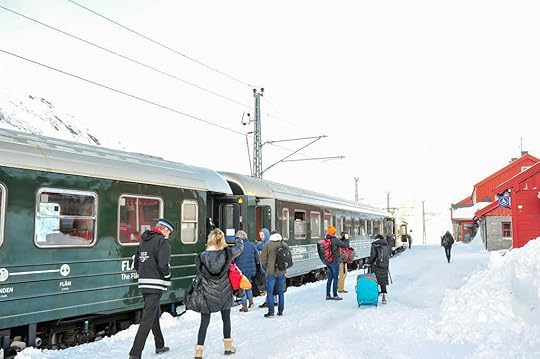
For me, this captured the theme of Anne Holt’s “1222“the story that started on Wednesday, February 14, 2007 when train # 601, travelling from Oslo to Bergen derailed in the midst of a hurricane named “Olga.” Of the 269 people on board, only one perished as a result of the accident, the train conductor Einar Holter.
Shortly after the accident, the passengers were rescued, whisked off to a nearby mountain lodge, a place they were forced to remain in until the storm passed. Among the passengers is Hanne Wilhelmsen, a retired Oslo police officer, now retired and confined to a wheelchair after she was shot in the back and paralyzed from the waist down since December of 2002.
The “Finse Disaster,” the name eventually tagged to the derailment, occurred near the train station that is located 1222 meters above sea level.
There are a few recurring themes throughout the story, one, the storm is getting worse, two, there is unexplained loss of life, most likely murder, and three, perhaps the most ominous of all, is the passengers themselves. This is how Anne Holt described them:
“Self-confident young people in horrendously expensive clothes…stressed businessmen with top-of-the-range laptops, desperately trying to get an internet connection, screaming kids and middle aged women, a handball team of fourteen year old girls completely incapable of grasping the point of showing some consideration for others…”
This was the mainstream of the passengers, then there were others:
The mysterious and unseen occupants of a special train car, protected by armed guards, a low key, quiet couple, assumed by Wilhelmsen to be Kurdish, who at a moment of apparent danger, both draw handguns, then quickly stashed them once the danger passed, and an erratic, moody television personality named Kari Thue, who seemed determined to seize control, foisting her haphazard agenda on the group.
As the story progresses, we see the subtle ways that people become impatient, both with the confinement and with each other. As the storm becomes worse, and the term of confinement increases, we read about some of the darkest aspects of human nature.
A quote by Aristotle fits well here:
“The ideal man bears the accidents of life with dignity and grace, making the best of circumstances.”
Amidst the chaos, confusion, violence and deviousness, there are characters whose personal integrity aligns with Aristotle’s standard.
It is this showdown of wills, played out against the backdrop of Mother Nature’s fiercest squall, that made this novel a pleasure to read.