

What do you think?
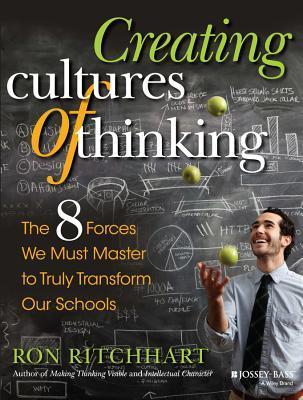
Creating Cultures of Thinking: The 8 Forces We Must Master to Truly Transform Our Schools: The 8 Forces We Must Master to Truly Transform Our Schools
Discover why and how schools must become places where thinking is valued, visible, and actively promoted As educators, parents, and citizens, we must settle for nothing less than environments that bring out the best in people, take learning to the next level, allow for great discoveries, and propel both the individual and the group forward into a lifetime of learning. This is something all teachers want and all students deserve. In Creating Cultures of Thinking: The 8 Forces We Must Master to Truly Transform Our Schools, Ron Ritchhart, author of Making Thinking Visible, explains how creating a culture of thinking is more important to learning than any particular curriculum and he outlines how any school or teacher can accomplish this by leveraging 8 cultural forces: expectations, language, time, modeling, opportunities, routines, interactions, and environment. With the techniques and rich classroom vignettes throughout this book, Ritchhart shows that creating a culture of thinking is not about just adhering to a particular set of practices or a general expectation that people should be involved in thinking. A culture of thinking produces the feelings, energy, and even joy that can propel learning forward and motivate us to do what at times can be hard and challenging mental work.
384 pages, Paperback
First published February 4, 2015
About the author
Ron Ritchhart
16 books52 followersRon Ritchhart is currently a Senior Research Associate at Harvard Project Zero where his work focuses on such issues as teaching for understanding, the development of intellectual character, creative teaching, making students' thinking visible, and most recently the development of school and classroom culture. Ron's research and writings, particularly his theory of Intellectual Character and framework for understanding group culture through the Cultural Forces, have informed the work of schools, school systems, and museums throughout the world. His current research focuses on how classrooms change as teachers strive to make thinking valued, visible, and actively promoted in their classrooms.
Ratings & Reviews
Friends & Following
Create a free account to discover what your friends think of this book!
Community Reviews
Displaying 1 - 30 of 47 reviews
March 28, 2015
If you were going to read one, just one, book on education, because you were hoping to get a sense for what we can do to bring out the life in learning for all students--and teachers, of course as well--then choose this book. It is a profound read, an unusual combination of high level educational research combined with practical what-to-do-now ideas for launching into a whole new and much better plan for learning in classrooms. Learning with meaningfulness, depth, bustling energy, and full participation. We’re talking about meaningful for everyone: students, teachers, administrators. Parents who want their children to be deeply engaged in learning. People who value learning. People who look to education to nurture the development of thoughtful adults and life-long learners.
This is the book. Likely to rise quickly to the best book in education of our time, this book--and way of thinking about learning--launches us into a new and much more vibrant, hopeful, and (at the very highest level) purposeful way of going about things in education. Let’s get beyond “testing cultures” and into “learning cultures.” Let’s develop intellectual character; let’s encourage habits of mind, intellectual passions and thinking dispositions that nurture the highest development of all. We do this by creating our own cultures of thinking, designed from within, designed by educators and members of the learning communities.
Chapters in the book correspond to “cultural forces:” “Expectations: Recognizing How Our Beliefs Shape Our Behavior; Language: Appreciating Its Subtle Yet Profound Power; Time: Learning to be Its Master Rather Than Its Victim; Modeling: Seeing Ourselves through Our Students’ Eyes; Opportunities: Crafting the Vehicles for Learning; Routines: Supporting and Scaffolding Learning and Thinking; Interactions: Forging Relationships That Empower Learners; Environment: Using Space to Support Learning and Thinking.”
In each chapter we examine an ultimate (and sometimes hidden to our daily consciousness) underlying dynamic tension in learning. Should we go for the desultory historically-arrived-at factory model of education, or should we go for deep learning as the essence of life and growth and becoming all that we can be as educators and students? An obvious choice. And Ritchhart guides us through seeing how to go about the change.
This is a powerful book, one that allows us to view education from a whole new viewpoint, one that gives us the tools to design cultures of thinking and highly engaged learning in all settings and disciplines.
This is the book. Likely to rise quickly to the best book in education of our time, this book--and way of thinking about learning--launches us into a new and much more vibrant, hopeful, and (at the very highest level) purposeful way of going about things in education. Let’s get beyond “testing cultures” and into “learning cultures.” Let’s develop intellectual character; let’s encourage habits of mind, intellectual passions and thinking dispositions that nurture the highest development of all. We do this by creating our own cultures of thinking, designed from within, designed by educators and members of the learning communities.
Chapters in the book correspond to “cultural forces:” “Expectations: Recognizing How Our Beliefs Shape Our Behavior; Language: Appreciating Its Subtle Yet Profound Power; Time: Learning to be Its Master Rather Than Its Victim; Modeling: Seeing Ourselves through Our Students’ Eyes; Opportunities: Crafting the Vehicles for Learning; Routines: Supporting and Scaffolding Learning and Thinking; Interactions: Forging Relationships That Empower Learners; Environment: Using Space to Support Learning and Thinking.”
In each chapter we examine an ultimate (and sometimes hidden to our daily consciousness) underlying dynamic tension in learning. Should we go for the desultory historically-arrived-at factory model of education, or should we go for deep learning as the essence of life and growth and becoming all that we can be as educators and students? An obvious choice. And Ritchhart guides us through seeing how to go about the change.
This is a powerful book, one that allows us to view education from a whole new viewpoint, one that gives us the tools to design cultures of thinking and highly engaged learning in all settings and disciplines.

August 25, 2014
Admittedly, books that inspire my growth as a teacher are some of my favorites, so you'll have to trust me when I tell you that Creating Cultures of Thinking: The 8 Forces We Must Master to Truly Transform Our Schools takes that love to a whole new level. Creating Cultures of Thinking is the latest installment in a decade-long conversation that began for me in 2004 with Intellectual Character: What It Is, Why It Matters, and How to Get It, and continued with Making Thinking Visible in 2011. In this trilogy Ron Ritchhart creates a vision of teaching, classroom culture, and intellectual life worthy of our highest aspirations.
Creating Cultures of Thinking also works as a stand-alone title. It's Low Threshold High Ceiling professional development. No matter the career stage, there are entry points here for all teachers passionate about honing their craft. In the midst of intense and multi-faceted pressures relentlessly pulling our attention and energy in other directions, Creating Cultures of Thinking dives into the complexity of creating transformation, of anchoring our daily classroom interactions in the "promotion of the dispositions needed for students to become active learners and effective thinkers eager and able to create, innovate, and solve problems"(34).
Committing to a culture of thinking requires submitting to vulnerability. Ritchhart acknowledges the struggle and recognizes that these changes grow only from examining and judging our own understandings, expectations, practices, and authenticity as thinkers. "It takes a degree of nerve, ambition, and fortitude to steadfastly and honestly work to uncover the story of learning one is telling students. Once we have done so, we must then assess how that story stacks up against what we truly want for our students," (29). "(This) requires a conviction on our part. We must first set and then calibrate our internal compass if we want it to act as a reliable guide"(43). If it is true that children grow into the intellectual life around them, then it is incumbent on us to be model thinkers. It takes courage to enter this arena, and Ritchhart inspires that courage. He asks us to recall a time when we have been a part of a culture of thinking, "A place where the group's collective thinking as well as each individual's thinking was valued, visible, and actively promoted as part of the regular day-to-day experience of all group members"(108). He reminds us, "(a) culture of thinking produces the feelings, energy, and even joy that can propel learning forward and motivate us to do what at times can be hard and challenging mental work"(5). With Creating Cultures of Thinking at my side, I am ready for the challenge.
Creating Cultures of Thinking also works as a stand-alone title. It's Low Threshold High Ceiling professional development. No matter the career stage, there are entry points here for all teachers passionate about honing their craft. In the midst of intense and multi-faceted pressures relentlessly pulling our attention and energy in other directions, Creating Cultures of Thinking dives into the complexity of creating transformation, of anchoring our daily classroom interactions in the "promotion of the dispositions needed for students to become active learners and effective thinkers eager and able to create, innovate, and solve problems"(34).
Committing to a culture of thinking requires submitting to vulnerability. Ritchhart acknowledges the struggle and recognizes that these changes grow only from examining and judging our own understandings, expectations, practices, and authenticity as thinkers. "It takes a degree of nerve, ambition, and fortitude to steadfastly and honestly work to uncover the story of learning one is telling students. Once we have done so, we must then assess how that story stacks up against what we truly want for our students," (29). "(This) requires a conviction on our part. We must first set and then calibrate our internal compass if we want it to act as a reliable guide"(43). If it is true that children grow into the intellectual life around them, then it is incumbent on us to be model thinkers. It takes courage to enter this arena, and Ritchhart inspires that courage. He asks us to recall a time when we have been a part of a culture of thinking, "A place where the group's collective thinking as well as each individual's thinking was valued, visible, and actively promoted as part of the regular day-to-day experience of all group members"(108). He reminds us, "(a) culture of thinking produces the feelings, energy, and even joy that can propel learning forward and motivate us to do what at times can be hard and challenging mental work"(5). With Creating Cultures of Thinking at my side, I am ready for the challenge.

December 11, 2019
For my review of this book, I have chosen to use the thinking routine "I used to think...Now I think..."
I used to think it wasn't so hard to create the right kind of classroom culture. Be kind and caring and clear in expectations and prioritize relationships. Now I think there's more to it than that, and it's worth stopping to reflect on the factors that contribute to a culture focused on thinking rather than just doing work.
I used to think that teachers were cultish in their use of thinking routines and applied them without much deliberation. "Today we're using CSI: Miami or maybe Stop, Collaborate and Listen. Tomorrow, Duck Duck Learning." Now I think there can be careful consideration of how these routines allow students to focus their thinking. Now I think they nicely split the difference between "solve for X over and over for the next 80 minutes; by the way, there's only one right way to do this" and "you're on your own to go learn; I'm here if you have questions". I still bristle sometimes when administrators use these routines on me, though, and am wary of meetings replete with chart paper and sticky notes or pieces of paper taped up to the four corners of the room. I'm a work in progress here.
I used to think that teachers were fairly unsophisticated in their understanding of linguistics, far more likely to make pronouncements about how they would like language to work than how it actually does and to focus way too much on semantics while ignoring all sense of pragmatics or the importance of individual context in how specific utterances are received by listeners. Now I think...well, I still sort of think this actually, but I agree that there's value in teachers reflecting on the language they use and what they might be communicating implicitly.
I used to think that relationships between teachers and students matter. Now I think this even more strongly.
I used to think...I don't know how to articulate it exactly: something about the importance of the whole-school culture or ecosystems. Now I think that creating a culture of thinking requires more than just a few teachers changing their practice but rather an institution-wide reexamination of what we value in terms of teaching and learning. It doesn't have to result in groupthink; it just doesn't make sense for students to be getting mixed messages about what matters and what learning is for.
I used to think education books were kind of a slog. Now I think they don't have to be.
I used to think it wasn't so hard to create the right kind of classroom culture. Be kind and caring and clear in expectations and prioritize relationships. Now I think there's more to it than that, and it's worth stopping to reflect on the factors that contribute to a culture focused on thinking rather than just doing work.
I used to think that teachers were cultish in their use of thinking routines and applied them without much deliberation. "Today we're using CSI: Miami or maybe Stop, Collaborate and Listen. Tomorrow, Duck Duck Learning." Now I think there can be careful consideration of how these routines allow students to focus their thinking. Now I think they nicely split the difference between "solve for X over and over for the next 80 minutes; by the way, there's only one right way to do this" and "you're on your own to go learn; I'm here if you have questions". I still bristle sometimes when administrators use these routines on me, though, and am wary of meetings replete with chart paper and sticky notes or pieces of paper taped up to the four corners of the room. I'm a work in progress here.
I used to think that teachers were fairly unsophisticated in their understanding of linguistics, far more likely to make pronouncements about how they would like language to work than how it actually does and to focus way too much on semantics while ignoring all sense of pragmatics or the importance of individual context in how specific utterances are received by listeners. Now I think...well, I still sort of think this actually, but I agree that there's value in teachers reflecting on the language they use and what they might be communicating implicitly.
I used to think that relationships between teachers and students matter. Now I think this even more strongly.
I used to think...I don't know how to articulate it exactly: something about the importance of the whole-school culture or ecosystems. Now I think that creating a culture of thinking requires more than just a few teachers changing their practice but rather an institution-wide reexamination of what we value in terms of teaching and learning. It doesn't have to result in groupthink; it just doesn't make sense for students to be getting mixed messages about what matters and what learning is for.
I used to think education books were kind of a slog. Now I think they don't have to be.

January 12, 2017
Excellent read that, appropriately, made me think a lot. I really appreciated the inspiring case studies and the careful analysis of them. I have been seeing thinking and opportunities to promote thinking everywhere since I finished it a few days ago. I am a future teacher, so I expect I will return to this book and get even more out of it later once I am actually in a classroom.

June 1, 2015
Have to admit I chapter jumped this book. Certain a ones captivated me and I took a thousand notes others helped me reflect on best practices. Highly suggested if the goal is shifting the culture in a school.

March 24, 2020
A very powerful handbook on transforming schools into places where thinking is foremost (rather than completing tasks, being compliant, etc).

May 16, 2020
A phenomenal, inspiring, thought-provoking masterpiece!
Such a “must read”!
Such a “must read”!

August 27, 2023
It was fine but I probably should have read the physical book rather than listened to the audiobook, I probably would have gotten more out of it.

September 24, 2025
There were some great ideas in this book, but nothing felt that new to me.
September 6, 2026
One of the more useful and important books in the world of education that I've read. A strong basis for approaching learning and teaching at any institution.
January 15, 2016
This book provides ideas on how to cultivate thinking in classrooms. I particularly liked the section on creating a physical classroom environment that encourages thinking. The thing that I don't like about it is that it is made up mostly of case studies. The downside of this is that the teaching situations are very particular, so you may get discouraged if your school doesn't allow you to do some of the things that the teachers in this book are able to do.

June 23, 2017
Important read for educators. See my blog review here: http://kimessenburg.blogspot.jp/2017/...

August 7, 2017
Easy and enjoyable read that explains a little of the history of schools, how change happens and what learning can look like as schools adapt to their learners.

September 2, 2017
Ritchhart lays out a framework for examining the cultures of our classrooms and schools centered on eight cultural forces, expectations, language, time, opportunities, interactions, routines, modeling, and environment, with an eye to promoting the development of thinking and understanding.
Steeped in a school and a work community rooted in EL Education and the Deeper Learning network in addition to several years working with Ritchhart's thinking routines, I didn't find a lot new here. Instead the framework provides a lens for examining practice and probing the degree to which we are realizing the development of thinking in our classrooms. I appreciate the value of aligning all of our collective resources towards the goal of more effective thinking.
The creation of classrooms, schools, and an education system that develops deep thinkers ready for life long learning is a journey. This is a great place to start on that journey and a helpful reminder for those of us who have traveled a bit down that path.
Steeped in a school and a work community rooted in EL Education and the Deeper Learning network in addition to several years working with Ritchhart's thinking routines, I didn't find a lot new here. Instead the framework provides a lens for examining practice and probing the degree to which we are realizing the development of thinking in our classrooms. I appreciate the value of aligning all of our collective resources towards the goal of more effective thinking.
The creation of classrooms, schools, and an education system that develops deep thinkers ready for life long learning is a journey. This is a great place to start on that journey and a helpful reminder for those of us who have traveled a bit down that path.

July 19, 2024
Excellent -- I think this was the missing link for me for Thinking Routines. I've had colleagues present them to me, and I've used them to try to spark thinking, but without having the theory behind them, they're just activities. I found the first 7 aspects of a thinking culture especially relevant, and great for understanding how to really teach an IB education. I was less convinced about the 8th: environment. On a whole school scale? Yes. On the classroom-level, not so much. I've worked in schools where sharing classrooms is a necessity, and believe that learning shouldn't depend so heavily on an individual teacher's space. We need to find better ways to share, collaborate, and develop learning spaces together.

July 19, 2018
Ritchart describes and elaborates on what makes a culture of thinking. Specifically, what are the aspects that we can include in our classrooms that not only make thinking visible, but sought after by teachers and students alike.
This is definitely not a beach read. It's a book whose chapters should be read in short bursts and given time to think about for a few days. It's useful as a book study for a faculty at a school, and would benefit from a structured workshop after the majority of a staff reads the book, or at least understands the main concepts that Ritchhart points out.
This is definitely not a beach read. It's a book whose chapters should be read in short bursts and given time to think about for a few days. It's useful as a book study for a faculty at a school, and would benefit from a structured workshop after the majority of a staff reads the book, or at least understands the main concepts that Ritchhart points out.
August 30, 2023
This is a clear description of the ways that classrooms can facilitate greater thinking among students. This is the first Ron Ritchhart book I've read, but I think it might make more sense after reading some of his other works, particularly Making Thinking Visible. I think the chapters on thinking routines was the most valuable, with specific examples of how to make thinking visible in a regular and predictable way.

April 4, 2024
This book inspired me during a tough part of the year. We need to look more toward building lessons that are relevant and that get our students to do the thinking than toward packaged curricula that can become outdated and irrelevant quickly. Ritchhart pushes for more problem-based and project-based assessments with real audiences instead of multiple choice tests. Teachers know all these things. Now, we just need to get the decision-makers to see it, too!

June 22, 2024
One of those books that made me very reflective as an educator, with some useful reflective/tracking tools for growing a culture of thinking…however, it’s still tough to build curriculum and put all these things into action. Will be in my short stack for ideas though!
Probably the biggest thing that has stuck with me comes from the beginning of the book. What story are we telling students about what it means to learn…be good at math…etc. What are our real goals and measures that matter???
Probably the biggest thing that has stuck with me comes from the beginning of the book. What story are we telling students about what it means to learn…be good at math…etc. What are our real goals and measures that matter???
April 2, 2019
A must-read for everyone in education, as well as parents and anyone who enjoys learning! Makes you really ponder the question of what “thinking” truly is. Can’t wait to try some of these ideas out at school!

December 2, 2020
This book is a very well rounded in talking about ways we can improve our classrooms. It made me excited to change some things and caused me to take a deeper look at how I am teaching. I am currently working on making changes to my expectations.

March 22, 2023
I read this as part of a PLC book study. It had a lot of great ideas to consider that we plan to implement. Reading this book also raised some frustrations about where education is and where it could be, which was probably an unintended "side effect" of our book study.

May 13, 2017
I read this with a class and appreciated our discussions and support for changing and developing practice. Some chapters were richer than others. Definitely worth thinking about.

November 10, 2017
A practical guide to setting up a sustainable culture of thinking in schools. Definitely worth a read for teachers.

March 25, 2019
Best education book I’ve read this year. Pushed my thinking in all the best ways.

August 6, 2019
this book has changed my approach to teaching - i am more focused on learning, and using thinking routines... my language has changed and i am a better teacher for it.

December 16, 2019
This has been the best book I've read on schools and teaching this year!

March 24, 2020
An easy and informative read. No advertisement or anything. It's pure ideas, research and reflections of classroom applications.

October 10, 2020
Really enjoyable, wide ranging and expansive, great illustrations from mini case studies.

Read
November 11, 2020This book made me completely rethink my approach to teaching. The author presents both theory and practice in very thoughtful and effective ways. Wow.
Displaying 1 - 30 of 47 reviews