What happens when a conservative president makes a liberal professor from the Ivy League his top urban affairs adviser? The president is Richard Nixon, the professor is Harvard's Daniel Patrick Moynihan. Of all the odd couples in American public life, they are probably the oddest. Add another Ivy League professor to the White House staff when Nixon appoints Columbia's Arthur Burns, a conservative economist, as domestic policy adviser. The year is 1969, and what follows behind closed doors is a passionate debate of conflicting ideologies and personalities.
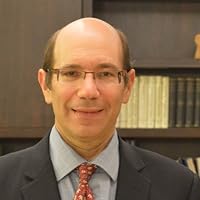
Who won? How? Why? Now nearly a half-century later, Stephen Hess, who was Nixon's biographer and Moynihan's deputy, recounts this fascinat-ing story as if from his office in the West Wing.
Daniel Patrick Moynihan (1927 2003) described in the Almanac of American Politics as "the nation's best thinker among politicians since Lincoln and its best politician among thinkers since Jefferson," served in the administrations of four presidents, was ambassador to India, and U.S. representative to the United Nations, and was four times elected to the U.S. Senate from New York.
Praise for the works of Stephen Hess
"Organzing the Presidency
"Any president would benefit from reading Mr. Hess's analysis and any reader will enjoy the elegance with which it is written and the author's wide knowledge and good sense. " -The Economist " "The Presidential Campaign " Hess brings not only first-rate credentials, but a cool, dispassionate perspective, an incisive analytical approach, and a willingness to stick his neck out in making judgments. - "American Political Science Review
"From the "Newswork Series " It is not much in vogue to speak of things like the public trust, but thankfully Stephen Hess is old fashioned. He reminds us in this valuable and provocative book that journalism is a public trust, providing the basic information on which citizens in a democracy vote, or tune out. -- Ken Auletta, "The New Yorker""
"Election Day 1962, when Nixon was running for governor of California and I was his speechwriter. I was returning home to Washington the next day when Nixon called me to say goodbye. At some point, I asked, 'Do you still think you're going to lose the race, Dick?' 'Yes,' he said. 'But at least I'll never have to talk about crap like dope addiction again.'”
This is a wonderful little book, and an illuminating one. It begins with a simple question: How did Patrick Moynihan, a liberal intellectual, end up wielding so much power within Richard Nixon's White House? The answer proves interesting. Moynihan flattered Nixon, and proved adroit at navigating the internecine politics of the Nixon White House. But more importantly, Nixon just didn't give a shit about domestic policy. He didn't want to talk about crap like dope addiction because he didn't much care about crap like dope addiction. It was the combination of his disinterest in the topic and his interest in Moynihan that led to Nixon's strangely progressive record on domestic and economic policy.
Short and insightful. Richard Nixon's character as seen through the lens of his left wing advisor Daniel Patrick Moynihan (it seems every president has his band of rivals, including appointments from the other side, something I hadn't realised). RML had no interest in domestic affairs (other than that needed to get elected); his full focus was always foreign affairs. But DPM managed to bring his attention around to issues like poverty in America.
Read this over Christmas vacation in California. Great book, very informative about both central characters, Daniel Patrick Moynihan and Richard Milhous Nixon. Stephen Hess does a super job narrating and explaining the relationship between the Liberal, Democrat Professor and the Conservative, Republican President.
A delightful and insightful look at two larger than life characters. Hess, who served with Moynihan in the Nixon White House, does here what he does best -- mixing historical analysis with your are there observation and reportage. Easy to read - with lots to learn from. Highly recommended.
An interesting account of Daniel Patrick Moynihan's time in the White House. In a short, kind of Biography, Mr. Hess give a brief and succinct explanation of what he did and how he was and was not able to influence the President. Really lacking on the analysis of the moves, this is more of just a brief and general tick-tock of the two years that Dan was in the White House. Great story overall and a short and easy read.
Very useful little book, written in an engaging way by Stephen Hess, who was of course there for all of it. Real Moyni-stans will be interested to hear how the UBI legislation came to pass, and it's fascinating how the drafting was so much more important - even for Nixon, who gave what Hess concedes was a heartfelt speech - than the execution, which was stymied by Southern Democrats (a shame, given that moving from "services" to "direct payments" in a variety of areas could've proven a long-term boon). Not a literary masterpiece by any means, but if you want to know about Nixon's intriguing first term, here you go.
Easy quick read, only 150 pages. I am always interested in anything Nixon-related and this tells an interesting story of how Moynihan functioned in the White House and how he and Nixon respected each other.
Since I've never really studied the period, most of what I knew about Nixon before reading this book was limited to Vietnam, the southern strategy, and Watergate. I really enjoyed this mini-biography of Moynihan and his time in the Nixon administration. I initially entered the drawing because I love snippets of history in which conservatives and liberals work together in surprising ways, and these two years in the Nixon administration certainly qualify as that kind of event. What really came of it? The biggest event was a failed welfare overhaul (Congress didn't pass it). But the expert telling of the domestic policy development in the administration is great (Hess was an assistant to Moynihan). It's readable, light, and informative. Biased, sure, by personal experience. But I loved it. I recommend it to anyone interested in the history of the period, or in just quirky political interactions, like I am.
My recollection of the Nixon period did not include Daniel Patrick Moynihan. I remember Pat as a somewhat moderate Senator from New York and had no idea he was part of the Nixon administration. This book is a very interesting first hand discussion of the relationship of an intellectual liberal and a conservative President. There was obvious respect and loyalty from each to the other. It is a new prospective, for me, of these two men. For those interested in a snippet of presidential history, I can highly recommend this little book.
Goodreads winner. "The Professor and the President" is the story of Daniel Patrick Moynihan, a liberal sociologist from Harvard, in the Nixon White House in 1969-1970 as Urban Affairs Advisor to the Republican President. Would hope that Stephen Hess, deputy to Moynihan in 1969 and life-long friend of Moynihan's would give us another great book on the next significant segment of Moynihan's life after the Nixon White House Years. Since a biography of Moynihan would fill volumes it is refreshing to read it in terms of specific times and places.
"'Incidentally, don't send me those draft letters. I don't want to be one of those politicians who remembers people's birthdays.' A lesson learned: Eisenhower, the warrior, was a natural politician; Nixon, the politician, was not." (xv)