Jump to ratings and reviews
Rate this book

The Wilderness of Ruin: A Tale of Madness, Fire, and the Hunt for America's Youngest Serial Killer – A Literary Gilded Age Thriller of Boston, Melville, and Depravity

Rate this book
In late nineteenth-century Boston, home to Herman Melville and Oliver Wendell Holmes, a serial killer preying on children is running loose in the city—a wilderness of ruin caused by the Great Fire of 1872—in this literary historical crime thriller reminiscent of The Devil in the White City.

In the early 1870s, local children begin disappearing from the working-class neighborhoods of Boston. Several return home bloody and bruised after being tortured, while others never come back.

With the city on edge, authorities believe the abductions are the handiwork of a psychopath, until they discover that their killer—fourteen-year-old Jesse Pomeroy—is barely older than his victims. The criminal investigation that follows sparks a debate among the world’s most revered medical minds, and will have a decades-long impact on the judicial system and medical consciousness.

The Wilderness of Ruin is a riveting tale of gruesome murder and depravity. At its heart is a great American city divided by class—a chasm that widens in the aftermath of the Great Fire of 1872. Roseanne Montillo brings Gilded Age Boston to glorious life—from the genteel cobblestone streets of Beacon Hill to the squalid, overcrowded tenements of Southie. Here, too, is the writer Herman Melville. Enthralled by the child killer’s case, he enlists physician Oliver Wendell Holmes to help him understand how it might relate to his own mental instability.

With verve and historical detail, Roseanne Montillo explores this case that reverberated through all of Boston society in order to help us understand our modern hunger for the prurient and sensational.

The Wilderness of Ruin features more than a dozen black-and-white photographs.

308 pages, Hardcover

First published February 1, 2015

220 people are currently reading
3354 people want to read

About the author

Roseanne Montillo

12 books98 followers
Roseanne Montillo is the author of two other works of nonfiction, The Lady and her Monsters and The Wilderness of Ruin. She holds an MFA in Creative Writing from Emerson College, where she taught courses on the intersection of literature and history. She lives outside of Boston.

Ratings & Reviews

What do you think?
Rate this book

Friends & Following

Create a free account to discover what your friends think of this book!

Community Reviews

5 stars
100 (6%)
4 stars
321 (19%)
3 stars
652 (39%)
2 stars
462 (27%)
1 star
120 (7%)
Displaying 1 - 30 of 334 reviews
Profile Image for Will Byrnes.
1,372 reviews121k followers
January 26, 2023
He pointed out that “a strong lack of conscience” is one of the hallmarks for these individuals. “Their game is self-gratification at the other person’s experience,” Hare said. “Psychopathic killers, however, are not mad, according to accepted legal and psychiatric standards. The acts result not from a deranged mind but from a cold, calculating rationality combined with a chilly inability to treat others as thinking, feeling humans.” - the author quoting Robert Hare, author of a book on Psychopathy
Call me Will. Some years ago, a lot, don’t ask, I thought I would see a bit of that northern rival city. It was wintry, snow on the ground. Accommodations were meager. No, I was not there alone, and the journey was not without portents. But I was spared a room-mate of the cannibalistic inclination. I still feel the pull, on occasions. Maybe stop by to see relics of Revolution, fields of dreams crushed and fulfilled, walk spaces where giants once strode. So I was drawn to Roseanne Montillo’s latest. In her previous book, The Lady and Her Monsters, she followed the trail of creation blazed by Mary Shelley as she put together her masterpiece, Frankenstein. In The Wilderness of Ruin, Montillo is back looking at monsters and creators. This time the two are not so closely linked. The monster is this tale is all too real, the youngest serial killer in US history. The artist in this volume is Herman Melville (and, of course, his monster as well, but the killer is the primary monster here). Montillo treats us to a look at his life, or at least parts of it, and offers some details on the elements that went into the construction of his masterpiece, Moby Dick. A consideration of madness, in his work and in his life, and public discourse on the subject of madness links the two. A third character here is Boston of the late 19th century, as Montillo offers us a look at the place, most particularly in the 1870s. I am sure there are parts of the city remaining, in the Fenway-Kenmore neighborhood, for one, where a form of madness is regularly experienced.

description
Roseanne Montillo - image from Penguin Random House

Before the infamous serial killers whose names we know too well, before BTK and Dahmer, before Bundy and Gacy, long before the Boston Strangler, Bean Town was afflicted by a particularly bloody small-fry with particularly large problems. Jesse Pomeroy was a sociopathic little beast who, as a pre-teen, preyed on small children, kidnapping, assaulting and cutting them. He was even known to have taken a bite. As a teen, after a spell in juvie, he graduated to murder. The book calls him America’s youngest serial killer. A drunken, abusive lout of a father played a part, but was Jesse born a monster or was he made? Of course, he would probably not fit as an actual serial killer, as currently defined, but he was definitely a multiple murderer, generated considerable terror in the area, and was certainly sociopathic.

descriptiondescription
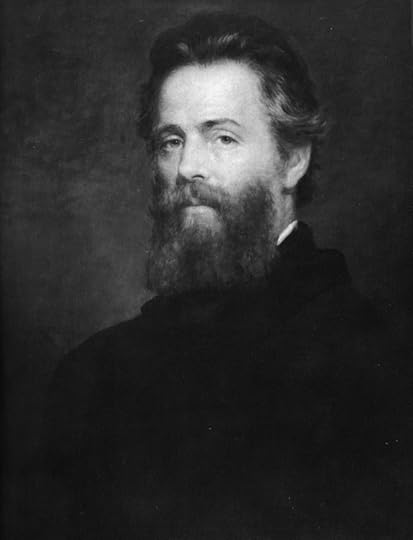
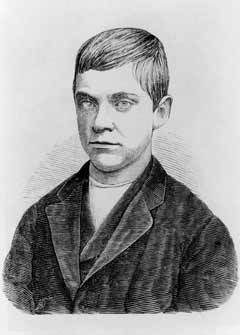
The young Jess Pomeroy and Herman Mellville

Montillo offers us a look at the mean streets of Boston in the 1870s. Her descriptions are filled with illuminating, and sometimes wonderful details. It was a very Dickensian scene with poverty widespread and in full view. Child labor was usual, housing was cramped and susceptible to conflagration. Class lines were sometimes demarcated quite clearly. Montillo tells of one in particular, Mount Vernon Street, that marked where well-to-do South Slope ended and working class North Slope began. It was also known as Mount Whoredom Street for its concentration of bordellos. My favorite period detail concerns a World Peace Jubilee that took place in 1872, following the end of the Franco-Prussian war. (The mayor was trying to spruce up the city’s image.) Johann Strauss played Blue Danube, and one hundred fifty firemen took the stage of the newly constructed Coliseum to perform a piece of music by pounding on 150 anvils, which probably makes Boston the birthplace of heavy metal (sorry).

description
The Coliseum in the World Peace Jubilee

Montillo also tells of the sort of political shortsightedness which has plagued governments everywhere. The Fire Chief had taken note of the unpleasantness endured by Chicago in 1871 and urged the city government to do some infrastructure investment to prevent a similar outcome. Think the city did it? Of course, after the conflagration, the media, indulging in their usual investigative acuity, somehow focused blame on the one guy who was trying to prevent catastrophe. Same ole media.

description
Baked Beantown - from Library of Congress

Melville had to endure some troubles of his own. We in the 21st century may regard Moby Dick as one of the masterpieces of American literature, but it sold like three-day old fish. Melville earned less than $600 for his effort, which labors took a considerable toll on his health and maybe on his sanity. Imagine you are Herman Melville and are working on your Opus Magnus, in a place (Arrowhead, in Pittsfield, MA) that is heavy with family, visitors, screaming children, constant distraction, and your family is trying to get you to stop writing, because, of course, it is the writing that is making you nuts. It is amazing to me that Melville did not take a page from Pomeroy’s book and reduce his distractions a notch. It will come as no surprise that he was quite interested in the notion of madness. It was a widely discussed issue of the day. There was direct applicability of the madness discussion to matters like sentencing. If a prisoner is considered insane, would it be ok to execute him? Montillo goes into some of the thought at the time and the thinkers making their cases. Melville’s interest in madness was certainly manifest in his book. Ahab has…issues.

Another treat in the book is some more back story on where and how Melville got some of his material. I had thought it was the tale of the Essex that had been the sole white whale inspiration. Turns out there was an earlier one. Just when you thought it was safe to go back in the whaler…. I am not aware of the name of the aged whale that took out the Essex, but the earlier one was named Mocha Dick, Mocha for the island near where it was sighted, and Dick as a generic appellation, like the Joe part of GI Joe. It does, however, sound like an unspeakable beverage not on sale at Starbuck’s, so far as I am aware.

description
Cover of J. N. Reynolds story Mocha Dick or the White Whale of the Pacific

Due to the joining together of a city and a multiple murderer, The Wilderness of Ruin does bear a base similarity to Erik Larson’s outstanding book, The Devil in the White City. Both tell of an awful killer, and depict a major American city at a time of great change. However Wilderness… does not deliver quite the punch of the earlier book.

First, the link between the killer and Melville lies not in their having anything to do with each other. It is in the fact that madness is associated with both of them. And that is a fairly thin tether with which to connect the two. There are added links having to do with perception of relative skull size and skin color, but I thought those were a stretch. Given how magnificently Montillo had delved into the underpinnings of Mary Shelley’s great work, I believe she would have been well served to have offered up another on Melville. It is possible, of course, that she did not have enough new material with which to populate an entire volume. And there is no shortage of material on Melville out there already. (a Google search of “Melville biography” yielded 9,460 results) Of course, I expect the same might have been said for Mary Shelley. Don’t know, but the linkage felt forced.

Second, there is not really much of a hunt for Pomeroy. He spends most of his time in the book well contained behind bars, attempting to escape his come-uppance legally, and with digging tools, unlike the devil in Chicago, who remained at his dark task for most of that tale.

Third, the title may suggest something to the author, (terminology used to describe the aftermath of the Chicago fire, perhaps) I did not really get a clear image of the stories being told from the title. I suppose Pomeroy creates his fair share of ruin, and Melville endures far too much, and, of course, the city goes all to blazes, but the title just felt off to me.

However, there is still plenty to like in The Wilderness…. That one can come away from this book with a Zapruder-like mantra, “There was a second white whale,“ is almost worth the price of admission on its own. For those who have not already availed of material on Herman, there is enough here to whet one’s appetite, without going overboard. Some of the details of 19th century Boston (Yes, the parts may not have been legally part of the Boston of the era, but they are part of it today) are fascinating. There is a nugget on the origin of a famous Poe story, from when he was stationed in Boston. The discussion on madness is certainly worth listening in on. As is an exchange of ideas about the benefits of solitary confinement. Finally, there is cross-centuries relevance to how government and media function. It will certainly come as no surprise to anyone living in 21st century America that lily-livered politicians would rather take a chance on their districts burning to the ground sooner than spend public money to protect them. And were you aware that Boston had suffered a catastrophic conflagration only a year after Chicago? (excluding you folks from the Boston area. You know about this, right?) And it will come as no surprise to anyone with a radio, television or computer that substantial portions of the media are dedicated to dimming the light by increasing the temperature. The book may not be equal to the sum of the parts, the linkages are a bit frayed, the hunt for and serial designation of the killer may have been exaggerated, but the parts are still pretty interesting. It is always a good thing to visit Boston.

First Posted – 1/9/15

Publication date – 3/17/15

=============================EXTRA STUFF

Links to the author’s Twitter and FB pages

Moby Dick for free on Gutenberg

Billy Budd for free on Gutenberg Australia

Here is a wiki on Mocha Dick, and here the text of the Knickerbocker article in which that tale is told.

A wiki piece on the World Peace Jubilee

My review of Montillo's amazing book, The Lady and Her Monsters: A Tale of Dissections, Real-Life Dr. Frankensteins, and the Creation of Mary Shelley's Masterpiece
Profile Image for Alisi ☆ wants to read too many books ☆.
909 reviews110 followers
March 19, 2015
This is truly up there with the worst of the crime fiction. Off the top of my head I can only think of one book that I'd consider worse than this.

This book has very little to do with the actual serial killer himself and more to do with random tangents the author seems to find herself writing. There are large sections of the book that just dive into utter randomness and these can go on and on and on. Then, when the author decides, hey! this is a book on a serial killer. Perhaps we should rejoin him? she does it in such a way that it's incredibly jarring.

These segues are not only boring but they're so poorly done that it's almost breathtaking. The author should fire her editor. But here are some examples...

Example 1: The boy apparently read a lot of books (what, I suppose, we'd call trash novels today) and one witness describes how he always had a book in his back pocket. We are then ripped away from this description of the killer and draw into a very long discussion on the history the these sorts of books. We are told how many authors (literary authors, I mean) look down on these books for being trashy and how these are mostly written by women and the author even gives us quotes on this.

I'm reading this and thinking WTF do I care about the publication of dime novels in the 1800s? I didn't buy this book to read about that.

Example 2: The boy apparently made a remark to someone that, if his life had been different, he'd've gotten a job on a boat and had lots of adventures. This is right after he was caught the first time so I expected some more trial stuff...

Instead we are treated to the entire life history of Herman Melville from his birth in the 181Xs and so forth -- well, this actually starts with the his father. What does Melville have to do with this story? ABSOLUTELY NOTHING.

After this long, boring bio on Melville, we are treated to the long, rambling account of the Great Boston Fire. Why the fire? Who knows. Apparently the fact that it happened while he was there was enough (though he is not mentioned in this account.)

We're told then that he's been given back into the custody of his mother and a tiny bit about a disappearance and murder then ...

We're kicked into the entire history of the Boston Police starting back in the 1600s.

Besides all this irreverent and boring detail, the author does a terrible job trying to convince us of the boys guilt. I know he did it but if all I had to go on was this book then I'd say this was a miscarriage of justice.

We have the boy basically saying 'if you said I did it, I must've done it' while the police questioning was very much 'you did it! you did it!' and giving him leading questions (and lying about prison sentences -- like, 'confess and you'll only get a year.') It's more telling that the police conveniently didn't record the interrogation at all. This is basically all the proof the author really gives us.
Profile Image for Mauoijenn.
1,121 reviews119 followers
October 12, 2015
I had high hopes for this one, but I have to follow so many others with my review... NOT GOOD! This really was more about Boston's shady history, than about the youngest serial killer in the US. I was more interested in his story, which we did get a little bit of, but not enough to warrant a whole book. I was bummed, as I enjoy books about serial killers. I know, I'm not right in the head!
Profile Image for GoldGato.
1,303 reviews38 followers
October 3, 2017
In the latter part of the 19th century, the Boston area was plagued with attacks on young children. The assaults became worse and eventually ended with murders. Sadly, everyone knew who the culprit was, and this book examines how and why this all took place. There's a lot happening in this book, so let's look at each subject (Serial Killer, Fire, Insanity).

Jesse Pomeroy was a big boy for his age, but that didn't stop others from making fun of him and his white cataract eye. Locals knew him as a torturer and killer of animals, the first sign of a deranged personality. Then, small children started being tortured. They accurately described their tormentor and Pomeroy was put away. But not forever. The author looks at Pomeroy's angry mother, who blamed the victims for the problems. Mother's boy, another sign of whackiness.

But America's youngest serial killer is not the only subject of this book. There is also the Great Boston Fire of 1872, which plays a role in Pomeroy's environment. And, mostly, there is a big focus on madness, specifically with an entire chapter devoted to Herman Melville (?).

To be honest, I felt I was on a Wikipedia ride. Start with youthful serial killer, segue over to urban catastrophe, then go back and forth between Moby Dick and Nathaniel Hawthorne and Mr. Melville. Made me a bit dizzy. Montillo writes with good research on each subject, but I never felt any real connection to any of the title tracts. One minute I'm reading about a little victim of Pomeroy, next thing I'm reading about something completely different. This is a method used by other authors, but here it never really ties together. Still, it's all very interesting and reminds one that just because someone is young, it doesn't mean they are an angel. And Helicopter Parents existed long before their spawn antagonize us now.

Book Season = Summer (fast food reading)
Profile Image for Jessica (booneybear).
304 reviews
January 5, 2015
I felt like this book had an identity crisis. There were three distinct stories throughout the book a) the boy killer, Jesse Pomeroy; b) the Great Fire of Boston in 1872 and c) the author Herman Melville. All well and good topics, however, put together in this book, they really didn't have anything to do with one another. Sure, they all existed at the same time, but that is not a good enough connection to place them all together in a book. I felt like I was reading three separate books that just happened to be conveniently packaged in one volume.

I kept waiting for each event to tie into each other by some common thread but that never happened.
Profile Image for Charlie.
28 reviews1 follower
December 21, 2014
Read an advance copy of this book. I came away feeling that there was much still to be known about Jesse Pomeroy. This may not be the fault of the author given the fact that he died over 80 years ago and that he seemed unwilling to divulge much whenever interviewed.

Despite the subtitle of the book "A Tale of Madness, Boston's Great Fire, and the Hunt for America's Youngest Serial Killer" in my opinion the fire had little to do with the story and the "hunt" an exaggeration ,as is the use of the term serial killer (usually determined as killing three or more people).

The author seemed more fascinated by Herman Melville and a large part of the book is devoted to him yet, the link between Melville & Pomeroy is tenuous at best.

Another minor but, for me, irritating thing is that the author mentions Pomeroy's age several times but it occasionally off by two years. While not the end of the world it does make you wonder what other facts or details are "off".

I honestly came away knowing much more about Herman Melville than I did Jesse Pomeroy...not a good thing given the supposed focus of the book.

Profile Image for Nikki in Niagara.
4,389 reviews175 followers
March 17, 2015

Like Montillo's first book, "The Lady and Her Monster", this book is not just simply about one thing. It is a history of a young criminal though two murders does not a serial killer make, named Jesse Pomeroy. Placing the reader in the late 1800s from approximately 1870 onwards, this is a social history of that time in Boston. Many topics are covered and even entire chapters are devoted to Oliver Wendall Holmes, Herman Melville, the history of mental illness to this point in time, the great Boston fire and Boston's World Fair of the 1880s. Jessie Pomeroy's life is detailed from birth to death, most of which he spent in prison in solitary confinement, upwards of fifty years. Mental illness, insanity pleas, the recognition of not being sane, and a backwards look at Jesse as a prime example of a psychopath are all key issues dealt with in this book. Roseanne Montillo has written a very literary volume that explores all the issues of the day at the time Jesse Pomeroy was alive. It is a particularly in-depth look at "madness" as referred to in the title and how this era seriously began the study and genuine concern and a degree of compassion for people and criminals suffering unbalanced minds. Herman Melville was interested in Pomeroy's case and thus a chapter is devoted to him biographically detailing his obsessions, morbidity and madness. This book deals with main topics I'm interested in from Victorian true crimes to the history of mental illness and I found it a fascinating read. However, it is not a page-turner. As I mentioned, The Wilderness of Ruin, is most definitely a literary work that captivates and compels yet calls for a slower thoughtful pace.
Profile Image for Virgowriter (Brad Windhauser).
725 reviews10 followers
April 5, 2015
The book is written well (at the sentence level, and it's interesting enough. You can also clearly tell the author has read (and digested) every book Erik Larson wrote. The issue with the book is not necessarily that it can't figure out what it is (or what story it's trying to tell); rather, the issue is how this book has been pitched. The cover suggests the story is about a hunt for a serial killer. First, killing two people does not a serial killer make. Furthermore, there's not much of a hunt. The story is really about the point at which our country became fascinated with mental insanity--I would have enjoyed the book a little more if I had this frame in mind. Even so, the author does not do a strong enough job tying everything together--a few of the connections are too forced--such as all the Melville content. It's all interesting, it just doesn't come together in the end.
Profile Image for Mandy.
67 reviews3 followers
November 4, 2014
Wilderness of Ruin by Roseanne Montillo
***I received a digital ARC of this book from the publisher in exchange for a fair, honest review, all opinions expressed are my own***
Boston in the late nineteenth- century, the streets are haunted by the shadow of the ‘red devil’ a malevolent entity that preys on local boys, leaving them beaten and bruised. As more children are found a similar chilling detail in their memories surfaces: their torturer and abductor is not a devil but a boy barely older then themselves: fourteen-year-old Jesse Pomeroy.
This book follows the seemingly interlinked tales of Jesse Pomeroy, Herman Melville (author of Moby Dick) and physician Oliver Wendell Holmes. The nature and understanding of madness and how it impacts the individual are fleshed out in order to make the book more three dimensional.
Ok, here is my blunt rundown:
The information on Pomeroy is well structured.
The atmosphere is well developed, excellent extra details such as the great fire and Melville’s life.
But the author has sensationalised the story and the use of hyperbole really lessened its impact for me. The biggest irritant is the use of the term “Serial Killer”. Jesse Pomeroy was a killer and a serial torturer/mutilator but he does not fit the classification of a serial killer.
The Princeton definition is: A serial killer is typically defined as a person who murders three or more people over a period of more than 30 days, with a "cooling off" period between each murder, and whose motivation for killing is largely based on psychological gratification.”
Jesse Pomeroy had two victims. Only one fitted his ‘pattern’ (with reference to his earlier tortures/mutilations/abductions), the second was based on circumstance and luck (not planning). This is where; despite all the research the author had done it all fell apart for me. The over-use of sensational language makes it seem less relevant. Jesse Pomeroy is worthy of a case study that details his story without relying on emotive, over the top language. His trial and subsequent attempts for release are fascinating.

If this book had the emotive language changed, references to “America’s youngest serial killer” removed and copies of supporting documents (newspaper articles that are referenced, etc.) it could be a stand-out work in historical true crime, but as it is it reads more like a discount crime library selection.


Profile Image for Kim Ess.
138 reviews
January 26, 2018
The book was interesting but fragmented. I thought it was going to be about Jesse Pomeroy, the child serial killer, but the author strayed from that storyline with whole sections going into great detail about the great Boston Fire of 1872, author Herman Melville, and then Oliver Wendell Holmes. I really don't understand how all of these subjects were supposed to coincide. All of the subjects were interesting even though I still don't get the connection.
Profile Image for Obsidian.
3,240 reviews1,140 followers
September 30, 2019
Not too much to say except I echo the other readers who complained about this book being about everything except Jesse Pomeroy. Montillo seems to want to show her research into everything but him and we focus on the history of Boston, the Boston Great Fire, Herman freaking Melville, and honestly I think left a big question mark about whether Pomeroy was the person who murdered Katie Curran.

"The Wilderness of Ruin" is a true crime book focusing on the United States youngest serial killer, Jesse Pomeroy. Born in 1859, in Boston, the young boy had a deformity of the eye that causes a lot of people to think he was ill. Even his own father beat Pomeroy and it seems that Jesse's sexual compulsion to whip young boys sprung from his own beatings by his father.

Between 1871 and 1872 young boys around Boston were being led away by an older boy with a strange eye who would tie them up, hang them up, and proceed to beat, whip, and in some cases stab them. Montillo then leads us to how the police eventually figure out who the abductor is and what happens next.

Unfortunately Montilio then jumps around in the book (the first of many instances) and instead of us following Pomeroy, she goes into details on Boston itself, how the fire chief at the time, John Damrell, was concerned about how Boston would someday have a fire as bad as Chicago. And I think there was also another instance of getting into Herman Melville. I honestly forget at this point, but let's say a good 2/3 of this book had zero to do with Pomeroy.

The writing I found okay, but the flow was just terrible. I think if Montillo had kept the book focused on Pomeroy and his crimes that would have been better. The segues into other things as I mentioned above take away the main focus of this book.

The setting of the book goes from the 1850s to the 1932 and I thought how odd it was that Montillo doesn't get into how the Great War would have affected Jesse's family. We hear about how his older brother got married and had children and that was it. We find out about his mother, but his father is mentioned a handful of times and that's it. It was so strange how Jesse started to feel like an after thought to this book which seemed to be all about the things that happened in Boston in a 70 year time period.
Profile Image for ♥ Marlene♥ .
1,697 reviews147 followers
April 20, 2015
Yes Good writing but too dry.
More a history book than true crime.

I started to read this April 9 and read the first half of the book then picked another book to read.

Started reading again. To be honest I had already hard about Jesse Pomeroy. The youngest serial killer so because he was so infamous I was waiting for when he was let free.

Chapters full of other people and in the end he bloody died in prison. He was scary maybe for that time but now we have so many people like him it was a bit bluh.
Profile Image for Katherine Addison.
Author 18 books3,684 followers
April 19, 2016
This book is kind of a mess.

It's about Jesse Pomeroy, Herman Melville, and the Great Boston Fire of 1872, and the biggest problem I had with it is that none of the three has anything very much to do with the other two. This kind of historical writing, the New Historicist anecdote technique expanded to book form, is kind of in vogue right now--it's all postmodern and shit--and when it's done well, it can be extremely illuminating. But to make it work, the reader has to be able to follow the subterranean connections between topic A and topic B, and the closest Montillo ever really came to that was the horrifying moment when I thought she was going to try to argue that Billy Budd is about Jesse Pomeroy. She didn't, thank goodness, but she never really made it clear why she was trying to juxtapose Pomeroy and Melville, nor what the Great Boston Fire had to do with either of them. Nor any of the other things that felt like random digressions.

Montillo also has difficulty--or I have difficulty with Montillo--over organizing her facts (I always think of Harriet Vane giving testimony at the inquest in Have His Carcase when I trot out this complaint). She loops back and forward through her chronology, which--again--can be really effective when done well (e.g., Son of the Morning Star: General Custer and the Battle of the Little Bighorn), but it takes unwavering control and pinpoint precision. And, I'm thinking, a lot of practice. In this book, it just means that it's difficult bordering on impossible to get a clear sense of the order in which events happen. And since one of her themes is the progression of Pomeroy's crimes, that is kind of a problem.

Now, I can see, because I've had a lot of practice, the connection she wants to make between Melville and Pomeroy, which is the emerging and evolving Victorian understanding of insanity--something she argues Melville was obsessed with and something that is visibly relevant to Pomeroy (was he insane? legally? medically? morally? what do any of those ideas even mean?). And, okay, yes, Pomeroy was living in Boston in 1872--I think? Again, I don't have a good sense of the timeline. The Great Boston Fire occurred on November 9, 1872 (with a follow-up on November 11 when the broken gas mains exploded). Jesse Pomeroy was sentenced to the state reform school September 21, 1872 and was released (four years early) in February 1874 . . .

. . . Okay, wait a minute. This doesn't even make sense. Pomeroy was sentenced to the reform school September 21, 1872 (p. 51). The Great Boston Fire happened November 9 (p. 77). Pomeroy was released February 6, 1874 (p. 101). Horace Millen was murdered and Jesse Pomeroy arrested April 23, 1874, "some five weeks after Katie Curran went missing" (p. 93). But Katie Curran disappeared "March 18, 1873, nearly four months since the deadly fire had devastated downtown Boston" (p. 91). This isn't merely a typo, although the book is riddled with errors (I will give one example, that of Captain George Pollard, "who had manned the Essex on its faithful journey when a whale rammed and sunk the ship" (228). How the near-homophone of "faithful" got used in place of "fateful" I do not know, but it is not the only place in this book where a word like the correct word--but, crucially, not--made it into print.) If Katie Curran went missing "four months since the deadly fire," she did go missing in 1873. But Pomeroy wasn't living in Boston to murder her until February 1874, more than a year after the Great Fire. So, okay, the timeline problems aren't just me. But, to make a long story short, Pomeroy wasn't living in Boston at the time of the Great Fire. He was in Westborough. Melville (whose timeline doesn't actually synch with Pomeroy's at all: Moby-Dick, where she's trying to pull the threads together, was published in 1851; Billy Budd, the other option, was left unfinished at Melville's death in 1891) was in New York.

There's lots of interesting stuff in this book, but it feels thrown together at random. There's nothing that actually pulls it together into a cohesive whole. It's just the interwoven, but not clearly connected, stories of Jesse Pomeroy, Herman Melville, and the Great Boston Fire of 1872. I found myself wishing she'd just picked one and stuck to it. My vote is for Pomeroy.

The next time someone tries to tell you Jack the Ripper was "the first serial killer," whatever they may mean by that, kindly point them at Jesse Harding Pomeroy, who has the Ripper beat by fourteen years. And the thing about Pomeroy, aside from the part where he spent 50 years in solitary confinement and came out no less sane than when he went in, is that between the interviews he gave before he was sentenced and the letters he wrote and the autobiography published in the Boston Sunday Times, you can get a weird sense of who he was (which you can't for the Ripper). Watching him trying to figure out how to tell the right lies to get judged legally insane makes it absolutely clear that he has no idea why what he did was wrong and only sort of understands why he might be considered insane for torturing and murdering a small boy. Pomeroy was a psychopath, using the strict definition of the term, and one thing I will applaud Montillo for is the careful accuracy with which she uses words like "psychopath" and "monomaniac." She balances the modern definition with the Victorian definition in a way that, through the example of Pomeroy, makes them both easier to understand. She shows very clearly that the Victorian model of sanity vs. insanity was simply not capable of dealing with a person like Pomeroy (or, for that matter, with poor Herman Melville, whose family spent years telling him to stop writing because they felt it was driving him insane; although Montillo doesn't cite "Bartleby the Scrivener," her description of Melville's dutiful, conscientious, hopeless performance of his job at the Customs House makes it all too clear where Bartleby comes from). The modern model has better words, delicate and precise enough to distinguish between mental illness and personality disorder, and Montillo demonstrates very clearly that Jesse Pomeroy was a psychopath by the modern definition--something his contemporaries had no word for.

Obviously, I would be interested in a much more in-depth exploration of that conceptual gap, both in the sense of how the words we use mold what we can and cannot say with them, and in the sense of what Pomeroy himself was, how he thought, what his understanding was of his self and his actions. This is not that book because that's not Montillo's project. She's trying to make a thematic connection between the whiteness of the whale and the whiteness of Pomeroy's right eye (she occasionally uses the word "albino," which of course has its own freight of negative symbolism--which she does not address at all), and although she doesn't succeed--the transition between Moby Dick as symbol of evil and Pomeroy as someone who creates evil jars instead of meshing. You can see the problem in what I wrote as well--the two registers of (1) the symbolism within Melville's novel, i.e., the symbolism Melville invested in a figment of his own imagination and which other people, very belatedly, well after Pomeroy was stashed away in the Massachusetts State Prison, started to find meaningful as well; and (2) any attempt to make a meaningful pattern out of Jesse Harding Pomeroy, to fit him into any kind of moral schematic of good and evil (and there's a whole 'nother problem there about whether morality has any useful meaning at all in contemplating Pomeroy), can't be brought together without trivializing or misrepresenting one or both sides. And she can't show, no matter how much she wants to, that anyone contemporaneous with Pomeroy thought of linking Melville's symbolism with him. (I was a little surprised that nobody apparently brought up "The Tell-Tale Heart," because that was certainly what I was thinking about in reading descriptions of Pomeroy's white eye.

SO, although Montillo doesn't succeed--I never buy into the pattern she's trying to show me--it's an interesting attempt, even if I did periodically find myself thinking, Why is this chapter about Herman Melville? And I appreciate the care with which she treats Pomeroy, the precision of the language she uses.

But, honestly, I still don't understand what the Great Boston Fire has to do with any of it.
Profile Image for Cheryl.
6,587 reviews237 followers
July 11, 2017
Prior to reading this book, I had not heard the name Jesse Harding Pomeroy. I am fascinated by serial killer stories. Looking for a book to read and having this one on my shelf for a while, I decided to pick it up.

I want to say that Jesse was evil but it was more then this. In fact, it was like the killings were more of an experiment to him. He was very analytical and intelligent. Even at a young age, he spoke as an mature adult. The way that he did not show emotion when questioned about the killings was scary.

I could see where the author was trying to take me with providing me with history of the Boston fires and diving into mental instability but I just did not feel these things really brought much to the story. Which at times read too much like a text book...dry. Overall, this book is fine but nothing too re-memorable to make me jump to check out another one of this author's books.
Profile Image for B..
2,582 reviews14 followers
July 31, 2019
If you're looking for a salacious, scandalous, or gruesome book on a serial killer, this isn't the book for you - just keep walking.

If, however, you're looking for a wonderfully rich and detailed snapshot of Boston's history during the time that a young serial killer was active, this is the book for you. If you like Melville, Hawthorne, reading about the relationships between events like the Boston Fire and whaling, the changing legal environment and the relationships between some of the most important classic literary writers, this is definitely the book for you. It'll take you all over the place and leave you wanting more. And the beauty of this book? The author gives you the titles of the books, right in the text, that will lead you down that quest for knowledge. It's a beautifully integrated history.
297 reviews1 follower
July 3, 2024
Perhaps I was too excited thinking that Herman Melville was involved in crime solving, but ultimately, the literary namedropping in this book overwhelmed the actual crime story. Melville and Holmes had nothing to do with the actual case of Jesse Pomeroy, whose crimes and temperament were interesting to read about on their own. The filler overwhelmed that story, however, and many questions were just ignored or left unanswered, like how Jesse had remained so un-bloodstained during the tortures and murders, and why repressed homosexuality never seemed to feature in the psychology analysis.
Profile Image for Maggi LeDuc.
207 reviews4 followers
July 2, 2024
I'm giving this book a 2 or 2.5. It was a really interesting case and I think that a lot of the issues it raised around morals/punishment/etc. could/are still debated today. But the author deviated a lot from Jesse Pomeroy and his crimes to give these bios of Melville and Wendell Holmes and whoever else. It seems like there wasn't enough Jesse to fill a book, but the author was determined to make it work.
Profile Image for Melanie.
558 reviews4 followers
March 5, 2016
Whoops, forgot to post this one after I finished. (Sorry, BEP090 class!) Anyway, I really liked this one. The development of Boston as a city is kind of a character in this book, so, boo, Red Sox, but the growth of cities is interesting to me. ANYWAY--Jesse Pomeroy, for some reason, when he is about 12, begins kidnapping, torturing by beating, and, later, killing, younger children. Eventually--spoiler alert, but not much of one--he is caught and imprisoned. When released, and still pretty much a boy, he goes back to his wicked ways and kills a couple of young children, This time, he is sent away for life. This takes place against a backdrop of a significant fire that Boston experienced, shortly after the Chicago fire.

The author is at pains to weave in the story of Herman Melville, author of works about men with obsessions, who lived and wrote at the time, interesting to me, but kind of an awkward insert into the book, as if the author feared she wouldn't have enough to write about.
Profile Image for jami.
93 reviews2 followers
March 6, 2015
I received an ARC from goodreads.com a couple weeks ago. This book had so much potential and really fell flat for me. There was a lack of direction that I felt rather keenly throughout the book. It seemed as though the author was torn amongst many subjects: the young serial killer Pomeroy, the Great Boston Fire of 1872, Herman Melville, and, most distracting of all, the detailed history of every part of Boston any of these people walked by, strolled through, or thought about. And however these subjects were perceived to have been related, the lines are never clearly drawn. The 2 stars are for the Pomeroy storyline, which was fascinating, though not given enough attention.
1,285 reviews9 followers
April 11, 2015
While the tale of young serial killer Jesse Pomeroy in 1870's Boston is unusual, the book feels padded. And why is a painting by C.W. Peale from the 18th century shown with a caption that would lead the reader to believe that is a picture of Pomeroy's victim, Katie Curran?
Profile Image for Rebecca Huston.
1,063 reviews181 followers
May 21, 2015
All I can say about this is that it was a quick read. Not very much on Jesse Pomeroy or his victims, but plenty of tangents that lost the main thread of the book, including Herman Melville and Moby-Dick. It barely eeks out a three star rating and I'm being very generous with that. Not recommended!
Profile Image for Anastasia.
4 reviews3 followers
March 27, 2018
The Wilderness of Ruin: a Tale of 19th Century Boston, Herman Melville, and a Child Psychopath would be a more accurate title.
Profile Image for Chelsea.
1,944 reviews56 followers
December 24, 2017
More reviews available at my blog, Beauty and the Bookworm.

I adore true crime books. I adore things about serial killers, who are obviously terrible but are also fascinating. I've watched Criminal Minds through like six times. So when The Wilderness of Ruin popped up in the libraray's true crime category, I was intrigued. Why? Because, according to the cover, this book is supposed to be "A tale of madness, Boston's greatest fire, and the hunt for America's youngest serial killer." In reality, it is none of those things. In fact, it is three separate things: an account of the evolution and of the so-called "youngest serial killer," Jesse Pomeroy (who wasn't really a serial killer, though he undoubtedly would have become one--he killed two people, and technically you need to kill three people over a span of more than a month to be considered a serial killer), a short telling of a huge fire that swept through Boston, and a mini-biography of Herman Melville.

This book was pretty awful. Why? There is absolutely nothing in these three narratives to tie them together. Montillo tries for a "well, the fire happened while Jesse lived in Boston, and Melville probably read articles about Jesse and was interested in mental illness!" as an explanation for why these three things comprise the book, but it's a very weak explanation and doesn't work at all in context. The fire takes about two chapters and is never mentioned again. There is no "hunt" for Jesse Pomeroy; because he'd assaulted younger children before, the police knew exactly where to look when they found a body that matched his MO and had him arrested in pretty short order. I kept expecting a jail break or something that would lead to an actual hunt, but that never happened. And the Herman Melville thing was just...weird. I have no idea why a biography of Herman Melville occupied approximately a third of this book. In addition to these three main threads, other random topics are delved into with an amount of detail that wasn't appropriate for what was going on in the larger narrative, such as the production of dime novels or penny dreadfuls. Montillo seems to want to tackle the ethics of Jesse's sentencing--both the death sentence and his commuted life in solitary confinement sentence--but doesn't really do so well; perhaps she was afraid of getting too political?

The writing itself wasn't bad, but the content was scattered and the structure did not hold together. This seemed like it was going to be fascinating, but really was just disappointing. Talk about a premise that did not deliver.

1.5 stars out of 5.
Profile Image for Dee Eisel.
208 reviews5 followers
September 14, 2018
Another in a series of late 19th-early 20th century murder sprees that aren’t common knowledge, this is the story of Jesse Pomeroy and his preying on children during his teenage years. It also follows what feels like a trend in true crime books detailing the era: It brings in the larger picture of the world in which these people lives, since it’s so different from our own. That part was OK, I guess. In this case, Montillo chose to weave in the life of Hermann Melville. It didn’t work as well as she wanted it to work.

It’s possible she took this tack because, given how long ago this was, there wasn’t as much research material for her to make a full book-length retelling of the story. She uses primary sources a lot for the Pomeroy end of the book, and even more for the Melville end. But the stories don’t mesh well. She uses Melville’s own mental illness and his choice of the word “monomania” to build a bridge between the two men. I wish she had had a little more to go on, to flesh it out more. As it was, it felt like an inadequate biography of both men.

Pomeroy is one of the worst amoral killers in the true crime books I’ve read, and his constant attempts to escape reminded me of King’s “Rita Hayworth And The Shawshank Redemption.” At one point Pomeroy actually had been excavating a wall with a spoon and put a piece of paper over it! Maybe King found some inspiration there. In other ways, Pomeroy reminded me of Ted Bundy.

The Melville sections felt inadequate to me. There are many better books written on his life, and I encourage people interested in his story to seek them out.

Two of five stars, and I hope someone else takes on the Pomeroy story and does it justice.
Profile Image for Alex Black.
759 reviews54 followers
October 8, 2022
I didn't enjoy this book overall, but I do feel glad that I read it. There's enough interesting bits in here that it felt worthwhile to some degree. I enjoyed learning about Pomeroy and his crimes, which I'd known nothing about prior to this book.

My biggest complaint is the same as everyone else's basically. There are so many weird tangents in this book. Montillo will be in the middle of a story about young Jesse Pomeroy and two pet canaries, and then will interrupt herself to discuss the construction of a nearby prison that has nothing to do with the canaries for a couple pages. Then she'll cut right back to the canary story like she never left. It was weird and she did that a lot. Like that's one example from the beginning, but it was constant throughout the book.

She also wrote a lot about Herman Melville and I could never quite figure out his relation to the rest of this book. Like what did he have to do with Pomeroy? I have no idea, but there were three full chapters about his life with pretty much no reference to Pomeroy or his crimes.

The extra information wasn't uninteresting, but it was so disjointed and difficult to get through. I've read books that include tangential information in an artistic way, but this just read like a jumbled mess. It was almost like Montillo wanted to include every bit of research she'd done.

I also didn't feel like I got a good grasp of Jesse Pomeroy's life, whether as a whole or specifically related to the crimes he committed. There was so much missing and it was all kind of thrown together messily, so I sometimes had trouble following what was happening.

I had a hard time getting through this and reading it felt like a chore, which was really disappointing. If you're really interested in Jesse Pomeroy, maybe this is worth the read. You could skim the unrelated bits and this book would probably be a third the length and a really quick read. But I don't think it's very worth your time.
157 reviews1 follower
August 23, 2018
An overall disappointing read that promised a lot but unfortunately did not deliver. Montillo can write well, but the book's content felt artificially assembled. It seems that the author wanted to follow the pattern of her last book, The Lady and Her Monsters, by linking famous nineteenth century authors like Herman Melville with the acts of violence and murder committed by teenage Jesse Pomeroy. This style does not work for the subject, however. The book is ultimately a flighty overview of late-nineteenth century Boston that touches on subjects including the crimes of Pomeroy, Melville's writing career (particularly in regards to his use of madness), and the Boston fire. More like Bill Bryson's One Summer than Erik Larson's Devil in the White City, the author's attempt to link together events separated by decades (under the pretense that they involve madness) creates a confusing timeline. Ultimately, the message of the book becomes obscured in an overall rambling work.
Profile Image for Kristen Montgomery Breh.
44 reviews16 followers
June 23, 2020
The worst thing about this book is that the poor writer does pretty good work- I actually found the book fairly interesting - but the title and subtitle are horrible and set the reader up for failure. The book isn’t a sensationalistic story or altogether gripping, as the title would suggest. It does recount some interesting history about Boston of the late 1800s, in particular, the murderer Jesse Pomeroy who was 14 when arrested for grisly crimes, as well as the evolving understanding of insanity versus psychopathy, the Boston fires, and somewhat random bits about Herman Melville. The narrative drags a little bit in places and it was hard to connect the dots between the many parts of the story, but overall, three stars seemed too harsh for the quality of the writing and depth of the research.
Profile Image for Sarah.
343 reviews31 followers
January 26, 2020
This was okay, but be warned; the title says it's about America's youngest serial killer, but that is a pretty small part of the book. There obviously wasn't enough to write about, because the author spends SO MUCH TIME on Herman Freaking Melville. And the history. Oh god, I was bored to tears.

Don't get me wrong, context is great. I did like having some, especially relating to society's outlook on literature and blaming any bad behavior on it. It reminded me very much of Oscar Wilde's trial (which was not mentioned, though I believe it took place in the 1809s so I think it was close enough to be worth a mention). I also liked the references to current psychology knowledge, but I wish there had been more of that.

The fire was dull, and I didn't think it was relevant to Jesse Pomeroy's situation. It was interesting, but boring and not very relevant. The kicker was Herman Melville, though. There is a man I did not care to know anything about. Moby Dick is like, the Most Boring Book Ever Written. I just did not care. I think it was a mistake to mention him so much. I get the author was trying to tie in society's outlook on mental illness, but I really didn't think this was the way to do it.

So yeah, it's an okay read, but beware whole chapters on just Herman Melville.
Profile Image for Vicki Owen Burns Perkins.
13 reviews
March 31, 2023
If you’ve read any of the other reviews on Goodreads, you already know this book is about a young serial killer, the Great Fire in Boston, and Herman Melville, author of Moby Dick. What do those 3 topics have in common with each other? Not a damn thing. How is Melville tied to Pomeroy, the young killer? He isn’t, unless you count that they were both crazy. What does the Great Fire have to do with Melville or Pomeroy? Nothing. The author seems to have just come up with 3 topics and put them in one book. The sections about Pomeroy were interesting, the sections about Melville were downright boring, and the sections about the fire were blessedly brief.
This entire review has been hidden because of spoilers.
Profile Image for BRT.
1,826 reviews
April 6, 2017
Writing about a specific event in history, especially one that's not well known, authors will sometimes use the device of interweaving more well known events and people from the time period. When done well, this supports the main story and rounds out the book. When done poorly, it just comes across as a series of random and thinly connected items. While the story of Jesse Pomeroy is a particularly vile case of a young psychopath and the youngest person convicted & incarcerated, the delivery method actually takes away interest from the story.
Displaying 1 - 30 of 334 reviews

Can't find what you're looking for?

Get help and learn more about the design.