The fullest, most detailed portrait of Lawrence of Arabia yet to appear in print. Apart from Winston Churchill, Lawrence of Arabia is probably the best known Englishman of this century. Yet until recently it has been impossible to disentangle the reality from the Lawrence myth; in death as in life he has remained an enigma. Was his reputation as a champion of Arab independence, acquired during the bloody desert fighting against the Turks during the Great War, justified? When Lawrence was captured by the Turks id he really suffer the tortures and sexual assaults he later hinted at? Why did he seek obscurity in the ranks of the Air Force and Tank Corps after the war? What were the mysterious circumstances of his death in 1935?
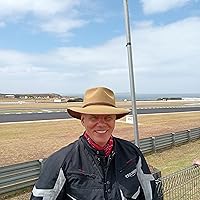
Phillip Knightley was a special correspondent for The Sunday Times for 20 years (1965-85) and one of the leaders of its Insight investigative team. He was twice named Journalist of the Year (1980 and 1988) in the British Press Awards. He and John Pilger are the only journalists ever to have won it twice.
He was also Granada Reporter of the Year (1980), Colour Magazine Writer of the Year (1982), holder of the Chef and Brewer Crime Writer’s award (1983), and the Overseas Press Club of America award for the best book on foreign affairs in 1975 (The First Casualty).
He has lectured on journalism, law, and war at the National Press Club, Canberra, ACT; the Senate, Canberra, ACT; City University, London; Manchester University, Queen Elizabeth College Oxford, Penn State, UCLA, Stanford University, California; the Inner Temple, the International Committee of the Red Cross, and at the Royal Military Academy, Sandhurst. He is a patron of the C.W. Bean Foundation, Canberra ACT.
His two main professional interests have been war reporting and propaganda and espionage. In more than 30 years of writing about espionage he has met most of the spy chiefs of most of the major intelligence services in the world. He dined with Sir Maurice Oldfireld, head of MI6. He lunched with Sir Dick White, head of MI5 and MI6. He corresponded with both. He lunched with Harry Rositzke, head of the CIA’s Soviet bloc division. He lunched with Lyman Kirkpatrick, the CIA’s Inspector-General. He dined with Leonid Shebarshin, head of the KGB. He lunched with Sergei Kondrashov, chief of KGB counter-intelligence. He had drinks with Markus Wolf, head of East German intelligence. He spent one week in Moscow interviewing the notorious British traitor, Kim Philby. He helped KGB general Oleg Kalugin write the outline for his book. He has met dozens of officers and agents from all sides and has written many articles on espionage. Few writers today have his depth of knowledge of the international intelligence community.
Phillip reviews non-fiction books for The Mail on Sunday, The Sunday Times, The Independent (London) and The Australian’s Review of Books and The Age (Australia). He was a judge for Canada’s Lionel Gelber Prize, the world’s biggest for the best book on international relations. He is European representative of the International Consortium of Investigative Journalists, Washington DC.
He is involved in the the Indian literary and publishing scene and has written columns for several leading Indian newspapers and magazines.
He presented the war reporting documentary to mark the 30th anniversary of This Week; a half-hour documentary on truth for schools’ television; has reviewed the papers for BBC Breakfast TV and many What the Papers Say. He has appeared in many documentaries in Britain, Canada and Australia. He is a judge for Canada’s Lionel Gelber Prize for the year’s best book on international relations ($50,000). He is on the management committee of The Society of Authors, London.
Phillip was born in Australia but has worked most of his life in Britain. He now divides his time between Britain, Australia and India. He is married with three grown-up children and relaxes by playing tennis most days.
Published in 1969, Phillip Knightley and Colin Simpson's The Secret Lives of Lawrence of Arabia reveals the limits of a reportorial approach to biography. The authors, writers for the Sunday Times, were the first biographers to access declassified wartime documents, Lawrence's collection in Oxford's Bodleian archive and the testimony of John Bruce, he served with Lawrence in the Tank Corps in the '20s and ritually flogged him (about which Lawrence's brother had paid Bruce to keep silent for three decades). Knightley and Simpson present this information engagingly, with often-convincing examinations of the sundry controversies surrounding Lawrence, although it's easy to tell from the structure that the book was originally a series of newspaper articles. The authors show that the newly released document verified many of Lawrence's stories, like his solo espionage mission to Damascus during the Aqaba campaign, which previous biographers had doubted. The book however falls victim to its central conceit that Lawrence, far from being tormented by guilt over his service to England and promises to Sherif Hussein's Arab rebels, was in fact a cradle-to-grave imperialist, recruited by D.G. Hogarth as an Oxford undergrad to work as a spy; thus Lawrence only cared about the Arabs insofar as they benefited England's war effort. Here the authors build on a few slender threads of evidence (Lawrence's longstanding distrust of French intentions in the Middle East, mostly), some documents damning only when viewed out of context (a wartime report arguing that an Arab state in the Middle East would benefit England more than a continued, weakened Ottoman Empire) and a lot of supposition that's not supported by their evidence, or Lawrence's own actions. At its most bizarre, they label Lawrence not only anti-Arab but a Zionist, due to his efforts to negotiate an understanding between Emir Faisal and Chaim Weizmann! No doubt this interpretation was agreeable to Knightley, who spent his career writing about intelligence and espionage, but it flattens Lawrence into a one-dimensional caricature, no more convincing than Lowell Thomas's idealized "Uncrowned King of Arabia." And thus, like many older Lawrence biographies, Secret Lives is now mainly of historiographic interest.
One of the greatest greatest books as it dismantles the shell of mystery that enveloped the legend of the desert and Arabs lover Lawrence of Arabia. Like Leslie Blanch's Wilder Shores of Love unveiling the life of Isabelle Eberhardt, also a desert and Arabs lover, Philip Knightley and Colin Simpson's precious book strips the British hero off his "divinity" as it portrays him the way he really was: a fake legend sent to help overthrow the Ottomans to pave the way for colonization...
This is a great book to understand Sykes-Picot Treaty: the British-French fiasco which reshaped the Middle East after World War I. The results still haunt us today. The book mainly offers unique insight into the remarkable personal life and exploits of T. E. Lawrence. The man was truly a gifted leader and negotiator, a real savant. However, guilt driven depression dominated his post-war life. Lawrence suffered major emotional breakdown, shunned the fame thrust upon him, assumed an alias, and reentered the military as an enlisted man. Being useful to one's country is one thing; being thoroughly "used" as a tool of amoral politics is quite another. The reality of that fact was simply too much to bear.
This is a solid work of journalism, in which Knightley and Simpson investigate the life of T.E. Lawrence using information that had recently come to life, from de-classified documents and testimony of friends and those who worked with him both in Arabia, and in England after the War.
What do we learn about this most enigmatic hero? Firstly, that he was not necessarily the idealistic seeker for Arab freedom that he portrayed in his writings. He was a soldier of the King, and used his undoubted charisma and intelligence to inveigle the Arab Revolt to work for the Entente war effort, all the while knowing that it was extremely unlikely that any Arabs would have self-determination in their or his lifetime.
Secondly, that despite his desire to return to the anonymity of the ranks after the end of Versailles, he could not help but to get involved in policy, particularly the development of the RAF. He was always scheming, plotting and writing letters to the head of the Force (Trenchard), MPs, or even the likes of Lady Astor. While sometimes his meddling was not welcome, others of his ideas continue today; he basically invented the idea of air sea rescue, and designed many of the early rescue launches of the RAF.
Thirdly - and perhaps today less shocking to the reader than it was when this book was written - was that Lawrence suffered depressive illness throughout his life, and the guilt he felt over his actions led him to engage in masochistic acts, both when he was in Arabia, by pushing himself beyond endurance, and back in England, where he degraded himself by serving in the ranks, and by having people beat him with a birch. The torturous stories he invented to justify his birching, especially those given to John Bruce, show a man at the end of his tether.
It was the Arab revolt that in many ways destroyed Lawrence, even as it was the making of him as a public figure. Not only the warfare in the desert, but the (to Lawrence) shamefulness of his lying to Faisal and Hussein and the act of writing Seven Pillars of Wisdom all took a heavy toll on his psyche. He had plans for other literary works, but his death only ten weeks after being discharged from the RAF put paid to that.
Knightley and Simpson also attempt to clear up the identity of S.A., to whom Seven Pillars of Wisdom is dedicated. They fairly convincingly conclude that it was Lawrence's friend Salim Ahmed, who was known as Dahoum. What they failed to get to the bottom of was Lawrence's sexuality; it seems he was sexless. There are also questions about his infamous night in Deraa, or at least the version of it as portrayed in his writings, with which some of the known facts conflict. It seems, from investigation, that Hacim Muhittin Bey was aggressively heterosexual, and would seem an unlikely instigator of buggery. Given the conflicting accounts, I do wonder whether Lawrence couldn't bring himself to write that he was raped by mere rankers, and had to inflate his attacker's status to that of Governor.
Overall then, this book is a good counter-factual to the story that Lawrence would have liked us to believe was true. In no way does it diminish his status as a hero of World War One, but it does bring us the complete man much more than we see in his own writings. If you can hunt out this book, and you are interested in Lawrence of Arabia, then it's well worth reading.