

What do you think?
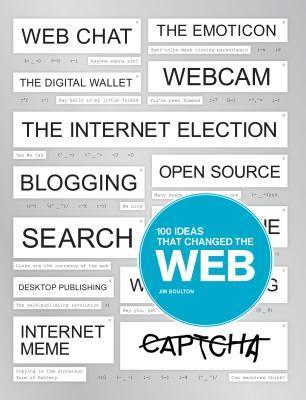
100 Ideas that Changed the Web
This innovative title looks at the history of the Web from its early roots in the research projects of the US government to the interactive online world we know and use today.
Fully illustrated with images of early computing equipment and the inside story of the online world's movers and shakers, the book explains the origins of the Web's key technologies, such as hypertext and mark-up language, the social ideas that underlie its networks, such as open source, and creative commons, and key moments in its development, such as the movement to broadband and the Dotcom Crash. Later ideas look at the origins of social networking and the latest developments on the Web, such as The Cloud and the Semantic Web.
Following the design of the previous titles in the series, this book is in a new, smaller format. It provides an informed and fascinating illustrated history of our most used and fastest-developing technology.
Fully illustrated with images of early computing equipment and the inside story of the online world's movers and shakers, the book explains the origins of the Web's key technologies, such as hypertext and mark-up language, the social ideas that underlie its networks, such as open source, and creative commons, and key moments in its development, such as the movement to broadband and the Dotcom Crash. Later ideas look at the origins of social networking and the latest developments on the Web, such as The Cloud and the Semantic Web.
Following the design of the previous titles in the series, this book is in a new, smaller format. It provides an informed and fascinating illustrated history of our most used and fastest-developing technology.
216 pages, Paperback
First published August 11, 2014
About the author
Jim Boulton
6 books4 followersJim Boulton is the author of 100 Ideas that Changed the Web and curator of Error 404, an exhibition of iconic websites that shaped the early web. The event has been the centre point of Internet Week, both in London and New York, attracting keynote presentations by the British Library and the Library of Congress. In 2013, it was visited by the team at CERN responsible for archiving the first website and is currently on international tour as part of the Barbican's hugely successful Digital Revolution exhibition.
Jim has spoken about digital preservation at the Library of Congress, shared the stage with Tim Berners-Lee at the Southbank's Web We Want festival and had his digital archaeology software exhibited at the Tate Modern.
www.digital-archaeology.org
Jim has spoken about digital preservation at the Library of Congress, shared the stage with Tim Berners-Lee at the Southbank's Web We Want festival and had his digital archaeology software exhibited at the Tate Modern.
www.digital-archaeology.org
Ratings & Reviews
Friends & Following
Create a free account to discover what your friends think of this book!
Community Reviews
Displaying 1 - 14 of 14 reviews

November 15, 2016
Great book. The ideas the author select proves how new software developer are thinking. They invest time in developing on the cloud. Also, use web responsibe web design to focuse in mobile first.
This book compiles the ideas that lead society to use the web as the main tool to work and entretain.
This book compiles the ideas that lead society to use the web as the main tool to work and entretain.

December 20, 2023
A nice book, very quick and interesting read. 10 years later, most of the ideas are still relevant, though many of the specific examples feel nostalgic nowadays, not only the dot-com bubble ones but even the ones mentioned as current. Still, they *were* important, so their inclusion helps understand today's Web.
Fortunately, the author stays away from predictions, so the book has aged much better than it would have otherwise. A sort of prediction that misfired terribly is in the article about QR codes, where it claims that they haven't caught in the West because, with fully-capable cameras in their phones, people would expect something more interactive than a B&W code that leads to a link... (which begs the question about why they were included in the book at all). Admittedly not many years ago I also thought that they (and Bluetooth devices!) wouldn't succeed in the end so I'm definitely not better lol.
Fortunately, the author stays away from predictions, so the book has aged much better than it would have otherwise. A sort of prediction that misfired terribly is in the article about QR codes, where it claims that they haven't caught in the West because, with fully-capable cameras in their phones, people would expect something more interactive than a B&W code that leads to a link... (which begs the question about why they were included in the book at all). Admittedly not many years ago I also thought that they (and Bluetooth devices!) wouldn't succeed in the end so I'm definitely not better lol.

February 2, 2019
VERRRY COOOOL! As a 90's kid, reading this book feels so nostalgic. Read this book to reminisce and celebrate all the cool things that happened on the internet! What I loved the most were the bits with backstory of technologies we take for granted today. Web technology has come a long way and internet is soooooooooo awesome!

September 19, 2014
Awesome compilation about the things that have shaped the internet into what it is today. It's amazing to think that all these things, cinluding the internet, were created by people's imaginations. Simply amazing!
September 23, 2014
A thoroughly enjoyable and interesting history of the internet and web in 100 ideas. It’s also beautifully illustrated.
I would have liked some of the essays to be longer and more detailed but the format probably limits space and doesn’t allow that.
I would have liked some of the essays to be longer and more detailed but the format probably limits space and doesn’t allow that.

April 25, 2016
a very good reference on the history of the digital trends that we know today. it's nice to know the story behind the once popular technology or web services such as Geocities, Hotmail, IRC, Napster, Netscape, Mosaic etc. All stories are kept short in one or two pages only.

September 14, 2014
Really interesting - quick and easy read.

September 21, 2014
I won the book via Goodreads giveaways and found that it was great for dipping into and really informative, would make a brilliant stocking filler for anyone obsessed by the Internet.

September 26, 2017
Very concise, clear, informative, witty and nicely illustrated. Highly recommended.

January 18, 2023
Sebuah buku padat tapi ringan untuk orang yang ingin mengetahui seberapa jauh kita dengan masa depan yang dipenuhi teknologi. Buku ini membahas banyak hal yang menjelaskan kenapa web bisa berkembang sebesar sekarang dari pembahasan teks pendek berita yang menjelma menjadi twitter, sejarah munculnya emoticon, User generated content yang membuat web penuh informasi sampai online payment pertama yang ternyata digagas oleh bisnis pornografi. Buku ini punya bahasa yang kasual dan tidak terlalu ilmiah sehingga orang awam dari bidang yang bukan Teknologi bisa paham dengan apa yang dijelaskan

June 25, 2021
Great book about web.

January 31, 2022
This book was a great overview of the history of the internet before 2014.

August 16, 2022
Basic Bits
This was a fun read.
A vast majority of these ideas I know very well. But I enjoyed the basic bits.
Good book to learn about how we got to Web3.
4.0/5
This was a fun read.
A vast majority of these ideas I know very well. But I enjoyed the basic bits.
Good book to learn about how we got to Web3.
4.0/5

July 12, 2023
It was a good book for what it was, definitely brought back some memories of the early web.
Displaying 1 - 14 of 14 reviews