

What do you think?
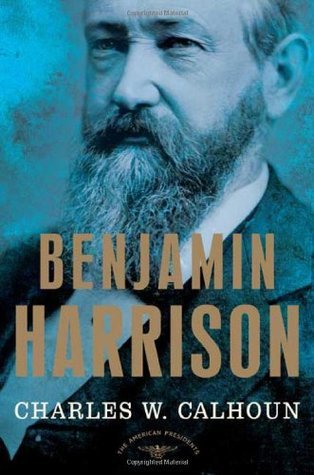
The American Presidents #23
Benjamin Harrison
The scion of a political dynasty ushers in the era of big government
Politics was in Benjamin Harrison's blood. His great-grandfather signed the Declaration and his grandfather, William Henry Harrison, was the ninth president of the United States. Harrison, a leading Indiana lawyer, became a Republican Party champion, even taking a leave from the Civil War to campaign for Lincoln. After a scandal-free term in the Senate-no small feat in the Gilded Age-the Republicans chose Harrison as their presidential candidate in 1888. Despite losing the popular vote, he trounced the incumbent, Grover Cleveland, in the electoral college.
In contrast to standard histories, which dismiss Harrison's presidency as corrupt and inactive, Charles W. Calhoun sweeps away the stereotypes of the age to reveal the accomplishments of our twenty-third president. With Congress under Republican control, he exemplified the activist president, working feverishly to put the Party's planks into law and approving the first billion-dollar peacetime budget. But the Democrats won Congress in 1890, stalling his legislative agenda, and with the First Lady ill, his race for reelection proceeded quietly. (She died just before the election.) In the end, Harrison could not beat Cleveland in their unprecedented rematch.
With dazzling attention to this president's life and the social tapestry of his times, Calhoun compellingly reconsiders Harrison's legacy.
Politics was in Benjamin Harrison's blood. His great-grandfather signed the Declaration and his grandfather, William Henry Harrison, was the ninth president of the United States. Harrison, a leading Indiana lawyer, became a Republican Party champion, even taking a leave from the Civil War to campaign for Lincoln. After a scandal-free term in the Senate-no small feat in the Gilded Age-the Republicans chose Harrison as their presidential candidate in 1888. Despite losing the popular vote, he trounced the incumbent, Grover Cleveland, in the electoral college.
In contrast to standard histories, which dismiss Harrison's presidency as corrupt and inactive, Charles W. Calhoun sweeps away the stereotypes of the age to reveal the accomplishments of our twenty-third president. With Congress under Republican control, he exemplified the activist president, working feverishly to put the Party's planks into law and approving the first billion-dollar peacetime budget. But the Democrats won Congress in 1890, stalling his legislative agenda, and with the First Lady ill, his race for reelection proceeded quietly. (She died just before the election.) In the end, Harrison could not beat Cleveland in their unprecedented rematch.
With dazzling attention to this president's life and the social tapestry of his times, Calhoun compellingly reconsiders Harrison's legacy.
224 pages, Hardcover
First published June 6, 2005
About the author
Charles W. Calhoun
11 books12 followersCharles W. Calhoun is an American historian and professor at East Carolina University. He holds a BA from Yale University and a PhD from Columbia University. He serves on the editorial board of the Journal of the Gilded Age and Progressive Era and resides in Greenville, North Carolina.
Ratings & Reviews
Friends & Following
Create a free account to discover what your friends think of this book!
Community Reviews
Displaying 1 - 30 of 162 reviews

March 30, 2019
Of all of America’s “lost” presidents, Benjamin Harrison may well be the most thoroughly forgotten. Most people forget he was president at all, and those who do remember him, remember him only as the man who occupies the space between the two Grover Cleveland administrations. (Cleveland we mostly forget about too, but since some of us remember that he was our only president to serve for two non-consecutive terms, we remember Harrison—or his name, at least—as the man who stood between.)
After reading Calhoun’s biography, I understand why Harrison is neglected. The central presidential issues of Harrison’s time—“Free Silver,” protectionism and tariffs, the civil service versus the spoils system,etc.—are not particularly exciting, and, although it is true that Harrison’s acts often encouraged trends that led to the modern progressive and imperialist presidency—namely, the Federal reservation of forest lands, the establishment of military pensions, the support of the Sherman Anti-Trust Act, an increased involvement in Latin America, the annexation of Hawaii, and the building up of the Navy—thes tendencies would come to fruition only later, under the McKinley and Theodore Roosevelt regimes.
On the other hand, when we look at some of the events that now seem emblematic of the Gilded Age—the Homestead Strike, the Wounded Knee Massacre, the rise of Populism—Harrison comes off looking like a bystander. Even in the one human rights issue he battled for—a plan to safeguard the rights of negro voters in the South—Harrison failed. (He was, however, ardent and sincere in his support, and —furthermore—was the first president to condemn lynching. In Frederick Douglass’ opinion: “To my mind, we never had a greater president.” He believed Harrison’s support of the election bill “should endear him to the colored people as long as he lives.”)
Two last things. First, just the hint of scandal, and secondly, a glimpse into the make-up of the White House staff at the end of the 19th century.
Here’s the “scandal.” Harrison, a devout Presbyterian, and a devoted husband, nursed his wife Carrie through her last illness (tuberculosis) during the final days of his second—and unsuccessful—presidential campaign. He also enjoyed the company of his wife’s niece (and secretary), the young widow Mary Scott Dimmick; they took walks together and she often massaged his temples when his head ached from stress. Four years after Carrie’s death, the 62-year-old Harrison married the 37-year-old Mary. Harrison’s only daughter, the 38-year-old Mary McKee, had disliked Mary for years and refused to attend the wedding.
Now, for our peek into the president’s staff in a less complicated age:
To handle the avanlanch of applications and recommendations, as well as all other pressing business, the president had a staff that was ludicrously small by modern standards. For his chief aide, known as the private secretary, he chose newspaperman Elijah Halford . . . In the White House, Halford shouldered a burden so enormous that he suffered a three-weeks physical collapse in the fall of 1889 Besides the private secretary, the staff included an assistant secretary, two stenographers, a telegraph operator, a purchasing and disbursing clerk, two other clerks, two doorkeepers, and four messengers. Unlike later presidents, Harrison had no speechwriter and prepared his state papers himself.

November 23, 2016
The President Between Cleveland
The 23d United States president, Benjamin Harrison (1824 -- 1901), is best known for serving between the two nonconsecutive terms of Grover Cleveland, the 22nd and 24th president. Harrison, the grandson of president William Henry Harrison, received a minority of the popular vote in 1888, but he defeated Cleveland in the electoral college. Harrison's presidency is obscure, and it tends not to be rated highly by scholars. In his highly sympathetic biography, "Benjamin Harrison" (2005), Charles Calhoun makes a strong case for Harrison, arguing that he "pointed the way" to the modern American presidency. Calhoun, professor of history at East Carolina University, has written several books on the United States in the Gilded Age. This short biography is part of the American Presidents series edited by Arthur Schlesinger Jr. and Sean Willentz.
For a short study, Calhoun's book offers a detailed consideration of Harrison and his presidency. In contrast to the usual portrayal of Gilded Age presidents, Calhoun sees Harrison as an activist who sought to expand Federal power and to reach out directly to the electorate in support of his policies. As Calhoun puts it, Harrison "harbored a philosophy of government that emphasized possibilities more than restraints." Harrison put the matter succinctly himself, during his unsuccessful campaign for reelection. Speaking in Galveston, Texas, Harrison described the Federally financed harbor in the city as an example of the "work which a liberal and united Government could do." Harrison continued, "This ministering care should extend to our whole country. We are great enough and rich enough to reach forward to grander conceptions than have entered the minds of some of our statesmen in the past." In another speech, Harrison spoke of his goal "by every method to enhance the prosperity of all our people; to have this great Government in all that it undertakes touch with beneficience and equal hands the pursuits of the rich and of the poor." With his support for an expansive role for the Federal government, Calhoun argues, Harrison anticipated the modern presidency.
The heart of Calhoun's book considers Harrison's role in proposing and securing a great deal of important legislation during his term in office. Harrison worked closely with Congress and showed a willingness to pursue his programs aggressively and to compromise when necessary. Calhoun devotes considerable space to discussing monetary policy and the support by many people for free coinage of silver. Harrison successfuly resisted this pressure while working with Congress to increase the production of silver in what he believed was a fiscally responsible manner. Harrison also supported the traditional Republican agenda of high tarrifs to protect American manufacturers, but he also introduced flexibility into the system by provisions for reciprocity agreements with foreign countries that would allow free trade to United States products. Harrison's accomplishments also included the enactment of the Sherman Anti-Trust Act and of a Forest Reserve Act, among much else. Harrison approved the first billion-dollar budget of the United States.
Harrison also supported modest but new provisions for Federal aid to education. He worked hard but unsuccessfully to strengthen voting rights for African Americans against the already powerful Jim Crow. In supporting voting rights, Harrison said:
"When and under what conditions is the black man to have a free ballot? When is he in fact to have those full civil rights which have so long been his in law? When is that equality of influence which our form of government was intended to secure to the electors to be restored? This generation should courageously face these grave questions, and not leave them as a heritage of woe to the next."
Calhoun also describes Harrison's important accomplishments in foreign affairs. The president had direct responsibility for many of the achievements of his administration, as Harrison quarreled repeatedly with his Secretary of State, James Blaine.
Calhoun's book is valuable because it takes a fresh look at a president most Americans do not know well and offers a positive assessment of his character and accomplishments. As do most of the books in the American Presidents series, Calhoun focuses upon the valuable traits of his subject and his style of leadership, a course I think is far preferable to tendencies towards deflationary accounts. Calhoun offers a readable, thoughtful presentation of Benjamin Harrison's life and presidency.
Robin Friedman
The 23d United States president, Benjamin Harrison (1824 -- 1901), is best known for serving between the two nonconsecutive terms of Grover Cleveland, the 22nd and 24th president. Harrison, the grandson of president William Henry Harrison, received a minority of the popular vote in 1888, but he defeated Cleveland in the electoral college. Harrison's presidency is obscure, and it tends not to be rated highly by scholars. In his highly sympathetic biography, "Benjamin Harrison" (2005), Charles Calhoun makes a strong case for Harrison, arguing that he "pointed the way" to the modern American presidency. Calhoun, professor of history at East Carolina University, has written several books on the United States in the Gilded Age. This short biography is part of the American Presidents series edited by Arthur Schlesinger Jr. and Sean Willentz.
For a short study, Calhoun's book offers a detailed consideration of Harrison and his presidency. In contrast to the usual portrayal of Gilded Age presidents, Calhoun sees Harrison as an activist who sought to expand Federal power and to reach out directly to the electorate in support of his policies. As Calhoun puts it, Harrison "harbored a philosophy of government that emphasized possibilities more than restraints." Harrison put the matter succinctly himself, during his unsuccessful campaign for reelection. Speaking in Galveston, Texas, Harrison described the Federally financed harbor in the city as an example of the "work which a liberal and united Government could do." Harrison continued, "This ministering care should extend to our whole country. We are great enough and rich enough to reach forward to grander conceptions than have entered the minds of some of our statesmen in the past." In another speech, Harrison spoke of his goal "by every method to enhance the prosperity of all our people; to have this great Government in all that it undertakes touch with beneficience and equal hands the pursuits of the rich and of the poor." With his support for an expansive role for the Federal government, Calhoun argues, Harrison anticipated the modern presidency.
The heart of Calhoun's book considers Harrison's role in proposing and securing a great deal of important legislation during his term in office. Harrison worked closely with Congress and showed a willingness to pursue his programs aggressively and to compromise when necessary. Calhoun devotes considerable space to discussing monetary policy and the support by many people for free coinage of silver. Harrison successfuly resisted this pressure while working with Congress to increase the production of silver in what he believed was a fiscally responsible manner. Harrison also supported the traditional Republican agenda of high tarrifs to protect American manufacturers, but he also introduced flexibility into the system by provisions for reciprocity agreements with foreign countries that would allow free trade to United States products. Harrison's accomplishments also included the enactment of the Sherman Anti-Trust Act and of a Forest Reserve Act, among much else. Harrison approved the first billion-dollar budget of the United States.
Harrison also supported modest but new provisions for Federal aid to education. He worked hard but unsuccessfully to strengthen voting rights for African Americans against the already powerful Jim Crow. In supporting voting rights, Harrison said:
"When and under what conditions is the black man to have a free ballot? When is he in fact to have those full civil rights which have so long been his in law? When is that equality of influence which our form of government was intended to secure to the electors to be restored? This generation should courageously face these grave questions, and not leave them as a heritage of woe to the next."
Calhoun also describes Harrison's important accomplishments in foreign affairs. The president had direct responsibility for many of the achievements of his administration, as Harrison quarreled repeatedly with his Secretary of State, James Blaine.
Calhoun's book is valuable because it takes a fresh look at a president most Americans do not know well and offers a positive assessment of his character and accomplishments. As do most of the books in the American Presidents series, Calhoun focuses upon the valuable traits of his subject and his style of leadership, a course I think is far preferable to tendencies towards deflationary accounts. Calhoun offers a readable, thoughtful presentation of Benjamin Harrison's life and presidency.
Robin Friedman

June 21, 2014
Book eighteen of my Presidential Challenge.
I struggled with whether or not to rate this a 2 or a 3 star book. It is a boring book to be sure, but I have no doubt this is the most accurate and interesting book anyone could make about President Benjamin Harrison. His administration had relatively few major triumphs or disasters. The main accomplishments of his time in office are now defunct issues that confuse modern readers. He was a one term President mainly remembered for serving between Grover Cleveland's two terms.
Is this book worth your time? I think so. Calhoun makes the argument that Harrison, not McKinley was the first 'modern' President. He makes a compelling case. Upon entering office, Harrison immediately bucked party leadership and refused to make appointments he didn't want. In a large part, this is the biggest reason he wasn't re-elected. These powerful figures never forgave him and so didn't support him the second time around. However, in doing this, Harrison set a precedent for other Presidents to follow and took away much of the political machines power.
The biggest tragedy of his term? It depends on what you mean. Politically, it was not being able to pass civil rights legislation that he mistakenly thought he could pass 'later.' If there's one thing I've learned about by reading all these Presidential biographies, it is that there is no 'later.' If it is important to you, do it now. You won't get a second chance.
Personally, his wife died two weeks before his re-election bid. This was the second large factor in his defeat. She had been ill for quite some time and he refused to leave her side to campaign and was punished for it.
The biggest issue that his administration tackled was the "Silver vs. Gold Standard" debate. I'll be honest, even having read this book, I still don't really get what the issue was. Back in the day, people were very concerned as to what was backing there money. Nowadays, we back our money with nothing at all...so, yeah, I don't really know who is right or wrong on that debate.
Creepiest thing about Harrison? He was clearly in love with his niece, Mame, for years and ultimately married and had a child with her after his wife died. This basically destroyed his family and many people never spoke to him again. I cannot underestimate how clear it was from the beginning how in love he was with his niece. I suppose it was a different time, but I don't think there was ever a good time to marry your niece (unless you were a British Royal. Monarchy burn!)
Harrison was on the right side of civil rights and treated Native Americans with dignity which I'm always a big fan of in my Presidents.
A good man who probably shouldn't have been kicked out of office (especially by Cleveland who I understand was a real asshat, but I guess we'll get there).
I struggled with whether or not to rate this a 2 or a 3 star book. It is a boring book to be sure, but I have no doubt this is the most accurate and interesting book anyone could make about President Benjamin Harrison. His administration had relatively few major triumphs or disasters. The main accomplishments of his time in office are now defunct issues that confuse modern readers. He was a one term President mainly remembered for serving between Grover Cleveland's two terms.
Is this book worth your time? I think so. Calhoun makes the argument that Harrison, not McKinley was the first 'modern' President. He makes a compelling case. Upon entering office, Harrison immediately bucked party leadership and refused to make appointments he didn't want. In a large part, this is the biggest reason he wasn't re-elected. These powerful figures never forgave him and so didn't support him the second time around. However, in doing this, Harrison set a precedent for other Presidents to follow and took away much of the political machines power.
The biggest tragedy of his term? It depends on what you mean. Politically, it was not being able to pass civil rights legislation that he mistakenly thought he could pass 'later.' If there's one thing I've learned about by reading all these Presidential biographies, it is that there is no 'later.' If it is important to you, do it now. You won't get a second chance.
Personally, his wife died two weeks before his re-election bid. This was the second large factor in his defeat. She had been ill for quite some time and he refused to leave her side to campaign and was punished for it.
The biggest issue that his administration tackled was the "Silver vs. Gold Standard" debate. I'll be honest, even having read this book, I still don't really get what the issue was. Back in the day, people were very concerned as to what was backing there money. Nowadays, we back our money with nothing at all...so, yeah, I don't really know who is right or wrong on that debate.
Creepiest thing about Harrison? He was clearly in love with his niece, Mame, for years and ultimately married and had a child with her after his wife died. This basically destroyed his family and many people never spoke to him again. I cannot underestimate how clear it was from the beginning how in love he was with his niece. I suppose it was a different time, but I don't think there was ever a good time to marry your niece (unless you were a British Royal. Monarchy burn!)
Harrison was on the right side of civil rights and treated Native Americans with dignity which I'm always a big fan of in my Presidents.
A good man who probably shouldn't have been kicked out of office (especially by Cleveland who I understand was a real asshat, but I guess we'll get there).

August 10, 2025
One of the many reasons I like going through these biographies (other than genuinely enjoying history) is seeing how cyclical history can be. It felt a bit deja vu reading about the tariff discussions happening during Harrison’s term. This was also when executive power over taxation and trade was expanded as they worked through their tariff bill. Anddddd you can see the effects of that today.
I will say - his whole relationship with his wife’s niece always felt weird to me, so it did not surprise me that he ultimately ended up marrying her after Caroline died. Gave me the ick 😆
I will say - his whole relationship with his wife’s niece always felt weird to me, so it did not surprise me that he ultimately ended up marrying her after Caroline died. Gave me the ick 😆

December 20, 2012
Benjamin Harrison is the 23rd President of the United States from 1889 to 1893. His early career and family background helped him accelerate to a political thunderbolt.
He started out as a lawyer in Indianapolis. While there he developed great writing skills and idea laced inspiring speeches. He also was the grandson of the hero of Tippecanoe. America’s 9th President William Henry Harrison. Old Tippecanoe was still fresh and very popular in the minds of Midwesterners in the 1880s.
When the Civil War broke out in 1861 Benjamin quickly joined the cause. He raised troops and was appointed to the rank of General. As a military leader he found that he had a natural ability to lead men. And he participated bravely in many battles. In fact, he participated in more battles in one month than his much publicized grandfather had in his entire military career.
President Harrison’s accomplishments:
He created of a postal subsidy which paid steamships to carry mail to overseas locations. This helped foster trade.
He also trumpeted and signed the Forest Reserve Act which set aside 13 million acres of nationally dedicated Forests.
Signed a Reciprocal tariff where the U.S. and a trading partner could grant equally advantageous trade concessions to each other.
He strongly supported the federal supervision of all congressional elections to protect recently freed slaves right to vote. However they were rejected numerous times by the congress.
He protected pelagic seals off the coast of Alaska from Canadian and British fisherman by threatening to use American force. This act preserved a healthy seal population into the 20th Century.
He signed legislation to provide pensions to Civil War veterans unable to work and widowers of war veterans.
He governed over the annexation of Hawaii at the very end of his term. However the Senate chose to wait until President Cleveland was sworn in to ratify.
Where he failed was at playing the political patronage game that was required at the time. Instead of hiring people that the local bosses offered, he hired people according to the quality of the individual. It alienating the people that helped him win the presidency in particular New York’s boss Thomas Platt and Pennsylvania’s political operative Mathew Qyay.
There are a number of reasons why he lost reelection despite a vibrant economy and peace. First, the lack of support lost to his mishandling of patronage as mentioned earlier. Second, silver currency proponents sprung up in the West because of large recent Silver discoveries there and the President was an opponent of Silver currency. Third, his ardent support for black civil rights frightened southerners. Fourth, worker strikes broke out in various locations which left an indication that despite higher wages things still were not good.
Most importantly however was that his wife had contracted tuberculosis a few months before the election. President Harrison spent this entire time caring for his wife. This prevented him from campaigning which was one of his great skills.
My opinion of President Benjamin Harrison is that he was a very good President and an even better man.
He started out as a lawyer in Indianapolis. While there he developed great writing skills and idea laced inspiring speeches. He also was the grandson of the hero of Tippecanoe. America’s 9th President William Henry Harrison. Old Tippecanoe was still fresh and very popular in the minds of Midwesterners in the 1880s.
When the Civil War broke out in 1861 Benjamin quickly joined the cause. He raised troops and was appointed to the rank of General. As a military leader he found that he had a natural ability to lead men. And he participated bravely in many battles. In fact, he participated in more battles in one month than his much publicized grandfather had in his entire military career.
President Harrison’s accomplishments:
He created of a postal subsidy which paid steamships to carry mail to overseas locations. This helped foster trade.
He also trumpeted and signed the Forest Reserve Act which set aside 13 million acres of nationally dedicated Forests.
Signed a Reciprocal tariff where the U.S. and a trading partner could grant equally advantageous trade concessions to each other.
He strongly supported the federal supervision of all congressional elections to protect recently freed slaves right to vote. However they were rejected numerous times by the congress.
He protected pelagic seals off the coast of Alaska from Canadian and British fisherman by threatening to use American force. This act preserved a healthy seal population into the 20th Century.
He signed legislation to provide pensions to Civil War veterans unable to work and widowers of war veterans.
He governed over the annexation of Hawaii at the very end of his term. However the Senate chose to wait until President Cleveland was sworn in to ratify.
Where he failed was at playing the political patronage game that was required at the time. Instead of hiring people that the local bosses offered, he hired people according to the quality of the individual. It alienating the people that helped him win the presidency in particular New York’s boss Thomas Platt and Pennsylvania’s political operative Mathew Qyay.
There are a number of reasons why he lost reelection despite a vibrant economy and peace. First, the lack of support lost to his mishandling of patronage as mentioned earlier. Second, silver currency proponents sprung up in the West because of large recent Silver discoveries there and the President was an opponent of Silver currency. Third, his ardent support for black civil rights frightened southerners. Fourth, worker strikes broke out in various locations which left an indication that despite higher wages things still were not good.
Most importantly however was that his wife had contracted tuberculosis a few months before the election. President Harrison spent this entire time caring for his wife. This prevented him from campaigning which was one of his great skills.
My opinion of President Benjamin Harrison is that he was a very good President and an even better man.

June 11, 2018
Charles Calhoun's volume on Benjamin is exactly what the American Presidents series should be. It is short, accessible, and lively--and it gives the relevant facts of Harrison's life in two chapters and spends the rest of the book focusing on his presidency and why it mattered.
In the process, Calhoun does a great job explaining the big issues that defined the political world of the 1880s. For example, the biggest and most controversial issues were tariffs and monetary policy. Tariffs were the major source of government revenue before the 16th Amendment, and they were also (as they are now) a way to protect American workers and products from foreign competition. But the revenue generating and protectionist functions of tariffs were not always compatible. And at the time, the Republican party was extremely protectionist (which required high tariffs) but opposed to high taxation (which meant low tariffs). As a result, Harrison spent much of his term trying to figure out how to keep tariffs high without raising revenue, as the government had large surpluses. Must have been nice.
Monetary policy was extraordinarily complicated because currency was actually made of things like gold and silver that had inherent value, but the inherent value was not always compatible with its exchange value. A lot of people wanted silver currency that was tied to gold at a 16-1 ratio. Republicans kind of hated this idea because the 16-1 ratio made it a fiat currency because gold was actually worth more than 16 times what silver was worth. Economic theory (Gresham's Law) predicts that, in such circumstances, the gold will disappear because people could melt it down and sell it for, well gold, rather than use it for currency.
The other major issue that should have defined Harrison's term but didn't was a voting rights act sponsored by Senator Henry Cabot Lodge that had enough votes to pass the House and the Senate, but it never came up because Southern Democrats kept trading their support for Republican tariff and monetary legislation in exchange for never bringing the Lodge bill to a vote. As a result, and much against Harrison's wishes, the Republicans basically sold out African-American voters in the South by trading their support of voting rights away for tariffs and sliver.
And then we almost got into a war with Chile over a bunch of sailors killed in a drunken brawl.
Calhoun describes all of this with splendid clarity, without either vilifying or deifying Harrison. And he makes one of the more unimportant presidents of the 19th century a fascinating subject and a relatively short book (about 150 pages) that can be read in a single evening--since, really, who is going to spend a month on Benjamin Harrison. Just an all-around great book.
In the process, Calhoun does a great job explaining the big issues that defined the political world of the 1880s. For example, the biggest and most controversial issues were tariffs and monetary policy. Tariffs were the major source of government revenue before the 16th Amendment, and they were also (as they are now) a way to protect American workers and products from foreign competition. But the revenue generating and protectionist functions of tariffs were not always compatible. And at the time, the Republican party was extremely protectionist (which required high tariffs) but opposed to high taxation (which meant low tariffs). As a result, Harrison spent much of his term trying to figure out how to keep tariffs high without raising revenue, as the government had large surpluses. Must have been nice.
Monetary policy was extraordinarily complicated because currency was actually made of things like gold and silver that had inherent value, but the inherent value was not always compatible with its exchange value. A lot of people wanted silver currency that was tied to gold at a 16-1 ratio. Republicans kind of hated this idea because the 16-1 ratio made it a fiat currency because gold was actually worth more than 16 times what silver was worth. Economic theory (Gresham's Law) predicts that, in such circumstances, the gold will disappear because people could melt it down and sell it for, well gold, rather than use it for currency.
The other major issue that should have defined Harrison's term but didn't was a voting rights act sponsored by Senator Henry Cabot Lodge that had enough votes to pass the House and the Senate, but it never came up because Southern Democrats kept trading their support for Republican tariff and monetary legislation in exchange for never bringing the Lodge bill to a vote. As a result, and much against Harrison's wishes, the Republicans basically sold out African-American voters in the South by trading their support of voting rights away for tariffs and sliver.
And then we almost got into a war with Chile over a bunch of sailors killed in a drunken brawl.
Calhoun describes all of this with splendid clarity, without either vilifying or deifying Harrison. And he makes one of the more unimportant presidents of the 19th century a fascinating subject and a relatively short book (about 150 pages) that can be read in a single evening--since, really, who is going to spend a month on Benjamin Harrison. Just an all-around great book.

February 11, 2018
I took a chance on this brief biography, as I was not finding exactly what I wanted in other available bios, and knew quickly I would have to revisit Harrison later. At just 166 pages of story, this was a fast-paced jog through the life of a man who seemed to come out of nowhere, return there later, and in between had a productive presidency that saw more bills passed than in any 4-year term to that point. Calhoun provides everything necessary to get a feel for Ben, as well as the jilted party loyalists, controversial domestic issues, and fickle populace that cost him reelection. Author bias shows itself, as he clearly takes the side of Harrison and Republicans on those very issues that, in the end, took decades to figure out. Accustomed to developing a relationship with each president during the 300-700 page books I typically read, I felt less of a connection with Harrison, and at the end was left with too many questions over his second marriage.

January 9, 2017
This book does an incredible job proving the relevance of the Presidency of Benjamin Harrison. For the most part, history has regained him as a caretaker between the two presidencies of Grover Cleveland. This books illustrates how he was so much more and a big influence on the future president William McKinley, who is considered the first modern president. Yet it seems very clear that Benjamin Harrison was an important influence on his Presidency, so where Harrison may be considered a modern president, it does look like he may have pointed in that direction.

February 27, 2017
Great read. Harrison was a very dedicated and active president. Makes for a interesting read.

July 31, 2020
2.5 stars as I think the chapter on his presidency could’ve been split into two chapters. Harrison was the grandson of a president and in between Cleveland's terms. He should get more credit for establishing the modern presidency as he pursued an active legislative agenda. Excited that I've made it this far in my reading project and the the 20th century.

Read
August 21, 2025Benjamin Harrison bio ✔️ An interesting guy, and clearly more than just the placeholder president between two Cleveland terms. So interesting to see how party politics are beginning to play such a crucial role in the presidency and even in Congress. Also, hard to believe I’m almost at the 20th century! Now, back to my Cleveland bio!

February 17, 2019
A short but solid biography of the nation’s 23rd President. The issues that dominated political debate in Harrison’s era (Gold Standard vs Free Silver, debates over tariffs, etc) are so foreign to the modern reader, that they naturally hold less interest than those of more recent administrations (at least to me personally). So while I normally prefer meatier biographies, this short one seemed to fit the bill. The author’s central claim is that Harrison was the model for or forerunner of William McKinley, whom many consider to be the first modern president. Though he only served a single term, his administration was remarkably active (and activist) and set the stage for later presidents like McKinley, TR, and FDR. I think there is a kernel of truth in this claim, however you could say that any president learns from or builds upon those that came before them…so to give Harrison credit for the successes of his successors seems a little farfetched. But all in all, a descent biography that captured the issues pretty well. 3 stars.
What follows are my notes on the book:
Benjamin Harrison was the grandson of the William Henry Harrison, the President 40 years earlier. He was well educated, a penetrating lawyer, and a devout Christian. He had a boundless capacity for work. Despite a run of Republican presidents, the strength of the two parties at this time were largely in equilibrium. This meant a powerful state leader could shift a presidential election by withholding support. Similarly, party bosses were quick to claim credit and seek patronage when their candidate won (2). Both sides risked alienating different groups that might jeopardize victory. Even so, both parties offered real choices at the polls. Harrison and the Republicans were Hamiltonian at heart and stressed government activism to foster economic development. A critical component of this was a protective tariff. Democrats clung to the Jeffersonian belief in small government and states’ rights (3).
Harrison hailed from the swing state of Indiana and boasted an impressive record as a soldier, lawyer, and senator. He would win the Presidency in 1888 despite losing the popular vote due to lopsided Democratic majorities in the Deep South (3). His first Congress passed an impressive array of measures including the McKinley Tariff Act, the Sherman Silver Purchase Act, the Dependent Pension Act, the Forest Reserve Act, and many others (4). He was largely successful as president but his activist government frightened many conservative voters who held to the traditional notion of limited government and they rejected him in the 1890 midterms and 1892 presidential election. His introverted personality didn’t help him smooth over the hurt feelings of those who didn’t receive his patronage. He managed to win re-nomination but his party’s leaders showed less enthusiasm and the failing health and death of his wife two weeks before the election prevented a more active campaign. McKinley learned much from Harrison’s example though applied them with a warmer personality and greater political skill. After his defeat in 1892, he returned to practice law in Indiana. Cleveland would have a disastrous second term that raised his contemporaries’ estimation of Harrison’s time in office (5-6).
Few presidents had a more distinguished lineage. His ancestors figured prominently in the development of colonial Virginia: representing VA in the Continental Congress, heading the committee that reported the Declaration of Independence, and served as Governor of the new state of VA. His grandfather distinguished himself as a soldier defeating Shawnee Chief Tecumsah at Tippecanoe Creek and winning the Battle of Thames River in the War of 1812. He would go on to be elected the nation’s 9th President. In the 1836 the newly formed Whig party lost to Van Buren because their regional candidates split the vote. Four years later they rallied around W.H. Harrison and sent him to the White House. Following a 90 minute inaugural address in cold weather, the 68 years old and died of pneumonia 1 month into his term (9).
Benjamin was born in 1833 in North Bend, IN. He was 7 years old when his grandfather died and his dad assumed management of the family farm. Chronically in debt, his father skirted financial ruin to provide his son an education. His mother was a strict Presbyterian. Religion loomed large for the Harrisons in the midst of the Second Great Awakening. They scraped up enough money to send him to Farmer’s College near Cincinnati. He was heavily influenced by his Presbyterian professors there and also fell in love with Caroline Lavinia Scott, the daughter of a minister. When the girl’s school moved, Harrison transferred to Miami University. While there his mother and two siblings died. He was a serious student and learned valuable lessons in public speaking and debate in school society. With a growing interest in current affairs, he saluted Henry Clay’s Compromise of 1850 that saved the country from sectional strife. He denounced intemperance and favored government intervention to check the effects of “Demon rum.” At a religious revival, he joined the church and flirted with entering the ministry. In the end, he chose to go into law believing that politics should also be imbued with moral energy and purpose (12-13).
He got engaged to Carrie Scott. Like most lawyers of that era, he “read law” under an established lawyer in Cincinnati. Despite no sure income, he convinced Carrie’s father to let them marry. They married in 1853 and Carrie was pregnant the next month. After admission to the bar, he relocated to Indianapolis. They lived in strained circumstances for the first several years of their marriage. So much so that for some of the time Carrie returned to live with her parents. At age 20, he got his big break and was invited into a law partnership. He served as a deacon and their social life revolved around the church (17). Slavery was the dominant issue as he came of age. The Whig Party, his natural political home, had collapsed in 1852. His vehement opposition to human bondage led him to align with the nascent Republican Party.
In 1857 he won his first election as city attorney of Indianapolis. The next year, he became secretary of the Republican state central committee gaining entry into the state party’s inner circle. Carrie gave birth to a second child. He stumped for Lincoln and was elected reporter for the state supreme court in 1861. With Carrie pregnant again, he did not answer Lincoln’s first call for volunteers. As the prospect of quick victory diminished, he enlisted and was commissioned a 2Lt. Within a month he was colonel of the 70th Indiana Volunteer Regiment (21). The 70th Indiana fought in the Atlanta campaign under Sherman. Harrison took part in more battles than his esteemed grandfather and on one occasion led a frontal assault to capture a Confederate battery. He proselytized among his men and was a strict officer. As the campaign dragged on, his regiment remained disciplined and effective. His superiors noticed and he was promoted to brevet general, but not until the war was coming to a close. After Atlanta fell, he was returned to Indiana for special duty, ostensibly recruiting but also campaigning for the Republican ticket (24).
Preventing the loss of peace became the cardinal purpose of Harrison and most Republicans in the post war years. He turned down a run for Congress to resume his legal practice and improve his family’s financial condition. In 1872 he ran for Governor but lost the nomination to the candidate favored by the machine bosses. As the hard times arrived, economics shared attention with the South and civil rights (30). During the Civil War the US had printed Greenbacks unbacked by specie. What to do with the fiat money was a central issue in postwar decades. Easterners tended to favor hard money (gold standard) and the West and South inclined to soft money (free silver). Intra-party divisions on this issue gave rise to many third party candidates. In 1876, Harrison was drafted as candidate for governor after the choice of the bosses was caught up in a scandal (32). He lost the election by 1%. The Great Railroad Strike hit Indiana and his chief rival died, allowing him to seize control of the Hoosier Republican Party (35). A key swing state, he swung the state behind Garfield who was nominated by the GOP in 1880. He had an opportunity to join Garfield’s cabinet but preferred the Senate and the IN legislature voted him in (before popular election of senators) (37).
He lamented the amount of time spent distributing patronage. A key issue during his tenure was excess Federal revenue which took money out of the economy. Democrats sought reduction of tariffs, but Harrison was a protectionist and preferred to cut internal duties (38). In the next GOP convention, Indiana supported Blaine. Blaine lost to Cleveland but would remember Harrison’s support 4 years later. He lamented Cleveland’s vetoes of veteran and dependent pension bills. When Democrats gained a majority in Indiana legislature, a Democrat replaced Harrison at the end of his 6 year term.
In an era when primaries were decided by state and district conventions, home state nominees were numerous but to win required distance from factional animosities, ability to articulate party positions, good standing in swing states, and a solid public record. Harrison had high marks in all these areas. With Blaine out this cycle, Harrison recognized better than most that Blaine’s devotees would wield great influence in selecting the nominee. With no clear front runner and many home state nominees, he was not aggressive but cultivated second-choice support in expectation of a prolonged convention. Sherman took the early lead (with Harrison 4th) on the 1st ballot. When Blaine unequivocally refused to be drafted, support swung to Harrison and he won on the 8th ballot (52).
He ran the nation’s first “front porch campaign” hosting numerous delegations that passed through the rail hub of Indianapolis. The tariff issue dominated the campaign and Harrison was an outspoken and articulate defender of protectionism. With the British outspoken proponents of free trade, the GOP deftly appealed to Irish-Americans who might tip the balance in key states. Turnout in the election was 79.3%. Indiana and NY swung to Harrison tipping the election to him. Cleveland won the popular vote thanks to lopsided margins in the Deep South where the African American vote was suppressed (58). The GOP also won a narrow victory in both houses of Congress.
Blaine’s men were crucial to Harrison election. That era’s “Mr. Republican” his prestige threatened to overshadow Harrison if placed in the cabinet. Nevertheless, Harrison brought him in as Secretary of State after withholding it for two months to show he was his own man (61). As the first Republican to succeed a Democrat since Lincoln, he was besieged by an avalanche of patronage requests. Remembering how the malfeasance of Grant’s subordinates sullied his administration, Harrison handled a large number of requests personally (69) and fell into the opposite trap of offending many bosses whose support would be critical in 4 years by refusing to simply accept their recommendations no questions asked (70). More outgoing men may have been able to compensate for this but that was not Harrison’s strength. Despite spending 6 hours a day personally handling patronage requests, he won few friends and the whole enterprise was a key factor that undermined his prospects for reelection.
He moved to liberalize pensions under existing law and appointed a commissioner to offer pensions to every veteran who could no longer support himself (even if their incapacity did not derive from military service). Blaine would have trouble adjusting to the new relationship and mutual mistrust festered (75). Blaine’s failing health, long absences, and inability to shoulder workload further strained the relationship. The US came to the brink of war with Germany over their encroachment in Samoa near the end of Cleveland’s term. At the conference in Berlin during Harrison’s term, the US won the restoration of the Samoan king but agreed to appoint justices to a municipal counsel. In so doing the US accepted responsibility for the government of a people beyond its own border for the first time ever (79). Harrison also presided over the creation of the International Bureau of American Republics which would eventually evolve into the Organization of American States (OAS).
When Congress convened, Harrison pushed for numerous recommendations for active government including tariff revision, silver legislation, antitrust legislation, safety and regulatory measures, and greater protections for the right to vote for African Americans (84). The GOP had a solid advantage in the Senator with 8 new senators from Western states but the large Democratic minority in the House sought to obstruct GOP efforts. Ways and Means Committee chair William McKinley agreed with Harrison on reducing the tariff while maintaining protectionism. He worked to make changes that would achieve their aims but not alienate farmers who also sought relief by putting items like sugar on the duty free list. On the other hand, adding sugar to the free list would deny the government leverage to open South American markets (87).
On civil rights, he supported a bill that would authorize Federal control of local elections if so petitioned by that congressional district, a bill that would have re-ordered power in the South (if it had not stalled in the Senate). Two other influential pieces of legislation did pass: the Dependent Pension Act (the precursor to modern welfare) and the Sherman Antitrust Act granting the government a greater role in policing the behavior of big business (93). The Sherman Act would prove to be one of the most enduring legacies of his administration when it would reach its full potential during TR’s trust busting two decades later. The Sherman Silver Purchase Act also passed. After the War, with a finite volume of greenbacks, silver was viewed as one way to increase the money supply, especially after large deposits were discovered in the West. Harrison did think free coinage of silver was a wise policy and sought a middle road. He sought to make government certificates redeemable in either metal, meaning they were treated equally, but at a ratio that maintained the dominance of the Gold Standard (100).
On September 30th, the McKinley Tariff Bill finally passed. Democrats vehemently denounced Republican activism and the “billion dollar Congress” that was so flippant with taxpayer money (107). The voters dealt the GOP a devastating blow in the midterms cutting the GOP down to a mere 88 seats in the House to the Democrat’s 235. Harrison chalked it up to party soreness over patronage and not to the changes in the tariff. While Harrison was distracted by the bloody battle at Wounded Knee Creek in South Dakota (112), many Democrats against free coinage voted for it in return for finally killing Lodge’s elections bill (114). With a Democratic Congress coming in, Harrison’s push for civil rights died with the 51st Congress. The 51st Congress had passed 531 laws, a legislative accomplishment not matched until TR’s second term (117).
With a hostile Democratic House, he shifted his focus to foreign affairs and the expansion of trade in his last two years. He was interested in Federal financing of a canal in Central America but the bill never passed. He brought the country to the brink of war with Chile after our sailors got into a bar fight. Chile eventually apologized. He also rattled his saber with England over excessive seal hunting in the Bering Sea. The UK eventually backed down and agreed to arbitration. Blaine resigned prior to the GOP convention, energizing anti-Harrison factions (139). Harrison beat Blaine 535-182 to win re-nomination but at the cost of a fractured party.
His wife’s failing health (tuberculosis) prevented him from campaigning. Despite Harrison’s successes, the GOP electorate remained aloof and unenthusiastic. Caroline died two weeks before the election. Cleveland defeated Harrison 277-145 to retake the White House. Besides the low GOP enthusiasm, labor angry with his protectionism in the Midwest and populist Westerners angry with the silver issue were the chief causes of his defeat. When revolution in Hawaii deposed the queen, Harrison was interested in taking advantage of the opportunity but the Senate did not take action before he left office (153).
Returning to Indiana a widower, he felt a sense of emptiness in his personal life. He resumed his law practice and groused over Cleveland’s policies and blunders. When the Panic of 1893 hit, it set the stage for Republican return to power. The persistent and increasingly intimate relationship with Mame Dimmick, the niece of his first wife, angered his daughter Mary. He married Mame in 1896 and she gave birth to his third child.
In 1897 he served as chief counsel for Venezuela in its dispute with Great Britain over the boundary with the colony of Guiana. While confronting British imperialism, he grew uncomfortable with America’s growing pretensions after the Spanish American War and US acquisition of the Philippines. After 2 years of preparation he gave his oral arguments in Paris only to have the tribunal give most of the disputed territory to the UK (163). Devoutly religious to the end, he fretted over US prosperity threatening American virtue. He died in 1901, with his wife of 5 years at his side.
What follows are my notes on the book:
Benjamin Harrison was the grandson of the William Henry Harrison, the President 40 years earlier. He was well educated, a penetrating lawyer, and a devout Christian. He had a boundless capacity for work. Despite a run of Republican presidents, the strength of the two parties at this time were largely in equilibrium. This meant a powerful state leader could shift a presidential election by withholding support. Similarly, party bosses were quick to claim credit and seek patronage when their candidate won (2). Both sides risked alienating different groups that might jeopardize victory. Even so, both parties offered real choices at the polls. Harrison and the Republicans were Hamiltonian at heart and stressed government activism to foster economic development. A critical component of this was a protective tariff. Democrats clung to the Jeffersonian belief in small government and states’ rights (3).
Harrison hailed from the swing state of Indiana and boasted an impressive record as a soldier, lawyer, and senator. He would win the Presidency in 1888 despite losing the popular vote due to lopsided Democratic majorities in the Deep South (3). His first Congress passed an impressive array of measures including the McKinley Tariff Act, the Sherman Silver Purchase Act, the Dependent Pension Act, the Forest Reserve Act, and many others (4). He was largely successful as president but his activist government frightened many conservative voters who held to the traditional notion of limited government and they rejected him in the 1890 midterms and 1892 presidential election. His introverted personality didn’t help him smooth over the hurt feelings of those who didn’t receive his patronage. He managed to win re-nomination but his party’s leaders showed less enthusiasm and the failing health and death of his wife two weeks before the election prevented a more active campaign. McKinley learned much from Harrison’s example though applied them with a warmer personality and greater political skill. After his defeat in 1892, he returned to practice law in Indiana. Cleveland would have a disastrous second term that raised his contemporaries’ estimation of Harrison’s time in office (5-6).
Few presidents had a more distinguished lineage. His ancestors figured prominently in the development of colonial Virginia: representing VA in the Continental Congress, heading the committee that reported the Declaration of Independence, and served as Governor of the new state of VA. His grandfather distinguished himself as a soldier defeating Shawnee Chief Tecumsah at Tippecanoe Creek and winning the Battle of Thames River in the War of 1812. He would go on to be elected the nation’s 9th President. In the 1836 the newly formed Whig party lost to Van Buren because their regional candidates split the vote. Four years later they rallied around W.H. Harrison and sent him to the White House. Following a 90 minute inaugural address in cold weather, the 68 years old and died of pneumonia 1 month into his term (9).
Benjamin was born in 1833 in North Bend, IN. He was 7 years old when his grandfather died and his dad assumed management of the family farm. Chronically in debt, his father skirted financial ruin to provide his son an education. His mother was a strict Presbyterian. Religion loomed large for the Harrisons in the midst of the Second Great Awakening. They scraped up enough money to send him to Farmer’s College near Cincinnati. He was heavily influenced by his Presbyterian professors there and also fell in love with Caroline Lavinia Scott, the daughter of a minister. When the girl’s school moved, Harrison transferred to Miami University. While there his mother and two siblings died. He was a serious student and learned valuable lessons in public speaking and debate in school society. With a growing interest in current affairs, he saluted Henry Clay’s Compromise of 1850 that saved the country from sectional strife. He denounced intemperance and favored government intervention to check the effects of “Demon rum.” At a religious revival, he joined the church and flirted with entering the ministry. In the end, he chose to go into law believing that politics should also be imbued with moral energy and purpose (12-13).
He got engaged to Carrie Scott. Like most lawyers of that era, he “read law” under an established lawyer in Cincinnati. Despite no sure income, he convinced Carrie’s father to let them marry. They married in 1853 and Carrie was pregnant the next month. After admission to the bar, he relocated to Indianapolis. They lived in strained circumstances for the first several years of their marriage. So much so that for some of the time Carrie returned to live with her parents. At age 20, he got his big break and was invited into a law partnership. He served as a deacon and their social life revolved around the church (17). Slavery was the dominant issue as he came of age. The Whig Party, his natural political home, had collapsed in 1852. His vehement opposition to human bondage led him to align with the nascent Republican Party.
In 1857 he won his first election as city attorney of Indianapolis. The next year, he became secretary of the Republican state central committee gaining entry into the state party’s inner circle. Carrie gave birth to a second child. He stumped for Lincoln and was elected reporter for the state supreme court in 1861. With Carrie pregnant again, he did not answer Lincoln’s first call for volunteers. As the prospect of quick victory diminished, he enlisted and was commissioned a 2Lt. Within a month he was colonel of the 70th Indiana Volunteer Regiment (21). The 70th Indiana fought in the Atlanta campaign under Sherman. Harrison took part in more battles than his esteemed grandfather and on one occasion led a frontal assault to capture a Confederate battery. He proselytized among his men and was a strict officer. As the campaign dragged on, his regiment remained disciplined and effective. His superiors noticed and he was promoted to brevet general, but not until the war was coming to a close. After Atlanta fell, he was returned to Indiana for special duty, ostensibly recruiting but also campaigning for the Republican ticket (24).
Preventing the loss of peace became the cardinal purpose of Harrison and most Republicans in the post war years. He turned down a run for Congress to resume his legal practice and improve his family’s financial condition. In 1872 he ran for Governor but lost the nomination to the candidate favored by the machine bosses. As the hard times arrived, economics shared attention with the South and civil rights (30). During the Civil War the US had printed Greenbacks unbacked by specie. What to do with the fiat money was a central issue in postwar decades. Easterners tended to favor hard money (gold standard) and the West and South inclined to soft money (free silver). Intra-party divisions on this issue gave rise to many third party candidates. In 1876, Harrison was drafted as candidate for governor after the choice of the bosses was caught up in a scandal (32). He lost the election by 1%. The Great Railroad Strike hit Indiana and his chief rival died, allowing him to seize control of the Hoosier Republican Party (35). A key swing state, he swung the state behind Garfield who was nominated by the GOP in 1880. He had an opportunity to join Garfield’s cabinet but preferred the Senate and the IN legislature voted him in (before popular election of senators) (37).
He lamented the amount of time spent distributing patronage. A key issue during his tenure was excess Federal revenue which took money out of the economy. Democrats sought reduction of tariffs, but Harrison was a protectionist and preferred to cut internal duties (38). In the next GOP convention, Indiana supported Blaine. Blaine lost to Cleveland but would remember Harrison’s support 4 years later. He lamented Cleveland’s vetoes of veteran and dependent pension bills. When Democrats gained a majority in Indiana legislature, a Democrat replaced Harrison at the end of his 6 year term.
In an era when primaries were decided by state and district conventions, home state nominees were numerous but to win required distance from factional animosities, ability to articulate party positions, good standing in swing states, and a solid public record. Harrison had high marks in all these areas. With Blaine out this cycle, Harrison recognized better than most that Blaine’s devotees would wield great influence in selecting the nominee. With no clear front runner and many home state nominees, he was not aggressive but cultivated second-choice support in expectation of a prolonged convention. Sherman took the early lead (with Harrison 4th) on the 1st ballot. When Blaine unequivocally refused to be drafted, support swung to Harrison and he won on the 8th ballot (52).
He ran the nation’s first “front porch campaign” hosting numerous delegations that passed through the rail hub of Indianapolis. The tariff issue dominated the campaign and Harrison was an outspoken and articulate defender of protectionism. With the British outspoken proponents of free trade, the GOP deftly appealed to Irish-Americans who might tip the balance in key states. Turnout in the election was 79.3%. Indiana and NY swung to Harrison tipping the election to him. Cleveland won the popular vote thanks to lopsided margins in the Deep South where the African American vote was suppressed (58). The GOP also won a narrow victory in both houses of Congress.
Blaine’s men were crucial to Harrison election. That era’s “Mr. Republican” his prestige threatened to overshadow Harrison if placed in the cabinet. Nevertheless, Harrison brought him in as Secretary of State after withholding it for two months to show he was his own man (61). As the first Republican to succeed a Democrat since Lincoln, he was besieged by an avalanche of patronage requests. Remembering how the malfeasance of Grant’s subordinates sullied his administration, Harrison handled a large number of requests personally (69) and fell into the opposite trap of offending many bosses whose support would be critical in 4 years by refusing to simply accept their recommendations no questions asked (70). More outgoing men may have been able to compensate for this but that was not Harrison’s strength. Despite spending 6 hours a day personally handling patronage requests, he won few friends and the whole enterprise was a key factor that undermined his prospects for reelection.
He moved to liberalize pensions under existing law and appointed a commissioner to offer pensions to every veteran who could no longer support himself (even if their incapacity did not derive from military service). Blaine would have trouble adjusting to the new relationship and mutual mistrust festered (75). Blaine’s failing health, long absences, and inability to shoulder workload further strained the relationship. The US came to the brink of war with Germany over their encroachment in Samoa near the end of Cleveland’s term. At the conference in Berlin during Harrison’s term, the US won the restoration of the Samoan king but agreed to appoint justices to a municipal counsel. In so doing the US accepted responsibility for the government of a people beyond its own border for the first time ever (79). Harrison also presided over the creation of the International Bureau of American Republics which would eventually evolve into the Organization of American States (OAS).
When Congress convened, Harrison pushed for numerous recommendations for active government including tariff revision, silver legislation, antitrust legislation, safety and regulatory measures, and greater protections for the right to vote for African Americans (84). The GOP had a solid advantage in the Senator with 8 new senators from Western states but the large Democratic minority in the House sought to obstruct GOP efforts. Ways and Means Committee chair William McKinley agreed with Harrison on reducing the tariff while maintaining protectionism. He worked to make changes that would achieve their aims but not alienate farmers who also sought relief by putting items like sugar on the duty free list. On the other hand, adding sugar to the free list would deny the government leverage to open South American markets (87).
On civil rights, he supported a bill that would authorize Federal control of local elections if so petitioned by that congressional district, a bill that would have re-ordered power in the South (if it had not stalled in the Senate). Two other influential pieces of legislation did pass: the Dependent Pension Act (the precursor to modern welfare) and the Sherman Antitrust Act granting the government a greater role in policing the behavior of big business (93). The Sherman Act would prove to be one of the most enduring legacies of his administration when it would reach its full potential during TR’s trust busting two decades later. The Sherman Silver Purchase Act also passed. After the War, with a finite volume of greenbacks, silver was viewed as one way to increase the money supply, especially after large deposits were discovered in the West. Harrison did think free coinage of silver was a wise policy and sought a middle road. He sought to make government certificates redeemable in either metal, meaning they were treated equally, but at a ratio that maintained the dominance of the Gold Standard (100).
On September 30th, the McKinley Tariff Bill finally passed. Democrats vehemently denounced Republican activism and the “billion dollar Congress” that was so flippant with taxpayer money (107). The voters dealt the GOP a devastating blow in the midterms cutting the GOP down to a mere 88 seats in the House to the Democrat’s 235. Harrison chalked it up to party soreness over patronage and not to the changes in the tariff. While Harrison was distracted by the bloody battle at Wounded Knee Creek in South Dakota (112), many Democrats against free coinage voted for it in return for finally killing Lodge’s elections bill (114). With a Democratic Congress coming in, Harrison’s push for civil rights died with the 51st Congress. The 51st Congress had passed 531 laws, a legislative accomplishment not matched until TR’s second term (117).
With a hostile Democratic House, he shifted his focus to foreign affairs and the expansion of trade in his last two years. He was interested in Federal financing of a canal in Central America but the bill never passed. He brought the country to the brink of war with Chile after our sailors got into a bar fight. Chile eventually apologized. He also rattled his saber with England over excessive seal hunting in the Bering Sea. The UK eventually backed down and agreed to arbitration. Blaine resigned prior to the GOP convention, energizing anti-Harrison factions (139). Harrison beat Blaine 535-182 to win re-nomination but at the cost of a fractured party.
His wife’s failing health (tuberculosis) prevented him from campaigning. Despite Harrison’s successes, the GOP electorate remained aloof and unenthusiastic. Caroline died two weeks before the election. Cleveland defeated Harrison 277-145 to retake the White House. Besides the low GOP enthusiasm, labor angry with his protectionism in the Midwest and populist Westerners angry with the silver issue were the chief causes of his defeat. When revolution in Hawaii deposed the queen, Harrison was interested in taking advantage of the opportunity but the Senate did not take action before he left office (153).
Returning to Indiana a widower, he felt a sense of emptiness in his personal life. He resumed his law practice and groused over Cleveland’s policies and blunders. When the Panic of 1893 hit, it set the stage for Republican return to power. The persistent and increasingly intimate relationship with Mame Dimmick, the niece of his first wife, angered his daughter Mary. He married Mame in 1896 and she gave birth to his third child.
In 1897 he served as chief counsel for Venezuela in its dispute with Great Britain over the boundary with the colony of Guiana. While confronting British imperialism, he grew uncomfortable with America’s growing pretensions after the Spanish American War and US acquisition of the Philippines. After 2 years of preparation he gave his oral arguments in Paris only to have the tribunal give most of the disputed territory to the UK (163). Devoutly religious to the end, he fretted over US prosperity threatening American virtue. He died in 1901, with his wife of 5 years at his side.

January 10, 2014
http://bestpresidentialbios.com/2015/...
“Benjamin Harrison” is Charles Calhoun‘s 2005 biography of the 23rd president. Calhoun is a professor at East Carolina University and the author of several books focused on the late nineteenth century. He is reportedly working on a biography of Ulysses S. Grant.
As the ninth member of The American Presidents Series I’ve read, “Benjamin Harrison” held few surprises. These biographies are generally well-edited and efficient with a reader’s time, and this was no exception. Lacking the breadth of more complete biographies, I tend to rely on this series for the obscure, forgotten or maligned presidents where short-and-sweet may be ideal.
Of all the presidents Calhoun could have been tasked with covering, Benjamin Harrison would seem to have been among the least enticing. But it is a task to which Calhoun is well-suited given his professional focus on Harrison’s era. And to his credit he produced a straightforward and extremely readable biography of this quietly competent, if terribly unexciting, president.
Calhoun’s primary thesis is fairly bold: that Harrison was an activist president who paved the way for the “modern presidency.” Legislatively, much was accomplished during Harrison’s term – and Calhoun rarely fails to credit him with this fact. Largely unmentioned, however, is that many of the freshly-minted laws were widely unpopular or ineffective and later abandoned. But Calhoun’s advocacy generally proves convincing nevertheless.
As a biography, “Benjamin Harrison” is comprehensive and well-paced. In addition to thoroughly reviewing Harrison’s political career, it provides reasonable coverage of his early life as well as his post-presidency. But while there is some effort to address his legacy, I would have appreciated much deeper insight into history’s treatment of Harrison – particularly since Calhoun makes such a concerted effort to elevate his presidency.
And despite a few attempts to humanize Harrison, this biography’s subject remains an impassive stone-faced figure from beginning to end. The description of Harrison’s late-life romance with his deceased-wife’s niece provides the book’s first real animation of the former president. But this comes so late in the biography that the reader has already given up hope of meeting a flesh-and-blood human.
Coverage of Harrison’s presidency itself feels appropriately paced and penetrating for a biography of this type. But, unfortunately, the topics of importance during Harrison’s administration (principally the import tariff, currency issues and foreign affairs) prove relatively uninteresting. The relative brevity of the biography saves the reader from uncomfortable drudgery, but Calhoun fails to explain the issues in a way that overcomes the inherent sense of tedium and complexity.
Overall, Charles Calhoun’s “Benjamin Harrison” is a useful biography of this unexciting president; but like Harrison himself, it occasionally feels dull and flat. Some of the blame certainly rests with Harrison, whose lusterless personality and forgettable presidency makes him a difficult subject. But while this biography is fairly successful at explaining Harrison’s public life, it falls short of fully revealing the man or explaining his place in history.
Overall rating: 3½ stars
“Benjamin Harrison” is Charles Calhoun‘s 2005 biography of the 23rd president. Calhoun is a professor at East Carolina University and the author of several books focused on the late nineteenth century. He is reportedly working on a biography of Ulysses S. Grant.
As the ninth member of The American Presidents Series I’ve read, “Benjamin Harrison” held few surprises. These biographies are generally well-edited and efficient with a reader’s time, and this was no exception. Lacking the breadth of more complete biographies, I tend to rely on this series for the obscure, forgotten or maligned presidents where short-and-sweet may be ideal.
Of all the presidents Calhoun could have been tasked with covering, Benjamin Harrison would seem to have been among the least enticing. But it is a task to which Calhoun is well-suited given his professional focus on Harrison’s era. And to his credit he produced a straightforward and extremely readable biography of this quietly competent, if terribly unexciting, president.
Calhoun’s primary thesis is fairly bold: that Harrison was an activist president who paved the way for the “modern presidency.” Legislatively, much was accomplished during Harrison’s term – and Calhoun rarely fails to credit him with this fact. Largely unmentioned, however, is that many of the freshly-minted laws were widely unpopular or ineffective and later abandoned. But Calhoun’s advocacy generally proves convincing nevertheless.
As a biography, “Benjamin Harrison” is comprehensive and well-paced. In addition to thoroughly reviewing Harrison’s political career, it provides reasonable coverage of his early life as well as his post-presidency. But while there is some effort to address his legacy, I would have appreciated much deeper insight into history’s treatment of Harrison – particularly since Calhoun makes such a concerted effort to elevate his presidency.
And despite a few attempts to humanize Harrison, this biography’s subject remains an impassive stone-faced figure from beginning to end. The description of Harrison’s late-life romance with his deceased-wife’s niece provides the book’s first real animation of the former president. But this comes so late in the biography that the reader has already given up hope of meeting a flesh-and-blood human.
Coverage of Harrison’s presidency itself feels appropriately paced and penetrating for a biography of this type. But, unfortunately, the topics of importance during Harrison’s administration (principally the import tariff, currency issues and foreign affairs) prove relatively uninteresting. The relative brevity of the biography saves the reader from uncomfortable drudgery, but Calhoun fails to explain the issues in a way that overcomes the inherent sense of tedium and complexity.
Overall, Charles Calhoun’s “Benjamin Harrison” is a useful biography of this unexciting president; but like Harrison himself, it occasionally feels dull and flat. Some of the blame certainly rests with Harrison, whose lusterless personality and forgettable presidency makes him a difficult subject. But while this biography is fairly successful at explaining Harrison’s public life, it falls short of fully revealing the man or explaining his place in history.
Overall rating: 3½ stars

October 7, 2022
A respectable entry in the “The American Presidents” series, historian Charles Calhoun investigates the often-forgotten life of Benjamin Harrison. To his credit, much of what this hard-working man stood for has held up well over time. Harrison, a very religious Civil War hero and honest man, fought hard for civil rights, disliked imperialism, free trade, and greed, and was an obsessively hands-on president who teamed with the 51st Congress (the “Billion Dollar Congress”) to pass a huge amount of legislation. Tragically, Harrison’s yearning to pass a strict Voting Rights bill (like the 1965 one) failed to pass through Congress, but it was a noble effort. Frederick Douglass amazingly stated, “To my mind, we never had a greater president” (117) in reference to the Voting Rights fight. Later in life, Harrison disliked McKinley’s economic policies that coddled the wealthy.
In addition to issues with the economy and other debates, Harrison’s wife died during campaign season, and this hurt his ability to get re-elected. He was thrilled to leave the job though, citing mental and physical exhaustion. Squeamishly, Harrison wound up marrying his non-blood related niece, in spite of protests from family members.
This was the 5th book I’ve read from “The American Presidents” series. It was not the most entertaining of the five, but it did not disappoint, the scholarship was evident, and I learned a lot about a president who is often glossed over.
In addition to issues with the economy and other debates, Harrison’s wife died during campaign season, and this hurt his ability to get re-elected. He was thrilled to leave the job though, citing mental and physical exhaustion. Squeamishly, Harrison wound up marrying his non-blood related niece, in spite of protests from family members.
This was the 5th book I’ve read from “The American Presidents” series. It was not the most entertaining of the five, but it did not disappoint, the scholarship was evident, and I learned a lot about a president who is often glossed over.

January 6, 2014
Often, Harrison is merely thought of as a place-holder president between Grover Cleveland’s two terms. However, the grandson of a former president was the first Republican since Lincoln to succeed a Democrat. To some this may not seem noteworthy, as this is an era generally relegated to Republican dominance. Contrary to that opinion, Calhoun asserts that the country and the parties were deeply with a couple of swing states deciding the outcome. I actually now think there is merit to that argument, particularly when you look at how many one-term presidents there are during this era. The fact that Harrison is from one of those swing states, Indiana, helps thrust him into consideration for the highest office.
As is the case with most of the books in the American Presidents Series, the book is a good overview of the man and the times, but because of its brevity it lacks the space to delve into deep analysis. This can be disappointing. I was especially disappointed with the lack of attention to Harrison’s reaction to the coup in Hawaii. I did come to appreciate how earnestly Harrison held to advancing the rights of freed slaves. It was only during this read that I realized how tragic the sacrifice of the Lodge bill for the tariff issue truly was for the country.
As is the case with most of the books in the American Presidents Series, the book is a good overview of the man and the times, but because of its brevity it lacks the space to delve into deep analysis. This can be disappointing. I was especially disappointed with the lack of attention to Harrison’s reaction to the coup in Hawaii. I did come to appreciate how earnestly Harrison held to advancing the rights of freed slaves. It was only during this read that I realized how tragic the sacrifice of the Lodge bill for the tariff issue truly was for the country.

November 2, 2009
Brief but excellent examination of the 23rd U.S. president and the second president named Harrison. This short biography covers the prominent portions of Harrison's life without the massive detail, but also without the turgid drudgery, of Harry Sievers's three-volume biography, the only substantial biography of Harrison thus far available.
June 8, 2025
This book is a concises study of an often -forgotten president. Harrison began some shifts in presidential power, and this book and author shows that clearly.

August 29, 2026
Benjamin Harrison is back in the news again thanks to Heather Cox Richardson seeming to tar him as the forerunner of MAGA. To hear this perspective, Harrison (elected by the electoral college rather than popular majority) embraced government by the few, for the few, until he was deservedly ousted by the man he had defeated.
Calhoun's book does a lot to set the record straight. He argues that Harrison was in fact a capable chief executive that accomplished more than Cleveland. He was defeated less by his own failures vis-a-vis Cleveland than by the perception that he was not doing enough. This does suggest certain modern parallels, but does not put Harrison with the modern Republican Party. In this telling, he seems far more like Joe Biden. And Calhoun points out, where Richardson ignores, that Cleveland's popular vote majorities were drawn almost entirely from the disenfranchisement of Black Americans in the South.
Calhoun notes that Harrison was a very capable congressional president, managing to get many of his preferred laws past. He also credits him with fighting hard to pass a federal law to protect the voting rights of African-Americans in the South. Even on economic issues, where Richardson is on firmer ground (at least because Harrison was pro-tariff), Benjamin Harrison at least pushed for active government intervention.
There are some drawbacks to the book still. Calhoun's discussion of the massacre at Wounded Knee (calling it a battle and attempting to explain away the soldiers' behavior) leaves a lot to be desired, as does the overall discussion of American expansion into Hawaii. But the Benjamin Harrison that emerges from these pages does begin to move in the direction of a more active chief executive, interested in advancing quality of life for the people of the country. Hopefully soon he will get a full biographical treatment.
Calhoun's book does a lot to set the record straight. He argues that Harrison was in fact a capable chief executive that accomplished more than Cleveland. He was defeated less by his own failures vis-a-vis Cleveland than by the perception that he was not doing enough. This does suggest certain modern parallels, but does not put Harrison with the modern Republican Party. In this telling, he seems far more like Joe Biden. And Calhoun points out, where Richardson ignores, that Cleveland's popular vote majorities were drawn almost entirely from the disenfranchisement of Black Americans in the South.
Calhoun notes that Harrison was a very capable congressional president, managing to get many of his preferred laws past. He also credits him with fighting hard to pass a federal law to protect the voting rights of African-Americans in the South. Even on economic issues, where Richardson is on firmer ground (at least because Harrison was pro-tariff), Benjamin Harrison at least pushed for active government intervention.
There are some drawbacks to the book still. Calhoun's discussion of the massacre at Wounded Knee (calling it a battle and attempting to explain away the soldiers' behavior) leaves a lot to be desired, as does the overall discussion of American expansion into Hawaii. But the Benjamin Harrison that emerges from these pages does begin to move in the direction of a more active chief executive, interested in advancing quality of life for the people of the country. Hopefully soon he will get a full biographical treatment.
July 30, 2019
Benjamin Harrison is the twenty-third book in The American Presidents series – a biographical series chronicling the Presidents of the United States. Charles W. Calhoun wrote this particular installment and edited by Arthur M. Schlesinger, Jr.
Benjamin Harrison was an American politician and lawyer who served as the twenty-third President of the United States from 1889–1893. He was a grandson of the ninth president, William Henry Harrison, creating the only grandfather-grandson duo to have held the office. He was also a great-grandson of Benjamin Harrison V, a founding father.
According to Calhoun, he postulates that Harrison was an activist president who paved the way for the modern presidency. Legislatively, much was accomplished during Harrison's term. Largely unmentioned, however, is that many of the freshly-minted laws were widely unpopular or ineffective and later abandoned.
The biography is comprehensive and well-paced. In addition to thoroughly reviewing Harrison's political career, it provides reasonable coverage of his early life as well as his post-presidency. However, while there is some effort to address his legacy, it lacks a deeper insight in how history remembered him.
All in all, Benjamin Harrison is a good, albeit brief biography of the twenty-third president and it is a good continuation to what would hopefully be a wonderful series of presidential biographies, which I plan to read in the very near future.
Benjamin Harrison was an American politician and lawyer who served as the twenty-third President of the United States from 1889–1893. He was a grandson of the ninth president, William Henry Harrison, creating the only grandfather-grandson duo to have held the office. He was also a great-grandson of Benjamin Harrison V, a founding father.
According to Calhoun, he postulates that Harrison was an activist president who paved the way for the modern presidency. Legislatively, much was accomplished during Harrison's term. Largely unmentioned, however, is that many of the freshly-minted laws were widely unpopular or ineffective and later abandoned.
The biography is comprehensive and well-paced. In addition to thoroughly reviewing Harrison's political career, it provides reasonable coverage of his early life as well as his post-presidency. However, while there is some effort to address his legacy, it lacks a deeper insight in how history remembered him.
All in all, Benjamin Harrison is a good, albeit brief biography of the twenty-third president and it is a good continuation to what would hopefully be a wonderful series of presidential biographies, which I plan to read in the very near future.

December 1, 2021
This volume in the brief biographies of the Presidents does its job: gets right to the point of the politics of the era, how Harrison fit into those politics, how he attained the Presidency, and what he accomplished when getting there.
Some reforms addressing income inequality and the imbalance of power between capital and labor were pursued and Calhoun makes the case that he set the tone for the McKinley and Roosevelt presidencies. It's not a powerful read, but it is effective. I wouldn't say that Harrison is necessarily worth a full length read but this book covers the bill if you agree and want to cover every President.
Some reforms addressing income inequality and the imbalance of power between capital and labor were pursued and Calhoun makes the case that he set the tone for the McKinley and Roosevelt presidencies. It's not a powerful read, but it is effective. I wouldn't say that Harrison is necessarily worth a full length read but this book covers the bill if you agree and want to cover every President.

January 13, 2021
Good read! Never realized he was the grandson of the other Harrison. Not a bad president.

June 13, 2022
I wish I had the intestinal fortitude to finish this boring book because it would be great to learn more about this part of our history.

October 12, 2023
Tremendously boring
June 9, 2026
Not terrible, but also the least well written of the few entries I’ve read in the American Presidents series. In particular, the portion of the book dedicated to his presidency was tedious and hard to follow, with disjointed materials all crammed into their respective chapters like sardines.

March 25, 2025
Benjamin Harrison was born in 1833 in his grandfather's house in North Bend, Ohio, the second of ten children. His great grandfather Benjamin Harrison V was governor of Virginia and his grandfather William Henry Harrison was the ninth president of the United States. His father John Scott Harrison served in Congress, however, he was a farmer who was often in debt. His mother was a strict Presbyterian.
Benjamin worked on the farm as a child, and also enjoyed hunting, fishing, and reading. He attended a log cabin school built on his father's property. When he was 14, his father sent him to Farmer's College near Cincinnati.
While in college, Benjamin fell in love with Caroline "Carrie" Lavinia Scott, the daughter of a Presbyterian minister who taught at the college. Her family moved away to Oxford, Ohio, and Benjamin followed them there to attend Miami University in 1850. During this year, his mother and two younger siblings died.
He was an excellent student and was elected president of the Union Literary Society which trained him in debate and public speaking. He remained a Presbyterian his whole life and considered becoming a minister, but ultimately decided on going into law. He became engaged to Carrie, but put off marriage until he was more financially secure. He began learning the law under a Cincinnati lawyer.
After a few months, he decided he couldn't wait to get married after all. Carrie's father married the two in 1853 and they lived at the farm of Benjamin's father while Benjamin commuted to Cincinnati to continue studying law. In less than a month, Carrie was pregnant.
Harrison was admitted to the bar when he was 20 in 1854 and he moved to Indianapolis where he would live the rest of his life. Money was tight and he had to settle for being a court crier for $2.50 a day. Carrie moved back to her parent's house to deliver their son Russell and would move back in with them off and on while money continued to be tight.
He finally got his big break a year later when William Wallace offered him a partnership. He also became a deacon at the local Presbyterian church. In 1857, he was elected city attorney for Indianapolis. It didn't pay well, but it gave him publicity. The next year, he became secretary of the Republican state central committee. His second child Mary was also born.
In 1860, he campaigned for Lincoln and was elected reporter of the state supreme court. He was elected an elder of his church at the age of 27, a position he would hold the rest of his life.
When the Civil War broke out, Harrison didn't immediately volunteer to join the fight. His wife was pregnant with their third child (who would die at birth), his job was keeping him busy, and he had a brother and a nephew living with him who depended upon his income.
By 1862, when it was clear the war wouldn't end anytime soon, Harrison enlisted and was made second lieutenant. He began recruiting the Seventieth Indiana Volunteer Regiment and was made its colonel. They performed garrison and guard duty for the first year and a half while Harrison trained his men and studied warfare. He banned liquor in camp, (although he occasionally drank wine himself) and held religious services in camp.
His unit joined the Atlanta Campaign led by General Sherman. At Resaca, Harrison led a frontal assault and captured a Confederate battery. After this success, he was made a brigade commander. During the summer of 1864, Benjamin took part in more battles in a month than his celebrated grandfather fought during his entire lifetime. Once, when his regiment became separated from their surgeons, Harrison dressed his men's wounds himself. After a victory at Peach Tree Creek, General Hooker promised to make Harrison a brigadier general, an appointment he didn't get until near the war's end.
After the war, Harrison went back to his law practice and job as supreme court reporter. He became quite successful. During a case involving the Whiskey Ring, Harrison defended an internal revenue officer named Brownlee accused of taking a bribe from a distiller. Harrison won the case by pointing out a discrepancy in the distiller's story. The distiller said Brownlee, about to serve as groomsman at a wedding, was wearing white kids gloves when he took the bribe, but a fellow groomsman said Brownlee arrived at the wedding without gloves. Harrison used this small discrepancy to discredit the distiller's entire testimony.
In 1876, when he was 42, he ran for governor. His democratic opponent affected a rustic image, so the election was characterized as Blue Jeans vs. Kid Gloves. Harrison lost, but gained in prestige due to his speaking tour in support of presidential nominee Rutherford B. Hayes.
In 1878, while campaigning for the Republicans, he learned that grave robbers had taken his father's body to a Cincinnati medical school.
During the 1880 Republican National Convention, he helped get James Garfield the nomination. Harrison got elected to the Senate where he favored pork-barrel bills that benefited Indiana. He supported federal aid to education and inserted a provision that states could only receive this funding if black and white students benefited equally. The bill passed in the Senate, but failed in the House.
He failed to get reelected to the Senate due to gerrymandering in the Indiana state legislature. After Republicans lost state elections in New York (a key swing state at the time), Republicans needed someone from Indiana (the other key swing state) for their presidential candidate. Since Harrison had a good public service record, had served in the Union army, was a good speaker, and hadn't made anyone else in the party particularly mad, he was the perfect choice.
It was tradition for presidential candidates to remain at home instead of making speaking tours. Harrison remained at home, but he gave speeches from his home town to people who came to see him. It was known as a front porch campaign, even though he didn't actually give speeches from his front porch. He gave over 90 speeches to over 300,000 listeners.
His wife Caroline helped with campaign social duties until another child was born. At that point, she asked her niece, the young widow Mary "Mame" Scott Dimmick to help with entertaining guests and childcare. "Uncle Ben" particularly enjoyed her company, going on long walks with her. Mame would massage his head in the evenings. When she received an invitation to travel with a younger relative in Europe, she accepted, although Harrison begged her to stay.
Many of Harrison's speeches concerned the tariff. President Cleveland wanted to lower the tariff, but Republicans like Harrison were in favor of the high tariff, believing it benefitted American workers. Lew Wallace, the author of Ben-Hur, wrote Harrison's campaign biography to try to counter his anti-labor aristocratic kid-gloves image. Harrison was advised to keep quiet about black rights as this could offend Southern voters, but he didn't want to get the presidency through silence and insisted on advocating for black men's right to vote.
There were accusations that Republicans were buying votes in the key state of Indiana. Of course, black men being prevented from voting in the South by Democrats was the bigger voter fraud that occurred in 1888. Harrison ended up barely winning the swing states of Indiana and New York, and thus the presidency, even though he lost the popular vote. The Republicans also won both houses of Congress.
Harrison rewarded supporters with cabinet posts, made his law partner the attorney general, and made his old college friend secretary of the interior. He moved into the White House with not just his wife, but as many family members as he could: his children, his children's spouses, grandkids, and his father-in-law. He missed his wife's niece Mame Dimmick, however, who was still traveling in Europe. The first letter he wrote as president was addressed to her.
He was constantly hounded by office-seekers. For the first year and a half, he spent four to six hours a day on patronage matters. He was a hands-on president, working closely with his cabinet secretaries and filling in for them when they were sick. He handled many patronage requests personally and looked into applicants himself, not content if senators vouched for them.
Harrison was not a cordial man and behaved particularly icy towards office-seekers, the bane of his existence. Even when a friend came to recommend an appointment, Harrison didn't offer him a chair and called him Mister instead of using his first name. He usually behaved warmly towards friends and family, of course. When one friend fell ill, Harrison took him and his wife into the White House for his convalescence. When navy secretary Benjamin Tracy's house caught fire, Harrison administered artificial respiration personally, informed him of the death of his wife and daughter, and let him stay in the White House to recover from his injuries.
Harrison sought a separation of his personal life from his professional life. He acted warm off-the-clock, but was all business while performing his duty. He appointed the young reformer Theodore Roosevelt to the Civil Service Commission, but like many presidents before him, while he was against the spoils system in theory, he wasn't able to get rid of it. In fact, he got rid of legions of Cleveland Democrat civil servants and replaced them with Republicans.
He made an enemy of Secretary of State Blaine by refusing to let Blaine's son be the assistant secretary of state. Although Harrison gave the younger Blaine another job in the State Department, the elder Blaine was disappointed. Blaine also felt he should have been the president instead of Harrison and considered Harrison his social inferior. Blaine was sophisticated and charming while Harrison was bland and no fun to be around. On one occasion, when the Harrisons visited the Blaines, the Blaines were nice to their face, but made fun of them in letters to friends afterwards. Blaine often claimed to be sick and Harrison had to pick up the slack, doing much of his work for him.
In 1889, the US had a dispute with Britain and Germany over Samoa, a key waystation en route to the large markets of the East. During the previous administration, Germany and the US were at the brink of war when a hurricane destroyed most of the naval vessels at Samoa. Harrison and Blaine sent delegates to Berlin for follow up negotiations and in the end, the US, Britain, and Germany formed a kind of joint protectorate over Samoa. Unfortunately, the plan wasn't implemented very well. Native Samoans resisted the regime and the three nations had to keep warships present to collect taxes. By 1899, the US and Germany divided the islands between them.
When Harrison sent American delegates to Berlin, he also sent along Mame's relative Lizzie and her husband, hoping Mame would return to America with them. She didn't return at that time, however, only returning later when her mother grew ill. After her mother's death, she became a frequent guest at the White House and resumed taking long walks with Harrison during the day and playing billiards with him in the evening. She helped with his correspondence and even had access to the government code used to write encoded messages. She was closer to him than anyone else.
When the economy started to get into trouble in September 1890, Harrison and The Treasury injected 50 million dollars into the economy to avert a panic from occurring. (He also did this again later.) A devastating flood hit Johnstown, Pennsylvania. Harrison offered federal assistance and raised a relief fund to help the people.
Harrison supported pensions for disabled veterans and their families whether they received their injuries on the battlefield or not, reaching $144 million a year (more than 40% of government spending) before the end of his term.
He signed a bill that modified tariffs somewhat. He signed the Sherman Anti-Trust Act to outlaw monopolies, (although it largely went unenforced). He was in favor of the gold standard, but had to compromise with the pro-silver faction of his party. Harrison signed the Forest Reserve Act which authorized the president to create national forests. He dedicated thirteen million acres.
He also wanted a bill to provide more federal oversight over elections so black men wouldn't continue to be denied the vote in Southern states, but he failed to get it passed after Republicans lost their Congressional majority in the midterm elections. He couldn't even get an anti-lynching bill passed.
After being cheated in land and not receiving rations promised by the government, some Sioux became adherents of the Ghost Dance, a religion that promised the return of the buffalo and death to enemies of the Sioux. White people in South Dakota became alarmed. When soldiers attempted to disarm Sioux at Wounded Knee Creek, a battle occurred leaving over a hundred dead, including many women and children.
Harrison ordered that no further attacks occur and Wounded Knee ended up being the last battle of the Indian Wars. Harrison made no fundamental change in policy, believing the solution was to civilize the Indians.
Harrison knew he wouldn't be able to accomplish much with a hostile Congress. In the spring of 1891, Harrison took a tour of the country with his wife and several friends, including Mame. Reporters came along and reprinted his speeches in newspapers. He traveled more than 9,000 miles through 21 states and 2 territories.
He next turned his attention to foreign policy, one of the areas where he could make progress without having to work with Congress. With his secretary of state often sick, he did much of the work himself, signing reciprocity agreements to encourage trade with Austria-Hungary, Germany, and several Latin American countries. This led to exports rising by an average of 20 percent, but Democrats ended the Harrison agreements in 1894.
In the spring of 1891, a New Orleans jury acquitted several Mafia-connected Italians accused of killing the city's police chief. Convinced the jury had been intimidated, a mob lynched eleven Italians held in police custody. The Italian government demanded justice, but Harrison said he was powerless since it was a state matter. Italy withdrew its minister from Washington. Harrison recalled the American minister to Italy. Things were tense, but the two countries returned their ministers a year later.
In October 1891, American sailors on shore leave in Chile got involved in a fight that left two Americans dead. Chilean authorities claimed it had been a bar fight that got out of hand, but Americans thought it was revenge for the US supporting the losing side in the recent Chilean civil war. The Americans had been unarmed and some wounds were due to bayonets, indicating police involvement. When Harrison's strongly-worded letter went unanswered, he began preparing for war. Chile finally apologized and paid a $75,000 indemnity and the matter was settled.
There was also tension with Canada hunting fur seals in the Bering Sea. The home base of the seals was Alaska and American law forbade taking seals in open water, but Great Britain didn't think the United States could ban hunting in international waters. Harrison threatened war over the issue and Britain, not willing to fight a war over seals, backed down.
During the tensions with Chile, Italy, and Great Britain, Harrison's relationship with his secretary of state Blaine worsened. Blaine was often ill, was considering running for president against Harrison, and was angry Harrison wouldn't promote his son-in-law to brigadier general over more than 50 other colonels with more seniority. Blaine eventually resigned.
Harrison beat Blaine and William McKinley to get the Republican nomination for president. Even though McKinley himself voted for Harrison, the rest of the Ohio delegates voted for McKinley. Harrison saw this as betrayal and never forgave McKinley.
While in the White House, his wife Caroline suffered frequent respiratory ailments, perhaps related to spending so much time renovating the White House's clammy basement and dusty attic. She fell ill in April 1892 and remained sick for months, eventually getting diagnosed with tuberculosis. Tending to her prevented Harrison from campaigning for reelection.
Meanwhile, European immigrants arriving in New York had cholera. To prevent an outbreak, Harrison extended quarantine of the ships and temporarily suspended immigration from infected European ports, averting an epidemic.
Immigration hadn't been a prominent issue for Harrison, although he did reverse his position on Chinese immigrants and signed legislation extending the exclusion of Chinese laborers an additional ten years. He also signed the Immigration Act of 1891 which restricted entry to mentally defective persons, paupers, felons, polygamists, and people suffering from contagious disease.
Union and nonunion workers squared off in Idaho's silver mines. The governor of Idaho asked for troops, but Harrison declined, thinking sending in troops would only aggravate the situation. After fighting broke out and several men died, Harrison did send in troops, but he didn't use troops in any of the other strikes taking place around the country.
His wife died two weeks before the election and he lost to Grover Cleveland. In his final moments in office, Americans led a revolution in Hawaii that ousted Queen Liliuokalani. There's no evidence Harrison engineered the revolution, but he ignored the Queen's pleas that he wait for all information to come in first and moved forward to annex Hawaii into the United States as fast as possible. He was blocked by the Senate who decided to wait until Harrison left office to annex Hawaii.
Harrison was 59 when he left the presidency, not yet ready to retire. He resumed his legal practice and wrote articles for magazines. The first letter he wrote from Indianapolis was to Mame Dimmick who had helped him care for his ailing wife. Within weeks, and to his daughter's shock and dismay, Harrison invited Mame to come visit them. After her visit, he continued writing her letters.
When Harrison proposed to Mame, his daughter Mary and son Russell both opposed the marriage. When he publicly announced the engagement in January 1896, a newspaper ran a story claiming Harrison and Caroline had fought about Mame while he was in the White House, a story possibly leaked by his son-in-law Robert.
Harrison married Mame in April 1896 and his children disowned him for it. She gave birth to his third surviving child Elizabeth in February 1897. Benjamin Harrison died of pneumonia in 1901 with only his wife at his bedside.
Benjamin worked on the farm as a child, and also enjoyed hunting, fishing, and reading. He attended a log cabin school built on his father's property. When he was 14, his father sent him to Farmer's College near Cincinnati.
While in college, Benjamin fell in love with Caroline "Carrie" Lavinia Scott, the daughter of a Presbyterian minister who taught at the college. Her family moved away to Oxford, Ohio, and Benjamin followed them there to attend Miami University in 1850. During this year, his mother and two younger siblings died.
He was an excellent student and was elected president of the Union Literary Society which trained him in debate and public speaking. He remained a Presbyterian his whole life and considered becoming a minister, but ultimately decided on going into law. He became engaged to Carrie, but put off marriage until he was more financially secure. He began learning the law under a Cincinnati lawyer.
After a few months, he decided he couldn't wait to get married after all. Carrie's father married the two in 1853 and they lived at the farm of Benjamin's father while Benjamin commuted to Cincinnati to continue studying law. In less than a month, Carrie was pregnant.
Harrison was admitted to the bar when he was 20 in 1854 and he moved to Indianapolis where he would live the rest of his life. Money was tight and he had to settle for being a court crier for $2.50 a day. Carrie moved back to her parent's house to deliver their son Russell and would move back in with them off and on while money continued to be tight.
He finally got his big break a year later when William Wallace offered him a partnership. He also became a deacon at the local Presbyterian church. In 1857, he was elected city attorney for Indianapolis. It didn't pay well, but it gave him publicity. The next year, he became secretary of the Republican state central committee. His second child Mary was also born.
In 1860, he campaigned for Lincoln and was elected reporter of the state supreme court. He was elected an elder of his church at the age of 27, a position he would hold the rest of his life.
When the Civil War broke out, Harrison didn't immediately volunteer to join the fight. His wife was pregnant with their third child (who would die at birth), his job was keeping him busy, and he had a brother and a nephew living with him who depended upon his income.
By 1862, when it was clear the war wouldn't end anytime soon, Harrison enlisted and was made second lieutenant. He began recruiting the Seventieth Indiana Volunteer Regiment and was made its colonel. They performed garrison and guard duty for the first year and a half while Harrison trained his men and studied warfare. He banned liquor in camp, (although he occasionally drank wine himself) and held religious services in camp.
His unit joined the Atlanta Campaign led by General Sherman. At Resaca, Harrison led a frontal assault and captured a Confederate battery. After this success, he was made a brigade commander. During the summer of 1864, Benjamin took part in more battles in a month than his celebrated grandfather fought during his entire lifetime. Once, when his regiment became separated from their surgeons, Harrison dressed his men's wounds himself. After a victory at Peach Tree Creek, General Hooker promised to make Harrison a brigadier general, an appointment he didn't get until near the war's end.
After the war, Harrison went back to his law practice and job as supreme court reporter. He became quite successful. During a case involving the Whiskey Ring, Harrison defended an internal revenue officer named Brownlee accused of taking a bribe from a distiller. Harrison won the case by pointing out a discrepancy in the distiller's story. The distiller said Brownlee, about to serve as groomsman at a wedding, was wearing white kids gloves when he took the bribe, but a fellow groomsman said Brownlee arrived at the wedding without gloves. Harrison used this small discrepancy to discredit the distiller's entire testimony.
In 1876, when he was 42, he ran for governor. His democratic opponent affected a rustic image, so the election was characterized as Blue Jeans vs. Kid Gloves. Harrison lost, but gained in prestige due to his speaking tour in support of presidential nominee Rutherford B. Hayes.
In 1878, while campaigning for the Republicans, he learned that grave robbers had taken his father's body to a Cincinnati medical school.
During the 1880 Republican National Convention, he helped get James Garfield the nomination. Harrison got elected to the Senate where he favored pork-barrel bills that benefited Indiana. He supported federal aid to education and inserted a provision that states could only receive this funding if black and white students benefited equally. The bill passed in the Senate, but failed in the House.
He failed to get reelected to the Senate due to gerrymandering in the Indiana state legislature. After Republicans lost state elections in New York (a key swing state at the time), Republicans needed someone from Indiana (the other key swing state) for their presidential candidate. Since Harrison had a good public service record, had served in the Union army, was a good speaker, and hadn't made anyone else in the party particularly mad, he was the perfect choice.
It was tradition for presidential candidates to remain at home instead of making speaking tours. Harrison remained at home, but he gave speeches from his home town to people who came to see him. It was known as a front porch campaign, even though he didn't actually give speeches from his front porch. He gave over 90 speeches to over 300,000 listeners.
His wife Caroline helped with campaign social duties until another child was born. At that point, she asked her niece, the young widow Mary "Mame" Scott Dimmick to help with entertaining guests and childcare. "Uncle Ben" particularly enjoyed her company, going on long walks with her. Mame would massage his head in the evenings. When she received an invitation to travel with a younger relative in Europe, she accepted, although Harrison begged her to stay.
Many of Harrison's speeches concerned the tariff. President Cleveland wanted to lower the tariff, but Republicans like Harrison were in favor of the high tariff, believing it benefitted American workers. Lew Wallace, the author of Ben-Hur, wrote Harrison's campaign biography to try to counter his anti-labor aristocratic kid-gloves image. Harrison was advised to keep quiet about black rights as this could offend Southern voters, but he didn't want to get the presidency through silence and insisted on advocating for black men's right to vote.
There were accusations that Republicans were buying votes in the key state of Indiana. Of course, black men being prevented from voting in the South by Democrats was the bigger voter fraud that occurred in 1888. Harrison ended up barely winning the swing states of Indiana and New York, and thus the presidency, even though he lost the popular vote. The Republicans also won both houses of Congress.
Harrison rewarded supporters with cabinet posts, made his law partner the attorney general, and made his old college friend secretary of the interior. He moved into the White House with not just his wife, but as many family members as he could: his children, his children's spouses, grandkids, and his father-in-law. He missed his wife's niece Mame Dimmick, however, who was still traveling in Europe. The first letter he wrote as president was addressed to her.
He was constantly hounded by office-seekers. For the first year and a half, he spent four to six hours a day on patronage matters. He was a hands-on president, working closely with his cabinet secretaries and filling in for them when they were sick. He handled many patronage requests personally and looked into applicants himself, not content if senators vouched for them.
Harrison was not a cordial man and behaved particularly icy towards office-seekers, the bane of his existence. Even when a friend came to recommend an appointment, Harrison didn't offer him a chair and called him Mister instead of using his first name. He usually behaved warmly towards friends and family, of course. When one friend fell ill, Harrison took him and his wife into the White House for his convalescence. When navy secretary Benjamin Tracy's house caught fire, Harrison administered artificial respiration personally, informed him of the death of his wife and daughter, and let him stay in the White House to recover from his injuries.
Harrison sought a separation of his personal life from his professional life. He acted warm off-the-clock, but was all business while performing his duty. He appointed the young reformer Theodore Roosevelt to the Civil Service Commission, but like many presidents before him, while he was against the spoils system in theory, he wasn't able to get rid of it. In fact, he got rid of legions of Cleveland Democrat civil servants and replaced them with Republicans.
He made an enemy of Secretary of State Blaine by refusing to let Blaine's son be the assistant secretary of state. Although Harrison gave the younger Blaine another job in the State Department, the elder Blaine was disappointed. Blaine also felt he should have been the president instead of Harrison and considered Harrison his social inferior. Blaine was sophisticated and charming while Harrison was bland and no fun to be around. On one occasion, when the Harrisons visited the Blaines, the Blaines were nice to their face, but made fun of them in letters to friends afterwards. Blaine often claimed to be sick and Harrison had to pick up the slack, doing much of his work for him.
In 1889, the US had a dispute with Britain and Germany over Samoa, a key waystation en route to the large markets of the East. During the previous administration, Germany and the US were at the brink of war when a hurricane destroyed most of the naval vessels at Samoa. Harrison and Blaine sent delegates to Berlin for follow up negotiations and in the end, the US, Britain, and Germany formed a kind of joint protectorate over Samoa. Unfortunately, the plan wasn't implemented very well. Native Samoans resisted the regime and the three nations had to keep warships present to collect taxes. By 1899, the US and Germany divided the islands between them.
When Harrison sent American delegates to Berlin, he also sent along Mame's relative Lizzie and her husband, hoping Mame would return to America with them. She didn't return at that time, however, only returning later when her mother grew ill. After her mother's death, she became a frequent guest at the White House and resumed taking long walks with Harrison during the day and playing billiards with him in the evening. She helped with his correspondence and even had access to the government code used to write encoded messages. She was closer to him than anyone else.
When the economy started to get into trouble in September 1890, Harrison and The Treasury injected 50 million dollars into the economy to avert a panic from occurring. (He also did this again later.) A devastating flood hit Johnstown, Pennsylvania. Harrison offered federal assistance and raised a relief fund to help the people.
Harrison supported pensions for disabled veterans and their families whether they received their injuries on the battlefield or not, reaching $144 million a year (more than 40% of government spending) before the end of his term.
He signed a bill that modified tariffs somewhat. He signed the Sherman Anti-Trust Act to outlaw monopolies, (although it largely went unenforced). He was in favor of the gold standard, but had to compromise with the pro-silver faction of his party. Harrison signed the Forest Reserve Act which authorized the president to create national forests. He dedicated thirteen million acres.
He also wanted a bill to provide more federal oversight over elections so black men wouldn't continue to be denied the vote in Southern states, but he failed to get it passed after Republicans lost their Congressional majority in the midterm elections. He couldn't even get an anti-lynching bill passed.
After being cheated in land and not receiving rations promised by the government, some Sioux became adherents of the Ghost Dance, a religion that promised the return of the buffalo and death to enemies of the Sioux. White people in South Dakota became alarmed. When soldiers attempted to disarm Sioux at Wounded Knee Creek, a battle occurred leaving over a hundred dead, including many women and children.
Harrison ordered that no further attacks occur and Wounded Knee ended up being the last battle of the Indian Wars. Harrison made no fundamental change in policy, believing the solution was to civilize the Indians.
Harrison knew he wouldn't be able to accomplish much with a hostile Congress. In the spring of 1891, Harrison took a tour of the country with his wife and several friends, including Mame. Reporters came along and reprinted his speeches in newspapers. He traveled more than 9,000 miles through 21 states and 2 territories.
He next turned his attention to foreign policy, one of the areas where he could make progress without having to work with Congress. With his secretary of state often sick, he did much of the work himself, signing reciprocity agreements to encourage trade with Austria-Hungary, Germany, and several Latin American countries. This led to exports rising by an average of 20 percent, but Democrats ended the Harrison agreements in 1894.
In the spring of 1891, a New Orleans jury acquitted several Mafia-connected Italians accused of killing the city's police chief. Convinced the jury had been intimidated, a mob lynched eleven Italians held in police custody. The Italian government demanded justice, but Harrison said he was powerless since it was a state matter. Italy withdrew its minister from Washington. Harrison recalled the American minister to Italy. Things were tense, but the two countries returned their ministers a year later.
In October 1891, American sailors on shore leave in Chile got involved in a fight that left two Americans dead. Chilean authorities claimed it had been a bar fight that got out of hand, but Americans thought it was revenge for the US supporting the losing side in the recent Chilean civil war. The Americans had been unarmed and some wounds were due to bayonets, indicating police involvement. When Harrison's strongly-worded letter went unanswered, he began preparing for war. Chile finally apologized and paid a $75,000 indemnity and the matter was settled.
There was also tension with Canada hunting fur seals in the Bering Sea. The home base of the seals was Alaska and American law forbade taking seals in open water, but Great Britain didn't think the United States could ban hunting in international waters. Harrison threatened war over the issue and Britain, not willing to fight a war over seals, backed down.
During the tensions with Chile, Italy, and Great Britain, Harrison's relationship with his secretary of state Blaine worsened. Blaine was often ill, was considering running for president against Harrison, and was angry Harrison wouldn't promote his son-in-law to brigadier general over more than 50 other colonels with more seniority. Blaine eventually resigned.
Harrison beat Blaine and William McKinley to get the Republican nomination for president. Even though McKinley himself voted for Harrison, the rest of the Ohio delegates voted for McKinley. Harrison saw this as betrayal and never forgave McKinley.
While in the White House, his wife Caroline suffered frequent respiratory ailments, perhaps related to spending so much time renovating the White House's clammy basement and dusty attic. She fell ill in April 1892 and remained sick for months, eventually getting diagnosed with tuberculosis. Tending to her prevented Harrison from campaigning for reelection.
Meanwhile, European immigrants arriving in New York had cholera. To prevent an outbreak, Harrison extended quarantine of the ships and temporarily suspended immigration from infected European ports, averting an epidemic.
Immigration hadn't been a prominent issue for Harrison, although he did reverse his position on Chinese immigrants and signed legislation extending the exclusion of Chinese laborers an additional ten years. He also signed the Immigration Act of 1891 which restricted entry to mentally defective persons, paupers, felons, polygamists, and people suffering from contagious disease.
Union and nonunion workers squared off in Idaho's silver mines. The governor of Idaho asked for troops, but Harrison declined, thinking sending in troops would only aggravate the situation. After fighting broke out and several men died, Harrison did send in troops, but he didn't use troops in any of the other strikes taking place around the country.
His wife died two weeks before the election and he lost to Grover Cleveland. In his final moments in office, Americans led a revolution in Hawaii that ousted Queen Liliuokalani. There's no evidence Harrison engineered the revolution, but he ignored the Queen's pleas that he wait for all information to come in first and moved forward to annex Hawaii into the United States as fast as possible. He was blocked by the Senate who decided to wait until Harrison left office to annex Hawaii.
Harrison was 59 when he left the presidency, not yet ready to retire. He resumed his legal practice and wrote articles for magazines. The first letter he wrote from Indianapolis was to Mame Dimmick who had helped him care for his ailing wife. Within weeks, and to his daughter's shock and dismay, Harrison invited Mame to come visit them. After her visit, he continued writing her letters.
When Harrison proposed to Mame, his daughter Mary and son Russell both opposed the marriage. When he publicly announced the engagement in January 1896, a newspaper ran a story claiming Harrison and Caroline had fought about Mame while he was in the White House, a story possibly leaked by his son-in-law Robert.
Harrison married Mame in April 1896 and his children disowned him for it. She gave birth to his third surviving child Elizabeth in February 1897. Benjamin Harrison died of pneumonia in 1901 with only his wife at his bedside.

September 2, 2013
This is a little gem of presidential biography, which shines light on all the right spots. The author demonstrates both narrative vigor and an analytic eye, and he manages to succinctly convey a nuanced portrait of our 23rd President.
Benjamin Harrison was the grandson of William Henry Harrison, our most famously short-lived President. Yet, despite his ancestry, he was provided with few advantages. After the first Harrison's victories in Indiana against the Indian leader Tecumsah in 1811, he had settled down to a farm there known as North Bend, and this small farm constituted most of his meager livelihood until the Presidency, after which it passed to his third son, Ben Harrison's father, who barely eked a living out of its 600 acres. Yet he passed a strict Presbyterian work ethic and deeply religious sensibility to his son, Benjamin, and helped him to a small extent through some state academies and colleges.
A stint in the Civil War raised Benjamin's political prospects, and after General Sherman gave much of his army leave to campaign for office in 1864 (presumably for Republican office), he won the position of State Supreme Court reporter from the Democrat Michael Kerr (who later became Speaker of the U.S. House of Representatives). Despite this seemingly modest position Harrison's campaign speeches, his participation in numerous high profile cases (defending the commissioners in a civil version of the ex parte Mulligan war crimes case, defending a suspect in Grant's Whiskey Ring), and the death of Indiana's other leading Republican, Oliver P. Morton, lead him by 1880 to become the leading Republican in this crucial Presidential swing state. A single term as Senator (during which he fought the Chinese Exclusion Act but supported increased pensions for Civil War soldiers and much "pork-barrel" spending) lead him to the 1888 Republican nomination and the presidency.
The author appropriately focuses on Harrison's first two years in office, where he and the 51st Congress passed more important legislation than in any comparable period in the late 19th century. To wit, the Sherman Antitrust Act, still essential today; the McKinley tariff, which sharply raised rates, in line with Republican orthodoxy, but also gave the President the power for the first time to negotiate "reciprocity treaties" with other nations; the Meat Inspection Act which first established federal authority over food safety (though only for export); the Morrill Land-Grant College Act to give support to African-American higher education in the South; the Forest Reserves Act, the first time public land had been set aside explicitly for posterity, the authorization of six battleships to take the U.S. navy into the modern age; the postal subsidy act to expand the U.S. merchant marine, and a host of other acts and resolutions. More than merely request this legislation, Harrison lobbied for it, inviting prominent Senators and representatives for dinner and negotiating compromises himself. The greatest failure of his presidency, however, was the defeat by Southern filibuster of the Henry Cabot Lodge "Force Bill," which would have guaranteed the right of blacks to vote in the South. The rights of African-Americans was no idle concern for Harrison, the author shows, but was central to his vision of the Republican party and of his personal mission in politics, ever since he "waved the bloody shirt" over Southern brutality during Reconstruction. Nonetheless, in this Congress, other legislation came first, and Democrats won the next in a landslide, campaigning against the most "activist" Congress in history.
Harrison was also a believer in a strong foreign policy, and during his time in office pushed for the annexation of Hawaii, the establishment of what would become the Panama Canal, and a host of other aggressive postures, but he would become presciently concerned about and opposed to U.S. imperialism after he left office.
Like all presidential biographers, the author argues for his subject's significance. Still, he makes a compelling case that Harrison belongs up there with McKinley and T.R. as someone who shaped the modern and activist presidency.

May 8, 2014
The latest in my ongoing effort to study America through the lens of presidential biographies, Charles W. Calhoun's Benjamin Harrison manages the amazing act of being as informative as a Wikipedia article without actually revealing all that much about its subject. This may be a result of the scope of the book - it's part of The American President's Series, edited by Arthur M. Schlessinger Jr, and it's probable that the author was working towards a specific word count. Whatever the reason, this is hardly the most comprehensive look at the life of the 23rd President (that honor resides with the 3 volume opus by Harry J. Sievers). This isn't necessarily a bad thing; but the book succeeds in revealing very little about Benjamin Harrison himself. This is a political biography, focused entirely on Harrison's professional actions, rather then his personal life. This sadly contradicts the aim of the American President series which, according to Mr. Schlessinger is to remind us of the humanity behind America's leaders.
A book that concentrates on Harrison's personal life might prove in drumming up some interest in the man, who is largely forgotten when it comes time to discuss America's presidents. Harrison's political life was the usual domestic arguments over the tariff, pensions, patronage and the economy, with a few international disputes to give the whole thing a little spice. But there are hints of a Greek drama going on behind the scenes: Harrison struck up a long friendship with his wife's neice, Mary Scott "Mame" Dimmick, such that she was eventually brought to the White House and was so trusted that she knew the government ciphers. His many surviving letters to her speak to a deep friendship and he continually sent her invitations and confided in her his professional concerns. All this might just be an echo of the Chester Arthur - Julia Sand relationship, if not for the fact that Harrison married his Mame in 1896, four years after the death of Harrison's first wife.
Mr. Calhoun doesn't let himself delve too deeply into this relationship, although this may be because he discounts the implications that there was a long, secret affair (platonic or otherwise). The question was certainly raised by Harrison's daughter, Mary, and her husband Robert McKee. They detested Mame and Robert seems to have suggested that the relationship was at best thoroughly improper. In any case, after the marriage, Harrison became estranged from his daughter and the two rarely, if ever, spoke. Marrying your wife's necee certainly isn't illegal, but it does fall into a murky moral terrain and the various questions about what really lay at the heart of Harrison and Mame (pun intended) is by far the most intriguing thing about him.
As mentioned, Mr. Calhoun doesn't go too deeply into any of this; much of this book is a survey of Harrison's accomplishments during his single term in office. There's about as much information here as there is in Alyn Brodsky's book on Grover Cleveland, another book which tries to demonstrate a man's forgotten contributions of the man to the evolution of American politics. Brodsky was pretty convincing in his portrayals, but then his book was also larger in scope. He was much more excited about his subject and the age in which he lived; Mr. Calhoun knows a lot about Harrison, but I never got the feeling that the man had inflamed his passion. It may be that there's a book out there that proves Harrison wasn't a caretaker president - but I'm not sure this one is it.
A book that concentrates on Harrison's personal life might prove in drumming up some interest in the man, who is largely forgotten when it comes time to discuss America's presidents. Harrison's political life was the usual domestic arguments over the tariff, pensions, patronage and the economy, with a few international disputes to give the whole thing a little spice. But there are hints of a Greek drama going on behind the scenes: Harrison struck up a long friendship with his wife's neice, Mary Scott "Mame" Dimmick, such that she was eventually brought to the White House and was so trusted that she knew the government ciphers. His many surviving letters to her speak to a deep friendship and he continually sent her invitations and confided in her his professional concerns. All this might just be an echo of the Chester Arthur - Julia Sand relationship, if not for the fact that Harrison married his Mame in 1896, four years after the death of Harrison's first wife.
Mr. Calhoun doesn't let himself delve too deeply into this relationship, although this may be because he discounts the implications that there was a long, secret affair (platonic or otherwise). The question was certainly raised by Harrison's daughter, Mary, and her husband Robert McKee. They detested Mame and Robert seems to have suggested that the relationship was at best thoroughly improper. In any case, after the marriage, Harrison became estranged from his daughter and the two rarely, if ever, spoke. Marrying your wife's necee certainly isn't illegal, but it does fall into a murky moral terrain and the various questions about what really lay at the heart of Harrison and Mame (pun intended) is by far the most intriguing thing about him.
As mentioned, Mr. Calhoun doesn't go too deeply into any of this; much of this book is a survey of Harrison's accomplishments during his single term in office. There's about as much information here as there is in Alyn Brodsky's book on Grover Cleveland, another book which tries to demonstrate a man's forgotten contributions of the man to the evolution of American politics. Brodsky was pretty convincing in his portrayals, but then his book was also larger in scope. He was much more excited about his subject and the age in which he lived; Mr. Calhoun knows a lot about Harrison, but I never got the feeling that the man had inflamed his passion. It may be that there's a book out there that proves Harrison wasn't a caretaker president - but I'm not sure this one is it.

September 7, 2019
Prior to reading about Benjamin Harrison, there was one reason I was excite to read about him and another that had me kind of dreading it. I was excited because he is the only president from the state of Indiana (where I live) and I’m tired of reading about New York politicians. I was dreading it though because I just read a massive Grover Cleveland biography and Harrison’s term and both elections were covered extensively in that book as he’s the only president whose terms was sandwiched between two terms for the same other guy.
I picked up this biography by Calhoun because there’s not a lot of other choices on Harrison aside from a three volume set that seemed extreme. This is part of the American Presidents series which are a bit shorter than the rest of the biographies I’ve been reading. I tried to be as thorough in noting what I thought was important with Harrison, but this book glossed over so many things briefly I came away with less than usual.
Born into – Benjamin Harrison was born positioned to be president though the author tries to downplay it. The five William Harrisons before him were some of the most powerful men in Virginia, ending in William Henry Harrison who was president. He left his son (Benjamin’s dad) a several hundred acre farm, and his dad also served in Congress. Calhoun downplays this by saying Benjamin’s family was not particularly wealthy, but they were certainly powerful and prestigious. 1 out of 5.
Pre-President – Harrison’s path in life was pointed to being a minister, and he stayed very religious throughout this life. However, after early education, he turned to law. After some initial low income years, he caught on with another firm to be more financially stable and then won his first elected office to City Attorney. Harrison didn’t initially enlist in the Civil War, due to his wife having a newborn. When enlistment was low in 1862, he was asked to do recruitment. He responded that he wouldn’t ask others to do something he wouldn’t do and enlisted as a Lieutenant. In one month of the war he had more battle experience than the entire career of his famous Tippecanoe relative and seemed to do well, getting promoted to Brevet General by the end of the war. His role as a private attorney during some high profile labor disputes haunted him later on in his political career as he seemed to minimize the hardship of employees in favor of the high paying businesses.
Harrison’s first forays into attaining a higher office were unsuccessful, including two failed bids for the governor spot. Despite his failed election attempts, he was the informal head of the Republican party based on name and involvement when he eventually did run and win for United States Senate where he served one term. His one term was fairly uneventful, with him primarily following Republican party line votes and eventually succumbing to pork barrel politics. Due to Indiana and New York being key swing states, Harrison was able to secure nomination for President when James Blaine indicated his reluctance to allow his name to be selected.
The only real scandal that occurred for Harrison during campaign was when one of his friends was found out to have been attempting to secure votes in Indiana via bribery. Harrison never acknowledged (or excused) his friend, which seemed to have minimal effect on the voting. Although he lost the popular vote, he won the electoral college and even took office with a Republican Congress, having defeated Grover Cleveland. 2.5 out of 5.
Presidential Career – The Cabinet Harrison selected did no favors for him when it came time for reelection, as most of his choices were meant to not offend various political groups and the bigger effect was a lack of loyalty from those same groups by not overtly selecting their guys. The head of the cabinet ended up being James Blaine, who Harrison made wait two months before offering him the position in an attempt to show who was in charge. The two had a strained relationship, although not fighting outright Blaine resigned from the Cabinet before the end of the term to campaign against Harrison for the Republican nomination. Secretary Blaine also felt Harrison and his wife were not as sophisticated as Blaine and his wife and made fun of them behind their back.
During Harrison’s administration, the United States was involved in a Samoan affair where multiple countries (America, UK and Germany) were militarily involved in selecting the leadership for the country. This was an extension beyond what was previously done in foreign policy under the Monroe Doctrine. The Republican president and Congress authorized unprecedented levels of payouts on pensions to Civil War soldiers, widows and children of soldiers, some arguably pointing to this as the beginning of the welfare state. For the third straight book, an author points to a president as being the one who really brought the Navy to new heights. I’m under the impression this was less to do with any president and more just the natural growth that occurred under Arthur, Cleveland and Harrison.
Overall, Harrison’s presidency passed more laws than any other president until Theodore Roosevelt’s second term. Midterm elections seemed to show the unpopularity of such an active government, as Democrats went from minority position to overwhelming majority in House of Representatives. On the major issues of the era, Harrison supported the Republican position on Tariffs and opposed unlimited coinage of silver. At very end of his term, Harrison submitted for possible annexation of Hawaii to Congress, but it didn’t pass under Cleveland’s leadership. There was a financial crisis during Cleveland’s term, but the author doesn’t even point this out, assuming that Harrison’s record setting law passage had nothing to do with it. 2 out of 5.
Vice President – His running mate was Levi Morton, a New Yorker who the author ignores completely throughout the book aside from that fact. 1 out of 5.
First Lady – Harrison fell in love with future wife Caroline and the two quickly got married. The author writes on page 16 that the couple were married on October 20, 1853 and in less than a month Caroline Harrison was pregnant. Later on the same page, he writes that she gave birth on April 12, 1854 to a boy, Russell. I’m not a prude and don’t judge Harrison, but I do think this was lazy writing by Calhoun to gloss over the real reason for the rushed wedding. Caroline got sick at end of his term as president and died a few weeks before the election. Not much was written about her but there was some speculation her illness (tuberculosis) could have been related to her going in basements and attics a lot in her renovation efforts.
Harrison found love again in the form of Mary “Mame” Dimmick, the 37 year old niece and former secretary of his dead wife. Harrison married her (he was 62, his two kids were both older than his new wife) and had a new child. There was some scandal that he may have been involved with her prior to his wife’s death and his children certainly didn’t approve of his new wife. 2 out of 5.
Post Presidency – After retiring from office, Harrison continued to practice law, taking some lucrative clients. He also continued to make speeches for the Republican party. His most prestigious post-presidency involvement was likely his representation of Venezuela in arbitration in their boundary dispute with the United Kingdom. Harrison’s side lost and he was unhappy with the judges. 2 out of 5.
Book itself - This book succeeded in being a quick, decent summary of Harrison’s life and presidency but it really failed at providing context for the man or interesting details. I lost faith in the author very early on when he perpetuated a lie about Caroline’s pregnancy rather than write that the couple got married because she was pregnant. Similarly, trying to downplay what a leg up Harrison had in the world due to his family hurt his credibility. There were a few attempts at pointing to Harrison’s legacy, saying he was the precursor for McKinley’s administration who many historians point to as the first modern president. However, all of these were positives on the legacy and the one-sidedness had me doubting their credibility. 2 out of 5.
I picked up this biography by Calhoun because there’s not a lot of other choices on Harrison aside from a three volume set that seemed extreme. This is part of the American Presidents series which are a bit shorter than the rest of the biographies I’ve been reading. I tried to be as thorough in noting what I thought was important with Harrison, but this book glossed over so many things briefly I came away with less than usual.
Born into – Benjamin Harrison was born positioned to be president though the author tries to downplay it. The five William Harrisons before him were some of the most powerful men in Virginia, ending in William Henry Harrison who was president. He left his son (Benjamin’s dad) a several hundred acre farm, and his dad also served in Congress. Calhoun downplays this by saying Benjamin’s family was not particularly wealthy, but they were certainly powerful and prestigious. 1 out of 5.
Pre-President – Harrison’s path in life was pointed to being a minister, and he stayed very religious throughout this life. However, after early education, he turned to law. After some initial low income years, he caught on with another firm to be more financially stable and then won his first elected office to City Attorney. Harrison didn’t initially enlist in the Civil War, due to his wife having a newborn. When enlistment was low in 1862, he was asked to do recruitment. He responded that he wouldn’t ask others to do something he wouldn’t do and enlisted as a Lieutenant. In one month of the war he had more battle experience than the entire career of his famous Tippecanoe relative and seemed to do well, getting promoted to Brevet General by the end of the war. His role as a private attorney during some high profile labor disputes haunted him later on in his political career as he seemed to minimize the hardship of employees in favor of the high paying businesses.
Harrison’s first forays into attaining a higher office were unsuccessful, including two failed bids for the governor spot. Despite his failed election attempts, he was the informal head of the Republican party based on name and involvement when he eventually did run and win for United States Senate where he served one term. His one term was fairly uneventful, with him primarily following Republican party line votes and eventually succumbing to pork barrel politics. Due to Indiana and New York being key swing states, Harrison was able to secure nomination for President when James Blaine indicated his reluctance to allow his name to be selected.
The only real scandal that occurred for Harrison during campaign was when one of his friends was found out to have been attempting to secure votes in Indiana via bribery. Harrison never acknowledged (or excused) his friend, which seemed to have minimal effect on the voting. Although he lost the popular vote, he won the electoral college and even took office with a Republican Congress, having defeated Grover Cleveland. 2.5 out of 5.
Presidential Career – The Cabinet Harrison selected did no favors for him when it came time for reelection, as most of his choices were meant to not offend various political groups and the bigger effect was a lack of loyalty from those same groups by not overtly selecting their guys. The head of the cabinet ended up being James Blaine, who Harrison made wait two months before offering him the position in an attempt to show who was in charge. The two had a strained relationship, although not fighting outright Blaine resigned from the Cabinet before the end of the term to campaign against Harrison for the Republican nomination. Secretary Blaine also felt Harrison and his wife were not as sophisticated as Blaine and his wife and made fun of them behind their back.
During Harrison’s administration, the United States was involved in a Samoan affair where multiple countries (America, UK and Germany) were militarily involved in selecting the leadership for the country. This was an extension beyond what was previously done in foreign policy under the Monroe Doctrine. The Republican president and Congress authorized unprecedented levels of payouts on pensions to Civil War soldiers, widows and children of soldiers, some arguably pointing to this as the beginning of the welfare state. For the third straight book, an author points to a president as being the one who really brought the Navy to new heights. I’m under the impression this was less to do with any president and more just the natural growth that occurred under Arthur, Cleveland and Harrison.
Overall, Harrison’s presidency passed more laws than any other president until Theodore Roosevelt’s second term. Midterm elections seemed to show the unpopularity of such an active government, as Democrats went from minority position to overwhelming majority in House of Representatives. On the major issues of the era, Harrison supported the Republican position on Tariffs and opposed unlimited coinage of silver. At very end of his term, Harrison submitted for possible annexation of Hawaii to Congress, but it didn’t pass under Cleveland’s leadership. There was a financial crisis during Cleveland’s term, but the author doesn’t even point this out, assuming that Harrison’s record setting law passage had nothing to do with it. 2 out of 5.
Vice President – His running mate was Levi Morton, a New Yorker who the author ignores completely throughout the book aside from that fact. 1 out of 5.
First Lady – Harrison fell in love with future wife Caroline and the two quickly got married. The author writes on page 16 that the couple were married on October 20, 1853 and in less than a month Caroline Harrison was pregnant. Later on the same page, he writes that she gave birth on April 12, 1854 to a boy, Russell. I’m not a prude and don’t judge Harrison, but I do think this was lazy writing by Calhoun to gloss over the real reason for the rushed wedding. Caroline got sick at end of his term as president and died a few weeks before the election. Not much was written about her but there was some speculation her illness (tuberculosis) could have been related to her going in basements and attics a lot in her renovation efforts.
Harrison found love again in the form of Mary “Mame” Dimmick, the 37 year old niece and former secretary of his dead wife. Harrison married her (he was 62, his two kids were both older than his new wife) and had a new child. There was some scandal that he may have been involved with her prior to his wife’s death and his children certainly didn’t approve of his new wife. 2 out of 5.
Post Presidency – After retiring from office, Harrison continued to practice law, taking some lucrative clients. He also continued to make speeches for the Republican party. His most prestigious post-presidency involvement was likely his representation of Venezuela in arbitration in their boundary dispute with the United Kingdom. Harrison’s side lost and he was unhappy with the judges. 2 out of 5.
Book itself - This book succeeded in being a quick, decent summary of Harrison’s life and presidency but it really failed at providing context for the man or interesting details. I lost faith in the author very early on when he perpetuated a lie about Caroline’s pregnancy rather than write that the couple got married because she was pregnant. Similarly, trying to downplay what a leg up Harrison had in the world due to his family hurt his credibility. There were a few attempts at pointing to Harrison’s legacy, saying he was the precursor for McKinley’s administration who many historians point to as the first modern president. However, all of these were positives on the legacy and the one-sidedness had me doubting their credibility. 2 out of 5.
December 6, 2020
A little dry but provides a decent (if perhaps a bit too rosy) outline of a little known president. I have to admit I knew very little about Benjamin Harrison, and I'm still a little unsure of how well I know his presidency. Historians have typically rated Harrison in the bottom 3rd of presidents, but Calhoun presents a largely optimistic portrait. Events such as the Battle of Wounded Knee and financial dips in the market are somewhat glossed over or the responsible of other nations such as England.
But I'll leave the rankings to the historians. What is clear is that Harrison believed in an expanded role for the Federal Government which would eventually lead to the progressivism of Roosevelt and the New Deal of FDR. The Sherman Anti-Trust act was passed during his administration. Harrison also lobbied relentlessly for an elections bill that would deal with voter suppression of primarily African Americans in the South. Unfortunately it never passed as issues such as silver verses a gold standard or protectionism versus free trade were deemed more important.
Considering our ballooning national debt it's difficult to realize that a surplus after the Civil War was considered a negative. The Democrats wanted to remove most of the tarifs while the Republicans wanted to remove tariffs on select items while keeping others, arguing this would protect US businesses while providing revenue for war pensions and other projects.
The McKinley tariff achieved this balance, but many modern historians believe was the cause of the Great Panic of 1893 after Harrison left office. Harrison of course thought that it was due to Grover Cleveland's mismanagement and seem to take great delight in the economic mess his successor was dealing with.
I do think Benjamin Harrison's presidency should get more attention. This is where see the beginnings of the growth of presidential power that we so decry today. How is this for a lame duck session? Harrison signs an executive order essentially annexing Hawaii. Cleveland rescinds the order.
Anyway, Calhoun's book is a good, short introduction to Benjamin Harrison. A little on the dull side, and perhaps too biased in Harrison's favor.
But I'll leave the rankings to the historians. What is clear is that Harrison believed in an expanded role for the Federal Government which would eventually lead to the progressivism of Roosevelt and the New Deal of FDR. The Sherman Anti-Trust act was passed during his administration. Harrison also lobbied relentlessly for an elections bill that would deal with voter suppression of primarily African Americans in the South. Unfortunately it never passed as issues such as silver verses a gold standard or protectionism versus free trade were deemed more important.
Considering our ballooning national debt it's difficult to realize that a surplus after the Civil War was considered a negative. The Democrats wanted to remove most of the tarifs while the Republicans wanted to remove tariffs on select items while keeping others, arguing this would protect US businesses while providing revenue for war pensions and other projects.
The McKinley tariff achieved this balance, but many modern historians believe was the cause of the Great Panic of 1893 after Harrison left office. Harrison of course thought that it was due to Grover Cleveland's mismanagement and seem to take great delight in the economic mess his successor was dealing with.
I do think Benjamin Harrison's presidency should get more attention. This is where see the beginnings of the growth of presidential power that we so decry today. How is this for a lame duck session? Harrison signs an executive order essentially annexing Hawaii. Cleveland rescinds the order.
Anyway, Calhoun's book is a good, short introduction to Benjamin Harrison. A little on the dull side, and perhaps too biased in Harrison's favor.

May 5, 2010
Between the author's obligatory introduction and conclusion that make the case of Harrison as the first modern president and least appreciated, there is a surprisingly contemporary story of national politics, economics, and personal toll. Similar to Lincoln, Harrison was not the favorite candidate entering the nominating process but he emerged as the least objectionable and possibly the most winnable Republican. And like Lincoln, once elected he struggled with the selection of his cabinet, eventually convincing his biggest rival to take the secretary of state position. While we heard many comparisons to Lincoln when Obama chose Clinton for this position, Harrison's choice of James Blaine may be the better parallel. And unlike the amazing relationship formed between Lincoln and Seward during a unique, wartime situation, Harrison and Blaine continued to be rivals, one of the causes of their eventual downfall.
Also strikingly similar to modern political patterns was how similar 1892 was to 1994 and to what is expected in 2010. After several years of Democratic power in the 1880s and a down business cycle, the Republicans swept the presidency and both houses of congress in 1890. Seeing a mandate for significant change, they immediately pushed for large, expansive legislation to increase the services provided by the federal government, along with its budget. While several of the issues are clearly were progressive and great with historical perspective (ie enforcing black, southern suffrage) and some are possibly as debatable now as they were then (pensions, anti-trust, monetary policies), internal party politics limited the effectiveness of a seemingly unstoppable platform. Senators and congressmen were more likely to vote based on what would get them re-elected and strike deals than just go with the president's favor. Yet still in the midterm elections of 1892, the Republicans lost control of Congress due to public dissatisfaction, and Harrison finally lost re-election two years later.
The foreign relations and economic monetary issues of the early 1890s are clearly primitive to the US and global economy of today. However, the questions and decisions made at this time were beginning to move the country's role from a self-contained, decentralized nation of states to an industrialized national power.
Here comes the Spanish American War and the battle of Populists and Progressives.
The book itself is good and typical of this solid series: 3/5 stars.
Also strikingly similar to modern political patterns was how similar 1892 was to 1994 and to what is expected in 2010. After several years of Democratic power in the 1880s and a down business cycle, the Republicans swept the presidency and both houses of congress in 1890. Seeing a mandate for significant change, they immediately pushed for large, expansive legislation to increase the services provided by the federal government, along with its budget. While several of the issues are clearly were progressive and great with historical perspective (ie enforcing black, southern suffrage) and some are possibly as debatable now as they were then (pensions, anti-trust, monetary policies), internal party politics limited the effectiveness of a seemingly unstoppable platform. Senators and congressmen were more likely to vote based on what would get them re-elected and strike deals than just go with the president's favor. Yet still in the midterm elections of 1892, the Republicans lost control of Congress due to public dissatisfaction, and Harrison finally lost re-election two years later.
The foreign relations and economic monetary issues of the early 1890s are clearly primitive to the US and global economy of today. However, the questions and decisions made at this time were beginning to move the country's role from a self-contained, decentralized nation of states to an industrialized national power.
Here comes the Spanish American War and the battle of Populists and Progressives.
The book itself is good and typical of this solid series: 3/5 stars.
Displaying 1 - 30 of 162 reviews