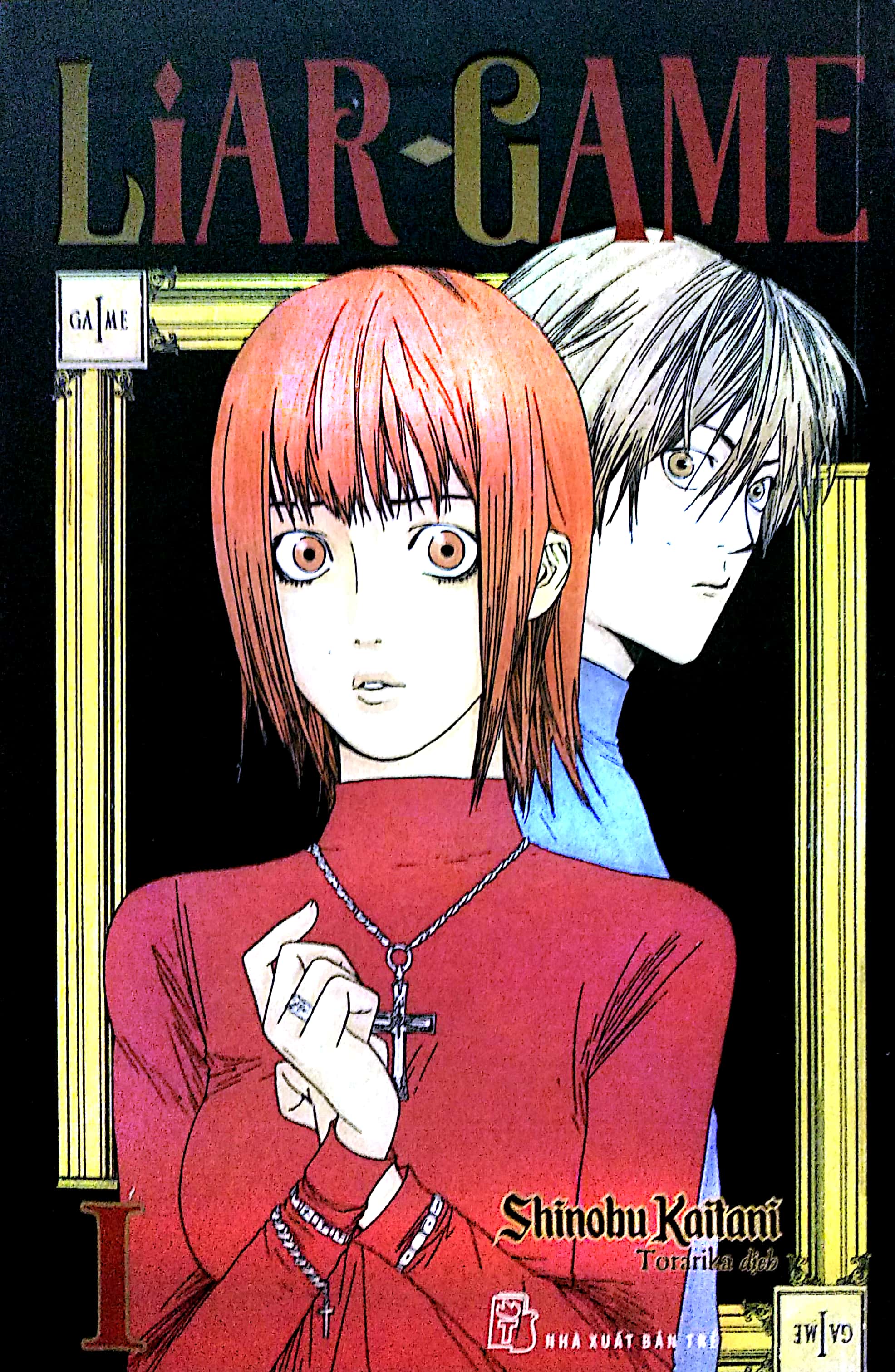
Die hoffnungslos naive Nao landet urplötzlich mitten in einem Sumpf aus Lügnern und Betrügern: dem Liar Game. Die Regeln sind einfach. Sie bekommt 100.000 Yen und einen Gegenspieler. Wenn sie das Geld nach 30 Tagen noch besitzt, ist alles gut. Wenn sie es sich abluchsen lässt, macht sie Schulden. Und wenn sie selbst vom Feind stehlen kann, darf sie es behalten. So einfach und doch so heimtückisch. In jedem folgenden Band werden den Spielern neue Spielvarianten vorgesetzt, neue Teilnehmer und neue Risiken werden definiert und das Lügen und Betrügen nimmt von Mal zu Mal neue, atemberaubende Dimensionen an.
Japanese: 甲斐谷忍He received the prestigious Tezuka Prize in 1991 for Mou Hitori no Boku (Another Me). In 1993, his series Suisan Police Gang was serialized in Shoukan Shounen Jump. In 1995, he co-illustrated the series Sommelier in the magazine Manga Allman to great acclaim. His baseball series One Outs, ended its run in Business Jump with 20 tankoubon released.
His current serial is Weekly Young Jump's Liar Game, which has been adapted into two seasons of a highly-rated drama series as well as a forthcoming movie.
Hobbies: horses, travel Special skill: calligraphy, spoon bending
Note before reading: This is a review of the entire series, which was, as far as I know, completed recently in 201 chapters.
Ahh, Liar Game. This was a Jdrama I just picked up to pass the time and suddenly, it had me and my sister hooked. Eventually I worked up the courage to read the manga and I have to say, it was both brilliant and a bit disappointing.
The premise of the Liar Game isn't all that new - testing humanity in the face of impossible circumstances. The real genius of the books lies in its common sense delivery of high-falutin' topics such as Game Theory, economics, psychology and the like, in a believable fashion. It doesn't hurt that it has some charismatic characters in the form of Akiyama, Yokoya and Fukunaga to explain these things, and art that grows even more easy on the eyes as time passes. (Think shirtless Akiyama...)
Nao is irritating in the beginning, of course, but I think her character development is one of the most satisfying things to come out of any manga. That said, there are a few moments later in the series where she reverts to type, something I think the author could have avoided.
Excuse me while I go off on a tangent here. The drama fails to mention one of the most important things in the manga - Akiyama's advice to Nao about doubting people to understand them. Why? This is such a pivotal factor in her character development and actions from that point forward, you would think they'd spare two minutes for it. I've watched the drama three times already and I don't remember it happening. Epic fail guys.
All the praise aside, there are a number of problems with the manga. The main one is that it becomes formulaic after a while. The games themselves are not a problem, they get more and more twisted, but the story telling remains the same. Come on Kaitani-sensei, after hearing the dealers say, "Let's watch the game unfold" the first fifteen times, you'd think we'd have figured it out already. Characters actions make less and less sense when we know for sure that Yokoya plans 20 steps ahead and they still don't suspect anything. I don't expect them to figure out intricate plots, but it would be most natural to not believe a damn thing Yokoya and Akiyama say.
The ending is the other big one. Hopefully, I won't spoil anything too much, but here it is - IT WAS LAME. Seriously? I did not expect this from Liar Game of all things. The ambiguity of the victory was ok with me, but you're telling me they started a game of that scale for such a waffly reason? It murdered my enjoyment of it, seriously. If the book had ended with Akiyama and Nao attempting to find out the truth of LGT, it would have been a much better ending. That's how bad the ending was in my opinion.
The last problem I have the manga is purely a non-techincal, personal one.
*takes a deep breath*
WHY WON"T YOU LET ME SHIP NAO AND AKIYAMA, DAMMIT? WHY?! THERE WERE SO MANY WAYS TO END THE SERIES AND YOU WOULDN'T EVEN LET THEM TALK FACE TO FACE AT THE END?! I KNOW THIS ISN'T THAT KIND OF MANGA, BUT WOULD IT KILL YOU TO GIVE ME SOME HOPE? WASN'T THAT THE WHOLE DAMN POINT?
That's all I wanted to say. Sorry for any spoilers, guys, but I think it's better not to get your hopes up about this.
Ok, so now it sounds like I don't like the manga, but that's not true. It is a work of pure genius. For everyone who loves intrigue, logic games, mysteries and high-stakes games, this is IT. Even if you don't like any of these things, you should read it for pure educational value. Especially the 17 Card Poker game and Musical Chairs. Pure analytical awesomeness.
So read it, but be prepared for a less than stellar ending and headscratching moments.
Bonus: Matsuda Shota, who plays Akiyama in the TV drama, just because I can.
This is a rating and review of the FIRST VOLUME only.
Story: ☆ Art: ☆☆
. . . and by "first volume", I really mean first two chapters of the first volume. So yeah, this is a one-star review of a DNF-book but ma'am. . . I . . . don't care.
I don't care if Nao "grows" by the end of the entire series. I don't care if she turns into an Oxbridge scholar. I don't care if she later wins a Nobel Prize. She is as dumb as a brick on fire and I lost brain cells just witnessing her:
(1) Literally give away her million yen to her rival; the guy against whom she knows she is playing the game--the game she knows is called the LIAR game.
(2) Literally standing in a corner of a street for a literal day without literally moving an inch (even to eat or shit) because some guy she just met "promised" her to meet her there after he "goes home to drop some shit off". Like bitch.
(3) Almost gets raped by two men because she's standing there waiting, and the first thing she does is scream the random stranger's name because HOW ELSE IS A GIRL TO REACT OTHER THAN TO WAIT FOR SOME KNIGHT IN SHINING ARMOUR TO RESCUE HER.
Like, I just can't. I CAN'T.
Also, the concept of the story was really cool until I actually read it.
- You get a million yen - Your rival gets a million yen - By the end of 30 days, the game masters will come to collect the million yen back from each of you - Meaning if your rival takes your million yen from you, you are a million yen in debt, your rival has a million yen in his pocket
You get the gist.
Except the entire foundation of the game was "By opening this letter, you agree to the terms and conditions of this game and agree to participate in this game."
Not to mention this note is found only AFTER you OPEN the letter to begin with.
Like fuck you. If I got a letter in my mailbox addressed to me, of course I'm gonna open it. GTFO with that shit. And then the fact the lawyer Nao contacted was like "Daaaamn, they got you good there, guess you gotta play the game huuuuh."
4.5 stars. Read the entire manga (201 chapters). Absolute mindfuck. Review to follow. (Yes, this is what I've been doing lately, precisely why I'm a bit slow on reading novels.)
I started reading this on a whim - I remember trying to read this years back, but then stopped because at the time I couldn't stand the art and wasn't quite so interested in the story. But then lately I came across the Japanese drama live action version and I was like, why not? I'm glad I started this, even though it's taking me awhile, because I think Ive reached an age where it seems like I can appreciate the kind of story being told. It's really fascinating. And I'm really curious as to see what is the point of the Liar Game.
Nao is a bit of an airhead, but she's so good at heart, that of course she'll be saved in the end. At first her naivety can be tiring (like surely, after all this time, you still haven't figured out that people will trick you?) but she does develop as the series goes on. Just when you think she's foolish, she comes out and surprises everyone.
So who else better than to pair her with a swindler? Akiyama-san has just come out of jail and Nao asks him for help. It's really cute how she was tricked and then he, feeling sorry for her, does help her in the end. As the story progresses, he becomes a very strong ally and friend to Nao - mostly because in the beginning, Nao wouldn't leave him alone, and when she was left alone, she did something silly like take on the second round of the Liar Game, which in turn lead Akiyama-san to following in her steps. If he didn't, he would worry about her fate.
Trust me, it's not like some sappy idol drama, where the feelings of the heroine come across as rather insincere and stupid. The characters are well developed. Nao is naive and innocent, good at heart, but willing to learn the hard realities and then to see beyond the darkness and make rational choices. For herself and for others. In some ways, she might be seen as some kind of Hero complex to her trying to save everyone, but she means well.
Absolutely mindfuck . Hell of a psychological thriller. Never enjoyed reading so much.
Edited on July 26, 2019
After reading Volume 1-19
I started this in the middle of June and I read down 19 volumes , 3800+ pages in almost 4-5 weeks.
First of all a heartfelt thanks to Shinobu Kaitani for this extremely well thought, brilliantly written and beautifully drawn manga series.
Well rather than the ending which could be a little long (maybe) else every story arc from starting to the end is purely amazing. It is not just entertainment, it serves a greater purposes, capturing human thought process and psychology, breaking and building of relationships and cooperation, trust and doubt and failures etc.
At times, one may find difficult what's going on as it is very complex but explanation make it easy at the end. I found Poker a little hard to understand as I no nothing about poker but after reading this I came to know to many new things.
Kaitani-San put so much of thought in writing this Magnum Opus it never feels as if it is fictional story or this thing can't happen in the real world.
I haven't read much of a mangas but definitely know that this series is pure brilliance and very underrated.
At last I till now didn't have any favourite fictional character but now I have one and that is none other than : Shinchi Akiyama 💙 and also Nao Kanazaki because at many times in my life I resemble her.
Read it , you will surely like it. Once again Thank You Very Much Mr. Kaitani for writing this manga series. #Respect
I know there's other volumes on here but I'm not arsed to add other reviews about this manga
So I have heard of this well-known horror manga from The Anime Man who mentioned it a couple of times in his videos. I read it this morning and honestly man, I CANNOT stand Nao. She literally reminds me of Bam from TOG who is also a complete utter simp. The amount of her having pointless meltdowns and always be easily tricked by different opponents she mets, literally grinds me f*cking gears man! I know I can be a crybaby myself when certain things happen but her character was literally all over the place. I've heard people says her personality changes overtime but with all due respect, I will still say she's the worst character I've ever crossed in the manga world lol.....
If only it was just about Shinichi and Yuuji partnering up to play the Liar game together, I would've enjoyed reading it no problem. Although I will admit, the story really did drag for me because a lot of things were going on that really weren't clear. What I'm trying to say here is not only the character Nao let me down but the whole plot of the story as well.
Yeah I mean if you don't mind having a typical wimpy character on a horror manga, go ahead and read this. Dont say I didn't warn you weebs!!!
Look, I liked it as a whole. But like, can we be done already with stupid frikkin female main characters in manga?? Like whyyyy?? She's so f-ing dumb it actually annoyed me.
I remember the first time I read this, back when I was a teenager, I thought that it was brilliant. I was so glad that I had taken a psychology course in high school enough to understand it, because from the get-go I was hooked on all its aspects.
That being said, one thing I remember thinking was that the art wasn't really top tier, at least not for what I was used to from shoujo mangas at the time. I saw it as an off-putting element, but thought that the author was contributing what artistic talents he could, and just went with it. When it comes to art vs. storytelling, I'll take storytelling nine times out of ten.
Ahem, but anyway, it's a great and brilliant read--by far my favourite manga out of anything.
I know that some people complain about Nao, the main character, and how gullible she is, but...well, that's the point, isn't it? And while I do acknowledge that it's rather unrealistic for anyone to be that honest to the point of being stupid, I'm not so sure. Since this is a psychological read and all, let me do a bit of profiling on her: she's honest because she's been educated to be so, and chances are that she's led a very sheltered life. She's an only child, so she wouldn't have learned about deception from those closest to her--perhaps a brother or sister would have learned about the lessons of life just as she did, and therefore she would've experienced lying earlier, for example. She seems a quiet, shy type of person, so chances are that she would've have gone partying or really gone out into the world a lot, either. Her main problems were at home with her father battling cancer, so likely she would've have had much opportunity for clubs or even part-time jobs that would put her in an environment wherein lying is normal.
In other words, she is an innocent in the world; and while I can acknowledge that such people are rare, especially nowadays, that doesn't mean that they don't or can't exist. You have to take Nao just as she is, much like you have to acknowledge Akiyama for being a psychological genius, despite being so young and just basing his observations from his university education. I mean, I don't really see people questioning him being able to do what he did so young and so thoroughly, and yet the point is that he DID.
As for the plot itself, I really like how it starts off as one of the simpler psychological tasks/challenges, and that it greets its readers fairly, even those who have only a passing knowledge or perhaps no knowledge at all of psychology. The examples that are used to explain everything just make all the logic super clear, to the point that I remember checking back to the explanations (with their hypothetical examples) over and over again when I first read this as a teen. I see no reason why I won't be doing so again and again.
So, all in all, both in my review for this volume (and more to come, to be sure), and for this series, I cannot recommend it enough!
Good! the art, the plot, the meanings...it was all so good ====================== إنها فتاة شابة (أمينة لحد السذاجة) في المرحلة الجامعية يتيمة الأم ووالدها على حافة الموت بسبب مرضه تتلقى ذات يوم رسالة -بأنه قد وقع عليها الاختيار للاشتراك في لعبة الكذب- مرفقة مع طرد بمليون ين، سيكون عليها منافسة شخص ثان لسرقة المليون ين خاصته وستربح وإلا أصبحت مدينة للشركة بالمبلغ المذكور إن حدث العكس عندما يعلن عن انتهاء اللعبة... المنافس كان مدرس لها منذ سنوات وقد أحسنت الظن به وسلمته عن طيب خاطر نقودها ليحتفظ بها من أجلها حتى نهاية الوقت وذلك بعدما أقنعها أن الشركة تخدعهما معاً... وعندما اكتشفت أن أستاذها خدعها وأعيتها الحيلة وهي تعيش رعب أن تصبح مدينة لأحدهم بمليون ين اضطرت للاستعانة بأحد محترفي الاحتيال الذي كان قد خرج لتوه من السجن بعد قضية اختلاس كبيرة، وبمساعدته ومن خلال وسائله الرهيبة في ممارسة الضغط النفسي على خصمه تمكن من استعادة ال2 مليون ين في آخر لحظة، وبعد أن أتى موظفو الشركة وأعلنو فوز الفتاة سلموها ما تم الاتفاق عليه...مليون ين بكاملها...وفي الحال قدمت نصفها للشاب المحتال لقاء أتعابه وكانا قد اتفقا على ذلك، ولكنها لطيبتها بقيت تفكر بأستاذها المسكين الذي وقع في ورطة رهيبة لن ينجو منها حتى لو باع نفسه في السوق السوداء، وفي الحال وعن طيب خاطر ذهبت إليه وقدمت له النصف مليون ليستعين بها على وفاء دينه، وفي الوقت الذي قال لها سابقاً وهو يبرر نشوة انتصاره عليها أن المرء عليه ألا يثق بالناس، رجته وهي تسلمه المال أن لا يعتقد بذلك ثانية... ولم يلبث الشاب المحتال كذلك أن أعاد إليها النصف الآخر لتعطيه للأستاذ قائلاً أن الاتفاق بينهما هو أن يأخذ نصف أرباحها وبما أنها لم تعد تملك شيء فلم يعد له حق في المال ظننت كما ظنت الفتاة...أن اللعبة انتهت، لكن وبعد إصرارها على مكافأة الشاب صعدت إلى غرفتها لإحضار نقود قد ادخرتها منذ زمن...وهناك كانت المفاجأة...رسالة أخرى...المرحلة الثانية من لعبة الكذب!!!! ====================== كتبت هذا التعريف كملخص للقصة لأني وجدتها جيدة ولابأس من إيصال المغزى للرفاق الذين لا يهتمون بمتابعة هذا النوع من الكتب :أقصد القصص المصورة ======================= يبدو أن القصة الكاملة متاهة لا خروج منها تحت مسمى لعبة الكذب !!!
Why did the girl have to be so stupid? Why why why? Tha's what annoyed me the most. The idea seems interesting though and I will continue with the second volume.
My search for "something" to read just like Alice in Borderland led me to Liar Game. A bit dissapointed but again, just gotta accept the fact that I'm never gonna find anything like the masterpiece AIB was...
"How stupid can you be?" MC: yes.
Honestly the mc is really annoying but I root for her. So far I figured out every single plot twist. The manga has a medicore start but it's still interesting. Akiyama is interesting... I'll continue reading to see where this goes.
Nao Kanazaki is a college student who's way too honest for her own good. When she finds a 100 yen coin (which is like change for them in Japan), she willingly goes through the trouble of giving it up in the police station. So when she was given a package of 50 million yen and a note telling her who her enemy is (an old teacher of hers) and that if she can't somehow obtain his 50 million yen, they'll both have a debt of 100 million yen, she doesn't know what to do. She even falls for a trap and loses her share of the money!
Enter Shinichi Akiyama. He's a famous con artist who managed to bankrupt a huge corporation. He initially had no intention in helping Nao when she approached him but memories of his mother (she was like Nao, too honest!) convinced him to at least get her out of the sticky situation.
Liar Game is about a tournament named after the title between people from different backgrounds where they have to advance to another round or end up with a huge debt. Nao and Shinichi are the main characters, but they meet a lot of other people in the way who become either new friends or enemies. As they get deeper and deeper into Liar Game, they decide to defeat the Liar Game organization from within by freeing their opponents with the money they win (yes, they can pay for their opponents' debts with their winnings) and rendering the tournament itself useless. Will they succeed?
Liar Game is brilliant, I tell you. You'll definitely learn a lot of interesting things.Each round is mind-boggling and it's fun to read about how Nao, Shinichi, and those that choose to join their side outwit the others. Some of the antagonists are awesome too, like Yokoya. The intellectual battles between Shinichi and Yokoya are my favorites so far.
Nao isn't as useless as you would first assume either. Oh, sure, she's easy to trick but her kind and open nature is the reason why Shinichi manages to convert people into their cause. And she can be pretty deep too; in fact, she even figured out the true purpose of Liar Game and had profound insights regarding the tournament and human nature that prove to be invaluable. Yeah, she's still kind of a damsel-in-distress, but her character development is moving and something to also look forward too.
If you're into psychological thrillers full of twists and turns, this is the manga for you! I highly recommend it!!!
This story has a lot going for it and a lot going against it. I really like the concept of a high stakes game based solely in pitting normal people against each other in a game that requires deception and underhanded tactics. I don't really like that the main character is a somewhat bland innocent girl paired with the intelligent edgy guy. It's a bit over done, and she's not really all that great to follow along with. I don't really like the art style either. It's pretty standard right up until the characters have to emote, and the for some reason their mouths are gigantic. Like half the time she has this tiny perfect little mouth, and then she yells and basically becomes Luffy.
Since I've already seen & loved the Japanese drama (I've seen/loved the KDrama too but it has a totally different plot), I'm not really sure how to rate this. I've experienced the story before, so therefore I can't really be like WOW THE PLOT TWISTS! because... I've seen it before. What I will say though is that I thoroughly enjoyed the events of this volume, both via watching the drama and reading this manga. Something in the 4/5 range seems like a fair rating, but if this were my first time experiencing this story, I might've rated it differently. Maybe higher, maybe lower. Not totally sure. Regardless, this concept and story are fascinating and I can't wait to continue this series and rewatch the drama alongside it! --------- Note: Vol 1 = Chapters 1-7
I am totally in love with this manga. Just perfect for me. Human psychology with puzzles and math-like problems. I can't ask for more! The series starts kinda of lame but soon it catches up. And actually each round of the game is better than the previous one. The author is getting better and better with each round of the game. The art might look horrible at the beginning. However, as you continue reading, you get used to it. And actually I can't imagine this series drawn any differently. The art work is just right for liar game!
My only disappointment is that I can't play this game in real life :(
This manga is very formulaic compared with similar "game" or "strategy" type stories with an unrealistically smart protagonist, where said MC always has everything figured out from the start, has their "ah-ha!" moment at some point in the game where they spend a ridiculous amount of time explaining their logic to their opponent, and then wins it all in the end.
It's boring and repetitive. I also heavily dislike the main female character who has to be one of the worst characters I've ever seen in a manga. STOP CRYING!!!!
This is mainly personal preference but the author's overuse of the shocked, open-mouthed expression in the characters really bothered me while reading.
I'm seeing many people praise this series, so I'm giving it a few more chapters, but so far, I am not enjoying this.
The manga was mindblowing and honestly too mindblowing that it gave me headaches at some point comprehending how things actually work during each game. The art style is alright for its time, definitely obvious that it's an old book.
The book's characters are all interesting how each of them has similar and different pov. which made them all key components of how the story progresses. In the beginning, you have to get passed by the main character Nao Kanazaki is not like other characters, and how innocent she is because as you read she makes up for it later in the story. The book has interesting concepts and the story is also pretty well. Besides the art style and kind of annoying main character, the manga is still pretty good 3/5.
Nao tras volver a casa se encuentra un maletín que contiene 100 millones de yenes y al abrir ese maletín empieza a formar parte del Liar Game.
El juego consiste en robarle los 100 millones a tu rival durante un mes, para sacar beneficio tiene que conservar su cantidad y la cantidad robada a su rival. Al final del mes deberá devolver los 100 millones que le prestaron y se quedará con lo robado. Pero si su rival le roba a ella tendrá pendiente una deuda de 100 millones que deberá pagar al juego.
Solo los mejores mentirosos pueden ganar, ¿te consideras capaz de mentir para ganar?
Salah satu komik jenius yg pernah ada, tak mengira bakal menyukai tokoh utama yg seperti nao, yg awalnya tak semenarik tokoh lainnya. Di tengah mind game penuh penipu seperti itu, segala trik bisa dijelaskan dengan logika, tpi tidak dgn sudut pandang sang tokoh utama yg out of the box.
Seinen bir seri ama daha genç olsam daha fazla sevebilirdim kanaati oluştu. Bazı oturmayan, gevşek şeyler var. Fakat devamı bir merak unsuru da barındırıyor. En az bir kitap daha buradayız. Ortalama diyorum.
this probably was mind-blowing back when it came out, but the main character is annoying as hell, and the plot overall is just a bit too basic when it comes to thrillers.
even though finding a way to read this in English wasn't the easiest, the story was mind-blowing. excited to keep pressing forward into the next volumes. I have to wonder if Squid Game took inspiration from this...