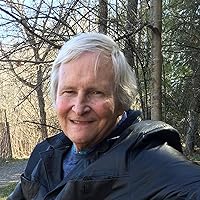
Robert Fowler has been at the heart of Canadian foreign policy for several decades -- as "sherpa" at the G8 Summit in 2002, Canada's ambassador to the UN when this country was on the Security Council, and a key public servant in the Defence Department. When he was kidnapped by Al Qaeda forces in West Africa in late 2008, it was almost the equivalent of former US ambassador to the UN Madelaine Albright being captured by Osama bin Laden -- except that the AQIM (Al Qaeda in the Magreb) that seized him seemed not to really understand the stature of their prize catch. They thought of him as a UN official to be held as a ploy against the UN, rather than as a senior figure in the defence and foreign policy establishment of the alliance battling against Al Qaeda. In his 130 days of captivity, Fowler suffered considerably -- but he also gathered remarkable first-hand impressions, up far too close, into the nature of the movement that is now exercising harsh control over northern Mali. This insightful, powerful book conveys these perceptions -- and the human dimensions of the hellish experience Fowler endured.
His account, Fowler says, will "perhaps allow readers to come to their own conclusions regarding the issue that often seems to be on their minds: how would I fare in such circumstances?" This is a very grim experience that is described -- 130 days of constantly shifting camps, sleeping on the ground in the middle of the Sahara, surviving on meagre food, fighting ill health and natural dangers, and confronting constant arbitrary hostility and potential execution. All this persists amid shifting hopes and fears about outside intervention, with videos being recorded where one is never sure whether communication is the goal or beheading is likely to occur. It takes a special sort of personal honesty yet analytical detachment to treat cogently such difficult months, and Fowler somehow achieves this -- making this a remarkable volume about a vividly harsh time.
Yet the author also manages to stand back from this ordeal. He presents very careful profiles of the various AQIM personnel with whom he interacted, thereby providing a discerning picture of a frighteningly effective and fanatic organization. He also conveys valuable details about their operational methods and the focus they place on building community support in their region. "I no longer," he also concludes, "have any time for political correctness and circumlocution." And Fowler therefore criticizes bluntly the RCMP for its unforgivable failure to keep his family informed during the kidnapping -- the leaders of Niger for in effect handing him to AQIM -- and his own Department of Foreign Affairs for its abdication of responsibility during the whole affair.
Fowler's combination of personal honesty and trenchant criticism makes this book an immersing read, with much to tell the reader about human endurance, the challenges facing Africa and the fundamental political conflicts at an international level.
As Canada and the rest of the world consider how best to respond to the AQIM takeover in northern Mali, Bob Fowler's insights are a profoundly helpful guide.