1/5 Stars (DNF @ 44%)
TL;DR - A lukewarm book with big ambitions it did not live up to. Interesting enough fantasy elements where present, but little else going for it. Yawn/cringe.
Big thanks to Avon, Harper Voyager, and NetGalley for providing the ARC for this book in exchange for an honest review!
***Trigger Warnings for: violence, decapitation, racism, Catholicism, religious persecution, and colonialism.***
‘Sun of Blood and Ruin’ by Mariely Lares is a fantasy novel set in an alternate Mexico circa the 16th century. It follows an eighteen year-old named Leonora, the daughter of the late viceroy of New Spain, or as she’s known to the common folk, Pantera, the masked vigilante who…runs across a lot of rooftops or something. Decades of unrest between the Spanish colonizers and the indigenous populace comes to a head, and Leonora must reckon with her past and her own self to find a path forward.
Hoo boy, where to even begin.
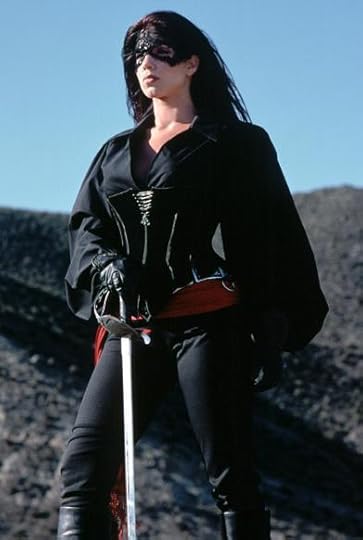
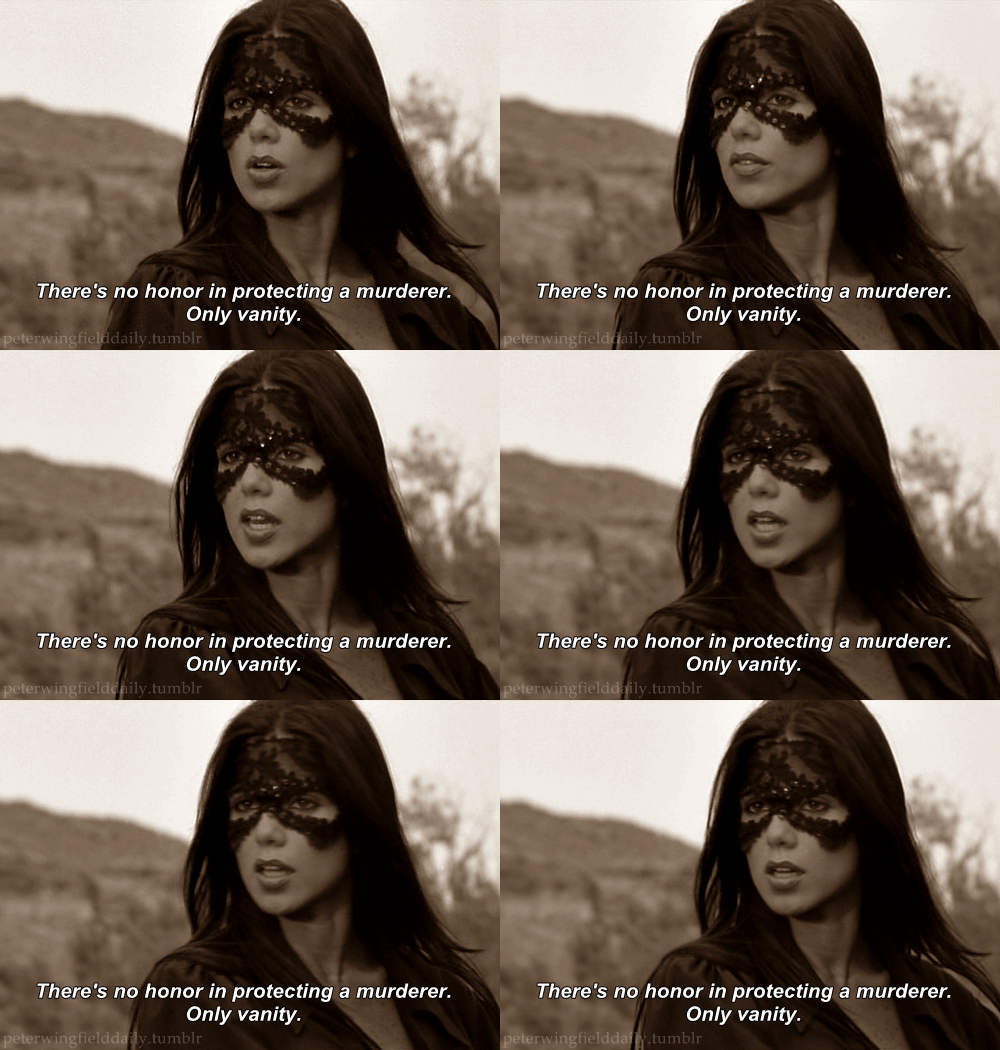
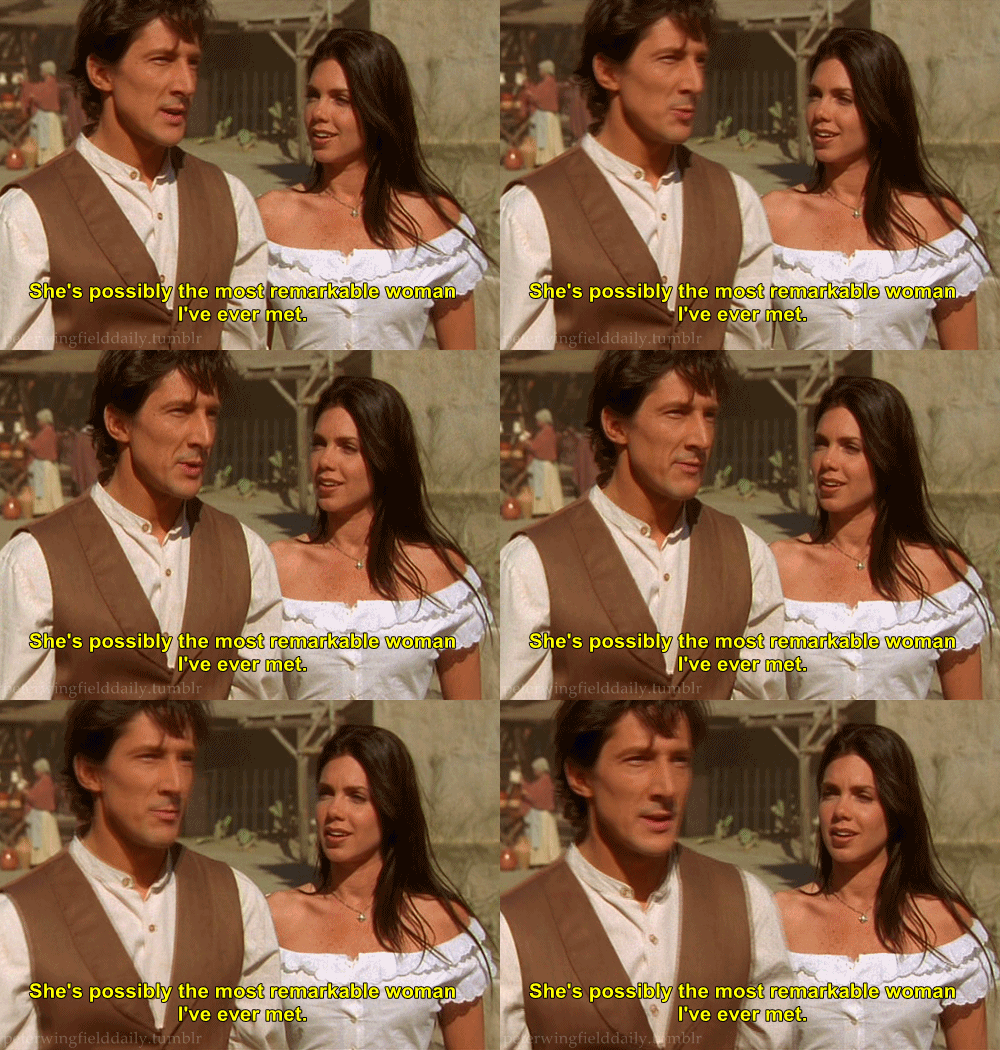
First, this is NOT a gender-bent Zorro retelling. Full stop. As someone who grew up obsessed with the movie (and whose brain chemistry was forever altered by Antonio Banderas in the titular role), I’m honestly kind of angry this book tried to pass itself off as such. The only similarity is that it takes place in Mexico and the main character sometimes wears a mask. At 44% in, there was one sword fight that lasted all of like, three sentences. No, ma’am.
(Okay, I’ll concede that there is some cringe, 90s action dialog and supposed-to-be-comical dispatching of adversaries, which tracks with the movie, but those moments were few and far between, and thrust haphazardly in the middle of otherwise serious stuff tonally. Yikes.)
Prose-wise, it’s fine. Nothing special, but not as bad as some things I’ve read lately. At the beginning, it jumps back and forth between past and present with no warning, which is jarring and annoying, but it does get better as it goes on. It’s also really on-the-nose in places, not a lot of tact, but at least passable from a craft standpoint in general.
(That said, I was fully convinced this was YA until I double-checked what it was shelved as on NetGalley. It doesn’t read like adult at all, it reads a lot younger, both in terms of prose depth and in the maturity of Leonora and her narration.)
In that vein, Leonora was…there. She sure was. For someone billed as literally Zorro, she was surprisingly inept. All while thinking to herself (read: the author telling us) she’s badass and “such a good actor” and patting herself on the back for doing almost nothing. At best, she’s a 2D cutout who does nothing but reminisce about her old teacher who, in ten years, didn’t seem to teach her much, and at worst, she’s annoying and wildly inconsistent in her characterization. All this while we’re being repeatedly told she’s amazing and cool and super duper good at swords and never actually shown it. She also gives heavy “not like other girls” vibes, and she engages in girlhate and slut-shaming, and she’s just SO SPECIAL YOU GUYS.
(Oh, and by the way, she has two different colored eyes. So, sit with that.)
(Also, I called her “Lorena” multiple times in the first draft of this review because she was so completely unmemorable.)
The love interest (who is VERY clear from the moment we meet him, even to my dumb ace ass who doesn’t read romance) is similarly boring. The faux love interest is also flat (with the addition of being, at the point I DNF’d, a stereotypical “promiscuous, romantically amoral bisexual” - neat!).
44% in and nothing of note has really happened, and it just drags. Combine that with copious info-dumping (often apropos of nothing), non sequiturs, and chapters that ended really suddenly with the feeling that the author just ran out of steam and tacked on a few shallow, trite lines to close them out, I just could not keep going because I didn't believe it would get any better.
And then my final issue, which was really the deciding factor in me calling it quits, was the way this book handles the very serious subject of colonialism. Which is to say, it poked it once with a 39.5 foot pole, walked away, and posted a selfie wearing a “Land Back” shirt. Leonora is a mestiza, half-Spanish and half-indigenous, whose father is literally the crown-appointed viceroy of New Spain and participated in its colonization alongside motherfucking CORTÉS. She was raised until the age of 8 in the palace as basically a princess, then went off to train with Mister Miyagi for 10 years and then came back to live in and enjoy the luxuries of the palace once more. She actively still enjoys the benefits of her father colonizing this place (and thinks all the time what a swell dude he was), but we’re supposed to believe that she cares about the natives? She “fights for the people” but still agrees to marry the Prince of Spain “for the good of the colony”? Excuse me??
(Nuanced characters with conflicting morals and actions can and do exist, but this girl ain’t it.)
The narrative does nothing to denounce colonialism except mention it in passing, in a very on-the-nose, almost fourth wall breaking way that feels like the author talking directly to the reader and not the character exploring it organically. Leonora is all “colonialism is bad” in her thoughts, but all “my dad was a really good guy and I’m going to go along with the colonizers’ plan anyway” in action. The math ain’t mathing.
Listen, maybe the book pulls a 180 and goes on to have a really good, heartfelt, and accurate conversation about the evils of Spanish colonialism that are still affecting the Americas to this day, the inner conflict of indigenous folks with any settler heritage they might have, etc, etc, but if you can’t have even a glimmer of an intelligent conversation about it by 44% in, you’ve lost me. Maybe (and that’s a generous maybe, please seek other sources in addition) this will be a good intro for someone brand spanking new to the decolonization conversation, but that’s not me, so this was a huge miss.
Final Thoughts:
Yeah, no. I was so excited for this book, and not only did it fall leagues flat of my expectations, it was also a lot worse for the puzzling and lackluster “conversations” about colonialism. It was ambitious, but ultimately failed to live up to anything to tried to be. Generously shelving under “thanks, I hate it”.