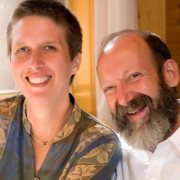
The nation's favorite literary farmer pays homage to the life of the senses. Rushing from one thing to another, we lose sight of the art of living, which for California farmer David Mas Masumoto is also the art of farming. Not fast farming, of the kind that produces fast food, but slow farming, the kind that notices each change of light and temperature and produces peaches with juice that runs down your chin.
On the farm, appreciating the fruits of one's own labor requires all the senses: smell that knows when a peach is ready to be picked; sight that observes the health of a season's crop; touch that measures the weight of a fruit; hearing that recognizes each voice that calls out across the fields; and taste that savors the refreshing tang of a fruit at that perfect moment of ripeness. Taking us into his fields to witness the cycle of the harvest, Masumoto reminds us that we must stop living on the run in order to savor the world around us.
David "Mas" Masumoto is an organic peach and grape farmer and author of Epitaph for a Peach (1995), which offers a glimpse of life on a family farm in Central California, Letters to the Valley, A Harvest of Memories (2004), Four Seasons in Five Senses, Things Worth Savoring (2003), and Harvest Son, Planting Roots in American Soil (1998). His organic farming techniques have been employed by farmers across the nation.
Masumoto earned his B.A. in sociology from the University of California, Berkeley and an M.S. in community development 1982 from the University of California, Davis. He is the winner of the UC Davis “Award of Distinction” from the College of Agricultural and Environmental Sciences in 2003. He was a founding member of California Association of Family Farmers. He has served on the California Tree Fruit Agreement research board and has been a member of the Raisin Advisory Committee research board.
Masumoto and his wife have two children. They reside in an 90 year old farmhouse surrounded by their vineyards and orchards just outside of Del Rey, California which is 20 miles south of Fresno.
David Mas Masumoto details many reflections about growing, cultivating, harvesting, and selling peaches; consistently he refers to "the peach" or "a peach," not the mass production. I found myself smiling when I'd come across this little reference. I came to think about the care and energy for the individual piece of fruit that grows delicious despite so much uncertainty and complexity in the farming. Early on I came to believe this book is really about individual work throughout life. It's about appreciating individual work but also that of others who labor as well. It just so happens that Masumoto's life work is farming, so his world of farming is explored as a larger metaphor for life. I especially enjoyed "Songs of a Shovel" in which he recounts presenting as a guest speaker at a national (perhaps international) conference for chamber music conductors, musicians, and other professionals. His parallels between his work with a shovel and theirs with various instruments to create special gifts for the world: nourishing, delicious food and inspiring, lyrical music. Yes, there were references to teaching as well throughout, and I took note of them. In fact, I took various chapters from this for my leadership course: "Planting Trees," "To See The Future," and the earlier referenced "Songs of a Shovel." When I find a book that I enjoy for both my personal enjoyment and professional edification, I come to enjoy it even more. (I often clearly separate the two; many of my professional readings do not appear anywhere on my Goodreads page.) I had hoped to read all of this before school started, but I'm now happy that I needed to put it down during my busy first weeks and return to it in the midst of all my classes and papers. It brought a message I need to hear, read, relearn, live -- on and on -- during this time of uncertainty in my work. Of course, you may read this book and draw many other meanings from its pages: family, community, the overlooked in society, a call for a simpler life, self-validation and pride in work. I thought about all of these while reading this, but I found my current interpretation resound a final time on the last page: I sometimes forget why I love this work -- to grow a peach or grape or raisin and hope there's a story shared in a simple, honest way. . . . I farm and write with the spirit of the humanities. Human - i - ties. I'm one of the many - the 'i' between human ties. The art of human ties. The sound of a ripe peach. . . . The feel of old work boots. A spirit of connection and the power of stories (270). I read some other reviews before reading this and saw that some people grew frustrated with continued references and repetition. I was aware of many repeated themes, but I did not find them frustrating at all. I enjoyed the return to the same lessons explored in different ways. I encourage you reading this review to get the book from the library or come borrow it from me. I'd enjoy talking with you and learning what you discover.
I enjoyed this book and the poetic writing style of Masumoto. His many metaphores brought to mind lessons for life, not to mention a strong desire to eat a peach! Growing up in a farming community with orchards and large gardens, I could relate to many of the essays and my mind was continually flooded with childhood memories. It was a timely reminder for me that there are things in life that cannot and should not be rushed. It is worth while to slow down and experience life with all five senses.
I begin my review of Four Seasons in Five Senses with the haiku David Mas Masumoto uses to end his chapter "Sound of a Ripe Peach." It sums up the contemplative nature of this book about running a family farm in California perfectly.
David Mas Masumoto is a third generation peach and raisin farmer in California. His book chronicles his life and work on the farm through the seasons as experienced by each of the five senses: sight, hearing, taste, smell and touch.
The book is best read outside in a garden or a park where nature can be experienced. It should be read slowly and savored like the peaches and grapes he describes in the book. You may find yourself distracted by day dreams of fresh fruit. I even stopped midway through the book to bake a pie.
From the overall rating for this book, it was at 4.85.
I was honestly surprised by the result of my rating, but I did enjoy this book! It is kinda different from other books that I have read before. This was a great cozy read for fall transitioning into early winter. I used to live in Japan, but not in mainland Japan. I love learning more about the Japanese culture. It was such an amazing book. Beautiful memoir!
So glad to finally get to know the Poet Laureate of Peaches. Picked this up because of the cover years ago, and finally savored it. Makes me feel closer to the farming community that surrounds my central valley home.
This seems like it will be a little boring.... But maybe it will make me think about farming differently.
ok. I stopped about 2/3 of the way through. I got too bored. His essays are well written, but I'm not that interested in how he has to listen for where to drive his tractor when he's still tractoring when the sun sets (you know, like a bat uses echolocation! yeah!).
It was "ok" but as much as I like well-written food/garden/farm books, this didn't do it for me.
A California fruit farmer pays homage to the life of the senses: smell that knows when a peach is ready to be picked; sight that observes the health of a season’s crop; touch that measures the weight of a fruit; hearing that recognizes each voice that calls out across the fields; and taste that savors the refreshing tang of a fruit at that perfect moment of ripeness.
This was a wonderful memoir of the writer's life growing up and then taking over the family peach farm in the Central Valley. Truly heartfelt - his love of the farm, nature and his family. Lyrical writer.
He really should have stuck to farming. Still, anytime someone want to write a book almost entirely about peaches, I'll probably read it. He does grow some damn fine fruit.
Nice to read about organic peach farming in Feb in VT, but I think his writing is repetitive. I have, however, tasted his peaches and they really are unbelievably good!
In this collection of essays, the author, a peach and raisin farmer, explores life through the five senses, making you realize that there is a farmer behind each piece of food you eat.