Eighteen-year-old Melinda Ashley never wanted to go to Mars. she had her life all planned out—marry ross and become a teacher. but when her estranged father convinces her to take an interplanetary vacation, she finds herself tempted to leave behind her comfortable existence on earth. Mars isn’t at all what she expected, and when she meets Alex preston, a second-generation Martian colonist, she finds herself on a surprising new path. sylvia engdahl’s classic novel has been revised and updated by the author to reflect new discoveries and research about Mars.
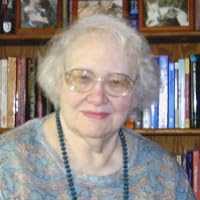
Sylvia Engdahl is the author of eleven science fiction novels, six of which, including the Newbery Honor book Enchantress from the Stars, are YA books also enjoyed by many adults. Although she is best known as an author for Young Adults, her most recent novels, the Founders of Maclairn duology (Stewards of the Flame and Promise of the Flame) and the Captain of Estel trilogy (Defender of the Flame,Herald of the Flame, and Envoy of the Flame) are adult science fiction and are not appropriate for readers below high school age. For FAQs about them and more, visit her website.
She has also written a nonfiction book, The Planet-Girded Suns: Our Forebears' Firm Belief in Inhabited Exoplanets, of which updated and expanded paperback and ebook editions were published in 2012, and three collections of her essays. Most of the nonfiction books listed under her name were edited, rather than written, by her as a freelance editor of anthologies for high schools.
Engdahl says, "I never listed more than a few of the books I read here and now the list is so outdated that i have removed all but a very few that are still among my favorites, plus ebooks I produced for my mother and for my friend Shirley Rousseau Murphy. For current lists of good books on the subjects I care about, please visit the Opinion section of my website."
The original hardcover edition of this book was published by Atheneum in 1970. An updated hardcover edition was published by Putnam in 2006, and was reprinted in paperback by Firebird in 2007. Some of the reviews here commenting on outdated technology and/or old-fashioned attitudes of the heroine evidently refer to the 1970 edition, which is still in some libraries and used book stores. Please read only the later editions!
There were two or three ebook editions issued by Firebird/Penguin in 2007 with the same text as the paperback. These are no longer available since Penguin no longer has the rights. New Kindle and epub editions with a different cover were published by me in October 2015. These new ebook editions contain additional minor updating of references to computer technology and the use of mobile devices.
Sylvia Engdahl is an American science fiction writer who has been publishing books since the early 1970s, principally in the Young Adult or Juvenile Fiction category. Her most well-known story is probably Enchantress from the Stars, which was nominated for a Newbery Medal in 1971. I have read several of her works, including the more mature sequel to Enchantress, The Far Side of Evil, as well as the Children of the Star Trilogy, and have found that Engdahl is an author who possesses a unique voice, and who writes carefully and thoughtfully on issues affecting both individuals and humanity as a whole. One of her staunchest beliefs is that we must colonize space as soon as possible if there is to be a meaningful future for humanity. The fact that Sylvia Engdahl is relatively unknown even among readers of science fiction is rather unfortunate, I think.
Although Journey Between Worlds is set on Mars, it is not primarily about technology or exploration, and the author classes it more as Romance than as Science Fiction. It was first published by Atheneum in 1970, but a new edition was issued by Putnam in 2006, with updates to descriptions of Mars and added references to computer technology. Another reason for the revised version was to remove phrasing that would appear sexist to most people reading it today. A few more modifications were added to the 2015 and 2021 ebook editions, including the Kindle version which I read. However, the story itself is overall just as it is in the 1970 edition.
Engdahl says that she wrote this book in 1967, which was of course before the Apollo missions and Mars probes had changed the public perception of space exploration, so in subsequent editions she altered some details based on discoveries made by the Mars landers and the photographs taken by them. References to the use of computers (both terminals and handheld devices, as well as etexts and long-distance electronic data transfer) by the public were also added. (The author states that in 1967 she did not envisage such things, even though she had served as a computer programmer for ten years!)
Although the romance between the central characters is admittedly the backbone of the story, the book also serves to showcase Engdahl’s advocacy of the colonization of the solar system, and to refute popular arguments which are often raised against it. As she says herself on her website, “…most people today cling to the idea that confinement to Earth is ‘natural’ and see no necessity for the human race to go beyond the limits of the world where our ancestors evolved. But this outlook needs to change. That's the theme underlying the story, and it depends on my characterization of the heroine.”
Journey Between Worlds could also be classed as a ‘coming of age’ story, and the way the heroine matures as well as her personal introspection on many points are presented with realism and sensitivity. I consider it a wise decision on the part of the author to have written the book in the first person and from the female protagonist’s point of view, for this definitely makes it more poignant and incisive.
In conclusion, the avid reader of hard science fiction or exotic space opera probably would not enjoy this book very much, but young adults (especially girls) would likely relate to it quite well.
(Incidentally, I think the best cover art was on the original 1970 edition. The 2006 edition is perhaps too cartoon-like, and the 2015 ebook cover is in my opinion pretty awful. The 2021 ebook cover is marginally better).
Below are some key quotations from the narrative of the story:
You can’t ever plan everything out in advance, I guess. But I used to think I could. I don’t think I wanted too much; the trouble was, I didn’t want enough.
Isn’t it funny how you can accept one thing as a perfectly natural, inevitable risk of living, and be all upset over something else just because it’s less common?
“It was the conquest of space that helped to bring about peace,” Alex interrupted. “Energy went into that which would otherwise have gone into war.” Like in the poem, I thought. Nightmare, endless wars . . . then we turned spaceward. “More than that, though,” the professor went on, “for the human race to stay cooped up on one world would lead only to a terrible sort of stagnation. It would create problems, not solve them.” “Stagnation or something worse,” said Alex darkly, “with the population situation the way it is. Without a frontier for expansion, neither today’s living standard nor freedom could last—and there’d eventually be violence.”
The idea that the human race will keep on moving, that we’ve got to expand or perish.”
How foolishly romantic the old astronomers were! Utopia, Eden, the Fountain of Youth, the Sea of Pearls. I wonder what they would think if they could take a close look at some of the drab, uninteresting places they christened, and hear those idealized names in everyday use.
You can imagine a thing, and see pictures of it, and still not have any conception of it at all.
“Seriously?” “It’s a very serious matter.” “But look, Alex, I wasn’t much on science in school, but even I know that it’s not considered feasible to go to the stars. Not ever.” He laughed. “You also know enough about history to know that there was a time when it wasn’t considered feasible to go to the moon.”
“We don’t know,” said Paul. “I have faith that it will, because colonization is the only truly long-range hope I can see for humanity. There isn’t any other answer. The day will come when Earth cannot support its population
You can never see what’s coming, I suppose; and with some things, it’s very lucky that you can’t.
It would have been a pity not to have come; it’s true enough that you miss a lot by setting limits for yourself. Especially since whatever bounds you set don’t really make you secure.
There are some things you can never be safe against, no matter how well you plan your life. Change is one of them; how young I was when I thought I could live forever at Maple Beach, and never change! Fear is another. And still another is grief.
Having a plan for your life is all very well, and even when it’s disrupted temporarily you can hang on tight and see it through. But once you begin to suspect that you might care about things that don’t fit into that plan, or into any plan that you’d ever want . . .
“Is that your reaction to being hurt—to strike out, without caring what you strike at?”
It’s funny how people who think they don’t have emotions are the very ones who get trapped by them.
“ ‘They cannot scare me with their empty spaces,’ ” he quoted softly, “ ‘Between stars—on stars where no human race is—’ ” “Robert Frost!” I took it up. “ ‘I have it in me so much nearer home, To scare myself with my own desert places.’ Oh, Alex! That’s true—so true.” With a sudden flash of understanding I burst out, “It’s not really space that scares me, is it?” “If you know that,” Alex told me, “you’ve already taken a big step.”
The laws that govern survival in space are inexorable; and unrealistic as I may have been in some of my feelings, I was practical enough to know that.
“I think so. Shutting out reality—telling yourself that a thing isn’t going to hurt when it is—is just asking for trouble, right?”
“But details like whether we live on Earth or on Mars aren’t as important as you think they are. The unchanging, real things are in people’s hearts.”
A civilization that can’t expand will turn to violence, I’m told. Or at least decay. How paradoxical that the only way to assure the future for Earth is to leave it!
I got a copy of the 2006 hardcover edition with an absolutely crazy-sauce, cartoony cover that I adore. It's worth the cost of the book alone. It does not represent the book's contents though which are far more classic.
In her Afterward to this edition, the author notes she was surprised that aside from a few scientific updates the biggest changes that she had to edit for when updating her 1970 original for this edition were the consequences of late 20th century feminism. As she puts it, "modern women's outlook toward marriage and toward careers...have changed more than my views of space have."
Despite her updates, the book's relationships feel slightly old fashioned. The heroine unthinkingly lets her boyfriend push her around, her career dream is to be a teacher and the only other teacher we meet is also female, plus it's assumed that a man doing business in a foreign place must need a wife, or wife substitute, to serve as a 'hostess' at his side. That said, I shudder to think what the 1970 version must have had going on...and am somewhat fascinated to realize that those 1970s edition attitudes were what I lived through as a little girl. I don't think young women today have any grasp on how huge a revolution occurred in the generation just before them.
Those musings aside, this is a sweet book. It's truly a coming of age, new adult thing. The heroine on occasion is so dumb about her attitudes that you want to shake her. But I'm willing to give it a pass because all that can be new adult in reality.
The descriptions of life on Mars colony are very well done indeed. And it's exceptionally pleasant to read a science fiction novel where it's not a huge space opera, nobody has to save the world, the aliens are not coming, and the revolution is not nigh. It's ordinary life instead. Real, true feeling ordinary life.
Melinda doesn't want to go to Mars. Why leave Earth when everything humans are meant to enjoy is there? But when her father, whom she's only seen sporadically over the last ten years, asks her to join him on a business trip to one of the Mars colonies after she graduates from high school, she can't bring herself to refuse him. Little does she know her months on Mars will change the way she thinks about life, love, and humanity.
With JOURNEY BETWEEN WORLDS, Sylvia Louise Engdahl has written a science-fiction story that will appeal to a variety of teens. Melinda faces many of the same problems today's young adults do, only in an otherworldly location. The first person narrative puts readers right inside Melinda's head and allows them to see through her eyes. Her struggle to overcome her fear of change and to examine her feelings and beliefs honestly should resonate with anyone uncertain of exactly who they are and want to be.
The story, of course, is not only about Melinda, but also Mars. The descriptions of Mars and its colonies are fascinating in their detail and realism, providing an exciting setting for Melinda's personal conflicts. The colonists, with their pride and passion, will make readers wonder if they, too, would have the pioneer spirit.
I would recommend JOURNEY BETWEEN WORLDS to any teen looking for a thought-provoking read. Unlike many science-fiction novels, this is not a story of action and technology, but rather of wonder. I'll admit, at times I wished there was more excitement, but overall it was a satisfying read. Both Melinda's problems and the issues raised by the colonization of another planet will give readers much to ponder long after they've finished reading.
I enjoyed the book. It would have more stars AND my respect if they broke up and she went back to Earth simply because they wanted different things from life. It pisses me off that of course the female character has a change of mind for seemingly no reason and happily gives up on her dreams. It doesn't matter that he asks her a few times if she's "really sure".
It was such a good dilemma, so real. But nothing changed at the end yet the dilemma was solved. "Love matters more than where you live", ok why did he not move to Earth and live with her then?
All along she's just getting manipulated by everyone to like Mars and to do stuff she doesn't want to. Everyone knows her "better than she knows herself". That sounds like getting pushed around, not being enlightened.
This entire review has been hidden because of spoilers.
Journey Between Worlds is a serious sci-fi drama about a young woman who takes a journey to visit a colony on Mars. I think the thing I enjoyed the most about this book was that it really engaged me and made me think about what it would mean to leave Earth, what a settlement on Mars would be like, etc. In that way, it's an "ideas" story, and it's very grounded and attempts to be realistic. But the characters and plot aren't bad either. Though I read the updated edition, some aspects do feel old-fashioned, including the main character herself and some of the romance. (For example, at the start, Melinda plans to marry her high school boyfriend after one year of college!)
Anyway, I mostly picked this up because somehow I had no idea Sylvia Engdahl wrote fiction other than Enchantress from the Stars (a book I loved as a kid that probably deserves a re-read soon). Now I kind of want to read more book about Mars colony life.
I like the idea this book presents. That maybe sitting still and not wondering what’s around the river bend isn’t any greater a plan than jumping head first into adventure. I feel like this this story could have been strengthen by removing the secondary romance completely. Maybe it’s because of when this was written but Mel’s almost single minded focus on what constitutes “dating” takes away from the meaning of the story. So many times she’s so worried about if being friends with a boy means they’re dating, but oh they haven’t kissed. And to that point I hate how every choice she makes is a result of people bullying her into things “because she’s so shy” it really takes away from the message of you should learn about other perspectives before you judge them when the first reaction to someone not agreeing with you is animosity. Good bones but really falls short where it matters
This is a difficult one to rate. I can't say I particularly enjoyed it, but it's hard to separate my opinions from the fact that this was written FIFTY YEARS ago. And while spaceship/space colonization romance books are common now, was there even a sci-fi YA romance before this book? I almost think not? But it's hard not to compare it to similar modern books, which are heavier on the plot and action (plus way more smooches).
Engdahl was a favorite author of mine when I was a teen/YA and this is one of hers I missed back then. Melinda is journeying to Mars to visit the colony there - built as Earth is depleting its resources and is in a critical state. The world-bulding is matter-of-fact and effective; this is more a coming-of-age story, filled with characters living their regular lives. Forewarning: the 1970s publication date shows up in some cringing gender roles stuff.
This is my least favorite of Sylvia Engdahl's books. The outcome is foreshadowed so much that there is no suspense about how it will turn out. The main characters are tw0-dimensional. I liked some of the others (Paul, Kathy, Alicia) better than Melinda and Alex.
A very good story of a young lady coming to terms with what she thinks she wants (to stay on Earth) to what she eventually really wants (to continue living on Mars) There was a very nice element of romance too!
I like this book and the author’s other books because it is about how the protagonist faced change. It seem like she was going to do what she did all along. I enjoyed reading this book.
I very honestly think this is a good read for everyone interested in space or not. It overall encompasses many parts of society whether you’re ion Mars or Earth. It can get a bit slow at times but it’s definitely something I didn’t want to put down a lot of the time!
It's been a LONG time since I've read a book that made me re-evaluate myself and my opinions. This book did just that. For that I'm grateful. 4.5 stars.
This novel will appeal to a variety of teens. The novel is a first person narrative which puts reader’s right into the thoughts and ambitions of Melinda Ashley, a recent high school graduate who thinks she knows what she wants in life. Melinda receives a roundtrip ticket to Mars from her father but there’s one catch, she doesn’t want to go. Melinda says all she wants is to become a teacher and marry her boyfriend Ross, but after an argument ensues with Ross, Melinda decides to set aside all her insecurities about life elsewhere and sets off for Mars, a world she knows nothing about. Through her travels to Mars she encounters new surroundings and people. Melinda realizes that what she thought she wanted in life was apparently dictated by the influences of other and through this journey she is discovering more about herself and turns that fear of uncertainty that was once inside of her and realize that there is more to life than what she has always thought. Mars has brought out the honesty in Melinda and from that she knows who she is and why.
I enjoyed this sci-fi novel because it wasn’t all about action and technology. Even though space travel and other areas of sci-fi literature do exists throughout the story, it was more of romantic novel which touched upon many issues that young adults go through. The novel touched upon the ideal of self-doubt, rediscovering self, maturity, making decisions, and following one’s heart, and being honest to “you.” I would recommend this novel because it offers a different approach to sci-fi literature which tweens can appreciate.
This takes place in a future where Earth has started colonizing Mars. It's still experimental, so most people on Earth don't ever expect, or want, to travel to Mars, and future funding is tenuous. Melinda has always planned to marry her high school boyfriend and live on the Oregon coast. But her father is going to Mars for several months, and he wants her to go with him, so she puts her plans on hold.
There have been people on Mars long enough that children born to the first homesteaders are now grown, but Melinda doesn't see that the Martians might consider Mars their home as much as she feels Earth is hers. She assumes that while Martians might like Mars, they would of course prefer to live on Earth. For most of the book, her paternalistic attitude doesn't change much, despite the best efforts of a really nice 2nd-generation Martian named Alex (I liked him), but in the end her world (planet) view alters drastically.
Sylvia Engdahl brings up interesting issues about the importance of investing in science, and she wants the reader to think about them. I've been a fan of funding NASA for a while, so I had no arguments. She also draws an intriguing picture of what a Martian colony might be like, complete with a trip to Phobos that all kids can take in the 8th grade.
The good stuff: I quite liked the cover illustration, by Craig Phillips, which has a sort of Nausicaa/Moebius feel to it, very suitable. The book was an easy read, reminiscent of those 1960s career guides for girls that were disguised as novels. Only instead of becoming a tour guide at the UN or a fashion illustrator while finding love and possibly solving a mystery, Melinda emigrates to Mars. The not-so-good stuff: The gender politics are firmly of their time. Melinda doesn't have much agency, and the male characters seem to make the important decisions. Comparisons are made between the American pioneers and the colonising of Mars, and the frontier spirit of ancestors and descendants. Mars has no aboriginal inhabitants, so that less comfortable parallel isn't much examined. The only opponent to colonisation is portrayed as misguided and unreasonable, which was rather disappointing.
I've read Science Fiction for a long time but haven't encountered much YA SF until recently. This book is now one of my favorites. It does explain some science: gravity, spaceflight, Mars conditions etc. But it mostly deals with how people live, act and react in these different future conditions and locations. I loved how the story showed that our point of view and preferences are largely based on what we've been exposed to so far in our life. Melinda has to deal with new things, ideas, people and places that are different and hard for her. As she comes to understand, accept and even like the alien things and people of Mars we also are taught to be more open minded. Melinda is a great character. It was good to read a Martian novel again - it seems like there has not been many recently.
Bought this because I met the author on MySpace and liked the cover. Yes, they say never judge a book by a cover, but there you go.
I started reading this but only got to chapter 5 or so before putting it down. While it was well-written and fun, I didn't really like the anachronistic attitude the narrator's love interest had towards women in general and her in particular. I felt this dated the book, even though I read the author's note which said the book had been re-edited to make it more current.
Well that was kind of terrible. And as a fan of Heinlein juveniles, it didn't have to be. Sure it was apparently written originally before 1969 and only marginally updated. But the action of the main character, a young lady who really lived to attach herself to some guy, was just plain annoying. Which was too bad because the back text of the rest of the book, dealing with the motivations behind colonizing Mars were almost as good as I would have expected from Engdahl. Though to be fair some of the technology missteps were jarring as well.
2-2013 From the author who wrote, "This Star Shall Abide" – a sci-fi classic full of deep philosophy and psychology, comes this trite YA romance novel. It looks to be one of the author’s earliest books (written in the mid 60’s and published in 1970). If the reader is expecting a YA romance, it is a decent read. The author argues for space exploration being humanity’s salvation as the backdrop to the story.
I had trouble empathizing with Melinda. She just seemed too clueless, and spineless.
Melinda has her first fight with her fiance when she goes to Mars with her father. There she keeps putting her foot wrong by assuming everybody thinks Earth is better.