

What do you think?

Treasury of Victorian Murder
The Case of Madeleine Smith
A scandalous secret affair in 19th century Scotland between an upperclass woman and a gentleman of lower standing ends in his murder by poison...
80 pages, Paperback
First published July 1, 2006
About the author
Rick Geary
190 books203 followersRICK GEARY was born in 1946 in Kansas City, Missouri and grew up in Wichita,
Kansas. He graduated from the University of Kansas in Lawrence, where his first cartoons were published in the University Daily Kansan. He worked as staff artist for two weekly papers in Wichita before moving to San Diego in 1975.
He began work in comics in 1977 and was for thirteen years a contributor to the Funny Pages of National Lampoon. His comic stories have also been published in Heavy Metal, Dark Horse Comics and the DC Comics/Paradox Press Big Books. His early comic work has been collected in Housebound with Rick Geary from Fantagraphics Books.
During a four-year stay in New York, his illustrations appeared regularly in The New York Times Book Review. His illustration work has also been seen in MAD, Spy, Rolling Stone, The Los Angeles Times, The Old Farmer’s Almanac, and American Libraries.
He has written and illustrated three children’s books based on The Mask for Dark Horse and two Spider-Man children's books for Marvel. His children’s comic “Society of Horrors” ran in Disney Adventures magazine. He was the artist for the new series of GUMBY Comics, written by Bob Burden, for which they received the 2007 Eisner Comic Industry Award for Best Publication for a Younger Audience.
His graphic novels include three adaptations for the Classics Illustrated, and the nine-volume series A Treasury of Victorian Murder for NBM Publishing. The new series A Treasury of 20th Century Murder began in 2008 with “The Lindbergh Child.” His other historically-based graphic novels include Cravan, written with Mike Richardson, and J. Edgar Hoover: A Graphic Biography.
Rick has received the Inkpot Award from the San Diego Comic Convention (1980) and the Book and Magazine Illustration Award from the National Cartoonists Society (1994).
He and his wife Deborah can be found every year at their table at San Diego’s Comic Con International. In 2007, they moved to the town of Carrizozo, New Mexico.
(from http://www.rickgeary.com/bio.html)
Kansas. He graduated from the University of Kansas in Lawrence, where his first cartoons were published in the University Daily Kansan. He worked as staff artist for two weekly papers in Wichita before moving to San Diego in 1975.
He began work in comics in 1977 and was for thirteen years a contributor to the Funny Pages of National Lampoon. His comic stories have also been published in Heavy Metal, Dark Horse Comics and the DC Comics/Paradox Press Big Books. His early comic work has been collected in Housebound with Rick Geary from Fantagraphics Books.
During a four-year stay in New York, his illustrations appeared regularly in The New York Times Book Review. His illustration work has also been seen in MAD, Spy, Rolling Stone, The Los Angeles Times, The Old Farmer’s Almanac, and American Libraries.
He has written and illustrated three children’s books based on The Mask for Dark Horse and two Spider-Man children's books for Marvel. His children’s comic “Society of Horrors” ran in Disney Adventures magazine. He was the artist for the new series of GUMBY Comics, written by Bob Burden, for which they received the 2007 Eisner Comic Industry Award for Best Publication for a Younger Audience.
His graphic novels include three adaptations for the Classics Illustrated, and the nine-volume series A Treasury of Victorian Murder for NBM Publishing. The new series A Treasury of 20th Century Murder began in 2008 with “The Lindbergh Child.” His other historically-based graphic novels include Cravan, written with Mike Richardson, and J. Edgar Hoover: A Graphic Biography.
Rick has received the Inkpot Award from the San Diego Comic Convention (1980) and the Book and Magazine Illustration Award from the National Cartoonists Society (1994).
He and his wife Deborah can be found every year at their table at San Diego’s Comic Con International. In 2007, they moved to the town of Carrizozo, New Mexico.
(from http://www.rickgeary.com/bio.html)
Ratings & Reviews
Friends & Following
Create a free account to discover what your friends think of this book!
Community Reviews
Displaying 1 - 30 of 71 reviews

August 22, 2019
A bright summer day - and a dash of murder! There are lots of ways to kill someone: those who use poison are particularly cruel - the suffering the victim often goes through speaks to a specific kind of heartlessness. If you have not read any of the books in this series you are missing out on lots of creepy fun: Rick Geary is always fantastic!

August 31, 2017
What connects this maybe could be murderess Madeleine Smith
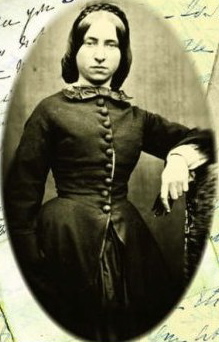
who maybe could be poisoned her now-surplus-to-requirements wouldn’t-take-no-for-an-answer boyfriend Emile L’Anglier with arsenic

which she said she had purchased as a cosmetic intending thereby to maintain a blooming complexion and an appearance of exuberant health with Mary Poppins is that after all the infamy and brouhaha of the trial she understandably relocated to London from Glasgow, took watercolour lessons, was courted by her teacher, a Mr Wardle, married him, and then became embroiled in socialist politics, where she hobnobbed with George Bernard Shaw, who, hearing her remarkable story, took his coffee from her “to no ill effect”, as he remarked at the time, this being a few years before he wrote Pygmalion, which was the basis of My Fair Lady, the 1964 film in which Audrey Hepburn was cast, infamously, over the obvious choice of Julie Andrews, who had been playing Eliza on stage between 1956 and 1959. The point here was that Julie could sing (like an angel) and Audrey couldn’t (not like an angel anyhow). So they had to get Marni Nixon to dub the singing for Audrey, which I had no idea about until years after I saw the film. Not surprising, really – when any Marni-sung tunes were on the radio the dj would say “that was Audrey Hepburn” and Marni’s name was nowhere to be found on the album sleeve either.
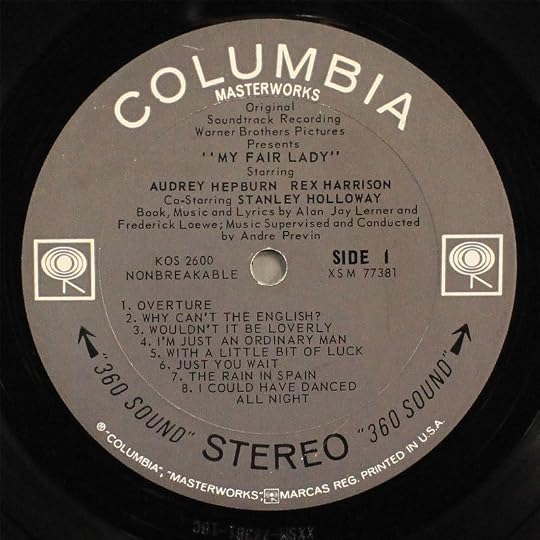
They liked to keep very quiet about the dubbing, even though exposing this frankly deceptive procedure was one of the key plot points in Singin’ in the Rain, everybody’s other favourite musical.
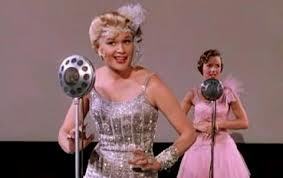
Ain’t no justice in this damn world, as Emile L’Anglier might have said if he hadn’t died horribly on 23rd March 1857.
who maybe could be poisoned her now-surplus-to-requirements wouldn’t-take-no-for-an-answer boyfriend Emile L’Anglier with arsenic
which she said she had purchased as a cosmetic intending thereby to maintain a blooming complexion and an appearance of exuberant health with Mary Poppins is that after all the infamy and brouhaha of the trial she understandably relocated to London from Glasgow, took watercolour lessons, was courted by her teacher, a Mr Wardle, married him, and then became embroiled in socialist politics, where she hobnobbed with George Bernard Shaw, who, hearing her remarkable story, took his coffee from her “to no ill effect”, as he remarked at the time, this being a few years before he wrote Pygmalion, which was the basis of My Fair Lady, the 1964 film in which Audrey Hepburn was cast, infamously, over the obvious choice of Julie Andrews, who had been playing Eliza on stage between 1956 and 1959. The point here was that Julie could sing (like an angel) and Audrey couldn’t (not like an angel anyhow). So they had to get Marni Nixon to dub the singing for Audrey, which I had no idea about until years after I saw the film. Not surprising, really – when any Marni-sung tunes were on the radio the dj would say “that was Audrey Hepburn” and Marni’s name was nowhere to be found on the album sleeve either.
They liked to keep very quiet about the dubbing, even though exposing this frankly deceptive procedure was one of the key plot points in Singin’ in the Rain, everybody’s other favourite musical.
Ain’t no justice in this damn world, as Emile L’Anglier might have said if he hadn’t died horribly on 23rd March 1857.

February 11, 2013
My interest in Madeleine Smith was first piqued years ago when I came across David Lean's 1950 movie 'Madeleine' on late night TV. I always meant to find out more about her and her life after the trial but as often happens my life got in the way and she remained mostly forgotten by me until recently. What renewed my interest in her story was that I found out Wilkie Collins' The Law and the Lady was inspired by Madeleine's court case and the unsatisfactory and peculiarly Scottish verdict of Not Proven.
Anyway, in my mad rush to reacquaint myself with Madeleine and learn more about her, this was the first book that came to hand. Not my usual fare admittedly but enjoyable all the same. This is nonfiction despite being a graphic novel, and is the potted story of her life. Despite it's format and relative brevity, it contains more information than one would think and had quite a bit in it that was new to me. It was a fun read and did what it was supposed to well, although I do intend to now move onto meatier tomes.
Overall, a great place to start if you are unfamiliar with Madeleine and her story.

August 6, 2011
Set in mid-19th century Glasgow, Madeleine Smith, a well-to-do young woman, embarks on an affair with a young man of lower class. When she becomes engaged to a wealthy older man, she breaks off the affair. Afraid that the affair will come to light, its suggested, she kills her former lover by serving him hot chocolate laced with enough arsenic to fell 40 men.
After his death, she is arrested, tried, and found not guilty. She might have done it but then her former lover had a dramatic side and had attempted suicide before - maybe this time he succeeded? After the trial she moves to London and then later New York where she dies. The end.
That was it?! I expected Geary to throw a curveball into the story to explain why he'd chosen such a bland, uninteresting case to explore in his otherwise excellent series. But no, nothing, that really is the whole story unfortunately: she might have poisoned one man or she might not have. In the end, you don't really care.
The book is taken up with the mundane life stories of Madeleine Smith and her lover Emile L'Angier, and we're forced to read the lovenotes of the usual calibre of the lovesick "I miss you" "I love you" blah blah blah. This was the first book in Geary’s Victorian Murder series where I was counting the pages til the end.
When you look back at the trumphs Rick Geary has produced in his series like The Beast of Chicago where H H Holmes has his sick hotel of death and scores of victims, or the assassination of Abe Lincoln by John Wilkes Booth and a major turning point in American history as a result, you have to wonder why Madeleine Smith, an unknown “possible” murderess, was included in the roster at all.
Do give this book a miss. Do check out the other books in Geary's excellent series.
After his death, she is arrested, tried, and found not guilty. She might have done it but then her former lover had a dramatic side and had attempted suicide before - maybe this time he succeeded? After the trial she moves to London and then later New York where she dies. The end.
That was it?! I expected Geary to throw a curveball into the story to explain why he'd chosen such a bland, uninteresting case to explore in his otherwise excellent series. But no, nothing, that really is the whole story unfortunately: she might have poisoned one man or she might not have. In the end, you don't really care.
The book is taken up with the mundane life stories of Madeleine Smith and her lover Emile L'Angier, and we're forced to read the lovenotes of the usual calibre of the lovesick "I miss you" "I love you" blah blah blah. This was the first book in Geary’s Victorian Murder series where I was counting the pages til the end.
When you look back at the trumphs Rick Geary has produced in his series like The Beast of Chicago where H H Holmes has his sick hotel of death and scores of victims, or the assassination of Abe Lincoln by John Wilkes Booth and a major turning point in American history as a result, you have to wonder why Madeleine Smith, an unknown “possible” murderess, was included in the roster at all.
Do give this book a miss. Do check out the other books in Geary's excellent series.

March 4, 2018
All the usual superlatives for Geary's work, plus he captures the fascination of the did she or didn't she? beautifully. Madeleine Smith may or may not have poisoned her lover in 1857. The jury at her trial came back with the Scottish verdict "Not proven," which is like the perfect commentary on the case. Madeleine had all the motive in the world to kill Emile l'Angelier, and she was proved to have purchased arsenic (for cosmetic purposes! no really!), but the prosecution could not prove that she met Emile on the night that he died. Geary traces the progress of Madeleine and Emile's relationship, the ins and outs of the trial, and then what happened to Madeleine afterwards (she moved to London, married, and became a prominent Fabian; after her first husband died, she moved to New York, married again, and died at the age of 92 in 1928). Geary does such a beautiful job.
August 6, 2011
Set in mid-19th century Glasgow, Madeleine Smith, a well to do young woman, embarks on an affair with a young man of lower class. When she becomes engaged to a wealthy older man, she breaks off the affair. Afraid that the affair will come to light, its suggested, she kills her former lover by serving him hot chocolate laced with enough arsenic to fell 40 men. After his death she is arrested, tried, and found not guilty. She might have done it but then her former lover had a dramatic side and had attempted suicide before- maybe this time he succeeded? After the trial she moves to London and then New York where she dies. The end.
That was it?! I expected Geary to throw a curveball into the story to explain why he'd chosen such a bland, uninteresting case to explore in his excellent series. But nothing - that's the whole story. She might have poisoned one man or she might not have. In the end, you don't really care.
The book is taken up with the mundane life stories of Madeleine Smith and her lover Emile L'Angier, and we're forced to read the lovenotes of the usual calibre of the lovesick "I miss you" "I love you" blah blah blah. This was the first book in the "Victorian Murder" series where I was counting the pages til the end.
When you look back at the trumphs Rick Geary has produced in his series - "The Beast of Chicago" H H Holmes with his sick house of death and scores of victims, or the assassination of Abe Lincoln by John Wilkes Booth and the turning point of American history as a result, or Jack the Ripper, possibly the most famous serial killer in history - you have to wonder why Madeleine Smith, an unknown possible murderess, was included at all.
Do give this book a miss. Do check out other books in Geary's excellent series.
That was it?! I expected Geary to throw a curveball into the story to explain why he'd chosen such a bland, uninteresting case to explore in his excellent series. But nothing - that's the whole story. She might have poisoned one man or she might not have. In the end, you don't really care.
The book is taken up with the mundane life stories of Madeleine Smith and her lover Emile L'Angier, and we're forced to read the lovenotes of the usual calibre of the lovesick "I miss you" "I love you" blah blah blah. This was the first book in the "Victorian Murder" series where I was counting the pages til the end.
When you look back at the trumphs Rick Geary has produced in his series - "The Beast of Chicago" H H Holmes with his sick house of death and scores of victims, or the assassination of Abe Lincoln by John Wilkes Booth and the turning point of American history as a result, or Jack the Ripper, possibly the most famous serial killer in history - you have to wonder why Madeleine Smith, an unknown possible murderess, was included at all.
Do give this book a miss. Do check out other books in Geary's excellent series.

June 25, 2018
Another one of Geary's illustrated murder cases, this time from the victorian era. A balanced graphic novel about the chronicles of the Madeleine Smith murder case in Scotland back in 1857.
It's enjoyable and provides the info you need to research further by yourself. Drawing style is, for one more time, procedural at first but it gets under your skin when you give it time.
It's enjoyable and provides the info you need to research further by yourself. Drawing style is, for one more time, procedural at first but it gets under your skin when you give it time.

March 21, 2021
Another compelling book from Rick Geary’s Treasury of Victorian Murder series. This one deals with a scandalous affair between an upper class woman and lower class foreign gentleman in 1850s Glasgow, ending in his death by poison. They attract each other’s attention one day and subsequently began a passionate but dangerous affair. When Madeleine becomes engaged to a different man, she begins to waver on her secret commitment, which plunges both she and her lover into confusion. Eventually she purchases arsenic and her lover dies of arsenic poisoning. Madeleine was never actually convicted for murder, but I think the signs are obvious.
The book gets slightly bogged down by text during the second half, in the dozen or so pages leading up the murder and trial afterwards. And I’m not big on romance stories so there were parts that didn’t interest me. But it’s still a good read, with Geary’s beautifully judged art carrying the narrative.
The book gets slightly bogged down by text during the second half, in the dozen or so pages leading up the murder and trial afterwards. And I’m not big on romance stories so there were parts that didn’t interest me. But it’s still a good read, with Geary’s beautifully judged art carrying the narrative.

June 27, 2012
This particulary lurid tale comes to us from an era in which the kind of double-faced behavior of woman (and men!) was not so uncommon at all. This obscure series of events plays out before us in Rick Geary's trademark style and skill- giving us that half nosy newspaper style, and half cold hard facts and thoughts on the situation... in this case, the story twists and turns and leaves so many things that seem not to add up, it's very easy for the reader to get involved in making his or her own decisions about what was REALLY going on...
I've been very fond of this series (A treasury of victorian murder) and I hope that I get to read all of them. They've varied in how much they interested me, but they always impress me that the author has gone to such effort to document and back up some of the tale so the reader knows where to go to read more, if he or she wishes!

July 28, 2010
I saw the David Lean film about Madeleine Smith so I was excited to read Rick Geary's version of the story. Geary is definitely more sympathetic to Emile L'Anglier than Lean; Geary paints him as the crushed dismissed lover where Lean's Emile is far more rascally and conniving. As with all of the books in the Treasury of Victorian Murder, The Case of Madeline Smith is thoroughly entertaining and somewhat unnerving and extremely well illustrated and written.

March 23, 2011
Rick Geary, it seems, has put together quite a number of these True Crime/ Unsolved Murder books. The stories, fascinating already, are very much helped by the static/ graven images which make up the art. Obviously researched in detail, this is another example of a quality book by NBM Publishing. I will indeed be ordering more from them!

December 27, 2018
While perhaps not the most interesting case, this volume still manages to engage with its beautiful artwork and compelling presentation.

July 13, 2018
This was incredible but I'm using my review to try to inspire:
Carl Panzram- someone I wish Geary (or anybody near his talent) did a graphic novel on! His story is blurry from being so long ago and but there are enough facts to pull it off with some artistic license.
I'll spark some interest in Panzram:
Little boy has ear problem and ultra half-assed home surgery removes a part of the brain that would come to be viewed as what most unhinged him over a century later. At the time he was just seen as a bad kid who was sent to a reform school that he would burn down. In a quest for "Cowboys and Indians" he ran away on a train and got gang raped by men which he would then perform on victims though doubtfully homosexual. What he did to people and what was done to him to make him even worse are very telling about jails (which he frequently escaped) and the corporal punishment of the time. If you do nothing else, please read his quotes!
*!*PANZRAM COULD HAVE BEEN THE MEANEST HUMAN BEING THAT EVER LIVED*!*
Carl Panzram- someone I wish Geary (or anybody near his talent) did a graphic novel on! His story is blurry from being so long ago and but there are enough facts to pull it off with some artistic license.
I'll spark some interest in Panzram:
Little boy has ear problem and ultra half-assed home surgery removes a part of the brain that would come to be viewed as what most unhinged him over a century later. At the time he was just seen as a bad kid who was sent to a reform school that he would burn down. In a quest for "Cowboys and Indians" he ran away on a train and got gang raped by men which he would then perform on victims though doubtfully homosexual. What he did to people and what was done to him to make him even worse are very telling about jails (which he frequently escaped) and the corporal punishment of the time. If you do nothing else, please read his quotes!
*!*PANZRAM COULD HAVE BEEN THE MEANEST HUMAN BEING THAT EVER LIVED*!*

July 29, 2010
I had been putting off reading a graphic novel, but I found this one that didn't have super heroes or anime and it wasn't as painful as I had anticipated. This book covers the true story of Madeleine Smith, an aristocrat who has a love affair with a clerk. When the clerk dies of poisoning, she goes to trial. Interesting story and kids who like a good mystery will enjoy this. For me, the story was a little choppy. I felt like I was reading something from a crime scene rather that a story. This was a quick read, and the pictures were very interesting, even though they were in black and white. I would recommend this book to kids who like mystery, or who want to try a graphic novel that isn't anime.

June 13, 2008
Reading The Case of Madeleine Smith is like watching a 19th Century Law and Order - only, apparently, this isn't just "ripped from the headlines" - her story actually WAS the headlines. This graphic novel traces the true story of an upper class woman who allegedly poisoned her lower class gentleman lover - in a case study type format. It felt well researched and the comic-book format makes the history so accessible. It also puts the time in which these people are living into context in a way that a typical text book couldn't.
I just found out that this author has a whole series of books along this line called "A Treasury of Victorian Murder" - fascinating. I'd definitely read another.
I just found out that this author has a whole series of books along this line called "A Treasury of Victorian Murder" - fascinating. I'd definitely read another.

February 6, 2016
This is another one of Rich Geary's graphic novels. I don't know why but I really like this books. They all have creepy illustrations which add wonderfully to the true murder stories in the book. This one was about a woman named Madeleine who poisoned a lover. At the time women could not marry whomever they wished but had to marry a man of their family's choosing. Madeleine became involved in a man named Emile but could not marry him because her parents disapproved of his standing in the community. That did not stop Madeleine and through a series of letters we know what happened between Madeleine and Emile. We also find out why she posioned him! Great read.

July 31, 2014
This is the second book I've read by author/illustrator Rick Geary and I enjoyed it even more than the first. The Case of Madeleine Smith does a thorough job of detailing the poisoning death of Smith's secret lover. Smith was ultimately charged with her lover's death but was acquitted of all charges. Geary does a great job of presenting all the facts in the case and leaves it to the reader to decide if justice was served or not. If you are a fan of true crime and graphic novels be sure to add this volume to your to be read queue.

January 11, 2009
As always, Geary's artwork is top notch, but the material of this volume, the 8th in the "Victorian Murders" series, is a bit of weak tea (I find it interesting that Geary subsequently moved on to the "20th Century Murder"). The true story of Madeleine Smith, who poisoned her lover, is fine but less compelling then earlier subjects. Still, interesting for those who may not realize how convoluted the societal rules and expectations for relationships were in the late 1800's.

November 20, 2011
Okay, I have finished all of this authors fine Treasury of Murder and the 2 biographies.
As always, this one was steady, well researched, written and drawn. Bravo Mr. Geary.
As always, this one was steady, well researched, written and drawn. Bravo Mr. Geary.

July 7, 2017
This was a case that I had never heard of before, so it had an almost trainwreck-like quality to it.

September 6, 2017
Enjoyable true crime read, and Geary's style of illustration were sometime the characters' pupils are not drawn makes the setting and story extra creepy.

June 14, 2019
Read for True Crime month on #bookclub4m.

February 19, 2025
One of the better stories. Mainly set in Scotland and then partly London. A daughter in a rich family likes to read thrilling stories. She is charming and likeable yet is more focused on shopping and being free. Meanwhile, Emile, a lowly lonely worker moves back to Scotland. He speaks both French and English and dates a lot, but has zero luck in love. All women soon grow tired of him. He rents a room. He spots Madeleine on the street. But you can't just talk to women. He befriends some guys who can bring her out. They meet and find each other interesting. They meet in secret and rarely. Mainly sending each other letters that he keeps. She starts to skip dances where you meet partners. After some years they have sex. She loves it and he finds it awful. An offense to God. He wants to marry, but her father refuses this ideas as he is poor. So it's impossible, making her that much more interested.
Soon a dull rich guy her own age appears as a suitor. Doing the right stuff in just visiting the family. Hanging around with her just to talk. She still proclaims love to Emile. Soon after we see how the letters change. At one point she calls it quit. Issue is that he kept the letters and even though they basically only met a few times he sees himself as her husband. So he tells her he will show all letters to her father. She started to like her new rich suitor so this issue is great. She buys arsenic from a shop many times over. Claiming it's for rats. He starts getting poisoned at the same time. Finally he dies. There is a trial. They read the letters, learn about the poison she now claims is for makeup. His diary where he accuses her is not proven to be his for some reason so not accepted into evidence. Not sure how as they have his handwriting. With this evidence she is acquitted. Her fiancé leaves forever.
Now, this is the first story where I'm convinced she must have been to blame yet goes free. The lover may have done it himself, but no one can show he bought poison or show how he did it. While she gave him tea to drink during that time. Something quite peculiar as they could barely meet at all. Tea she herself prepared. Because she is rich and a young pretty woman they acquit her after 22 minutes of deliberation. But frankly she is guilty. Even without the diary we have witnesses who say he told them about the possible poisoning. She lives free as a rebel with rebel kids.
How is she not convicted? Because she is rich? As he is sorta French and poor the rich people claim he deserved it for even seducing her. While the lower classes all say they felt someone like her would do just this and that she would go free. Seems like law is not that lawful. This clearly needed more details about what the jury was even thinking.
Soon a dull rich guy her own age appears as a suitor. Doing the right stuff in just visiting the family. Hanging around with her just to talk. She still proclaims love to Emile. Soon after we see how the letters change. At one point she calls it quit. Issue is that he kept the letters and even though they basically only met a few times he sees himself as her husband. So he tells her he will show all letters to her father. She started to like her new rich suitor so this issue is great. She buys arsenic from a shop many times over. Claiming it's for rats. He starts getting poisoned at the same time. Finally he dies. There is a trial. They read the letters, learn about the poison she now claims is for makeup. His diary where he accuses her is not proven to be his for some reason so not accepted into evidence. Not sure how as they have his handwriting. With this evidence she is acquitted. Her fiancé leaves forever.
Now, this is the first story where I'm convinced she must have been to blame yet goes free. The lover may have done it himself, but no one can show he bought poison or show how he did it. While she gave him tea to drink during that time. Something quite peculiar as they could barely meet at all. Tea she herself prepared. Because she is rich and a young pretty woman they acquit her after 22 minutes of deliberation. But frankly she is guilty. Even without the diary we have witnesses who say he told them about the possible poisoning. She lives free as a rebel with rebel kids.
How is she not convicted? Because she is rich? As he is sorta French and poor the rich people claim he deserved it for even seducing her. While the lower classes all say they felt someone like her would do just this and that she would go free. Seems like law is not that lawful. This clearly needed more details about what the jury was even thinking.
This entire review has been hidden because of spoilers.

October 15, 2017
For such a short book, The Case of Madeleine Smith certainly felt much longer. The art takes some getting used to; it’s not quite as realistic as true Victorian art would be, but it’s drawn in the same sort of crosshatch, black-and-white style. Many of the characters end up looking the same, so it can be difficult telling them apart if you’re not paying attention. The flow of boxes makes sense, though, and it should be easy to follow for any struggling reader who chooses to use this book for an assignment.
To be honest, this book would most likely be appropriate for middle-school students, despite the fact that it’s about a murder. Students in ninth or tenth grade would probably appreciate it, as well. Where the problem lies, however, is the fact that Geary routinely quotes letters by Madeleine and Emile in his narrative.
Full review at A Writer Reads.
To be honest, this book would most likely be appropriate for middle-school students, despite the fact that it’s about a murder. Students in ninth or tenth grade would probably appreciate it, as well. Where the problem lies, however, is the fact that Geary routinely quotes letters by Madeleine and Emile in his narrative.
Full review at A Writer Reads.
June 22, 2017
I had never heard of the case of Madeleine Smith, and since I appreciated the last book I read by Rick Geary, I thought I would give this one a try. This case is definitely interesting and the central character, Madeleine Smith, sounds like a woman who was somewhat ahead of her time. By the standards of her era, she was a bit promiscuous and definitely had a rebellious streak towards her parents. Whether she had the will and ability to commit murder, I am not entirely sure (despite the jury's findings). However, the decision of the jury was slightly surprising as was the rest of the course of her life...

April 21, 2025
Geary's Victorian Murder graphic novels are curiously Victorian, morbid, and feel gossipy, in a good way because as readers, we'll never truly know what the truth is because did Smith poison a lover with arsenic to get rid of him before she was to marry another gentleman after a sordid affair for many years? Or was he already a Werther-like character that had had so many failed romantic relationships and his ideation of suicide that he drove himself to it?
The book does give an introduction to both "main characters" and the trial and the aftermath including Smith's living a very long life. I like the cool vibe that these graphic novel murder mysteries put out for a reader.
The book does give an introduction to both "main characters" and the trial and the aftermath including Smith's living a very long life. I like the cool vibe that these graphic novel murder mysteries put out for a reader.

May 28, 2020
I like the writing and art style of this book series. The story is well laid out and it seems as though no detail had been spared. However, the antics of Madeline Smith are quite tame compared to contemporary times. Still an intriguing read but may not be “exciting” enough for others.

September 4, 2017
It's Rick Geary doing Rick Geary, but ultimately, it's a story I know really well and have never been super interested in.

September 4, 2017
An interesting way to present historical crimes!
January 10, 2019
Another library graphic read. She gets away with murder.
Displaying 1 - 30 of 71 reviews