What do you think?
Rate this book


224 pages, Paperback
First published January 1, 1979
Opera is not forbidden to women. That is true. Women are its jewels, you say, the ornament indispensable for every festival. No prima donna, no opera. But the role of jewel, a decorative object, is not the deciding role; and on the opera stage women perpetually sing their eternal undoing. The emotion is never more poignant than at the moment when the voice is lifted to die. Look at these heroine. With their voices they flap their wings, their arms writhe, and then there they are, dead, on the ground. Look at these women who fill the theater, accompanied by penguins in uniforms that scarcely vary: they are present, they are decorative. They are present for the dispatch of women like themselves. And when the curtain closes to let the singers take their last bow, there are the women kneeling in a curtsey, their arms filled with flowers; and there, beside them, the producer, the conductor, the set designer. Occasionally, a . . . But you wouldn't know how to say it: a produceress? A conductress? Not many women have access to the great masculine scheme surrounding this spectacle thought up to adore, and also to kill, the feminine character.I have worked in opera for fifty years, and while I read books in my field, I would not think of reviewing them as I would a novel or book of poetry. Besides, I consider myself tone-deaf to philosophy, yet here is a philosopher—and a French one at that—writing so lucidly that she illuminates my world. And while I respect feminism, I find so much feminist writing, especially on the academic front, either strident or sterile; for precisely this reason, I would advise you to skip the introduction here by Susan McClary. And yet Catherine Clément herself (brilliantly translated by Betsy Wing), totally committed to her gender's cause, is charming, outspoken, surprising, and totally honest. The twenty-page Prelude from which the paragraph above is taken is a free-flowing confession from one who is captivated by opera, in love with the men who created it and accompany her to it, yet horrified by its underlying assumptions and treatment of her sex. As an essay, it is a literary marvel. I would recommend it to anyone, whether they are interested in the subject or not.
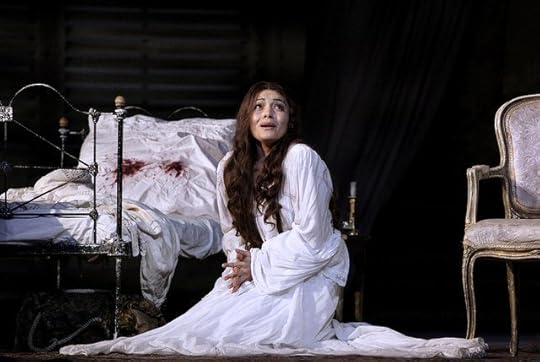
One can also die of youth—of too much flame wasted when everywhere is cold, when no stove is hot enough to warm what is inside and life slips away quietly, without warning. You can did like that, on tiptoe, while all around you everything swirls and whirls. This time there are no parents around. In La Boheme all the characters are desperately young. No one is evil; it is the opera of innocence. A woman loses her life in it, of course. But it is as if there were no responsibility, as if nothing happened other than this great cold, freezing them all, which one of them, a woman, cannot withstand.
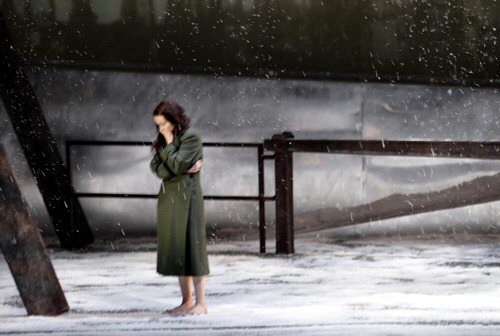
She will just barely have time, coming to her senses when everyone thinks she is already dead, to get up again and sing the famous, rotten love-death. It is a confused discourse in which death, the sea, waves, light, and heaven produce an apotheosis for her that is mystical and musical, in which it is her turn to die alone, despite the final chord when the chromatics are resolved in the only major key in the opera.
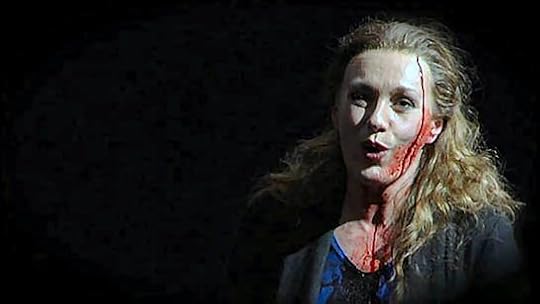

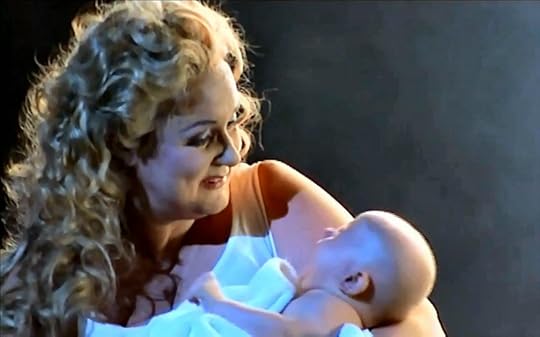
One day I became aware that opera did not come to me from my head. And, although I have often used the word heart, it was because of some leftover sense of propriety and prudence in a world where women are still held—in respect or contempt. Opera comes to me from somewhere else; it comes to me from the womb. That is no easygoing sexual organ. The uterus, which is where hysteria comes from, is an organ where the thought of beings is conceived, a place where powerful rhythms are elaborated; a musical beat that is peculiar to women, the source of their voice, their breathing, their spasmodic way of thinking. There and there alone history is expressed in the first person. There buried centuries are revived, just as Michelet, Diderot, and Freud in certain flashes that were quickly picked up on, were able to see. The hysteric knows how to rediscover the rebellions against Rome in her womb, as well as mythical Sabbats; these days the hysteric is able to make herself consumptive, just like in the last century, and die of it if it is necessary. But this past is no bittersweet nostalgia. As the present forms of numerous and disorganized movements in which feminine revolt is incoherently expressed prove, it is the thrust of the future. The projection of the future depends on this return of the womb. And the imitation dead women who haunt me sow bits of a world in which, perhaps, one day I shall feel free. […]
Just as you always stretch your arms when you leave the darkness, these women will always sing.
Of course, in one's own language it is rare that one can avoid the meaning. ... There is no getting around it. One has to understand. I think that that is the secret cause of resistance to French opera: meaning exists, no more mystery, so long exoticism.But she is translated into English, a language with no operatic tradition to speak of, at least in the period she concentrates on: late 18th to early 20th century: Purcell is too early and Britten too late.
a man who, from the height of his scholarly perch, will think this or that, will do his work as a critic.Her description recalled for me comments from gay writers on opera:
The opera formed an enclave, an Indian reservation where wildness was permitted, a transitory and painful promised land. Music for me was an unthought refuge.