
What do you think?
Rate this book


418 pages, Kindle Edition
First published April 30, 2013




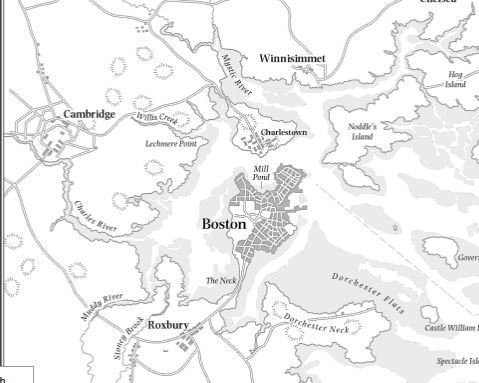

"Two days after the evacuation, the British saw fit to destroy the fortifications at the Castle with a spectacular series of explosions. The resulting fire raged throughout the night with such an intensity that a lieutenant from Connecticut discovered that even though he was several miles away he was able to read a letter from his wife by the light of the burning fortress. The fate of the Castle served as a fresh reminder of the devastation that had been avoided through the occupation of Dorchester Heights. Washington, however, continued ‘lamenting the disappointment’ of not having been able to implement what he described in a letter to a friend in Virginia as his ‘premeditated plan’ to attack Boston, ‘as we were prepared for them at all points.’"
Looking back over two centuries later, we know that the patriot movement ultimately led to independence, but such an end result was by no means inevitable in the spring of 1775, when many still believed that the British government must eventually do as it had always done in response to past colonial protests and withdraw the offending legislation.I'm pretty sure I won't do justice in this review. This is history and not as confined to the title as might be expected. I repeat this, as the writing style is very good, but it isn't what we might think of as narrative (or creative) nonfiction. There was a place or two where I was easily distracted. However, the good news is that there are no footnotes. By about 2/3 in I was pretty much riveted to the text. I learned more than I knew already, even recently having read The Revolutionary: Samuel Adams, which was the point of picking it up. It might have quenched my thirst for knowledge of this period, but did not, and I look forward to reading others on the list I have created for myself.
By early June, Gage had determined that there was no longer any “prospect of any offers of accommodation” from the provincials. It was therefore time, he decided, to issue a proclamation instituting martial law in Massachusetts. Given Burgoyne’s reputation as a wordsmith, Gage requested that his old Westminster schoolmate ghostwrite a proclamation that offered clemency to all patriot leaders who promptly surrendered, with the exceptions of Samuel Adams and John Hancock.
According to one account, he [George Washington] immediately asked the messenger if “the provincials stood the British fire.” When he was assured that they had, he responded, “Then the liberties of our country are safe.”


