A man is making a crude leather mask with an iron spike fixed in the middle of the forehead. It is a 'death mask', once used by Icelandic farmers to slaughter calves, and he has revenge in mind.
Meanwhile, a school reunion has left Sigurdur �li unhappy with life in the police force. While Iceland is enjoying an economic boom, his relationship is on the rocks and soon even his position in the CID is compromised after he agrees to visit a couple of blackmailers as a favour to a friend, and walks in just as a woman is beaten unconscious. When she dies, Sigurdur �li has a murder investigation on his hands.
Moving from the villas of Reykjav�k's banking elite to a sordid basement flat, Black Skies is a superb story of greed, pride and murder from one of Europe's most successful crime writers.
Arnaldur Indriðason has the rare distinction of having won the Nordic Crime Novel Prize two years running. He is also the winner of the highly respected and world famous CWA Gold Dagger Award for the top crime novel of the year in the English language, Silence of the Grave.
Arnaldur’s novels have sold over 14 million copies worldwide, in 40 languages, and have won numerous well-respected prizes and received rave reviews all over the world.
In this tenth book in the "Inspector Erldendur" series, a different member of the investigative team - Detective Óli - looks into the murder of a woman who engages in 'wife-swapping' activities. The book can be read as a standalone.
*****
Though nominally an Inspector Erlendur novel the detective in this book is his team member, Sigurdur Óli.
In Reykjavík, Iceland, Detective Sigurdur Óli is approached for a favor by his friend Patrekur. It seems that Patrekur's sister-in-law and her husband have engaged in a spot of wife swapping....
.....and are being blackmailed by another swinger couple, Lina and Ebbi.
Patrekur asks Sigurdar Óli to pressure the blackmailers to back off and to get the incriminating photos of his relatives.
Sigurdur Óli goes to the blackmailing couple's house at the exact moment Lina is being viciously attacked with a baseball bat and fatally injured. The attacker runs past Sigurdur Óli and escapes. Despite his personal involvement in the case Sigurdur Óli joins the investigative team. He soon discovers that Lina and Ebbi owe a large amount of money and frequently engage in extramarital trysts. Thus the detective team looks for suspects among Reykjavík's debt collectors as well as men who have received sexual favors from Lina.
Meanwhile Sigurdur Óli is repeatedly contacted by an elderly alcoholic tramp, Andrés, who has has taken an old man hostage and tied him up in a basement.
Andrés is incoherent, however, and can't make Sigurdur Óli understand his situation.
Sigurdur Óli has to dig through layers of intrigue to discover who attacked Lina and why. He also looks into Andrés difficulties and uncovers some shocking secrets.
The book has an array of interesting characters, including Sigurdar Óli's girlfriend and mother, fellow detectives, local thugs, and shady bankers. The story has an engaging plot that leads to a satisfying resolution. Very good mystery.
I appreciate the subtle art in the construction of this police procedural set in Iceland. The plot concerns the bludgeoning murder of a woman accountant known to be involved with her husband in wife swapping. The protagonist in this 10th novel in a series is Sigurdur Óli, a colleague of the usual lead detective, Erlendur, whom I encountered in “Jar City.” He is ordinary in many ways, not brilliant, notably courageous, or driven by ideals, but he doggedly works to get the job done. He discovers the victim while acting on behalf of a friends request to discourage a blackmail attempt involving a family member who participated in the wife swapping. That would be an obvious motive for murder, but the woman’s association with a group of bankers involved in financial shenanigans deserves exploration as well.
The case leads Óli down pathways that bring him into the lives of both the poor, downtrodden and the financial high-fliers of this liberal society. As a conservative working class member of this culture, he is disgusted by the apparently laziness and excuses of the criminals of the lower classes and by the corruption and greed among the upper classes. Here is a bit on his mindset on the former type:
If there was one thing that deeply pissed him off about his job it was having to be matey with little jerks like Kristjan, having to suck up to people he despised and stoop to their level, even pretend to be one of them, try to put himself in their shoes. His colleague Erlendur found it easy because he understood these losers, but Elinborg could call on some sort of feminine intuition when forced to consort with criminal lowlifes. But the way Sigurdur Óli saw it, there was an unbridgeable gulf between him and a delinquent like Kristjan. … From Sigurdur Oli’s point of view, the little shit had forfeited the right to stand up and be counted, to be listened to or treated as a member of society.
The evolution of Oli’s sensibilities and insights regarding the lives of these sorts of transgressors represents the hidden core of this novel. His own experience of his parent’s divorce and inability to keep his relationship with his wife from falling apart begins to undermine the certainty of his judgment of other people. Throughout the story, a troubled, mentally ill man he knows to have suffered terrible abuse from a stepfather as a child keeps trying to communicate with him, hinting he has found his abuser. The reader knows from the first pages he is seeking revenge. Óli begins to have more sympathy for the damage many people bear. Will he be able to take effective action to intervene for this person or others in his cases whom the system has failed?
This book begins to open my eyes a bit about what the renaissance of Nordic or Scandanavian Noir is all about. As Goodread’s reviewer Harry Roolaart has been telling us so eloquently, the themes involve a special sort of realism distinct from the other traditional detective and crime novels of the West. We do not get told what to feel, and we don’t usually get the thrill of an exaggerated cat-and-mouse game with a fiendish villain or the blatant drama of classic noir with a lonely, jaded hero struggling with pervasive corruption or organized crime. Instead, what we get here is almost a sociological approach to portraying the fate of lowly figures from the failed welfare system or of more well-to-do people lured to illegal financial schemes.
The lead female characters in “The Girl with the Dragon Tattoo” and “Smylla’s Sense of Snow” were effective in finding pathways to retributive action, contributing to the broad success of these particular novels. Mankell and his predecessor from decades earlier, Sjöwall and Wahlöö, gained wide appeal from the quirky brilliance of their detectives. Indriðason and, apparently, other writers in this new subgenre do not grab these tickets for widespread bestseller appeal. I suspect many will feel depressed by this particular story and suffer from the low level of conventional action or personality pizzazz. If you don’t expect these conventional entertainments, maybe like me you will be more satisfied with the subtleties in this tale.
The book was provided by the publisher through the Goodreads Giveaway program.
لابد وأن سماء مكفهرة ، مثقلة بالغيوم الداكنة تلك التي تظل واقعاً قبيحاً لا يعرف سوى جني المال بأي وسيلة كانت ، حتى وإن كان على حساب أطفال أبرياء ، وإحالتهم جثثاً هامدة ضائعة تسير على قدمين..،لا يسعني سوى الشعور بالاستياء والغثيان ازاء القبح ولا اعلم متى أتوقف عن إبداء دهشتي أمام وحشية الانسان وقسوته؟...
مرت فترة من الصمت .. كانت الموسيقى من حولهما إيطالية ، و كذلك الطعام الذي كانا ينتظرانه .. فقط الصمت بينهما كان أيسلندياً
عودة إلى آيسلندا ، حيث الآلام تنخر الروح كما ينخر الصقيع العظم .. ، و حيث تستعرض في كتاب واحد عدة قضايا من ذلك المجتمع النائي ، سلسلة من الوقائع التي يندى لها الجبين ، لا تقل أي منها شناعة عن الأخرى لكن لعلّ أبرز ما حاول أندريداسون مناقشته هو اغتصاب الطفولة و تجارة أفلام الأطفال الإباحية ، و الضرر التي تُحدثه على نفسية الطفل في المدى الطويل و هنا استعان بشخصية أندريس التي ظهرت كشخصية فرعية في رواية (قشعريرة) لنراها الآن تظهر على السطح بدور أكبر و ألم يطغى على كل الحكاية ، و يستمر أندريداسون مع الابتزاز و العلاقات المشبوهة و سوق الأموال و المصارف و ما يجري فيه من عمليات احتيال ..
يستمر غياب المحقق ارليندور كما الحال في رواية (غضب) ليتولى سيغودور أولي التحقيق في الجرائم ، و مع أنّ هذا يتيح لنا التعرف أكثر على شخصية سيغودور أولي و طبيعة حياته ، إلا أنّ الأجواء المرافقة لعالم ارليندور و وحدته و ذكرياته الأليمة ... هي ما كانت تسبغ السلسلة بنوع من الكآبة العذبة التي لطالما جذبتني لحكايات ارنالدور اندريداسون و علّقت قلبي برواياته .
Arnaldur was quoted in an interview recently as saying: "I have no understanding of financial markets but I understand that people can be greedy." For an author who claims little understanding, he has probably written a more lucid and accurate account of the reasons behind Iceland's 2008 crash than anything else I have read. Cheap off-shore credit, poor government oversight and regulation, shonky financial products and the whole neoliberal economic philosophy (even Milton Freidman is obliquely referenced!) are all referred to here, as is the rampant greed and reckless overconsumption that swept the whole western world in recent years. But writing economic commentaries is not Arnaldur's stock in trade: he writes about people, their tragedies, motivations, stupidity or wisdom. As always, he is a master of interweaving his themes with various plots. For example, he uses the economic climate in part to show the development and changes of attitudes in his central character, Sigurdur Oli. But a greater instrument for change is Sigurdur Oli's attempts to understand his own parents as a result of the breakdown of his partnership with Bergthora. He is also humanised by his dealings with the tragic Andreas, a figure whom he had previously despised as a hopeless loser. In previous books in this series, Sigurdur Oli has always seemed the antithesis of Erlendur. However, here we find similarities. Neither man has the ability to properly communicate with those nearest to him, possibly as a result of having parents who seldom really talked, or answered questions. Both have problems from the past which still overshadow them, and each is fundamentally a loner beyond superficial friendships. And both men are extremely persistent and competent detectives, able to draw seemingly unrelated pieces of evidence together to further their case. There are three deaths in this book, but are they all premeditated murders? Again, in the case of one of the deaths, we have far more sympathy with the perpetrator than the victim, whose evil destroyed a young boy's life. This is another recurrent theme of Arnaldur's, that sins of commission or omission towards children may have profoundly tragic effects for the rest of a person's life. Thus, once more, Arnaldur has transcended the genre of mere crime fiction into a work of fine literary merit.
Seguimos sin Erlendur, y la verdad es que se nota, aunque menos que en la anterior. El caso, pese a no ser el más top, esta bien enredado y pese a que los entresijos de la banca no me interesan nada, no dejan de ser un buen reflejo de la realidad, al menos la de ese momento. Y Andresito, pobre miserable!!!! Sólo me queda 1 libro, sólo 1 (lloro).
Another wonderfully melancholic work by the incomparable Mr Indridason. A meditation on the evils we commit against each other and the life-altering echoes said evils leave behind....whether we realize it or not. Hot DAMN, this cat can write!!
With an upcoming trip to Iceland in the works, I wanted to tick off two boxes: a better understanding of the country and some crime thrillers to entertain me. I found this series by Arnaldur Indriðason, which has me even more excited. In the English translation’s eighth novel, Inspector Erlendur Sveinsson is still away to mentally regroup after a number of trying cases, handing off control to Detective Sigurdur Oli, who is in a slump. He does not see his worth with the police, until he is handled a complex case. A blackmailer has been murdered, though his own antics could well pave the way for a rationale to kill. While Sigurdur must keep his connection under wraps, he has a case that could make a significant difference in his career. Indriðason keeps the reader enthralled with this piece.
Detective Sigurdur Oli has struggled. Since leaving school, his time with the Reykjavik Police has paled in comparison to many of his former schoolmates. Sigurdur Oli finds himself depressed and left to wonder how much of a difference he makes from day to day. When he is asked to look into a handful of blackmailers, Sigurdur finds one of them laying in a pool of blood. As his superior, Inspector Erlendur Sveinsson, remains away to mentally regroup, Sigurdur will have to handle this himself, taking the lead.
After the blackmailer dies, Sigurdur must trying to solve the case without tying himself to the scene, which proves more difficult than it seems. The blackmailer had a sordid past, which not only included video evidence of things, but documented proof of horrible happenings around Iceland. These are things that never should have been kept quiet.
As Sigurdur Oli balances the case to find a killer, he must weigh it against what the blackmailer had in his possession. Reason to kill becomes relevant in the case, though no one can know the depths of horror that Sigurdur Oli finds amongst the blackmailing items. Arnaldur Indriðason sends chills down the spines of the reader with this dark addition to the series.
Arnaldur Indriðason has been someone whose books I wanted to read, but it is only now, with tickets to Reykjavík purchased, that I chose to take the plunge. I love Scandinavian noir thrillers, in which I would label this book. The book explores new and curious angles about the series, once more leaving Inspector Erlendur Sveinsson out of the spotlight. The narrative builds from the outset and entertains the reader. There are dark aspects that the strong-willed reader can enjoy, all of which play into the larger story, which is anything but lighthearted. Characters are key once more, with Inspector Sigurdur Oli’s backstory and development in the spotlight, which enriches the series as his colleague did in the last novel. Plot points help add gruesome twists into the story, though they work effectively to surprise the series fan. I am eager to see where Arnaldur Indriðason takes things and how soon Inspector Erlendur will be back to take the reins.
Kudos, Mr. Indriðason, on another dark and impactful story.
Since I reserve 1* rating for books I hate, this gets 2. Huge disappointment and total waste of time. I bought this book before I had a falling out with the author's works and it took me a long time before I picked it up. I wish I hadn't. I wish I'd just let it go unread. It is bleak, depressing and boring from start to finish. There is not a likeable character in sight. There is nothing wrong with the plotting and the theme - child pornography - is important, but nothing of value is added. There is nothing new here and nothing to hang on to. About as cheerful as suicide note. Not recommended.
كالعادة.. رواية رائعة.. متشابكة الخيوط ببراعة.. ومفعمة بالهموم الإنسانية.. في هذه الرواية يختفي المحقق إرلندور ويقوم سيغودور اولي بدور البطولة فنقترب منه أكثر ونتعرف على همومه وشخصيته.. وقد أثبت جدارته في تولي القضية بشخصيته المختلفة عن إرلندور وأساليبه المختلفة في التحقيق.. تدور الرواية في خطين متوازيين. خط أندي المتشرد السكير الذي يظهر للشرطة ويختفي. وخط قضية تبادل زوجات حاول سيغور أولي التدخل فيها فوجد سيدة قتيلة في منزلها..
حتى في غياب بطله الرئيسي ومحققه النجم يقدم لنا إرنالدور اندريداسون روايتين ممتعتين وقويتين، وتجريان جنبًا إلى جنب خلال غياب ارلندور في إجازة للشمال . غضب وغيوم داكنة... عملان استثنائيان يتقدم فيها مساعدا ارلندور للتحقيق كل على حدة.
Arnaldur Indriðason con i suoi romanzi ci ha aiutato a conoscere meglio la storia islandese e i cambiamenti sociali avvenuti dal dopoguerra (La signora in verde, Un corpo nel lago) al boom economico dei primi anni del millennio. Protagonista di questo romanzo è proprio il senso di onnipotenza che prevale in Islanda negli anni della grande bolla speculativa (che di lì a poco sarebbe scoppiata con tutte le conseguenze che conosciamo) in cui quasi tutti vivono al di sopra delle loro possibilità indebitandosi e i confini del bene e del male diventano talmente sfumati da essere quasi invisibili.
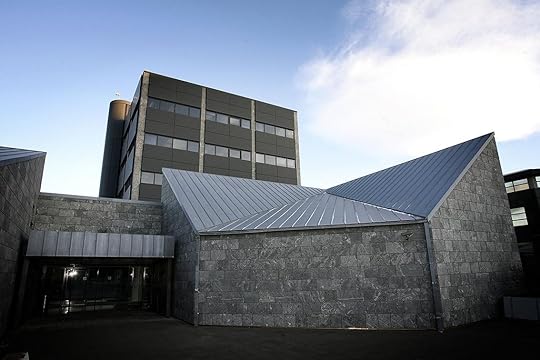
La banca nazionale islandese, comunemente nota come Svörtuloft (traduzione "cielo nero").
Non sarà Erlendur a indagare tra nuovi ricchi e l’onnipresente disagio sociale ma il suo collega Sigurður Óli, un poliziotto molto diverso dal nostro caro ispettore: scarsamente empatico, poco incline ai sensi di colpa e all’introspezione, impulsivo e pieno di pregiudizi.
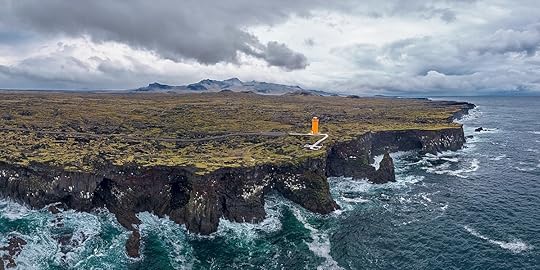
Le scogliere di Svörtuloft (cielo nero) in Islanda.
Un bel cambiamento che però, secondo me, non rende meno piacevole la lettura (sempre che siate interessati più agli aspetti sociali e meno all’elemento poliziesco) a differenza di quanto accade in Un doppio sospetto dove l’indagine condotta da Elínborg (un’altra collega di Erlendur) si stempera troppo nelle problematiche familiari e nel tocco femminile dello stile investigativo.
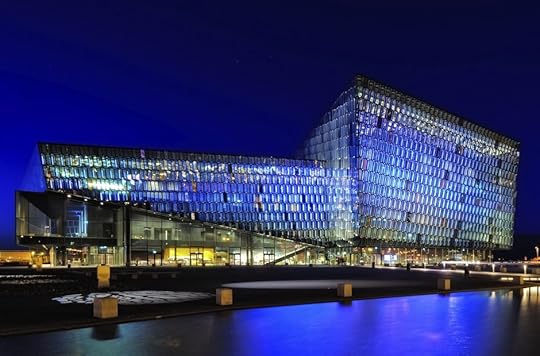
Dal 2011, la prima sala concerti appositamente costruita a Reykjavík ha ospitato l'Islanda Symphony Orchestra e gli uffici della Icelandic Opera. La costruzione fu parzialmente abbandonata quando la crisi finanziaria prese piede, prima che il governo islandese accettasse di salvare la sala concerti a metà dell'edificio. Per molti anni è stato l'unico progetto di costruzione dell'Islanda.
Erlendur toujours en vacances dans l'est islandais. Ou en retraite. Ou carrément disparu? Prétexte en tous cas pour Indridason de, aprés l'inspectrice cuisinière Elinborg, donner la vedette du 10e épisode de la série au n°3 du trio, l'agaçant Sigurdur Oli. Comme toujours, deux situations différentes en parallèle. Celle d'un pauvre petit bonhomme qui a subi, enfant, les pires outrances, et une autre plantée dans le décor qui a précédé la grande débandade bancaire islandais en 2008. Donc encore une autre facette de cet étonnant petit pays si fascinant et complexe. Souvent sordide mais, comme toujours avec Indridason, jamais vulgaire, la grande (une des!) qualité de l'auteur. Sigurdur Oli agace, là où Erlendur se torture et Elinborg captive par son empathie, mais Indridason étoffe le personnage, le fissure dans ses certitudes, le rend même sympathique. Bref, renouvellement dans la brume islandaise. Mais Erlendur? Il va ressurgir ou non? Suspense...
What a mess of a book. I've really enjoyed this series until this book. In the course of the series, Sigurdur Oli was the character I liked the least and this story didn't help. He is a snob and a boring one at that. There doesn't seem any other police officers working other than the one that tells him off. As for the plot, it is so thin you can read a newspaper through it and that would probably be a better use of your time. The strands in which the two stories are intertwined are ridicously thin. Honestly, one or the other story would have been interesting but put together this way just doesn't work. I'm really disappointed in this. Partly because I have enjoyed this series so much and partly because the book is just not good.
Arnaldur has a skill for developing characters, even though the characters are unlikable. Another thing I like about this writer is that the violence is off stage. (I am still kicking myself for reading Jo Nesbo, as I don't need his images in my head). Arnaldur's stories are gritty, but without graphic depictions of violence. He leaves it to the reader to fill in the blanks.
I was anxious to read a new “Inspector Erlendur novel” but he, himself, appeared nowhere. As a result, the entire novel felt different. I missed him. And Sigurdur Oli is a much shallower and less interesting character, although we did get to know him on a deeper level. I hope Erlender returns in the next one....
The last book by Arnaldur Indridason, Outrage, saw the usual protagonist of the series, detective Erlunder disappear for an extended leave of absence and the investigation taken up by his female colleague, Elinborg. I enjoyed the book but missed the character of Erlunder so was slightly apprehensive when I noticed he had not yet returned for Black Skies. This time, the central police figure is Sigurdur Óli, known in previous books mainly for his attempts to become a parent with his partner Bergthóra.
Although written in 2009, the book is set in 2005, at the height of Icelandic economic boom. Sigurdur Óli attends a high school reunion and notes with dismay that most of his contemporaries have become rich from the country’s economic success. However the friend of one his classmates is being blackmailed after he and his wife were photographed at a swingers party. Sigurdur Óli agrees to pay a visit to the blackmailer but before he can speak to her, he surprises an attack on the woman by an unknown assailant. Sigurdur is now in a difficult situation as he tries to remain involved in the police investigation without revealing the reasons for his presence at the murder scene.
Meanwhile an elderly man has been taken prisoner and had placed over his head a leather mask fixed with a spike, similar to those used by Icelandic farmers to kill their animals. It is clear that a disturbed individual is extracting revenge for past misdemeanours.
Such is Indridason’s skill as a writer that the elevation of Sigurdur Óli as a central character worked very well. Instead of once more focusing on the the fertility problems experienced by him and Bergthóra, we see instead the toll that it has taken on their relationship and the separate paths they are now following. The emphasis on the personal seemed to chime in with the plot. Sigurdur is pressurised by a personal acquaintance to investigate a blackmail plot, and when things start to disintegrate this friend unfairly blames Sigurdur for coming to the attention of the police.
Although the blackmail plot is related to husband and wife swapping parties thankfully this isn’t at the centre of the book. Instead the focus is on the greed of bankers and those in associated professions at the height of the economic boom. As the author makes clear it is not only the selfishness of the bankers that is to blame for the spiralling debt situation but the archaic Icelandic laws which fail to provide a legal structure to address financial abuse.
The book was, as usual, an engrossing read and although the relevance of the man with the mask wasn’t initially clear, the links are eventually made. The book is full of incidental detail including reference to the absent Erlundur, Sigurdur’s relationship with his divorced parents and the despair of the police at the justice system which fails to keep repeat offenders off the streets. As readers of Indridason will know, these are themes that crop up again and again in his writing.
My favorite Indridason so far. There is something very readable about this series. One of the main plots is grim (the death mask) yet Indridason presents it in a new light and the reader will be deeply moved by the conclusion. Simultaneously the reader is presented with a cautionary tale of greed complicated by police force politics. A third light hearted plotline about someone stealing a newspaper and Sigurdur Oli's personal life round out a great read. Fans of this series will not be disappointed.
Like other fans of Erlendur, I was worried that a Erlendur mystery without Erlendur might fall a little flat. Plus, Erlendur's colleague Sigurdur Óli, the protagonist of Black Skies is not a very likeable character. Erlendur is endlessly morose and fascinating. That had not been my impression of boring Sigurdur Óli. Ok, I was wrong about all of this. I should have trusted Indriðason. Ostensibly about a murder that is the result of blackmail, there are really three crimes, two related and one unrelated. But the characters are what set Indriðason mysteries apart from the rest. In Black Skies he offers a more nuanced portrait Sigurdur Óli and completes the heartbreaking story of another character whom readers met in Arctic Chill, Andres.
Indriðason departs from his usual narrative to fill in the complicated background of Sigurdur Óli. His mother, now an accountant, has been divorced from his father, a plumber, for many years. His mother seems to be cold and unforgiving. His father tried everything he could to keep the marriage together; he became a doormat. And Sigurdur grew up determined that "he would do his damnedest to avoid turning out like his father" (137). Sigurdur keeps asking the question, "What brought them together?" He admits that he's baffled by their relationship. He's coming to grips with the collapse of his own long-term relationship with Bergthora and wondering how his parents' marriage may have affected him.
Sigurdur is definitely not my type. Chilly and insensitive, he's much more like his mother than his father, which hasn't helped his relationships with women. No one, including Bergthora, is good enough for our Siggi, according to his mother. Ick. Plus, while studying at a police academy in the U.S. he has become obsessed with American sports, especially football and baseball. Because of the time-change, he often stays up late at night watching football games on his satellite TV. He has no interest in books, the arts, or anything cultural. What a fun guy! He has no sympathy for any criminal, even youthful offenders who may have experienced brutal and impoverished childhoods. He basically loaths his job and thinks he may have been wrong to abandon the study of law to become a policeman.
But in the course of Black Skies Sigurdur evolves. He finds himself more sympathetic to criminals and the down-and-out, people like Andres. A chronic alcoholic introduced in Arctic Chill, his story is told here through flashback. We learn more about his sexual abuse at the hands of his step-father and so does Sigurdur, to whom Andres has reached out. Andres has found his step-father and plans to take revenge. Or does he? After seeing a short film clip of Andres at age 10, Sigurdur reflects, "...he rarely felt any sympathy for the luckless individuals he came across in the line of duty,but there was something about the boy's wretchedness, his anguish and defencelessness, that moved him" (189). At this point Sigurdur begins to find his humanity and although I still miss Erlendur, I kind of fell in love with Sigurdur.
There's more, of course. Murders to be solved. Details about the strangely lenient criminal justice system in Iceland. (No one seems to go to jail for very long, despite the seriousness of the crime.) The seemingly deficient social welfare system. The crazy financial situation that led to the collapse of their economy in 2008. Tidbits about life in Iceland. City life vs. country life. And a death in the ice-covered wilderness.
But the story of Andres is what will stay with you when you close this book. It's horrifying and desperately sad.
I wasn't impressed with "Jar City" mainly because I found the pace too slow for my taste but I could no longer continue to ignore Arnaldur Indridason's Inspector Erlandur's exceptionally good reviews by my GR Friends. Inspector Erlandur is otherwise occupied here so the action falls to Inspector Sigurdur Oli. Sigurdur is approached by an old school friend to help retrieve some pictures for a friend that is apparently a victim in a blackmail scheme. Sigurdur agrees to help but by not reporting the blackmail scheme originally, he must now solve the more complex mystery encompassing international banking, murder and blackmail to stay above water himself. Indridason weaves this very elegant and complex novel with a potential revenge killing by a child abuse victim.
Sigurdur is a lonely, disappointed man in general but I liked him because he doggedly pursue's his concept of justice in an unjust world. My first "Jar City" impression of Arnaldur Indridason's people was shortsighted and I'm now glad I gave this unique group of Icelandic detectives another go. They drive the action in subtle yet compellingly interesting ways. Now it's back to Iceland for the other books in the series.
Not my favorite Erlendur. This is darker and more depressing than the norm of this series. Yes, what comparative bleakness quotients! It's centered on Oli. He of the "be the least you can be" soul.
Regardless, the author's plotting is well done and the writing of personality nuance and onus superb, as usual. If it hadn't been so, I would not have finished the book. Because there is NO ONE remotely likable in sight. And also the child porn subject matter criminal core! Ugh!
It's amazing how he can get so much substance out of the most minimal onus. Not only for effort and positive actions, initiated and resolved. But also for the least of any directional posits or core beliefs. Of any kind. It's almost as if all the characters are mere manipulated toy pieces on a playing board.
Eine unterhaltsame Lektüre. Iceland am Vorabend der Finanzkrise. Finanz-Wikinger häufen scheinbare Reichtümer an auf Pump. Vor diesem Hintergrund verfolgt Sigurður Óli (dieses mal ohne die Hilfe seines Freundes und Kollegen Erlendur) den Mord an einer Erpresserin der auf unerklärliche Weise mit dem Unfalltod eines Bankers verbunden scheint.
Und wieder hat mich Indriðason in seine Geschichte hineingezogen, auch dank der Vielschichtigkeit seiner Hauptfigur, die auch im Erwachsenenalter noch mit dem Trauma der Scheidung von seinen Eltern und dem Ende seiner Beziehung zu seiner langjährigen Partnerin Bergþora zu kämpfen hat. Keine große Literatur, aber solide Unterhaltung für Liebhaber skandinavischer Krimis.
Me gustan los policiales nórdicos, pero no conocía al autor islandés Arnáldur Indridason. Fue una de esas descargas compulsivas de Kindle, hace un par de años. Y no me arrepiento. La historia atrapa y tiene mucho ritmo, pasan cosas todo el tiempo. Aunque es un libro corto, tiene varias historias paralelas que se van uniendo. Lo leí en un día, casi en un tirón- lo recomiendo si les gusta un policial bien resuelto.
In this one of the series, Iceland is starting to have what you might call more modern problems. Gangs are showing up, and huge industrial plants are using the land that has been open forever. And for the first time, as best as I can remember, there is a modern murder. It's more than a police procedural because the characters are so deeply imagined. It's kind of a shock that even Iceland changes.
Disappointed! Otro libro donde Erlendur no aparece. Qué está pasando con mis autores favoritos que van en picada? Primero Nesbo y ahora Indriðason. Historia aburrida, sin chispa, donde tenemos de protagonista a Sigurdur Oli (compañero de Erlendur) por el cual no sentí ninguna empatía ni como policía ni como persona. Se me hizo eterno... Espero que esto mejore en el próximo, una lástima que una saga tan buena termine mal.
Inspector Erlendur is off in the East on holiday, so Sigurdur Óli is the star of this episode. What a different atmosphere there is in Iceland with Mr Gloom and Doom out of the picture. This is by far my favorite book in the series.
I’ll have to admit all those names, so many E’s and Th’s, are Murder To keep straight!! Plus all their nicknames.
The translator seems to have a lot of trouble with English phrases. Also, it is sake not saki, a Japanese alcoholic beverage.
Black Skies is the second Inspector Erlendur book where he has taken a leave of absence and never appears in the book. In the first book where he is missing, Outrage, his female assistant, Elinborg, is the focus as she handles crimes in his absence. In Black Skies, the focus is on Erlendur’s other assistant, Sigurdur Oli. Sigurdur is separated from his wife and is conflicted about whether he wants to get back with her or not. He is asked by a friend to help with a blackmailing case – some incriminating photos were taken at a swinger’s party that could derail a political career. Sigurdur also finds himself on the trail of money-laundering bank officials. Although the crimes are interesting, the best parts of this book are the characters and the descriptions of life in Iceland. There is a theme running throughout the book that the problems these characters face have their roots in troubled childhoods. As Sigurdur ponders his marriage problems, he remembers his own parents' divorce and the effect it had on his life. There is a pitiful alcoholic man who is unable to recover from his severe abuse as a child and lives only to exact retribution from the man who tortured him. But I still miss Inspector Erlendur and his troubled family and hope they reappear in the next book.
Erlendur is still on vacation somewhere. So after Elinborg last book it's Sigurdur Oli's turn to star in this new book which takes place at the same time than Elinborg's. Sigurdur has to investigate the agression of a libertine blackmailer and dig up the dirty secrets of an icelandic banking system that seems to have lost all sense of values. And reason as well. And then there's the pathetic case of Dresi-who appeared in Arctic chill-who never could get over with what happened to him as a kid.
The plot is well done, two of the investigations deftly intertwined. As often the case in Indridason's novels, the relations between the characters, be they friends or total strangers, are a bit odd. Cold. Detached. As for those between the Police and suspects they're even stranger. If it took place in the USA I can't imagine Sigurdur going through half his questions to any of the bankers before getting a restraining order. I reckon that's Iceland for you.
During the previous books Sigurdur seemed to basically be an asshole, haughty with as much empathy as a kitchen sink. I won't lie to you, he doesn't become much more sympathetic. Which doesn't mean he wasn't interesting. We happen to know more about his parents and be the witnesses of the end of his couple with Bergthora. When he finally understands Dresi's ordeal he shows his heart is not entirely made of stone. He has frailties and regrets. No doubt he'll be back to his old self in the next book but it was nice to see him under a new light. He and Elinborg deserved their own books.
As for the style, Indridason is constant. Dry, cold, without affect. Can't say I'm too fond of it but the plot and the characters make up for it.
I won a ARC for this book from Goodreads. Awesome, a new Erlendur novel... Wait, it actually does say "an Inspector Erlendur novel" on the back cover (and "an Icelandic thriller" on the front). But there is no Erlendur here - other than his daughter searching for him in the beginning, and then Sigurdur and Finnur wondering where he is. Without Erlendur, how can this be "an Erlendur novel"? What we have as the inspector is one of his colleagues instead, Sigurdur Oli. And while I had grown to slowly like Erlendur and his odd aura of sadness around him, Sigurdur Oli does not disappoint. He's grumpy - adorably grumpy. All while his friends and his mum take advantage and try to bully him, but at least he'll grow to be something more, now that the very odd relationship with Bergthora is off. The style is very Indridason. I love the cold, chilly air with some of the characters, the bizarre discussions and behaviors, and the deep hidden stories in the past. Like in so many Erlendur stories, we have the current and then we have the past storyline. But the past storyline doesn't bind to where you'd imagine. I like Indridason's borderline characters. Everyone has their likes, aspirations, dislikes, and also their past. So while we occasionally have a homeless drunkard in the story, even that drunk or junkie was once a child with an air of innocence (except perhaps Eva Lind, the junkie daughter of Erlendur. Who thankfully isn't present more than for a third of a page here). You'll be left wondering where Erlendur might be... Meanwhile, I suddenly like Sigurdur Oli a lot. Adorably grumpy is just the best way to describe him.
Erlendur is still on vacation in Eastern Iceland, and his co-worker Sigurdur Olí gets his fifteen minutes of fame.
A man, a suspected blackmailer, has been found killed in a shabby Reykjavík apartment. In parallel to this, Sigurdur Olí makes a police rookie mistake. He Gives a personal favour to a friend, and walks just right into another murder case.
The latter directs him directly into Icelands financial world of the mid 80’s, just before the devastating bank crash.
Well, I dont quite know what to say about this one. An Erlendur story without Erlendur isn’t just right. Sigurdur Olí has been a total jerk in the previous books, but in this one there was some character development. I still don’t like him though.
The plot wasn’t too exciting, but it was OK.
The most interesting thing about this book was to get some insight and reminder about the Icelandic bank crisis. I had almost forgotten about that. Note to self: Never trust banks.
Five facts about the Icelandic crisis:
1. The three largest banks (Kaupthing, Landesbanki and Glittnir) were deregulated in 2001.
2. In order to expand, they started to borrow money from other banks in primarily the Netherlands and in the UK. The amounts were huge. Before the crash, the sum amounted to 11 times the Icelandic GDP.
3. In 2008, in connection to the global bank crisis, the banks couldn’t refinance their loans. The financial system collapsed.
4. For obvious reasons, the government couldn’t bail them out. The currency and stock market were in free fall, and the IMF had to step in.
5. 29 bankers were sentenced to prison. Many, however, got away with it.
He's amazing, Indridason - sweet and soulful - I don't know another mystery writer except perhaps for Camilleri who is able to weave you so artfully into the lives of his characters, the setting, their moral dilemmas, the angst of being police detectives and, of course, the crimes themselves - here he takes us into the world of Sigurdur Oli, as Outrage took us into the world of Elinborg (this book more or less takes place in the same moment as Outrage!) - the breakup of his marriage, his to the right politics, fractured relationships with his parents and friendships dating back to high school and mixes them up with some interconnected (or not so interconnected) crimes that chill us with their Icelandic coldness. Only thing wrong with this book? Indridason is tormenting his fans with hints about his great detective Erlendur who has disappeared into the frozen wilds of Eastern Iceland and his past! I can hardly wait to see what Indridason does next!!!!!