“Love is a dark and dangerous animal. For love, you must be prepared to die.”
Matadora is set in 1930’s Spain and Mexico, in the years leading up to the Spanish Civil War. It begins on a bull-breeding ranch in southern Andalucia, Spain, and takes the reader to Mexico and then back to Spain.
The story centres on a girl named Luna Caballero Garcia, orphaned young and working as a servant of the famed Garcia family. Luna is determined to become a bullfighter, despite her lowly station in life and the fact that women are prohibited from graduating to the status of matador-do-toros. She burns for the ring, and is willing to bend or break any rule to enter it.
Fortunately, Luna finds unlikely patrons in her master’s sons. Manuel, an aspiring poet and socialist, sees in his surrogate sister the genius he wishes he was; Pedro sees a chance to make an astonishing amount of money. The trio decides to travel abroad where Luna will have the opportunity to prove her skill but she knows her true destiny lies in the blood-soaked sands of home.
Matadora is a powerful, compelling exploration of love and ambition. The pain that drives all our ambition, the yearning for love it reveals, the lengths we go to win love, and the price we pay along the way. Matadora is about someone like you, trying against all odds, to win love.
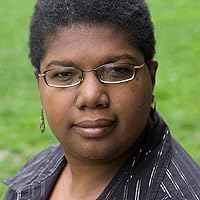
Elizabeth Ruth is a writer, creative writing instructor and mother living in Toronto, Canada. Her first novel, Ten Good Seconds of Silence was a finalist for the Writers' Trust of Canada Fiction Prize, the Amazon.ca Best First Novel Award and the City of Toronto Book Award. Her critically acclaimed second novel, Smoke, was chosen for the One Book One Community program and named as a top-ten book of the year by NOW magazine. Elizabeth's third novel - Matadora, featuring a female bullfighter in 1930's Spain and Mexico -was published in April, 2013. Matadora is a novel about ambition, passion, politics, and art. NOW Magazine picked Matadora as #3 on their 2013 Must Read Books list. The National Post gave Matadora a stellar review: http://arts.nationalpost.com/2013/04/...
In 2013, Elizabeth will also publish a Good Reads Books novella for adults with low literacy. Love You To Death is a Psychological thriller.
In 2003 Elizabeth edited an anthology entitled: Bent On Writing, contemporary queer tales.
Elizabeth is well known for her mentorship of aspiring writers. She teaches at the University of Toronto, and within the Humber School for Writers Correspondence Program.
Recently Elizabeth held the position of Writer-In-Residence at the Toronto Public Library. She has also recently delivered workshops and offered manuscript evaluations to writers in northern Ontario. Together with parenting writer Ann Douglas, Elizabeth Ruth delivered professional development workshops to writers across Canada.
Elizabeth Ruth is the current chair of the author's advisory committee of the Writers' Trust of Canada. She holds a BA in English Literature and an MA in Counselling Psychology, both from the University of Toronto. She is also a graduate of the Humber School of Writers.
May 31, 1130am ~~ First of all, thanks to GR friend Sandy for telling me about this book. I never would have known about it otherwise, and even though I did not like it as much as I expected to, I did still enjoy the basic story.
This is a novel about a young girl in Spain who dreams of being a bullfighter. She is an orphan who was raised on the hacienda of a family who bred fighting bulls, and the two brothers of the family (Pedro and Manuel) agree to begin training her secretly to be able to fight bulls from horseback. Luna has no memory of her mother, who died in childbirth. But she has been told that her father was a great bullfighter, and something inside tells her she could be great too. She eventually learns the truth about her family ties, but does the knowledge come too late?
The story follows her from Spain to Mexico and back, and takes place in the mid 1930's when Spain was enduring the cataclysms of civil war. Luna must face this tragedy when she returns to Spain, but until then it means nothing to her. The only important thing is her training. So what will happen to her in Spain? Will she pull her head out of the bullring long enough to see what is going on in her country? Will she even care if she does?
I tried to like Luna, but as other reviewers have said, she was not really a very likable person. However, a matador needs such arrogance and such focus, so I could forgive her that, to a point.
What I could not forgive were the author's errors, which began to show up once Luna and her cuadrilla arrived in Mexico. I could rant and rave for hours but I will say only a few things. I once read an autobiography of an author (I don't remember the name) who said the most important lesson she ever learned about writing was that you have to get your moon in the right place in the sky. Which means you need to be certain about the details in your story. If an author does not know for sure which currency a country uses (Mexico is peso, Spain is peseta, even in the 1930's), or when a Rosca De Reyes is part of a fiesta (only on January 6, never in December during the posadas), that author needs to find these things out before starting to write.
And if the main subject of your book is bullfighting, an author really needs to know as much about it as possible before starting a project. That way it is less likely to see unfortunate scenes such as the one in Columbia for Luna's fellow student Armando. I will just say this: a bull's career is a one time event. They do not leave the ring under their own power unless there is an indulto, in which case they are allowed to go out to pasture and hopefully breed more bulls like themselves. But an indulto is only for those bulls who show such bravery and grace that they win the hearts of the crowd and it is a very rare event. No management would ever boast about having a killer bull in the ring and no matador worth his sword would accept such an opponent. There are rules, and no one would flaunt them openly the way the author described. Not with the bull in Columbia and not with the idea of shaving the horns for Luna's first bull. That is still sometimes done, but it is a shameful, cowardly act done in secret, in the dark, and an honorable matador would never accept such a thing being done and would certainly never go ask permission to do it.
So as much as I enjoyed the story on the one hand, I was very disappointed with it on the other. To end on a good note, I can say that this book led me to hunt for the autobiography of Conchita Cintron, the woman on the cover and obviously a major influence for the story. I had heard of her and have read a little about her, but now when the book arrives I will get to read her life story in her own words.
Wow! This was a great read! The third and most recent of Elizabeth Ruth's books.
A story set during the Spanish Civil War, in Spain and in Mexico, about an ambitious young woman who aspires to become a matador.
The research that went into this book is palpable and I love the integration of Spanish terms into the English (with a glossary of terms to help) made me feel as though I could read Spanish! Really well done.
The story is riveting, hard to put down. There are a few key characters, not so many you need to keep notes, and you get to know them really well.
This book is multi-layered in terms of themes and each is well developed and well integrated - seamless.
Love the really short chapters.
Thanks Elizabeth for an incredible piece of work! And thanks for personally signing my copy at the book launch!
Matadora by Toronto-based writer Elizabeth Ruth is an ambitious book, about an ambitious woman. This novel follows Luna Callabero Garcia, a peasant girl who works as a servant on a ranch in Southern Spain in the 1930s. Orphaned (supposedly) and burning with a passion to rise above her lot in life, Luna sets her sights on becoming a bullfighter, despite the fact that her class and her gender prevent her from ascending to the top status as a matador. Luna unconsciously hopes that bullfighting will fill the empty hole in her heart from the loss of her mother at childbirth as well as alleviate her poverty.
I loved the sound of this novel before I even cracked the cover. I’m always interested in the idea of women breaking into male dominated fields, although bullfighting makes me squeamish and the descriptions in Matadora certainly made me disgusted at the senseless violence directed at both human and non-human animals. But, I appreciated how Ruth didn’t turn the subject into a polemic against bullfighting and that rather, without ever exactly condoning it Ruth looks into the complexity of Luna’s place in this Spanish cultural tradition. It would be quite easy to condemn this peculiar ritual, but it’s much more difficult to look at the contradictions and intricacies. Luna, for instance, believes the bulls are her equals; that is why she can fight them. Ruth also often focuses on the artistic appeal of Luna’s passion too, which is both sport and dance...
We read this book for book club, and while I may be biased (it was my choice) I really enjoyed it. I heard an interview with Elizabeth Ruth on CBC radio, and that' s what inspired me to get the book. At first I was skeptical - as a fierce lover of animals, I couldn't imagine reading about such a cruel and archaic practice as the slaughter of animals for sport. I cringed and cried my way (and skipped many pages) through Yann Martel's Beatrice and Virgil, so a large part of me was not looking forward to this. Still, I was intrigued, so I began. Let me send a message to other animal lovers like myself: I felt that Ruth dealt with the issue of bullfighting with great delicacy. Never once was the slaughter glorified or drawn out for shock value. I really appreciated that about this book. I enjoyed the character of Luna. She was headstrong, and difficult and stubborn and she made for a brilliant main. Through the story we watch her grow and risk much in the name of her single pointed goal. This is a story of struggle, and passion and wanting. It is the story of the decisions that come from these conditions, and their consequences. The book is beautifully written, I will seek out others by Ruth. It did not turn me into a supporter of bullfighting, but it certainly showed me another perspective.
I surprised myself by finishing the book, writing is good but as a strong opposant to the barbaric practice of corrida I could barely handle the graphic tale of animal abuse and the apology of it also did not care at all for any of the characters.
I struggled with this book even though it was set in Spain and Mexico of the 1930's which had drawn my interest and there was a fairly positive review in the Globe and Mail.
I had little sympathy for the main character Luna, the young female matador. She was a stubborn girl who never develops and yet the other characters seemed to have more interesting qualities, from Pedro her manager, to Manuel, her poet brother and even Grace, the Canadian "medic". Often I wondered if this book was aimed at a younger audience and often felt it was more geared towards a female audience. So perhaps others will like this for those reasons. The Spanish Civil War section seemed more researched and well written while the other parts just seemed to be lacking finese.
One thing that bothered me was whenever she used Spanish words or phrases, then she added the English equivalent. This was very redundant and made me wonder if this book was aimed at a younger crowd. Leave the Spanish in the book and add the words in the appendix or just let people figure out the context (or Google it). Most Spanish words aren't that hard to figure out and this became a real draw back. When Julian Barnes uses French, he doesn't translate it for us.
Was thoroughly enjoying the book all along.... Not going to include any spoilers but the author introduced one more issue into the story towards the end that I just didn't think was necessary. Did it ruin the book for me though? Absolutely not! I would recommend it to anyone. A story well told and the reader is one hundred percent behind the main characters. So glad I got to read this one!!!! So glad that this author was present at our last writers series.
Amazing. Very well-written. A story of love and ambition against the backdrop of a country torn into pieces by war. Matadora is one Canadian novel you won't want to put back on the shelf for later. The time is now. The capote and banderillero await, ringside. Read it.
The universe E Ruth creates in "Matadora" is taut with threads of hope, passion, ambition, success and deceit. I wasn't sure how I'd respond to the sections about bullfighting, with bulls and horses being killed, but since Luna is convinced of the poetry and grace and nobility of bullfighting - as was commonly held in 1930s Spain - the novel breathes within that historical reality. Ruth isn't asking us to love or hate bullfighting; she's writing a story in a world where Luna believes bullfighting will bring her power - and family.
In terms of writing craft, I just love how Ruth packs so much description and character into each sentence, weaving a complete world of emotion and relationships and place. Here's an example, from a scene where Luna has to show how she reads cattle. She is still not sure if she will be trained, because she's not a boy:
"From their sunny perch on the platform at one end of th training ring Luna and Manuel could see the flat tops of the olive trees, and a few gall oaks bending and twisting like arthritic old men. They found El Mayoral in the stands, ready with his paper and pen. He'd take notes on each stage and assign a grade to each of the cows, though it was Luna who was going to be most harshly graded."
When the story jumps from the personal concerns of Luna and Manuel to the unpredictable tensions & violence that became Spain's civil war, we can feel the bone-deep questions about whether / how art and personal ambition matter during so much social unrest. Sounds like questions many of us are asking as we look around the world today, whether we're artists/writers or not.
Some other reviewers have said they find Luna's character "thin." I didn't. Instead, I read a character who's search for belonging is met with loss, over and over, making Luna's choices believable and compelling. The scene where she learns of Paqui's death and hacks her grief into the bus seats with her sword ... so moving.
This book read more like a ditch than a hill, which is fine and a little refreshing. It certainly wasn't what I expected. I was very impressed with the author's research into the time period of this book but I felt that the main character was thinly developed. It would have also been nicer to have the Spanish parts written in real Spanish (punctuation etc) and not always translated word for word in English immediately after. That style was useful for some parts but started to feel redundant. Overall 3 stars because the last 100 pages or so got very exciting and helped bring the rest of the book together from the stretched middle.
Found this book in a free hotel library in Madrid. Best decision ever as touring Southern Spain and the sites of famous bull rings. The lingo in the book helped when the guide spoke of matators. Loved it
Loved the theme of the challenges facing a young woman breaking into a traditionally male-dominated profession. This book opened my eyes to bullfighting in a way I had not expected. The settings and historical time period were interesting. Many contrasting characters and deft imagery, and I enjoyed the way Spanish words were integrated into the text so seamlessly. The links between Canada and Spain during the Spanish Civil War were not known to me previously. I enjoyed the protagonist's character development. Months after reading it, images from this novel revisit me often. One I will keep on my shelf and read again and again, and gift to others.
Full disclosure: I've known the author for over 20 years (we went to uni together). But I don't get into fiction that much.
I *loved* this book. I could not put it down. This is the first book where the author has stepped away from her own personal experience which I think is a good thing. I learned a lot ( women in bullfighting, cultural history, etc) without it being hammered into my skull. You will find yourself gasping in parts- it's like you can see the drama flash in your head like a flim.
Buy a copy for your next flight. Trust me, you will not leave it on the plane when you land.
I kept wondering why I could not stick with this novel. It is well written, interesting, and that characters are beautifully developed.I just cannot stand cruelty to animals! Although I know that bull fights are a rich history of the Spanish past, I really don't want to read a detailed story full of animal deaths. Also I peeked and I know how the story ends. If you can handle animal cruelty and death, and want an interesting read, Matadora is certainly worth your time. I on the other hand, prefer to move on to different things.
I won this book from Goodreads. I liked the first third of the book. The setting and family dynamics were interesting. But I felt the book lost its way when the story moved to Mexico and then moved back to Spain. There wasn't much depth to Luna's character and the story felt a bit disjointed and superficial. I have read a few books set during the Spanish civil war that I have really enjoyed. Here I felt that the book was trying to deal with too many things at once and the historical background lost any significance other than creating chaos in the characters' lives.
The reason that I liked this book (rather than really liked or loved it) was entirely personal, I think. Matadora is beautifully written, but in my view, the protagonist is fatally flawed in a way I couldn't get past, and her obsession - bull fighting - is something I can't stomach. The book succeeded in that it expanded my understanding of bull fighting, and of people who are obsessed with success in a way that makes them extremely underdeveloped in all other ways. But for me, it was painful rather than pleasurable to read.
I was wondering if adding "Grace" at the end of the book with such a strong views was just to bring Canada to the mix. I didn't care for her, she didn't do anything in terms of character development for Luna or anybody. she was not a well formed character. She had this opposite love and hate for Luna and what she did but it didn't sink with me. I started the book slow, got in to it in the middle but the end was not really well developed compare to the rest of the book.
Even though the idea of bullfighting sickens me, I rooted for the heroine to succeed. A fascinating look at an usual occupation told through the eyes of an orphan girl servant. The injustices of a male/upperclass dominated society are mirrored in the girl's own family. There are times when she is unlikeable and times when I wanted to hug her. Memorable and remarkable book.
WHAT THE HECK!! After that roller coaster the end just made me that much more shocked. This book was extremely well written! I loved the different landscapes and the the ways the characters grew. There was lots of loss in this book. Every page felt like some one was devastated! However it was done elegantly and is so worth every second you spend reading it!
I thought the character development was weak and although the story was good I did not care about the characters. I don't know if this was a problem with the other books printed in the run, but 40 pages were repeated at one point. I remember thinking, 'This looks familiar' and sure enough I had already read it. At that point, I stopped reading.