

What do you think?

Stories of Edith Wharton - Vol.2
The Eyes: A famous ghost story. The Daunt Diana: Tells about the love of art. The Moving Finger: An eerie story about a man's clinging to his wife's memory. The Debt: A story of loyalty.
Hardcover
First published January 1, 1910
About the author
Edith Wharton
1,747 books5,680 followersEdith Wharton emerged as one of America’s most insightful novelists, deftly exposing the tensions between societal expectation and personal desire through her vivid portrayals of upper-class life. Drawing from her deep familiarity with New York’s privileged “aristocracy,” she offered readers a keenly observed and piercingly honest vision of Gilded Age society.
Her work reached a milestone when she became the first woman to receive the Pulitzer Prize for Fiction, awarded for The Age of Innocence. This novel highlights the constraining rituals of 1870s New York society and remains a defining portrait of elegance laced with regret.
Wharton’s literary achievements span a wide canvas. The House of Mirth presents a tragic, vividly drawn character study of Lily Bart, navigating social expectations and the perils of genteel poverty in 1890s New York. In Ethan Frome, she explores rural hardship and emotional repression, contrasting sharply with her urban social dramas.
Her novella collection Old New York revisits the moral terrain of upper-class society, spanning decades and combining character studies with social commentary. Through these stories, she inevitably points back to themes and settings familiar from The Age of Innocence. Continuing her exploration of class and desire, The Glimpses of the Moon addresses marriage and social mobility in early 20th-century America. And in Summer, Wharton challenges societal norms with its rural setting and themes of sexual awakening and social inequality.
Beyond fiction, Wharton contributed compelling nonfiction and travel writing. The Decoration of Houses reflects her eye for design and architecture; Fighting France: From Dunkerque to Belfort presents a compelling account of her wartime observations. As editor of The Book of the Homeless, she curated a moving, international collaboration in support of war refugees.
Wharton’s influence extended beyond writing. She designed her own country estate, The Mount, a testament to her architectural sensibility and aesthetic vision. The Mount now stands as an educational museum celebrating her legacy.
Throughout her career, Wharton maintained friendships and artistic exchanges with luminaries such as Henry James, Sinclair Lewis, Jean Cocteau, André Gide, and Theodore Roosevelt—reflecting her status as a respected and connected cultural figure.
Her literary legacy also includes multiple Nobel Prize nominations, underscoring her international recognition. She was nominated for the Nobel Prize in Literature more than once.
In sum, Edith Wharton remains celebrated for her unflinching, elegant prose, her psychological acuity, and her capacity to illuminate the unspoken constraints of society—from the glittering ballrooms of New York to quieter, more remote settings. Her wide-ranging work—novels, novellas, short stories, poetry, travel writing, essays—offers cultural insight, enduring emotional depth, and a piercing critique of the customs she both inhabited and dissected.
Her work reached a milestone when she became the first woman to receive the Pulitzer Prize for Fiction, awarded for The Age of Innocence. This novel highlights the constraining rituals of 1870s New York society and remains a defining portrait of elegance laced with regret.
Wharton’s literary achievements span a wide canvas. The House of Mirth presents a tragic, vividly drawn character study of Lily Bart, navigating social expectations and the perils of genteel poverty in 1890s New York. In Ethan Frome, she explores rural hardship and emotional repression, contrasting sharply with her urban social dramas.
Her novella collection Old New York revisits the moral terrain of upper-class society, spanning decades and combining character studies with social commentary. Through these stories, she inevitably points back to themes and settings familiar from The Age of Innocence. Continuing her exploration of class and desire, The Glimpses of the Moon addresses marriage and social mobility in early 20th-century America. And in Summer, Wharton challenges societal norms with its rural setting and themes of sexual awakening and social inequality.
Beyond fiction, Wharton contributed compelling nonfiction and travel writing. The Decoration of Houses reflects her eye for design and architecture; Fighting France: From Dunkerque to Belfort presents a compelling account of her wartime observations. As editor of The Book of the Homeless, she curated a moving, international collaboration in support of war refugees.
Wharton’s influence extended beyond writing. She designed her own country estate, The Mount, a testament to her architectural sensibility and aesthetic vision. The Mount now stands as an educational museum celebrating her legacy.
Throughout her career, Wharton maintained friendships and artistic exchanges with luminaries such as Henry James, Sinclair Lewis, Jean Cocteau, André Gide, and Theodore Roosevelt—reflecting her status as a respected and connected cultural figure.
Her literary legacy also includes multiple Nobel Prize nominations, underscoring her international recognition. She was nominated for the Nobel Prize in Literature more than once.
In sum, Edith Wharton remains celebrated for her unflinching, elegant prose, her psychological acuity, and her capacity to illuminate the unspoken constraints of society—from the glittering ballrooms of New York to quieter, more remote settings. Her wide-ranging work—novels, novellas, short stories, poetry, travel writing, essays—offers cultural insight, enduring emotional depth, and a piercing critique of the customs she both inhabited and dissected.
Ratings & Reviews
Friends & Following
Create a free account to discover what your friends think of this book!
Community Reviews
Displaying 1 - 7 of 7 reviews

July 5, 2025
I like Wharton's writing a lot; this would have been 5 stars if it hadn't been for the last story, which I thought was predictable and a bit boring.
The Eyes: an old artist named Culwin tells of an apparition that has haunted him throughout his life: a pair of disembodied eyes that appear at the end of the man's bed and seem to reproach Culwin for his wrongs; perhaps a manifestation of guilt.
The Daunt Diana: a beautiful and rare sculpture of the goddess Diana and one man's strange obsession and final contentment.
The Moving Finger: Ralph Grancy, after a first troubled marriage, finally finds happiness in a second wife and commissions her portrait. when the second Mrs. Grancy dies, Ralph is bereft, and requisitions the artist, Claydon, to age the painting along with him. After Ralph himself dies, Claydon takes back the painting and restores it to its former beauty and youth; possession and a blurring of the line between art and reality.
The Debt: eminent professor Oliver Landfear takes on a brilliant young student named Dredge, mentoring him and naming him his successor over Landfear's own son. Dredge inherits the professor's position upon his death and begins what appears to be a campaign to disprove his mentor's life's work. the meaning of loyalty and scientific integrity.
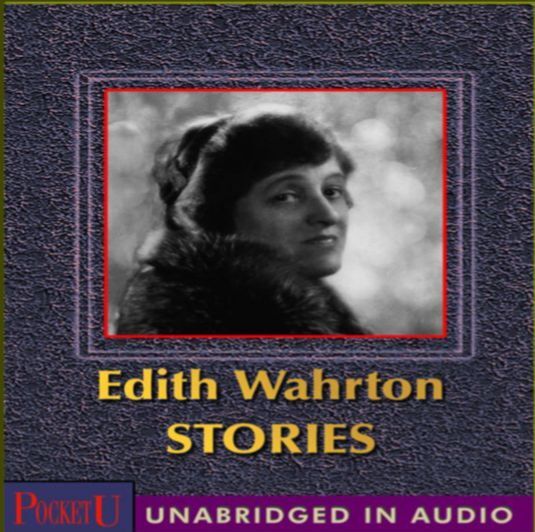
Note: sort of weird, but the edition I listened to misspelled Wharton's name on the cover.
The Eyes: an old artist named Culwin tells of an apparition that has haunted him throughout his life: a pair of disembodied eyes that appear at the end of the man's bed and seem to reproach Culwin for his wrongs; perhaps a manifestation of guilt.
The Daunt Diana: a beautiful and rare sculpture of the goddess Diana and one man's strange obsession and final contentment.
The Moving Finger: Ralph Grancy, after a first troubled marriage, finally finds happiness in a second wife and commissions her portrait. when the second Mrs. Grancy dies, Ralph is bereft, and requisitions the artist, Claydon, to age the painting along with him. After Ralph himself dies, Claydon takes back the painting and restores it to its former beauty and youth; possession and a blurring of the line between art and reality.
The Debt: eminent professor Oliver Landfear takes on a brilliant young student named Dredge, mentoring him and naming him his successor over Landfear's own son. Dredge inherits the professor's position upon his death and begins what appears to be a campaign to disprove his mentor's life's work. the meaning of loyalty and scientific integrity.
Note: sort of weird, but the edition I listened to misspelled Wharton's name on the cover.

May 5, 2011
This is a small collection of four short stories read by Ralph Cosham, who does a fine job. Here's my breakdown of each story:
1. The Moving Finger - A widower has a painting of his much-loved wife that is cause for disturbance to his once-close friends. Seemed like it might have a Poe twist, but there's something far more rooted in reality going on. Five out of five stars.
2. The Debt - A young scientist writes something like "On the Origin of Species" and gives speeches supporting his thesis, much to the dismay of his mentor's widow and her adult children. Four out of five stars.
3. The Daunt Diana - A jealous antique collector has buyer's AND seller's remorse. Four out of five.
4. The Eyes - One man has TWO ghost stories to share, although there's reason to believe it's just his subconscious messing with him OR some trick of the eye he hasn't picked up on. I'm giving this only three stars because I wasn't clear about the ending - did the other guy ALSO see what the narrator saw or does he understand what's really going on?
1. The Moving Finger - A widower has a painting of his much-loved wife that is cause for disturbance to his once-close friends. Seemed like it might have a Poe twist, but there's something far more rooted in reality going on. Five out of five stars.
2. The Debt - A young scientist writes something like "On the Origin of Species" and gives speeches supporting his thesis, much to the dismay of his mentor's widow and her adult children. Four out of five stars.
3. The Daunt Diana - A jealous antique collector has buyer's AND seller's remorse. Four out of five.
4. The Eyes - One man has TWO ghost stories to share, although there's reason to believe it's just his subconscious messing with him OR some trick of the eye he hasn't picked up on. I'm giving this only three stars because I wasn't clear about the ending - did the other guy ALSO see what the narrator saw or does he understand what's really going on?
September 10, 2018
First story was interesting. It was an audio book and I think might have been better if I had read it.

September 20, 2018
Great stories! Loved them all!

February 5, 2020
Compelling short stories that stand up 100 years after being written.

October 25, 2022
Almost as fun as Edgar Allen Poe!

January 13, 2024
Pakkomielteet eräänlaisten kauhutarinoiden tai henkilökohtaisten tragedioiden perustana.
Displaying 1 - 7 of 7 reviews