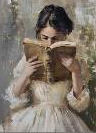
What does it take to survive in a world built on lies?
Sixteen-year-old Rubric loves her pampered life in the Academy dormitory. She’s dating Salmon Jo, a brilliant and unpredictable girl. In their all-female world, non-human slaves called Klons do all the work. But when Rubric and Salmon Jo break into the laboratory where human and Klon babies are grown in vats, they uncover a terrifying secret that tears their idyllic world apart.
Their friends won’t believe them, and their teachers won’t help them. The Doctors who rule Society want to silence Rubric and Salmon Jo. The two girls must flee for their lives. As they face the unthinkable, the only thing they have left to believe in is their love for each other.
Nora Olsen's debut novel, The End: Five Queer Kids Save The World, was published by Prizm Books in December 2010. It's the story of five LGBTQ teens who must travel through time to avert a nuclear war. Olsen's second novel, Swans & Klons, was published Bold Strokes Books' Soliloquy imprint in May 2013 and is a dystopian YA novel about two girls who fall in love as they join the struggle to free enslaved clones. Frenemy of the People (2014) is the story of two girls who hate each other... until they fall in love. Maxine Wore Black (2014) is a queer and trans YA homage to Daphne du Maurier's Rebecca.
In the future of the planet Earth, there is no longer a need for males. No longer are women subjected to the disgusting man creatures, and they don't have to go through the awful, painful, barbaric ritual of child birth. There are only women, chosen to be descendants of 300 superior females, and only from those 300. And then there are the Klons- the lesser minded, not-quite-humans that serve the Society and do the jobs that no one else wants to, like cleaning and driving. Light on rules and fairly peaceful, Rubric wasn't one to question the ways of Society, until together with her girlfriend, Salmon Jo, they uncover a disturbing truth- Klons may not be different from humans at all. The girls must decide where they stand, what they will risk, and how to unravel the knitted lies that they have been fed all of their lives.
----
I have to say, I'm quite impressed by this book. It falls in two of my favorite book genres- dystopian and LGBT. Though this book isn't without faults, I would definitely recommend it.
+ I love the combination of blending the two aforementioned themes. I am a huge fan of dystopian fiction, and this is the first book I have ever encountered with such a strong queer theme. It gave the novel a very unique plot line, and will make it stand out in my mind.
+Because of the lesbian motif of Swans and Klons, I found it more relatable than most other books of the same genre. I was able to more vividly experience Rubric's emotions- from love to separation and grief- since they were emotions directed at a female. I often thought of my own girlfriend and myself in their place. Like Salmon Jo and Rubric, one of us is very practical and no nonsense, and the other is artistic and almost too imaginative.... I won't divulge which of us is which!
+As with other dystopian novels, I like this book because it was disturbing. Books with futures that are almost utopias scare me more than horror books ever could, and this one was no exception. The unique twist of genetically identical people being created only to be slaves is creepy, at the very least, though I mean it in the best way possible.
-My faults with the book were few, but still hindered my reading experience. The first was the lack of romance and affection between Salmon Jo and Rubric. Often times they seemed blatantly cold and plastic towards one another. I wish there would have been more sweetness, so that I could dive deeper emotionally into the plot.
-The only other problem that I had with this book was a few word redundancies that got old really quick. The words "thicko" and "veruckt" were used with an alarming abundance. I'd definitely switch up those words now and then.
I sincerely hope that Swans and Klons is the first book in a series, or at least a two-parter. Nora Olsen has made a new fan in me with her new, queer-friendly take on dystopian fiction. Fans of books such as Beta or Uglies should check this book out. If gay themes or relationships offend you, than this is NOT a book for you!
Thank you to NetGalley and Bold Strokes Books, Inc. for my e-copy. This review can also be found on my blog, Bitches n Prose.
SWANS & KLONS is quite possibly the most infuriating book I’ve ever read. Rubric dodges impossible situations on Forest Gump luck. The narrator consistently points out reasons for the girls’ plans (lack of plans) not to succeed and yet by sheer stupidity of the other characters, they get what they want accomplished.
Grown up with everything done for her by Klons, Rubric acted just like Paris Hilton in the television series A SIMPLE LIFE. She acts like a spoiled brat and gets away with constant tantrums. She liked the idea behind rescuing the Klons, but she was flabbergasted when she was expected to do ‘slave labor’. Rubric is extremely self-centered and though she insists that she cares deeply for Salmon, she doesn’t hesitate in leaving her girlfriend behind for the chance to return to her old life. Unlucky for Rubric, her very taboo actions of running off with slaves and burning down buildings made her return less welcoming than she wanted. And the narrator makes her seems so cold and uncaring:
Just because the fabric of Rubric’s universe had been ripped apart was no reason for her to quit her regular routine.
Um? I think it is a pretty good reason, personally.
And then the reactions to certain situations are completely off the wall. Here is what Salmon Jo says immediately after her seizure:
“That was brutal,” Salmon Jo said thickly. ”I think I pissed myself.” She stretched a bit and reached for Rubric’s hand. Then she closed her eyes.
There are two controversial topics at the core of this novel, but the truly controversial scenes are hidden beneath talk and fluff. It’s like the author didn’t want to commit to being offensive, yet still wanted to make jabs. As a result, the characters don’t act the way they’re suppose to. They feel mechanical in the scenes that require the most emotion. This lack of emotion at this critical scenes enraged me as a reader. It’s like holding out a teddy bear to a kid and then at the last second, you point in the other direction and say, “look candy” and hide the bear. If you’re going to offer me a teddy bear, give me a damn teddy bear. It was impossible to connect to any of the characters, because of the narration.
Slavery — Klons are genetically inferior and thus slaves. Salmon and Rubric are searching through the labs and they come to the conclusion based on circumstantial evidence that Klons are no different. If Salmon was more true to her character as a doctor/researcher, she would have focused more on finding more information to support her theory and then exposing the secret. It would have been way more believable than two teenage girls running around as imposters of their superiors.
Feminism – Females are genetically superior to males. In fact, males were so lazy and stupid that they became extinct. Although, a male does show up late in the book and he is apparently dumber and hairier than an ape. He also is not for breeding. No, the women impregnate themselves with embryos collect who knows when to save themselves from sex. Because sex = male dominance? Also, every time pregnancy is mentioned, it is considered an ugly and horrible thing to go through. Rubric is absolutely repulsed by the notion of pregnancy.
The world building relies too heavily on standard dystopian expectations with one key exception — there is no security when it suits the plot. All Klons are chipped, the girls have key cards, the real doctors have security present, and every single person is fingerprinted. If escape is so easy and the chips removed so easily, then why don’t more Klons attempt escape. The security mechanisms just vanish when the girls need to get something accomplished. There are loopholes and loopholes within loopholes and none of them make sense. There are weird terms used, such as veruckt (dumb), thicko (stupid), shatzie (girlfriend/partner), and Hollyhuck (not quite sure).
During one point in the story, a girl splashes a bottle of chlorine all over Rubric. I’m hoping that the author meant chlorine bleach, because straight chlorine would have ate away Rubric’s skin and given her life-time respiratory problems. I double checked. The book says chlorine and not chlorine bleach. Rubric was treated with aloe vera, which is what you put on a sunburn.
I haven’t figured out why the book is called SWANS AND KLONES when society is split between the Panna and the Klons. There are a couple mentions of swans. One: Rubric makes a clay swan. Two: Nanny Klon tells a story about two swans, but the story wasn’t really about the swans, so I don’t get it. Over all, this book pissed me off more than any other book ever. It has a weaker plot, whinier characters, and potentially more controversial scenes than REVEALING EDEN. Nothing in this book makes sense and I can’t understand how it ever found a publisher.
(I received a copy from Netgalley in exchange for my honest review.)
Imagine a world where men do not exist. Women not only run society, but they ARE society. As in the only members. In the distant future, male children are born with something wrong with them that ultimately causes them to become what the women call "Cretinous Males." They are physically and mentally weaker to a large degree, making them giant children essentially. In this future society, women do not even give birth anymore. All children are created and raised in giant tubes until they are able to be born. And in order for humans to have a more meaningful life free from menial labor, Klons are created.
This book has a wonderful plot that takes readers on a journey of self-discovery, and shows what happens when the basic principal you have been taught all your life turns out to be a lie. Rubric and Salmon Jo do not find anything wrong with their world until they see something that makes them question just how Klons and Humans are created. They begin to wonder, what makes someone human? Even though this book is set in the distant future, it is a plausible world and when you consider genetic engineering that is done, and the creation of highly advanced AI, you have to wonder what DOES make someone human? What does it mean to be human?
I can easily see this as the first in a series, because the book leaves off at a place that could be the end, but also the beginning of another grand adventure. I'd love to see more of Rubric, Dream, Salmon Jo, and everyone else. There is a lot of potential here with what the author could do.
“At the final moment, Doctors saved humanity by discovering how to create human life without the animalistic and outdated method of sexual reproduction. The Doctors chose three hundred specimens of exquisite womanhood to be the templates for all future generations to come. And thus Society was born, and in this great nation called Society we have three hundred Jeepie Types.” From Swans & Klons by Nora Olsen
When I was wandering around NetGalley looking for something to read I stumbled upon this book. I was excited to see a book with lesbian characters. I have only read one other that is in a more science fiction setting. I looked forward to reading the book, and I think I read it in only a couple of days.
In a future, all female world there are two races of women, the Panna’s and the Klons. The Klons are genetically modified (from the Pannas), non-human, who are stronger physically but with lower mental abilities; they are the working class serving the Pannas. In this world, sixteen-year old Rubric and her girlfriend Salmon Jo live pampered lives in the Academy dormitories. Upon starting to work outside the dormitories they stumble across a secret that tears their world apart, and makes them question everything. Now they must flee for their lives.
Honestly, I am a month or so out from having read this, and I am having trouble remembering most of it. There was just so little in this book that made an impression on me. My overall feeling on it was that it was ok, but is just never surprised me, or really touched me in any way.
The world Olsen creates is interesting, but never really unique. It reminds me of some very old science fiction stories and movies. The Panna’s are very pampered and sheltered, and that causes the story to feel a little like a boarding school story. The Pannas from Society understand that there are women who live outside the fences of Society, but they are seen as crazy and base (they still give birth naturally, which is seen as extremely disgusting to the Pannas). The world outside of Society was the most interesting to me, and I wish we could have spent a little more time there.
There are some new words, the most prominent being schatzie, or girlfriend/lover. They are a little jarring at first, but you get used to it. The one that takes longer to figure out is “cretinous male” which was what the males turned into and that started the beginning of the Society. From my understanding, the cretinous males are significantly less intelligent, hairy, shorter, almost Neanderthal like men (so the males have de-evolved basically). There are still some cretinous males living with the women outside of Society. As for the main characters, I never really connected to Rubric Anne or Salmon Jo. I think it is interesting that all Pannas have a noun and name combo, but I could never decide if the “L” was pronounced in Salmon Jo’s name or not. Rubric was an artist and a rebel, but never really seemed to have a burning conviction in her. Salmon Jo, with her love of science, was easier for me to relate to, but as we only see her through Rubric’s eyes, she is still a bit of a mystery.
It was interesting to consider the questions raised by the Jeepie Type, which is short for Genotype Phenotype. From my high school biology understanding: Genotype is the hereditary information (so the basic genes) and Phenotype is how the genes present. So the Jeepie Types are the 300 different sets of DNA that the Pannas and Klons are created from, sort of like the 300 basic human models. Each Jeepie Type is known for certain traits, behaviors, and interests. Rubric’s Jeepie Type tend to be artists, and Salmon Jo’s type are good at science and can even become doctors (the leaders of Society), but some go “crazy” and have to be fixed. There is a ceremony at 16 where each Panna is paired with an older woman of her Jeepie Types as a sort of mentor. The book is constantly referencing which type everyone is. It makes you question how much of a person’s self is genetic, environmental, or free will. It was interesting to see Olsen’s take on this.
The overall problem that they discover was not hard to guess. In fact, I knew what the problem would be just from the summary so I was not surprised. It was hard to feel the same pressure that the characters do, since it was such an obvious thing. I’m sure that if you think about what secret it could be, you could guess it right now, too! There was a little action towards the end that helped pick up the pace of the book but it feels a bit too late, and a bit too brief.
Final Verdict: An ok novel that doesn’t disappoint, but doesn’t provide a thrill either.
First, the horribly truncated summary: In the future, men devolve into apes and women enslave each other.
For some, the future is closer than this book gives credit.
I was given a copy of this book through Netgalley in exchange for an honest review. Netgalley is generous and benevolent in waiting for me to perform, and for that, I thank them.
As it turns out, dystopia is the new paranormal romance. We like our dystopia these days, especially when the price of gas goes up. What’s a sparkley vampire going to do about that, huh?
Hmm… vampires attacking oil refineries. It’s just crazy enough to work.
Our future in this book is a time where a mitochondrial disorder has deformed men mentally and physically. In order to save the race, women began to clone themselves, leading to a society where there are only 300 types of women.
Not sure why they didn’t try to clone the last genetically healthy male, but that’s not important. What is important is that the leaders of the Society have created an upper and lower class based on genetics. The perfect embryos turn into Pannas while the “defective” ones are raised as laborers, or Klons.
The book opens with Rubric Anne (all Pannas are given nouns as a first name) waiting to find out which genetically-similar Panna will be taking her as a mentor. All young Pannas wait excitedly for this day, since it means adulthood/freedom from dorm living. Her girlfriend/schatzie, Salmon Jo, is selected to work at the genetic reproduction plant while Rubric trains with a famous artist.
We adopted a German vernacular in the future. No one knows why, we just did. Sorry, Japan, you tried your hardest.
Salmon Jo finds out that the differences between Pannas and Klons are non-existent and tells Rubric. Rubric tries to find out more and gets them both into trouble, so the two girls flee.
The devil is in the details and the details of this future world just aren’t here. When the reveal happens, the world isn’t built up enough to make it earth-shattering, so it instead turns lackluster. Scenes that should be action scenes are talked about instead of shown to us. The idea is good and the story is decent, but I kept wanting more than I was given.
Also, the ending was good, but the setup for it felt heavily contrived.
Reminiscent of Ursula K. Le Guin’s short story The Ones Who Walk Away from Omelas and Aldous Huxley’s novel Brave New World, this slim novel explores what happens after two adolescent girls discover the harsh truth behind their idyllic world.
Males were done away with long ago, being seen as violent, dangerous and stupid. Now society is divided between human girls and cloned ones, the latter called Klons. Klons are deemed inferior: not as smart, nuanced, autonomous or special as humans.
(In a world where Nanny Klons are advised to drink two flagons of fat daily to make them plump [because studies have shown that teenagers respond better to nannies who were curvy], you don’t know whether to laugh or cry. While it’s great this is a world that doesn’t look askance at portly people, you have to gag at the idea of a person force feeding herself like a goose being fattened up for paté.)
Rubric and Salmon Jo are two humans and perfectly happy with the world they know and each other. Learning the truth about their relationship to Klons is a shock. They realize they’ve been spoon fed rhetoric and lies, and they’ve become so ingrained that it’s tough for them to see past their indoctrination.
This book details how Rubric and Salmon Jo try to rectify what’s wrong in their enclave and the results are part pathos and part hilarity. Running away doesn’t solve the problem and the city girls swiftly decide they’re not going to survive long on rations and sleeping on the stony ground. Starting a bloodless coup doesn’t seem possible but they are chilled at the notion of killing anybody or getting killed because they’re seen as members of the ruling class.
The novel takes us on a joyride as Rubric and Salmon Jo bicker over what is the right course of action, separate, carry out heists, arson, freedom rescues that just skim the edge of kidnapping and much more. It’s action adventure that just barely skirts being zaniness, like watching a person trying to cross a slippery floor without skidding into a pratfall.
It’s clear the two girls, who only know about slave revolts through vague conversations, are completely clueless about how to stage one. It makes you reconsider other adventure stories about rebel factions trying to overthrow evil empires. What were those like in their early days? Were they staged by powerful, charismatic leaders who swayed people by passion, revelation and fiery speeches? Or were they inept goofballs flailing away at unfair rules?
Whatever you decide, Swans & Klons gives you a decidedly different slant on the Slave Uprising trope.
3.5 stars I enjoyed the concept of this book and morality behind it. While there were a few character and plot flaws it was certainly entertaining enough to be enjoyable!
(nb: I received an advance copy from the publisher via NetGalley)
Rubric and Salmon Jo have a seemingly idyllic life. They are students at a top academy. They are ready to begin working with their mentors, and they have each other.
Rubric begins training with a noted artist, while Salmon Jo starts work in The Hatchery, the place where new babies are decanted.
Yes, decanted. Not "born." Babies in this world are poured out of a tank when gestation is complete.
I should probably mention, there are no men in Society, only Pannas (socially proper women) and Klons, specially engineered quasi-human servant women. The idea of a woman allowing a baby to gestate in her womb is abhorrent in Society, thus the Hatchery. Legends tell that in The Land of The Barbarous Ones, the primitives still engage in such disgusting practices as pregnancy.
One night, Rubric and Salmon Jo stumble upon a disturbing piece of information about how Klons are engineered. This knowledge makes it impossible to return to their previous, comfortable life, and leads them on a dangerous journey that could see them both killed.
There is a lot to like in "Swans and Klons." In Salmon Jo and Rubric's native land, "Society," author Nora Olsen has created a future without poverty or war, yet nobody seems to have any spiritual fulfillment or real happiness either. The Klons, in essence, do all the work. They raise the young Pannas, cook, clean, do factory labor, whatever tasks the Pannas deem beneath them. The Pannas live as goddesses, sans the Divinity. It's fitting that this realm is ruled over by doctors. (A nurse friend used to half-joke that M.D. stood for "minor deity," her commentary on the godlike egos many doctors have.)
Since babies are decanted in a Hatchery, there are no parents or siblings. Girls are raised in institutions and academies until time to move on to the largely sterile "real" world, where it's clean and safe, but not especially rewarding.
There are some interesting dualities in "Swans and Klons," and if I'm reading too much into it, please forgive me.
First, the main characters' names are appropriate. Salmon Jo is a scientific braniac; salmon is "brain food". Rubric directs the duo's daring schemes; a rubric is a set of directions, or a list of required tasks.
Second, both civilizations--the one of Pannas and Klons, and "The Land of The Barbarous Ones"--refer to their land as "Society." They don't know enough about one another to realize this. They speak the same language, but there is no sense of shared humanity. The women in the Panna/Klon Society are galled by the thought of pregnancy and childbirth, while the women in the "Barbarous Ones" Society speak of it as a beautiful, rewarding experience.
Additionally, there is a high border barrier separating the two lands. When a person runs through that barrier, she receives one hell of an electrical shock. There is also one hell of a culture shock. In the "Barbarous" Society, everybody works to plant and harvest, but with everyone pitching in, it takes half the day. In "Panna/Klon" Society, the Pannas don't lower themselves to do any chores or manual labor, while the Klons work ungodly long workdays to do it all.
I don't want to over-analyze "Swans and Klons" as a social treatise. Its primary mission is to entertain YA readers, and I think it will succeed. I think female tween and young teen readers will feel empowered by this world without men. Some young male readers could be less-enthralled, but I think the story's adventure--with massive explosions--is strong enough to keep them interested.
Finally, Rubric and Salmon Jo are "schatzies," or girlfriends. Theirs is not a silly girly flirtation, either, where they ride ponies and braid one another's hair. These two face danger together; they argue and annoy each other and make up, just like any other real couple--straight or gay. Author Nora Olsen has set a goal to write entertaining books where LGBTQ teens can see themselves in the starring role. In writing "Swans & Klons," she has created a book where two girls can love each other, kiss and hold hands openly. The only pointlet I would make here is that in Society, there are no other choices. Their healthy, sharing relationship promotes a positive image for lesbian teens, but in Society, you're either lesbian, or you're single: it's a totally safe world, unlike the worlds many LGBTQ teen readers inhabit.
Again, I'm over-analyzing.
At day's end, "Swans and Klons" is a fast, imaginative journey through a unique fantasy world teens will love. Bonus points to Ms. Olsen for sneaking in additional depth we way-the-hell-beyond-Y-A readers can geek out over.
Originally Reviewed At:Mother/Gamer/Writer Review Source: NetGalley Rating: 3 out of 5 Controllers Reviewer: Ariel
First of all, I love Dystopian literature, so I was really excited to read Swans & Klons by Nora Olsen. The story follows Rubric and her girlfriend, Salmon Jo, through a futuristic society (called Society) where men are extinct and there are 300 genetic types of women, 300 “Jeepie Types”. Young girls are raised in dormitories and when the humans are 16, they get partnered with an adult of their Jeepie Type, their Jeepie Similar, who mentors the young girls on how to be an adult in Society. Women don’t give birth, instead, babies are hatched in tanks at the Hatchery. In addition to the humans, there are Klons, who are also hatched in hatcheries and go to their own dormitories where they are taught to do different labor tasks, because humans do no labor for themselves.
The premise for this novel was really good, and it sounded like an interesting story. Rubric and Salmon Jo discover something about Society that changes their views on life forever, but no one believes them. This sets up an amazing theme for the novel of growing up and questioning what society tells you is acceptable, and forces you to start making your own decisions about things.
Rubric is an ambitious young woman who is extremely artistic and creative. She dreams of building airships and doing great things with her art, so she’s ecstatic when her Jeepie Similar is one of her idols, Stencil Pavlina. However, she is quickly disillusioned when Stencil Pavlina is not exactly who she imagined she would be. To make things worse, Salmon Jo, who was not thrilled with her Jeepie Similar assignment at first, ended up loving her Jeepie Similar assignment.
The two are a cute couple, they seem to compliment each other really well; Rubric is artistic while Salmon Jo is more scientific. The two are well written characters, each with their own quirks and personalities. There’s even strife between Jeepie Similars, which I thought was nice since Jeepie Similars are theoretically supposed to get along because they’re the same genetically.
Overall, it was a really enjoyable and quick read, it could probably be read in an afternoon all in one go. It was different than other dystopian fiction I’ve read (I’ve never read about an all female society before) so that was a nice change.
With all that being said, I kind of disliked how quick of a read it was. I feel like the story could have been developed a lot more, maybe some explanation of how Society came to be, and when it came to be. The only real opposition is a land over a giant wall around Society that is called the Land of the Barbarous Ones, where they still have males and women still get pregnant. I don’t want to say the plot was rushed, because it didn’t necessarily feel rushed, but it was a very quick paced book. Like I said, it could have been developed further and still been a good novel.
All in all, I give the novel 3 out of 5 controllers. It’s definitely worth a read, but I wasn’t blown away by it and the pacing could have been a little slower.
UPDATE: In 2014 I reviewed this book and gave it 4 stars. I was new to the queer community and my own queer identities, and I was enthusiastic to discover a book where all the women were default queer, and the entire society was made up of lesbians.
Four years later, I can see a LOT of problems with this book. It doesn't mention or allow for trans, intersex, or nonbinary characters, since the worldbuilding sharply divides the population into male and female based on their apparent biological sex.
There's also a truck load of ableism. All of the men are born with a disease that leaves them disabled, both physically and mentally, and they're referred to throughout the book with extremely hurtful language such as "beasts" and "Cretinous Males" and referring to them as apes, barbaric, unevolved, etc. They regularly discuss the males like they're lesser evolved. If I am remembering correctly, there is also eugenics at play, since the reason men don't exist in the metropolis is they systematically killed them all.
There is a group living outside the city and human civilization who believe the men have value and raise them and live with them....... I remember being slightly off-put and confused because the women have sex with these men, and given the way the book describes their condition, I don't think those men are capable of consenting. The whole vibe of the village outside of civilization is that they raise and care for the men like they are children, so there's that extra layer of creepiness.
When I bought this book in 2013, it was one of the few sci-fi novels I could find featuring queer women, but there are so, so many better ones out there, and you should not read this one.
Below is my original review, posted in January 2014.
I was so surprised by this book! It doesn’t get good reviews on Goodreads, but I think it is severely underrated. The worldbuilding is phenomenal. Every detail of this fictional world is immersive, and I loved getting to explore it.
The characters were interesting, especially the protagonist and the way she reacts to her situation. The author didn’t hesitate portraying her reaction to things through the lens of the spoiled, entitled aristocrat that she was, while still making you sympathize with her desire to do good in the world.
This book seemed a bit rushed, through, especially in the middle. A lot of amazing questions about humanity and human nature could have been explored in this if the subjects had been handled with more subtlety. Instead, they’re sort of hurled at us in between action sequences - really fun action sequences whose outcome I really couldn’t guess - but still. This book was really short, and if it were longer, it could have slowed down and had time to be magnificent.
As it is, though, it was really fun, and I loved it. Did I mention basically everyone in the entire book is gay? And that it’s about a futuristic society run entirely by women? You should definitely check it out.
I read the synopsis, and I fell in love. My two favourite genres - LGBT and dystopian - mixed together; it was practically my idea of heaven. However, the execution wasn't quite what I expected.
The concept was fabulous, I can't fault it at all - living in a dystopian Earth, teenage girls have been brought up in a society where only women exist. Men have long been extinct, and to reproduce and keep the population at a steady level, they clone embryos. This means that there are "Jeepie Similars" all over their world - people who are genetically identical to them. These Jeepie Similars can either be Humans or Klons - Klons are basically slaves for humans, but Rubric and Salmon Jo soon find out that actually, there is no difference between the two - their differences are based on the environment they have been brought up in.
I loved the idea of only women running the world. In the present day, although LGBT is becoming more accepted, women being with women is still frowned upon. In this society, it was completely normal - women and men was the strange concept, and it was an interesting twist on things.
However, I think the concept was the only thing I liked. The rest of it...I guess I built myself up for this novel to be absolutely fantastic, but I really didn't like it. It was a quick read, written not incredibly well, and god, the characters didn't half get on my nerves.
Salmon Jo. The girlfriend is called Salmon Joe. Isn't a salmon a fish? I know they were supposed to have weird names, but I felt even the Klons noun names made more sense - Dream, Shine, Bloom...they were better than reading 'Salmon Jo' about five times on every page. What made it worse was that because it was written in the third person and everyone was a girl, Olsen had to use their names to distinguish one from the other - hence even more 'Salmon Jo'. I just...I lost my patience, hearing Rubric go on and on about this fish.
I also think Rubric must have been a five year old - she didn't know what she was doing half the time, and I found her reactions incredibly fake. She gets to work with her dream mentor, and she slaps her; she wants to free all the Klons, but when she manages one, she whines and complains about wanting to go back to a society that she knows is corrupt. She was just very false and irritating.
I also think the storyline followed that same falsehood. There's going to be a lot of spoilers here, but after Rubric suddenly gets taken in for treatment (and I mean seriously suddenly), she is swept back out again by her mentor (who, may I remind you, she slapped!), and then SHE RUNS AWAY FROM HER SAVIOUR and is suddenly back with Salmon-flipping-Jo. And all within a few days - well isn't that just peachy?
It wasn't the worst novel I've read, but I had such high hopes for it, and in comparison it was just severely lacking. If you like LGBT and dystopian novels, then maybe you should try this, as the concept is good. I just felt it wasn't executed well, which was a shame.
Pros: interesting premise, great characters, positive depictions of lesbian relationships, positive depictions of handicapped, thought provoking, doesn't provide easy answers, great use of linguistical shifts
Cons: underdeveloped world-building, less development than the story deserved
For Parents: no sex but there is kissing, swearing done in German, minor violence
After a mysterious disease turned all men into 'Cretinous Males' with degenerative disorders, humanity chose 300 specimens of female perfection on which to build Society. Hatched from tanks, those without modifications are human. Those with modifications are klons, stronger and without the passions and intelligence of their human similars, they serve so the humans can achieve their full potential.
Rubrik and Salmon Jo are sixteen, schatzies (lovers), and leaving the academy for their first mentoring assignments in the city. Rubrik is an artist. Salmon Jo is a scientist working at the hatcheries. When Salmon Jo makes a startling discovery about the klons, their lives are forever changed.
This is a quick, fun read. The characters are a little quirky and their relationship fantastic (no angst, no unwarranted fights or wafflings of affections, no love triangles, just a nice, functional relationship).
I loved that the girls are products of their society, thinking pregnancy and males (at least on Rubrik's side) are disgusting. Similarly, the linguistical shifts, adding in some German words (or, German based words) was neat, and I loved their misunderstanding/misuse of the word 'hacker'.
Later in the book there are some descriptions of handicapped people that are done with great care and respect. Indeed, this is a great book for questioning biases on several accounts, and specifically what makes a person human. I loved that the author provided no answers, just ethical and philosophical questions
The biggest downside to the book was its low word count. The publisher lists the page count at 264, but the epub file on my iPad came up to 108. On numerous occasions the pacing felt rushed as the story jumped from one aspect to another trying to get everything in. I think the world-building especially suffered here. There's enough information to follow the story, but I'd have loved to see it fleshed out better, especially given the complexity of the issues being addressed.
Also, things on the whole go too easily for the girls. With very little planning most of their crazy schemes turn out ok, which seemed a bit far fetched considering what they were doing.
The premise of this book sounded really good. And at first it was, I quite liked the idea of an all female futuristic society, and there was some logical explanation as to how the female society is divided and where they came from. The basic purpose of the humans seems to be live a rich and full live, and all the manual works and dull jobs are done by what appear to be genetically engineered slaves called Klons,
Females grow up at an academy and when they are sixteen they are paired with a mentor from the city. The story starts off promising, we meet the main character Ruberic, she's creative and artsy and dying to get a well known artist as her mentor. We also meet her love interest, Salmon Jo (that name drove me nuts) who was more sciency and quite bold and smart.
They uncover a secret about the Klons that shatters Ruberic's world and the rest of the novel is about them trying to deal with it. It...wasn't as good as it could have been. Ruberic got to be a very annoying character, she seemed quite shallow...and got annoyed when people didn't seem to like her way of thinking. And while she and the girlfriend complimented each other well, I didn't get the feeling of closeness between them other than a very close best friends with some major kissing. Ruberic talks about how much she loves SJ, and several occasions does stupid things to choose her over all others...but, meh. I didn't feel it.
Whole I liked that both girls wanted to do something about the secret they discovered, and Ruberic's idealism in dealing with the problem...they seemed to dive into their mission without much thought other than feeling it along as they went. It worked for a while but got quite irritating that a lot of it seemed to be luck.
By the end I wanted to slap Ruberic several times. She wound up grating on my nerves with her decisions.
The writing itself was flawless, and the story was nicely fast paced, I read it in a few days and would very much like to read something from this author again. Unfortunately, with this one, the characters just didn't do it for me.
Quick and dirty summary: Two girlfriends live in a women-only society (men died out because of a genetic disease linked to the Y chromosome) where genetically modified clones wait on them hand and foot. They figure out that their society is corrupt and run away, freeing some of the clones in the process.
I actually liked this book. I found the idea of the story to be interesting, so I was able to overlook a lot of the major flaws, and there were some things that I really liked. Oddly, the things I liked most were things that other reviewers disliked.
I liked that Rubric is whiny and self-absorbed. If a person never has to do anything for themselves, it stands to reason that they would be this way. I also like that she is horrified at the idea of childbirth, and freaked out by the Cretinous Male she sees near the end of the book. To someone who has never known anything about pregnancy, and who has only ever known about babies grown in hatcheries, childbirth WOULD seem horrifying. And if someone had never seen a male before, seeing one for the first time WOULD be freaky. I think that a lot of other YA fiction - especially dystopian fiction - tends to idealize characters. I think that the author made Rubric reactions realistic to her character's background and upbringing.
I agree with a lot of other reviewers that this book has major problems, though. Lack of world building, Rubric's dumb "Forrest Gump" luck, and the fact that Salmon Jo is the dumbest name ever. I'm hoping, though, that there will be a second book to flesh things out a bit more.
Set in a future dystopian society where men have degraded into a useless non-intelligent state, women run the Society that sixteen year old Rubric lives in and there are no males at all except for the ones who live outside of the wall in the Land of the Barbarous Ones. Women are either human or Klons, who have been "genetically modified" to be stronger and more hard working so that they can be slaves. When Salmon Jo, Rubric's schatzie, which is a German word that means sweetheart - the book uses German words periodically as well as some made up words - finds out that Klons are humans just like they are and that in reality there have not been any genetic modifications, the two girls set out to free the Klons in an adventure that has it's downfalls, but tends to conveniently work out fine for Rubric.
I found the setting to be underdeveloped. If the women have the scientific technology for producing babies entirely outside of a human body, then surely they should have the technology for communicating with the rest of the world. In fact, they most likely would need to since they probably could not have all the raw materials necessary for that kind of technology all in that one small area.
I was also sad that an all female society would have slavery. I had hoped that it would be more utopian than that.
I did not really like the characters either. Rubric seemed very selfish and self-centered and none of the other characters were very well developed.
Holy CRAP this was an awful book. I wish I could mark this as "un-read" and erase it from my memory.
There are spoilers below but this book isn't even worth reading so don't bother.
The premise sounds pretty good: In the future, only women exist and they have 'klons' to do all their work for them. But then our wonderful heroine and her girlfriend uncover a 'shocking' secret that changes their world forever!
Before I read this book, I thought it couldn't possibly be that klons are actually really humans, right? That's way too obvious, too cliche, too STUPID to be the big twist. Well, ladies and gentlemen, here's a first: I was wrong. That was EXACTLY what the plot twist was. So pretty much the message that you can take away from this supposedly feminist book is that if women were in charge, there would be slavery. Ooooooooooooooookay. If I'm reading a futuristic book about a society made up only of women, I expect something like in Charlotte Perkins Gilman's /Herland/, where the women all share everything - food, work, home, possessions. It doesn't have to be perfect, and in fact it shouldn't be perfect because if it was, there would be no conflict, no story. But making the 'human' women have slaves because they are essentially too lazy to do the work themselves is just the complete wrong direction to go with this.
Oh and also: the men. Apparently they died out because of some degenerative disease found in the Y chromosome. They essentially became too stupid to live. No, I'm not kidding.
Wow. I don't know why I've wanted to read it, when I found out that it exists. I guess after-our-world society with lesbians made it interesting.
Beware; spoilers.
Sadly I'm disappointed to not end, and I'm only on page 57. I cant find any kind of sympathy for the lead character, Rubric. Not one bit. She's annoying, and I cant hear the words; thicko, veruckt (verrückt actually, in German, just like Schatzie) or hollyhock. It's awfully annoying, Rubcric's responses are...unintelligent and snotty. She is nothing but a little brat, and I am not interested in seeing her journey towards having a conciousness and compassion. The world they live in is thrown at us, from all sides, and bam you are hit with; veruckt, Schatzies, thickos (countless of times) and treatments.
Sadly very badly written, the grammar and words remind me of a twelve year old who is starting their first fan-fiction without having read anything good yet.
Awful.
Boring, uninteresting, sparse vocabulary and not captivating. I can already guess that she will find a Cretinous Male and fall in love with him, then give birth to a cretinous male after a pregnancy. (That's what this book is saying, like, all the time.)
Awful, awful, awful. And I am a lesbian yet just reading all this male-phobe bullshit makes me roll my eyes and wish to never encounter people like this.
Swans and Klons was a quick read, but not in a very good way: the entire book and its characters were very shallow, its world underdeveloped, its ending an extremely rushed disappointment. None of the characters felt likeable or even relatable, other than perhaps Dream, who had woefully little page-time. I couldn't connect emotionally at all with the main character, Rubric, and the supposed depth of her relationship with Salmon Jo involved entirely too much telling and too little showing. Also frustrating was how black-and-white everything was, with virtually no allowance for compromise between each Society's values, for example, between pregnancy being repulsively unnecessary and it being the most significant goal a woman could achieve for her community.
I'd rather not discourage reading any piece of queer fiction -- especially speculative YA queer fiction, centered around female characters and free of love triangles -- but neither can I can encourage reading this particular piece. The all-female utopian society hiding a dark underbelly, with the alternative society beyond its border, was not an uninteresting concept. However, it's a concept that I've read and seen done better, multiple times over the years.
As with most things, the description of this book was ten times more exciting than the actual book. A Dystopian future populated by only women (who are therefore lesbians by default) should be the perfect setting for a sci-fi/gay fic romp, but the premise is somewhat lessened, reserved, by dint of it being a novel for Young Adults. The romantic scenes are downplayed and tasteful, which is refreshing, but the advent of the "Cretinous Males" (all men in this dystopian future developed a mitochondrial defect essentially rendering them back into the Cro Magnon stage) serves as a rather alienating factor for any male reader of this book. I suppose it's arguable that it wasn't written for us, but by the same token it's hard not to take away from the book a pointed antagonism towards men as a whole, which seems to go against the overarching Civil Rights dilemma presented in the rest of the book. Ultimately, the most enjoyable part of this book was finishing it, though there are a number of young women to whom I would highly recommend a perusal.
Overall Rating: Excellent premise, poorly executed, male persecuted.
This book is labeled as a GLBT novel, the only reason it has that label is because there are no men in this story. Women fall in love with women. GLBT is not really the theme. This is a YA dystopia.
Fantastic idea, The turning point was interesting, albeit not surprising. The last few pages were the best part of this novel.
That being said, this novel was lacking some raw emotions. I really didn't feel the characters love or fear. The main character went from "happy-to-paint", to "Must-free-all-klons" in a blink of an eye. It really wasn't believable. Also, there are so many made-up words that I got confused, especially in the beginning of the novel.
Read the rest of my review, and see the giveaway at my blog - Read it in Houston
This novel was quick and easy to read, it was enjoyable and engaging. The characters are multi-dimesnional and relateable. This dystopian novel is so different from the other cliche dystopian Young Adult novels in print today and that is a relief, it is a breath of fresh air and makes it easier to read, easier to accept and enjoy.
The issues discussed and faced by these two teenage girls, the protagonists are ones that can be seen in each society and country in the world today, just in different aspects and that alone creates a multi layered novel that everyone can relate to.
The only downside I can see is that the endind is 100% unsatisfying, I know everyone likes a good love story, but I felt this novel was so much more than just that, and could have been longer and ended much more satisfactorily. The love story line, for me, was a minor role, a filler, if you will.
All in all a really good read, quick and easy to read, a fun story for older teens.
Young author writing for LBGT teens I think. Good concept in the story. Delivery shows youth. But I kept reading because, A. there's very few stories out there that capture lives of LBGT other than the erotic genre and this fact is sad, B. I'm a sucker for any storyline I've never heard before, no matter the level of writing, and C. I think this author is going to get better and better with each new project. Besides, who am I to judge - I still haven't published anything other than a blog yet. You go Nora!
The reason I gave it a 3 rather than a 4 or 5 was: I didn't care for the "Cretinous Males" concept at all, and the level of the writing. I did, however, wonder if the Cretinous Males idea spawned from a meddlesome or lazy brother out of revenge. If so, I commend you for your pen weaponry!
This book was a quick easy read. However it was not very good. the plot and ideas were new...but it was rather sexist. It focused on the idea of females ruling the world, and children being grown in vats, it also focused a lot on males being disgusting and inapt. The idea also needed farther development. It started out good but as the story went on t didn't seem to really go anywhere. There was something happening of course, but it didn't seem to reach a really good climax and conclusion. All in all I'd say if you just need an easy read to take your mind off other things this isn't a bad book. However, if you want a good story with well developed characters and plot I'd go for something else.
In the future there are no longer any men, so women are created in the lab as two classes-- the swans and the klons. The klons are genetically inferior to the swans, and so exist as a slave/servant class, while the swans are sorted into various occupations and positions based on the genetic material they are created from. Also because there are no men around, the women are all functionally lesbian. I enjoyed the world building here, but the story fell very very flat. It centers around two girls who are beginning to find their place in this world order when they uncover a big secret and have to decide what to do about it. Creative concept, but just not very good.
Slate described this as one of "19 great books [of 2013] you never heard about—but should’ve." Maybe. I love all of the genres that this crosses (i.e., sci fi/fantasy, dystopias, LGBT), but the ideas--and I read sci fi/fantasy for the new frames for seeing world--didn't surprise me or make me think. Maybe if I'd read this as a teen, when I was really into dystopian novels, but now this novel seemed flat and I think I would have thought as much at 16.
Nonetheless, Swans and Klons was a fun read and, although the characters were smart and well intentioned, they were believably. Good end of the semester fare.
This was a YA novel that could have been stronger if it had been targeted to adults. The plot was a bit superficial at times and could have used a lot more developing. I think the target audience also toned down the implications, making it much less disturbing than it should have been. On a positive note, this was one of the healthiest teen romances I have read and represented a real young relationship, not the abusive stereotypes so popular today.