Widely acclaimed study of the makers and singers of medieval Latin poetry considers the works of such poet-scholars as Fortunatus, Abelard, and the colony of Irish scholars around Liège and Cologne. Other topics include humanism during the first half of the 12th century, the archpoet, the scholars' lyric, and the Carmina Burana.
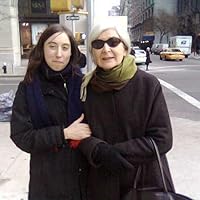
Helen Jane Waddell was an Irish poet, translator and playwright.
She was born in Tokyo, the tenth and youngest child of Hugh Waddell, a Presbyterian minister and missionary who was lecturing in the Imperial University. She spent the first eleven years of her life in Japan before her family returned to Belfast. Her mother died shortly afterwards, and her father remarried. Hugh Waddell himself died and left his younger children in the care of their stepmother. Following the marriage of her elder sister Meg, Helen was left at home to care for Mrs Waddell, whose health was deteriorating.
Waddell was educated at Victoria College for Girls and Queen's University Belfast, where she studied under Professor Gregory Smith, graduating in 1911. She followed her BA with first class honours in English with a master's degree, and in 1919 enrolled in Somerville College, Oxford, to study for her doctorate. A travelling scholarship from Lady Margaret Hall in 1923 allowed her to conduct research in Paris. It was at this time that she met her life-long friend, Maude Clarke.
She is best known for bringing to light the history of the medieval goliards in her 1927 book The Wandering Scholars, and translating their Latin poetry in the companion volume Medieval Latin Lyrics. A second anthology, More Latin Lyrics, was compiled in the 1940s but not published until after her death. Her other works range widely in subject matter. For example, she also wrote plays. Her first play was The Spoiled Buddha, which was performed at the Opera House, Belfast, by the Ulster Literary Society. Her The Abbe Prevost was staged in 1935. Her historical novel Peter Abelard was published in 1933. It was critically well received and became a bestseller.
This is one of the hardest books to describe that I've ever read. The only comparison I can think of is to Carlyle's French Revolution, which is style-wise very different. But both books are nonfiction about a very interesting topic, filled with vivid anecdotes, and yet the reason to read them is not the information but the writing itself. Both seem to assume the reader's prior familiarity with the subject (there is even plenty of untranslated Latin, among other languages, strewn about the book), and weave an allusive, poetic web of words around the topic rather than directly and clearly narrate. It reminds me of Virginia Woolf's distinction between learners and readers: this book is definitely for readers.
The book is an overview of the poets who wrote in Latin from the end of the Western Roman Empire until the beginnings of the Renaissance, mostly rowdy clerical students who seem exactly like the university students of today: constantly poor, constantly drunk, playing pranks and making music. Waddell describes them and their writing in brief flashes of illumination, not letting the light shine long enough for you to get the full picture, but giving enough of an impression to fascinate. She seems to have an enormous breadth of learning to draw from for purposes of comparison, and not just about Latin, medieval history, or even Western literature: when she says "There is something Chinese about Ausonius," it's not an Orientalist cliche she's invoking. She was born in Tokyo, daughter of a scholar of Chinese, and has a volume of poems she translated from the Chinese. The book is stuffed with allusions and quotations, and I think unless you are Waddell herself, it's impossible to be conversant with everything she references; so it passes like a dream, partly understood and imperfectly remembered, but beautiful. Here is a representative quote, which I have opened to completely at random: "It is not to say that every thirteenth-century sculptor, every down-at-heel goliard poet, had read the De Universitate any more than the 'rakehelly rout of ragged rhymers' in Elizabethan England had read Giordano Bruno. But these things are in the air. Provençal poetry demands no other intellectual background than that of its century, a May morning, the far-off singing of birds, a hawthorn tree in blossom, a Crusade for the Holy Sepulchre. It is the Middle Ages in the medium of a dream."
I find this book extremely hard to recommend, because if I say "you should read this book about wandering scholars in the middle ages" it sounds like the interest is in the topic. But on the other hand I can't say "the subject matter isn't interesting, the writing is," because the subject matter is interesting, and the anecdotes are eminently re-tellable. But I do recommend it, to anyone who loves reading the supersonic ranging of an amazingly learned and nimble mind, who clearly adores her subject and wants to convey the essence of it, rather than mummify it in objective, neutral prose. If I were a teacher, I might not assign it in a Medieval literature class, but I would definitely assign it in a writing class, to show that nonfiction writing doesn't have to conform to the tedious, bloodless robotic writing favored by high-school English curriculum.
This is that strangeness, without which beauty is not made perfect.
This is the wonky cousin of The White Goddess from Robert Graves. Rampant rolls of verse citation seep and suggest all the anxious influence of the ancients, particularly the Irish, who survived the initial pillage from the vikings and thus kept the fire burning per the ancient training. Thus when the Normans stormed the door, the Irish fled and took with them the seeds of generation. The 12C Renaissance was made a possibility.
I detract a star as I suck; there are no translations of much of the cited verse. There is also a dearth of historical analysis but I don't believe that was the intention. Monks stuffed with classic poetry and hearts beating with the secular left the cloister and took to the road. We reap the dividends even today.
Thomas Pynchon writes: A collateral effect, for me anyway, was that of Helen Waddell's The Wandering Scholars, reprinted in the early '50s, an account of the young poets of the Middle Ages who left the monasteries in large numbers and took to the roads of Europe, celebrating in song the wider ranges of life to be found outside their academic walls. Given the university environment of the time, the parallels weren't hard to see. Not that college life was dull, exactly, but thanks to all these alternative lowlife data that kept filtering insidiously through the ivy, we had begun to get a sense of that other world humming along out there. Some of us couldn't resist the temptation to go out and see what was happening.
I can't retain any of the information in this book, because of Waddell's eccentric, complicated, and completely wonderful writing style. Full of anecdotes about monks, bishops.
This was the book that made the reputation of Helen Waddell, the medievalist from my own corner of County Down. It's a study of the lyrical tradition of poetry in the Middle Ages in Europe, tracing influences across geographies and cultures. I found the writing very dense; written very chattily as if these were all people whose reputations we already knew, with minimal context and footnotes mostly to works available only in well-equipped university libraries. I'm really surprised that it did so well on publication in 1927; perhaps the readers of the 1920s were more au fait with early medieval literature than I am.
Still there are some fascinating details in there. It's always interesting to be reminded of the career of Gerbert of Aurillac, which is crying out for an accessible biographical treatment, either factual or fictional. The same goes for the murky story of the Viking Siegfried (or Sifrid, as Waddell calls him). There's the mysterious figure of the Archpoet. And more locally it's interesting to see Liège popping up as an important centre of culture.
She supplies a lot of translations of the lyrics, to which she brings her own good ear for a phrase; here's the Archpoet's Estuans Interius, as set to music by Carl Orff in the Carmina Burana a few years later, with the original text (which fairly bounces along) and Helen's translation.
Estuans interius ira vehementi in amaritudine loquor mee menti: factus de materia, cinis elementi similis sum folio, de quo ludunt venti. Cum sit enim proprium viro sapienti supra petram ponere sedem fundamenti, stultus ego comparor fluvio labenti, sub eodem tramite nunquam permanenti.
Feror ego veluti sine nauta navis, ut per vias aeris vaga fertur avis; non me tenent vincula, non me tenet clavis, quero mihi similes et adiungor pravis.
Mihi cordis gravitas res videtur gravis; iocis est amabilis dulciorque favis; quicquid Venus imperat, labor est suavis, que nunquam in cordibus habitat ignavis.
Via lata gradior more iuventutis inplicor et vitiis immemor virtutis, voluptatis avidus magis quam salutis, mortuus in anima curam gero cutis.
Seething over inwardly With fierce indignation, In my bitterness of soul, Hear my declaration. I am of one element, Levity my matter, Like enough a withered leaf For the winds to scatter. Since it is the property Of the sapient To sit firm upon a rock, It is evident That I am a fool, since I Am a flowing river, Never under the same sky, Transient for ever.
Hither, thither, masterless Ship upon the sea, Wandering through the ways of air, Go the birds like me. Bound am I by ne'er a bond, Prisoner to no key, Questing go I for my kind, Find depravity.
Never yet could I endure Soberness and sadness, Jests I love and sweeter than Honey find I gladness. Whatsoever Venus bids Is a joy excelling, Never in an evil heart Did she make her dwelling.
Down the broad way do I go, Young and unregretting, Wrap me in my vices up, Virtue all forgetting, Greedier for all delight Than heaven to enter in: Since the soul is in me dead, Better save the skin.
I'm glad I have read this at last, and I'll put some of Helen Waddell's other works on my reading list now.
Somehow remains incredibly engaging despite narratives and disparate references being woven together in a way where you can never truly keep up --- In the last resort, the mediaeval scholar's lyric has value only for those to whom the richest thing in life is the sense of the past: who believes as Milton did in his exultant scholar's youth that to read history is "to be present as it were in every age, to extend and stretch life backward from the womb, and thus extort from unwilling Fate a certain foregone immortality."
Beautiful fragments against the beginning of the end of divinity. Reading this is like spending an evening with a brilliant, chatty scholar who knows her work so well she can't take time to explain exactly who the poet was or where his work is written down. One either keeps up or is lost in the rush of wit and beauty. The scholars are the secular poets of the late middle ages, the first voices to mock the church, to revive Eros and Bacchus, playful precursors of NeoPlatonism and alchemy, wastrels, lovers, gamblers, doomed men and this history of their lives and work is immortal in its own right. Academia as art and inspirational in an age wherein conformity creeps back like mold on cheese.
Apologies to Golding, but Pound's oft-quoted appraisal, 'the most beautiful book in the language,' more fittingly belongs to this work: prose like stained glass; standing at a luminous midpoint between two distinct influences: the impossibly learned magnanimity of Saintsbury and the allusive pointillism of the Imagists.
A wonderful, whacky piece of writing about the Middle Ages and the "bad boy" writers and hellraisers who inhabited them. If your image of these years is of pious books and true holiness, you might want to take a look! Some of the words in Orff's Carmina Burana come from this book.
On p. 236, near the end of the book, Waddell says, "In the last resort, the medieval scholar's lyric has value only for those to whom the richest thing in life is the sense of the past." I think that sums it up well. It may be an understatement.
I'm not entirely sure what I read here ... but I do know that I enjoyed it.
The author's style is a blast, and this is just a fun book to read. The organization is a little haphazard, and if you think this is going to be a collection of bios of famous scholars, or a review of the lives of itinerant scholars, then good to luck to you.
The author's love and enthusiasm of the subject are obvious, but as far as taking away a lot of facts ... yeah, not so much of that. Maybe I simply don't know enough about the subject to really appreciate the content here, so this could be a highly specialized work. Either way, it was fun to read.
I wanted to write a long rant in this review, comparing this book with Curtius’ big ol’ didactic book about the Latin Middle Ages. I wanted to chide the academic world for preferring the latter. I wanted to chide readers for demanding clarity rather than vision from their scholars, information rather than beauty and profundity.
But other reviews of this book seem to have said it better than I could. So: well-said, Goodreaders.
One Of A Kind - Exceptional Book! It Tells About "The Bar That Changed The World"!" Emotionally Explains How The "King James Bible" Is The Masterpiece Of English. HINT: It Has To Do With The Synthesis Of Christ And The Muses ... #TheBarThatChangedTheWorld #SynthesisOfChristAndTheMuses #TheMiddlePillar #DepartToTheRightHandNorTheLeft
I picked up this book because Thomas Pynchon mentioned it in the introduction to his short story collection as one of the major influences on his generation of writers. It's a strange work of scholarship, very much of its time (1927), concerned less with academic rigor than with a graceful and complex prose style. It's about a pretty specific historical topic, the 12th and 13th century Latin poetry of the Goliards, groups of disillusioned university students and young clergymen who wandered Europe singing songs and writing poems critiquing society--in a way, the proto-Beats, precursors to the 1960s:
"But these others who served a ruinous altar and got a scanty living by it: the grammarians of Toulouse sitting up at nights to argue the frequentative of the verb to be: Rahingus of Flavigny filling his scanty leisure with copying Virgil: Froumund of Tegernsee collating manuscripts of Perseus with chilblained hands: Primas shivering and mocking in his shabby cloak, writing a lament for Troy with Bacchanalian tears: the Archpoet coughing his heart out on the Lombard roads; a century of nameless vagabonds: on these the iniquity of oblivion hath blindly scattered her poppy. They kept the imagination of Europe alive: held untouched by their rags and poverty and squalor the Beauty that had made beautiful old rhyme. And for those of us who are the conservatives of letters, for whom literature obeys the eternal movement of the tides, for whom the heavens themselves are old, there remains the stark simplicity of Terence—“In truth they have deserved to be remembered of us.”
“O no man knows Through what wild centuries Roves back the rose.”"
A shockingly disappointing read. Seriously, how can a book about the wandering vagrant poet/holy fools of the Middle Ages, their drink, their verse, and their importunate and filthy (we assume) undergarments...how can a book about all these wondrous, wondrous things be this unreadable and uninteresting? Sure, there's flashes of some of the awesome: the whole introductory bit about monks and those wacky fucks holding on to the Latin "pagan" lyric traditions (something seen at the time by the establishment as akin to A.L.F.-on-Garfield snuff videos, to name a modern equivalent) is pretty darn good and we get hints and flashes of some of the greatness of these guys, but Waddell, obviously wacked-out of her mind on some sort of Latin-lyric version of ketamine, doesn't ever talk about any actual history. Her language, flowery and refreshingly unacademic, can't disguise the fact that all we're given here is a litany of name-drops and a bunch of shit in languages that the layperson can't read. There is actually only one chapter on the Ordo and one on the Archpoet, but both are wastes of space.
A sadly somewhat neglected classic of medieval scholarship, somewhat light on context but if you're not willing to do some outside research on your own you probably won't end up hunting down a copy of this anyway. In my wildest dreams I picture a reissue with a generous anthology in the back. Torrid threesomes with generous anthologies. Anyway, this also has a bunch of frankly adorable anecdotes about monks, which I'm always in to.
I think I read this back in '74 but I need to reread to make sure. I was writing a paper and translating a poem by Peter Abelard to his son at the time and I seem to remember reading this.
5/14/2011---The Wikipedia article on the GOLIARDS tells us of their raucous life-style, their satirical criticism of the Medieval Church from within its ranks, and references Helen Waddell's book.