

What do you think?
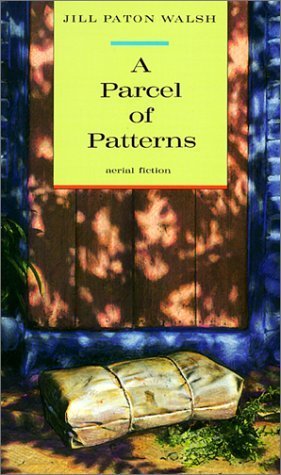
A Parcel of Patterns
"A parcel of patterns brought the plague to Eyam. A parcel sent up from London to George Vicars, a journeyman tailor, who was lodging with Mrs. Cooper in a cottage by the west end of the churchyard.
So begins Mall Percival's account of how her village of Eyam struggled against the plague. George Vicars dies on September 6, 1665, and by the end of October, twenty-five more townsfolk have been buried. As the deaths continue, the villagers, including Mall, begin to panic--helpless to fight off the disease. Uncertain as to how it is contracted and passed from one person to another, Mall forces herself to make a sacrifice that radically changes her life--she decides to stops seeing Thomas Torre, a man from another village, the man she hopes to marry. In June of 1666, at their minister's urging, the entire village makes a pact to protect those who live in the surrounding countryside by staying within the boundaries of Eyam.
Although Mall longs to see Thomas, she remains steadfast in her resolution, until one day Thomas runs into the center of Eyam, knowing that he will not be allowed to leave, yet fearing that Mall has died. Mall and Thomas marry, but their happiness is short-lived. Finally, in October of 1666, the pestilence subsides. Mall, overwhelmed by grief and sorrow, decides to write a chronicle of all she has witnessed in Eyam, hoping that it will set her free.
So begins Mall Percival's account of how her village of Eyam struggled against the plague. George Vicars dies on September 6, 1665, and by the end of October, twenty-five more townsfolk have been buried. As the deaths continue, the villagers, including Mall, begin to panic--helpless to fight off the disease. Uncertain as to how it is contracted and passed from one person to another, Mall forces herself to make a sacrifice that radically changes her life--she decides to stops seeing Thomas Torre, a man from another village, the man she hopes to marry. In June of 1666, at their minister's urging, the entire village makes a pact to protect those who live in the surrounding countryside by staying within the boundaries of Eyam.
Although Mall longs to see Thomas, she remains steadfast in her resolution, until one day Thomas runs into the center of Eyam, knowing that he will not be allowed to leave, yet fearing that Mall has died. Mall and Thomas marry, but their happiness is short-lived. Finally, in October of 1666, the pestilence subsides. Mall, overwhelmed by grief and sorrow, decides to write a chronicle of all she has witnessed in Eyam, hoping that it will set her free.
144 pages, Paperback
First published October 1, 1983
About the author
Jill Paton Walsh
78 books228 followersJill Paton Walsh was born Gillian Bliss in London on April 29th, 1937. She was educated at St. Michael's Convent, North Finchley, and at St. Anne's College, Oxford. From 1959 to 1962 she taught English at Enfield Girls' Grammar School.
Jill Paton Walsh has won the Book World Festival Award, 1970, for Fireweed; the Whitbread Prize, 1974 (for a Children's novel) for The Emperor's Winding Sheet; The Boston Globe-Horn Book Award 1976 for Unleaving; The Universe Prize, 1984 for A Parcel of Patterns; and the Smarties Grand Prix, 1984, for Gaffer Samson's Luck.
Series:
* Imogen Quy
* Lord Peter Wimsey and Harriet Vane
Jill Paton Walsh has won the Book World Festival Award, 1970, for Fireweed; the Whitbread Prize, 1974 (for a Children's novel) for The Emperor's Winding Sheet; The Boston Globe-Horn Book Award 1976 for Unleaving; The Universe Prize, 1984 for A Parcel of Patterns; and the Smarties Grand Prix, 1984, for Gaffer Samson's Luck.
Series:
* Imogen Quy
* Lord Peter Wimsey and Harriet Vane
Ratings & Reviews
Friends & Following
Create a free account to discover what your friends think of this book!
Community Reviews
Displaying 1 - 30 of 153 reviews

April 11, 2011
I am intrigued by books about the plague. The attraction? Well, even one of my crappiest, exhaustion-filled day pales in comparison to living through the plague. Or maybe it's those gore filled plague sores that call to me (but I'd never truly admit that).
This book is a bit different than the few that I've read about the plague of the 1600's in that it isn't scholarly, dry or written from the point of view of adults. This fictional tale is told by a young lady named Mal who describes her world with beauty and sensitivity. Initially, the writing style was a bit of a chore and a little difficult to get into. But stick with it, the journey is well worth the work. Once I adjusted myself to the rhythm of the writer and the different language choices (than I'm used to) I fell completely into Mall's world of hard work and young love amidst the threat of unbelievable horror when the Bubonic Plague arrives.
I'm a hard-hearted reader, having read far more than my share of overly sentimental stuff, but this book brought me to tears too many times to count from the sheer strength of this young girl. It makes me all teary just to think about these people. This is a book that should be required reading in schools (if it isn't already).
This book is a bit different than the few that I've read about the plague of the 1600's in that it isn't scholarly, dry or written from the point of view of adults. This fictional tale is told by a young lady named Mal who describes her world with beauty and sensitivity. Initially, the writing style was a bit of a chore and a little difficult to get into. But stick with it, the journey is well worth the work. Once I adjusted myself to the rhythm of the writer and the different language choices (than I'm used to) I fell completely into Mall's world of hard work and young love amidst the threat of unbelievable horror when the Bubonic Plague arrives.
I'm a hard-hearted reader, having read far more than my share of overly sentimental stuff, but this book brought me to tears too many times to count from the sheer strength of this young girl. It makes me all teary just to think about these people. This is a book that should be required reading in schools (if it isn't already).

September 21, 2010
A stunning novel based on the true story of the Great Plague that came to Eyam, England in 1665, and nearly destroyed the village. The disease arrives in a parcel of dress patterns, and within 14 months, destroys 267 of the village's 350 inhabitants. The villagers of Eyam make the heartbreaking decision to voluntarily quarantine themselves inside the village limits until the plague has run its course. Historians estimate that this act of selflessness, by preventing the spread of plague, saved hundreds of thousands of lives throughout England. It also tells us that for the next year, people from the surrounding villages left food and supplies outside the town so that Eyam would not starve.
The story is narrated in beautifully consistent 17th-century English by Mall Percival, a 16-year old Puritan girl who survives and even finds love--twice--in the midst of unspeakable tragedy. It explores themes of legalism and grace, superstistion and ignorance, and shows the fine line that separates all of them. An amazing book.
The story is narrated in beautifully consistent 17th-century English by Mall Percival, a 16-year old Puritan girl who survives and even finds love--twice--in the midst of unspeakable tragedy. It explores themes of legalism and grace, superstistion and ignorance, and shows the fine line that separates all of them. An amazing book.

January 20, 2022
A parcel of patterns (for sewing dresses) came from London to the town of Eyam in Derbyshire and brought the Plague to it. Death began claiming the villagers starting with George Vicar, who met his horrible end on 6 September 1665, with the last of of the several deaths recorded in October 1666, without specific dates anymore for each of the dead, the few remaining survivors no longer being able to cope with the business of meticulous record-keeping.
In the beginning, the dead were being buried within the church premises, the people then of the belief that this would be an advantage and assures that their departed loved ones would not get lost at the hour of their resurrection. But eventually they ran out of space there, so burials were done elsewhere, often in mass graves, and they even ran out of gravediggers at one point.
This was a time when men were short of Science but long on Faith. Faith, of course, availed them nothing. Some of their beliefs, in fact, exacerbated their plight, yet it did not dissuade the inhabitants of Eyam to do a heroic act: they willingly subjected themselves into a self-imposed quarantine, not wanting to spread the Plague elsewhere, at a great added sacrifice to them. When the Plague had run its course over a year after, 267 of the 350 villagers were dead.
This is historical fiction. The two ill-fated lovers, who were the main protagonists, were fictional. But the rest was recorded history. Most remarkable, to me, was how the author managed to write this, including the characters’ dialogues, like it was written by a 17th century writer, in the manner of old English prose, that I even thought at the beginning that this was an old classic I’ve never heard of before when actually it was fist published in 1983. The language was something like this:
“There was a place called Shepherd’s Flat, on the edge of Eyam but within the parish bound, on the upland pastures; a cluster of cottages where dwelt two families, Kemps and Mortins, keeping flocks, and a few hens, and two cows, and killing hares and rabbits for the pot, and growing a patch of beans. Their sheep and ours had often to be sorted by our dogs, and at shearing we had always worked together with them, and shared the labour, and the ale, and the clip-supper afterwards. Good honest folk. The Kemp children played at tag-and-seek with children from Eyam town that August, and came home sickening, to their mother’s frantic grief, she being a widow. Mother and children of the Kemps all died, and the Mortin father, Matthew, out of neighbourly charity, buried them. Within a day his own child, Sarah, aged but two, died sleeping, and he dug a grave for her by his house gable-end, and laid her there. Margaret his wife was carrying a child and near her time when she too sickened. And finding none would set foot in his house to help his wife, Matthew helped forth his child himself, while his son Robert, but of three years old, had perforce to be locked in a chamber near by, he now having the fever and having not a wit enough at his tender age to keep in bed. The child screamed all the time his brother was being born, to his father’s grief. And this was not yet bad enough, for before the week was out, Matthew Mortin laid his son also, and his wife, and his son new born, in the grave by the gable-end, and dwelt at Shepherd’s Flat alone, with but his greyhound and his cows for company. And so plentifully had the hares and rabbits flourished while men so decline, there being none to hunt and trap and take them, that the uplands were all overrun with small game, and Mortin’s hound could bring him meat within a few short minutes, any time of day. So he sat solitary, stirring not out, and the dog brought him victuals, and he milked his cows for them both.”
Nicely done Madam!
In the beginning, the dead were being buried within the church premises, the people then of the belief that this would be an advantage and assures that their departed loved ones would not get lost at the hour of their resurrection. But eventually they ran out of space there, so burials were done elsewhere, often in mass graves, and they even ran out of gravediggers at one point.
This was a time when men were short of Science but long on Faith. Faith, of course, availed them nothing. Some of their beliefs, in fact, exacerbated their plight, yet it did not dissuade the inhabitants of Eyam to do a heroic act: they willingly subjected themselves into a self-imposed quarantine, not wanting to spread the Plague elsewhere, at a great added sacrifice to them. When the Plague had run its course over a year after, 267 of the 350 villagers were dead.
This is historical fiction. The two ill-fated lovers, who were the main protagonists, were fictional. But the rest was recorded history. Most remarkable, to me, was how the author managed to write this, including the characters’ dialogues, like it was written by a 17th century writer, in the manner of old English prose, that I even thought at the beginning that this was an old classic I’ve never heard of before when actually it was fist published in 1983. The language was something like this:
“There was a place called Shepherd’s Flat, on the edge of Eyam but within the parish bound, on the upland pastures; a cluster of cottages where dwelt two families, Kemps and Mortins, keeping flocks, and a few hens, and two cows, and killing hares and rabbits for the pot, and growing a patch of beans. Their sheep and ours had often to be sorted by our dogs, and at shearing we had always worked together with them, and shared the labour, and the ale, and the clip-supper afterwards. Good honest folk. The Kemp children played at tag-and-seek with children from Eyam town that August, and came home sickening, to their mother’s frantic grief, she being a widow. Mother and children of the Kemps all died, and the Mortin father, Matthew, out of neighbourly charity, buried them. Within a day his own child, Sarah, aged but two, died sleeping, and he dug a grave for her by his house gable-end, and laid her there. Margaret his wife was carrying a child and near her time when she too sickened. And finding none would set foot in his house to help his wife, Matthew helped forth his child himself, while his son Robert, but of three years old, had perforce to be locked in a chamber near by, he now having the fever and having not a wit enough at his tender age to keep in bed. The child screamed all the time his brother was being born, to his father’s grief. And this was not yet bad enough, for before the week was out, Matthew Mortin laid his son also, and his wife, and his son new born, in the grave by the gable-end, and dwelt at Shepherd’s Flat alone, with but his greyhound and his cows for company. And so plentifully had the hares and rabbits flourished while men so decline, there being none to hunt and trap and take them, that the uplands were all overrun with small game, and Mortin’s hound could bring him meat within a few short minutes, any time of day. So he sat solitary, stirring not out, and the dog brought him victuals, and he milked his cows for them both.”
Nicely done Madam!

May 10, 2011
Seriously, they have to come up with a better picture for the cover than they already have, if they're planning on bringing it back out into print again. And the font size, margin, what not--it needs to be bigger and better spaced. It's so hard to read it--it's about the size of a pamphlet, but the thickness of a real book.
I actually started this yesterday because my mom had been telling me for days that I had to hurry up and read this one book. What do you say when you're determined not to like a book? * sigh * Against all odds--wouldn't you know-- I actually like it. I was not prepared at all for the romance part--but then, every book I've ever read about this time period has something to do with romance. Is it because the time period is so boring that they have to put something in to make it interesting? Weirdly enough, I don't mind the romance. Maybe I'm at the point now where I can handle it a little better.
Something I just don't get about this book is that it was supposed to be about a tiny little village, right? And then the main character tells you that there's at least four people croaking every day. And, like, a year passes, and now, there's whole families dying in a day. O.o And the town is still well-populated.
* edit *
So I finished it.
Whew.
This book, in a word? Sad. Just sad. So you're really happy for the main character in the end because she gets married to this guy she's been in love with and avoiding forever or something. And then, this (outtake from the book;
If I could change one thing about how I read this book, it would be that I read it all in one sitting, and also that I'd not let my eyes skip over sentences. If I could change something about the book, I would have chapters. Yes. There are no chapters, which is frustrating to an extent, because there's no stopping places except for those little paragraph breaks. And I don't think that the author brought this book to an editor...because the grammar in this book is * cough * quite awful.
The story is good. The storytelling could be better, and grammar would help a lot. And the pace could be picked up a bit, and I bet it would draw in more audiences if more than just romance and the Black Death (a.k.a. the Plague) happened in this book. It gets old after a while.
* edit *
And what kind of names are Mall and Emmot?!
I actually started this yesterday because my mom had been telling me for days that I had to hurry up and read this one book. What do you say when you're determined not to like a book? * sigh * Against all odds--wouldn't you know-- I actually like it. I was not prepared at all for the romance part--but then, every book I've ever read about this time period has something to do with romance. Is it because the time period is so boring that they have to put something in to make it interesting? Weirdly enough, I don't mind the romance. Maybe I'm at the point now where I can handle it a little better.
Something I just don't get about this book is that it was supposed to be about a tiny little village, right? And then the main character tells you that there's at least four people croaking every day. And, like, a year passes, and now, there's whole families dying in a day. O.o And the town is still well-populated.
* edit *
So I finished it.
Whew.
This book, in a word? Sad. Just sad. So you're really happy for the main character in the end because she gets married to this guy she's been in love with and avoiding forever or something. And then, this (outtake from the book;
If I could change one thing about how I read this book, it would be that I read it all in one sitting, and also that I'd not let my eyes skip over sentences. If I could change something about the book, I would have chapters. Yes. There are no chapters, which is frustrating to an extent, because there's no stopping places except for those little paragraph breaks. And I don't think that the author brought this book to an editor...because the grammar in this book is * cough * quite awful.
The story is good. The storytelling could be better, and grammar would help a lot. And the pace could be picked up a bit, and I bet it would draw in more audiences if more than just romance and the Black Death (a.k.a. the Plague) happened in this book. It gets old after a while.
* edit *
And what kind of names are Mall and Emmot?!

January 8, 2010
Read in conjunction with Year of Wonders for f2f book group. We thought this YA novel was more realistic and straightforward and had greater emotional impact of the two with its account of the Eyam story from the young girl's point of view -most found it the more interesting read of the two. There was also the element of the clash between the Puritan/faith based outlook and the more secular/scientific outlook of the Restoration in the reactions to the crisis. I had read this many years ago (around time of publication most likely) and this time listened to the unabridged audio. Very good reader and the accents and sounds of the period added a lot. In contrast, Year of Wonders felt more "artsy" & literary in style so the historical aspects got lost in the verbiage.

April 28, 2016
Wow. Did this book take me by surprise.
My husband and I read it together and we couldn't put it down. I would recommend reading this aloud to someone because then you will appreciate the strong, spare beauty of the language. And my goodness, does Paton Walsh know her 17th century! Just don't read the synopsis here on Goodreads because it gives far too much away.
I almost gave it 5 stars, and maybe I will come back and do so.
I should say, this book is SAD. It makes you feel grateful for the little things in life -- like the fact that you are unlikely to have to bury your whole family with your own hands. Yes, it's incredibly sad, and it's about a real historical situation, but it is not without hope.
For me, this was an appropriate fictional follow up to Suffering and the Sovereignty of God. Both take an absolutely unblinking view of the consequences of believing in a God who is both good and sovereign in a world where horrific things happen. I was on a knife edge throughout the book, worried the author would take a humanistic turn at the end, but then...
This is exquisitely written and researched historical fiction.
My husband and I read it together and we couldn't put it down. I would recommend reading this aloud to someone because then you will appreciate the strong, spare beauty of the language. And my goodness, does Paton Walsh know her 17th century! Just don't read the synopsis here on Goodreads because it gives far too much away.
I almost gave it 5 stars, and maybe I will come back and do so.
I should say, this book is SAD. It makes you feel grateful for the little things in life -- like the fact that you are unlikely to have to bury your whole family with your own hands. Yes, it's incredibly sad, and it's about a real historical situation, but it is not without hope.
For me, this was an appropriate fictional follow up to Suffering and the Sovereignty of God. Both take an absolutely unblinking view of the consequences of believing in a God who is both good and sovereign in a world where horrific things happen. I was on a knife edge throughout the book, worried the author would take a humanistic turn at the end, but then...
This is exquisitely written and researched historical fiction.

March 1, 2011
Stories about plagues are not really my cup of tea, so I can't really say this was a book I *enjoyed*. However, although it was sad and frightening, it's also well-written, with plenty of historical details, and I liked the style. I listened to the audio book and the narrator did a great job.

June 27, 2014
Actually a very good story of how the plague comes to a town and what happens. Interesting this I on the 1001 children's book list because it does not seem like a book for children at all.
August 14, 2020
I first read this as a teenager, and I loved it! In fact, it haunted me for years and recently I was trying to find it although I couldn't remember the author or the names of the characters. Goodreads recommendations randomly tossed it my Way, and I really enjoyed the reread.

March 26, 2023
Really interesting historical fiction about a town in England that suffered greatly through the Plague in 1665. It is told in first person from one who lived through it. This was very interesting to read directly after reading The Doomsday Book by Connie Willis. The two go together well.
It is a pretty quick read, as the book is short.
It is a pretty quick read, as the book is short.

December 30, 2023
Rlly good till the end. Its a sad book, but pretty good. Has a classic feel to it, like if you mixed Dickinson and L.M. Montgomery. I loved the MC, she was so sweet. This book almost made me cry!

August 21, 2025
A very short book based on the true story of Eyam, a small town that quarantined itself to stop the spread of the plague.

April 13, 2020
Jill Paton Walsh is the author of Hengest’s Tale, set in Viking times and accurate enough to please Tolkien. Her talent is for telling a first-person account of a tragedy set in the past. Her use of historical details is deft and evocative. She had a way of making simple things count, of sketching quotidian details into a circumstance so that they make sense. You cannot read The Emperor’s Winding Sheet without having a good idea of the situation and events of the fall of Constantinople in 1453. Her stories move briskly, and even though the main plot is usually provided for by research, she contrives multiple satisfying sub-plots that bring home details and pathos. Her love and understanding of humans in their different situations is her great historian’s strength. There is always a lot of feeling in a story that she tells, because she knows how to send the rain which fills the brooks and streams, which feed the rivers, which all run into the sea.
This is a book in which a plague runs it course. We watch it arrive unannounced, then they have to isolate because the only way to stop it is to eliminate contagion, they have hope it will diminish in the winter but it trickles on, in spring there is waxing then waning, bringing hope, but then the plague reaches its high tide. Walsh knows how to evoke, and she evokes the harrowing and pitiful moments with a measured, steady, unadorned account. She really knows how to accumulate feeling, how to build up shared memories between the narrator and the reader, how to use the pace of her story to wring the most out of the fewest words.
A Parcel of Patterns is set in 1665, in a village of Derbyshire at the moment when the Clarendon laws had driven the old Puritan pastor from the village church and his replacement arrived. Part of the skill in that situation is experiencing the muted religious conflict through the eyes of a villager. The plague arrives in a parcel containing patterns for a dress which is to be a more fashionable and exuberant dress than is customary, one the old pastor would have found tending toward vanity. The dress is for the new pastor’s wife. I think Walsh means this book as a kind of indictment of God for human suffering: as the story progresses, among the differences that emerges between the old and new clergymen is one concerning providence. The doctrine of Divine providence is the one point of theology in which the narrator becomes most involved.
It is the one thing that does not satisfy about the book. The parcel of patterns never really achieves its symbolic potential. It is a bit Barthian in the inscrutability it attributes to the Lord, and the emblem remains inert. I find it ironic that the point at which she errs is when she departs from her own pattern to be anachronistic.
It is a disappointment, and a pretty critical one, among all the successes of the story. It is a good story nevertheless: it does keep one in sympathy with the narrator, the theological point is nearly carried out, done mostly well and not brutally, the human interest is strong, the historical details come alive, and her characters and their choices are convincing.
It is also much more poignant to read of those experiences when still in the coronavirus lockdown with all the uncertainty of the moment and no sense of the extent of the damage to come. It really works in the favor of such a story to have strong resonances in one’s present experience.
This is a book in which a plague runs it course. We watch it arrive unannounced, then they have to isolate because the only way to stop it is to eliminate contagion, they have hope it will diminish in the winter but it trickles on, in spring there is waxing then waning, bringing hope, but then the plague reaches its high tide. Walsh knows how to evoke, and she evokes the harrowing and pitiful moments with a measured, steady, unadorned account. She really knows how to accumulate feeling, how to build up shared memories between the narrator and the reader, how to use the pace of her story to wring the most out of the fewest words.
A Parcel of Patterns is set in 1665, in a village of Derbyshire at the moment when the Clarendon laws had driven the old Puritan pastor from the village church and his replacement arrived. Part of the skill in that situation is experiencing the muted religious conflict through the eyes of a villager. The plague arrives in a parcel containing patterns for a dress which is to be a more fashionable and exuberant dress than is customary, one the old pastor would have found tending toward vanity. The dress is for the new pastor’s wife. I think Walsh means this book as a kind of indictment of God for human suffering: as the story progresses, among the differences that emerges between the old and new clergymen is one concerning providence. The doctrine of Divine providence is the one point of theology in which the narrator becomes most involved.
It is the one thing that does not satisfy about the book. The parcel of patterns never really achieves its symbolic potential. It is a bit Barthian in the inscrutability it attributes to the Lord, and the emblem remains inert. I find it ironic that the point at which she errs is when she departs from her own pattern to be anachronistic.
It is a disappointment, and a pretty critical one, among all the successes of the story. It is a good story nevertheless: it does keep one in sympathy with the narrator, the theological point is nearly carried out, done mostly well and not brutally, the human interest is strong, the historical details come alive, and her characters and their choices are convincing.
It is also much more poignant to read of those experiences when still in the coronavirus lockdown with all the uncertainty of the moment and no sense of the extent of the damage to come. It really works in the favor of such a story to have strong resonances in one’s present experience.

November 15, 2025
I couldn't put this book down. this sweet town in England saved so many in their courageous act to isolate themselves from others during the plague

June 14, 2023
crying. what a beautiful story. there is pain and pain and pain but there is still hope and gentle love and light at the end of it. wonderfully, refreshingly Christian -- excellent approach to the problem of pain. horrifically relevant to recent times. incredible main character and compelling, fleshed-out side characters. i especially loved Emmot Sydall and the two parsons. excellent book, have wanted to read it for around two years and it did not disappoint.

September 14, 2017
Are there book design classes? Can I send my copy of this book to a book design class so the students can autopsy it and learn what not to do? Seriously, this is one of the worst-designed books I’ve ever read. The book is about the size of my hand. The covers and binding are stiff. There are basically no margins, so the writing runs all the way across the page and sometimes gets covered by the binding. If you have carpal tunnel like me, it’s an awkward book to hold. I kept dropping it. Constantly losing my page does not make me a happy reader.
Let’s put the design disasters aside and talk about the plot. This novel is a fictionalization of a real-life event that occurred in Eyam, England during the 1660s. After the villagers start dying from plague, they decide to quarantine themselves to keep the sickness from spreading to other villages.
This story is narrated by Mall, a teenage shepherdess from Eyam. She’s in love with Thomas, a shepherd from a nearby village. They’re making plans to get married, but their future is derailed when the people of Eyam decide to quarantine the village. Mall and Thomas are no longer allowed to see each other. Thomas has no way of knowing if Mall is alive. Mall is forced to stay in town and take care of her friends and family as they die.
Earlier this year, I read Year of Wonders by Geraldine Brooks, which is also about Eyam and the plague. I felt “meh” about that book. Unfortunately, I felt “meh” about A Parcel of Patterns as well.
The author does a nice job of capturing the monotonous horror of watching people die. Mall is completely powerless. She can’t leave Eyam, and she can’t stop the plague. The people in the village believe that God is punishing them, but they don’t know why. The sickness pushes people to their mental limits. It’s a devastating situation.
Other reviewers have mentioned the writing style, so I probably should, too. This book is written in the way that people spoke in 1600s England. If you’ve read British classics, you probably know what I’m talking about. It’s antiquated English. Getting used to the writing style takes some time, but it didn’t bother me. The writing isn’t hard to understand. It’s just different.
I was bothered by the length of the book. There are a lot of characters and only 136 pages. Most of the novel reads like a list to me. This person dies, and then this person dies, and then this person dies. Since the book is so short, the reader doesn’t get a chance to know the characters before they die. The characters appear briefly, and then they’re dead.
Thomas also got on my nerves. After Eyam quarantines itself, he keeps trying to see Mall. Whenever he notices her in the distance, he runs toward her, and she runs away. She asks him to stay away from Eyam, but he doesn’t listen. Dude, just stay in your own village! What if he had carried the plague home with him? Then the quarantine would’ve been pointless. One dude would’ve killed everyone because he refused to listen to his girlfriend. Not cool.
So, I didn’t love this novel. I’m still searching for a really good historical plague book.
Let’s put the design disasters aside and talk about the plot. This novel is a fictionalization of a real-life event that occurred in Eyam, England during the 1660s. After the villagers start dying from plague, they decide to quarantine themselves to keep the sickness from spreading to other villages.
This story is narrated by Mall, a teenage shepherdess from Eyam. She’s in love with Thomas, a shepherd from a nearby village. They’re making plans to get married, but their future is derailed when the people of Eyam decide to quarantine the village. Mall and Thomas are no longer allowed to see each other. Thomas has no way of knowing if Mall is alive. Mall is forced to stay in town and take care of her friends and family as they die.
Earlier this year, I read Year of Wonders by Geraldine Brooks, which is also about Eyam and the plague. I felt “meh” about that book. Unfortunately, I felt “meh” about A Parcel of Patterns as well.
The author does a nice job of capturing the monotonous horror of watching people die. Mall is completely powerless. She can’t leave Eyam, and she can’t stop the plague. The people in the village believe that God is punishing them, but they don’t know why. The sickness pushes people to their mental limits. It’s a devastating situation.
“And may God better understand and love us, than we, in our weakness, can do him.” – A Parcel of Patterns
Other reviewers have mentioned the writing style, so I probably should, too. This book is written in the way that people spoke in 1600s England. If you’ve read British classics, you probably know what I’m talking about. It’s antiquated English. Getting used to the writing style takes some time, but it didn’t bother me. The writing isn’t hard to understand. It’s just different.
I was bothered by the length of the book. There are a lot of characters and only 136 pages. Most of the novel reads like a list to me. This person dies, and then this person dies, and then this person dies. Since the book is so short, the reader doesn’t get a chance to know the characters before they die. The characters appear briefly, and then they’re dead.
Thomas also got on my nerves. After Eyam quarantines itself, he keeps trying to see Mall. Whenever he notices her in the distance, he runs toward her, and she runs away. She asks him to stay away from Eyam, but he doesn’t listen. Dude, just stay in your own village! What if he had carried the plague home with him? Then the quarantine would’ve been pointless. One dude would’ve killed everyone because he refused to listen to his girlfriend. Not cool.
So, I didn’t love this novel. I’m still searching for a really good historical plague book.
July 28, 2009
This book was amazing. It is based on the true story of the town of Eyam in England that was struck by the plague after a parcel of patterns arrived from London containing infected fleas and how the villagers shut themselves off from the outside world to try and contain it. I am completely amazed by the sacrifice the people made in doing this. They knew that many of them would die because they chose to stay but in doing so probably saved northern England from the plague.
I have to admit I am a bit partial to English historical books because of my family history obsession. I have a great desire to understand the lives of my ancestors. I personally cannot fathom the trials they lived through. I can only get a glimpse of their lives through the parish registers I search so a book like this truly opens a window into their lives.
After reading it I got on the internet and read more about this incident in history. It was truly heartbreaking and yet inspiring.
I have to admit I am a bit partial to English historical books because of my family history obsession. I have a great desire to understand the lives of my ancestors. I personally cannot fathom the trials they lived through. I can only get a glimpse of their lives through the parish registers I search so a book like this truly opens a window into their lives.
After reading it I got on the internet and read more about this incident in history. It was truly heartbreaking and yet inspiring.

Read
March 22, 2022Thanks to the publisher, Vintage, for sending a copy of the new edition of this book.
This is a historical novel, first published in 1983, based on true accounts of Eyam village in Derbyshire. The plague arrived in Eyam in 1665 and the village made the decision to shut itself off from the rest of the country to save lives.
In the story, we follow events from the perspective of Mall, a young woman who lives in the village, but goes out to the hills to tend her sheep and see her sweetheart. Mall is kind hearted and selfless but loses so much because of the plague. As you'd probably expect from the subject matter, this is a really sad, reflective story, with a pretty melancholic tone. So many characters die (probably historically accurate) that it's hard to look on the positive side, but the novel does offer a moment of hope at the end.
Content warnings for death, death of a parent, some semi-graphic descriptions of illness, epidemic/pandemic, depression.
This is a historical novel, first published in 1983, based on true accounts of Eyam village in Derbyshire. The plague arrived in Eyam in 1665 and the village made the decision to shut itself off from the rest of the country to save lives.
In the story, we follow events from the perspective of Mall, a young woman who lives in the village, but goes out to the hills to tend her sheep and see her sweetheart. Mall is kind hearted and selfless but loses so much because of the plague. As you'd probably expect from the subject matter, this is a really sad, reflective story, with a pretty melancholic tone. So many characters die (probably historically accurate) that it's hard to look on the positive side, but the novel does offer a moment of hope at the end.
Content warnings for death, death of a parent, some semi-graphic descriptions of illness, epidemic/pandemic, depression.
September 10, 2008
This book is about the plague and how it affected the town of Eyam in Derbyshire village England in 1665. The story tells of the devastation and incredible loss while also telling of the struggle to keep the plague from spreading to other towns. It captures the fright of the people and their fierce devotion to religion. I really enjoyed this book and would recommend it to anyone who enjoys history. The book is fiction, but based on actual events.

March 21, 2011
This was really fascinating, but I found it a little dry at times. There seemed to be a fair amount of build-up and I felt the pace didn't really start to pick up until everyone was dying of the plague... but I guess that's just what I was more interested in too. ;)

January 18, 2012
A good book about the plague, and I actually enjoyed reading it. I liked the way it was told from young Mall's perspective, and I also enjoyed the tension and sincerity of the two preachers. Reading this book can also help put our modern lives in perspective. I was having a rather depressing day and told my husband I needed to get back reading my plague book so I could feel better about my own life. It worked.

February 12, 2010
I LOVED this book! I wish that this book were about 100 pages longer and that a sequel would have been written. This book is another author's interpretation about the town in England that sequestered itself during a bout of the plague in the 1600s. It is similar to Year of Wonders by Geraldine Brooks, but I actually liked this one even better! SOOOO good!
January 13, 2016
Terribly boring. The book is highly predictable and you can know the ending when you realize the plague comes. While the book is sad and the point to read are for the emotions, the characters are lifeless and are boring. Nothing happens at all and characters simply wait for they're fall. There's no reason to read. Spoiler alert: the plague kills everyone, but it doesn't matter.
August 28, 2022
Although a childrens book this is a well written story about the impact of the plague in Eyam. It probably has more resonance reading it after the pandemic.

November 29, 2022
Interesting voice and detail. Great to read in 2021 to contextualise COVID pandemic.
TLDR: they had it much worse during the plague!
TLDR: they had it much worse during the plague!

November 20, 2020
This book was in my son’s homeschooling curriculum and has been in the curriculum for years, long before the current Covid pandemic.
But what a timely read. This book is set in a small village called Eyam, England, in 1655. The Plague was raging in London, and when the new parson’s wife orders some new dresses in the “London style” of fashion, the town tailor orders a parcel of cloth patterns from London. This is the flea infested parcel that brought the plague to Eyam. In a little over a year, the plague would rage through the village, killing nearly all the population.
This book is a fictionalized account of a historical event, with some “real” characters, such as the Parsons Mompesson and Stanley, and the tailor’s assistant George Vicars. Other characters, such as Mall the protagonist, are made up.
The story is a simple one, so I suppose anyone looking for action and adventure would find this book dull. It is about the Plague so, no surprise, it is not a happy book. People die. A lot of people.
What I got out of this book is the similarities between this Plague and what is currently happening with the Covid-19 virus. The book does a great job of describing: people who take no caution and don’t believe the warnings, people who take the warnings and cautions so seriously that they stop truly living, and a slew of people in various ranges in the middle. Ideas and theories form as to the cause and treatment, and rules are made regarding staying away from the afflicted, only to be broken by the very rule-makers as their own loved ones are afflicted. The illness took people randomly, it seemed, as it killed those who took every precaution and those who took no precautions. The old, the young, and the in between, people in all age groups and all demographics died.
I enjoyed the various questions that this book and similarly, our current pandemic raises. In these harsh times, do we take precaution and hope for the best, or do we live life to the fullest, taking little to no precaution, with the assumption that we have no control over whether we live or die, so we may as well live it up? The lady who served as the village healing lady, who made all sorts of tinctures and brews for various ailments—was she right in keeping secret the recipes for all her brews (in order to preserve her job) or should she have shared her recipes so others could mend? Do well people expose themselves in order to nurse the sick?
The village then took on a very selfless and courageous oath to quarantine themselves so that they would not spread the illness to surrounding areas. Their efforts were successful, but the village itself took a huge hit. This book is to be Mall’s account of the dead, her tribute to them.
I read this book in a day, as I was quite interested to see what would happen. One reviewer gave the book 1 star because the book was “predictable.” Well, yeah. It’s a book about the plague so it is fairly easy to figure out what happens. What was not predictable to me, was how similar this plague, that happened in another continent centuries ago, was so similar to this current pandemic. People are truly the same, through time and geography.
Good easy read, would be good for discussion with 8th-10th graders. My son read this in his 9th grade curriculum.
4/5 stars.
But what a timely read. This book is set in a small village called Eyam, England, in 1655. The Plague was raging in London, and when the new parson’s wife orders some new dresses in the “London style” of fashion, the town tailor orders a parcel of cloth patterns from London. This is the flea infested parcel that brought the plague to Eyam. In a little over a year, the plague would rage through the village, killing nearly all the population.
This book is a fictionalized account of a historical event, with some “real” characters, such as the Parsons Mompesson and Stanley, and the tailor’s assistant George Vicars. Other characters, such as Mall the protagonist, are made up.
The story is a simple one, so I suppose anyone looking for action and adventure would find this book dull. It is about the Plague so, no surprise, it is not a happy book. People die. A lot of people.
What I got out of this book is the similarities between this Plague and what is currently happening with the Covid-19 virus. The book does a great job of describing: people who take no caution and don’t believe the warnings, people who take the warnings and cautions so seriously that they stop truly living, and a slew of people in various ranges in the middle. Ideas and theories form as to the cause and treatment, and rules are made regarding staying away from the afflicted, only to be broken by the very rule-makers as their own loved ones are afflicted. The illness took people randomly, it seemed, as it killed those who took every precaution and those who took no precautions. The old, the young, and the in between, people in all age groups and all demographics died.
I enjoyed the various questions that this book and similarly, our current pandemic raises. In these harsh times, do we take precaution and hope for the best, or do we live life to the fullest, taking little to no precaution, with the assumption that we have no control over whether we live or die, so we may as well live it up? The lady who served as the village healing lady, who made all sorts of tinctures and brews for various ailments—was she right in keeping secret the recipes for all her brews (in order to preserve her job) or should she have shared her recipes so others could mend? Do well people expose themselves in order to nurse the sick?
The village then took on a very selfless and courageous oath to quarantine themselves so that they would not spread the illness to surrounding areas. Their efforts were successful, but the village itself took a huge hit. This book is to be Mall’s account of the dead, her tribute to them.
I read this book in a day, as I was quite interested to see what would happen. One reviewer gave the book 1 star because the book was “predictable.” Well, yeah. It’s a book about the plague so it is fairly easy to figure out what happens. What was not predictable to me, was how similar this plague, that happened in another continent centuries ago, was so similar to this current pandemic. People are truly the same, through time and geography.
Good easy read, would be good for discussion with 8th-10th graders. My son read this in his 9th grade curriculum.
4/5 stars.

May 1, 2022
A Parcel of Patterns by Jean Paton Walsh
“A parcel of (dressmaking) patterns brought the plague to Eyam. A parcel sent up from London to George Vicars, a journeyman tailor, who was lodging with Mrs. Cooper in a cottage by the west end of the churchyard.”
This novel is a fictionalization of a real-life event that occurred in Eyam (pronounced ‘eem’), Derbyshire, England, during the 1660s. After the residents started dying from the plague, they had to decide whether or not to try to flee in order to save themselves or remain in the village to prevent the disease from spreading to other settlements in the vicinity.
Jill Paton Walsh was an outstanding writer, and this book for older children and young adults is firmly based on historical research into the plague outbreak specific to Eyam, and it really brings the human implications of the catastrophe to life. Although the protagonist herself is fictional, many of the other characters are real names from history. I have read other works by this author, such as Fireweed and The Green Book, both of which were highly imaginative and engrossing. A Parcel of Patterns, first published in 1983, was one of the first fictional attempts to get to grips with the effects of the plague on people both physically and psychologically.
This story is narrated by a teenage girl from Eyam named Mall, who is in love with Thomas, a shepherd from a nearby village. They originally had intended to be married, but their plans are wrecked because Mall feels she must avoid Thomas and keep him away from Eyam for fear of transmitting the plague to him.
This book is written in an approximation of seventeenth-century English speech, which makes Mall’s account feel all the more authentic. However, the writing still flows smoothly and is easy to understand, so this should not be a problem for most readers.
It is likely that reading this book will prompt you to do further research into the events which occurred at Eyam, and into the general history of the plague throughout the ages. I would therefore recommend it both as excellent fiction and as an educational experience.
“A parcel of (dressmaking) patterns brought the plague to Eyam. A parcel sent up from London to George Vicars, a journeyman tailor, who was lodging with Mrs. Cooper in a cottage by the west end of the churchyard.”
This novel is a fictionalization of a real-life event that occurred in Eyam (pronounced ‘eem’), Derbyshire, England, during the 1660s. After the residents started dying from the plague, they had to decide whether or not to try to flee in order to save themselves or remain in the village to prevent the disease from spreading to other settlements in the vicinity.
Jill Paton Walsh was an outstanding writer, and this book for older children and young adults is firmly based on historical research into the plague outbreak specific to Eyam, and it really brings the human implications of the catastrophe to life. Although the protagonist herself is fictional, many of the other characters are real names from history. I have read other works by this author, such as Fireweed and The Green Book, both of which were highly imaginative and engrossing. A Parcel of Patterns, first published in 1983, was one of the first fictional attempts to get to grips with the effects of the plague on people both physically and psychologically.
This story is narrated by a teenage girl from Eyam named Mall, who is in love with Thomas, a shepherd from a nearby village. They originally had intended to be married, but their plans are wrecked because Mall feels she must avoid Thomas and keep him away from Eyam for fear of transmitting the plague to him.
This book is written in an approximation of seventeenth-century English speech, which makes Mall’s account feel all the more authentic. However, the writing still flows smoothly and is easy to understand, so this should not be a problem for most readers.
It is likely that reading this book will prompt you to do further research into the events which occurred at Eyam, and into the general history of the plague throughout the ages. I would therefore recommend it both as excellent fiction and as an educational experience.
April 13, 2025
Based on the true story of the town of Eyam, whose people voluntarily quarantined after discovering they were infected with the bubonic plague to stop the spread.
*spoilers ahead!*
Mall Percival is fifteen and lives in Eyam with her parents. Her bf/beloved lives one town over. At the beginning, town life seems idyllic - this is Mall's optimism and unbroken spirit. After the new parson's wife sends for new dress patterns from London, the tailor who receives the parcel of patterns mysteriously falls ill and dies. It's sad, but not tragic, after all this is 1660's England and life expectancy isn't all that great. However, more people get sick, and it doesn't take long to notice they have the "plague tokens": swollen lymph nodes, rash, fever and delirium. The plague catches like wildfire, ravaging the townsfolk. But instead of fleeing in an attempt to escape the disease, they are persuaded by the parson to quarantine the whole town so that they don't start an epidemic.
Mall then watches helplessly as her best friend, father, and mother succumb to the disease, along with dozens more. Desperate to protect Thomas, her beloved, and keep him healthy, she sends him a message saying that she is dead so he won't try to come to Eyam. Unfortunately, this has the exact opposite effect, and he charges into Eyam like the love-crazed buffoon that he is, saying that if she was dead, there was nothing left to live for anyways. When he discovers she's actually alive, they enjoy a brief and happy marriage before Thomas also dies of plague, and Mall is left depressed and crippled by guilt. Once the plague has run its course, she marries a childhood friend (who has a bad case of unrequited love) though she doesn't love him, and they sail to New England to begin again.
An important theme throughout this book was sacrifice, which hurts, but also brings joy and relief.
TLDR: a parcel infested with the plague contaminates an entire town, hundreds of people end up dying, including everyone the main characters cared about.
*spoilers ahead!*
Mall Percival is fifteen and lives in Eyam with her parents. Her bf/beloved lives one town over. At the beginning, town life seems idyllic - this is Mall's optimism and unbroken spirit. After the new parson's wife sends for new dress patterns from London, the tailor who receives the parcel of patterns mysteriously falls ill and dies. It's sad, but not tragic, after all this is 1660's England and life expectancy isn't all that great. However, more people get sick, and it doesn't take long to notice they have the "plague tokens": swollen lymph nodes, rash, fever and delirium. The plague catches like wildfire, ravaging the townsfolk. But instead of fleeing in an attempt to escape the disease, they are persuaded by the parson to quarantine the whole town so that they don't start an epidemic.
Mall then watches helplessly as her best friend, father, and mother succumb to the disease, along with dozens more. Desperate to protect Thomas, her beloved, and keep him healthy, she sends him a message saying that she is dead so he won't try to come to Eyam. Unfortunately, this has the exact opposite effect, and he charges into Eyam like the love-crazed buffoon that he is, saying that if she was dead, there was nothing left to live for anyways. When he discovers she's actually alive, they enjoy a brief and happy marriage before Thomas also dies of plague, and Mall is left depressed and crippled by guilt. Once the plague has run its course, she marries a childhood friend (who has a bad case of unrequited love) though she doesn't love him, and they sail to New England to begin again.
An important theme throughout this book was sacrifice, which hurts, but also brings joy and relief.
TLDR: a parcel infested with the plague contaminates an entire town, hundreds of people end up dying, including everyone the main characters cared about.

July 10, 2020
I'll tell you right off that, in this book, they talk in a weird old-fashioned way, which I love. Here's an example:
"It was not named abroad for many days. Though my father had called it Plague that struck down poor Edward Cooper..."
The story takes place in the real village of Eyam, England, in 1665. And everything that happened in the story is real: like how the Plague came in a package from London, where they also had Plague. And the people at Eyam (which was out in the country) decided to quarantine the whole village in order to protect the villages around them from the sickness. They miss their family and friends, and they set aside their plans, and they argue a lot about what is the right thing to do. And, if you've been listening to the grown-ups this summer, this'll all sound pretty familiar. Which is weird, 'cause in the 1600's they didn't have high tech medicine or the internet. The people of Eyam get their advice from their preachers, and their only medicines are herbs a local woman grows in her garden.
As far as sickness goes, Plague is way gross-er than COVID. People get these giant boils and fevers make them crazy enough to run out in the street naked. Then, when they look like they're getting better, they suddenly die! Yikes.
The Plague nearly wiped out the village, but they sacrificed a lot to keep it from reaching others, so I have to think they were heroes. If you want to learn about it, this is a fast read, despite the fancy language.
"It was not named abroad for many days. Though my father had called it Plague that struck down poor Edward Cooper..."
The story takes place in the real village of Eyam, England, in 1665. And everything that happened in the story is real: like how the Plague came in a package from London, where they also had Plague. And the people at Eyam (which was out in the country) decided to quarantine the whole village in order to protect the villages around them from the sickness. They miss their family and friends, and they set aside their plans, and they argue a lot about what is the right thing to do. And, if you've been listening to the grown-ups this summer, this'll all sound pretty familiar. Which is weird, 'cause in the 1600's they didn't have high tech medicine or the internet. The people of Eyam get their advice from their preachers, and their only medicines are herbs a local woman grows in her garden.
As far as sickness goes, Plague is way gross-er than COVID. People get these giant boils and fevers make them crazy enough to run out in the street naked. Then, when they look like they're getting better, they suddenly die! Yikes.
The Plague nearly wiped out the village, but they sacrificed a lot to keep it from reaching others, so I have to think they were heroes. If you want to learn about it, this is a fast read, despite the fancy language.
January 12, 2017
Set in 1665 rural England, A Parcel of Patterns brutally illustrates the effect of the Great Plague of London on the villagers of Eyam, as it spread from London to consume a large portion of England, becoming the final major epidemic of the Bubonic Plague to devastate the country, reducing the country’s population from an estimated 5.25 million in 1630 to 4.9 million in 1680 . Walsh uses the novel as a means to demonstrate what people do under the influence of fear, and the humanity that can be shown when your neighbor is dying a terrifying death. Walsh explores this phenomenon through the character of Mall Percival, a sixteen year old girl living in Eyam, and perfectly captures the struggles she endures as she watches everyone she’s ever known die around her. The book opens with an explanation as to how the plague got to Eyam, through a “. . . parcel of patterns . . .” (1), as the title suggests. In A Parcel of Patterns, Jill Paton Walsh portrays 16th century England in the wake of the Bubonic Plague realistically by showcasing the hopelessness and despair that consumed the people of Eyam during the Plague’s infestation of their town, and by highlighting the role of religion in 16th century European society, and the people’s reliance on their beliefs during the epidemic.
Displaying 1 - 30 of 153 reviews