

What do you think?
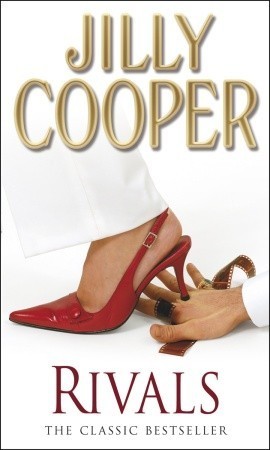
Rutshire Chronicles #2
Rivals
One of the glorious Rutshire Chronicles.
Into the cut-throat world of Corinium television comes Declan O’Hara, a mega-star of great glamour and integrity with a radiant feckless wife, a handsome son and two ravishing teenage daughters. Living rather too closely across the valley is Rupert Campbell-Black, divorced and as dissolute as ever, and now the Tory Minister for Sport.
Declan needs only a few days at Corinium to realize that the Managing Director, Lord Baddingham, is a crook who has recruited him merely to help retain the franchise for Corinium. Baddingham has also enticed Cameron Cook, a gorgeous but domineering woman executive, to produce Declan’s programme. Declan and Cameron detest each other, provoking a storm of controversy into which Rupert plunges with his usual abandon.
As a rival group emerges to pitch for the franchise, reputations ripen and decline, true love blossoms and burns, marriages are made and shattered, and sex raises its (delicious) head at almost every throw as, in bed and boardroom, the race is on to capture the Cotswold Crown.
Into the cut-throat world of Corinium television comes Declan O’Hara, a mega-star of great glamour and integrity with a radiant feckless wife, a handsome son and two ravishing teenage daughters. Living rather too closely across the valley is Rupert Campbell-Black, divorced and as dissolute as ever, and now the Tory Minister for Sport.
Declan needs only a few days at Corinium to realize that the Managing Director, Lord Baddingham, is a crook who has recruited him merely to help retain the franchise for Corinium. Baddingham has also enticed Cameron Cook, a gorgeous but domineering woman executive, to produce Declan’s programme. Declan and Cameron detest each other, provoking a storm of controversy into which Rupert plunges with his usual abandon.
As a rival group emerges to pitch for the franchise, reputations ripen and decline, true love blossoms and burns, marriages are made and shattered, and sex raises its (delicious) head at almost every throw as, in bed and boardroom, the race is on to capture the Cotswold Crown.
716 pages, Paperback
First published January 1, 1988
About the author
Jilly Cooper
94 books942 followersDame Jilly Cooper, OBE (born February 21, 1937) was an English author. She started her career as a journalist and wrote numerous works of non-fiction before writing several romance novels, the first of which appeared in 1975. She was most famous for writing the six blockbuster novels the Rutshire Chronicles.
Ratings & Reviews
Friends & Following
Create a free account to discover what your friends think of this book!
Community Reviews
Displaying 1 - 30 of 1,521 reviews
October 31, 2014
Rating unchanged on reread: 5 stars
Undoubtedly THIS IS GARBAGE, if you like, from the (in)glorious 80s.
Think Dynasty,

Think Horses,

Think Dogs

Think sexism, chauvinism, adultery, parties, politics, intrigue, promiscuity .... and whatnot
Think characters you love to hate and hate to love, and yet, even the most repulsive ones have some saving graces.

And it's TRASH in its purest form, which deserves its own category and noone does trashy books like Jilly Cooper does.
She takes trash and recycles it and gives you this proudly and unashamedly:

I mean, at the end of the day it still stinks, but somehow you forget about it. :)
Undoubtedly THIS IS GARBAGE, if you like, from the (in)glorious 80s.
Think Dynasty,
Think Horses,
Think Dogs
Think sexism, chauvinism, adultery, parties, politics, intrigue, promiscuity .... and whatnot
Think characters you love to hate and hate to love, and yet, even the most repulsive ones have some saving graces.
And it's TRASH in its purest form, which deserves its own category and noone does trashy books like Jilly Cooper does.
She takes trash and recycles it and gives you this proudly and unashamedly:
I mean, at the end of the day it still stinks, but somehow you forget about it. :)

November 28, 2024
Lured by the overwhelmingly positive reviews, I recently watched Disney’s adaptation of Jilly Cooper’s 1980s’ novel Rivals, and found myself completely gripped. The series ends on a cliffhanger but it was obvious, from reviews, that Cooper’s book ties up all the loose ends. Desperate to know what happened to my favourite characters, I decided to track it down. It was a bad idea. A very bad idea. Although I’m in awe of the writing team that managed to turn something so deeply problematic into a compelling, incredibly entertaining, critique of Thatcher’s Britain.
The show, like the book, is set in a middle to upper-class, rural town and its surrounds, the kind of area that tourists associate with English countryside, beautiful landscapes, ancient buildings bathed in golden light, crowned by dreaming spires. But its glorious vistas are marred by the fact that it’s primarily populated with scheming, power-obsessed men and downtrodden women. But, unlike the show, Cooper’s novel contains few, if any, redeeming characters or features. I’d read that the adaptation toned down some of the excesses of Cooper’s narrative but I had no idea quite how much had been tweaked or omitted.
Cooper’s extensive cast of characters are linked by connections to a local, commercial TV company run by domineering, power-hungry Tony. Tony hates local MP, and former celebrity show-jumper, Rupert with a passion. The feeling’s mutual. Into the mix come the O’Hara family, bohemians who might have been lifted from the pages of Dodie Smith’s I Capture the Castle. There’s Declan, a former BBC presenter/interviewer adored by the viewing public, his jaded wife Maud – former actress now fading beauty – and three children including Taggie who keeps everything together. Adept at cooking, Taggie is kind and pure of heart, like a figure plucked from a fairy tale – 18 in the novel, 20 in the show.
The plot, of show and novel, hinges on a challenge to Tony’s monopoly over local TV and his subsequent leadership of the community. In the show this is juxtaposed with a slowly unfolding romance between Taggie and the much older Rupert; and between wealthy, working-class business owner Freddie and the unsung wife of another of Tony’s employees. Both of which are present in the novel but buried in a morass of extraneous detail and a host of peripheral characters. The show managed to make Taggie’s growing attraction to serial womaniser Rupert credible but barely - their earliest encounters include a cringeworthy scene in which Rupert casually thrusts his hand up Taggie’s skirt. Rupert is, we’re given to understand, a product of his times, a lonely, misunderstood man whose intrinsic good is demonstrated by his enduring love of animals. Similarly, Tony’s misogynistic, homophobic attitudes are contrasted with leftie Declan’s outrage over the appalling treatment of Tony’s female staff. But the source material differs extensively from the screen version. Rupert and Declan bond over their attitudes towards Tony but as part of a panel for a beauty contest revel in debating the merits of one contestant’s tits versus another’s crotch. "Animal-lover" Rupert is actually famous for brutalising his horses during his show-jumping years – but in Cooper's universe that apparently demonstrates his need for unwavering love and validation.
Cooper’s women are often sympathetically drawn but united in their lust for male approval, Cameron an ambitious, talented TV producer is undone by Rupert’s impressively large cock, falling in love in an instant. Unlike the show, the women here willingly collude in the propping up of male egos. This, Cooper seems to be saying, is just how things are, men want to be masterful, and women want masterful men - although preferably ones who also love dogs. Cooper’s world is hetero to the core, the few queer characters are hideously stereotyped or unpleasantly vilified. Cameron’s insecurities are shown to stem from her mother coming out as a lesbian whose butch – Cooper’s description is too offensive to repeat – partner was, of course, desperate to molest teenage girls.
I imagine there will be the usual, tedious few who excuse the unpalatable attitudes that pervade the book as simply a reflection of the times. And, on one level, they would be right but I think it’s important to recognise that Cooper’s England is not an unfiltered depiction of the era but represents an unabashedly centre-right, conservative perspective. This may have been a deeply toxic time but it was one that also boasted a significant, thriving left-wing counterculture from gay rights groups to feminist activists and anti-racist campaigners, none of whom are given any real credence here - to put Cooper's novel in context The Handmaid's Tale was published in 1985, three years before this; and authors like Toni Morrison and Angela Carter were already gaining recognition for their work. Although Cooper's narrative’s a highly effective reminder that history is not linear and progress towards a more balanced society is far from inevitable. The fleeting commentary on Reagan’s presidency and a “backlash” America longing for traditional family values and the leadership of a strong male patriarch was depressingly redolent of the kind of rhetoric spouted by Trump and his ilk - and lapped up by millions. So, interesting as a cultural document but little else, and even that interest was near impossible to sustain over 700 pages of decidedly-pedestrian prose.
The show, like the book, is set in a middle to upper-class, rural town and its surrounds, the kind of area that tourists associate with English countryside, beautiful landscapes, ancient buildings bathed in golden light, crowned by dreaming spires. But its glorious vistas are marred by the fact that it’s primarily populated with scheming, power-obsessed men and downtrodden women. But, unlike the show, Cooper’s novel contains few, if any, redeeming characters or features. I’d read that the adaptation toned down some of the excesses of Cooper’s narrative but I had no idea quite how much had been tweaked or omitted.
Cooper’s extensive cast of characters are linked by connections to a local, commercial TV company run by domineering, power-hungry Tony. Tony hates local MP, and former celebrity show-jumper, Rupert with a passion. The feeling’s mutual. Into the mix come the O’Hara family, bohemians who might have been lifted from the pages of Dodie Smith’s I Capture the Castle. There’s Declan, a former BBC presenter/interviewer adored by the viewing public, his jaded wife Maud – former actress now fading beauty – and three children including Taggie who keeps everything together. Adept at cooking, Taggie is kind and pure of heart, like a figure plucked from a fairy tale – 18 in the novel, 20 in the show.
The plot, of show and novel, hinges on a challenge to Tony’s monopoly over local TV and his subsequent leadership of the community. In the show this is juxtaposed with a slowly unfolding romance between Taggie and the much older Rupert; and between wealthy, working-class business owner Freddie and the unsung wife of another of Tony’s employees. Both of which are present in the novel but buried in a morass of extraneous detail and a host of peripheral characters. The show managed to make Taggie’s growing attraction to serial womaniser Rupert credible but barely - their earliest encounters include a cringeworthy scene in which Rupert casually thrusts his hand up Taggie’s skirt. Rupert is, we’re given to understand, a product of his times, a lonely, misunderstood man whose intrinsic good is demonstrated by his enduring love of animals. Similarly, Tony’s misogynistic, homophobic attitudes are contrasted with leftie Declan’s outrage over the appalling treatment of Tony’s female staff. But the source material differs extensively from the screen version. Rupert and Declan bond over their attitudes towards Tony but as part of a panel for a beauty contest revel in debating the merits of one contestant’s tits versus another’s crotch. "Animal-lover" Rupert is actually famous for brutalising his horses during his show-jumping years – but in Cooper's universe that apparently demonstrates his need for unwavering love and validation.
Cooper’s women are often sympathetically drawn but united in their lust for male approval, Cameron an ambitious, talented TV producer is undone by Rupert’s impressively large cock, falling in love in an instant. Unlike the show, the women here willingly collude in the propping up of male egos. This, Cooper seems to be saying, is just how things are, men want to be masterful, and women want masterful men - although preferably ones who also love dogs. Cooper’s world is hetero to the core, the few queer characters are hideously stereotyped or unpleasantly vilified. Cameron’s insecurities are shown to stem from her mother coming out as a lesbian whose butch – Cooper’s description is too offensive to repeat – partner was, of course, desperate to molest teenage girls.
I imagine there will be the usual, tedious few who excuse the unpalatable attitudes that pervade the book as simply a reflection of the times. And, on one level, they would be right but I think it’s important to recognise that Cooper’s England is not an unfiltered depiction of the era but represents an unabashedly centre-right, conservative perspective. This may have been a deeply toxic time but it was one that also boasted a significant, thriving left-wing counterculture from gay rights groups to feminist activists and anti-racist campaigners, none of whom are given any real credence here - to put Cooper's novel in context The Handmaid's Tale was published in 1985, three years before this; and authors like Toni Morrison and Angela Carter were already gaining recognition for their work. Although Cooper's narrative’s a highly effective reminder that history is not linear and progress towards a more balanced society is far from inevitable. The fleeting commentary on Reagan’s presidency and a “backlash” America longing for traditional family values and the leadership of a strong male patriarch was depressingly redolent of the kind of rhetoric spouted by Trump and his ilk - and lapped up by millions. So, interesting as a cultural document but little else, and even that interest was near impossible to sustain over 700 pages of decidedly-pedestrian prose.
Read
October 27, 2024I decided to read this after binge watching the TV show and needing more.
By and large, I enjoyed it, but I had to keep reminding myself 'it was the 80s... things were different...' Like, men could say they openly lust after 14yr olds and compliment their wives by saying they had the body of a child!
I have to say I was impressed by the density of the dialogue and characters, it felt very immersive and had a lot more weight to it than plenty of other romance novels I've read over the years.
I do think the TV show does A LOT better in bringing out some of the personality of the characters. Cameron Cook in the book was mostly unreemdable, but I felt there was a lot more nuance to her in the show. Likewise for Freddie and Lizzie (who I love in the show!!!!! yes danny dyer yes!)
Enjoyable binge read, but can't say I'm going to read her other novels.
It's also really fucking funny when Coopers describes a delicious meal, or beautiful clothes, and then proceeds to describe the most unappealing and ugly food and fashion. Oh the 80s!
By and large, I enjoyed it, but I had to keep reminding myself 'it was the 80s... things were different...' Like, men could say they openly lust after 14yr olds and compliment their wives by saying they had the body of a child!
I have to say I was impressed by the density of the dialogue and characters, it felt very immersive and had a lot more weight to it than plenty of other romance novels I've read over the years.
I do think the TV show does A LOT better in bringing out some of the personality of the characters. Cameron Cook in the book was mostly unreemdable, but I felt there was a lot more nuance to her in the show. Likewise for Freddie and Lizzie (who I love in the show!!!!! yes danny dyer yes!)
Enjoyable binge read, but can't say I'm going to read her other novels.
It's also really fucking funny when Coopers describes a delicious meal, or beautiful clothes, and then proceeds to describe the most unappealing and ugly food and fashion. Oh the 80s!

November 16, 2024
and the award for biggest yapper goes to....
if you're like me and have been obsessed with the show (namely rupert & taggie) want more of them and decide to read the book...let me stop you right there. This was 700+ pages of RUBBISH. Only in the last 5% you get a conclusion to their story. THE LAST 5% OF A 700+ PAGE BOOK PEOPLE!! Utter madness. This was long winded, filled with stupid drama, multiple slurs, sexism, pedophilia, A CONCENTRATION CAMP JOKE, random flowery prose and was overall so ridiculous i hate myself for having to see it through. The only good part was freddie & lizzie and that was more in the background. The show was infinitely better and they changed a good bit around. If there's ever a s2 I'll be interested in how they're turning this shit show around to give people the ending they want.
P.S. to anyone swooning over rupert campell black and shipping him with taggie or anything female that can walk..you are infuckingsane! 🥰 this man is a pedophile and the asshole of all assholes. Throughout this entire book he compared taggie to a child yet proceeded to sexualize and fantasize about her in the same breath. Exhibit A: "watching taggie... looking as the manager had thought, not a day over 14, he was kneed in the groin with longing"
What we're not going to do is promote whatever the fuck this is jilly cooper.
if you're like me and have been obsessed with the show (namely rupert & taggie) want more of them and decide to read the book...let me stop you right there. This was 700+ pages of RUBBISH. Only in the last 5% you get a conclusion to their story. THE LAST 5% OF A 700+ PAGE BOOK PEOPLE!! Utter madness. This was long winded, filled with stupid drama, multiple slurs, sexism, pedophilia, A CONCENTRATION CAMP JOKE, random flowery prose and was overall so ridiculous i hate myself for having to see it through. The only good part was freddie & lizzie and that was more in the background. The show was infinitely better and they changed a good bit around. If there's ever a s2 I'll be interested in how they're turning this shit show around to give people the ending they want.
P.S. to anyone swooning over rupert campell black and shipping him with taggie or anything female that can walk..you are infuckingsane! 🥰 this man is a pedophile and the asshole of all assholes. Throughout this entire book he compared taggie to a child yet proceeded to sexualize and fantasize about her in the same breath. Exhibit A: "watching taggie... looking as the manager had thought, not a day over 14, he was kneed in the groin with longing"
What we're not going to do is promote whatever the fuck this is jilly cooper.

March 31, 2012
Jilly, my affection for you has lead me to keep reading, way, way past the point when you became unreadable. (There's debate about when this occurred. For me the tipping point was Pandora. For some it was SCORE! The exclamation mark was too much to bear.) For me, Rivals is the ultimate Jilly, though I know many would say Riders cannot be bettered. But Rupert finds love. How can you beat that?
November 17, 2024
4,5⭐️ The thing about this book is… It is so much fun but only after you accept the fact that you don’t really like most of the characters. And what I mean by that is they are not good people- they cheat, they do whatever it takes to get whatever they want, they lie- BUT they are so entertaining, funny and you want more and more.

November 18, 2024
Hate that I have the hots for a fictional tory MP but the heart wants what it wants

June 26, 2026
After watching all of the TV show in 2 days, I couldn't wait to read this. It's the epitome 80s excess, with money, sex and posh people having constant affairs. I much prefer the Rupert Campbell-Black of the TV show, with less of the animal abuse and dubious age gap shown in the books, and I absolutely fell for him the way everyone else seems too. This isn't without its problems - it's at times racist, homophobic and misogynistic, but it's also very tongue in cheek and frivolous, which is exactly the escapism I needed at the moment.
![Profile Image for laurel [the suspected bibliophile].](https://i.gr-assets.com/images/S/compressed.photo.goodreads.com/users/1645808644i/7494844._UX200_CR0,6,200,200_.jpg)
November 28, 2024
"Is Rupert Campbell-Black as attractive as everyone says?" asked Caitlin.
"Yes," sighed Lizzie. "He seems to get more so."
"They say he was very wild in his youth."
"Well, he's had a rather extended youth.""
Never did I ever think that Rupert Campbell-Black, the asshole and scoundrel villain of Riders, could ever be redeemed.
And yet.
I wasn't planning on reading this because I loved the first book so much and didn't think that I'd want to read book two, which focuses on my least favorite character and an entirely new cast, but then I watched the Hulu show and...well, Alex Hassell's brilliant portrayal of Rupert changed my mind. And after binge-watching the first season (please please please have a season 2!) I knew that I needed more.
The entire book is long and ridiculous and tawdry, but somehow toned down significantly from Riders, or maybe that was because I expected more? Regardless, there's a lot less statutory rape, and the fatphobia isn't as prevalent. There is a shit-ton of ableism present, but it's often challenged.
"Jolly easy to have principles when someone else picks up the bill," said Lizzie.
There's an entire cast of people—so many, many people—all revolving around a franchise bid between staid and awful Corinium, lead by the aptly named Lord Tony Baddingham, and an upstart group called Venturer, lead by the wayward and unlikely heroes.
"Not content with groping Taggie and ensnaring Maud, he's now trying to seduce my dog."
While there are a lot of villains, there are also a lot of immorally grey people, and some absolutely delightful human beings. As for marriage loyalty? Get out of here. Everyone cheats. Except Monica, who is much nicer in the book than she is in the show. And Valerie, who is just obliviously awful. And Taggie, of course, who is the heart and soul of the book. But there's a bunch of others to love. Lizzie, and Freddie, two honorable people who you just root for. And people you begin hating and then end up respecting the hell out of, like Cameron Cook. And people you want to just smack upside the head and tell them to get themselves together, like Declan O'Hara. And people you just want to see at the bottom of a hole, like Maud. Fuck Maud.
The book boils down to how to instill loyalty—by being true to yourself, by being honest, and by treating the people beneath you with respect (there's a moment that had me in absolute tears).
And...that even the most dastardly rakes can be reformed, but they've got to put in the work. Because of course at its core, this is the slowest of slow burns between two people who don't seem to fit and yet grow to be absolutely right for each other.
Cameron shrugged. "If you can get gold with a broken shoulder, I can talk too much with a broken heart."
"Yes," sighed Lizzie. "He seems to get more so."
"They say he was very wild in his youth."
"Well, he's had a rather extended youth.""
Never did I ever think that Rupert Campbell-Black, the asshole and scoundrel villain of Riders, could ever be redeemed.
And yet.
I wasn't planning on reading this because I loved the first book so much and didn't think that I'd want to read book two, which focuses on my least favorite character and an entirely new cast, but then I watched the Hulu show and...well, Alex Hassell's brilliant portrayal of Rupert changed my mind. And after binge-watching the first season (please please please have a season 2!) I knew that I needed more.
The entire book is long and ridiculous and tawdry, but somehow toned down significantly from Riders, or maybe that was because I expected more? Regardless, there's a lot less statutory rape, and the fatphobia isn't as prevalent. There is a shit-ton of ableism present, but it's often challenged.
"Jolly easy to have principles when someone else picks up the bill," said Lizzie.
There's an entire cast of people—so many, many people—all revolving around a franchise bid between staid and awful Corinium, lead by the aptly named Lord Tony Baddingham, and an upstart group called Venturer, lead by the wayward and unlikely heroes.
"Not content with groping Taggie and ensnaring Maud, he's now trying to seduce my dog."
While there are a lot of villains, there are also a lot of immorally grey people, and some absolutely delightful human beings. As for marriage loyalty? Get out of here. Everyone cheats. Except Monica, who is much nicer in the book than she is in the show. And Valerie, who is just obliviously awful. And Taggie, of course, who is the heart and soul of the book. But there's a bunch of others to love. Lizzie, and Freddie, two honorable people who you just root for. And people you begin hating and then end up respecting the hell out of, like Cameron Cook. And people you want to just smack upside the head and tell them to get themselves together, like Declan O'Hara. And people you just want to see at the bottom of a hole, like Maud. Fuck Maud.
The book boils down to how to instill loyalty—by being true to yourself, by being honest, and by treating the people beneath you with respect (there's a moment that had me in absolute tears).
And...that even the most dastardly rakes can be reformed, but they've got to put in the work. Because of course at its core, this is the slowest of slow burns between two people who don't seem to fit and yet grow to be absolutely right for each other.
Cameron shrugged. "If you can get gold with a broken shoulder, I can talk too much with a broken heart."

August 4, 2013
Rating 3* out of 5. One star deduction for excessive length. The previous book in the series "Riders" was even longer - over 900 pages - but I did not want it to end. "Rivals" wasn't as interesting. The format probably contributed as well, reading books over 500 pages on kindle is quite dreary in itself.
I wish I would have read this when I was 17! The sleazy decadance would have rid me of any romantic illusions, or rather, delusions, and perhaps prevented me from learning the hard way. "Rivals" must have been the "mummy porn" of the eighties. My goodness. Everyone lusts for each other, there is back-stabbing, affairs and counter-affairs en masse.
One of the biggest reasons that I picked up this book was to find out what happened with Rupert's wronged wife Helen. She was left in quite a state at the end of "Riders". Well, turns out she's happily married and that's about it. Other than Rupert, none of the characters from "Riders" make much of an appearance. Of course, Rupert was the arch-villain in "Riders" and in "Rivals" he's made to appear quite nice. Misguided, but nice.
Rupert, the super tv-star Declan and a few others are making a rival bid for a tv franchise. It is currently being run by the sleazy and horrible Tony, who is quite sure he will be able to keep the franchise. There are dozens of characters, they all appear to be sleeping together in different constellations and occasionally it's quite difficult to keep them apart. It's a blur. Not all of it. Rupert, Declan, his 18-year old dyslectic daughter Taggie, Tony, the female producer Cameron are all quite clear-cut, unique. The only one who is not horrible in some way is sweet, misunderstood Taggie, whom everyone takes advantage of.
Certainly this book is readable enough, but it would have been much better if some of the side-tracks and subplots had been edited away. Seven hundred pages consisting mostly of who's-sleeping-with-whom is a bit much. It's very educational though. Highly recommended if you're younger than twenty.
I wish I would have read this when I was 17! The sleazy decadance would have rid me of any romantic illusions, or rather, delusions, and perhaps prevented me from learning the hard way. "Rivals" must have been the "mummy porn" of the eighties. My goodness. Everyone lusts for each other, there is back-stabbing, affairs and counter-affairs en masse.
One of the biggest reasons that I picked up this book was to find out what happened with Rupert's wronged wife Helen. She was left in quite a state at the end of "Riders". Well, turns out she's happily married and that's about it. Other than Rupert, none of the characters from "Riders" make much of an appearance. Of course, Rupert was the arch-villain in "Riders" and in "Rivals" he's made to appear quite nice. Misguided, but nice.
Rupert, the super tv-star Declan and a few others are making a rival bid for a tv franchise. It is currently being run by the sleazy and horrible Tony, who is quite sure he will be able to keep the franchise. There are dozens of characters, they all appear to be sleeping together in different constellations and occasionally it's quite difficult to keep them apart. It's a blur. Not all of it. Rupert, Declan, his 18-year old dyslectic daughter Taggie, Tony, the female producer Cameron are all quite clear-cut, unique. The only one who is not horrible in some way is sweet, misunderstood Taggie, whom everyone takes advantage of.
Certainly this book is readable enough, but it would have been much better if some of the side-tracks and subplots had been edited away. Seven hundred pages consisting mostly of who's-sleeping-with-whom is a bit much. It's very educational though. Highly recommended if you're younger than twenty.
November 6, 2024
If you’re here because you watched the show, turn around now, because this is a rare instance where the show is better than the book. First of all, this book is full of sexism. I know it was written in a different time, but the whole relationship with Taggie and Rupert is just so unromantic, weird, lackluster, and full of misogyny. Rupert is about 20 years older than her, which is already creepy, but what really made me hate this relationship (which by the way isn’t even a relationship, they don’t get together till the last 20 pages), is just how much of an asshole Rupert is. He has no character growth whatsoever, the show paints him as a reformed rake because of Taggie, but do not expect to see this in the book as well. I didn’t feel a connection to most of the characters, they were all kind of awful people, and the characters I did enjoy were not main characters (besides Taggie). All in all, stick to the show and just wait for a season two instead, while you’re waiting, you should watch Midnight at the Pera Palace on Netflix. It’s great and deserves so much more love than it gets. (seriously please watch it I need it renewed for a season 3.)

August 18, 2025
In many ways, appalling, and yet so much fun.

October 19, 2008
Original thoughts:
I first read this in my teens in the 80s and loved it. Riders was good, but Rivals was goooooood. Bonkbusting mayhem at it's best, with the added adorability of the romance between Rupert and Taggie, awww!
Today's thoughts:
Continuing my re-romps through the works of bonkbuster queen Jilly Cooper, Rivals was second only to Polo back in my teens. Bastard bad boy Rupert from Riders is finally tamed by the young, shy, quivering, dependable, adorable Taggie, and true to my old memories, their romance is oh so sweet. Watching swaggering serial shagger Rupert try to convince himself that he only has father-like feelings for innocent 19 year old Taggie, as well as the discovery of the dried leaves in his drawer and the airport arrivals scene had me sighing and swooning as much now as they did then, making me feel all warm n' fuzzy n' squishy inside.
The rest of the book couldn't quite live up to my multiple reads and 5 star rating. I still enjoyed all the bed hopping, the punchable 'caring' characters, the affected accents of the social-climbing wannabes, the bed hopping, the gossip, the bitching, the backstabbing, the bed hopping, the experimental teens, the drink-addled midlife crises, the shrieking egomaniacs, the bed hopping and the downright silliness, but I'm older and more world-weary these days and marathon romps wear me out ;-p
5 perfect bonkbusting stars from my teens; 4 nostalgically fun, Rupert and Taggie loving, slightly exhausted stars from now.
I first read this in my teens in the 80s and loved it. Riders was good, but Rivals was goooooood. Bonkbusting mayhem at it's best, with the added adorability of the romance between Rupert and Taggie, awww!
Today's thoughts:
Continuing my re-romps through the works of bonkbuster queen Jilly Cooper, Rivals was second only to Polo back in my teens. Bastard bad boy Rupert from Riders is finally tamed by the young, shy, quivering, dependable, adorable Taggie, and true to my old memories, their romance is oh so sweet. Watching swaggering serial shagger Rupert try to convince himself that he only has father-like feelings for innocent 19 year old Taggie, as well as the discovery of the dried leaves in his drawer and the airport arrivals scene had me sighing and swooning as much now as they did then, making me feel all warm n' fuzzy n' squishy inside.
The rest of the book couldn't quite live up to my multiple reads and 5 star rating. I still enjoyed all the bed hopping, the punchable 'caring' characters, the affected accents of the social-climbing wannabes, the bed hopping, the gossip, the bitching, the backstabbing, the bed hopping, the experimental teens, the drink-addled midlife crises, the shrieking egomaniacs, the bed hopping and the downright silliness, but I'm older and more world-weary these days and marathon romps wear me out ;-p
5 perfect bonkbusting stars from my teens; 4 nostalgically fun, Rupert and Taggie loving, slightly exhausted stars from now.

July 9, 2015
I've been SO thoroughly enjoying my re-read of my pile of Jilly Cooper books - Rivals is one of my favourites (although the next one up Polo is my *absolute* favourite) due to the character of Declan and the fact that in this one Rupert meets the love of his life for the first time.
Fast, funny and so entertaining I really recommend these - for all people of all ages (ok perhaps 14 and over - I read them first around then!) The perfect pick me up reads.
Sadly I have to put the re-read on hold for a while due to extreme review reading but I will no doubt be back to them soon when I shall enter the world of Perdita and Polo once more.
Happy Reading Folks!
Fast, funny and so entertaining I really recommend these - for all people of all ages (ok perhaps 14 and over - I read them first around then!) The perfect pick me up reads.
Sadly I have to put the re-read on hold for a while due to extreme review reading but I will no doubt be back to them soon when I shall enter the world of Perdita and Polo once more.
Happy Reading Folks!

December 26, 2024
This was absolutely trash…
I loved it
I loved it

June 18, 2015
Following on a few years from where Riders leaves off, Rivals throws us back into the saddle (see what I did there) in Rutshire, where Rupert Campbell-Black is now Tory (of course) Minister for Sport. Freshly divorced from Helen, he is literally shagging anything that comes within a ten-metre radius of his penis and casually sticking two fingers up to his conquests' husbands while he does it.
New to Rutshire is Declan O'Hara, an Irish talk show host with a gloriously shambolic wife and three teenage kids. Declan's been hired to be the star attraction at Corinium Television, but it soon becomes clear that he's only been hired to help Corinium keep the TV franchise. After a cataclysmic fall-out, Declan storms off only to be joined by other disgruntled Corinium staff and, in a random turn of events, Rupert and Billy once the true nature of Corinium's chief exec comes to light.
So what do a load of posho showjumping types do when faced with such dastardly deeds? Why, they form their own consortium to pitch for the TV franchise, of course! Because the transition from showjumping to television production is the natural course of events.
I'm being mean. I actually loved this book for many reasons, some of which being:
1) It has a red stiletto on the cover
2) Rupert Campbell-Black falls in love. Like, actually in love.
3) It's so eighties, it should be a crime
For me, this was actually a better read than Riders, which spent far too long going on about the rules and regulations surrounding international showjumping. Whatever. Jilly Cooper's writing is a lot tighter here and while Rivals doesn't exactly break moulds, it's a hilariously gripping read.
New to Rutshire is Declan O'Hara, an Irish talk show host with a gloriously shambolic wife and three teenage kids. Declan's been hired to be the star attraction at Corinium Television, but it soon becomes clear that he's only been hired to help Corinium keep the TV franchise. After a cataclysmic fall-out, Declan storms off only to be joined by other disgruntled Corinium staff and, in a random turn of events, Rupert and Billy once the true nature of Corinium's chief exec comes to light.
So what do a load of posho showjumping types do when faced with such dastardly deeds? Why, they form their own consortium to pitch for the TV franchise, of course! Because the transition from showjumping to television production is the natural course of events.
I'm being mean. I actually loved this book for many reasons, some of which being:
1) It has a red stiletto on the cover
2) Rupert Campbell-Black falls in love. Like, actually in love.
3) It's so eighties, it should be a crime
For me, this was actually a better read than Riders, which spent far too long going on about the rules and regulations surrounding international showjumping. Whatever. Jilly Cooper's writing is a lot tighter here and while Rivals doesn't exactly break moulds, it's a hilariously gripping read.

February 17, 2010
I read this on and off whenever I need a brain holiday. WHo can beat Rupert and Taggie????
November 19, 2024
tw AIDS, paedophilia
After watching the bonkers TV series of Rivals, I decided to give the book a go. (My piece on the TV series here https://jellicoejay.substack.com/p/i-...)
The kindest thing I can say about this romance is that it's unutterably barmy and of its time (the late 80s). Two unpleasant rich men, grammar school educated Tony and aristocrat Rupert, scheme their way through life while lying to different women and having sex on every flat surface. There are many love triangles and squares. Both men are equally unpleasant, but the author favours Rupert, the aristocrat, and it shows.
Both men end up working in TV, but Cooper is uninterested in TV or anything except frolicking so it's just a backdrop for plenty of incredibly unnecessary and boring intrigue, with two companies based in the same village spying on each other. Or something. Jilly Cooper is a very smart writer so a lot of this is well observed as well as unashamedly trashy. This could be super camp!... If only it was structured better, and not extremely dated and homophobic.
After Cooper takes 100 pages to introduce the plot, Rupert (37) falls for his friend's daughter, dyslexic chef Taggie (17!), providing the main love story and squicking out most modern readers. In fairness, Cooper tries to understand Taggie's dyslexia and show ways that she copes with it - but in service of what? "You poor little duck," Rupert says, seeing the notes Taggie uses for accessibility. Well, so much for Taggie's independence, then.
I'm not sure what was happening with Cooper while she was writing this, but I find the recurring motifs strange. For instance, there's a fixation with AIDS (although ONLY mentioned in connection with straight men and straight couples.) And with paedophilia involving young girls; a simple search for fourteen brings up: 1. "He [a grown man] thought how glamorous the other fourteen-year olds looked." 2. A revolting interview with a paedophile who boasts about sleeping with a young girl and "doesn't figure he screwed her up." For some reason, this interview is presented as a lot of fun and not hideous. 3. Rupert, seeing Taggie looking "not a day over fourteen" feels longing. And so on, over and over. In Jillyworld the extreme age gap between Taggie and Rupert is not just permissible, but the best thing for Rupert (a character points out he needs a "submissive" young wife) and outright paedophilia is brushed off as just a bit of fun.
The last act drags along and it feels as if Cooper gets bored with her characters. It's always a bit hard to tell who's speaking, as they all gush in the exact same way, but in act 3 the dialogue becomes robotic. "There was no way a penniless student could be part of my future goals. I didn't figure he had sufficient weight." Also notably, Cameron Cook the career woman and love interest gets with Rupert and becomes a housewife, which is because Cooper hates feminism. Cameron fails to get on with his kids, who are mean to her. This is made out to be Cameron's fault for "sulking" and not being enough fun or as young as Taggie, which is because in Cooper's books any adverse situation at home is usually the woman's fault somehow. Rupert behaves dreadfully as a parent but is always forgiven, because... you get the idea.
I read this book in two days and I'm not sure why; it's very readable but I don't know what was so compulsive about it. Maybe it's that the couples tend to have a better and less mean-spirited time together than in the previous novel, Riders. Maybe it's that Taggie and her sister Caitlin are mostly well drawn and have a sweet relationship which is genuinely engaging.
Lastly, and weirdly, there's very little sex in this book. Instead, the characters keep attending meetings, where we're told how great Rupert is. Rivals loves to tell us what we should think. Every time the reader thinks bewilderedly "This can't be right" the great clunking hand of Cooper comes down and tells them it's a jolly good laugh.
After watching the bonkers TV series of Rivals, I decided to give the book a go. (My piece on the TV series here https://jellicoejay.substack.com/p/i-...)
The kindest thing I can say about this romance is that it's unutterably barmy and of its time (the late 80s). Two unpleasant rich men, grammar school educated Tony and aristocrat Rupert, scheme their way through life while lying to different women and having sex on every flat surface. There are many love triangles and squares. Both men are equally unpleasant, but the author favours Rupert, the aristocrat, and it shows.
Both men end up working in TV, but Cooper is uninterested in TV or anything except frolicking so it's just a backdrop for plenty of incredibly unnecessary and boring intrigue, with two companies based in the same village spying on each other. Or something. Jilly Cooper is a very smart writer so a lot of this is well observed as well as unashamedly trashy. This could be super camp!... If only it was structured better, and not extremely dated and homophobic.
After Cooper takes 100 pages to introduce the plot, Rupert (37) falls for his friend's daughter, dyslexic chef Taggie (17!), providing the main love story and squicking out most modern readers. In fairness, Cooper tries to understand Taggie's dyslexia and show ways that she copes with it - but in service of what? "You poor little duck," Rupert says, seeing the notes Taggie uses for accessibility. Well, so much for Taggie's independence, then.
I'm not sure what was happening with Cooper while she was writing this, but I find the recurring motifs strange. For instance, there's a fixation with AIDS (although ONLY mentioned in connection with straight men and straight couples.) And with paedophilia involving young girls; a simple search for fourteen brings up: 1. "He [a grown man] thought how glamorous the other fourteen-year olds looked." 2. A revolting interview with a paedophile who boasts about sleeping with a young girl and "doesn't figure he screwed her up." For some reason, this interview is presented as a lot of fun and not hideous. 3. Rupert, seeing Taggie looking "not a day over fourteen" feels longing. And so on, over and over. In Jillyworld the extreme age gap between Taggie and Rupert is not just permissible, but the best thing for Rupert (a character points out he needs a "submissive" young wife) and outright paedophilia is brushed off as just a bit of fun.
The last act drags along and it feels as if Cooper gets bored with her characters. It's always a bit hard to tell who's speaking, as they all gush in the exact same way, but in act 3 the dialogue becomes robotic. "There was no way a penniless student could be part of my future goals. I didn't figure he had sufficient weight." Also notably, Cameron Cook the career woman and love interest gets with Rupert and becomes a housewife, which is because Cooper hates feminism. Cameron fails to get on with his kids, who are mean to her. This is made out to be Cameron's fault for "sulking" and not being enough fun or as young as Taggie, which is because in Cooper's books any adverse situation at home is usually the woman's fault somehow. Rupert behaves dreadfully as a parent but is always forgiven, because... you get the idea.
I read this book in two days and I'm not sure why; it's very readable but I don't know what was so compulsive about it. Maybe it's that the couples tend to have a better and less mean-spirited time together than in the previous novel, Riders. Maybe it's that Taggie and her sister Caitlin are mostly well drawn and have a sweet relationship which is genuinely engaging.
Lastly, and weirdly, there's very little sex in this book. Instead, the characters keep attending meetings, where we're told how great Rupert is. Rivals loves to tell us what we should think. Every time the reader thinks bewilderedly "This can't be right" the great clunking hand of Cooper comes down and tells them it's a jolly good laugh.
April 9, 2013
My favorite! Because Rupert finds true love! OK, OK, it's only partially a favorite because of that. It's also a favorite because it was my first JC and also wickedly hilarious. But yeah, the romance between Rupert and Taggie made me swoon -
Anyway, this is set a number of years after Riders and involves a TV franchise run by ruthless, dictatorial and evil Tony Longboringlastname. A very varied group of people who are fed up or have been victimized by Tony decide to take him on and fight to get the franchise. One of the franchise members is Rupert, long divorced, retired from show-jumping and a Tory Minister for Sport. In the course of the book, Rupert falls hopelessly (and for the first time in his life) in love with the gorgeous, sweet-natured Taggie O'Hara but tries to fight it as being too unsuitable for her with his past and age difference. (Btw, this is one of the few times I don't mind 'rake redeemed by the love of a good woman' set-up because it's pretty clear that due to his (lack of) upbringing and personality, the guy needs a very sweet and loving domestic Madonna on a pedestal type of significant other).
Fun ensues!
Anyway, this is set a number of years after Riders and involves a TV franchise run by ruthless, dictatorial and evil Tony Longboringlastname. A very varied group of people who are fed up or have been victimized by Tony decide to take him on and fight to get the franchise. One of the franchise members is Rupert, long divorced, retired from show-jumping and a Tory Minister for Sport. In the course of the book, Rupert falls hopelessly (and for the first time in his life) in love with the gorgeous, sweet-natured Taggie O'Hara but tries to fight it as being too unsuitable for her with his past and age difference. (Btw, this is one of the few times I don't mind 'rake redeemed by the love of a good woman' set-up because it's pretty clear that due to his (lack of) upbringing and personality, the guy needs a very sweet and loving domestic Madonna on a pedestal type of significant other).
Fun ensues!

November 28, 2024
Quite trashy, quite entertaining, VERY of its time, do go into it remembering it was published in 1988
Cannot wait for rivals s2!!! The drama!!!
Cannot wait for rivals s2!!! The drama!!!

November 17, 2024
Did I have life altering withdrawals from the rivals tv show and decide to read the book? Yes, yes I did. This book definitely did what it needed to do and I loved being able to read about all the characters I absolutely loved again.
That being said, you can’t go into this book expecting it’s going to be similar to the show, in my opinion it was actually quite different. I was expecting answers and was just left with more questions and now I feel like I need to read the whole book series😂 if you can separate the tv show from the book and not compare every detail you will LOVE this book.
Just a little side note: if you are wanting more of Rupert and Taggie they are barely together in the book and their relationship in the show is 100 times better🫠 that was my one disappointment 😭😭 HULU JUST RENEW FOR SEASON 2 PLEASE
That being said, you can’t go into this book expecting it’s going to be similar to the show, in my opinion it was actually quite different. I was expecting answers and was just left with more questions and now I feel like I need to read the whole book series😂 if you can separate the tv show from the book and not compare every detail you will LOVE this book.
Just a little side note: if you are wanting more of Rupert and Taggie they are barely together in the book and their relationship in the show is 100 times better🫠 that was my one disappointment 😭😭 HULU JUST RENEW FOR SEASON 2 PLEASE

January 22, 2025
I want to read more Taggie and Rupert!

May 30, 2025
I had read this decades ago when I was 14 I think.. But I found the audiobook I remember how much I had enjoyed it.. and loved all the characters, especially Rupert and Taggie. It was wonderful to be revisit the 80s and the simple world where streaming and cable didn’t exist.

February 13, 2025
Obviously I was curious about this due to David Tennant's involvement in the Disney adaptation, the trailers made it very appealing.
I loved the whole 80's setting and the storyline surrounding Lord Baddingham desperately trying to retain his Corinium TV franchise.
*I remember when one our local ITV stations changed from TVS to Meridian as a kid*
So it's very nostalgiclly fun.
There's a lengthy list of characters at the beginning of the book which can be slightly confusing at times though many of them either hate each other or have sex - in some instances both!
Certainly a product of its time and some of the seductive parts were highly amusing.
Gloriously over the top - it certainly a time capsual of the era.
I loved the whole 80's setting and the storyline surrounding Lord Baddingham desperately trying to retain his Corinium TV franchise.
*I remember when one our local ITV stations changed from TVS to Meridian as a kid*
So it's very nostalgiclly fun.
There's a lengthy list of characters at the beginning of the book which can be slightly confusing at times though many of them either hate each other or have sex - in some instances both!
Certainly a product of its time and some of the seductive parts were highly amusing.
Gloriously over the top - it certainly a time capsual of the era.

December 31, 2013
Reading the American version, which is titled _Players_.
Update: I wonder why they changed the title--Rivals was a much better title.
However, regardless of the title, a terrible book. An 80's corporate soap opera that's very dated. Characterization is terrible--I had to really concentrate to remember which one was Declan and which Rupert and which Tony (the women were a little better differentiated), but worst of all was the ridiculous inconsistency of them. My favorite was Cameron, the high-powered, bitchy, ambitious, American television producer. But when she temporarily loses her job and moves in with Rupert, she becomes someone who can shop and cook and cares deeply about the quality of her cooking. Makes no sense. The much vaunted "sexiness" also left me cold. Sure, lots of people are falling into bed with lots of other people, but the writing surrounding those episodes is at best un-erotic and at worst positively risible. (Paraphrasing, here, because I don't have the book in front of me, but one particularly cringe-making description was something like "With him inside her, she felt like a lock that contained the Queen Mary 2.") There was the occasional amusing turn of phrase or word play, but not nearly enough to justify the rest of the tripe. I've had Jilly Cooper on my list to read for a long time. I think I can safely take her off, now.
Update: I wonder why they changed the title--Rivals was a much better title.
However, regardless of the title, a terrible book. An 80's corporate soap opera that's very dated. Characterization is terrible--I had to really concentrate to remember which one was Declan and which Rupert and which Tony (the women were a little better differentiated), but worst of all was the ridiculous inconsistency of them. My favorite was Cameron, the high-powered, bitchy, ambitious, American television producer. But when she temporarily loses her job and moves in with Rupert, she becomes someone who can shop and cook and cares deeply about the quality of her cooking. Makes no sense. The much vaunted "sexiness" also left me cold. Sure, lots of people are falling into bed with lots of other people, but the writing surrounding those episodes is at best un-erotic and at worst positively risible. (Paraphrasing, here, because I don't have the book in front of me, but one particularly cringe-making description was something like "With him inside her, she felt like a lock that contained the Queen Mary 2.") There was the occasional amusing turn of phrase or word play, but not nearly enough to justify the rest of the tripe. I've had Jilly Cooper on my list to read for a long time. I think I can safely take her off, now.
December 7, 2013
Oh, the shame: I actually loved this. It was utterly barking, and bears no relation to real life, but it's really awfully funny. There are a lot of horses, dogs, quails' eggs, muddy range rovers, agas and one hilariously snobby woman who puts toilet cleaner in her garden fountains. Honestly, it's great fun.

April 5, 2021
Indebted to Els for bringing the joy of an annual Jilly to my life. What a treat. Love the normality of the 'bush' back in the day.
September 16, 2023
two stars to the absolute freaks in 1988 who made this a best seller

May 31, 2026
I thought it was great. Trashy and fun. Characters were awful people, cheating and lying to get what they want, but I couldn't wait to see what happened next. Now to watch the series to see how it compares.

November 29, 2024
این از اون کتابهایی بود که adaptationشون یک دنیا از خودشون بهتره.
Displaying 1 - 30 of 1,521 reviews