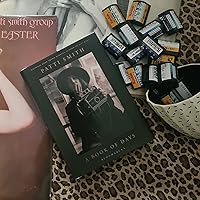
It’s the summer of 1984 in Swaffham, Massachusetts, when Mel (short for Melanie) encounters Sylvia, a tough-as-nails trans woman whose shameless swagger catalyzes Mel’s dawning trans self-awareness. But it also sparks the fury of townie Swaffham and throws Mel into conflict with her mother and best friend. Decades later, Max (formerly Mel) is on probation from his teaching job for (ironically) defying speech codes around trans identity. Back in Swaffham, he must face his own role in the disasters of the past. With the charged teenage emotion of Claire Messud’s The Burning Girl and the propulsive social interrogation of Rebecca Makkai’s I Have Some Questions for You, Hansbury reckons with gender and class as he delivers a timely and captivating narrative of self-realization amid the everyday violence of small-town intolerance. As the story builds to its explosive conclusion, Some Strange Music Draws Me In illuminates the unexpected ways that queerness can provide a ticket to liberation.
Griffin Hansbury is the author of the novel Some Strange Music Draws Me In, Vanishing New York and Feral City (writing as Jeremiah Moss), and The Nostalgist. A Pushcart Prize winner and Lambda Literary Award finalist, his writing has appeared in several publications, including n+1, the New York Times, and the New Yorker and Paris Review online. A trailblazer in the field of psychoanalysis, he was the first analyst to practice and publish as openly transgender. He lives in Manhattan.
A powerful story about growing up queer and trans, Some Strange Music Draws Me In is told in dual timelines between 1984 and 2019. I really liked the 1984 sections and how Griffin Hansbury did a wonderful job of highlighting the tumultuousness and rough-and-tumble of adolescence: when your parents are mean, when you’re not sure where you stand with your best friend, when you’re suffocated by a small town. Hansbury of course highlights how these elements are compounded for queer and trans youth; I liked the portrayals of navigating the blurry lines of friendship and romance and the search for a queer and trans mentor figure. As someone who was a high schooler between 2009 and 2013 (and ate up queer representation like Queer as Folk, which I write about in this blog post, and queer YA fiction that came out during that time too) this book was a moving reminder of just how rough it could’ve been for me if I had grown up in a different era. The casual, disturbing violence of men toward women, of cisheteros toward the lgbtq+ folks, and yet how queer and trans people found a way to survive beautifully anyway – Hansbury captures the mess well.
I agree with other reviewers that some of the 2019 sections felt a little off-kilter for me. In the first half of the book these sections sometimes felt like a way for Hansbury to insert his views on certain contemporary issues in the lgbtq+ community; it came across as a bit obvious and thus distracting from the narrative. However, I did feel like our protagonist Max grew toward the end of the 2019 section and had several heartwarming conversations with his loved ones, some of which genuinely moved me. Not the perfect novel but one that feels important, especially given the onslaught of hate against trans communities in the United States right now.
Okay - this book has left me speechless, but I will try. This is going to be a long and personal review. I would recommend everyone read this book.
Someone else said this book feels like a book for trans people, rather than a book to explain transness to cis people, and I would agree, although it's still the best work I've found in terms of articulating things I'd like the people around me to understand.
It is a very particular experience to have transitioned before it was as well-known and supported as it is now. It's something that a lot of people in our current social context cannot understand; how desperately under-resourced we were, how different being trans was then than it is now. While every trans experience is different, this one so resembled mine that I have been a low key wreck for the duration of my time with this book and I also feel a sense of grief at it's ending (and I say that jokingly after a good fantasy romp, but I mean it seriously this time).
I need to call out specifically the way this book articulates a few things in particular.
- The isolation and confusion of being a young kid who is trans but has absolutely no idea about those concepts or words, and who - when exposed to it - can only access stories of people transitioning in the "opposite" direction, and even then, usually depicted in such horrific ways that we can't reconcile our existence, wondering how to be an impossible thing, creating delusional narratives in order to try to play at a "regular" life, bargaining, etc.
- The violence that overtakes people when their ideas of gender are threatened. I didn't grow up in a small town, but the reactions of the small town people in this book mirrored those of my own social group, family, school, friends, when it was me. The way people tell you repeatedly, aggressively, that you are unlovable if you continue to be who you are, that you are "being" wrong, or loving wrong, that your survival means pain for the people you're close to. Seeing these things on the page was so sadly comforting. The way it can take your parents more than a decade to be able to stomach you, and the way you have to work at that balance of shame and anger and forgiveness and grace and confusion. At the risk of sounding like a crotchety old man, a lot of people these days do not understand that transitioning 15 years ago more resembled transitioning in the 70's than it resembles transitioning now. Which brings me to:
- The fantastic social commentary and articulation of the complex relationship that trans elders (oof, am I a trans elder now?) have with trans and gender non-conforming youth and experiences these days. People are thinking about and doing gender very differently. Yes, we fought for this. We want things to be easy for trans and gender non-conforming people, that has always been the goal. We want it to be easy, we want it to be socially normal with abundant resources, we want the general public to know what a pronoun is and be inclined toward respecting it.
That being said, it's hard to reconcile some of it. There are things I struggle with, but I don't feel it's useful to air my own lack of understanding too much. For people in decades past, it was a life or death decision to transition - in which we knew that we were actively choosing trauma and violence and rejection in order to be who we were, because the alternative was even more of an impossibility. I think this book hosts a really good articulation of why it is hard for older trans people to wrap their heads around the new social norms in which there is often little gravity given to the decision to move through the world as a gender non-conforming person. It is great progress, it is to be celebrated, but it is different - and until now it's a perspective that has been absent from the conversation as older trans people's voices are not typically uplifted.
Absent from this book are detailed descriptions about what dysphoria is like, and while we see with Sylvia how brutally painful and depleting it is to be a visibly trans person in the world, Max's visible mid-transition years are missing. Imagine the bathroom scene, and imagine it happening weekly for years. I am good with these things being left out of the book though; as I said, this feels like a book written by and for trans people. I am glad it's not trauma porn. "Nevada" exists to talk about the delayed development element. "Stone Butch Blues" exists if you want to know about the pain and violence. This book exists to gently remind me of the years I have distanced myself from, and to leave me with a sense of hope and feeling a little less disconnected from the whole world.
This is not something I talk about, and it is a huge overshare, but the shock of being seen has awoken something in me that I now have to deal with. I am really, really grateful to Griffin Hansbury for this work.
"In one memory, I would tell her, I am four years old. I know this because I'm at my aunt Shirley's house in Florida and she only lived in that house the year I was four. There are hibiscus flowers and saw palmettos in the yard and I am running barefoot across the rough, scratchy Florida grass, playing a game like tag with my cousin Kenny and the two girls who live next door. When they catch him, the girls cover Kenny in kisses, something they don't do when they catch me. I understand for the first time, that I am not a boy. I didn't quite know it before and now I do. It is not a happy awakening. I go running to the other side of the house, where I sit on the steps and cry. When my aunt appears in the doorway and asks what's wrong, I know enough to say: Nothing.
The Nothing stays inside me, accumulating shame, taking the shape of impossible longing. Years go by. I learn how to leave my body. I forget what I know about myself. Now and then, quietly, it makes itself felt."
the bold paragraph is so relatable but that's none of your business.
as far as coming of age stories go, this is probably one of the better ones i have ever read. i think it captures the confused longing for something you don't even understand yet of trans youth very well.
it was also one of my better reading experiences this year but a. i just ... don't like reading about children, b. some of the thematic choices of the 2019 chapters made me feel kinda ugh, like i think we had more pressing problems in 2019 than the infighting between trans elder and trans youth and i cringe thinking about some of the scenes between max and the social worker assigned to him, and c. i kinda wish there was more exploration of his relationships to his family members. like how did his mum get over saying "I'd rather kill you than let you become trans/gay/whatever" to idk ... acceptance? resignation?
Finally a “coming-of-age” novel that is written *by* and *for* queer people. These pages house such pure dialogue of what it means to be trans, both from a teenager figuring it out, and an adult who has come so far.
i thought this so tender and loving, i loved reading from max’s perspective, as a lost 13 year old girl in the 80s and then later as a trans man in 2019 looking back at his early years.
the rawness in which it explores gender, identity, queerness, sexuality would absolutely floor me at times. there is everything of that uncertain time, the longing for knowing who you are. the desperation of needing a role model. the being in love with your girl best friend, the hating your small conservative town. the hating your parents.
what else, i loved the the setting. the green, hazy summer of 1980. it was honestly so transporting to imagine hot and sticky summers, riding bikes with your best friend and doing fuck all because your bored. stealing kisses by lakes and in the forests of your backyards.
and all the while there is violence brewing at every corner from strangers and people that max knows. i read some scenes with my heart in my throat.
i need more queer loving fiction people to pick this up, i need more trans people reading this, especially trans men.
Aaaaahhhh this was wonderful. I tend not to be a fan of coming-of-age books, but the relationship between sylvia and mel really carries this. I really liked the perspective of max as an older trans person, as well as the thoughts on gender & love & life. It really felt like a book for trans people.
What a book. It's so fucking poignant and painful yet, at the end of it, I just feel hopeful about the future. It's a beautiful novel that's a must-read.
“It is difficult to love something you cannot comprehend. And how can you comprehend that which has hardly been imagined? How could I imagine the shape of my own love?”
One of the best novels I’ve read on queerness (in general, one of the best books I’ve read this year). POV of Mel in 1984, learning and coming into her own identity by befriending a transsexual, Sylvia. The dynamics between Sylvia and Mel and Mel and her best friend, Jules, was impeccable and reminded me of my childhood best friend. the POV switches often to 2019 where Uncle Max, a transsexual man, has come so far in a pitiful and toxic small town and having been raised in a shit family, reflects on his despairingly sad past. That ending devastated me. You will not be disappointed when you read this, I promise.
Brutal and beautiful. The author moves back and forth from 1984 to 2019 seamlessly, weaving a story of love, heartache, loss, and becoming. This book will live in my head and heart for a very long time.
A really interesting insight into the trans male experience. So much packed in about queerness, generational trauma, self-discovery/acceptance and how much things can change in one sense but stay just the same in another.
Loved how it was written — immersive and lyrical without being flowery.
Only not a 5 star because I found it a little slow in places, but only a few.
Somewhere between 3 and 4 stars. I wish I could rate this higher, I wish to find the one perfect novel by and about trans men, I wish this could have been it. Surprisingly I was not a fan of the dual timelines, though usually I love them.
Maybe it is because I was not alive in the 80s, but there it made sense to constantly refer to foods and objects with their brand names — this book is about the working class and the persistent struggle of affording a life under this American capitalism, after all. But in the 2019 timeline it made me cringe so hard!!! Brand names, sure, but bringing up tumblr and Jeffree Star and the attack helicopter meme was too much.
This actually brings me to my two main critiques. For one, the metalepses used by Hansbury annoyed me personally. I love fourth-wall breaks, but the execution was lacking. It’s just the narrator adding some extra information in parentheses and addressing the reader while he does so. Why Hansbury decided that telling the reader to google the attack helicopter meme was important enough to add, but not THAT important so to put it in parentheses is beyond me.
Main thing I disliked about the 2019 narrative is the failed attempt to satirise culture differences between different generations of queer people. I even agree with some of his points, but come on!!! I was in high school in 2019, no real diversity/sensitivity advisor would get a teacher in trouble for disrespecting neo-pronouns. I feel like there would have been a way to explore generational conflicts in a more mature way, to match the actually very good 1984 timeline.
The coming of age narrative in 1984 was amazing, written beautifully and full of this tender confused teenage longing. I loved the leitmotif of music. The 1984 narrative managed to explore many different themes in a full and intertwined way. I wish the other half of the book did the same.
Content warnings; sexual assault, transphobia, homophobia, racism
Hansbury’s novel jumps between the mid-late 1980s (1984, 1987) and 2019. The 1st person narrator of both, Mel as a child and Max as an adult, is a transman who is balancing the potential loss of his job, cleaning out his dead mother’s place, and reconnecting with his sister, all of which inspire his looking back on his past.
The balance between the two time periods is done well, and both halves have interesting stories that speak to each other. Mel’s story of learning from a transfemme mentor is personal but also a fruitful place to explore what life as an emerging queer was like; these experiences directly contrast with Max’s contemporary experiences with younger individuals, including their niece. The descriptions of both worlds, and seeing how they flow into and then reflect each other, were the highlight for me when reading.
There were parts of the book that I didn’t like that are probably more personal preference than an issue with the book. There is a lot of sexual content involving minors (14-15 year olds), not all of which is consensual, and predatory sexualization of minors by adults. Note that these are not worse than other coming-of-age novels, but I still didn’t care for it.
Overall, I do think the book is well-written and explores themes towards queerness and self-identity spanning very different periods of life and time periods, and I think many readers will enjoy this book.
4.5 - This book captured a particular vibe that is so Tangerine Dream, summer in a dying town with nothing to do but kill or be killed, learning to love and wrestle with language, and so much more. I think the only parts that took me out of the atmosphere were the parts set more in the present when the narrator explains terminology and gender politics in what feels more like explanatory blog posts to the cis readers rather than part of a fiction novel, but I’m sure those parts are needed and important to explain to and meet a wider audience. Love the ending and how it totally emulates the feeling of learning something that entirely re-writes your memory of the past but still you hold the memory of both narratives. The need for trans elders like Sylvia in a young trans person’s life back then and also the complex nuances of respect/disrespect and remembering/forgetting between current generations of trans people is something I loved reading about both in this and in Ivan Coyote’s Care Of which I recently let my sister borrow a copy of and which she is eating up.
Really enjoyed this book. It’s a fresh approach to the familiar ‘coming of age in a small town’ story. The writing itself is lovely, poignant, and transports you right back to 1984. There are some heavy topics (assault, transphobia, gender) but overall it didn’t feel depressing. I couldn’t put it down and read the whole book within a few days!
I actually have a lot of thoughts about this. like on the one hand this was beautifully written, in poetic prose, telling a wild and sometimes tragic tale. especially the 80s timeline. however this entire storyline with max‘s job kind of annoyed me, and I think the debate that was dealt with here could have been approached a different way, but maybe that’s just me. what I liked about the timeline was that it provided an anchor point to tell this story from. it‘s how the trauma could be handled with hindsight, and it does contrast varying experiences, which is a very valid discussion IMO. I do have to say that I very much enjoyed the ending, it pulled everything together quite nicely, and the text definitely added to my own thoughts and feelings on a few matters.
you know i love a queer coming-of-age tale!! i’ve not seen much representation of trans men & their stories in the media, which makes this book even more important. the line ‘without others like me, I could not exist. I was a thing not even dreamt.’ just perfectly underlines why queer representation matters, and perhaps this book has become just that for some of its readers - something that max never had.
‘Our civilised world was surrounded by nature’s relentless press, tall green grass reaching for our bare legs, music of crickets in the dry yellow weeds, smell of soil and wildflowers, pine resin percolating deep in the skins of the trees. We were animals, too, trying hard to be people.’
‘I did not yet understand that softness can be an irresistible magnet for hate.’
‘Maybe she needed me to see her, the way I needed her to see me. It occurs to me now that, while we were a decade apart in age, we were the only two people like us in that world. We had no one else to be our mirrors.’
Skimmed hard towards the end, hence the lack of a star rating. Hansbury covers some impressive ground, and I enjoyed the commentary on generational variance in the LGBT community - the differences between “new” and “old” school trans and queer folk, which of course exist on an ever-evolving continuum, as well as the stories of queer elders, never cease to fascinate me - but there was a heavy-handedness throughout that wore at my interest.
Maybe for someone else this is a good book, and the review suggest this is true, but that is definitely not the case for me. This is another book about trans pain, not joy. Perhaps some people will find comfort in that but it's not me.
I also don't think I'm quite the target audience for this. While I'm a trans man myself, I'm part of the younger generation the main character complains about several times in this book. I'm one of those people who thinks labels are good when chosen by the individual as it's easy to feel lost or broken when there is no word for what you are (as the main character feels when he can't find evidence of other trans men). I'm one of those people who thinks the t-slur should not be used in classroom settings regardless of the situation and that safe places are important. I'm also one of those people who thinks that separating trans men and cis men into two different categories is wrong. Trans men are men, and while yes that phrase gets used as a weapon in this book, that does not make the phrase any less true.
I think it important to note that there are several cases of sexual assault in this book, as well as a questionable friendship between a 23 year-old trans woman and the main character when he's a child (13-14). It is made clear there is no ill-intent, but when trans women are already seen as predators and friendships between kids and adults are seriously questionable even when both parties are cis, it does not seem like the best thing to have included in this book.
Written in a style that feels indistinguishable from a memoir, Hansbury tells a story highlighting the disconnect between generations of queer people. It’s a frustrating read at times as a Millennial/Gen Z cusp reader, but it’s supposed to be. Told on a dual timeline, Some Strange Music Draws Me In explores complicated feelings of jealousy of how much easier younger generations have it and desire for the pain previous generations went through to get to this point to count for something. This is one of those books that probably aren’t on many people’s radars but absolutely needs to be.