

What do you think?
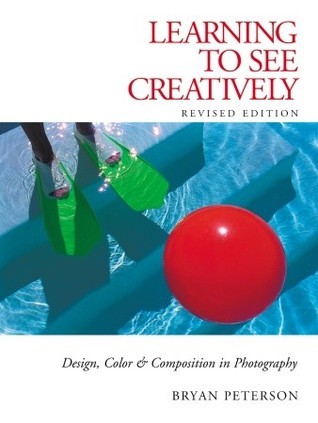
Learning to See Creatively: Design, Color & Composition in Photography
Almost everyone can “see” in the conventional sense, but developing photographic vision takes practice. Learning to See Creatively helps photographers visualize their work, and the world, in a whole new light.
Now totally rewritten, revised, and expanded, this best-selling guide takes a radical approach to creativity. It explains how it is not some gift only for the “chosen few” but actually a skill that can be learned and applied. Using inventive photos from his own stunning portfolio, author and veteran photographer Bryan Peterson deconstructs creativity for photographers. He details the basic techniques that went into not only taking a particular photo, but also provides insights on how to improve upon it—helping readers avoid the visual pitfalls and technical dead ends that can lead to dull, uninventive photographs.
This revised edition features the latest information on digital photography and digital imaging software, as well as an all-new section on color as a design element. Learning to See Creatively is the definitive reference for any photographers looking for a fresh perspective on their work.
Now totally rewritten, revised, and expanded, this best-selling guide takes a radical approach to creativity. It explains how it is not some gift only for the “chosen few” but actually a skill that can be learned and applied. Using inventive photos from his own stunning portfolio, author and veteran photographer Bryan Peterson deconstructs creativity for photographers. He details the basic techniques that went into not only taking a particular photo, but also provides insights on how to improve upon it—helping readers avoid the visual pitfalls and technical dead ends that can lead to dull, uninventive photographs.
This revised edition features the latest information on digital photography and digital imaging software, as well as an all-new section on color as a design element. Learning to See Creatively is the definitive reference for any photographers looking for a fresh perspective on their work.
160 pages, Paperback
First published June 1, 1988
About the author
Bryan Peterson
76 books132 followersBryan F. Peterson has been a full-time commercial photographer since 1981, shooting assignments all over the world for many of the Fortune 500 companies, including Kodak, UPS, and American Expiress. He is also a contract stock photographer for Corbis and Getty. He has been a contributing editor at Outdoor Photographer Magazine and is currently a contributing editor at Popular Photography and Imaging Magazine. Within the photographic community, he is most noted as the author/photographer of four best selling “how-to” photography books, Understanding Exposure, Understanding Shutter Speed, Learning to See Creatively and Beyond Portraits, with two new books due out in the spring of 2009, Understanding Close-up Photography and The Field Guide to Photography. He is also the founder and one of the instructors at the world’s number one on-line photography school, www.ppsop.net.
Ratings & Reviews
Friends & Following
Create a free account to discover what your friends think of this book!
Community Reviews
Displaying 1 - 30 of 115 reviews

August 31, 2017
کتاب دید خلاقانه در عکاسی واقعا کتاب مفیدی در عکاسی است واقعا فقط داشتن دوربین حرفه ای و ... برای عکاسی خوب و جذاب کافی نیست بلکه باید دیدی خلاق در عکاسی داشت با خوندن این کتاب خیلی از محدودیت های که در ذهن شما در عکس گرفتن وجود دارد حذف می شود و یا نگاه شما تغییر می کند این کتاب بنظرم در ذهن و نحوه عکس گرفتن هر عکاسی می تونه باعث تغییر شود

February 10, 2010
Learning to See Creatively was a bit a disappointment for me. It seems odd to say this since I am still really a beginner in terms of photography but there didn’t seem to be a whole lot there that I didn’t know already. And for the most part, each concept was discussed rather superficially, then followed by a selection of photos that illustrated over and over again the very basic information that the author presented.
For someone completely new to photography and composition, the second and third chapters would be the most valuable. They cover “Elements of Design (Line, Shape, Form, Texture, Pattern and Color) and “Composition” (Filling the Frame, Rule of Thirds, Diagonals, Framing, Picture Within a Picture, etc.) All topics that should be in a composition book, even if they could and should have been covered in more depth. Having said that, there were a lot of topics that should have been here but were inexplicably left out… the use and placement of negative space, body language and placement in portraits, just to name a few.
Instead, the author focused his attention on a chapter about different kinds of lenses, (which I felt went on too long and should have been discussed later in the book in relation to the design concepts he discusses in chapters 2 and 3 rather than being the first thing discussed). He also chose to devote chapters to Digital Photography (including a section on why digital cameras just aren’t good enough and dictates of when it is and is not acceptable to use post processing) and a chapter on Career Considerations. Now don’t get me wrong, there is a time and a place for information about careers in photography. But it seems to me that if you are reading a book about composition, it seems somewhat off topic especially when the composition sections were skimpy and incomplete.
For someone completely new to photography and composition, the second and third chapters would be the most valuable. They cover “Elements of Design (Line, Shape, Form, Texture, Pattern and Color) and “Composition” (Filling the Frame, Rule of Thirds, Diagonals, Framing, Picture Within a Picture, etc.) All topics that should be in a composition book, even if they could and should have been covered in more depth. Having said that, there were a lot of topics that should have been here but were inexplicably left out… the use and placement of negative space, body language and placement in portraits, just to name a few.
Instead, the author focused his attention on a chapter about different kinds of lenses, (which I felt went on too long and should have been discussed later in the book in relation to the design concepts he discusses in chapters 2 and 3 rather than being the first thing discussed). He also chose to devote chapters to Digital Photography (including a section on why digital cameras just aren’t good enough and dictates of when it is and is not acceptable to use post processing) and a chapter on Career Considerations. Now don’t get me wrong, there is a time and a place for information about careers in photography. But it seems to me that if you are reading a book about composition, it seems somewhat off topic especially when the composition sections were skimpy and incomplete.

December 28, 2015
Learning to see creatively. Wow. Think about that. What a huge and bold title for a book. Is seeing creatively something we can teach? Or learn? And, if so, how?
Bryan Peterson takes on this task. But he doesn't seize the reigns of teaching-to-see-creatively lightly. After all, this is the third edition; Peterson has been grappling with the ideas in this book since 1988. Peterson is no novice to photography, to creativity; his website reminds us that he has been a successful commercial photographer for over thirty-five years. He has lots to share with those of us who have just come to this world. And he does so.
Peterson shares his secrets of how to see creatively in three ways. First, in a didactic, left-brained way, he provides the design, color, and composition rules for photography, some of which, one hopes, we have intuited for ourselves through our early successes and failures. Second, he shows lots of beautiful examples of his struggles to try out the rules. And, third, he offers exercises to build personal knowledge of those rules.
Some books can be read in an hour; this book is a book I've lived with for several months. That, for me, is the mark of a good book: I don't just read the words, but I reread the words and try out the ideas.
It's the trying out of the ideas that is most important, I think, in a book like this. So I thought I'd share some of my results.
For a true test, you'd really need to see some before pictures, but take my word for it, these are much improved.
What do you think? Does this sound like a book you should read?
Bryan Peterson takes on this task. But he doesn't seize the reigns of teaching-to-see-creatively lightly. After all, this is the third edition; Peterson has been grappling with the ideas in this book since 1988. Peterson is no novice to photography, to creativity; his website reminds us that he has been a successful commercial photographer for over thirty-five years. He has lots to share with those of us who have just come to this world. And he does so.
Peterson shares his secrets of how to see creatively in three ways. First, in a didactic, left-brained way, he provides the design, color, and composition rules for photography, some of which, one hopes, we have intuited for ourselves through our early successes and failures. Second, he shows lots of beautiful examples of his struggles to try out the rules. And, third, he offers exercises to build personal knowledge of those rules.
Some books can be read in an hour; this book is a book I've lived with for several months. That, for me, is the mark of a good book: I don't just read the words, but I reread the words and try out the ideas.
It's the trying out of the ideas that is most important, I think, in a book like this. So I thought I'd share some of my results.
For a true test, you'd really need to see some before pictures, but take my word for it, these are much improved.
What do you think? Does this sound like a book you should read?

September 6, 2015
Before I finished this book, I had my camera in hand and was outside taking pictures. Though I am not inclined to be an abstract photographer, the tips in this book were very helpful and got my wheels turning.
Peterson comes from his thirty-plus years of experience to address Expanding Your Vision, Elements of Design, Composition, The Magic of Light, and Photoshop. His style is very rounded out, from traditional landscapes to modern abstract photographs. The books is full of beautiful images and informative text. Though I have read through the book once, I know that I will refer back to it several times to study different images and his camera settings.
Negatives:
Being a secular photography book, there were a few images that I decided to cover up before my brothers would see the book (I actually was surprised that there were only 6-10). There were also some words that my family views as "bad words."
I received this book from Blogging for Books for this review.
Peterson comes from his thirty-plus years of experience to address Expanding Your Vision, Elements of Design, Composition, The Magic of Light, and Photoshop. His style is very rounded out, from traditional landscapes to modern abstract photographs. The books is full of beautiful images and informative text. Though I have read through the book once, I know that I will refer back to it several times to study different images and his camera settings.
Negatives:
Being a secular photography book, there were a few images that I decided to cover up before my brothers would see the book (I actually was surprised that there were only 6-10). There were also some words that my family views as "bad words."
I received this book from Blogging for Books for this review.

July 26, 2020
This is really a 3.5 star book. I didn't agree with everything the author said, but I did learn some things that were helpful. He's a big believer in photoshop and in posed/designed pictures, and those are the points on which we disagree. He also assumes everyone reading the book has $100,000 worth of photo equipment to work with, which is a little annoying.
However, this book is not intended for beginners, nor for the phone camera crowd (I read the 3rd edition, 2015, but the discussion is entirely about cameras -- and cameras with interchangeable lenses)
The focus on the elements of art composition and how those elements contribute to an image is interesting and helpful. Recommended for serious photographers with limited art background.
However, this book is not intended for beginners, nor for the phone camera crowd (I read the 3rd edition, 2015, but the discussion is entirely about cameras -- and cameras with interchangeable lenses)
The focus on the elements of art composition and how those elements contribute to an image is interesting and helpful. Recommended for serious photographers with limited art background.

May 1, 2015
بدک نیس، ولی میتونست بهتر توضیح بده. آدم یه جورایی سردرگم میشه وسطای خوندن کتاب.

November 19, 2020
This is an older book and most of what I read I had learned many times over from other sources. That said, I did learn one important aspect of composition that I do not remember encountering before so it was well worth the read.

November 28, 2023
Amazone had some highly interesting reviews
don't believe me?
Amazone
Change Your Perspective and Start Taking Dynamic Pictures
I have to admit, this is the first photography book that I've actually read from cover to cover. Each chapter contains valuable information that teaches the reader to shift their perspetive and see the world differently.
As a student photographer I constantly struggle with the mistaken assumption that I have to have something of value to photograph or that every picture I take has to be of something momentous. Not so. With this book I learned that I can look at a field of flowers along the side of the road and by simply "flopping down on my belly" see the world from an different perspective. This is what the author teaches. How to shift your view of the world around you and find true inspiration in the common and ordinary.
The author teaches when to use a telephoto and when to use a wide angle lens and also talks about the usefulness of the much maligned 50mm lens. The reader also learns how to incorporate color into photographs, how to interpert and accomodate line, form and texture.
The sample photographs are in full color and provide the reader with examples that illustrate the lessons beautifully.
One word of caution, if you're looking for a book that discusses the more technical aspects of photography such as apeture, shutter speed or depth of field charts, this is not the book for you. This books assumes you have a basic working knowledge of photography and is written to take you to the next level beyond the fundamentals of photography.
I highly recommend this book. It has helped me tremendously. Now I look for reasons to go out and shoot and no longer bemoan the lack of subject matter. The world has opened up and my photographs have definitely improved.
Therese M. Woolley
---
Concise, interesting, helpful
This is an interesting little book. It is geared towards the novice photographer, but others with more experience may be inspired by it too. It can easily be read in one sitting.
The author shuns sophisticated camera lingo or fancy techniques and concentrates on the fundamentals of composing a memorable photograph.
The book is profusely illustrated and most photographs are presented twice, one framed in the conventual manner and the second with a subtle, but dramatic improvement.
The author powerfully demonstrates that minor changes can have profound effects on the success of the picture. Raising or lowering the camera angle, using aperture to control depth of field, choosing the proper focal length, emphasizing lines, texture or shapes as well as other simple techniques are all briefly discussed.
The prose is concise; for the most part the author lets the photography do the talking.
While these are all basic techniques and the author does not cover any unique ground, the information is well presented.
Most successful photographs fail because of simple mistakes. The author almost exclusively confines his focus to landscape photography or inanimate objects.
The reader looking for insight into photographing people or nature will be better served by other references.
The reader looking for the basics of using a camera, or the reader looking for intermediate or advanced technique will also be disappointed.
However, if, like so many of us, you are in need of simple techniques to improve your photographs, this is a useful resource.
The novice will certainly benefit from reading this and even the experienced photographer may find an idea or two.
JWH
---
Very Good Presentation of Techniques
I have read a few books on compositions. What makes this one standout is the way Bryan illustrates his technique.
In each chapter, he first defines each concept clearly, then he uses pictures and the related comments to demonstrate the point.
Combining all the chapters, it is a complete approach to composition.
He always includes a 'big picture' shot to go with the sample picture to demonstrate the different the technique makes. By doing so, it also demonstrates how to use photography telling a story.
The focus is on building and fixed subject. The tonal contrast bit could be better. Also no mentioning of layering (maybe by design). These are very minor gipes.
The book is very easy to read and understand. It has a lot of beautiful pictures of Oregon. Hey, he has made power lines looking good (in picture anyway)! Highly recommended for beginner and intermediate photographer.
Trader John
---
Can turn (almost) anyone into a pro.
If you're prepared to put the time in and study study study these pictures, then go out and shoot shoot shoot literally thousands of photographs (I shot 5,000+ in my first year), then accurately anaylze what you are doing right, you WILL improve.
If you think one quick read is all you need then you're deluding yourself.
Instant mastery is a joke and you'd be foolish to look for quick fixes.
But for a SOLID grounding in what works and what doesn't, you can't beat this book.
You may also want to investigate, The Art of Black and White Photography by John Garrett.
But most of all, shoot away.
Andy Todes
---
The Next Level of Composition
Many (probably the vast majority from my experience) of books on photographic composition never go beyond 'the rule of thirds' or 'watch for S-curves'.
Although this book, by necessity, repeats much of the information we've all heard many times before, if other ways to goes to the next level by applying some old rules in unique ways or by breaking the 'rules' in ways that add impact.
The pictures are very good and by themselves would make the book worthwhile.
I sometimes struggle for subjects in my immediate area, but this book encourages me to look at relatively common sights in a new way. Clears out photographers block, in a matter of speaking.
Phoenix_dh

Read
January 21, 2020Too basic for me, and for a 2015 book (read in 2020) it seems too outdated for a printed book. There are some insights but few to justify this as a solid book to seriously improve your photography. The focal length chapters are better explained on a You Tube channel and colour or composition are too superficial delved upon.
What I didn't really like is the quality of the front page, fonts, images used, and the content as I said is very basic nowadays.
What I didn't really like is the quality of the front page, fonts, images used, and the content as I said is very basic nowadays.

March 6, 2016
I'm halfway through a photography course that costs over $600, and I've learned more from this book than I've learned in my course so far. Highly recommended for anyone who wants to "make" photos instead of just "taking" them.

February 18, 2016
Helpful tips. Bryan Peterson’s approach to photography will open your eyes to the possibilities that your camera can create.

May 19, 2016
Uno dei libri migliori della collana. Peterson mostra e spiega delle immagini spettacolari dando consigli chrle possono anche sembrare banali ma che risultano preziosissimi.

May 25, 2022
very helpful book, but a bit outdated
Elements of design:
Line shape form texture pattern color
Form: Form is seen in three dimensions, while shape has only two. Form assures us that an object has depth. Since communicating form depends on light and the resulting shadows, It's best to photograph a subject under sunny skies and sidelight to reveal it's form. The contrast between the light and dark area of a sidelit shape given it form.
Contrast - which is the element I rarely think about. A great example in the book that bright yellow flower can be placed aginst the dark background and can also be used to draw attention to the background.
mental checklist:
- relative to depth of field, what kind of picture am I taking? which aperture should I use
- are there any motion-filled opportunities here?
- should I be using higher or lower ISOs for this shot?
- what are the wide-angle lens possibilities? Is there any foreground subject matter to exaggerate? Are there any strong lins to create a "vanishing" perspective? is today's wether an opportunity to emphasize the vastness of the sky in relation to the landscape below? Is this the time to call upon the fish-eye so that I can exaggerate the foreground perspective?
- what are the telephoto lens possibilities? is the subject before me best isolated with the narrower angle of view? Do I have a busy or colorful background to emphasize?
- should I shoot from my eye level or knee level or while laying on my belly or back? is there any nearby tree or some stairs that will give me some elevation so that I can shoot this scene from a high vantage point? is there another picture within the picture I just composed?
- is this subject best shot now or later? is it best photographed in frontlight, sidelight, or backlight? should I use a refecltor to add some fill light, or is this the time to call upon my flash? does the sky overhead offer up a chance to shoot an expansive composition? Is this the kind of scene that can be shot in all four seasons?
- does it feel as if the landscape, cityscape, or seascape is missing sth? Perhaps the scene before me is best used as part of a ps composite
Elements of design:
Line shape form texture pattern color
Form: Form is seen in three dimensions, while shape has only two. Form assures us that an object has depth. Since communicating form depends on light and the resulting shadows, It's best to photograph a subject under sunny skies and sidelight to reveal it's form. The contrast between the light and dark area of a sidelit shape given it form.
Contrast - which is the element I rarely think about. A great example in the book that bright yellow flower can be placed aginst the dark background and can also be used to draw attention to the background.
mental checklist:
- relative to depth of field, what kind of picture am I taking? which aperture should I use
- are there any motion-filled opportunities here?
- should I be using higher or lower ISOs for this shot?
- what are the wide-angle lens possibilities? Is there any foreground subject matter to exaggerate? Are there any strong lins to create a "vanishing" perspective? is today's wether an opportunity to emphasize the vastness of the sky in relation to the landscape below? Is this the time to call upon the fish-eye so that I can exaggerate the foreground perspective?
- what are the telephoto lens possibilities? is the subject before me best isolated with the narrower angle of view? Do I have a busy or colorful background to emphasize?
- should I shoot from my eye level or knee level or while laying on my belly or back? is there any nearby tree or some stairs that will give me some elevation so that I can shoot this scene from a high vantage point? is there another picture within the picture I just composed?
- is this subject best shot now or later? is it best photographed in frontlight, sidelight, or backlight? should I use a refecltor to add some fill light, or is this the time to call upon my flash? does the sky overhead offer up a chance to shoot an expansive composition? Is this the kind of scene that can be shot in all four seasons?
- does it feel as if the landscape, cityscape, or seascape is missing sth? Perhaps the scene before me is best used as part of a ps composite
February 25, 2021
I liked the title of this book and have followed this author for many years even when I was shooting with film 35mm slr cameras. I really enjoyed this short book because this photographer helps to stoke the burning fires on creativity. A whole lot of this I have worked on for years in taking pictures from a creative viewpoint. While reading this I realized there were a few exercises and viewpoints that had slipped my mind on creativity over the last few years. I would recommend this book to anyone who needs to understand how all the elements of a scene of life that we live in can be viewed from the lens of a camera with the various tools at our disposal. Years ago I read a similar book from this author, actually may have been the same title, although this time he has shared his experience with post production of a photo using software tools specifically photoshop. The extra little tidbits helped a lot.

January 26, 2022
(NOTE: I read, the 3rd edition, 2015). Very good, and very detailed book explaining all of the core elements of planning and capturing a good image. Line, form, design, texture and color are all given their due. There are many photos in the book, and each is captioned with the relevant camera settings and lens choices. You might get jet lag, as the camera zooms from the NJ shore to Washington, to Chicago (where Petersen is based) to Paris, and the Netherlands. A Photoshop chapter is included, but sadly, portraits are not given their own section (there are portraits among the selected photos.) Petersen, who teaches photography classes is a firm believer in getting it right in camera. Some small criticisms: the book meanders a bit and is a little too introspective at times. I hope future editions give Portraits their own section. (4.1-4.4/5.0)

June 11, 2023
I've always been a very visual person, and thought I had a good eye for photography; this book confirmed a lot of my intuitive sense for composing a nice image, but also gave me some vocabulary that helps me understand and think about a photo I'm taking -- and I used that today, already, when at a nearby state park, and was taking a photo of some super interesting rocks: I could see the texture in the granite; the lovely light purple color of the rock and the light green lichen; the lines in the striations, and also appreciate the light of the cloudy day.

July 20, 2017
This is an excellent book for even the beginning photographer. It was a good refresher for me and gave me some new ideas. I'm pretty much an enthusiastic amateur. I wish I could afford some of the lenses he talks about in this book. Nor am I in the position of being able to afford to rent equipment that I can stand on to bring me higher. Still, it's an interesting and thoughtful book. You can learn a lot.

May 21, 2019
This book, though it predates the digital revolution, is still very relevant today. While there have been huge changes in the instruments we use to take photos, the way we need to see light and composition has not changed. This book provided a great overview on the more creative side of taking photos.
October 30, 2022
A Photography Masterclass from a Masterclass photographer. A must read for a beginner photographer and expert alike. The author has touched upon almost all of the major subjects of photography in this book and is an amazing read with page on page examples for every topic that he explores in regards to photography

February 18, 2018
If you know the most basic knowledge of shutter, capture and depth of field. But when you are starting to shoot. The photos looks missing a sparkling spot. Read this book and practice as the book said. I saw a big improvement on my photos
June 9, 2018
This is one of the best photography books that I have read.
It provides excellent examples of how to capture various scenes with photos provided to give perspective.
It is a very inspirational book that has already influenced the way I take photos.
It provides excellent examples of how to capture various scenes with photos provided to give perspective.
It is a very inspirational book that has already influenced the way I take photos.

November 21, 2018
Great photography book
The example shots in this book give you just what’s needed to “see” the principle being taught in the chapter. I wish I’d have come across this book years ago, my photography skills would be far ahead of what they are right now.
The example shots in this book give you just what’s needed to “see” the principle being taught in the chapter. I wish I’d have come across this book years ago, my photography skills would be far ahead of what they are right now.

March 1, 2020
I am a beginning camera buff and wanted to see what Peterson had to say. I am glad I read the book and he gives quite a few good tips and suggestions on how to create a great picture. And each of his pictures has a little blurb on how he created his photo used in the book. It was a good read.

January 1, 2025
Although this book is very basic, I like it very much. For those interested in photography, it provides all the fundamental concepts of the field. It reminds me the first class I ever took on the subject. I highly recommend it.
July 23, 2025
Great photography and advise. I got this book a long time ago. I am currently making cards & cutting out some photos from the book for the cards and they are turning out so good - I am really pleased.

May 11, 2017
"There is a certain importance in not always relying on rules, otherwise you might not develop confidence in your vision when it differs from that of others". Useful for beginners.

July 22, 2017
Learned a lot from this book. It changed the way how I see things. I need a lot of eye practice and learn more about color psychology.
February 3, 2018
Loved the book!

March 4, 2018
Good coverage of the basics
This is a solid book that I come back to again and again to require the mindset of the basics of composition and reawaken my creativity.
This is a solid book that I come back to again and again to require the mindset of the basics of composition and reawaken my creativity.

September 16, 2018
This had some great ideas, but it's the third book of his that I've read and there wasn't anything easy shattering here for me.
Displaying 1 - 30 of 115 reviews