

What do you think?

Library of America #173
Four Novels of the 1960s
Known in his lifetime primarily to readers of science fiction, Philip K. Dick is now seen as a uniquely visionary figure, a writer who, in editor Jonathan Lethem’s words, “wielded a sardonic yet heartbroken acuity about the plight of being alive in the twentieth century, one that makes him a lonely hero to the readers who cherish him.”
This Library of America volume brings together four of Dick’s most original novels. The Man in the High Castle (1962), which won the Hugo Award, describes an alternate world in which Japan and Germany have won World War II and America is divided into separate occupation zones. The dizzying The Three Stigmata of Palmer Eldritch (1965) posits a future in which competing hallucinogens proffer different brands of virtual reality, and an interplanetary drug tycoon can transform himself into a godlike figure transcending even physical death.
Do Androids Dream of Electric Sheep? (1968), about a bounty hunter in search of escaped androids in a postapocalyptic society where status is measured by the possession of live animals and religious life is focused on a television personality, was the basis for the movie Blade Runner. Ubik (1969), with its future world of psychic espionage agents and cryonically frozen patients inhabiting an illusory “half-life,” pursues Dick’s theme of simulated realities and false perceptions to ever more disturbing conclusions, as time collapses on itself and characters stranded in past eras search desperately for the elusive, constantly shape-shifting panacea Ubik. As with most of Dick’s novels, no plot summary can suggest the mesmerizing and constantly surprising texture of these astonishing books.
Posing the questions “What is human?” and “What is real?” in a multitude of fascinating ways, Dick produced works—fantastic and weird, yet developed with precise logic, marked by wild humor and soaring flights of religious speculation—that are startlingly prescient imaginative anticipations of 21st-century quandaries.
This Library of America volume brings together four of Dick’s most original novels. The Man in the High Castle (1962), which won the Hugo Award, describes an alternate world in which Japan and Germany have won World War II and America is divided into separate occupation zones. The dizzying The Three Stigmata of Palmer Eldritch (1965) posits a future in which competing hallucinogens proffer different brands of virtual reality, and an interplanetary drug tycoon can transform himself into a godlike figure transcending even physical death.
Do Androids Dream of Electric Sheep? (1968), about a bounty hunter in search of escaped androids in a postapocalyptic society where status is measured by the possession of live animals and religious life is focused on a television personality, was the basis for the movie Blade Runner. Ubik (1969), with its future world of psychic espionage agents and cryonically frozen patients inhabiting an illusory “half-life,” pursues Dick’s theme of simulated realities and false perceptions to ever more disturbing conclusions, as time collapses on itself and characters stranded in past eras search desperately for the elusive, constantly shape-shifting panacea Ubik. As with most of Dick’s novels, no plot summary can suggest the mesmerizing and constantly surprising texture of these astonishing books.
Posing the questions “What is human?” and “What is real?” in a multitude of fascinating ways, Dick produced works—fantastic and weird, yet developed with precise logic, marked by wild humor and soaring flights of religious speculation—that are startlingly prescient imaginative anticipations of 21st-century quandaries.
835 pages, Hardcover
First published May 10, 2007
About the author
Philip K. Dick
1,947 books23.3k followersPhilip Kindred Dick was a prolific American science fiction author whose work has had a lasting impact on literature, cinema, and popular culture. Known for his imaginative narratives and profound philosophical themes, Dick explored the nature of reality, the boundaries of human identity, and the impact of technology and authoritarianism on society. His stories often blurred the line between the real and the artificial, challenging readers to question their perceptions and beliefs.
Raised in California, Dick began writing professionally in the early 1950s, publishing short stories in various science fiction magazines. He quickly developed a distinctive voice within the genre, marked by a fusion of science fiction concepts with deep existential and psychological inquiry. Over his career, he authored 44 novels and more than 100 short stories, many of which have become classics in the field.
Recurring themes in Dick's work include alternate realities, simulations, corporate and government control, mental illness, and the nature of consciousness. His protagonists are frequently everyday individuals—often paranoid, uncertain, or troubled—caught in surreal and often dangerous circumstances that force them to question their environment and themselves. Works such as Ubik, The Three Stigmata of Palmer Eldritch, and A Scanner Darkly reflect his fascination with perception and altered states of consciousness, often drawing from his own experiences with mental health struggles and drug use.
One of Dick's most influential novels is Do Androids Dream of Electric Sheep?, which served as the basis for Ridley Scott's iconic film Blade Runner. The novel deals with the distinction between humans and artificial beings and asks profound questions about empathy, identity, and what it means to be alive. Other adaptations of his work include Total Recall, Minority Report, A Scanner Darkly, and The Man in the High Castle, each reflecting key elements of his storytelling—uncertain realities, oppressive systems, and the search for truth. These adaptations have introduced his complex ideas to audiences well beyond the traditional readership of science fiction.
In the 1970s, Dick underwent a series of visionary and mystical experiences that had a significant influence on his later writings. He described receiving profound knowledge from an external, possibly divine, source and documented these events extensively in what became known as The Exegesis, a massive and often fragmented journal. These experiences inspired his later novels, most notably the VALIS trilogy, which mixes autobiography, theology, and metaphysics in a narrative that defies conventional structure and genre boundaries.
Throughout his life, Dick faced financial instability, health issues, and periods of personal turmoil, yet he remained a dedicated and relentless writer. Despite limited commercial success during his lifetime, his reputation grew steadily, and he came to be regarded as one of the most original voices in speculative fiction. His work has been celebrated for its ability to fuse philosophical depth with gripping storytelling and has influenced not only science fiction writers but also philosophers, filmmakers, and futurists.
Dick's legacy continues to thrive in both literary and cinematic spheres. The themes he explored remain urgently relevant in the modern world, particularly as technology increasingly intersects with human identity and governance. The Philip K. Dick Award, named in his honor, is presented annually to distinguished works of science fiction published in paperback original form in the United States. His writings have also inspired television series, academic studies, and countless homages across media.
Through his vivid imagination and unflinching inquiry into the nature of existence, Philip K. Dick redefined what science fiction could achieve. His wor
Raised in California, Dick began writing professionally in the early 1950s, publishing short stories in various science fiction magazines. He quickly developed a distinctive voice within the genre, marked by a fusion of science fiction concepts with deep existential and psychological inquiry. Over his career, he authored 44 novels and more than 100 short stories, many of which have become classics in the field.
Recurring themes in Dick's work include alternate realities, simulations, corporate and government control, mental illness, and the nature of consciousness. His protagonists are frequently everyday individuals—often paranoid, uncertain, or troubled—caught in surreal and often dangerous circumstances that force them to question their environment and themselves. Works such as Ubik, The Three Stigmata of Palmer Eldritch, and A Scanner Darkly reflect his fascination with perception and altered states of consciousness, often drawing from his own experiences with mental health struggles and drug use.
One of Dick's most influential novels is Do Androids Dream of Electric Sheep?, which served as the basis for Ridley Scott's iconic film Blade Runner. The novel deals with the distinction between humans and artificial beings and asks profound questions about empathy, identity, and what it means to be alive. Other adaptations of his work include Total Recall, Minority Report, A Scanner Darkly, and The Man in the High Castle, each reflecting key elements of his storytelling—uncertain realities, oppressive systems, and the search for truth. These adaptations have introduced his complex ideas to audiences well beyond the traditional readership of science fiction.
In the 1970s, Dick underwent a series of visionary and mystical experiences that had a significant influence on his later writings. He described receiving profound knowledge from an external, possibly divine, source and documented these events extensively in what became known as The Exegesis, a massive and often fragmented journal. These experiences inspired his later novels, most notably the VALIS trilogy, which mixes autobiography, theology, and metaphysics in a narrative that defies conventional structure and genre boundaries.
Throughout his life, Dick faced financial instability, health issues, and periods of personal turmoil, yet he remained a dedicated and relentless writer. Despite limited commercial success during his lifetime, his reputation grew steadily, and he came to be regarded as one of the most original voices in speculative fiction. His work has been celebrated for its ability to fuse philosophical depth with gripping storytelling and has influenced not only science fiction writers but also philosophers, filmmakers, and futurists.
Dick's legacy continues to thrive in both literary and cinematic spheres. The themes he explored remain urgently relevant in the modern world, particularly as technology increasingly intersects with human identity and governance. The Philip K. Dick Award, named in his honor, is presented annually to distinguished works of science fiction published in paperback original form in the United States. His writings have also inspired television series, academic studies, and countless homages across media.
Through his vivid imagination and unflinching inquiry into the nature of existence, Philip K. Dick redefined what science fiction could achieve. His wor
Ratings & Reviews
Friends & Following
Create a free account to discover what your friends think of this book!
Community Reviews
Displaying 1 - 30 of 249 reviews

January 1, 2014
First of three volumes of Philip K. Dick’s works in the Library of America collection, this includes four novels written in the 1960s: The Man in the High Castle, The Three Stigmata of Palmer Eldritch, Do Androids Dream of Electric Sheep? (aka Blade Runner), and Ubik. To cut a long story short, these are some of the author’s most famous works, with that mesmerizing blend of pulp sf and metaphysical speculations on the nature of time and reality.
Do you want to know more?
- The Man in the High Castle
- The Three Stigmata of Palmer Eldritch
- Do Android Dream of Electric Sheep
- Ubik
Do you want to know more?
- The Man in the High Castle
- The Three Stigmata of Palmer Eldritch
- Do Android Dream of Electric Sheep
- Ubik

January 19, 2017
“I am Ubik. Before the universe was, I am."
Philip K. Dick, Ubik
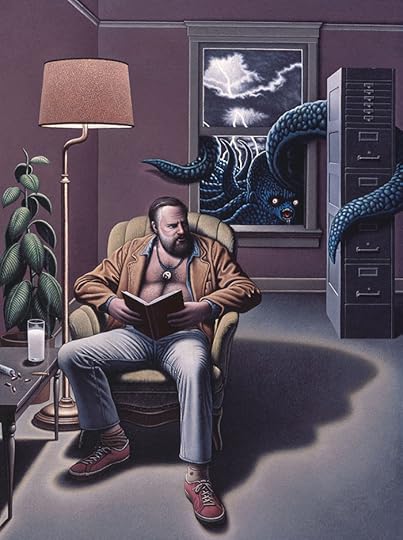
Perhaps my favorite collection of Philip K. Dick Novels:
1. The Man in the High Castle - Read December 2015 (5-stars)
2. The Three Stigmata of Palmer Eldritch - Read May 2016 (4-stars)
3. Do Androids Dream of Electric Sheep - Read December 2013 (5-stars)
4 Ubik - Read December 2013 (5-stars)
Philip K. Dick, Ubik
Perhaps my favorite collection of Philip K. Dick Novels:
1. The Man in the High Castle - Read December 2015 (5-stars)
2. The Three Stigmata of Palmer Eldritch - Read May 2016 (4-stars)
3. Do Androids Dream of Electric Sheep - Read December 2013 (5-stars)
4 Ubik - Read December 2013 (5-stars)

November 9, 2024
The Man in the High Castle ⭐️⭐️⭐️⭐️
The Three Stigmata of Palmer Eldrich ⭐️⭐️⭐️1/2
Do Androids Dream of Electric Sheep? ⭐️⭐️⭐️⭐️⭐️
Ubik ⭐️⭐️⭐️⭐️1/2
I love Library of America collections. Beautiful books made to last a lifetime.
If you’re a fan of Philip K Dick, these are the editions to own and pass along to family after you enter your half-life pod.
Use as directed.
The Three Stigmata of Palmer Eldrich ⭐️⭐️⭐️1/2
Do Androids Dream of Electric Sheep? ⭐️⭐️⭐️⭐️⭐️
Ubik ⭐️⭐️⭐️⭐️1/2
I love Library of America collections. Beautiful books made to last a lifetime.
If you’re a fan of Philip K Dick, these are the editions to own and pass along to family after you enter your half-life pod.
Use as directed.

June 12, 2012
pdk's flaws as a novelist have been stated and restated... mostly because they're true. that said, any one of his books explodes with more ideas and 'holy shit!' moments than most people have in their dim, miserable lives. i'm a jackass for giving ubik 3 stars, but i can't get over summa those awkward-as-ass plot machinations, the clumsy prose, and cardboard characters -- it's also b/c none of the books in this collection (well, mebbe high castle) should stand on their own. as with simenon - who said that his books are all part of a mosaic which makes up one large work - these four books, i argue (and forcefully), must be taken as a whole: you do that and discover they're way greater than the sum of their parts. a lot going on here. and i always get a chubby from any of that 'plato's cave' shit that makes up so much of PDK's oeuvre.

August 17, 2010
I'm not really sure how to go about reviewing four novels without splitting this review into several tedious sections but here it goes.
The Man in the High Castle and Do Androids Dream of Electric Sheep? are arguably the most popular of his novels in this collection and, admittedly, the ones I was most excited to read. I also found them to be the least enjoyable of the collection.
I felt that The Man in the High Castle ended abruptly leaving most of the characters without strong resolution, sad because of how well written they were. Considering the concept of alternate historical fiction was new I won't punish it too hard. It was a good read but a bit jumpy.
I didn't expect a picture perfect adaptation of Do Androids Dream of Electric Sheep? in Ridley Scott's Blade Runner. This is one of the only instances where I'm willing to say that the movie is more enjoyable than the novel. There were strange, seemingly willy-nilly, metaphors tossed into the story and I found myself struggling to believe some of the dialogue. I actually stopped at one point and said, "No man or machine would ever speak like this. It's a bit unreal." A good novel but it is lacking at times.
The Three Stigmata of Palmer Eldritch was my second favorite of the novels. Although, at times, I found myself wanting to just get to reading about Barney Mayerson it was an enjoyable story. I loved how the details of the world unfolded slowly without any one character just conveniently reflecting on information that would be commonplace knowledge to them. I loved the metaphysical discussion about reality going on throughout the story.
Which leads me to my favorite of the novels in the collection, Ubik. It was thrilling and exciting. It leads you from place to place and keeps you guessing the entire time. Once it really picks up (about 20-40 pages in) it had me fully. It could have easily gone the way of most stories in which reality is in question. I appreciate that it didn't. Once I figured out what "Ubik" was, the whole story just clicked. It was a fantastic reading experience and I recommend it out of all the novels of his I have read.
When I finished with Ubik I had to sit for thirty minutes and just consider it. In fact, I considered the whole collection but Ubik had most of my mind and time. Philip K. Dick was an incredible writer.
The Man in the High Castle and Do Androids Dream of Electric Sheep? are arguably the most popular of his novels in this collection and, admittedly, the ones I was most excited to read. I also found them to be the least enjoyable of the collection.
I felt that The Man in the High Castle ended abruptly leaving most of the characters without strong resolution, sad because of how well written they were. Considering the concept of alternate historical fiction was new I won't punish it too hard. It was a good read but a bit jumpy.
I didn't expect a picture perfect adaptation of Do Androids Dream of Electric Sheep? in Ridley Scott's Blade Runner. This is one of the only instances where I'm willing to say that the movie is more enjoyable than the novel. There were strange, seemingly willy-nilly, metaphors tossed into the story and I found myself struggling to believe some of the dialogue. I actually stopped at one point and said, "No man or machine would ever speak like this. It's a bit unreal." A good novel but it is lacking at times.
The Three Stigmata of Palmer Eldritch was my second favorite of the novels. Although, at times, I found myself wanting to just get to reading about Barney Mayerson it was an enjoyable story. I loved how the details of the world unfolded slowly without any one character just conveniently reflecting on information that would be commonplace knowledge to them. I loved the metaphysical discussion about reality going on throughout the story.
Which leads me to my favorite of the novels in the collection, Ubik. It was thrilling and exciting. It leads you from place to place and keeps you guessing the entire time. Once it really picks up (about 20-40 pages in) it had me fully. It could have easily gone the way of most stories in which reality is in question. I appreciate that it didn't. Once I figured out what "Ubik" was, the whole story just clicked. It was a fantastic reading experience and I recommend it out of all the novels of his I have read.
When I finished with Ubik I had to sit for thirty minutes and just consider it. In fact, I considered the whole collection but Ubik had most of my mind and time. Philip K. Dick was an incredible writer.

May 8, 2015
Four novels in this volume. I should have written a review of each as I finished it . Regrets. I shall get to them all.
Just a note for now: "The Man in the High Castle" is a fun, sophisticated story which presents an excellent meditation on our relation to history and time. Brilliant.
Just a note for now: "The Man in the High Castle" is a fun, sophisticated story which presents an excellent meditation on our relation to history and time. Brilliant.

January 10, 2025
Read Ubik this time.
All sorts of wild ideas in this one, but it holds together. No spoilers. After a quick start in a future world, the plot veers in a couple of unexpected directions abruptly, then turns into suspense. Pretty cool.
All sorts of wild ideas in this one, but it holds together. No spoilers. After a quick start in a future world, the plot veers in a couple of unexpected directions abruptly, then turns into suspense. Pretty cool.

March 12, 2009
The four books that are included in this collection are some of the best I have ever read. These four stories together pretty much covers every genre in literature. This book is published by the Library of America and would be a great book to have on your bookshelf. The paper and binding is perfect for the multiple combined novels in the book. It feels like one solid novel when you are reading it. If anything, get it for the stories, they are amazing and life changing!

November 13, 2018
Excellent novels and an obligatory stop for anyone with the slightest interest in science fiction.
From the broken English of the Japanese conquerors of the US to the iconic Deckard.
Ubik is obviously the strong dish, having given me two sleepless nights. The first one rushing to finish such a thrilling story, the second one thinking about it.
I am going to finish the review here because I fear I might find coins with Runciter's face.
From the broken English of the Japanese conquerors of the US to the iconic Deckard.
Ubik is obviously the strong dish, having given me two sleepless nights. The first one rushing to finish such a thrilling story, the second one thinking about it.
I am going to finish the review here because I fear I might find coins with Runciter's face.

May 11, 2019
Warning: Excessive exposure to Phillip K. Dick's writings might cause you to lose grip of consensual reality.
That's how good they are. I had read the first three novels a few years back, consecutively–and decided I couldn't psychologically cope with a 4th experience of the sort. I recently picked the book up again to finally get around to Ubik, the last of the four novels contained in this excellent volume. Because this is the novel that's fresh on my mind, the review will focus on it. However, a lot of the themes explored there are present throughout, and it does make a lot of sense to think of these four novels as a single unit, showcasing Dick's views on metaphysics, American consumer culture, consciousness-altering drugs, and the promises and perils of technological development.
Ubik is undoubtedly a plot and idea-driven novel rather than a character-driven one. All of these are to some extent, but I still recall Juliana Frink's intense and impulsive personality in The Man in the High Castle years after reading that novel. In Ubik the characters feel more one-dimensional, although I could really empathize with Joe Chip's complete inability to deal with money, particularly in its credit-based incarnations. Nonetheless, where Ubik excels is in its immaculate plotting (at one time everything seems to be falling apart but then gets brilliantly connected towards the end, and yet simultaneously leaves things tantalizingly unresolved).
Ubik also has a brilliant central technological innovation, of the dead living on in an eerie "half-life" which turns out to be much more complicated than their still-living counterparts imagine when they communicate via a phone-like device. The world of Ubik has overt supernatural elements not only in this half-life but in the psychic abilities developed by "talented" and "anti-talented" (those able to counteract talents such as precognition, telekinesis, or telepathy)... but in a very appropriate way, these developments are not, in this universe, probed to search for metaphysical or philosophical answers. They are simply incorporated as more cogs and factors of contemporary capitalism. Well, it's really retro-futurist capitalism at this point, as the action takes place in 1992. But the core capacity of incorporating any phenomena into the economy, monetizing even psychic abilities and the existence of an afterlife, is a timeless capitalist practice. And it's not even what Dick is most interested in, something that minor authors might have taken as the central point of a novel. He has bigger fish to fry: the connection of our lived experience to empirical or consensual reality. That's why I want to finish with a quote that illustrates well the curious combination of metaphysical interrogation and all-American consumer culture that Dick captures so well:
Final, unrelated thought: I really enjoyed the way Dick writes female characters: in exactly the same way he writes male ones. In both cases, they tend to be one-dimensional, not always realistic, usually not likeable. Some, in both gender, stand out as exceptions: Ella Runciter, Juliana Frink, Rick Deckard, etc. But the key impression I get is that these people just happen to be male or female, without their gender having to be a key personality trait. And I think this is the kind of writing and characterisation that seems most desirable to me, in that it doesn't essentialize female or male traits. Much rather have this than what usually gets classified as "feminine" or "women's" writing, or demanding more strong female leads, or reading only female authors in search of some elusive (because inexistent, at least in my mind) female voice. That's it, rant over.
That's how good they are. I had read the first three novels a few years back, consecutively–and decided I couldn't psychologically cope with a 4th experience of the sort. I recently picked the book up again to finally get around to Ubik, the last of the four novels contained in this excellent volume. Because this is the novel that's fresh on my mind, the review will focus on it. However, a lot of the themes explored there are present throughout, and it does make a lot of sense to think of these four novels as a single unit, showcasing Dick's views on metaphysics, American consumer culture, consciousness-altering drugs, and the promises and perils of technological development.
Ubik is undoubtedly a plot and idea-driven novel rather than a character-driven one. All of these are to some extent, but I still recall Juliana Frink's intense and impulsive personality in The Man in the High Castle years after reading that novel. In Ubik the characters feel more one-dimensional, although I could really empathize with Joe Chip's complete inability to deal with money, particularly in its credit-based incarnations. Nonetheless, where Ubik excels is in its immaculate plotting (at one time everything seems to be falling apart but then gets brilliantly connected towards the end, and yet simultaneously leaves things tantalizingly unresolved).
Ubik also has a brilliant central technological innovation, of the dead living on in an eerie "half-life" which turns out to be much more complicated than their still-living counterparts imagine when they communicate via a phone-like device. The world of Ubik has overt supernatural elements not only in this half-life but in the psychic abilities developed by "talented" and "anti-talented" (those able to counteract talents such as precognition, telekinesis, or telepathy)... but in a very appropriate way, these developments are not, in this universe, probed to search for metaphysical or philosophical answers. They are simply incorporated as more cogs and factors of contemporary capitalism. Well, it's really retro-futurist capitalism at this point, as the action takes place in 1992. But the core capacity of incorporating any phenomena into the economy, monetizing even psychic abilities and the existence of an afterlife, is a timeless capitalist practice. And it's not even what Dick is most interested in, something that minor authors might have taken as the central point of a novel. He has bigger fish to fry: the connection of our lived experience to empirical or consensual reality. That's why I want to finish with a quote that illustrates well the curious combination of metaphysical interrogation and all-American consumer culture that Dick captures so well:
"I have to think something out. Maybe Baltimore is only there when one of us goes there. And the Lucky People Supermarket; as soon as we left, it passed out of existence. It could still be that only us who where on Luna are really experiencing this."
"A philosophical problem tof no importance or meaning," Joe said. "And incapable of being proved one way or the other." (p. 710)
Final, unrelated thought: I really enjoyed the way Dick writes female characters: in exactly the same way he writes male ones. In both cases, they tend to be one-dimensional, not always realistic, usually not likeable. Some, in both gender, stand out as exceptions: Ella Runciter, Juliana Frink, Rick Deckard, etc. But the key impression I get is that these people just happen to be male or female, without their gender having to be a key personality trait. And I think this is the kind of writing and characterisation that seems most desirable to me, in that it doesn't essentialize female or male traits. Much rather have this than what usually gets classified as "feminine" or "women's" writing, or demanding more strong female leads, or reading only female authors in search of some elusive (because inexistent, at least in my mind) female voice. That's it, rant over.

February 3, 2012
I'm really excited about this anthology. I've long wanted to read all four novels and now I have them. It was a really expensive book, but it's a good one, nicely bound and with a cloth ribbon bookmark. Doesn't take much to get me excited, as you can see!
Philip K. Dick can be overwhelming. He was a man with a brain on fire, and his stories are so packed with ideas you need to consciously pause and reflect between chapters, or in this case, novellas. I just finished the first novella of this volume, The Man in the High Castle, and I will read some other books now before coming back to the next novella, The Three Stigmata of Palmer Eldritch.
I'm giving The Man in the High Castle 3.5 stars. The story is intensely compelling, but rough and in my opinion unfinished. Had it been given to someone like Stanley Kubrick, it could have been turned into a legendary and seminal movie, like 2001: a Space Odyssey. It is a story of parallel worlds; in this one it is the early 1960s and the Germans and Japanese had won WWII. The east coast of the former USA is occupied by the Nazis, the west coast by the Japanese. The remnant of the USA lies between. The Germans are still wrestling with succession of power issues, and fallout from their political intrigues affect much of what happens in Japanese-ruled San Francisco. A woman living in the independent Rocky Mountain States reads a book by a reclusive writer, a book presenting a world where America had defeated the Axis in WWII, a book presenting a much different America. And she begins to realize ... as the writer himself realizes ... that there is such a world. In fact, one high-ranking Japanese officer in San Francisco briefly wanders into that world, and what a coincidence ... he had read the same book! This story is densely packed with ideas and cultural insights into eastern ways of thinking, and I hoped it would go on longer. I now think David Mitchell, author of Cloud Atlas, may be a Philip K. Dick fan. More soon, when I return to the rest of the novellas in this volume.
--------------------
I'm back. Dropping down to 2.5 stars for The Three Stigmata of Palmer Eldritch, and pulling my overall in-progress rating down from 3.5 to 3 stars. Fascinating and deep story, but dated ... a victim of its times, in that everything hinges on the taking of hallucinatory drugs. I never react well to drugs as a plot device; your mileage may vary. Very little science to back up the ease with which humans flit back & forth between Earth, Venus, Mars, and a few habitable moons; nothing to make Palmer Eldritch's trip to Proxima Centauri and back within the span of only a few years even remotely possible, and trust me, I would have suspended disbelief over the flimsiest bit of hocus-pocus, like a warp drive. No, the focus is entirely on the two drugs, Can-D and Chew-Z, and there were times I was tempted to skip ahead.
--------------------
Back again, months later, Do Androids Dream of Electric Sheep? down, Ubik to go.
Once again, I feel I need to take a break. PKD stories don't go gently into the memory banks; they keep kicking around, a gift that keeps on giving. My overall rating for this collection of four novellas, BTW, is back up to 4 stars.
I thought I had read Do Androids Dream of Electric Sheep? in my late teens or early 20s, but I didn't recognize the novella this time around. That may be the result of having watched Blade Runner too many times, which is significantly different from PKD's story in many ways. Oddly, there's a touch of provincialism in PKD's novella, a sincerity and straight-forwardness totally absent from the movie. I was surprised to find PKD's city so sparsely populated, for example, most of the population gone to colony planets; equally surprised to encounter Deckard as a fairly low-level independent contractor to the police department, a man with pedestrian dreams and aspirations, and a wife to boot.
I had forgotten about the Penfield mood organs, the electric animals, and Mercerism. The genius android hobbiest who takes in Pris halfway through Blade Runner has his equivalent in PKD's chickenhead Isidore, and Deckard is deadly when it comes to spotting and retiring androids, but otherwise PKD's story is vastly different from Blade Runner. The affair between Deckard and the android Rachel Rosen is a more depressing story altogether, not at all like the movie, which I now perceive to have been given a Hollywood happy ending. Thus endeth my love affair with Blade Runner; thus beginneth my newfound purist's love for the PKD original.
Seriously, if you haven't read this most seminal tale, do so now. Do it before you read another word of science fiction ... yes, it's that important.
--------------------
I've finished Ubik, and thus this collection of Philip K. Dick. Of the four novels included in this volume, Ubik was the most dreamlike, hallucinatory tale of all. I willingly admit I didn't fully understand it, but like Do Androids Dream of Electric Sheep?, Ubik utterly enthralled me, even with its many flaws. Dick envisions a 1990s future where man has set up colonies on the moon and nearby planets, and is beginning to work on travel to other solar systems. People with psionic abilities are used by unscrupulous companies to spy on, and interfere with, the secret work of other companies; the characters in Ubik work for a "prudence organization" that hires itself out to combat this sort of espionage. And then it gets weird, seriously 1960s San Francisco brain fever LSD weird, and you either love it or hate it. I love it, and lingered over the incredible details of Dick's vision, which he surely must have goaded along with drugs: the homeopape machines, the conapt doors that won't let you out until you put a nickel in the slot, the effects of time displacement, the half-dead people dreaming in their moratoriums, the slowly-unpeeling layers of the mystery Glen Runciter's gifted employees are confronted with, the suddenly stale cigarettes and strangely altered coins, the Des Moines of the 1930s.
Reading Philip K. Dick is like taking your mind to the gym for a demanding workout. What makes it doable, what makes it readable, is the pedestrian, everyday nature of Dick's characters, who stolidly confront unworldly events by carrying on with their jobs and lives. It's not easy to explain, but try to imagine Blade Runner (the movie based on Do Androids Dream of Electric Sheep?) without the grounded, workaday character of Rick Deckard ... you wouldn't buy it. Dick didn't just write science fiction, he wrote a lot of realistic fiction as well, and that's what grounds his science fiction, as fantastic as it is.
This collection of four novels was put out by The Library of America, edited by Jonathan Lethem. There are two companion collections: Philip K. Dick: Five Novels of the 1960s and 70s, and Philip K. Dick: Valis and Later Novels. They are, as noted at the top of this review, not cheap, but they are nicely bound with onionskin paper and cloth bookmarks, and now I shall have to make an investment in the two remaining collections. If you're a fan, I don't see how you can do anything less.
Philip K. Dick can be overwhelming. He was a man with a brain on fire, and his stories are so packed with ideas you need to consciously pause and reflect between chapters, or in this case, novellas. I just finished the first novella of this volume, The Man in the High Castle, and I will read some other books now before coming back to the next novella, The Three Stigmata of Palmer Eldritch.
I'm giving The Man in the High Castle 3.5 stars. The story is intensely compelling, but rough and in my opinion unfinished. Had it been given to someone like Stanley Kubrick, it could have been turned into a legendary and seminal movie, like 2001: a Space Odyssey. It is a story of parallel worlds; in this one it is the early 1960s and the Germans and Japanese had won WWII. The east coast of the former USA is occupied by the Nazis, the west coast by the Japanese. The remnant of the USA lies between. The Germans are still wrestling with succession of power issues, and fallout from their political intrigues affect much of what happens in Japanese-ruled San Francisco. A woman living in the independent Rocky Mountain States reads a book by a reclusive writer, a book presenting a world where America had defeated the Axis in WWII, a book presenting a much different America. And she begins to realize ... as the writer himself realizes ... that there is such a world. In fact, one high-ranking Japanese officer in San Francisco briefly wanders into that world, and what a coincidence ... he had read the same book! This story is densely packed with ideas and cultural insights into eastern ways of thinking, and I hoped it would go on longer. I now think David Mitchell, author of Cloud Atlas, may be a Philip K. Dick fan. More soon, when I return to the rest of the novellas in this volume.
--------------------
I'm back. Dropping down to 2.5 stars for The Three Stigmata of Palmer Eldritch, and pulling my overall in-progress rating down from 3.5 to 3 stars. Fascinating and deep story, but dated ... a victim of its times, in that everything hinges on the taking of hallucinatory drugs. I never react well to drugs as a plot device; your mileage may vary. Very little science to back up the ease with which humans flit back & forth between Earth, Venus, Mars, and a few habitable moons; nothing to make Palmer Eldritch's trip to Proxima Centauri and back within the span of only a few years even remotely possible, and trust me, I would have suspended disbelief over the flimsiest bit of hocus-pocus, like a warp drive. No, the focus is entirely on the two drugs, Can-D and Chew-Z, and there were times I was tempted to skip ahead.
--------------------
Back again, months later, Do Androids Dream of Electric Sheep? down, Ubik to go.
Once again, I feel I need to take a break. PKD stories don't go gently into the memory banks; they keep kicking around, a gift that keeps on giving. My overall rating for this collection of four novellas, BTW, is back up to 4 stars.
I thought I had read Do Androids Dream of Electric Sheep? in my late teens or early 20s, but I didn't recognize the novella this time around. That may be the result of having watched Blade Runner too many times, which is significantly different from PKD's story in many ways. Oddly, there's a touch of provincialism in PKD's novella, a sincerity and straight-forwardness totally absent from the movie. I was surprised to find PKD's city so sparsely populated, for example, most of the population gone to colony planets; equally surprised to encounter Deckard as a fairly low-level independent contractor to the police department, a man with pedestrian dreams and aspirations, and a wife to boot.
I had forgotten about the Penfield mood organs, the electric animals, and Mercerism. The genius android hobbiest who takes in Pris halfway through Blade Runner has his equivalent in PKD's chickenhead Isidore, and Deckard is deadly when it comes to spotting and retiring androids, but otherwise PKD's story is vastly different from Blade Runner. The affair between Deckard and the android Rachel Rosen is a more depressing story altogether, not at all like the movie, which I now perceive to have been given a Hollywood happy ending. Thus endeth my love affair with Blade Runner; thus beginneth my newfound purist's love for the PKD original.
Seriously, if you haven't read this most seminal tale, do so now. Do it before you read another word of science fiction ... yes, it's that important.
--------------------
I've finished Ubik, and thus this collection of Philip K. Dick. Of the four novels included in this volume, Ubik was the most dreamlike, hallucinatory tale of all. I willingly admit I didn't fully understand it, but like Do Androids Dream of Electric Sheep?, Ubik utterly enthralled me, even with its many flaws. Dick envisions a 1990s future where man has set up colonies on the moon and nearby planets, and is beginning to work on travel to other solar systems. People with psionic abilities are used by unscrupulous companies to spy on, and interfere with, the secret work of other companies; the characters in Ubik work for a "prudence organization" that hires itself out to combat this sort of espionage. And then it gets weird, seriously 1960s San Francisco brain fever LSD weird, and you either love it or hate it. I love it, and lingered over the incredible details of Dick's vision, which he surely must have goaded along with drugs: the homeopape machines, the conapt doors that won't let you out until you put a nickel in the slot, the effects of time displacement, the half-dead people dreaming in their moratoriums, the slowly-unpeeling layers of the mystery Glen Runciter's gifted employees are confronted with, the suddenly stale cigarettes and strangely altered coins, the Des Moines of the 1930s.
Reading Philip K. Dick is like taking your mind to the gym for a demanding workout. What makes it doable, what makes it readable, is the pedestrian, everyday nature of Dick's characters, who stolidly confront unworldly events by carrying on with their jobs and lives. It's not easy to explain, but try to imagine Blade Runner (the movie based on Do Androids Dream of Electric Sheep?) without the grounded, workaday character of Rick Deckard ... you wouldn't buy it. Dick didn't just write science fiction, he wrote a lot of realistic fiction as well, and that's what grounds his science fiction, as fantastic as it is.
This collection of four novels was put out by The Library of America, edited by Jonathan Lethem. There are two companion collections: Philip K. Dick: Five Novels of the 1960s and 70s, and Philip K. Dick: Valis and Later Novels. They are, as noted at the top of this review, not cheap, but they are nicely bound with onionskin paper and cloth bookmarks, and now I shall have to make an investment in the two remaining collections. If you're a fan, I don't see how you can do anything less.

August 9, 2022
Could be 3.5 stars. Rounded down because I found it somewhat disappointing after reading all the lavish praise for Dick's work. Keep in mind that I don't often read sci fi. Reactions to individual titles as follows, in order of reading.
Do Androids Dream of Electric Sheep?: Suffers by comparison with Blade Runner, the movie that was developed from it. The film has an immense visual impact, of course, but the book does not even try for anything close. The film script also strips away a bunch of inessentials and offers a much more coherent and intense narrative. It's as if the film writers figured out what Dick was really aiming at as he churned out a lot of clumsiness. The clumsiness includes weak character development and most of the androids' astonishing acceptance of their fate. But still a little intriguing as a look at the question of what is human. 3 stars.
Ubik: The first half was more promising than Do Androids Dream, but then it sank into a miasma of unexplained happenings that felt like Dick was writing in a drug haze. Oddly, a few pages include cityscape descriptions that hint at what eventually showed up in Blade Runner but are not in Do Androids Dream. Maybe 3.5 stars because it once again tries to tackle big questions. Still a chore getting through the second half.
The Man in the High Castle: The earliest novel of the four in this collection and by far the most fully realized. The plotting and narrative are controlled and make sense. The characters are more vivid and believable than in the other two novels. Rightly or wrongly, the book left an impression that Dick was still in reasonably good shape when this one came out in 1962, and that the others from a few years later were written quickly for money while he was in a more drug-addled state. But what's with the fascination with I Ching, which also pops up in one of the later books? 4 stars.
The Three Stigmata of Palmer Eldritch: Did not read. I was not at all attracted by the description of the story on the cover fold. Decision was supported when I read in the end-pages chronology that Dick once said he could not understand the book and could not read it.
All in all, thought the novels were good enough that I was glad I gave them a try and learned something about Dick's vision and style. Don't know that I'll look up any more of his novels, though, especially since this is supposed to be a collection of some of his best work.
Do Androids Dream of Electric Sheep?: Suffers by comparison with Blade Runner, the movie that was developed from it. The film has an immense visual impact, of course, but the book does not even try for anything close. The film script also strips away a bunch of inessentials and offers a much more coherent and intense narrative. It's as if the film writers figured out what Dick was really aiming at as he churned out a lot of clumsiness. The clumsiness includes weak character development and most of the androids' astonishing acceptance of their fate. But still a little intriguing as a look at the question of what is human. 3 stars.
Ubik: The first half was more promising than Do Androids Dream, but then it sank into a miasma of unexplained happenings that felt like Dick was writing in a drug haze. Oddly, a few pages include cityscape descriptions that hint at what eventually showed up in Blade Runner but are not in Do Androids Dream. Maybe 3.5 stars because it once again tries to tackle big questions. Still a chore getting through the second half.
The Man in the High Castle: The earliest novel of the four in this collection and by far the most fully realized. The plotting and narrative are controlled and make sense. The characters are more vivid and believable than in the other two novels. Rightly or wrongly, the book left an impression that Dick was still in reasonably good shape when this one came out in 1962, and that the others from a few years later were written quickly for money while he was in a more drug-addled state. But what's with the fascination with I Ching, which also pops up in one of the later books? 4 stars.
The Three Stigmata of Palmer Eldritch: Did not read. I was not at all attracted by the description of the story on the cover fold. Decision was supported when I read in the end-pages chronology that Dick once said he could not understand the book and could not read it.
All in all, thought the novels were good enough that I was glad I gave them a try and learned something about Dick's vision and style. Don't know that I'll look up any more of his novels, though, especially since this is supposed to be a collection of some of his best work.

February 8, 2010
The first volume of the three-books set from the Library of America.
FEBRUARY 18, 2010:
The Man in the High Castle:
Well, well, my first Philip K. Dick novel... And what do I think? Hm...
Well, I think that had I been younger (say, in my teens or early 20s) I would have been more impressed. As it is I enjoyed the story but ultimately it left me dissatisfied. Just as things were starting to happen, so to speak, the story stopped.
I greatly appreciate Dick's play with the notion of Reality--it's splendid, in fact--but it is not well enough put together in the story, in my opinion. A lot of threads and too few knots tying it together.
It is cool enough to read what on the surface is a story about an alternative historic reality (what if the Japanese and the Germans were the ones who won WWII?) and following different characters, both some "at the bottom" on the social scale and some of the high-ups, and how they live and perceive their life; and it was interesting how both the I Ching and a novel in the story about an alternate reality ("What if the Japanese and the Germans had lost the war?) played a crucial role. Dick's talent for entering the mindset of a given character is amazing and really caught me each and every time. And the times where--in various ways--Reality shifts and/or is blurred were also captivating and mesmerizing moments. Dick's toying with both metaphysic reality and cultural reality is quite something worth following. A shame in the end all of it felt, to me, merely as a lot of great moments but not tied together well enough to make a well-rounded story.
Okay, some would say there is a reason for this, that it is a point with the story--perhaps even underlined by what happens in the end at the home of the author of the fictive book-telling-the-truth. There is a point in most of the threads hanging; it says something about Reality according to Dick. But if that's the case either it went over my head or it just is too speculative and with not enough storytelling for my taste. I think the latter is the case but who am I to judge (if something went over my head I really can't say, right?;-)).
A story I will therefore rate 3 or 3½, since I do like it but not without a number of "but"s. I can't decide which... Which is also, in a way, a recommendation;-)
MARCH 19, 2010:
The Three Stigmata of Palmer Eldritch:
There is no doubt that on the conceptual level this novel is the work of a genius. Mind boggling concepts, juggling discussions about God, existence, Reality (Realities), Time, life & death, and such rather heavy matter. And there is an interesting story to go along with it all... But what leaves me somewhat dissatisfied after all is that the storyline as a whole seems to be different elements pieced together for no (in my opinion) real logical reason. For instance, after the fascinating (and wonderfully turned-dark) drug-induced experiences Barney have the following chapter starts with him thinking Palmer Eldritch is actually God Himself. Now, that would be OK if something in the storyline before--or some revelation later on--somehow showed this. But in my opinion this never happens. It is and remains pure speculation, and I don't really see this element in what I read. Sure, in the "drug worlds" Palmer apparently can turn up whenever he wants to and such, but this doesn't indicate him being God Himself, in Real Life (or even in those "worlds"). Not by a long shot, in my opinion.
So--in short--this is a conceptually wonderful tale (5 stars) but the execution isn't without its flaws... So 4 stars, all in all, to Palmer Eldritch.
JUNE 14, 2010:
Do Androids Dream of Electric Sheep?:
My favourite of the first three novels. The novel seems more focused and, well, tight (repeating myself there, eh?:-P). Since there is also less obvious traces of drugs in this tale I suspect that's a major reason for my experience;-)
While I think the movie starring Harrison Ford succeeds better at emotionally grabbing me re. humanity and the blurry lines between what's human and what's not, Dick's novel no doubt excels in both that and other--often religious--issues as well. He is by and large more of an intellectual writer than an emotional one, in my opinion, but he nevertheless conveys powerful images & ideas, entering with a deeper layer of emotional impact. At least in me.
4½ stars.
(I kept wondering, btw, if "android" and "Nexus-6" are the origins for Google's cellphone system, Android, and their own first smartphone, Nexus One?... A little upsetting, really...;-))
Next: Ubik.
FEBRUARY 18, 2010:
The Man in the High Castle:
Well, well, my first Philip K. Dick novel... And what do I think? Hm...
Well, I think that had I been younger (say, in my teens or early 20s) I would have been more impressed. As it is I enjoyed the story but ultimately it left me dissatisfied. Just as things were starting to happen, so to speak, the story stopped.
I greatly appreciate Dick's play with the notion of Reality--it's splendid, in fact--but it is not well enough put together in the story, in my opinion. A lot of threads and too few knots tying it together.
It is cool enough to read what on the surface is a story about an alternative historic reality (what if the Japanese and the Germans were the ones who won WWII?) and following different characters, both some "at the bottom" on the social scale and some of the high-ups, and how they live and perceive their life; and it was interesting how both the I Ching and a novel in the story about an alternate reality ("What if the Japanese and the Germans had lost the war?) played a crucial role. Dick's talent for entering the mindset of a given character is amazing and really caught me each and every time. And the times where--in various ways--Reality shifts and/or is blurred were also captivating and mesmerizing moments. Dick's toying with both metaphysic reality and cultural reality is quite something worth following. A shame in the end all of it felt, to me, merely as a lot of great moments but not tied together well enough to make a well-rounded story.
Okay, some would say there is a reason for this, that it is a point with the story--perhaps even underlined by what happens in the end at the home of the author of the fictive book-telling-the-truth. There is a point in most of the threads hanging; it says something about Reality according to Dick. But if that's the case either it went over my head or it just is too speculative and with not enough storytelling for my taste. I think the latter is the case but who am I to judge (if something went over my head I really can't say, right?;-)).
A story I will therefore rate 3 or 3½, since I do like it but not without a number of "but"s. I can't decide which... Which is also, in a way, a recommendation;-)
MARCH 19, 2010:
The Three Stigmata of Palmer Eldritch:
There is no doubt that on the conceptual level this novel is the work of a genius. Mind boggling concepts, juggling discussions about God, existence, Reality (Realities), Time, life & death, and such rather heavy matter. And there is an interesting story to go along with it all... But what leaves me somewhat dissatisfied after all is that the storyline as a whole seems to be different elements pieced together for no (in my opinion) real logical reason. For instance, after the fascinating (and wonderfully turned-dark) drug-induced experiences Barney have the following chapter starts with him thinking Palmer Eldritch is actually God Himself. Now, that would be OK if something in the storyline before--or some revelation later on--somehow showed this. But in my opinion this never happens. It is and remains pure speculation, and I don't really see this element in what I read. Sure, in the "drug worlds" Palmer apparently can turn up whenever he wants to and such, but this doesn't indicate him being God Himself, in Real Life (or even in those "worlds"). Not by a long shot, in my opinion.
So--in short--this is a conceptually wonderful tale (5 stars) but the execution isn't without its flaws... So 4 stars, all in all, to Palmer Eldritch.
JUNE 14, 2010:
Do Androids Dream of Electric Sheep?:
My favourite of the first three novels. The novel seems more focused and, well, tight (repeating myself there, eh?:-P). Since there is also less obvious traces of drugs in this tale I suspect that's a major reason for my experience;-)
While I think the movie starring Harrison Ford succeeds better at emotionally grabbing me re. humanity and the blurry lines between what's human and what's not, Dick's novel no doubt excels in both that and other--often religious--issues as well. He is by and large more of an intellectual writer than an emotional one, in my opinion, but he nevertheless conveys powerful images & ideas, entering with a deeper layer of emotional impact. At least in me.
4½ stars.
(I kept wondering, btw, if "android" and "Nexus-6" are the origins for Google's cellphone system, Android, and their own first smartphone, Nexus One?... A little upsetting, really...;-))
Next: Ubik.
This entire review has been hidden because of spoilers.

August 16, 2013
Sloppy brilliance rattles down from these pages. Despite the loose springs and unattached gear or two, the stories tick on. Dick desperately tries to keep up with his own handiwork as his imagination outpaces the writing.
All the stories revolve around the thought that reality is not real. Whether it’s the alternate reality of an alternately real world like in The Man in the High Castle, the drug-induced dollhouses of The Three Stigmata of Palmer Eldritch or the half-life in Ubik , we are constantly challenged to question what we experience in our world. Of course, there are no answers and the questions are nothing new. But Dick’s writing deftly makes us re-wonder in a way that makes it all seem fresh and unexplored. Maybe the point is not to know. Maybe we simply are all engaged in the Sisyphean walk of Wilbur Mercer. Maybe the question is all there is and, in zen-like contemplation, we are to wonder Do Androids Dream of Electric Sheep?
It may not all be the most well thought out writing or the most expertly packaged, but it’s good. Really, really good. This is the stuff that you are left thinking about for weeks afterward. And which causes you to inspect your golden retriever for a secret electronic access panel. Or maybe that was just me.
All the stories revolve around the thought that reality is not real. Whether it’s the alternate reality of an alternately real world like in The Man in the High Castle, the drug-induced dollhouses of The Three Stigmata of Palmer Eldritch or the half-life in Ubik , we are constantly challenged to question what we experience in our world. Of course, there are no answers and the questions are nothing new. But Dick’s writing deftly makes us re-wonder in a way that makes it all seem fresh and unexplored. Maybe the point is not to know. Maybe we simply are all engaged in the Sisyphean walk of Wilbur Mercer. Maybe the question is all there is and, in zen-like contemplation, we are to wonder Do Androids Dream of Electric Sheep?
It may not all be the most well thought out writing or the most expertly packaged, but it’s good. Really, really good. This is the stuff that you are left thinking about for weeks afterward. And which causes you to inspect your golden retriever for a secret electronic access panel. Or maybe that was just me.

November 25, 2007
The Man in the High Castle
Something I both love and hate about PKD is the banality of so much of his writing. While most other alternative histories about WWII tend to focus on military maneuvers or politicians, The Man in the High Castle is mostly about the everyday lives of various everyday people. This is kind of a genius move, because it allows Dick to create a nightmarishly vivid alternate reality--vivid in its banality. He shows how the Axis hegemony changes American culture and individual America psyches from the inside out. This makes the wham-bam ending all the more potent and unsettling. I've heard complaints about Dick's female characters, but Juliana sticks out as a positive one, in that the entire thing hinges on her, and she is as nuanced as the rest of the dramatis personae.
The Three Stigmata of Palmer Eldritch
David Cronenberg, please make a movie of this. Why are all Dick's books so short? This book is a mindfuck in a way that was probably totally original in the '60s but is sort of old hat now, in that we've all seen Yellow Submarine at this point.
Something I both love and hate about PKD is the banality of so much of his writing. While most other alternative histories about WWII tend to focus on military maneuvers or politicians, The Man in the High Castle is mostly about the everyday lives of various everyday people. This is kind of a genius move, because it allows Dick to create a nightmarishly vivid alternate reality--vivid in its banality. He shows how the Axis hegemony changes American culture and individual America psyches from the inside out. This makes the wham-bam ending all the more potent and unsettling. I've heard complaints about Dick's female characters, but Juliana sticks out as a positive one, in that the entire thing hinges on her, and she is as nuanced as the rest of the dramatis personae.
The Three Stigmata of Palmer Eldritch
David Cronenberg, please make a movie of this. Why are all Dick's books so short? This book is a mindfuck in a way that was probably totally original in the '60s but is sort of old hat now, in that we've all seen Yellow Submarine at this point.

October 18, 2010
AWESOME--
Summary: The Man in the High Castle is pretty good; The Three Stigmata of Palmer Eldritch is better, with all its trippy existential aspects; Do Androids Dream of Electric Sheep? is ever better and managed to blow me away; and Ubik is yet even better than the preceding three novels and I almost defecated in my pants.
Don't expect poetic prose, vivid descriptions, or true characterization from PKD. All that doesn't really matter, though, if you consider how he squeezes and stretches and twists the sci-fi genre completely out of shape to suit his own fancy. The questions he raises through the sci-fi genre are philosophical, metaphysical, and theological, and I don't think I've read anything like it. It's quite mind-blowing.
Do Androids Dream of Electric Sheep? alone convinced me to buy the other two volumes published by LOA.
Great collection. Highly recommended.
Summary: The Man in the High Castle is pretty good; The Three Stigmata of Palmer Eldritch is better, with all its trippy existential aspects; Do Androids Dream of Electric Sheep? is ever better and managed to blow me away; and Ubik is yet even better than the preceding three novels and I almost defecated in my pants.
Don't expect poetic prose, vivid descriptions, or true characterization from PKD. All that doesn't really matter, though, if you consider how he squeezes and stretches and twists the sci-fi genre completely out of shape to suit his own fancy. The questions he raises through the sci-fi genre are philosophical, metaphysical, and theological, and I don't think I've read anything like it. It's quite mind-blowing.
Do Androids Dream of Electric Sheep? alone convinced me to buy the other two volumes published by LOA.
Great collection. Highly recommended.

August 17, 2014
Read during my Dick period - which most people would say was my 20's through 40's (rimshot).

neglected_deprived_and_languishing
October 31, 2017*Special Content only on my blog, Strange and Random Happenstance during Dystopian Drama (November 2017)
The Man in the High Castle
Date I read this book: November 12th, 2017
★★★★★
The Allied Troops failed. The Axis powers won and divided up the spoils. Nazi Germany claimed the eastern United States while Imperial Japan created the Pacific States of America from the western coast and the Rocky Mountain States became a neutral buffer zone. It has been fifteen years since the end of the war. Fifteen years living under new laws, adapting to new cultures. Fifteen years of trying to forget the freedom Americans once had. But everyone has handled the situation in a way unique to themselves. Robert Childan has flourished under Japanese domination. His shop, American Artistic Handcrafts Inc. deals with objects from America's past that the Japanese just love for their historicity. He has learned his trade well and understands the respect and protocol his clients demand. From Nobusuke Tagomi, a high ranking Japanese trade official dealing with a visiting Swedish industrialist, to the Kasouras, a young couple in love with Americana, Childan will go beyond what is necessary to please his customers. But soon his confidence in his life and his store will change forever when an item he has is accused of being a forgery.
Of course it is a forgery, there is no way that there are enough Colt .44s from the "wild west" to supply the demand for them, but Childan doesn't know he's just collateral damage from two disgruntled employees who work for his supplier, the Wyndam-Matson Corporation, trying to go out on their own making jewelry instead of forgeries. One of these two men is Frank Frink, a man desperately hoping no one ever finds out he's Jewish and daydreaming that his wife, Juliana, will return to him. But Juliana is in the Rocky Mountain States where she's gotten involved with a man, Joe, who's obsessed with a book, The Grasshopper Lies Heavy, written by Hawthorne Abendsen, The Man in the High Castle. Abendsen never forgot his freedom and his book is about an Allied victory in WWII. A past and present that could have been. As powers are at play trying to once again change history and divide alliances with the Germans wanting sole control of the world, one woman will learn the truth and perhaps it will set everyone free.
Back when I was more of a film buff than book geek I was very much aware of the controversy surrounding Blade Runner and which release of the film was the true vision of Ridley Scott, similar to the issues surrounding Terry Gilliam's Brazil which lead to me buying a cheap VHS transfer for the directors cut at a Doctor Who convention. This desire for truth lead me to seek out and read the source material, Do Androids Dream of Electric Sheep? by Philip K. Dick. My introduction to his terse almost choppy writing style is forgotten in the fogs of time, or in this case a really long train trip to New York, but I still remember my film TA's awe that I bothered to go to the source. This has always kind of shocked me, an adaptation doesn't exist in a bubble and the original source material, be it book or play, is always worth reading. When The Library of America came out with a "four volumes of the 1960s" omnibus deluxe edition containing Do Androids Dream of Electric Sheep? I jumped at the chance to upgrade my tatty paperback movie tie-in. It wasn't until Rufus Sewell signed onto the adaptation of The Man in the High Castle that I noticed that it was one of the four books in this volume I'd bought.
From that moment I knew I needed to read this book and yet, as so often happens, time was against me but once again my blog's theme months came to the rescue. I would read The Man in the High Castle this November no matter what! As it turned out this book is tailor made for me. I have a love of historical fiction but I also have a love of Steampunk. And think about this, what is Steampunk but a more typical alt history in that it leans towards the fantastical? This book combines all this into a wonderful mashup that occasionally has some over-the-top science fiction elements. But being the type of author Philip K. Dick was I think we can forgive him Nazis colonizing Mars, all the ensuing space race jargon, and those super rockets that get you from Germany to San Francisco in a matter of minutes not hours because he uses them so sparingly. In fact his using these fantastical elements so sparingly makes them have a greater impact than if it was all about aliens. Because the truth is this book isn't heavy on the plot, it isn't about great world changing events, it's about a select few people and how they deal with the world around them and learning their truth. And a search for the truth is how I first found Philip K. Dick in a wonderful sense of synchronicity. The Man in the High Castle is a character study and I loved that.
The lead characters are Robert Childan, Nobusuke Tagomi, Frank Frink, and Juliana Frink, and none of them are fully sympathetic, which makes them human and therefore far more interesting. Childan is grasping and obsessed with his status, think of an Arnold Rimmer not in outer space but dealing antiques in an alternate San Francisco. Tagomi is I think the most fascinating, someone who the readers would see as an enemy, but is drawn so complexly, who is so multifaceted, that he instantly becomes the hero of the book. He's constantly being pushed outside his comfort zone, forced to face situations he could never have envisioned, and yet he rises admirably to all challenges. Childan and Tagomi represent the more Japanese side of the Axis powers, and what I connected to was this glimpse into a culture that is so dependant on status and behavior. This book gets you into another mindset, makes you question how you see the world around you. I couldn't help noticing parallels to Michael Crichton's Rising Sun and how that book also gave us this tantalizing acress. For me Frank was almost a non-character, because he was really just there to connect Juliana to the rest of the narrative. And while Philip K. Dick obviously suffers a bit from the objectification of women who are in thrall to men that was not only prevalent but expected at the time, the turn around at the very end put this trope in it's place.
One thing that runs through this character driven book as a unifying force is the voice of the oracle through the I Ching. While the characters constant reliance on this device of cleromancy might in clumsy hands have conceivably bogged down the narration, Philip K. Dick handles it in such a deft and skilled way that it becomes a character of it's own. He either really knows his stuff or is really good at making it look that way. This device is also where the biggest most thought-provoking elements of The Man in the High Castle arise. The idea that the oracle has access to alternate dimensions that can be achieved through higher thought and belief, that truth can be divined? Shivers up my spine. The scene where Tagomi is trying to come to grips with all that he has suffered and done over the course of the book as he sits on that park bench looking deep into a broach designed by Frank and reaches awareness because the Wu of the piece moved him and for an instant he comes into our world, not the alternate world he has always lived in, it's like the book transcended. In that moment The Man in the High Castle was no longer a character study, but a religious experience connecting all of the universes. This book became MORE than a book. It became an experience to never forget.
An experience that relies heavily on Philip K. Dick being meta before meta was really a thing. The book that drives Juliana and much discussion about what-ifs and could-have-beens in The Grasshopper Lies Heavy. A book that shows the Axis powers losing and the world becoming very much like the one we live in. Just think on that. From our POV we're reading a book about an alternate outcome to WWII while the characters in that book are reading a book about an alternate outcome to WWII that is similar to how our world actually is. So much fun is derived not in seeing the horror the world could have been in had the Allies lost, but in seeing how Abendsen wrote this other world. The subtle changes that still led to the same result. So much of this book is chaos theory in action. The world is a house of cards, change one thing, change so many things. Because the Allied Forces lost not because of anything that happened during the war but because of the assassination of FDR prior to the war. Change one thing change everything. And yet, somehow, the oracle sees the truth at the heart of it all. Perhaps the changes within Abendsen's book to our truth are inaccuracies on his part. As to why he would have inaccuracies in a book he'd written? Well, you'll just have to read this one to find out.
Do Androids Dream of Electric Sheep
Date I read this book: March 1st, 2023-March 4th, 2023
★★★
Earth is a radioactive wasteland. There are cities where you can eek out a life but those that can have emigrated off planet, where they've been given an android servant to help with their new life. Every once in a while an andy escapes Mars and it's indentured servitude and comes to Earth and needs to be hunted down. This is where Rick Deckard comes in. He is a bounty hunter who tracks down the androids and retires them. He gets a sizable bounty for each andy he puts down and all he wants to do with that money is replace his electric sheep. At one time he had a live one and it was everything to him, his status in society secured. But it tragically died and he secretly replaced it with a replica. With the bounties from the six escaped Nexus-6 androids he could replace his sheep or maybe even get a goat. The problem is the Nexus-6 is next to impossible to distinguish from humans, and an andy already got the drop on his senior officer. Therefore his boss thinks it's wise that he visit Rosen Associates, the creators of the Nexus-6, to make sure the test capable of determining if an android is an android short of checking their bone marrow, the Voigt-Kampff test, still works. There he meets Rachael Rosen, the heir to the company, and, surprisingly, an android. Her ability to almost pass the test and his stirring of emotions for her confuse him. Could the line between human and android be thinner than he's ever thought? At least he's able to retire his first target without a problem. The second target once again makes him question his job. Luba Luft is a famous opera singer, and an android. A clever one who turns the tables on him and gets him arrested. At the police station he starts to question everything. Who is in power? Are androids secretly among us? Is that their master plan? Could even he be an android with implanted memories? After Luba Luft is taken care of Deckard administers the Voigt-Kampff test on himself. He is human, but has empathy for the androids. But what does that matter now that he has the money to buy a goat? But will the goat satisfy Deckard and his wife? Or will he still think of Rachael. There are also three more androids to account for...
If you are not a reader of science fiction you most likely know Do Androids Dream of Electric Sheep? as the book that became the film Blade Runner. That's why I picked it up to read over twenty years ago. I read it straight through without sleep on an overnight train to New York City and it confused the hell out of me because it was nothing like the film. And I'm including all the versions of it out there. It's best to take the book on it's own terms. Because if you read it through the lens of the film you will be disappointed and confused. They are akin to each other but feel like distant cousins. In fact this is a weird instance in which both the book and the film have amazing cultural impact on their respective fields but are two disparate stories. Yet both stories can be boiled down to the question, what is it to be human? And Dick posits that what makes us human is empathy. But how do you quantify empathy and success in Dick's world? That's through the owning of an animal. If you are poor you can only afford a cheap electric imitation animal, but if you have a real animal you are not just showing that you have money, you are showing that you are a more successful human. The fact that characters painstakingly poor over the pages of Sidney's Animal and Fowl Catalogue like gambling addicts at a horse race is both amusing and tragic. They are junkies looking for their next hit of upward mobility. To prove that they are worth something. Which is why the revenge of the android Rachael is so perfect, she emasculates Deckard by taking the one thing he truly loves, his goat. Proving that it's the androids who understand what it is to be human more than the humans. Deckard wanted the goat to prove something, whereas the androids don't want anything other than to experience what it is to live. Luba Luft is the prime example of this. She's an opera singer who goes to a museum to take in the Edvard Munch exhibit. She is part of and an enthusiast of culture. If art is the purest form of the human condition Luba Luft is just as human if not more than Deckard who only wants a goat. And as for the religion? Mercerism? I'm not sure how even Dick himself felt about that. He was drawn deeply into religion and in the book it's a way to connect to other humans. It's really the one thing that the androids can't experience. And yet it is a lie. So will people willingly believe a lie to feel connected? I think as we see with Deckard and his toad that people will believe anything if they are desperate enough.
The Man in the High Castle
Date I read this book: November 12th, 2017
★★★★★
The Allied Troops failed. The Axis powers won and divided up the spoils. Nazi Germany claimed the eastern United States while Imperial Japan created the Pacific States of America from the western coast and the Rocky Mountain States became a neutral buffer zone. It has been fifteen years since the end of the war. Fifteen years living under new laws, adapting to new cultures. Fifteen years of trying to forget the freedom Americans once had. But everyone has handled the situation in a way unique to themselves. Robert Childan has flourished under Japanese domination. His shop, American Artistic Handcrafts Inc. deals with objects from America's past that the Japanese just love for their historicity. He has learned his trade well and understands the respect and protocol his clients demand. From Nobusuke Tagomi, a high ranking Japanese trade official dealing with a visiting Swedish industrialist, to the Kasouras, a young couple in love with Americana, Childan will go beyond what is necessary to please his customers. But soon his confidence in his life and his store will change forever when an item he has is accused of being a forgery.
Of course it is a forgery, there is no way that there are enough Colt .44s from the "wild west" to supply the demand for them, but Childan doesn't know he's just collateral damage from two disgruntled employees who work for his supplier, the Wyndam-Matson Corporation, trying to go out on their own making jewelry instead of forgeries. One of these two men is Frank Frink, a man desperately hoping no one ever finds out he's Jewish and daydreaming that his wife, Juliana, will return to him. But Juliana is in the Rocky Mountain States where she's gotten involved with a man, Joe, who's obsessed with a book, The Grasshopper Lies Heavy, written by Hawthorne Abendsen, The Man in the High Castle. Abendsen never forgot his freedom and his book is about an Allied victory in WWII. A past and present that could have been. As powers are at play trying to once again change history and divide alliances with the Germans wanting sole control of the world, one woman will learn the truth and perhaps it will set everyone free.
Back when I was more of a film buff than book geek I was very much aware of the controversy surrounding Blade Runner and which release of the film was the true vision of Ridley Scott, similar to the issues surrounding Terry Gilliam's Brazil which lead to me buying a cheap VHS transfer for the directors cut at a Doctor Who convention. This desire for truth lead me to seek out and read the source material, Do Androids Dream of Electric Sheep? by Philip K. Dick. My introduction to his terse almost choppy writing style is forgotten in the fogs of time, or in this case a really long train trip to New York, but I still remember my film TA's awe that I bothered to go to the source. This has always kind of shocked me, an adaptation doesn't exist in a bubble and the original source material, be it book or play, is always worth reading. When The Library of America came out with a "four volumes of the 1960s" omnibus deluxe edition containing Do Androids Dream of Electric Sheep? I jumped at the chance to upgrade my tatty paperback movie tie-in. It wasn't until Rufus Sewell signed onto the adaptation of The Man in the High Castle that I noticed that it was one of the four books in this volume I'd bought.
From that moment I knew I needed to read this book and yet, as so often happens, time was against me but once again my blog's theme months came to the rescue. I would read The Man in the High Castle this November no matter what! As it turned out this book is tailor made for me. I have a love of historical fiction but I also have a love of Steampunk. And think about this, what is Steampunk but a more typical alt history in that it leans towards the fantastical? This book combines all this into a wonderful mashup that occasionally has some over-the-top science fiction elements. But being the type of author Philip K. Dick was I think we can forgive him Nazis colonizing Mars, all the ensuing space race jargon, and those super rockets that get you from Germany to San Francisco in a matter of minutes not hours because he uses them so sparingly. In fact his using these fantastical elements so sparingly makes them have a greater impact than if it was all about aliens. Because the truth is this book isn't heavy on the plot, it isn't about great world changing events, it's about a select few people and how they deal with the world around them and learning their truth. And a search for the truth is how I first found Philip K. Dick in a wonderful sense of synchronicity. The Man in the High Castle is a character study and I loved that.
The lead characters are Robert Childan, Nobusuke Tagomi, Frank Frink, and Juliana Frink, and none of them are fully sympathetic, which makes them human and therefore far more interesting. Childan is grasping and obsessed with his status, think of an Arnold Rimmer not in outer space but dealing antiques in an alternate San Francisco. Tagomi is I think the most fascinating, someone who the readers would see as an enemy, but is drawn so complexly, who is so multifaceted, that he instantly becomes the hero of the book. He's constantly being pushed outside his comfort zone, forced to face situations he could never have envisioned, and yet he rises admirably to all challenges. Childan and Tagomi represent the more Japanese side of the Axis powers, and what I connected to was this glimpse into a culture that is so dependant on status and behavior. This book gets you into another mindset, makes you question how you see the world around you. I couldn't help noticing parallels to Michael Crichton's Rising Sun and how that book also gave us this tantalizing acress. For me Frank was almost a non-character, because he was really just there to connect Juliana to the rest of the narrative. And while Philip K. Dick obviously suffers a bit from the objectification of women who are in thrall to men that was not only prevalent but expected at the time, the turn around at the very end put this trope in it's place.
One thing that runs through this character driven book as a unifying force is the voice of the oracle through the I Ching. While the characters constant reliance on this device of cleromancy might in clumsy hands have conceivably bogged down the narration, Philip K. Dick handles it in such a deft and skilled way that it becomes a character of it's own. He either really knows his stuff or is really good at making it look that way. This device is also where the biggest most thought-provoking elements of The Man in the High Castle arise. The idea that the oracle has access to alternate dimensions that can be achieved through higher thought and belief, that truth can be divined? Shivers up my spine. The scene where Tagomi is trying to come to grips with all that he has suffered and done over the course of the book as he sits on that park bench looking deep into a broach designed by Frank and reaches awareness because the Wu of the piece moved him and for an instant he comes into our world, not the alternate world he has always lived in, it's like the book transcended. In that moment The Man in the High Castle was no longer a character study, but a religious experience connecting all of the universes. This book became MORE than a book. It became an experience to never forget.
An experience that relies heavily on Philip K. Dick being meta before meta was really a thing. The book that drives Juliana and much discussion about what-ifs and could-have-beens in The Grasshopper Lies Heavy. A book that shows the Axis powers losing and the world becoming very much like the one we live in. Just think on that. From our POV we're reading a book about an alternate outcome to WWII while the characters in that book are reading a book about an alternate outcome to WWII that is similar to how our world actually is. So much fun is derived not in seeing the horror the world could have been in had the Allies lost, but in seeing how Abendsen wrote this other world. The subtle changes that still led to the same result. So much of this book is chaos theory in action. The world is a house of cards, change one thing, change so many things. Because the Allied Forces lost not because of anything that happened during the war but because of the assassination of FDR prior to the war. Change one thing change everything. And yet, somehow, the oracle sees the truth at the heart of it all. Perhaps the changes within Abendsen's book to our truth are inaccuracies on his part. As to why he would have inaccuracies in a book he'd written? Well, you'll just have to read this one to find out.
Do Androids Dream of Electric Sheep
Date I read this book: March 1st, 2023-March 4th, 2023
★★★
Earth is a radioactive wasteland. There are cities where you can eek out a life but those that can have emigrated off planet, where they've been given an android servant to help with their new life. Every once in a while an andy escapes Mars and it's indentured servitude and comes to Earth and needs to be hunted down. This is where Rick Deckard comes in. He is a bounty hunter who tracks down the androids and retires them. He gets a sizable bounty for each andy he puts down and all he wants to do with that money is replace his electric sheep. At one time he had a live one and it was everything to him, his status in society secured. But it tragically died and he secretly replaced it with a replica. With the bounties from the six escaped Nexus-6 androids he could replace his sheep or maybe even get a goat. The problem is the Nexus-6 is next to impossible to distinguish from humans, and an andy already got the drop on his senior officer. Therefore his boss thinks it's wise that he visit Rosen Associates, the creators of the Nexus-6, to make sure the test capable of determining if an android is an android short of checking their bone marrow, the Voigt-Kampff test, still works. There he meets Rachael Rosen, the heir to the company, and, surprisingly, an android. Her ability to almost pass the test and his stirring of emotions for her confuse him. Could the line between human and android be thinner than he's ever thought? At least he's able to retire his first target without a problem. The second target once again makes him question his job. Luba Luft is a famous opera singer, and an android. A clever one who turns the tables on him and gets him arrested. At the police station he starts to question everything. Who is in power? Are androids secretly among us? Is that their master plan? Could even he be an android with implanted memories? After Luba Luft is taken care of Deckard administers the Voigt-Kampff test on himself. He is human, but has empathy for the androids. But what does that matter now that he has the money to buy a goat? But will the goat satisfy Deckard and his wife? Or will he still think of Rachael. There are also three more androids to account for...
If you are not a reader of science fiction you most likely know Do Androids Dream of Electric Sheep? as the book that became the film Blade Runner. That's why I picked it up to read over twenty years ago. I read it straight through without sleep on an overnight train to New York City and it confused the hell out of me because it was nothing like the film. And I'm including all the versions of it out there. It's best to take the book on it's own terms. Because if you read it through the lens of the film you will be disappointed and confused. They are akin to each other but feel like distant cousins. In fact this is a weird instance in which both the book and the film have amazing cultural impact on their respective fields but are two disparate stories. Yet both stories can be boiled down to the question, what is it to be human? And Dick posits that what makes us human is empathy. But how do you quantify empathy and success in Dick's world? That's through the owning of an animal. If you are poor you can only afford a cheap electric imitation animal, but if you have a real animal you are not just showing that you have money, you are showing that you are a more successful human. The fact that characters painstakingly poor over the pages of Sidney's Animal and Fowl Catalogue like gambling addicts at a horse race is both amusing and tragic. They are junkies looking for their next hit of upward mobility. To prove that they are worth something. Which is why the revenge of the android Rachael is so perfect, she emasculates Deckard by taking the one thing he truly loves, his goat. Proving that it's the androids who understand what it is to be human more than the humans. Deckard wanted the goat to prove something, whereas the androids don't want anything other than to experience what it is to live. Luba Luft is the prime example of this. She's an opera singer who goes to a museum to take in the Edvard Munch exhibit. She is part of and an enthusiast of culture. If art is the purest form of the human condition Luba Luft is just as human if not more than Deckard who only wants a goat. And as for the religion? Mercerism? I'm not sure how even Dick himself felt about that. He was drawn deeply into religion and in the book it's a way to connect to other humans. It's really the one thing that the androids can't experience. And yet it is a lie. So will people willingly believe a lie to feel connected? I think as we see with Deckard and his toad that people will believe anything if they are desperate enough.

December 6, 2018
I got half way through Android Dreaming (3/4 of the book) and then I lost this book somewhere in Paris on a trip. I need to reach my 12 book goal this year, so I'm counting it as done!
* Man in high castle: There was a lot of world building in this short story which the TV show on amazon definitely used to their advantage. Both the book and the show are not that interesting by themselves but I think they are actually very compelling when considered a whole. Kind of like the complementary effect you see w/ Game of Thrones and what will see as the show goes beyond the books.
* Palmer Eldritch: I didn't really pay much attention to this story, but it did afford me plenty of amazing naps on the NYC subway. It was another story in the drug/addiction motif that Dick likes. I still want to read scanner darkly which is in the same vein.
* Androids Dream: This story seemed like the inspiration for the blade runner movie. I was enjoying it but as I said it got lost somewhere in Paris with my wife's new iPhone 8.
Now I have to finish half blood prince which I've been reading since 2015.
* Man in high castle: There was a lot of world building in this short story which the TV show on amazon definitely used to their advantage. Both the book and the show are not that interesting by themselves but I think they are actually very compelling when considered a whole. Kind of like the complementary effect you see w/ Game of Thrones and what will see as the show goes beyond the books.
* Palmer Eldritch: I didn't really pay much attention to this story, but it did afford me plenty of amazing naps on the NYC subway. It was another story in the drug/addiction motif that Dick likes. I still want to read scanner darkly which is in the same vein.
* Androids Dream: This story seemed like the inspiration for the blade runner movie. I was enjoying it but as I said it got lost somewhere in Paris with my wife's new iPhone 8.
Now I have to finish half blood prince which I've been reading since 2015.

November 11, 2024
got a library card so it seemed only right to get back on goodreads 😜
only read "do androids dream of electric sheep?" but figured i'd click on the edition i actually read. love both "blade runner" movies so i thought i'd enjoy the book inspiration but unfortunately sci-fi is still so difficult for me to read. reading "2001: a space odyssey" next without having seen the movie, so i wonder how i will like that.
had some decent lines and great themes that only shone through in the end, which made it feel like the author only realized the themes were there after 150 pages. would reread if i cared more to figure out what this book was actually talking about
only read "do androids dream of electric sheep?" but figured i'd click on the edition i actually read. love both "blade runner" movies so i thought i'd enjoy the book inspiration but unfortunately sci-fi is still so difficult for me to read. reading "2001: a space odyssey" next without having seen the movie, so i wonder how i will like that.
had some decent lines and great themes that only shone through in the end, which made it feel like the author only realized the themes were there after 150 pages. would reread if i cared more to figure out what this book was actually talking about
August 5, 2022
So glad I finally decided to tackle some of the classics penned by this sci-fi master. I can definitely see, now, how so many elements in current science fiction was built upon his short stories and novels. My favorite was either "Do Androids...?" or "Ubik." Reading these has made me curious about PKD‘s life as well: it‘d be interesting to know more of the man behind this golden age of sci-fi. For now, I guess I‘ll finally let myself be convinced to watch “Blade Runner.”

August 26, 2017
I always enjoy PKD's writing. I've read two of the novels in this collection - The Man in the High Castle and Do Androids Dream of Electric Sheep. I admit that I definitely preferred Androids over Man :)
October 18, 2020
Not the whole anthology, just ‘The Man in the High Castle.’ For me, maybe two yarrow sticks too many.

January 22, 2021
Among the first fairly obvious notes is that Philip K Dick is considered one of a dozen or so preeminent sci-fi authors of the last 100 years. This reputation is well deserved. Speculative fiction is best when it has predictive power and PKD excels at just that. However, I would say for those English majors or literary snobs that his prose is not particularly interesting or "literary." If your plan was to read a "classic" and glean some new vocabulary to impress your special lady friend at a cocktail party then Dick is not the guy for you. I should say, also, that his character development is notably lacking for someone among the greats of literature. All of his characters are essentially place holders for the author to forward the plot. None of them are particularly relatable or even likable.
So why give PKD such high marks as an author? So glad you asked. His superlative talent is the construction of alternate realities that mimic our own but are different in very important ways. In Ubik and The Three Stigmata of Palmer Eldritch one can feel the culture of the 1960s peeping through, but there are Mars colonies, space travel, telepaths, "precog" future Seers, and a heavy reliance on psychedelic and psychotropic drugs. The plots of these stories are at first seemingly fantastical but fit well into the scientific, progressive, naturalistic worldview that most inhabit 60 years after PKD wrote. I wont ruin any of the fun things PKD predicts about our world today but he was certainly quite aware of the direction of the technotronic oligarchy that was only in infancy in the 1960s.
Man in the High Castle was the lowest of the four in this volume. The premise is interesting but it gets buried in the Eastern mysticism mumbo jumbo. Since none of Dick's characters are particularly memorable it makes for a boring slog with all the I ching Tao blah blah blah. Im curious what people think of the ending.
So why give PKD such high marks as an author? So glad you asked. His superlative talent is the construction of alternate realities that mimic our own but are different in very important ways. In Ubik and The Three Stigmata of Palmer Eldritch one can feel the culture of the 1960s peeping through, but there are Mars colonies, space travel, telepaths, "precog" future Seers, and a heavy reliance on psychedelic and psychotropic drugs. The plots of these stories are at first seemingly fantastical but fit well into the scientific, progressive, naturalistic worldview that most inhabit 60 years after PKD wrote. I wont ruin any of the fun things PKD predicts about our world today but he was certainly quite aware of the direction of the technotronic oligarchy that was only in infancy in the 1960s.
Man in the High Castle was the lowest of the four in this volume. The premise is interesting but it gets buried in the Eastern mysticism mumbo jumbo. Since none of Dick's characters are particularly memorable it makes for a boring slog with all the I ching Tao blah blah blah. Im curious what people think of the ending.

August 2, 2010
The Man In The High Castle: The author varies his style of writing throughout the book, sometimes mirroring the character, sometimes transposing the style of speaking to their thinking. For instance, Japanese characters often leave off verbs to imitate stereotypical Japanese attempts at English. But then he'll use that same style for a German speaker. Overall, the setting for the book is what grabbed me, but Philip Dick (who also wrote Ubik, which should've clued me in) is just not an author I generally enjoy reading. His books dabble a little too far into the alternate reality and is just overall too strange (think Clockwork Orange versus reality) for my taste.
The Three Stigmata of Palmer Eldritch: How wrong I was in my previous estimate of Philip Dick! Of the four novels in the book (three I read currently, Ubik I had previously read) this was most definitely my favorite. Much like in Ubik, the reader is constantly left wondering what is real and what isn't. The merger of Palmer Eldritch into the worlds of the user leads each to wonder if what they see is reality or fantasy. Without Palmer Eldritch, though, they would never be able to tell. It blurs the lines to such an extent that we are left questioning truly what is reality. Are we living our own lives, or is this all a dream? And if it's a dream, is it ours, or someone else's?
Do Androids Dream of Electric Sheep: The basis for the movie Blade Runner, the novel is interesting again in its blurring of the definition of human. If we create a machine so realistic, not only physically, but intellectually, how can we objectively determine whether a machine is human? If they can be programmed to have the exact same responses, without digging into the machinery, can we devise a test to tell the difference? Currently there is such a test, but as machines become more complex and close the gap between machine and human, will we find ourselves in a world where we have to begin to question our own "human-ness"?
The Three Stigmata of Palmer Eldritch: How wrong I was in my previous estimate of Philip Dick! Of the four novels in the book (three I read currently, Ubik I had previously read) this was most definitely my favorite. Much like in Ubik, the reader is constantly left wondering what is real and what isn't. The merger of Palmer Eldritch into the worlds of the user leads each to wonder if what they see is reality or fantasy. Without Palmer Eldritch, though, they would never be able to tell. It blurs the lines to such an extent that we are left questioning truly what is reality. Are we living our own lives, or is this all a dream? And if it's a dream, is it ours, or someone else's?
Do Androids Dream of Electric Sheep: The basis for the movie Blade Runner, the novel is interesting again in its blurring of the definition of human. If we create a machine so realistic, not only physically, but intellectually, how can we objectively determine whether a machine is human? If they can be programmed to have the exact same responses, without digging into the machinery, can we devise a test to tell the difference? Currently there is such a test, but as machines become more complex and close the gap between machine and human, will we find ourselves in a world where we have to begin to question our own "human-ness"?

February 10, 2013
For me PKD is to science fiction something like what Graham Greene is to political fiction, or Evelyn Waugh to satire. They are not master stylists, taking the novel form in new directions, nor are they masters of the social canvas or creators of an array of multi-faceted, psychologically complex characters, and they are not even consistently great storytellers. They descend to the workmanlike and sometimes even the clumsy, in prose, characterization, and plotting. But they are still the best at what they do, putting their stories at the service of ideas that go beyond genre fiction’s often limited reach. Dick’s the one who challenges you to think: how do you know what’s real? If your brain is tinkered with enough, if your world is technologically modified enough, where’s that line between living and dead things, between fantasy and history, between real and unreal? It’s gone, a vanishing point. What happens to human life at such a point? What happens to nature? It isn’t pretty. (And yet it's not exactly catastrophe either. In his world, we just keep bungling on somehow).
To understand the relevance of this, just take a look at the edges of bio-science, and robotics, and psycho-active drug research today. There are plenty of well-funded people working diligently to take us well past the vanishing point, and Dick, of course, was warning that it’s quite likely we won’t even know when we slip across that invisible line forever. In fact, so busy fooling around with our shiny little gizmos, we don’t seem to know or even care how much real complexity we’ve already lost. Certainly we’re doing all we can to reduce the vibrant, incomprehensibly complex sophistication of natural systems to the level of our own vastly inferior, sometimes outright cheesy simulacra, and in that sense, we already live in Dick’s world.
To understand the relevance of this, just take a look at the edges of bio-science, and robotics, and psycho-active drug research today. There are plenty of well-funded people working diligently to take us well past the vanishing point, and Dick, of course, was warning that it’s quite likely we won’t even know when we slip across that invisible line forever. In fact, so busy fooling around with our shiny little gizmos, we don’t seem to know or even care how much real complexity we’ve already lost. Certainly we’re doing all we can to reduce the vibrant, incomprehensibly complex sophistication of natural systems to the level of our own vastly inferior, sometimes outright cheesy simulacra, and in that sense, we already live in Dick’s world.

August 8, 2015
I've read a lot of Dick's short stories, but this has been my first foray into his novels. Dick was super fascinating in that he totally understood the human condition, and had ideas that could blow anyone away, but he just didn't know how to craft an ending. His writing is at times brilliant and at times stunningly flat and clueless, but it's his inability to nail an ending that's always upset me most, especially because I love him and his stories so much. Dick is the perfect example of an author who should have collaborated; he creates the story and a better writer puts it into action..
That said... The Man in the High Castle has a complicated array of characters, each of whom are extremely well-rendered. The story builds a lot of suspense fairly quickly, and I love the idea of The Grasshopper Lies Heavy. The Amazon pilot turned it into a film, which is a brilliant move as well, but just the idea of an alternate reality that seems so real within the reality of the story... great storytelling piece. Unfortunately, Dick had no idea how to end his novel, as usual, and damn do the last few pages suck. They SUCK. Not just as a total letdown, but even the writing seems awkward.
Do Androids Dream of Electric Sheep? -- the cornerstone of good sci-fi turned into film! It's Blade Runner! Yeah, not really. My review for this novel could be almost identical to the previous one... Brilliant idea (and more brilliant ideas that the movie didn't tackle, like the entire subplot of electric animals, or the "chickenhead" mental issues, etc.) that just needed a more coherent writer to do it justice. The dialogue is oftentimes entirely dumb (like Deckard saying stiffly, "I'm going to arrest you," or whatever), and the end just ends, without the stunning beauty of Blade Runner's Roy Baty speech or the origami unicorn or anything.
That said... The Man in the High Castle has a complicated array of characters, each of whom are extremely well-rendered. The story builds a lot of suspense fairly quickly, and I love the idea of The Grasshopper Lies Heavy. The Amazon pilot turned it into a film, which is a brilliant move as well, but just the idea of an alternate reality that seems so real within the reality of the story... great storytelling piece. Unfortunately, Dick had no idea how to end his novel, as usual, and damn do the last few pages suck. They SUCK. Not just as a total letdown, but even the writing seems awkward.
Do Androids Dream of Electric Sheep? -- the cornerstone of good sci-fi turned into film! It's Blade Runner! Yeah, not really. My review for this novel could be almost identical to the previous one... Brilliant idea (and more brilliant ideas that the movie didn't tackle, like the entire subplot of electric animals, or the "chickenhead" mental issues, etc.) that just needed a more coherent writer to do it justice. The dialogue is oftentimes entirely dumb (like Deckard saying stiffly, "I'm going to arrest you," or whatever), and the end just ends, without the stunning beauty of Blade Runner's Roy Baty speech or the origami unicorn or anything.

July 31, 2014
Hoo, boy. Judging by these four novels, which in this Library of America edition are supplemented by a year-by-year chronology of the author's life; a note on the inspirations for these novels; and very informative historical notes; Philip Kindred Dick was a supremely inventive but troubled writer. As I read through these novels between Wednesday, July 30, 2014 (when I bought this Library of America (www.loa.org) omnibus) and 12:30 am American EDT today; I thought, I'd never want to live in the worlds PKD dreamed up. Too grim. To describe the books I needed to consult the front and back flaps of the omnibus I just finished. *The Man in the High Castle*, which was published in 1962 and won the Hugo Award (science fiction's highest honor, for the best science fiction novel of the year, as voted by the fans at the next year's World Science Fiction convention) in 1963, is an alternate history in which Japan and Germany won World War II and the United States is chopped into occupied territories. *The Three Stigmata of Palmer Eldritch* (published in 1965) shows us an Earth, devastated by climate change, in which competing hallucinogens reveal different virtual-reality experiences, and an interplanetary drug lord sets himself up as God. In *Do Androids Dream of Electric Sheep?* (1968), made by Ridley Scott into the 1982 movie *Blade Runner*, a bounty hunter pursuing escaped androids (artificial humans) in a postapocalyptic world, is irrevocably changed by one of them. Finally, *Ubik* (1969) may be the strangest book I've read in a very long time, dealing with parallel realities, decay and death, and an elusive panacea in spray-bottle form. Despite (or maybe because of) their weirdness, these stories are riveting.

September 5, 2016
Oh hey, a review. I haven't done one of these in a while.
I have NO clue if it's my attention span is getting shorter and worse but my GOD, I could not for the life of me follow any of the novels. Every one of them, the first few chapters, I'd think to myself "Huh, I think I understand what's going on" and then further along, it just became utter nonsense.
I think it's a lot of different reasons. I seem to run hot and cold when it comes to older scifi, especially older scifi written by white hetero men. (ooh I went there) It must be the writing style too, probably a holdover from serialized writing where you're supposed to just fill everything with dense...stuff. Not always commentary or a big "message", just text. And it feels...unimportant, ultimately, because all the stuff like character description and setting just get bunched together in big blocks of text that don't flow or get a lot of space to breathe. At times, it feels like somebody on ADD medication just talking without stopping to take a breath.
I'm not sure if that makes me stupid or I'm in such a headspace where I'm too distracted to pay attention but even then, my mind wandered like crazy reading all of these stories and I'm still not sure if it's me or I just need to be more selective of the older scifi I read. Even then, three of four novels in this collection are considered scifi classics.
I just don't know.
I have NO clue if it's my attention span is getting shorter and worse but my GOD, I could not for the life of me follow any of the novels. Every one of them, the first few chapters, I'd think to myself "Huh, I think I understand what's going on" and then further along, it just became utter nonsense.
I think it's a lot of different reasons. I seem to run hot and cold when it comes to older scifi, especially older scifi written by white hetero men. (ooh I went there) It must be the writing style too, probably a holdover from serialized writing where you're supposed to just fill everything with dense...stuff. Not always commentary or a big "message", just text. And it feels...unimportant, ultimately, because all the stuff like character description and setting just get bunched together in big blocks of text that don't flow or get a lot of space to breathe. At times, it feels like somebody on ADD medication just talking without stopping to take a breath.
I'm not sure if that makes me stupid or I'm in such a headspace where I'm too distracted to pay attention but even then, my mind wandered like crazy reading all of these stories and I'm still not sure if it's me or I just need to be more selective of the older scifi I read. Even then, three of four novels in this collection are considered scifi classics.
I just don't know.

January 19, 2016
Philip K. Dick at his finest. A meditation on the afterlife wrapped in a sci-fi novel filled with time travel, parapsychology and a stinging critique of modern (circa 1969) culture. Joe Chip works for a Runciter Associates, a prudence organization, which provides "inertials" (people whose very presence impedes the psychic abilities of others) for individuals and organizations who believe they could be victims of psychic theft. Joe, Pat Conley (his newest and strangest find--instead of a true inertial she seems to be able to slip back in time and "fix" things), and all his other best inertials are called to Luna for a big and secretive job. Of course it turns out to be a trap, and that's where things start to get weird... (Review refers to Ubik, one novel in this collection.)
Displaying 1 - 30 of 249 reviews