

What do you think?
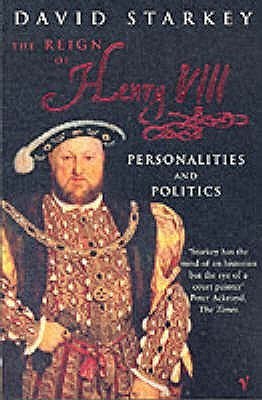
The Reign of Henry VIII: Personalities and Politics
Henry VIII was almost never alone. He was surrounded, twenty four hours a day, by the small group of intimates and personal attendants who made up the staff of his Privy Chamber. They organised his daily life, kept him amused and acted as the landline between the king and the formal machinery of government. These men, intermarried, interbred and close knit even in their mutual feuding, were supremely well placed to rig politics and patronage for their own benefit. Their influence was important and sometimes decisive: factions in the Privy Chamber destroyed Anne Boleyn, they frustrated the Catholic reaction of the 1540s, and, by doctoring Henry's will, prepared the way for the full blooded Protestantism of his son's reign.
The Reign of Henry VIII is not so much a book about Henry VIII. It is about the great game of politics over which he presided.
The Reign of Henry VIII is not so much a book about Henry VIII. It is about the great game of politics over which he presided.
160 pages, Paperback
First published January 1, 1985
About the author
David Starkey
138 books468 followersDavid Starkey is one of Britain's foremost historians, renowned for his commanding expertise on the Tudor period and the English monarchy. A Cambridge scholar, he established his academic reputation with rigorous work on the Tudor court, particularly Henry VIII's privy chamber and the role of faction in politics. His major works include Six Wives: The Queens of Henry VIII, Elizabeth: Apprenticeship, and Monarchy: From the Middle Ages to Modernity.
A gifted communicator, Starkey became a familiar television presence through documentaries including David Starkey's Monarchy and Henry VIII: Mind of a Tyrant. His style is unapologetically forthright, combining scholarly rigour with bold interpretive claims that challenge received wisdom. He was appointed CBE in 2007 for services to history.
A gifted communicator, Starkey became a familiar television presence through documentaries including David Starkey's Monarchy and Henry VIII: Mind of a Tyrant. His style is unapologetically forthright, combining scholarly rigour with bold interpretive claims that challenge received wisdom. He was appointed CBE in 2007 for services to history.
Ratings & Reviews
Friends & Following
Create a free account to discover what your friends think of this book!
Community Reviews
Displaying 1 - 17 of 17 reviews

July 12, 2020
Ein sehr informatives Sachbuch über die Persönlichkeiten und Politik am Hof von Henry VIII. Die Tudor-Zeit gehört zu meiner liebsten überhaupt und durch unzählige Romane, die ich schon darüber gelesen habe, bin ich immer interessiert an den Geschehnissen dieses Hofs. Das Sachbuch hat mir einige neue Sichtweisen auf den Hof gegeben und meinen Blick definitiv geweitet. Ich hatte allerdings manchmal so meine Schwierigkeiten, alles genau zu verstehen. Aber das hat sich recht schnell gelegt. Kann euch das Buch wirklich ans Herz legen, wenn euch Henry VIII. und seine Regierungszeit interessiert.

December 18, 2014
meh. Pretty disjointed and without impact. I don't think I'm a fan of David Starkey, if this book is an example.
Originally posted at Small Review
This is another one of my experimental forays into historical non-fiction, and unfortunately this is another book that takes more of the "academic" approach.
Instead of quotes and historian comparisons, David Starkey's narrative does flow nicely and he does offer his own opinion on what is The Truth (more on that soon). So, that's good.
The reason I'd classify this in the more academic group is because of the structure of the book. Each chapter deals with a different faction or major influence on Henry, but there is only the loosest of timelines followed and huge amounts of information are left out.
That's not a criticism on the book itself, because this is not a 101 level book and so it's assumed the reader already has knowledge of all the major chronological high points. And, for the most part, I did.
So why the problem? Chalk it up to my personal preference. I'm a reader who likes things repeated. I don't like this approach of delving into the details and foregoing the greater context, even if I know the greater context. Yes, the trees are nice, but I want to focus on the details of the trees without losing the context of the forest. I think that makes the details hit harder and the momentum and tension build to greater heights. But, hey, I also prefer novels.
Points for teaching me about the various factions influencing Henry and really driving home the point that the manipulations going on in Henry's court were downright scary! While none of the factions explored were new or surprising, I really liked the deeper look into them and this gave so much more background to the long string of wives (and why they were toppled). I also really liked his treatment of Wolsey.
Still, despite all that, I couldn't help wanting more out of everything. But, that's as much a compliment to David Starkey as it is a complaint.
I've heard David Starkey can be pompous, and I definitely saw why people have lodged that complaint. He injected his own commentary and bias here and there, and while I think it was supposed to come across as smugly funny (oooh look how offensive I can be!) it came across to me as more forced and flat. So, I'm not offended like some other readers, but I'm not impressed by these witticisms either.
Will I read more David Starkey? Well, I own a copy of his biography on Elizabeth I, so I'll at least be giving that a try. Overall, he definitely knows his subject matter very well and while I don't love the way he chose to present it, this approach may in part be due to the nature of this book. He also wrote a mammoth book on Henry's wives, so that may be more what I'm looking for.
Originally posted at Small Review
Originally posted at Small Review
This is another one of my experimental forays into historical non-fiction, and unfortunately this is another book that takes more of the "academic" approach.
Instead of quotes and historian comparisons, David Starkey's narrative does flow nicely and he does offer his own opinion on what is The Truth (more on that soon). So, that's good.
The reason I'd classify this in the more academic group is because of the structure of the book. Each chapter deals with a different faction or major influence on Henry, but there is only the loosest of timelines followed and huge amounts of information are left out.
That's not a criticism on the book itself, because this is not a 101 level book and so it's assumed the reader already has knowledge of all the major chronological high points. And, for the most part, I did.
So why the problem? Chalk it up to my personal preference. I'm a reader who likes things repeated. I don't like this approach of delving into the details and foregoing the greater context, even if I know the greater context. Yes, the trees are nice, but I want to focus on the details of the trees without losing the context of the forest. I think that makes the details hit harder and the momentum and tension build to greater heights. But, hey, I also prefer novels.
Points for teaching me about the various factions influencing Henry and really driving home the point that the manipulations going on in Henry's court were downright scary! While none of the factions explored were new or surprising, I really liked the deeper look into them and this gave so much more background to the long string of wives (and why they were toppled). I also really liked his treatment of Wolsey.
Still, despite all that, I couldn't help wanting more out of everything. But, that's as much a compliment to David Starkey as it is a complaint.
I've heard David Starkey can be pompous, and I definitely saw why people have lodged that complaint. He injected his own commentary and bias here and there, and while I think it was supposed to come across as smugly funny (oooh look how offensive I can be!) it came across to me as more forced and flat. So, I'm not offended like some other readers, but I'm not impressed by these witticisms either.
Will I read more David Starkey? Well, I own a copy of his biography on Elizabeth I, so I'll at least be giving that a try. Overall, he definitely knows his subject matter very well and while I don't love the way he chose to present it, this approach may in part be due to the nature of this book. He also wrote a mammoth book on Henry's wives, so that may be more what I'm looking for.
Originally posted at Small Review
November 19, 2013
Lots more information about King Henry and the Tudor dynasty

September 12, 2017
A good primer but somewhat outdated (in terms of language and presentation of certain facts and opinions) as the 2002 version did not incorporate any revisions of the 1985 original or an epilogue addressing any changes in Starkey's stances since. Starkey does correctly present the conditions around Henry's actions but arguably doesn't present sufficient analysis of his motivations and, in turn, give him enough credit for the actions taken in his name at times. While Alison Weir's tome on Henry VIII is lengthier and occasionally meanders it does present a better balance between Henry's independent decisions and his counselors and courtiers acting as driving forces between decisions made in Henry's reign, though this is likely in part because of research developments that occurred after Starkey's text was originally written.

January 6, 2019
Very good short reading for the Tudor history fan.


November 7, 2021
A short introduction to some of the key members of the Tudor Dynasty- glad it included Henry’s father as sometimes he gets overlooked in history.
3*
3*

August 15, 2023
Writing style sometimes gratingly blokey, but analysis of the power balancing between the privy council and the court at the heart of the political tumult of Henry’s reign is illuminating

May 27, 2020
I’ve discovered I neither have an aptitude nor an interest for high politics, it’s just a lot of silly men (and sometimes even women) with silly names doing stupid things for reasons I don’t understand but I’ve learnt how to say “wet dream” in Latin so it’s a thumbs up for me.

July 3, 2012
This book is a good introduction to the reign of Henry VIII, particularly the role of faction in major events of Henry's reign, like Wolsey's fall, Anne Boleyn's execution, and Cromwell's execution. Each chapter deals with a major faction or influence on Henry VIII, so the chapters can be read as standalones, which is quite handy.
It doesn't really focus much on Henry, which is a pity as he was so influential in the role of faction and the power games of the Tudor court. A focus on Henry himself would have made the book stronger, in my opinion. Because he was missing, it felt a little disjointed somehow, discussing his reign without really including the man himself – I wanted a little more. It is quite a short book as well and it would have benefitted from being longer and more comprehensive.
What I do like about Starkey's writing is that he is very focused on the facts and although he does put his opinion in, he makes the difference between fact and opinion very clear. This book may now be considered outdated, written originally in the 1980s, and a discussion of the possible motivations of those involved in Henry’s reign is absent. We cannot know, obviously, what people were thinking, but looking at potentially what drove them would have added more context and opened the book up a little.
David Starkey is always an engaging writer – when you read one of his books it is difficult to put it down, but I think his own biases and even misogynism comes through (less misogynism in this book as it focuses largely on men), which can at the same time make it difficult to read. Generally, this book would have benefitted from being longer with more detail, but a good introduction certainly to the key players throughout Henry VIII’s reign.
It doesn't really focus much on Henry, which is a pity as he was so influential in the role of faction and the power games of the Tudor court. A focus on Henry himself would have made the book stronger, in my opinion. Because he was missing, it felt a little disjointed somehow, discussing his reign without really including the man himself – I wanted a little more. It is quite a short book as well and it would have benefitted from being longer and more comprehensive.
What I do like about Starkey's writing is that he is very focused on the facts and although he does put his opinion in, he makes the difference between fact and opinion very clear. This book may now be considered outdated, written originally in the 1980s, and a discussion of the possible motivations of those involved in Henry’s reign is absent. We cannot know, obviously, what people were thinking, but looking at potentially what drove them would have added more context and opened the book up a little.
David Starkey is always an engaging writer – when you read one of his books it is difficult to put it down, but I think his own biases and even misogynism comes through (less misogynism in this book as it focuses largely on men), which can at the same time make it difficult to read. Generally, this book would have benefitted from being longer with more detail, but a good introduction certainly to the key players throughout Henry VIII’s reign.

March 25, 2018
Good lord I am well, almost shocked at the lack of excitement about this book. For my part it is a work of genius which would be the first I'd recommend to anyone - though probably alongside a basic narrative book or biography.
It has the advantage of combining the erudition and depth of knowledge of the professional, specialist historian, with that most unusual talent, brevity. David Starkey makes the case for a faction ridden court better any anyone else in my view. He has a talent for painting pictures through the personalities he chooses to describe. His picture of an indecisive Henry VIII, whose very indecision encouraged the constant, vicious bloodletting of the court and chamber is much more believable to me than the puppet master tyrant or the great hero of A F Pollard.
This is a book with a point of view which needs to be balanced with other books, but it is the work of a brilliantly insightful historian, and very well written.
It has the advantage of combining the erudition and depth of knowledge of the professional, specialist historian, with that most unusual talent, brevity. David Starkey makes the case for a faction ridden court better any anyone else in my view. He has a talent for painting pictures through the personalities he chooses to describe. His picture of an indecisive Henry VIII, whose very indecision encouraged the constant, vicious bloodletting of the court and chamber is much more believable to me than the puppet master tyrant or the great hero of A F Pollard.
This is a book with a point of view which needs to be balanced with other books, but it is the work of a brilliantly insightful historian, and very well written.

October 5, 2012
I read this book in an afternoon and I really enjoyed it. It's my first Starkey book and I have to say I love his writing style - very clear and simple, and even humorous at times. I loved how this book wasn't bogged down with tedious facts about Henry that we already know. It's a deep look at some of the key political figures during Henry's reign, most notably Cardinal Thomas Wolsey, Anne Boleyn, and Thomas Cromwell. Starkey did a great job with this book and there is so much information packed into just 145 pages. Definitely a book worth reading in order to better understand the political intricacies of Henry VIII's court.

December 8, 2014
Loved it. I think if you know a fair amount about Henry's court, then this is an excellent overview of the factions involved. Even if you know a lot about the characters and politics, a few more jigsaw pieces are likely to fall into place. This is essentially an extended essay covering the tug of war that was Henry VIII's Council: an effervescent ramble through the major players surrounding Henry through his lifetime. It isn't an introduction to the subject: it's much more 201 than 101. Starkey's ascerbic wit shines through and it's hard not to hear his voice in your head whilst reading. What's not to like?
October 10, 2008
This book has a misleading title. As I was reading there was looming absence - Henry VIII. You learn very little about him here - clearly his name is in the title only for selling copies. It is the sub title, "Personalities and Politics" that is more clear. You can learn here about Wolsey and Cromwell, Carew and Boleyn, minions and favorites, Dukes and Earls and Duchesses, etc. And, if you want to learn about that, this volume will probably be very interesting. But if you want to learn about King Henry VIII, you will probably want to start with a different book.
January 2, 2012
i liked this book but there were times when the writing was boring. if you know about Henry then nothing is boring. there were parts that dragged on. this book is written more like a history text not like a story. there are dates, and titles for everything. i love this time in history and all the drama that happened but i admit i like the story and not all the extra details. but if you are into getting into "the weeds" of it all this book is for you

March 6, 2016
Foreign policy of HVIII?

August 1, 2019
Very good for first year A Level students studying the Tudors.
Displaying 1 - 17 of 17 reviews