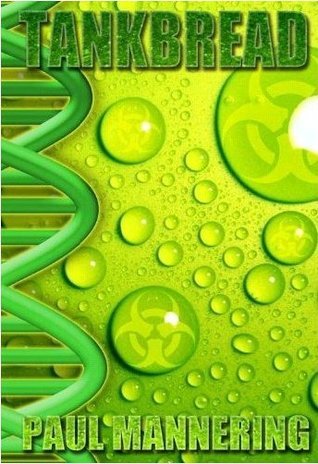
Tankbread has now been published by Permuted Press. You can find the current edition amazon.com/Tankbread-ebook/dp/B00BVRQ...
Ten years ago humanity lost the war for survival against a spreading plague that brought the dead back to life as flesh eating monsters.
Now intelligent zombies rule the world. Feeding the undead a steady diet of cloned people called Tankbread, the survivors live in a dangerous world on the brink of final extinction.
One outlaw courier must go on a journey through the post-apocalyptic wasteland of Australia. Fighting his way into the very heart of the apocalypse in the desperate search for a way to save the last humans and destroy the undead threat.
His only companion is a girl with an extraordinary secret. Her name is Else and she's Tankbread
Praise for Tankbread Paul Mannering's TANKBREAD is a guts and glory joyride into very dark territory. Very nasty and lots of fun!" ~ Jonathan Maberry, New York Times bestselling author of DEAD OF NIGHT and DUST & DECAY
Mannering's take on the post-zombie apocalypse is scarifyingly real. Baked dog while you take orders from your zombie master anyone? Sink your teeth into an Australia where the zombies are in charge - you won't be disappointed.
~ Rocky Wood, author of STEPHEN A LITERARY COMPANION and HORRORS! GREAT STORIES OF FEAR AND THEIR CREATORS
"Tankbread reads like a tick-list of genre tens of thousands of zombies, a brave, wise-cracking warrior hero, a beautiful woman who might just hold the key to everything, mad scientists, and even a knight in shining armour and a helicopter-piloting mother superior thrown into the mix! And yet the whole is far greater than the sum of its disparate parts. Tankbread is a blast from start to finish. A breathless, country-crossing zombie epic - kind of like Mad Max colliding head on with Dawn of the Dead. Mixing great action scenes, laugh-out loud moments, copious amounts of horror and lead characters you really grow to give a damn about, Tankbread is a unique and very entertaining entry in the over-saturated zombie genre. Read it and enjoy it - I did."
~ David Moody, author of the AUTUMN and HATER series.
Let me start off by saying that TANKBREAD has an incredibly compelling premise: intelligent zombies known as "evols" have taken over the world. They only deign to allow humanity to exist as long as our scientists provide them with delicious, stem cell-heavy clones known as tankbread.
My primary complaint about the book is that this premise is completely and almost instantly squandered. After a single scene with a smart, malevolent evol, the whole concept is dispensed with, as it is revealed there are also dumb, feral zombies, and for the rest of the book they become the primary antagonists. It was about as disappointing as watching "Return of the Living Dead: Necropolis" and finding out that the truly entertaining Trioxin 2-4-5 zombies had been replaced with some weaksauce Romero-light garbage.
So, setting that disappointment aside, I decided to evaluate this as a standard zombie potboiler. Viewed through that lens, it gets some high marks for originality. For one, it's set in Australia, which is nice change of pace from the usual urban North American climes where zombies in horror fiction seem exclusively to congregate. The story is largely a HOBBIT-style "there and back again narrative" as the unnamed protagonist and his young ward, an awakened tankbread clone, head from Sydney to Woomera on the first half of their quest, and then turn back.
The characters encounter a convent, a fishing village which play-acts old movies, some towns connected by a train line, and a few other communities in a series of vignettes, then revisit them on the return journey and witness how their various survival plans held up. (A particular highlight was the medieval-styled village of an Australian SCA-analogue, though that only appeared on the return journey.) The narrative structure allowed Else, the awakened tankbread clone, to view each mini-society first through the eyes of a child, then, after a preternaturally fast maturation due to the density of stem cells in her brain, to see them again after her intellectual and (mild) emotional awakening.
Else's abbreviated adolescence is an enjoyable character arc, as she quickly goes from not knowing how to use cutlery to debating Kierkegaard. Unfortunately, few of the other characters get as much room for personal growth, and the unnamed main character remains an Eastwood-style strong-and-silent type throughout, perhaps by design. I would've enjoyed seeing Soo-Yong, the only real evol antagonist, given a chance to chew more scenery in particular.
Three quarters of the way through the book I had more or less settled on giving this a three-star rating with a general opinion of "an above-average zombie procedural which squandered a unique premise" but after the conclusion, I had to bump it up a full star. The unusual and grotesque body horror of the finale redeemed much of the story. If Mannering had either followed through on the intelligent zombie overlords premise or, instead, focused earlier on the borderline Bizarro-style monstrosity of the "Adam" zombie, TANKBREAD would likely have been an all-time classic. As it stands, I consider it an above-average zombie story which leaves me hopeful about the sequels.
New Zealand's indie author, Paul Mannering, has unearthed himself and his expertise on “homo necrosis” in TANKBREAD. The TANKBREAD zombies overran my brain as they feasted upon the few remaining living humans in Australia. In the midst of the feeding frenzy, one man and one female human clone found themselves overwhelmed by human need, emotions, and desire. While the two fought their way across the country on a mission to save the living, Mr. Mannering did not hold back on the blood and gore with every brandish of the sword and each round fired.
I found myself quite impressed with this zombie infestation and found the ending a perfect checkmate. I realized I had gotten so engrossed in the never-ending fight to survive that I missed a few key pieces, which the author conveniently reminded me of in the last few paragraphs. Well played, Mr. Mannering. There were a few times the transitioning between scenes seemed a bit rough around the edges and required a reread, but all-in-all, I thought TANKBREAD was the edgiest way for me to end October 2012.
I generally love dystopian stories, but the world this author created was just too much for me. The gore, guts, and depravity level of this novel is really high in my opinion and It made me uncomfortable enough to quit reading about a third of the way into the book. You may not agree with me writing a review for a book which I did it finish, but I thought it was an important personal reminder not to pick this one up again, just in case I ran across the summary in a few years and thought it had promise.
Zombies have risen. The world we knew is gone. In its place is a world controlled by the intelligent undead. The only thing that keeps mankind from going extinct is Tankbread; cloned humans for the zombies to eat.
The concept of this story is fascinating, a world ruled by the undead and kept running via cloning. A really great idea, however, it gets abandoned pretty early on in favour of a more traditional zombie adventure.The nameless protagonist gets swept into a mission to a save the life of a tankbread girl, and find a cure for the zombie plague. The usual 'get from point A to point B, save the world' deal.
I was enjoying this story, it wasn't as great as I was hoping, but it was interesting. That was until the number of contrived coincidences broke it for me. I was fine with the constant random encounters that waited until the protagonist was ready to continue, but when the car's tyre exploded for no reason other than to remove the latest batch of red-shirts, I'd had enough. From there the inconsistencies and coincidences just started to annoy me.
One point that really bothered me was when the group set out a two part plan that involved starting a very loud car that would draw every zombie in the area then opening the gate to safety. The group calmly discussed how there was no avoiding having someone die to open the gate, but I found myself screaming "Why!". If they'd done the two things in reverse order everyone would be fine. It was a moment that existed just to remove an inconvenient character and that was it.
It was readable and interesting in places, even though there were a few things that bothered me. A decent zombie story despite its flaws, just a shame that the base concept wasn't carried further than the first chapter.
This book was selected as the Book of The Month in the Goodreads Zombie! Group. However, due to the large amount of extremely graphic gore, rape, the offhanded comments about incestuous relationship, and other disturbing content, I was unable to finish this story. I reached 84% before everything in me was totally repulsed by the mere thought of continuing to read on. And so I closed the book, deleted off my kindle and dropped out of the group read. In addition to the objectionable content, I felt that the characters were cookie cutter stereotypes, the plot was wandering all over the place without any clear direction. Overall I would say that this story reads more as a horrific nightmare than a post apocalyptic thriller. I know everyone has their own limits to such content, and what shocks and offends some might not shock and offend others. To each their own, right? Needless to say I do not recommend this story.
Great story unlike any zombie book I've read before. Tankbread is a genetically made clone of humans that humanity feed to the living dead or Evols! Basics are a man with no name has to race 1000 mile across Australian outback with a female clone to try and get her to a scientist who may be able to help destroy the zombies for good!
This is an action packed. Roller coaster of a story, will appeal to all zombie fans 5*
The zombie action and the fast pace of the book was great. Up until the 75% point in the book, I would have rated this a solid 4. Despite some depraved scenes, a lot of contrivances, and a lot of unanswered questions. But the final part of the book was totally disappointing. I was not happy with the resolution of the story at all.
Gallons of blood and gore and tons of decaying flesh alone are not enough to create suspense. From the hard-core marine who cuts off his arm after beeing bitten by a zombie to the mother who kills her 7-year old girl with her last bullet the author left out absolutely no cliché.
I like zombie stories and as such it was okay. Just barely...
For some of you, even the backtext description of what this book is about may be too gruesome for you, so I won't describe some key parts of the setting here. Yes, it is gruesome, but it's also interesting and different enough that it drew me in, and I thought a gritty zombie book might be a nice change of pace. Bonus: set in Australia!
I definitely got what I was looking for. If the backtext didn't make it clear, the story is gritty, with lots of people (and, of course, zombies) dying. I had a different idea of how the tankbread worked from the description, but what the author does with the idea is interesting and makes sense. The zombies are distinctive, and the post-zombie-apocalyptic society he's built makes sense. Mannering also makes the locations and the characters distinctive and engaging, worth getting to know even for their brief appearances before they are overrun by zombies.
The story ranges over a wide swath of Australia, which is even better than I was expecting, and although it ultimately gets a little weird, the climax and resolution are satisfying. And even though this is a series, they are written for different times and places, so this book stands alone enough.
The dead outnumber the living a hundred thousand to one. In order to maintain higher brain function, they need in ingest human stem cells. Tankbread are human clones rich with those very stem cells, and farmed by the humans to serve their zombie masters. Zombies are known as "extremely violent lucid organisms"; Evols for short. When it's discovered that the Tankbread aren't just mindless clones, a courier is given the perilous task of saving humanity.
Tankbread delivers no shortage of gore and graphic content. Intended for a mature audience, the squeamish may find Tankbread uncomfortable. I, however, am far from squeamish (unless there are spiders), and I tip my proverbial hat to Mannering for laying it all out there for readers to devour.
The book started out a bit rocky for me, and I had difficulty keeping up with it's momentum. The book paces extremely fast, with very few lulls in the action to catch your breath. However, the writing is excellent and the story is 100% original. The concept is sci-fi meets horror, and I realized early on that I had to really open my mind up and throw away my preconceived notions of the zombie apocalypse in order to invest in the outside the box story delivered by Mannering. It started out as a three star read, but somewhere along the way, I became invested in the story and the book ended with my four star stamp of approval. I firmly believe Tankbread is a must read for hardcore horror fanatics.
If I were to relate Tankbread to a movie, it would The Fifth Element. "Else", the three week old Tankbread traveling with the courier is similar in spirit to Milla Jovovich's Leeloo. Else is naive, and learns the way of this dystopian world at an alarming rate. By the time the two reach their ultimate destination, she is the smarter of the two. Tannering's main characters are multidimensional and in a constant state of progression. Their emotion and reactions are raw and despite being in a made up world, they manage to come across believable and realistic. Tankbread stretched the limits of my imagination further than I thought possible.
Summary: 1 star rating that I feel is more than generous because - honestly - saying 'I did not like it' is not a strong enough statement to reflect my disappointment nor describe what a sheer slog it was to get to the end of the book. 'Tankbread' is little more than a series of gorefests provided via herky-jerky pacing pored into a random chapter form with sloppy structure. It is most assuredly neither worth the price I paid for my copy nor the trouble of continuing to read the next chapters.
Review: Despite a promising and even somewhat unique premise, 'Tankbread' failed utterly to provide the kind of story one would expect from reading the promotional plug. It was as if someone had taken a much better executed story and boiled it down so that nothing but action sentences remained. And in doing so, the very heart and soul of this story felt empty and lacking. Entire battle sequences were often completed in the space of 3 or 4 poorly structured 2 sentence paragraphs. One felt that either limits had been placed on the author to finish by a certain page count or that he had already grown tired of the concept before he ever got it out of the outline stage.
There is little to no character development and scenes - even those with far-reaching consequences - are played out in a matter of a few short and poorly developed sentences. Mannering's book reminded me far too much of the Peter Clines disappointing 'Ex-Heroes' books, noting the latter were better written even with the repetitive descriptions of each and every one of the killed zombies. At least Clines bothered to put something other than battle scenes in his books. Still, both series share a complete lack of well-built suspense nor any trace of horror, again, only leaving one with a sense of so much untapped potential being wasted.
This book will occupy one of the last places in my long list of zombie based books, not only for now but probably until my days are done.
Not what I was expecting. A highly exhilarating post-apocalyptic fiction novel in which a world is run by unintelligent & some semi-intelligent zombies. Flesh eaters, they're on their way to destroying the human population of Australia when one man is coerced into carrying a message across the barren wasteland of the continent in order to save a person. He ends up saving a civilization. Lots of cursing, lots of extraneous sex, and a guy who seriously lacks moral qualms but a highly entertaining read.
Loved this book (if you can use the word "love" ob such a gory mess). A different take on the zombie/undead genre..and set in Australia, which makes a change. See - Australian scientists really could take over the world LOL. Tankbread is created to satisfy the need to feed of the zombies and make them leave the still live humans alone.. sort of works (/snicker). Can't really say much more without being a spoiler.. If you like this genre READ it! you will love it too. Some great characters scattered throughout too.
https://labibliotecadellibraio.blogsp... Letto e recensito da Dolci ...deve essere mantenuta una forma alternativa di cibo. Il tankbread è quella forma alternativa.
Romanzo ben scritto, coinvolgente, originalissimo e pieno di azione, 'Tankbread' è la storia del viaggio di un uomo attraverso un mondo invaso da orde di zombie, dopo aver scoperto la verità sul "cibo" creato per sostenere la popolazione di zombie.
«Gli scienziati fanno il tankbread, gli evols mangiano il tankbread così che il resto di noi abbia una possibilità.» (Gli Zombie sono conosciuti come "organismi lucidi estremamente violenti"; Evols in breve.)
Il libro, inizialmente, l'ho trovato un po' lento e ho avuto difficoltà a tenere il passo con la lettura. Le scene descritte erano estremamente veloci, scure e raccapriccianti, con poche pause nell'azione per riprendere fiato. Tuttavia, lo stile di scrittura è eccellente e la storia è originale al 100% ed alcune parti anche grottescamente divertenti. Devo dire che il personaggio principale, purché non mi sia dispiaciuto, mi è sembrato un mix tra il Rick Grimes di The Walking Dead e il Brad Pitt di War World Z, cioè uno sfigato che dove arriva porta distruzione. La protagonista femminile è stata davvero ben sviluppata e mi è piaciuta la sua evoluzione personale. Anche il mondo post-apocalittico è stato davvero descritto con dovizia di particolari e, spesso, mi sono ritrovata accanto ai protagonisti della storia. La tensione della lettura è rimasta alta quasi fino in fondo, il che ne ha reso il racconto piuttosto coinvolgente. Ho capito che, essendo così assorta nella lotta senza fine per la sopravvivenza, non ho notato alcune parti chiave, che l'autore fortunatamente mi ha ricordato negli ultimi paragrafi. Credo fermamente che Tankbread possa essere una lettura davvero interessante per gli appassionati di orrore e di storie sugli zombie. Sono rimasta parecchio incuriosita da come è finito il libro e aspetto l'uscita del capitolo successivo della serie per vedere cosa accadrà in seguito.
In un mondo post apocalittico, gli esseri umani sopravvivono cercando di non diventare cibo per gli zombi, chiamati “evol”, e offrendo loro in sacrifico persone clonate, i tankbread appunto, per sfamare il nemico e controllarlo. La terra è diventata un mondo crudo, oscuro e pericoloso, dove la gente cerca di resistere, giorno dopo giorno, con il poco o niente che ha a disposizione. In mezzo alla devastazione, alla paura e al terrore, un uomo e una tankbread si ritrovano a intraprendere un viaggio con uno scopo che si rivelerà ben diverso dall’obbiettivo finale da raggiungere.
Questo libro ha attirato la mia attenzione perché dalla trama sembrava proprio appartenere alla categoria dei distopici che piacciono a me. E infatti, di base, la storia era potenzialmente molto interessante e poteva offrire diversi spunti originali, ma a mio avviso l’autore non è riuscito a svilupparla in modo adeguatamente coinvolgente e stimolante.
Ci sono tempistiche che fanno perdere il lettore, a volte rallentando troppo l’evolversi della storia, a volte inciampando in azioni ripetitive senza alcuna motivazione sostanziale.
Per la maggior parte del libro ci troviamo davanti una narrazione dei fatti senza un approfondimento emotivo dei personaggi, per me un aspetto essenziale. Questo purtroppo non mi ha permesso di sentirmi pienamente coinvolta nella storia e ha ovviamente influito sul mio giudizio.
Il finale l’ho trovato affrettato e improvvisato, in poche parole deludente. Inoltre sono presenti piccoli refusi che, sia pur non inficiando la lettura, risultano fastidiosi.
Editing recensione a cura di Lady Owl per Feel The Book
If Zombies are your thing, you'll enjoy this a slightly different take on the Zombie theme. Set in Australia after the unexplained Apocalypse. Now intelligent zombies rule the world. Feeding the undead of a steady diet of cloned people called Tankbread, the survivors live in a dangerous world on the brink of final extinction. One outlaw courier must go on a journey through the post-apocalyptic wasteland of Australia. Fighting his way into the very heart of the apocalypse in the desperate search for a way to save the last humans and destroy the undead threat. His only companion is a girl with an extraordinary secret. Her name is Else, and she's Tankbread. The book is extremely graphic. With both violence and sex (rape and consensual). There is vulgar language, Throughout. But None the less it was an enjoyable book, with some touches of dark humour thrown into the mix.
I voluntarily reviewed an ARC of this book in exchange for an honest review
This is a book about zombies, pure and simple. The difference is the author, because he weaves this tale from a totally different perspective with very interesting characters, drama, action, and above all ; a very disturbing climax. There were several twists to the story which keeps the reader involved and hoping for a successful resolution, but this story was never that simple. This was a very good read.
Hello, this is a very good start to a story. Although I hated the ending. Extremely well written and entertaining to read. Off to book 2. Good job. Thanks.
This is an exciting ride on the down slope of a roller coaster! You may have to check your wind molded hair style before you go shopping after putting this novel down. It is FAST but not dull. If "zombies" are on your reading list this novel will satisfy. Later. Keep Reading.
While Tankbread is zombie fiction, it's also a surprisingly successful mix of genres. The dystopian future, the Australian outback, along with the perilous road trip and crazy characters, naturally leads one to compare Tankbread to Mad Max. The voice and over all 'feel', however, is reminiscent of the pulp science fiction and adventure novels of the 20's to 30's (give or take a decade at either end). I'm thinking of writers such as Edgar Rice Burroughs, Arthur Conan Doyle, and Robert E. Howard. Asimov and Heinlein come to mind as well. The Courier is very much a testosterone directed male specimen along the lines of Tarzan or Conan the Barbarian.
I don't intend to imply that Tankbread is an example of great literature. It's very obvious that Mr. Mannering has the imagination and practical skills to write a serious novel. It seems, however, almost as if he wrote this book in a frenzy intended to get it into the hands of his readers as soon as possible. And, besides... Zombies!
There is a WHOLE BUNCH OF GORE in Tankbread, so if blood and guts is a problem for you, you shouldn't read it. I mean a WHOLE BUNCH OF GORE. It is not appropriate for younger readers. There is also a whole heck of a lot of swearing. It's not gratuitous swearing, in my opinion. The dialog is very much what you would expect from a man such as The Courier and the people he and Else encounter, in the environment we find them in.
This was an EXTREMELY FUN AND ENJOYABLE read. There is a lot of action, as Else and The Courier struggle against terrible odds to complete their mission. I found myself biting my nails, and squirming with anxiety, and other times Iaughing out loud (it would have been so fun to have a friend reading this at the same time to talk about it with.) It is also a very tender and sweet love story.
There were some plot elements that were either not quite tied up at the end or perhaps not explained thoroughly. This and the writing quality I've already mentioned influenced my 4 star rating. Others may not agree, but I had such a good time with this book and the characters, I believe the score is appropriate.
I'm looking forward to reading more of Mr. Mannering's work in the VERY near future. Once I discovered there was a sequel, I went directly to Amazon and downloaded Tankbread2 on my kindle.
This book does a lot of interesting and new things, but also does some old and clichéd things. The story and the world fall into the former category. It’s always great to see a zombie (or a post-apocalyptic) story take place somewhere other than North America. I know this may come as a shock, but these things COULD happen in places other than America. As someone who loves to travel, the locations are described well. I could really picture them in my mind.
The idea that we lost a zombie war is radical and something I've never seen before. The thought that we could be slaves to the zombies? Inconceivable! And the fact they could evolve into intelligent beings? Now you've got my interest. It was refreshing to see the author take a tired genre and flip it on its head.
Unfortunately things quickly fall into familiar patterns.
We have an unnamed hero, which I’m not sure if it was done to provide a “skin” for the reader or it was regarded as a non-issue, falling into a Mad Max-esque role. A super-powered being that has something else just bubbling beneath the surface. The two of them wander from Point A to B in a set of random encounters stitched together disjointedly. About ¾ of the way through the book I forgot what their original destination was.
Speaking of the characters, virtually no one has any character development or backstory. There’s plenty of opportunity to do so, in the quiet times between encounters. This left me with a meh feeling when people exited the story, which they do frequently. I want to care about characters and should feel something at their passing. I almost hoped the ones with development/backstory would survive so I could learn more about them.
The ending came out of nowhere. I have two thoughts on why this happened: 1. The story was moving along and the author didn't know how to wrap up the book or 2. The ending was already laid out and the rest of the book was just a way to get from beginning to end. And it wasn't certain how to transition from the last piece to the end. The way the book is laid out makes me lean toward the second.
All in all, it’s a good first attempt at a novel. The gore didn't bother me. Seriously, who enters into a zombie story with the expectation of little gore? It’s like watching a Western and getting disgusted there’s a saloon scene. The world setting is solid and I’m actually anticipating the sequel. I’m curious to see where things go from here.
Tankbread is a zombie book set 10 years after a zombie outbreak. It's set in Australia and while a world gone to ruin is predominantly going to look the same wherever the story takes place it makes a nice change for a story to focus on a different country and geography compared to the standard setting of the USA. We even get some good old fashioned Aussie slang thrown in, it's a small touch but is nice instead of the usual generic American slang.
The story is just different enough to stand out from the rest of the zombie books out there, the idea of the zombies behaviour and how some of them keep their brain functions and mind to remain evolved is well thought out and adds another layer to the standard undead character style of mindless drones.
The story starts out with a courier being given a job to retrieve something from the geeks (scientists who create the tankbread) at the Sydney opera house by one of the evolved zombies (evol-extremely violent lucid organism), it's a good opening paragraph and gives you a feel for what the rest of the book's like. From there the story really picks up as things go wrong and aren't what they seem resulting in the courier embarking on a cross Australia journey.
The plot is good and after my initial first impression of the courier character that wasn't very promising, in a shock I didn't see coming by the end I really cared about him and his travelling companion Else, they have a surprisingly deep relationship that grows over their journey. There's a decent ending to, that both finishes the novel nicely and also sets things up for a sequel.
The book won't win any awards for the story or writing and it isn't an epic masterpiece of poetic literature. If I had to compare Tankbread to anything, then it would have to be compared with a Hollywood popcorn action movie with an above average plot, you will have a good time but at the end of the day you can just switch off your brain and enjoy the fun ride your taken on. That is in no way a criticism as I really enjoyed the book.
Tankbread takes place ten years into the zombie apocalypse, and the human race hasn’t fared well. There are only small pockets of people left, and most of them are barely surviving. Those that are still hanging on owe their lives to the deal struck between some of the smarter zombies and the “geeks.” The geeks supply human clones for the zombies to eat, and the zombies stop eating the folks who were made the old fashioned way. It’s a win-win, unless you’re a tankbread, of course. When the zombies break the truce, it’s up to one man to get across a post apocalyptic Australia with a tankbread girl that could be humanity’s last chance for survival.
I found the idea of this book brilliant and intriguing. A great concept doesn’t always mean a great book, but Tankbread delivers! From page one, Mannering does an excellent job of painting a vivid picture of the very bleak dystopian world in which the book is set. The characters and settings are exactly what you can expect to see in a post apocalyptic world in which humanity is losing the battle for survival. No effort is made to turn the unnamed main character into a “good guy.” He isn’t a bad guy, he’s simply another person trying to live in a world where the odds are stacked against him.
On kind of a side note, this book sat in my kindle for a while. I kept putting off reading it because of a few negative reviews that talked about all sorts of sexual depravity and rape. While I realize that this sort of thing will be an unfortunate aspect of the eventual apocalypse, I’m not a huge fan of reading or writing about it. When I eventually decided to start Tankbread, I braced myself for a 287 page incest-and-rape-athon. What I found were a couple of scenes that were uncomfortable and made me cringe a little, but nothing I would call overly graphic or would stop me from recommending this fantastic read. Of course, everyone has their own tolerance level for such things. If you’re extremely sensitive to rapey stuff, maybe skip this one. If you aren’t, get started on five-star novel right away.
What would you do to protect someone you just met?
Zombies are everywhere EVLO's - extremely violent lucid organisms (or evols) as they are called in this book. They are kept at bay by being fed "Tankbread". One man is hired to deliver something and ends up getting in way over his head into a world he didn't even know existed.
The narration in this, done by Rupert Degas was good. His narration really helped this story. The slight Australian accent was a wonderful touch without being hard to understand. I genuinely believe that his narration helped me enjoy this book more. Tankbread was one of those books that meandered seeming to go on without a plot (much like the characters in the book). Don't get me wrong, I enjoyed the book. But I think that this could have used some more direction.
I like to check reviews out to see what others think of something, especially when I like it (when I absolutely love something I write my review, post it and then read other reviews). This one surprised me. Yes, the book is violent. Yes, it's vulgar. No, it didn't need to be - but to leave a bad review based solely on that is insulting to the author.
Now, with that said this book is extremely graphic. With both violence and sex (rape and consensual). There is vulgar language, and I actually found it as comic relief throughout this downer of a book. Else was wonderful. Her usage of foul language never ceased to make me laugh.
Needless to say, this book was interesting. It was a new take on a zombie book. The zombies wet different. The story was different (if a bit random). I want to compare this to a movie but it will give away a pretty big part of the story (so I won't). With what I said earlier. If violence, sex, and extremely bad language isn't your cup of tea - you probably won't enjoy this. If you don't mind these things it was a great read.
Though I personally own this book, the review was originally written and posted to AudiobookReviewer dot com
Tankbread by Paul Mannering Mannering’s debut novel brings a vision of the apocalypse set in the wastes of what was once Australia. Sheep run wild and woolly, remaining townships board themselves away from zombie hoards and a lone, unnamed courier wanders the brutal landscape, surviving on a day to day basis. Tankbread are brain dead clones, mass produced by scientists holed up in the Sydney Opera House and fed en masse to the zombie scourge in an attempt to appease their voracious appetites in a bitter peace treaty. Our nameless hero finds himself tasked with transporting one such Tankbread across country in effort to find a cure for the virus that has decimated the world, before her fatal best before date ends. What follows is a witty, action packed adventure that draws upon classics such as Soylent Green, I Am Legend and with more than a hint of The Fifth Element as our hero begins to train the child like clone he comes to name Else in ways of self-defence and survival. His prickly wit and wry John McClane-esque one-liners soon rub off on her and for me this was the ultimate joy of the entire story. Else’s learning curve is tragic and comical, her childlike curiosity in a dangerous world is a rose amongst gnashing teeth. I found myself rooting for her throughout despite her numbered days, begging please don’t let Else die, please don’t let Else die . . . Along the way our hero and his not vulnerable for long sidekick, face off against endless swarms of hungry zombies and meet a variety of strange characters that add a greater depth to the story including honourable knights, flying nuns, feral children and flesh hungry pigs. From cover to cover, Tankbread is a balls to the wall, brains on the ceiling, tongue through cheek action comedy that even manages to twang a few heartstrings along the way. Zombie fans need to jump on this now and give this novel the recognition it deserves. 5/5