

What do you think?
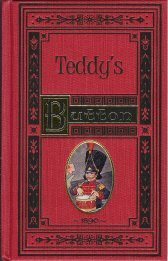
Teddy's Button
Here is a story that will open a child's understanding of the spiritual battle within as Teddy learns that he is his own worst enemy.
As a stubborn boy and girl refuse to back down from their selfish pride, one of the many lessons they learn is that they cannot win battles by force and hate, but by carrying the banner of love.
Through this charming story, Amy Le Feuvre helps children to understand the spiritual battle that rages in their soul, and that parents and children are on the same side.
Bibliographical note: This edition does not have a published date within its covers but by the list of books that are included it is circq 1903, so that date has been used for cataloguing purposes.
As a stubborn boy and girl refuse to back down from their selfish pride, one of the many lessons they learn is that they cannot win battles by force and hate, but by carrying the banner of love.
Through this charming story, Amy Le Feuvre helps children to understand the spiritual battle that rages in their soul, and that parents and children are on the same side.
Bibliographical note: This edition does not have a published date within its covers but by the list of books that are included it is circq 1903, so that date has been used for cataloguing purposes.
141 pages, Hardcover
First published January 1, 1896
About the author
Amy Le Feuvre
226 books59 followersAmelia Sophia Le Feuvre (1861-1929) was born in Blackheath, London, England in 1861.
She grew up in a large family which employed a governess for the children's education. Her father worked as a Surveyor at H. M. Customs. Her grandfather, James Mainguy, was a reverend in Guernsey.
She dedicated her life to writing and wrote many books and stories that are filled with Biblical principles and her popularity began in the 1890s and continued for over three decades. She also wrote for magazines like 'Sunday at Home' and 'The Quiver'. Her writing was typical of the new approach of the evangelical writers to the young reader and, like many of the writers of the period she was particularly fond of the "quaint" child, "old fashioned" with delicate health, a type modelled on Paul Dombey. She also wrote of family life, specialising in the outwardly naughty child, the odd one out, whose motives are consistently misunderstood by the adults.
Her publishers included Revell in Chicago, Dodd Mead in New York, the Religious Tract Society in London, and Hodder and Stoughton in London and latterly the Lutterworth Press kept her works in print.
She died at Exeter, Devon, on 29 April 1929 after 68 fruitful years.
Her first book, 'Eric's Good News', was published in 1894 and her last, 'A Strange Courtship' was published posthumously in 1931. She wrote more than 65 books in her career, including at least one, 'Laddie's Choice' (1912), using the pseudonym Mary Thurston Dodge.
Note: Her exact date of birth is not known, she was born in the first quarter of 1861 so the date of 1 March has been used for convenience.
She grew up in a large family which employed a governess for the children's education. Her father worked as a Surveyor at H. M. Customs. Her grandfather, James Mainguy, was a reverend in Guernsey.
She dedicated her life to writing and wrote many books and stories that are filled with Biblical principles and her popularity began in the 1890s and continued for over three decades. She also wrote for magazines like 'Sunday at Home' and 'The Quiver'. Her writing was typical of the new approach of the evangelical writers to the young reader and, like many of the writers of the period she was particularly fond of the "quaint" child, "old fashioned" with delicate health, a type modelled on Paul Dombey. She also wrote of family life, specialising in the outwardly naughty child, the odd one out, whose motives are consistently misunderstood by the adults.
Her publishers included Revell in Chicago, Dodd Mead in New York, the Religious Tract Society in London, and Hodder and Stoughton in London and latterly the Lutterworth Press kept her works in print.
She died at Exeter, Devon, on 29 April 1929 after 68 fruitful years.
Her first book, 'Eric's Good News', was published in 1894 and her last, 'A Strange Courtship' was published posthumously in 1931. She wrote more than 65 books in her career, including at least one, 'Laddie's Choice' (1912), using the pseudonym Mary Thurston Dodge.
Note: Her exact date of birth is not known, she was born in the first quarter of 1861 so the date of 1 March has been used for convenience.
Ratings & Reviews
Friends & Following
Create a free account to discover what your friends think of this book!
Community Reviews
Displaying 1 - 30 of 104 reviews

March 28, 2020
In her heyday, and it was a long one - she was immensely popular from the 1890s to the 1930s -, Amy Le Feuvre was The Religious Tract's Society's most prolific and popular author. Her tales always had a Christian meaning behind them and Biblical principals nearly always came into the story. 'Teddy's Button' is no exception as Teddy Platt, who had a passionate desire to follow in his father's footsteps in the army, fought with his conscience after agreeing with the rector, Mr Upton, that he needed to do something about his mischievousness.
Teddy got great pleasure from relating the tale of the button that he proudly wore in the middle of his shirt. He would tell anyone who wanted to listen that his father had fought bravely and died fighting for his country and that the button was the only relic from his uniform that found its way back home ... and consequently to Teddy.
But the likeable Teddy was prone to get up to mischief and his mother, Mrs John, and his teachers were always telling him off. He was always contrite after such episodes and he decided that he wanted to do something about it. After a particularly nasty clash with one of the village girls, Nancy, Teddy realised that on occasions he was not as nice as he could be. So, with advice from his mother and his granny, Mrs Platt, he went to see Mr Upton who told him all about enlisting as a soldier in God's army.
Mr Upton gave Teddy a parallel situation when he told him that his father died in saving the regiment's colours; he said that God, too, had a banner, which was tantamount to his colours. 'It is a wonderful banner,' said Mr Upton and he told Teddy that it was 'His banner over me was love.' Teddy listened attentively and asked whether God would let him hold up the banner for Him. Mr Upton explained that he could do so if he had enlisted in His service.
Teddy went away and thought about all this and decided that he would enlist and worked out that there were two opposing forces within himself. So that he could know how to handle them he named them as Ego for the good part of himself and Ipse for the bad part of himself. And from then on he tried to relate to these whenever situations presented themselves, and he could either be good, which he began to prefer, or bad.
He explained the position to his friend Nancy, who wanted to be a sailor rather than a soldier but Teddy told her there were no sailors in His army. That is until Mr Upton put him right and told Teddy that a sailor could be one of the soldiers in His army. Teddy explained this to Nancy, who accepted the explanation, and they became firm friends from then on.
However, Teddy met with a nasty accident and lost his beloved button. At one point it looked as though he would die but he eventually pulled through with tender care from all those who loved him. And as he recovered, and fortuitously his button was returned, he had long chats with his mother about his beliefs and decided that he would fight Ipse 'hard until I die' then he believed his Captain would think him as brave as his father.
The Christian message flows all the way through the book but it is so well interwoven that it does not detract from the story at all and it is no surprise to know that even into more modern times (when The Lutterworth Press took over The Religious Tract Society) Amy Le Feuvre's books were still regularly given as Church and Sunday School prizes. This copy of mine for instance has a prize label in it given to Horace Wilkinson of St James's Sunday School (sadly no location mentioned), who received it as First Prize for 'Never absent, never late, with full marks for bringing Bible and Hymn Book' at Christmas 1910 and it is signed 'Robt. Railton Rector'.
'Teddy's Button' is a charming and delightfully uplifting book.
Teddy got great pleasure from relating the tale of the button that he proudly wore in the middle of his shirt. He would tell anyone who wanted to listen that his father had fought bravely and died fighting for his country and that the button was the only relic from his uniform that found its way back home ... and consequently to Teddy.
But the likeable Teddy was prone to get up to mischief and his mother, Mrs John, and his teachers were always telling him off. He was always contrite after such episodes and he decided that he wanted to do something about it. After a particularly nasty clash with one of the village girls, Nancy, Teddy realised that on occasions he was not as nice as he could be. So, with advice from his mother and his granny, Mrs Platt, he went to see Mr Upton who told him all about enlisting as a soldier in God's army.
Mr Upton gave Teddy a parallel situation when he told him that his father died in saving the regiment's colours; he said that God, too, had a banner, which was tantamount to his colours. 'It is a wonderful banner,' said Mr Upton and he told Teddy that it was 'His banner over me was love.' Teddy listened attentively and asked whether God would let him hold up the banner for Him. Mr Upton explained that he could do so if he had enlisted in His service.
Teddy went away and thought about all this and decided that he would enlist and worked out that there were two opposing forces within himself. So that he could know how to handle them he named them as Ego for the good part of himself and Ipse for the bad part of himself. And from then on he tried to relate to these whenever situations presented themselves, and he could either be good, which he began to prefer, or bad.
He explained the position to his friend Nancy, who wanted to be a sailor rather than a soldier but Teddy told her there were no sailors in His army. That is until Mr Upton put him right and told Teddy that a sailor could be one of the soldiers in His army. Teddy explained this to Nancy, who accepted the explanation, and they became firm friends from then on.
However, Teddy met with a nasty accident and lost his beloved button. At one point it looked as though he would die but he eventually pulled through with tender care from all those who loved him. And as he recovered, and fortuitously his button was returned, he had long chats with his mother about his beliefs and decided that he would fight Ipse 'hard until I die' then he believed his Captain would think him as brave as his father.
The Christian message flows all the way through the book but it is so well interwoven that it does not detract from the story at all and it is no surprise to know that even into more modern times (when The Lutterworth Press took over The Religious Tract Society) Amy Le Feuvre's books were still regularly given as Church and Sunday School prizes. This copy of mine for instance has a prize label in it given to Horace Wilkinson of St James's Sunday School (sadly no location mentioned), who received it as First Prize for 'Never absent, never late, with full marks for bringing Bible and Hymn Book' at Christmas 1910 and it is signed 'Robt. Railton Rector'.
'Teddy's Button' is a charming and delightfully uplifting book.

November 28, 2012
The kids and I listened to this audio book through Lamplighter Publishing, and it was well done. We were captivated by the wonderful story of friendship, forgiveness, facing our weaknesses, and what it means to follow Christ.
November 6, 2014
This is my favorite Lamplighter book. We have listened to the audio many many times. The book has a different ending then the audio. The kids were very surprised by the differences. I would recommend this book to everyone!...krb 11/6/14
Listened to the audio again while doing dishes. Great story!...krb 4/19/26
Listened to the audio again while doing dishes. Great story!...krb 4/19/26

April 21, 2017
We have the audio drama version of this and have listened to it many, many times!

April 25, 2016
For Lincoln on his 6th birthday. August 2012
This is a shorter illustrated version of the original work but still long for reading in one session. A young boy is learning how to please his Captain by how he loves the people around him.
This is a shorter illustrated version of the original work but still long for reading in one session. A young boy is learning how to please his Captain by how he loves the people around him.

January 20, 2021
The message is really subtle as a brick wall and I was initially critical of the book for that reason, but as the story settled in, it really made me think of my own struggle with battling my worst enemy. Often times I settle for "this is just how I am," where Teddy really made a decision to fight that ugly self.
In the long run, I probably prefer real life stories of faith, since there are plenty of real life heroes to choose from, but this did cause me to "take arms" more, which was the author's intent.
In the long run, I probably prefer real life stories of faith, since there are plenty of real life heroes to choose from, but this did cause me to "take arms" more, which was the author's intent.

November 21, 2023
O povestioară simplă și totuși complexă prin mesajul ei.
Teddy ține mult la nasturele rămas amintire de la tatăl său care a fost soldat iar acesta capătă un sens profund.
Consider ca Teddy poate fi simbolul tuturor copiilor care au o inocență aparte și care descoperă credința alături de un pastor sau un duhovnic (îndrumător) iscusit. Punând în atenție pasiunea copilului pentru soldați, pastorul știe cum să îl facă pe Teddy să privească lucrurile într-un sens aparte: îl determină să se înroleze și el în armata lui Hristos.
Mi-a plăcut foarte mult! Aș recomanda-o atât copiilor cât și adulților, chiar este o carte fără vârstă.
Teddy ține mult la nasturele rămas amintire de la tatăl său care a fost soldat iar acesta capătă un sens profund.
Consider ca Teddy poate fi simbolul tuturor copiilor care au o inocență aparte și care descoperă credința alături de un pastor sau un duhovnic (îndrumător) iscusit. Punând în atenție pasiunea copilului pentru soldați, pastorul știe cum să îl facă pe Teddy să privească lucrurile într-un sens aparte: îl determină să se înroleze și el în armata lui Hristos.
Mi-a plăcut foarte mult! Aș recomanda-o atât copiilor cât și adulților, chiar este o carte fără vârstă.

August 23, 2018
This is certainly Amy Le Feuvre’s most popular book, but I didn’t enjoy it as much as I have some of her other books. My memory of the others is vague, but I recall the children in her other works coming off as truly childlike, while Teddy’s deep thinking and piety make him seem contrived.

July 8, 2019
A cute, classic children’s story about a naughty little boy becoming a soldier of God. Very sweet. I really enjoy this author.
September 12, 2026
LOVE LOVE LOVE
This book is not overrated. It just now made me cry.
This book is not overrated. It just now made me cry.

Read
April 27, 2025Throwback to the sincere morality/gospel tales of my youth.
Was surprised how teetotaling played a much bigger role in the religion of that day than I remembered (sobriety/abstinence is functionally next to godliness here), but then alcoholism among especially military men in ages past was also quite the scourge.
The font choice--adjacent to comic sans--was like a jump scare.
Was surprised how teetotaling played a much bigger role in the religion of that day than I remembered (sobriety/abstinence is functionally next to godliness here), but then alcoholism among especially military men in ages past was also quite the scourge.
The font choice--adjacent to comic sans--was like a jump scare.

August 23, 2024
3.5 ⭐️
The message of the story is great but the way it was told was meh. Although it did get my son asking how to become a Christian.
The message of the story is great but the way it was told was meh. Although it did get my son asking how to become a Christian.

August 25, 2011
Teddy is a young boy full of mischief. He is very popular among the boys because of his great story-telling skills and ideas for getting into mischief. His favorite story of all is the one about his father. His father was a soldier, a hero who died in battle. Teddy carries his father's war button around with him and aspires to be a soldier just like his father.
When Teddy's mischief gets him into trouble at church he soon learns of another Captain he can follow~Jesus Christ. He soon "enlists" into the Lord's army. At first Teddy is wanting an enemy to fight. He soon finds that enemy in himself. He names his enemy "Bully" and he has many struggles throughout the rest of the story battling Bully in order to not disappoint his Captain.Teddy has such a sensitive heart for his Captain. He wants to serve his Captain well. He finds that sometimes though he loses his battle with Bully.
Originally written in 1890, Teddy's Button is still a relevant story for today. I loved how much Teddy wanted to please his Captain. One of my favorite parts of the whole story was when Teddy arranged for the local Vicar to host a tea party for the soldiers coming through town. He wanted the Vicar to tell the soldiers about his Captain. I also loved the description of Teddy's struggle within himself with good and evil. We all have our "Bullies" to battle. This was a great classic book to read and I can't wait to share it with my grandson someday soon.
When Teddy's mischief gets him into trouble at church he soon learns of another Captain he can follow~Jesus Christ. He soon "enlists" into the Lord's army. At first Teddy is wanting an enemy to fight. He soon finds that enemy in himself. He names his enemy "Bully" and he has many struggles throughout the rest of the story battling Bully in order to not disappoint his Captain.Teddy has such a sensitive heart for his Captain. He wants to serve his Captain well. He finds that sometimes though he loses his battle with Bully.
Originally written in 1890, Teddy's Button is still a relevant story for today. I loved how much Teddy wanted to please his Captain. One of my favorite parts of the whole story was when Teddy arranged for the local Vicar to host a tea party for the soldiers coming through town. He wanted the Vicar to tell the soldiers about his Captain. I also loved the description of Teddy's struggle within himself with good and evil. We all have our "Bullies" to battle. This was a great classic book to read and I can't wait to share it with my grandson someday soon.
September 22, 2014
I had heard about this from a mom from school. I was not sure what I was getting when I got the book. I had to do a interlibrary loan and it came from another state. At first I was confused. There was a boy names Teddy. His father was a soldier and had died in war. Teddy had a button from his father's uniform. This was his most prized possession. He would tell anyone that would listen about how heroic his father was. He met a girl one day who told him he was lying about his father. Teddy hated Nancy. He went to see the minister of the local church. The minister told him how he could be a soldier of God's army. It was an incredible book about being saved, forgiveness and how God brought the perfect people into your life. Teddy probably wouldn't have listened to the minister until he talked about being a solider. Teddy was able to lead several people to Christ. A book that is older but is so relevant and necessary today.
This entire review has been hidden because of spoilers.

March 8, 2010
My kids got the audio of this fantastic book, written by Amy LeFeuvre in 1896, for Christmas a few years ago. A precious story.
Here is the description:
Who is your most foul and cruel enemy? After reading Teddy’s Button, you may have a new answer to that question. Flamboyant Teddy Platt cannot keep silent about the glorious history of his sacred button. Soon this passion brings him into contention with a new little girl in the village. God uses this enmity to bring Teddy to his knees ready to sign up in the Lord’s Army prepared for service in the war against his worst enemy—himself! Are you a faithful servant of the King flying the banner of Love over your life? Teddy has some lessons to teach us all.
Here is the description:
Who is your most foul and cruel enemy? After reading Teddy’s Button, you may have a new answer to that question. Flamboyant Teddy Platt cannot keep silent about the glorious history of his sacred button. Soon this passion brings him into contention with a new little girl in the village. God uses this enmity to bring Teddy to his knees ready to sign up in the Lord’s Army prepared for service in the war against his worst enemy—himself! Are you a faithful servant of the King flying the banner of Love over your life? Teddy has some lessons to teach us all.

June 3, 2010
This illustrated, abridged version of Teddy's Button is one of our family's favorites. It is such a beautiful, beautiful book! I got choked up at one point and I think my husband was misty-eyed, too. I highly recommend it. It took a few nights to get through, but my boys hung on every word and begged for me to read more. The voice of the characters lends itself easily to reading it aloud in fun accents. Kids love that. :)
The message is beautiful. I really can't think of another word for it. If my boys hadn't already asked Jesus into their hearts, they surely would have enlisted as His soldier after reading this! I don't want to spoil the message, I'll just say it's a parable of agape love.
The message is beautiful. I really can't think of another word for it. If my boys hadn't already asked Jesus into their hearts, they surely would have enlisted as His soldier after reading this! I don't want to spoil the message, I'll just say it's a parable of agape love.

August 29, 2012
Teddy is a young boy who loves his father's war button. He talks to the town boys about his father's heroic death in battle and wants to be just like him. Teddy wants to become a good soldier, but he is also faced with becoming a good Christian and being a good warrior in God's army too. He becomes friends with a local sailor girl named Nancy. At first, they use to be enemies, but Mr. Upton teaches Teddy that you need to love your enemies even when they are not kind to you. Then, some soldiers needed a place to rest and they chose his little town. Teddy met a young soldier who wanted to become a follower of Christ but thought he wasn't brave enough. Teddy wants to help him. Will he save this young soldier? Find out by reading the book.

May 28, 2017
I really love Lamplighter books, and have been reading them for years. It seems like a good thing to abide by C.S. Lewis' saying of “A children's story that can only be enjoyed by children is not a good children's story in the slightest.”
This story was sweet, but it almost felt like it was written as a children't story but aimed at adults, if that makes sense. It felt like the author was trying a bit too hard. There are several others of this genre that I love much much more (i.e., The Basket of Flowers, House of Love, Ishmael), but I am glad I read this one.
This story was sweet, but it almost felt like it was written as a children't story but aimed at adults, if that makes sense. It felt like the author was trying a bit too hard. There are several others of this genre that I love much much more (i.e., The Basket of Flowers, House of Love, Ishmael), but I am glad I read this one.

January 16, 2013
This is a very well written book. It helped me understand that my biggest enemy is myself. In the book,Teddy is a boy probably about
one year old,and his dad is a sergeant in the army. Teddy's dad dies a brave death saving the life of a fellow solder. About seven years later
Nancy moves in the house next door,and her dad is a sailor. She does not believe that Teddy's dad was a hero in the army. I encourage you to read this book,
to find what treasures lay ahead in the story!
one year old,and his dad is a sergeant in the army. Teddy's dad dies a brave death saving the life of a fellow solder. About seven years later
Nancy moves in the house next door,and her dad is a sailor. She does not believe that Teddy's dad was a hero in the army. I encourage you to read this book,
to find what treasures lay ahead in the story!
Read
December 14, 2014A must read! The kids and I read this aloud and laughed much!!! It is a great read for anyone, but I would think children around 6-10 years of age would enjoy it the most. I just love, love this book, and I am 43!!! A wonderful story about a rambunctious boy who wants to be in the Lord's army with all his heart!

October 22, 2015
I read this book to my children about 10 years ago. It is still one of our favorite stories. I would highly recommend as a good children's book to read aloud. The words and the story are so descriptive of a period of time that has long past. A great wholesome book which will help build moral Christian character.

February 27, 2018
This moralistic tale is about how Christianity is a battle in which we fight temptations within ourselves. The main character is a child with temptations characteristic of children. I didn't mind the Christian values but I think that correlating violence with God's efforts to reach and minister to his children is error-prone as seen by those who use "holy wars" to justify their actions.

October 19, 2009
We ordered this from lamplighter publishing. HIGHLY recommend any of these books. We read it a little at a time after dinner and the kids LOVED it and are asking for another one. It really encourages the love of language and discussion about what it means to be a "soldier".

December 21, 2009
An excellent short story to read to your children at bedtime.
This little story is a thought provoking analysis of a child's motivations and heart condition. A great launch pad for discipling and instructing.
This little story is a thought provoking analysis of a child's motivations and heart condition. A great launch pad for discipling and instructing.

February 3, 2011
Teddy is a young boy, with big blue eyes, blonde curly hair, and a tendancy to get in trouble. But this year is diffrent from the others.
I LOVED this book! It was so cute, but it has a very good point!
I LOVED this book! It was so cute, but it has a very good point!
April 2, 2011
This is a beautiful story! I was really impressed with it. OH that we could return to the time when books were written to inspire character! This was our first read aloud in the afternoons. Now we are hooked :0).

October 18, 2013
I really don't remember much about this book... we read it last year at a EvFree study where the mom's go to their study and their kids have their own little study. I'm not sure if I liked it or not, so I just put three stars. And no, I did not just finish it.

February 26, 2014
Great little book about a young man who "enlists" under the true Captain and his fight against his personal enemy "Bully." This would be a great book to read to younger children - perhaps a chapter a day? Highly recommended.

May 4, 2014
The story is very sweet and has many good lessons. The struggle with our sin nature is a very real battle that we all have.
The story leans more toward decision salvation instead of election but It's a worthy read.
The story leans more toward decision salvation instead of election but It's a worthy read.

January 17, 2016
5* Children's fiction with a gospel message so clearly told! Teddy is a cute little character who wants to be good but nevertheless makes some grand fails. This will be required reading for my son and daughter.
Displaying 1 - 30 of 104 reviews