This war has drawn international attention. In a dress rehearsal for World War II, fascists support the Nationalists, while communists have come to the aid of the Republicans. Atrocities have devastated both sides. It is at this moment, when the Republicans have surrendered, and the Guardia Civil has begun to impose order in the ruins of Madrid, that Tejada finds the body of his best friend, a hero of the siege of Toledo, shot to death on a street named Amor de Dios. Naturally, a Red is suspected. And it is easy for Tejada to assume that the woman caught kneeling over the body is the killer. But when his doubts are aroused, he cannot help seeking justice.
Rebecca Pawel was born in 1977 and was raised in New York City. She spent a summer studying in Madrid in 1994 and fell in love with Spain. She also majored in Spanish language and literature at Columbia University.
Death of a Nationalist was nominiated for Best first Novel for both the 2004 Anthony and 2004 Macavity, and won the 2004 Edgar Best First Novel. It was also a finalist for the LA Times Best Mystery.
She is currently a teacher at the High School for Enterpirse, Business and Technology in New York City.
Another book by a new author. I thought there were a few weak points, but her description of life in Spain under the victorious Fascists/Nationalists is terribly realistic and you immediately understand the paranoia and fear that gripped Madrid and other cities upon the end of the Civil War. This begins with the murder of a Civil Guard member, a lost notebook by a 2nd grade girl and then the murder of her Aunt who went to retrieve the book and was found crouching over the dead Civil Guard member. While not martial law, the people of Madrid are not able to walk freely and the aunt is presumed to have been a "Red" on the losing side of the war. Thus begins the investigation into the life and death of Civil Guard member Paco Lopez Perez, a death that has more layers than meets the eyes of his friend Sergeant Tejada who is in charge of the investigation. We also meet the fiance of the Aunt who himself (a devout Communist) is trying to find out who killed her and so we have dual storylines as everyone attempts to solve the mystery. But we also have a black market issue, corrupt Civil Guards and even the beginning of a relationship between Sergeant Tejada and the 2nd grade girls teacher - a lady who has lost her job just because she was questioned about the little girl in her class, such was the fear of the Civil Guard. A good book, with a bit of a rushed ending that should have lasted two chapters instead of cramming all solutions into one combined chapter but other than that, this first book of the series makes me want to look for more in the Sergeant Tejada series.
İspanya'da İç Savaş sonrası ilkokul ikinci sınıf öğrencisi Aleja'nın bir cinayeti görüp, korkudan temel ihtiyaçlar gibi karneye bağlı olan defterini düşürmesiyle başlayan olaylar...Guardia Tajeda'nin eline geçen defter, hem öldürülen arkadaşının soruşturmasını üstlenmesine hem de karşı taraftan Elena'yla yakınlaşmasına neden oluyor. Görünenin arkasındakileri görebilmek için Tajeda'nın mücadelesi ve aldığı kararlar, kendisiyle hesaplaşmasını da sağlarken, adaleti gerçekleştirmeye azmetmiş bir polisin doğuşuna tanık oluyor okuyucu.
Açlık ve ölümün kol gezdiği yıllara odaklanan yazar, başarılı bir iş çıkarmış ve tarihsel gerçeklere sadık kalmış. Çeviride sıkıntı olmamasına rağmen, önerim gözden geçirilerek yeniden basılması. Gözden kaçan bölümler arasında atlamalar okumayı güçleştiriyor zaman zaman...
1939, Madrid…. İspanya iç savaşın sonlarına yaklaşmış, Falanjistler ve Franco şehirlerde hakimiyeti ele geçirmiş. Yıllar süren savaş ve eziyetin ardından halk büyük bir yoksulluk ve korku içinde.
Faşist bir milis, bir Gardia, sokakta ölü bulunur; onu öldürdüğü düşünülen bir muhalif de Guardia Çavuş Carlos Tajeda tarafından öldürülür. Bu iki cinayetin araştırılması sırasında hikayeyi faşist ve cumhuriyetçi farklı karakterlerin bilinç düzeyinden okuyoruz. Geri planda ise Madrid ve Madrid halkının iç savaş sonrası yaşadıkları anlatılıyor.
İspanya ve İç Savaşın daha fazla anlatıldığı bir hikaye bekliyordum ama siyasi bir roman değil polisiye ile karşılaştım. Oldukça tarafsız bir anlatım var ve ajite edilmemiş İspanyolların yaşadıkları. Serinin diğer kitaplarında kahraman Carlos Tajeda’nın yaşayacağı değişimi bekliyorum merakla.
What a breath of fresh air! A whodunit/procedural set at a unique historical time and and told from the POV of two improbable protagonists. #shoppinginyourbookshelvespaysoff
It's 1939 and Madrid, the last holdout during the Spanish Civil War, has finally fallen to Franco's Nationalist forces. The Guardia Civil is tasked with rounding up the remaining Republicans or Reds who are still in hiding and trying to bring the rest of the citizenry into the ¡Viva España! fold. By fear or persuasion.
During Holy Week a Guardia turns up dead and Sergeant Tejada is tasked with finding the culprit. Not being a trained detective Tejada stumbles through an investigation, gets a lot wrong, has cause to question many of his closely held beliefs, ultimately finds the culprit, and a version of justice is achieved. One of his blunders causes his polar opposite, Gonzalo Llorente a fugitive Red, to start his own line of inquiry. No joy.
Using this two opposite sides of what is ultimately the same coin allows Rebecca Powell to show a nuanced & rounded picture of not only the Spaniards of the era but human beings in general. Absolute villains or saints are scarce on the ground and most people are composed of both light & shadow.
I really liked this and I particularly liked Tejada as an antihero protagonist. I'd be interested in following his adventures.
suggested reading about post-war Madrid La colmena
Roman büyük İspanyol şair Garcia Lorca’nın kurşuna dizilmesine sebep olan İspanyol Sivil Muhafızı Baladı şiiriyle başlıyor. İç savaşın sonlarına doğru bir zaman dilimi Tejada ( bir gardia) en yakın arkadaşının ölümü üzerine olayı soruşturmaya başlıyor. Diğer kahramanlarımız Gonzalo , Kızkardeşi Carmen , yeğeni Aleja ve Aleja’nın öğretmeni Elena Fernandez. Tejeda bir falanjist ve gardia yani sivil muhafız. Diğer kahramanlarımız Cumhuriyetçi. Roman çok akıcı rahat ilerliyor ancak romandaki politik söylemler bana biraz yüzeysel ve sloganik geldi. Belki politik bir roman olarak değil de polisiye olarak okumak daha anlamlı olabilir diye düşünüyorum. Ve Lorca’nın dizeleriyle tamamlamak istiyorum : Çünkü hiç kimse kalmadı ekmeği, şarabı bölüşecek Hiç kimse ölümün ağzında ot yetiştirecek Hiç kimse dinlenmenin dokusunu liflerine ayıracak Hiç kimse fillerin yaralarına gözyaşı dökecek
Part of my murder mystery bonanza, further proof that I'm turning into my mother.
I thought I'd hate this book. I really dislike novels set in the Spanish Civil War on principle, probably due to an overdose of Hemingway in high school. And yes, I read 30 pages of this at the beginning of the month, and thought, "Ugh, well, can't stand it." But yesterday, I was at work, digging through the piles of things on my desk, and I found Death of a Nationalist peeking through the mayhem. And I gave it a second shot.
(I'm sorry, I shouldn't make firearm jokes when talking about mysteries.)
I finally got into the rhythm of the split narration between Sergeant Tejeda, the Nationalist protagonist, and Gonzalo, a Republican refugee. Rebecca Pawel paints her characters with shades of grey; Tejada rationalizes his actions according to a complex moral code that doesn't seem entirely Nationalist in tone. Gonzalo, who seeks revenge on his lover's killer, doesn't quite know how to reconcile the truth with his preconceived notions of the Guardia Civil.
Minor characters are written well, and I enjoyed the actual mystery portion while understanding that it wasn't my primary impetus to finish the book. Instead I wanted to know how the game of cat and mouse between Tejeda and Gonzalo would be resolved.
A highly entertaining, seemingly accurate historical representation of Spain just before World War II.
I was leery of the fascist with a heart of gold tone the books seemed to start with, but I was pleasantly surprised that Tejada ended up being a much more complex character. He’s neither a good fascist nor is he an exceptional detective, which I think is part of what makes him a sympathetic character. I was pleased, in a sick sort of way, that Pawel wasn’t afraid to make Tejada an apologist for the Nationalist cause and, he often uses the violence and brutality the Guardia Civil were known for. I guess this is the part where I should talk about moral ambiguity and the question of innate decency and all that, but I don’t think Tejada really bristled under the power the Guardia had – he seems to wrestle much more when forced to be a decent guy and a poor Guardia. This is part of the reason I like this book, few of the characters are simply a caricatures, Tejada is this complex person who happens to believe, with some doubts, in the Nationalist cause. But he’s willing, ultimately to betray some of his ideals for his belief in friendship, revenge and maybe atonement. I don’t read many detective stories but this one reeled me in right away. I didn’t want to care for a fascist, ¡Viva la Republica! and all, but I found that the writing and the honesty of the characters made this a page turner for me.
TV’de bizim dizilerden izliyormuşum gibi okuyorum ama oldukça akıcı bir kitap. Ninesinin ördüğü renkli kazakla Jimenez umarım ikinci kitapta da vardır:)
DEATH OF A NATIONALIST (Historical Novel/Mystery) – EX Rebecca Pawel – 1st book Set in Madrid, 1939, and the bitter civil war between the Nationalists, supported by the facists, and the Republicans, supported by the communists, with atrocities committed by both sides. It is at this moment, when the Republicans have surrendered, and the Guardia Civil has begun to impose order in the ruins of Madrid, that Carlos Tejada Alonso y Leon, a Sergeant in the Guardia Civil, finds the body of his best friend, a hero of the siege of Toledo, shot to death on a street named Amor de Dios. Naturally, a Red is suspected. And it is easy for Tejada to assume that the woman caught kneeling over the body is the killer. But when his doubts are aroused, Tejada decides to investigate further. ***This is a remarkable, and painful, book. It raised my anger at mankind throughout centuries whose actions have resulted in war and atrocities However, it is a very well written story with duo views of Tejada the Nationalist and Gonzalo Llorente the Republican; as well as within Tejada himself when he realizes the woman he killed had been innocent. The descriptions are brutal but the book is excellent and well deserved having received an Edgar.
Esta novela constituye un retrato certero de la posguerra española. Con un estilo austero y honesto, La autora plantea una trama donde el crimen sirve como pretexto para explorar las heridas abiertas de una sociedad rota por la Guerra Civil. Lo más destacable es la humanidad con la que están construidos los personajes, son personas atrapadas en sus contradicciones. El autor logra transmitir la tensión de la época con una naturalidad a pesar de la crudeza de lo vivido y narrado. Lo más potente su final. Porque, en medio del odio y la miseria, hay un gesto que lo cambia todo. Un acto que demuestra que, incluso en los peores tiempos, hacer lo correcto no entiende de bandos.
This is an interesting novel which is in the form of a detective story/ murder mystery set at the conclusion of the Spanish Civil war in 1939 where the nationalists under General Franco came to power. The novel follows in the footsteps of the Tejada; an officer in the Guardia Civil (Police) as he investigates the death of a colleague.
The novelist has st a touch challenge for herself by having the protagonist be a policeman representing a totalitarian and Fascist regime. Given in our current context where the role of police is being heavily condemned, makes it even more so difficult have sympathy for the character where the novel opens with Tejada killing in cold blood someone who happened to be at the scene of the crime and which sets the novel in open
Leaving that aspect aside, the novel is well paced and as new characters are introduced, the reader is kept guessing as to who might be the the true perpetrator of the crime. I also felt with respect to the setting of the novel where hunger and fear are commonplace while living in a bombed out Madrid as well as Tejada's detective work which seems to rely alot on pure luck and alot of mistaken identities, felt very realistic and believable.
While you don't need to have a deep understanding of the Spanish Civil war to follow the plot of the novel, you might miss some of the more subtle references and I personally would have liked to see more exposition about these in the novel.
The ending was quite unexpected though felt it was a bit rushed and some of the loose ends seemed to be resolved a bit too neatly.
But apart from that its an interesting read for someone who likes mystery novels
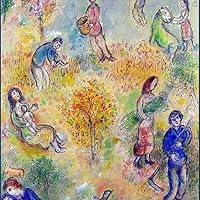
I bought this book at a used book store on a lark, on the basis of its historical setting (the Spanish Civil War of the 1930s and the doomed Republican struggle for democracy and against fascism) and its cover photograph. I really wanted to like it.
It is not a good book. As a mystery, it is dull and not intriguing. As historical fiction, it disappoints--the characters don't sufficiently feel of their time and place. As a story, it fails--the magical resolution of the storylines in the last few pages of a couple of the less major characters feels forced. And the fleeting romance is both implausible and an inexplicable blip in the plot that just disappears.
But its principal, ineluctable failure is that anyone with even a passing acquaintance with the Spanish Civil War cannot but loathe the protagonist. Serious spoiler alert: He is a Falangist/fascist who spontaneously executes a "Red" in cold blood for no defensible reason in the first few pages of the book. After that moment, I could never take him seriously as the protagonist, and the author did almost nothing to plausibly redeem him.
There are books where the protagonist is intentionally, in whole or in part, unsympathetic--think "Lolita" or "The Catcher in the Rye" or "A Confederacy of Dunces." This is not such a novel. Rather, it's that the author both lacks the skill to realistically characterize her hero and fails to appreciate the historical weight of the conflict in which she situates him. The fall of the Spanish Republic meant 40 years of Franco's brutal fascist dictatorship in Spain. I just can't get beyond that.
Normally I enjoy writing burn reviews of books I dislike. I can't even bring myself to try to do that here. I'm just aghast.
Pawel set herself a difficult task: to make a sergeant in Franco's guardia civil an honorable sympathetic character. She succeeds as well as possible, I suppose, but even so, in his devotion to the Fascist cause, he has no problem killing a suspect (who turns out not to be guilty) in cold blood and is party to torture even if he rarely commits the outrages himself. He tries to make amends for his mistakes, but still views all Republicans as godless monstrous "reds" and apparently sees no moral failing in participating in a rebellion against a lawfully elected government. The story/plot is quickly moving and involving and the characters are three-dimension. An interesting comparison would be to Javier Cercas's El Monarca de las Sombras, labeled a novel but seeming to be memoir. An uncle of the narrator (who is at least a version of Cercas) was killed young, about 20, in the civil war in Franco's forces, and Cercas, not at all sympathetic to Franco, comes to realize how young, inexperienced, small-town people like his uncle could have been honorable people even though fighting for something Cercas finds repugnant.
WOW. A perfect mystery set in Spain just after their Civil War ended and Franco's regime is cleaning up the country of the Republicans (aka the Communists). Having read a bit about that war's brutality, the book rings very true. The story is very well crafted, mixing a real murder mystery with the realities of the general devastation: fear, hunger, resistance, black market... Can't recommend enough.
It is a murder mystery set in Spain just after the conclusion of the civil war. So who killed the Guardia Civil? The main character, Sergeant Carlos Tejada, thinks he knows and immediately executes the person. Then he gradually realizes (as the reader already knows) that he is wrong. How he deals with that is the core of the novel.
Two things make this book stand out. First is the landscape. You feel Madrid in the book, with the fear, pain, and uncertainty. She teases out the shortages of basic goods along with the black market availability for those with the right kind of money (i.e. not Republican). She lays out the hatred the two sides had for each other--really, even more than hatred there was just disdain. She also brings out how everyone is careful what they say and what emotions they allow to show, even with supposed allies.
Second is the character complexity. Through Tejada you feel the ideology of the Spanish civil war. He is absolutely cold-blooded about Republicans or indeed anyone who is not entirely with Franco and the Nationalist cause. Some of the most interesting parts of the novel are his encounters with people with different ideological perspectives, and how he feels about them. He even has to find ways to rationalize why he helps some people and not others.
I add this to my collection of political mysteries for a class I will teach someday. Exactly when, I have no idea.
So . . . I only thought this book was okay. It was David's contribution to the Book Club White Elephant, so I thought it would be weird. (And have a protagonist who was selfish and existentialish.) But instead it was a pretty straightforward kind of mystery that takes place immediately following the Spanish Civil War. (Or maybe during it technically, I do not know.) And I don't know much about the Spanish Civil War, so that part was neat. But aside from that, none of the characters felt real to me, they all felt like . . . characters. I dunno. Sorry, David.
I don't often give five stars and when I do I don't know what to say. It just seems much easier to criticize than to praise. Praise sounds like gushing, like fluff, I liked this ...I liked that, while criticism sounds well learned, wise, like you've been around the block, you perceived the flaws, you've read better ...so I don't know what to say, other than,
The history. I have read my fare share of fiction and nonfiction set during or around World War II, but all of it thus far has been focused on Germany, France, England, the U.S., Japan and Poland. This was my first foray into a circa World War II novel that was set in Francoist Spain immediately following the Spanish Civil War. It was so interesting to learn more about the nature of the Spanish Civil War conflict by getting to know characters who were regular citizens and essentially pawns within this larger historical shift. It’s obvious, given the near-fascist nature of Franco’s supporters, that the reader is more drawn to feel for the anti-Francoist secondary characters Gonzalo, Carmen, Aleja and Elena, suffering with them through hunger, fear and despair. The author does a really skillful job, however, at also humanizing the pro-Franco characters in the book, like sergeant Tejada and the other members of the Guardia Civil, who show moments of reflection on their beliefs that demonstrate they’re in some ways just as trapped within the currents of history as their counterparts.
The flawed primary character. The main character in this crime mystery is a member of the Guardia Civil, which still exists in Spain and is the oldest law enforcement agency in the country. After the Spanish Civil War, the Guardia Civil came under the control of Franco’s government, and therefore its members were all picked from loyalists to the his regime. Our ‘hero’, Carlos Tejada Alonso y Leon, is a sergeant in the Guardia Civil and fought on Franco’s side during the civil war. Often, in detective novels like these, the investigator at the center of the novel is depicted as having rigid morals and superhuman sleuthing skills, which in my opinion caricatures and dehumanizes them. Tejada, on the other hand, is not only starting off his relationship with the reader on the moral low ground (being a Francoist), but also makes one mistake after the other in his investigation. I loved that he was a fully developed and humanly flawed person who the reader can see morph during the narrative, with the promise that his character progression may continue in the next 3 installments of the series.
The writing. Another drawback that often makes me avoid classic detective novels like this one is that often the quality of the writing takes a back seat to the action or suspense of the plot. It was actually the reverse in this novel. The plot, to be honest, is far from elaborate, and for the most part the reader will not be hugely surprised by plot twists. The writing, on the other hand, is at the level of really good literary fiction. Pawel knows how to construct a beautiful descriptive sentence, whether what she’s describing is a plaza in Madrid, the feelings of a character experiencing a trauma (see the quote included in the cover image for this post), or a spectacle of brutal violence. The fact that the writing was excellent, that there was plenty of character development in the novel, and that I was experiencing a part of history through a fictional lens that I never had before, made me more than satisfied with the somewhat simplistic plot.
What I Didn’t Like
I wanted even more history. As I mentioned above, Pawel has her readers experience the history in which this novel is set through the eyes and actions of her characters. Because all her characters are regular people, caught within this historical maelstrom, Pawel barely touches on the broader ideologies and historical events that surround the narrative. While the reader learns about the famine experienced by regular people in Spain during this time, the curfews, the casual violence and the discrimination, there could have been more about the Civil War as a whole to set the scene for the characters’ lives. I think other authors I’ve read have done a better job of not only covering the mundane and personal to their characters but also delving into that broader backdrop throughout their novels to give their readers a stronger footing from which to experience the narrative.
Final Verdict
Thoroughly enjoyable crime mystery through which you’ll learn about the Spanish Civil War and Francoist Spain, that will keep you wondering about what sergeant Tejada will get up to in the next novel.
A diverting read, though seems to understate the horrors of the Spanish civil war.
Rebecca Pawel introduces us to Sergeant Carlos Tejada Alonso y Leon, one of Spain’s Guardia Civil (the military institution responsible for civilian policing). Death of a Nationalist (2003) is the first of four Sergeant Tejada novels and follows on the heels of Philip Kerr’s 1930s Berlin noir series, launched a little over a decade earlier. Like Kerr, Pawel’s protagonist is an investigator working within a fascist regime, in this case Franco’s Spain rather than Hitler’s Germany.
The novel opens at the end of the Spanish civil war with the Guardia restoring order in Madrid, a process that involves rounding up leftist sympathizers and shipping them off to prison and interrogation. Sergeant Tejada is called to investigate the murder of a fellow member of the Guardia. Suspicion immediately falls on the communists, who are still carrying out sporadic attacks on Franco’s forces. After an initial blunder, Tejada starts to suspect that the murder may be less straightforward, possibly linked to the black market in army rations.
The writing is appropriately suspenseful, producing an absorbing page turner. Pawel’s novel also appears well-researched, with a postscript acknowledging information gained from web-based oral histories of the period. This is reflected in rich period detail such as the bomb damage on Madrid’s streets and the malnutrition of the population.
That said, the psychological trauma of years of fratricidal slaughter does not come alive on the pages. Indeed, Pawel seems ready for her characters to shrug off the psychic burdens of the war. After just a few short conversations, an attractive leftist woman schoolteacher finds herself in the arms of Nationalist Sergeant Tejada exchanging a passionate kiss. Since the same schoolteacher was nearly raped by Nationalist troops earlier the same evening, her passion for Tejada is doubly strange.
As a comparison, how much credibility would American readers give to a novel in which a Southern Belle falls for one of Sherman’s troops as his army burned its way through the South? (Since Death of a Nationalist has been translated into Spanish, it is disappointing that we don’t have more reviews from Spanish readers that would indicate whether they think the plotting is plausible.)
Those unfamiliar with the factions involved in Spain’s civil war may also find the different groupings confusing: the Falangists, the Royalists/Carlists, Republicans, Nationalists, reds/Communists, etc. It would have been helpful to work in a little more background description of the warring parties to clarify the novel’s plot.
Overall, a fine beach read but far from great literature.
Set in Madrid of 1939, just after the end of the Spanish Civil War, this intriguing crime book hinges on the politics of the place and time. Franco and his nationalist/fascist army and place are in power and busy hunting down remnants of the republican and communist resistance. Spain's cities are scarred by bullet and shell holes, food is exceedingly scarce, and reprisals and disappearances are the order of the day. To the greatly feared Guardia Civil falls the task of maintaining law and order, so when one of their own is shot in the street, a ruthless investigation led by the slain officer's former partner moves swiftly to identify the communist responsible for the assassination.
The investigator is Sgt. Tejada, a respected grizzled veteran who increasingly questions the official party line as he gets accustomed to life after the Civil War. A compelling character, he soon finds himself tangled in a complicated case involving the black market which may or may not be linked to his friend's murder. (French crime writer Didier Daeninckx employed a somewhat similar plot in his 1995 book, A Very Profitable War, set in Paris just after WWII). Meanwhile, a wounded republican must evade capture by the Guardia and mete out his own revenge. The two men's stories both revolve around vengeance, redemption, and hope-seen from opposite ends of the spectrum. Pawel manages to do this without creating a hero and villain dynamic-both are sympathetic, and both are flawed.
Ultimately, the book is rather grim and unsparing, and thus true to the nature of civil war. It's a very good debut, although readers without some previous knowledge of the Spanish Civil War may not get as much from it. If the setting is of interest, check out Alan Furst's spy novel, Night Soldiers, which is set partly in the middle of the Spanish Civil War, and Vittorio Giardino's graphic spy novel No Parasan!, which vividly captures battle-scared Barcelona of the era.
It’s 1939 and the Spanish Civil War, the bloody dress rehearsal for World War II, is coming to an end with Generalissimo Franco’s Fascists victorious. The Guardia Civil, Spain’s national police force, is still on the lookout for former Republican fighters or Reds, as they call them. Near the beginning of the novel, our protagonist, Guardia Sergeant Carlos Tejada, shocked me with a brutal summary execution in the war torn rubble of Madrid. I’m not used to the main character committing war crimes. But, after Tejada discovers his victim was innocent of killing his old friend and fellow Guardia officer, who’s body he finds her by, he begins a gradual shift in his right wing upbringing and politics. He still hates communism and is a devout Catholic, but he starts seeing the humanity of his victim’s family. Plus, a growing attraction to a Republican school teacher is heart wrenching for both as they struggle with their intrenched beliefs. The other unusual aspect of this story is it becomes a circular whodunit. Tejada searches for the real killer of his friend and his victim’s lover searches for who in the Guardia killed her. I know there’s several more Sergeant Tejada books in which I would love to see if his evolution continues.
Set in Madrid at the end of the Spanish Civil War, Pawel paints a moving picture of the living conditions in the city. The depth of the enmity between the Nationalists and Republicans - who are universally labelled Reds - is expressed through her protagonist, Sergeant Carlos Tejada of the Guardia Civil. He readily expresses his bias by immediately committing a murder, shooting a Red-Republican sniper who'd had killed his friend . Rationalized as an execution, Tejada is bothered by doubts, not of the moral kind, but that he'd made a mistake, someone else had shot his friend. If he wanted to know the truth, he had to look further.
Tejada, though educated and intelligent, is a bumbling if dogged investigator, and not a likeable character who is at ease with beating prisoners and summary executions. He makes assumptions based on his socio-political leanings which are slowly challenged and undermined as the story proceeds. Cracks appear in his world-view by the end of the novel, and it may be of interest where Pawel takes him in subsequent novels.
A very fine first novel, fast paced, with plenty of tension and good characterization.
Recomendado en la contraportada de Slow Horses y con el recuerdo del buen sabor de boca que me dejó Winter in Madrid me atrajo este policiaco con un Guardia Civil de protagonista en la inmediata postguerra madrileña. Aunque la descripción de la época y el lugar no tiene reparos (salvo una escena en la antigua catedral de San Isidro que veo difícil porque la habían quemado y la reconstrucción fue muy larga) la investigación es simplona, el caso poco interesante y el investigador principal bastante poco atractivo para el lector. A pesar de que inicia una saga con el sargento Tejada como protagonista, el antagonista, Gonzalo, roba el foco en la mayor parte del libro y su improbable huida destroza la suspensión de la incredulidad del lector. No está mal pero el resto de los libros van a tener que esperar a épocas con menos libros interesantes en la pila.
I gradually got pulled in by this book. The story takes place in Spain where the civil war has just ended. The war is apparent in everything: bombed buildings, hunger, unemployment, distrust and anxiety. Obviously those who lost the war are having the hardest time. The story is told from the perspective of a Guardia civil - on the winning side of the civil war, and the other from the perspective of a communist who fought against franco in the war. He is on the run and would be executed if found. There is a lot of atmosphere in the story and the plot is interesting. The unfolding of the plot felt rushed, and the end not very believable. Unfortunately, the characters and their actions were not at all times very credible for me: in particular I had difficulty following the moral code of the fascist protagonist, which just didn't make sense to me in the context of him being a fascist. I did like the fact that the protagonist realizes that the investigation he is running is of poor quality that its course is dictated by luck - bad luck or good luck, depending on the perspective. So, some good points, and some not so good. A solid three stars.
Death of a Nationalist is set in Madrid just after the Spanish Civil War. Carlosizes Tejada, a Guardian Civil mistakenly kills an innocent woman whom he thinks is responsible for his friend’s death. He soon realizes his mistake and then pursues truth which takes him in multiple, unexpected directions. This book vividly shows the hardships left behind after the civil war and the conflicting ideologies as the two sides must interact to solve this murder. Though the unveiling story was interesting and I wanted to know how the story unfolded, my ignorance of Spanish history and politics kept me from totally investing in this intrigue. If you are a true history buff and love politics, I think you would enjoy this book.
What a very interesting book! I know very little about the Spanish Civil War, which made the story line a bit hard to follow, but this book is well worth the extra effort. The characters are all wonderfully flawed: doctrinaire Sgt. Tejada, obsequious Cpl. Jimenez, bureaucratic Lt. Ramos, despairing Carmen and selfishly single-minded Gonzalo. Elena and Aleja are the only two characters I liked, but I found all of them fascinating. The plot and the setting are wonderful, but the characters are the book's strongest point. The history of the Spanish Civil War is incredibly cruel, and I wonder how Gonzalo would react to the McCarthy era's persecution of Communist just a few years after the end of WWII.