The book starts with biographical pieces and reprints from different works of the past. Split up by decades (50s, 60s, 70s, 80s, and the early 90s), this was a good sampling of Thompson's works and came with original commentary. There were several original pieces and delivered on Thompson's gonzo style rhetoric. All in all, a decent addition to the Hunter S. Thompson collection with a good amount of material from the 1980s. The Pulitzer divorce trial, to capers of pig heads, and opinions offered on the Reagan/Bush I regimes. At the end of the book, Thompson finds himself in a first-person role not of his choosing when felonies are thrown at him by an ever right-leaning American justice system. If you're an HST fan, you must add this to your list. And again, he at times seems a bit prophetic in times to come.
"The servant problem is the Achilles' heel of the rich. The only solution is robots, but we are still a generation or so away from that, and in the meantime it is just about impossible to hire a maid who is smart enough to make a bed but too dumb to wonder why it is full of naked people every morning. The gardener will not be comfortable with the sight of rope ladders hanging from the master-bedroom windows when he mows the lawn at noon, and any chauffer with the brains to work a stick shift on a Rolls will also understand what's happening when you send him across the bridge to a goat farm in Loxahatchee for a paid of mature billies and a pound of animal stimulant...
...Look at the servants. They have warts and fat ankles. Their children are too dumb to learn and to mean to live, and there is no sense of family continuity. There is a lot more to breeding than teaching children good table manners, and a lot more to being rich than just spending money and wearing alligator shirts. The real difference between the Rich and the Others is not just that "they have more money," as Hemingway noted, but that money is not a governing factor in their lives, as it is with people who work for a living. The truly rich are born free, like dolphins; they will never feel hungry, and their credit will never be questioned. Their daughters will be debutantes and their sons will go to prep schools, and if cousins are junkies and lesbians, so what? The breeding of humans is still an imperfect art, even with all the advantages.
Where are the Aryan thoroughbred that Hitler bred so carefully in the early days of the Third Reich? Where are the best and brightest children of Bel Air and Palm Beach?
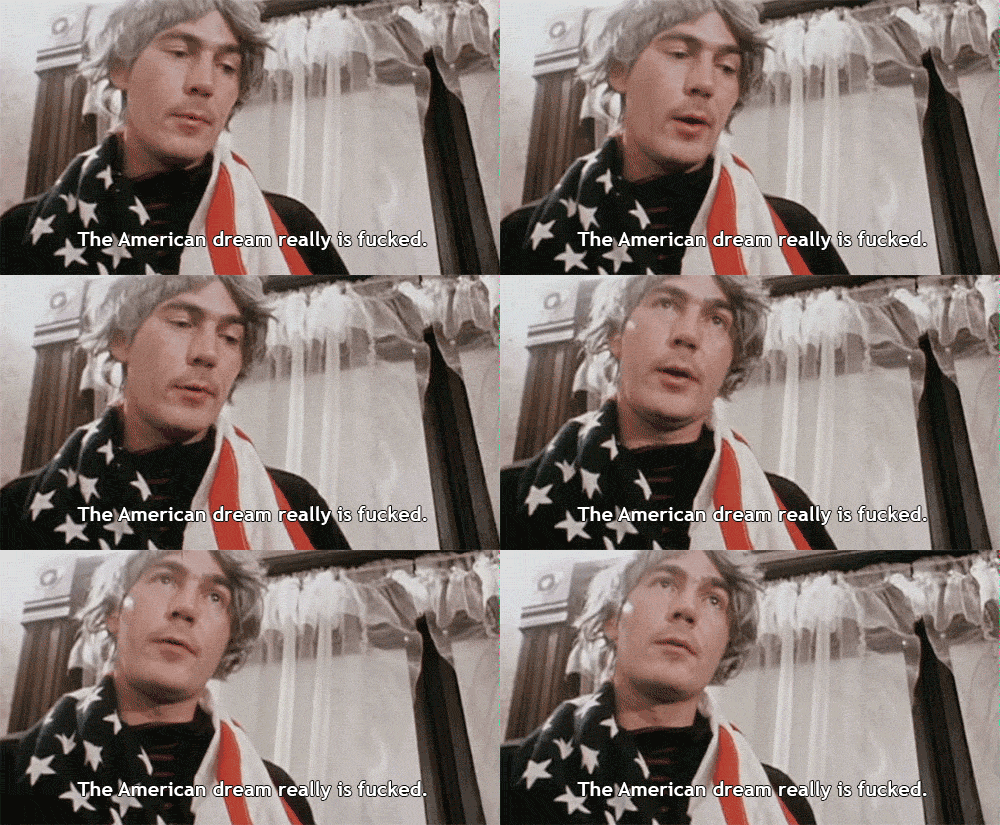
These are awkward questions in some circles, and the answers can be disturbing. Why do the finest flowers of the American Dream so often turn up in asylums, divorce courts, and other gray hallways of the living doomed? What is it about being born free and rich beyond worry that makes people crazy?"
4/5