Jump to ratings and reviews
Rate this book

The Pole

Rate this book
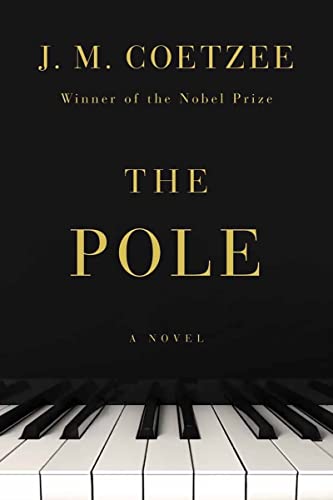
A psychologically probing, compulsively readable novel about dogged love and the unpredictability of human relationships―from the Nobel Prize–winning author of Disgrace . Exacting yet maddeningly unpredictable, J. M. Coetzee’s The Pole tells the story of Wittold Walccyzkiecz, a vigorous, “extravagantly white-haired” Polish pianist who becomes infatuated with Beatriz, a stylish patron of the arts, after she helps organize his Barcelona concert. Although Beatriz, a married woman, is initially unimpressed by Wittold, she soon finds herself pursued and ineluctably swept into the world of the journeyman performer. As he sends her letters, extends countless invitations to travel, and even visits her husband’s summer home in Mallorca, their unlikely relationship blossoms, though, it seems, only on her terms. The power struggle between them intensifies― Is it Beatriz who limits their passion by controlling her emotions? Or is it Wittold, trying to force into life his dream of love? Evocative of Joyce’s “The Dead,” The Pole is a haunting work, evoking the “inexhaustible palette of sensations, from blind love to compassion” ( El País ) typical of Coetzee’s finest novels.

166 pages, Hardcover

First published September 19, 2023

221 people are currently reading
7882 people want to read

About the author

J.M. Coetzee

184 books5,265 followers
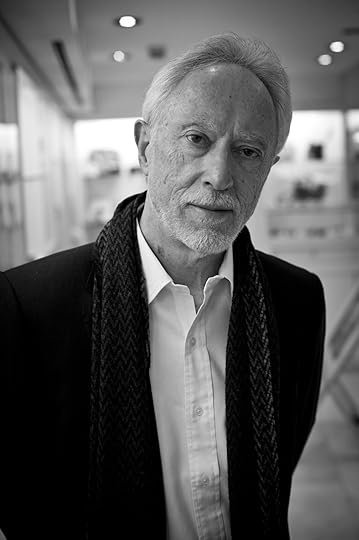
J. M. Coetzee is a South African writer, essayist, and translator, widely regarded as one of the most influential authors of contemporary literature. His works, often characterized by their austere prose and profound moral and philosophical depth, explore themes of colonialism, identity, power, and human suffering. Born and raised in South Africa, he later became an Australian citizen and has lived in Adelaide since 2002.
Coetzee’s breakthrough novel, Waiting for the Barbarians (1980), established him as a major literary voice, while Life & Times of Michael K (1983) won him the first of his two Booker Prizes. His best-known work, Disgrace (1999), a stark and unsettling examination of post-apartheid South Africa, secured his second Booker Prize, making him the first author to win the award twice. His other notable novels include Foe, Age of Iron, The Master of Petersburg, Elizabeth Costello, and The Childhood of Jesus, many of which incorporate allegorical and metafictional elements.
Beyond fiction, Coetzee has written numerous essays and literary critiques, contributing significantly to discussions on literature, ethics, and history. His autobiographical trilogy—Boyhood, Youth, and Summertime—blends memoir with fiction, offering a fragmented yet insightful reflection on his own life. His literary achievements were recognized with the Nobel Prize in Literature in 2003.
A deeply private individual, Coetzee avoids public life and rarely gives interviews, preferring to let his work speak for itself.

Ratings & Reviews

What do you think?
Rate this book

Friends & Following

Create a free account to discover what your friends think of this book!

Community Reviews

5 stars
965 (17%)
4 stars
2,261 (41%)
3 stars
1,695 (31%)
2 stars
446 (8%)
1 star
92 (1%)
Displaying 1 - 30 of 830 reviews
Profile Image for Ilse.
551 reviews4,434 followers
August 30, 2025
The yearning for what is beyond our reach

Is love a state of mind, a state of being, a phenomenon, a congeniality that disappears right before our eyes into the past, into the backwaters of history?. Love is what Beatriz, the female protagonist in Coetzee’s new novel The Pole wonders about.

Whatever might be the answer, is there is anything else but love that we never seem to tire talking or reading about? It seems only right that Coetzee in his eighties doesn’t waste time and choses to thematise and explore what feels essential to existence, the mysteries of love and connection.

Beatriz, a banker’s wife in her late forties who is wrapped up in a withered marriage and charity works, becomes the object of veneration - almost obsession - of the Polish pianist Witold Walczykiewicz who she is expected to entertain as a host before and after the piano recital her circle organises in Barcelona. He is seventy-two, tall, extravagantly white-haired, massive, once famous as a Chopin interpreter. She isn’t particularly charmed by his measured, unsentimental interpretation of the preludes of Chopin – she prefers the warmer, epic view of Chopin by Claudio Arrau and misses the feeling of rapture she has come to expect of Chopin- nor is she much impressed by Witold’s personality or appearance. Nevertheless she grows intrigued when he seeks to stay in contact with her. One thing leads to another and an uncommon relationship unfolds between them, riddled by questions and doubts and with even a joint stay in Mallorca – another one of the many echoes to Chopin (and George Sand).


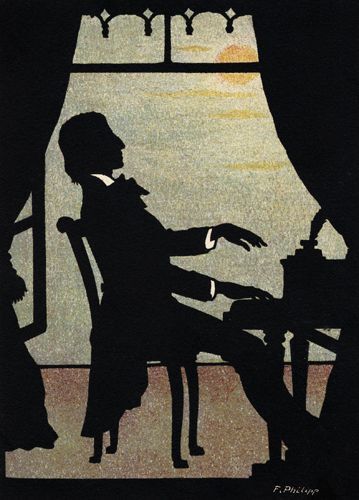
(silhouette of Chopin by F. Phillip)

Coetzee focusses mostly on the feelings and thoughts of Beatriz who seems to determine the terms and conditions of the relationship – at least at first sight. She seems common sense impersonated, wondering why her thoughts keep turning to the Pole and reflecting on her own motifs and what she can possibly mean to him – unlike his views on Chopin’s music, a sturdy, taciturn dreamer.

What follows isn’t a romantic tale on infatuation or late in life passion, nor a run-of-the-mill story on adultery. Witold ascribes Beatriz a more lofty role, reminiscent of Dante’s Beatrice (‘Do you remember the poet Dante Alighieri? His Beatrice never gave him a single word and he spent his life loving her’). Does she agree? Is she just a muse to him? Coetzee doesn’t suggest any communion of souls, nor touches on the power of art and music to bring people together. Both are writing their own story. Coetzee explores the relationship between Beatriz and Witold to gauge the human condition and deficiency. Because they don’t speak each other’s language and can only communicate in a shared foreign tongue, Beatriz is permanently aware of the risk of possibly misunderstanding each other, of not reading each other correctly – the need of translation turns both into a leitmotif and metaphor for human communication which is inevitably flawed.

Oscillating between passion and rationality Coetzee’s pared-down, subtle tale conveys masterfully a universal, timeless longing for beauty and grace.

Our beloved remains as unreachable and unfathomable and unknowable as we are to ourselves.
(**** ½)
Profile Image for Gaurav Sagar.
203 reviews1,706 followers
September 12, 2025

How could we justify art? We have written numerous books over the years though the same book might have been written again and again. We have created countless pieces of arts- be it music or other forms, and all those chords may be striking the same notes over the years. What keeps us inspiring us to create art, the purpose of the art has anything to do with our innate human nature, it tells something about humanity in its essence. One of the tantalizing possibilities may be that art is about expression of human emotions such as love, affinity, grief or sadness, and all these feelings define our existence; so, it may be possible that art deals with human existence.


A man, perhaps at the end of his career, old enough to not to be fit in our criterion of vigorous and attractive personality, finds an accidental opportunity to come across a woman, itinerant entertainer, of mid forties while visiting Barcelona for a concert, for he plays piano- an interpreter of Chopin though an unusual one since there is nothing usual about his life. A strange prose, that is distilled over the years due to assiduity of the author and is devoid of excesses, with a silken touch captures aesthetically what follows between the two protagonists. The man belongs to the world of music which has an ability to transport you to the realm beyond our earthly abode though he himself lacks it, perhaps too sentimental while the woman, maintains a restrained, practical approach, for she is well aware of the trade-offs associated with an affair, no matter how passionate it would be. The prose is written with a strange introduction of sections which are sequentially numbered as if it some sort of diary, the reader would realize only in the last chapter that it is being infused to mak the reader aware of the very act of its creation.


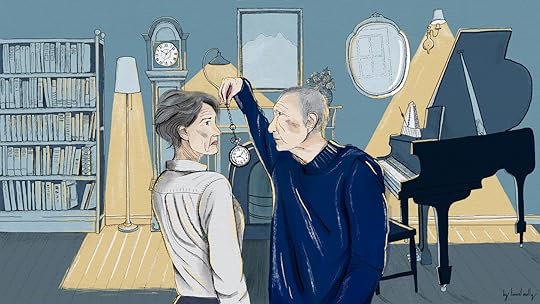
link: source


The story gradually reveals the secrets of the lives of the protagonists so as to enact the very process of familiarization, whose future may have contrasting things in its womb, for it may be love or tragedy or could it be both. What starts as an infatuation struggles due to the limitation of languages, for both protagonists speak different languages and perhaps belong to different world altogether since the rift of language proves unsurpassable at times. It brings to our notice the famous dilemma of language and culture; it is often presumed that language is just about communicating ourselves, but our linguistic expeditions have time and again revealed that language can’t be assimilated without considering the cultural aspect. Although love is known to travel beyond the barrier of languages, our man, Witold gently surrenders himself to our lady, Beatriz, but perhaps his emotions are lost somewhere in the translation, for Beatriz maintains a relatively subdued, unassuming and reasoned attitude though at times she keeps questioning her actions and motifs. A strange relationship develops out of this flux which is as complex as human emotions are and has a variegated kaleidoscope of various shades of emotions.


It becomes almost impossible for Witold to control himself, as if he does not have any command over his emotions, even when the expected response from Beatriz does not come his way as one loves without giving a thought about its reciprocation (it inevitably reminds me of Alien Hearts by Guy De Maupassant), perhaps that’s how we humans are – slaves to our desires and emotions. Man could love someone by expressing himself through words even if there is no one to read, for the art originates from such an embodiment of love would stand as an epitome of love. The question arises here is that does it qualify for love, or it is just the infatuation or perhaps a lifelong mourning wherein an enterprise for the lifetime is being taken to resurrect love that is never firmly founded by metamorphosizing our allusive object of love. One may rise (is it out of love or pity) from the dungeons of indifference to understand that art originated out of love, to look for its motives in a hope to find the hint of the unrequited love; perhaps the whole expedition is to give essence one’s own life which has been traversing the lines of obscurity, as if that art becomes the existential need on which one’s entire existence is founded. The innate desire of humanity to seek validation from others perhaps rises above the various probable possibilities.


link: source


Our memory behaves in a strange way, for we struggle to ascend it to immortality by keeping our past lives however, its natural tendency is to keep forgetting and thereby depositing our memories to the oblivion of obscurity as we keep erasing and rewriting our memory by transforming our older reminiscences to myth. Do we behave similarly with love too, for we keep memories associated with it alive, saving from the ravages of time, by embodying them to something which may exist even after our life and therefore may act as immortal symbols of our unrequited love. The context of memory reminds me of A Heart So White by Javier Marias, which I read recently. The question here arises is that are all our actions in the disguise of love essentially the games we play in the pretext of basic human need to connect and affirmation.


J.M. Coetzee pens down a fascinating tussle between sentiment and reason based upon the theme of austerity here, wherein a restrained approach has been followed by not allowing characters to show their emotions fully under the pretext of inability of language. The story amply showcases how our emotions lies at the centre of our existence through the backdrop of Dante and Beatrice, for we may be Dante to someone and Beatrice for someone else.


link: source
Profile Image for Taufiq Yves.
509 reviews319 followers
March 27, 2025
The Pole is told from the perspective of Beatriz, a well-to-do, educated Spanish woman in her late 40s. She enjoys a seemingly perfect life, complete with a stable marriage, a passion for music, and a penchant for philanthropy. While she once believed in the power of love, she has grown more pragmatic with age, learning to look at things realistically.

A chance encounter with a 70-year-old Polish pianist, Wittold Walccyzkiecz, disrupts her tranquil life. Renowned for his restrained and rational interpretations of Chopin, the pianist is the antithesis of Beatriz's more emotional approach to music. Their initial interactions are hindered by a language barrier. For Beatriz, this is merely a brief interlude in her otherwise peaceful existence. However, when the pianist expresses his love for her in an email, she is more perplexed than moved.

Coetzee portrays Beatriz as exceptionally clear-headed and emotionally distant. She embodies the spirit of our times: distrustful of unmotivated love and accustomed to controlling her emotions. When confronted with an unexpected desire, she politely declines and even discusses it nonchalantly with her husband. She seems capable of dismissing love at will, yet she can't help but wonder: ”When someone says they love me, what do they really want from me?"

Beatriz meticulously plans a vacation, inviting the pianist to her husband's childhood villa. She even manages to maintain control over their intimate moments, which Coetzee describes with clinical precision, as if they were a scientific experiment. Beatriz appears to be observing herself, analyzing how this deviation from her usual life affects her and those around her.

Yet, nothing changes. She dismisses the pianist, ignores his letters, and continues with her life. It's only after his death, when his daughter contacts her about a box he left for her, that I realize Beatriz's narrative is unreliable. She visits Poland, spends the night in his home, and even hires a translator to decipher his final poem. Her curiosity seems more complex than she lets on.

Those who have never experienced all-consuming love can never truly understand it. Beatriz's encounter with the pianist's one-sided love is like visiting a historical site: a place where people once built their lives, their loves, their beliefs. And yet, she remains detached, as if observing a distant civilization.

I completely understand Beatriz. For years, I've avoided romantic literature because I no longer seeking for it. Even the pianist's declaration, "I want to spend my whole life with you. A week? A day? Even a minute. A minute would be enough. I will engrave you in my memory," fails to move me. It's as if I’ve become immune to such sentiments.

I no longer believe in the idea of being engraved in someone's memory. For me, forgetting is the only antidote. Phrases like "everything passes," "time heals all wounds," "love is an illusion," and "only desires and needs are eternal" have become daily mantras.

Coetzee is known for his use of symbolism. In this novel, Dante, Chopin, and Poland are all significant symbols. However, these symbols seem less important than the novel's opening line: At first, it was the woman who caused him trouble, and then, very soon, it was the man."

Who is this "he"? Perhaps it's Coetzee himself, or perhaps it's some of us, the readers. Initially, we are troubled by the cold rationality of characters like Beatriz. But when we encounter the passionate, irrational love of the pianist, we become fearful of being consumed by such emotions.

In the end, I choose rationality over passion. I tread carefully around the ruins of romanticism, leaving behind a token of remembrance.

The novel explores themes of love, loss, aging, and the clash between reason and emotion. Beatriz serves as a representative of modern society, where emotional detachment and pragmatism often prevail over passion and idealism. The Polish pianist, on the other hand, embodies a more romantic, idealistic view of love.

Coetzee uses the contrast between these two characters to examine the complexities of human relationships and the impact of societal changes on our understanding of love. The novel also raises questions about the nature of identity, memory, and the meaning of life. It was just an OK read for me.

2.6 / 5 stars
Profile Image for Candi.
707 reviews5,513 followers
October 2, 2023
“You were in love with me—I have no doubt about that—and love is by nature extravagant.”

Someone once told me that in a relationship one person is always going to love more than he or she receives in return. One partner might even worship the other. That makes sense to me. What I have more trouble understanding is a relationship in which one person does all the giving and expects very little to nothing in return. I mean to say, I don’t doubt that this can occur, but I just can’t believe that this could be rewarding. And I don’t mean simply when love is denied. I mean an actual relationship where one partner treats the other’s love, his or her passion, with scorn. That’s what I ultimately took away from this little novel. I know that Coetzee meant much more than that, but perhaps Coetzee and I just don’t quite see eye to eye (this isn’t the first time!). I can never feel for his characters for some reason. If I could feel for them even the slightest bit, I’d likely fall for just about any message he feeds me.

“She believes, on the whole, in first impressions, when the heart delivers its verdict, either reaching out to the stranger or recoiling from him. Her heart did not reach out to the Pole when she saw him stride onto the platform, toss back his mane, and address the keyboard.”

The Pole is a seventy year old concert pianist made famous for his controversial interpretation of Chopin’s work. Beatriz is twenty-four years his junior and rather unhappily married. The Pole falls for Beatriz. He falls hard and fast. She doesn’t reciprocate but is intrigued by what she considers to be a bit of nonsense. Despite herself, she can’t help but reflect on the nature of this “relationship”, about how such a man can be content with simply worshiping her as he does with that little to nothing in return which I mentioned above. He would be content to love this woman even for the briefest moment in time. So I began to reflect myself. Perhaps this was an older man’s wish - to have one last “love”.

“For just a day even. For just a minute. A minute is enough. What is time? Time is nothing. We have our memory. In memory there is no time. I will hold you in my memory. And you, maybe you will remember me too.”

I don’t know, on a sentence level I really admire Coetzee’s writing. But I fail to feel any sort of warmth in his prose. And I guess that is something I look for in a story like this. I don’t need it to be romantic or sentimental (Coetzee would refuse to be labeled as such, I’m certain), but I need something to bring me over to his side so I can nod my head and say, Yes, I completely understand! While I fell for the Pole, I still don’t quite get Beatriz. But maybe I’m not supposed to.

As an aside, the blurb for Coetzee’s novel states it is “evocative of Joyce’s ‘The Dead’.” Go read that short story if you want to learn what really grabbed my heart.

“Is love a state of mind, a state of being, a phenomenon, a fashion that recedes, even as we watch it, into the past, into the backward reaches of history?”
Profile Image for Orsodimondo.
2,457 reviews2,429 followers
October 4, 2025
LA VITA NOVA


Witold è un pianista polacco famoso per le sue esecuzioni del compatriota Chopin. Beatriz è di Barcellona e si occupa di organizzare concerti di classica per il suo circolo. È così che si conoscono: l’associazione musicale alla quale collabora Beatriz invita Witold a suonare nella capitale catalana. Dopo il concerto segue cena a quattro e il Polacco rimane folgorato da Beatriz, che invece non rimane affatto altrettanto folgorata dalla sua interpretazione al piano, fra sé ha piuttosto pensato che Witold è arido e troppo poco sentimentale per un musicista come Chopin.
E invece Witold si dimostra, e dimostrerà fino alla fine, estremamente sentimentale nei confronti della bella quarantenne catalana.


La vita nova perché è chiaro che il nome di Beatriz e l’intera vicenda – questa specie d’amore che vien voglia di definire cortese, “angelicato”, per quanto sia con scarsa base concreta, non fosse altro per l’età del Polacco, il pianista sulla copertina, che ne ha oltre settanta – il nome di Beatriz e la fragile faccenda amorosa rimandano a Dante.
Ma avrei potuto usare come titolo al mio commento anche Lost in translation, perché la spagnola Beatriz (catalana) e il polacco Witold dal cognome impronunciabile (troppe w e z, si dice all’inizio del romanzo), si esprimono in un inglese incerto, una terra di mezzo che nessuno dei due padroneggia alla perfezione, e in effetti per nessuno dei due è madre lingua: e come si fa a parlare d’amore in una lingua straniera che si conosce così così:
Che spettacolo comico loro due che fanno l'amore in inglese, una lingua di cui entrambi ignorano le potenzialità erotiche.


Lui si lascia rapire da lei – ma ancor più probabilmente dall’idea che si è fatto di lei – lei invece si sottrae: si sente moglie fedele, anche se da anni dorme in camere separate e suo marito non ha più rapporti sessuali con lei (li ha con altre donne, Beatriz ne è consapevole). Si sente moglie fedele in un matrimonio civile, decoroso, e non può sentirsi attratta da un uomo anziano che potrebbe essere suo padre.
Tanto più lei si sottrae, tanto più lui si lascia prendere dal castello mentale, e sentimentale, che si è costruito.
Più avanti, se Beatriz dovesse etichettare il sentimento che la spinge oltre, le fa lasciare aperta la porta della sua stanza di notte, lo chiamerebbe compassione:
Lui si è innamorato di lei e lei ne ha avuto compassione e per questo gli ha dato quello che voleva.
Lui lo chiama amore, la chiama passione. Per lei è solo un’avventura (fling)


In trasparenza si può pensare anche proprio a Chopin e alla sua storia con George Sand.
Inevitabile avvicinare l’ultima stagione del pianista polacco, artista nella sua terza età, a quella dello stesso Coetzee.
Il finale è una sorpresa che secondo me fa compiere un ulteriore salto avanti al romanzo.
Sempre chiaro e semplice e diretto, senza alcun fronzolo, nel segno della sottrazione, evitando descrizioni, trascurando il non essenziale, senza mai cercare un momento lirico, restando con i piedi ben saldi a terra, liberando la sua costante affilata ironia, questa volta Coetzee riesce, nella sua impareggiabile e specifica maniera, a essere delicato. E certo, la suddivisione in sei parti, la scrittura precisa, scandita, evocano una partitura musicale, proprio come quelle che il Polacco esegue sulla tastiera del suo strumento in modo accurato nitido e perfetto, ma senza scaldare il cuore di chi lo ascolta,


Profile Image for Helga.
1,386 reviews478 followers
October 6, 2023
4.5
To understand, you must be silent and listen. Let the music speak…

You pick up a book because you love its cover. You are not sure if you’ll like the story or not. You tell yourself, what is the worst that could happen? Good thing the book isn’t very long.
You start reading. The beginning is a bit confusing but after a while you grab the book a little tighter, your heart starts beating faster…you cannot stop reading…one more page…one more paragraph…you have to know…you have to…

Between a man and a woman, between two poles, electricity either crackles or does not crackle. So it has been since the beginning of time.

The story is about a man and a woman.
She is in her forties; intelligent, well-educated, well read, a good wife and mother.

He is a man of seventy. He is a Pole (his name is too difficult to pronounce). He is a concert pianist and a controversial interpreter of Chopin.
He is dry and severe. In the matters of soul, he is extremely opaque but at the piano he plays with all his soul.

For the lover the desired body is a soul.

The Pole is invited by a Circle that stages monthly recitals in Barcelona to perform. The woman, Beatriz is a member of the board.
And that is how they meet.

What is time? Time is nothing. We have our memory. In memory there is no time. I will hold you in my memory. And you, maybe you will remember me too.

The Pole performs his recital and leaves Spain only to write to Beatriz, confessing his love for her.

I am not a poet. I can only say, since I met you my memory is full of you…always you are with me. You protect me. I have peace inside me. I say to myself, I must find her, she is my destiny.

But she is implacable. For her who is a realist and not much of a romantic, what the Pole declares is all nonsense.

I am not the answer to the riddle of your life.

She declares most vehemently that she is not in love with him. She is only sorry for him; sorry for his being a lonely old man…but if so...but if so...
why does her mind keep going back to the Pole?

As for me, I had no luck,
came too late, lived too far away
had only her image to close my eyes on
poor fluttering little thing in the chambers of memory.
763 reviews95 followers
May 1, 2023
I once saw an extremely uncomfortable interview with Coetzee, where he was almost unable to respond for extreme fear of not finding exactly the right word.

There is something of that fear in this novel as well, which is about an older Polish pianist falling madly in love with a younger Spanish woman. The pianist, known for his stern interpretation Chopin, realises his body is no longer attractive, that he has little left to offer. The fact that he has to communicate in English doesn't help. So, how to deal with this passion he feels? He tries to console himself with fantasies of a life after death and of a higher love such as the one Dante felt for Beatrice.

But the novel is written from the perspective of the woman, Beatriz, the subject of the infatuation, who doesn't feel the same way and dislikes the Pole's ('the name has so many w's and z's that no one even tries to pronounce it') interpretation of Chopin. She is quite unpredictable which is good for the plot but I am not sure it all felt completely natural.

I enjoyed the high quality of writing and the references to Chopin and Georges Sand in Mallorca as well as to various myths. As to the theme, I was unsure at first (an older man writing about an older man falling in love with a much younger woman), but the final third convinced me. 4 stars.
Profile Image for Flo.
487 reviews527 followers
October 12, 2023
Probably the closest thing to a love story that Coetzee wrote. Even if objectively, it isn't one of his best, there is something so simple and sincere about this little book that I really enjoyed my time with it.
Profile Image for Krista.
1,469 reviews854 followers
May 10, 2023
He is a Pole, a man of seventy, a vigorous seventy, a concert pianist best known as an interpreter of Chopin, but a controversial interpreter: his Chopin is not at all Romantic but on the contrary somewhat austere, Chopin as inheritor of Bach. To that extent he is an oddity on the concert scene, odd enough to draw a small but discerning audience in Barcelona, the city to which he has been invited, the city where he will meet the graceful, soft-spoken woman.

The Pole, if I’m understanding it correctly, is all about what’s lost in translation between people: from what’s lost by an author as he attempts to translate his nebulous ideas into words on the page, to what’s lost when two strangers are forced to resort to “global English'' in a necessarily superficial effort to understand one another. And as this comes from J. M. Coetzee — a native of South Africa who does not consider English to be his mother tongue, and who has released his last two novels first in Spanish after having them translated from his English originals — there are layers of meaning and irony beyond what might appear to be a simple girl meets boy story. This is about art, and the effort to use art to transcend what can be put into words, and about the basic impossibility of any two people understanding one another at all; if I’m understanding this correctly. I loved every bit of this short novel. (Note: I read an ARC through NetGalley and passages quoted may not be in their final forms.)

Producing a concert, making sure that every thing runs smoothly, is no small feat. The burden has now fallen squarely on her. She spends the afternoon at the concert hall, chivvying the staff (their supervisor is, in her experience, dilatory), ticking off details. Is it necessary to list the details? No. But it is by her attention to detail that Beatriz will prove that she possesses the virtues of diligence and competence. By comparison, the Pole will show himself to be impractical, unenterprising. If one can conceive of virtue as a quantity, then the greater part of the Pole’s virtue is spent on his music, leaving hardly any behind for his dealings with the world; whereas Beatriz’s virtue is expended evenly in all directions.

As it opens, we meet Beatriz: not exactly beautiful, but graceful and well-built; a wealthy banker’s wife, approaching fifty, who organises events for the Concert Circle in her native Barcelona. At the last minute, Beatriz is put in charge of entertaining the visiting Maestro, whose name has “so many w’s and z’s in it that no one on the board even tries to pronounce it — they refer to him simply as ‘the Pole’”; and as she has no idea if he speaks any Spanish, or even simple English, Beatriz invites an elderly French-speaking couple along for a post-concert dinner; after all, Chopin spoke French, didn’t he? Conversation at dinner proceeds in basic English, with imperfect understanding, and although Beatriz assures the reader that she is not “chatty”, she can’t help but confront this Witold Walczykiewicz over what she thinks is his improper interpretation of Chopin, even if Witold has been widely celebrated for his “controversial” efforts. After they part, and Beatriz files the evening away as unremarkable, she will begin to receive emails from Witold in which he proclaims an undying love for her — referencing Dante and his Beatrice in the old Italian — and she then proceeds as though she doesn’t even understand her own mind: “I’ll certainly not email him back,” until she does; “I’ll certainly not go to Mallorca when he’s playing there,” until she does; “I’ll certainly not invite the Maestro to visit our family vacation home after my husband leaves,” until she does. Long after these events, after Beatriz has filed them away as ultimately unremarkable, she will come into possession of a series of poems that Witold has written for her, and as she tries to have them appropriately translated from Polish to Spanish (discovering along the way that computer programs have no sensitivity for the task), she will need to confront the fact that maybe she never really knew Witold at all.

Years later, when the episode of the Pole has receded into history, she will wonder about those early impressions. She believes, on the whole, in first impressions, when the heart delivers its verdict, either reaching out to the stranger or recoiling from him. Her heart did not reach out to the Pole when she saw him stride onto the platform, toss back his mane, and address the keyboard. Her heart’s verdict: What a poseur! What an old clown! It would take her a while to overcome that first, instinctive response, to see the Pole in his full selfhood. But what does full selfhood mean, really? Did the Pole’s full selfhood not perhaps include being a poseur, an old clown?

As for the layers of what’s lost in translation: The first chapter, in its entirety, reads 1. The woman is the first to give him trouble, followed soon afterwards by the man. And who is the “him” who is given trouble? Coetzee himself. He never lets us forget that we are reading a novel — a later passage reads: It is only a matter of chance that the story being told is not about Loreto and her man but about her, Beatriz, and her Polish admirer. Another fall of the dice and the story would be about Loreto’s submerged life. — so it’s interesting to begin with the notion that getting first the woman, and then the man, “right” had given the author some trouble. Coetzee is said to have released his most recent novels first through an Argentinian press, after having had them translated into Spanish, as an effort to combat the cultural hegemony of the English language and the Global North. For The Pole, I read (in The New Yorker ) that Coetzee even followed the advice of his Spanish translator, Mariana Dimópulos, and her suggestions for how a Spanish woman like Beatriz would actually “think, speak, and act”. So not only do we have a male author writing from a female POV about her inability to understand a foreign man’s intentions, but this male author enlists the help of his female translator to get his female character right — before she alters it all into a different language with its different shades of meaning. (I also found it nicely ironic that in a Dutch publication [netherlands.posten.com; the website won’t let me link it] — the language in which Coetzee previously had first released some novels — the English translation has the title of this novel as “The Pool”.) Beatriz and Witold not only face the barriers of sex and language, but there's a generational gap as well — the Maestro having been born in Poland at the height of WWII might explain his old-fashioned infatuation — and when Beatriz eventually travels to his apartment in Warsaw to retrieve the poems, she'll realise that she never asked him one question that challenged the way that she imagined he lived.

But this novel is about more than what’s lost in translation (or omitted) with the spoken word: Witold interprets Chopin “austerely”, which Beatriz doesn’t understand or like. We see Witold literally evoking Dante and Beatrice as a parallel for their relationship (which Beatriz does not understand or like), while in the background, we are to understand that their meeting in Mallorca metaphorically parallels events in the relationship between Chopin and George Sands. And when Beatriz attempts to get Witold’s poems translated — by a person from the university who usually deals with legal documents, and who warns that she can translate words but not a poem’s meaning — Beatriz does not understand (or like) them either. How much of this misunderstanding, through multiple art forms, is due to what is lost in translation, and how much of it simply represents how unknowable we necessarily must be to one another? This is a long review of a short book because it gave me so much to think about. Totally recommend it, rounding up to five stars for the extended experience.
Profile Image for Anna Carina.
682 reviews338 followers
March 26, 2024
Update:
Ich habe mich überzeugen lassen, dass das Buch doch mehr Inhalt liefert, als ich ihm zugestanden habe. Am Ende über die Sprache einen Raum für sich zu entdecken und darüber aus der eigenen starren Ordnung hinaus zu gelangen, lässt zu, dass ich doch eine transformierte Prozesshaftigkeit wahrnehmen kann.
Beatrize als Frieden in Bezug auf die Fügung in das System, dem Witold entgegensteht, ist ein Aspekt, den ich so nicht gesehen habe. Ihre Anmut, die ich rein optisch interpretiert habe, zieht sich durch die Art und Weise wie Witold sie systemisch sieht. Er führt offen Krieg gegen das Außen. Daher stellt Beatrize eine Harmonie für ihn her. Sie beginnt den Krieg gegen sich selbst. Den verkrusteten Panzer, langsam zu brechen.
Da ich es ohnehin sprachlich und kompositorisch gut fand, kann ich jetzt mit gutem Gewissen auf 4 Sterne aufwerten.

Hier die unveränderte 2,5 Sterne Erstbesprechung:

Ein Buch das verliert oder gewinnt, je nach dem aus welchem Blickwinkel es gelesen wird.
Meiner ist der, der symbolischen Ordnung. Wie wir Chiffren der Musik oder des gesprochenen Wortes interpretieren, decodieren und diese an unser Begrenzung, dem Unvermögen, der geistigen Unbeweglichkeit, der Ignoranz scheitern.

Witold, der Pianist, der Pole steht für das Gefühl. Er sucht Frieden. Sein Blick auf die Welt ist die Wirkung. Was erzeugt etwas. Preisschilder sind ihm egal. Bei ihm gleiten die Bedeutungen, bekommen keine feste Zuschreibung. Er spricht und denkt in offenen Begriffen, die vielfältig mit Leben gefüllt werden können. Er benötigt keine Gründe oder Gewissheitsbeweise für etwas. Sein Gefallen an Beatrize bekommt eine abstrakte Bedeutung, die sich wie in der „Vita Nova“ von Dante, in ein Erhaltendes, Einschreibendes, das über das begrenzt Irdische hinaus weiterlebt, zeigt.

Beatrize wird ihm als Negation entgegen gesetzt. Beatriz liebt Preisschilder. Sie ist besessen von ihnen. Und hier übertreibt Coetzee maßlos. Plakativ, schematisch, offensichtlich. Ich fühle mich von der Inszenierung dieser Figur veräppelt.
Diese Person, aus der Bildungsklasse stammend, die angeblich so tiefsinnige Fragen stellt, verweigert sich den einfachsten Kombinationsaufgaben. Sie ist permanent von dem was er sagt irritiert. Sie schreibt allem sofort eine Bedeutung zu, urteilt und ordnet was sie nicht versteht ihrem Ordnungssystem unter. Die Frau ist die Verweigerungshaltung der Verständigung und Verschränkung in Person.
Coetzee schreibt ihr eine aggressiv, abblockende, neurotische Haltung ein.

“Er fragt nicht nach ihrer Ehe und den damit verbundenen Erinnerungen, gute oder schlechte. Er fragt nicht, ob sie ein Foto ihres Mannes ständig bei sich hat. Er fragt nach überhaupt nichts. Echt desinteressiert.“

„»Ja? Nein? Ich kann es nicht sagen. Eine Tochter zeigt ihrem Vater nicht ihre Leidenschaften.«
Sie lässt es durchgehen. Leidenschaft: Was, glaubt er, bedeutet dieses Wort? Nackte Körper in einer Sommernacht?
All ihre Gespräche scheinen so zu sein: im Dunkeln hin und her gereichte Münzen, ohne ihren Wert zu kennen.“


Es gibt kurze, aufflackernde Momente in ihren Gedanken:
„wenn der Wille aussetzt und man, für kurze Zeit, reines Erleben ist.“

Das ist mir allerdings viel zu wenig. Ich lese dieses Buch leider äußerst destruktiv. Als Scheitern und Unvermögen des Menschen wahrhaft zu Lieben und einander zu verstehen. Keinen gemeinsamen Code zu finden.

Bücher dürfen bei mir gerne das Scheitern als Ergebnis haben. Allerdings erlebe ich die Figurenzeichnung als künstlich und reine Effekthascherei. Zudem bespielt Coetzee rein die äußere Form. Der Inhalt wird mir verweigert. Er zerschellt an der überbordenen, monolithaften Urteilsfindung Beatriz’s, bevor er überhaupt die Möglichkeit bekommt sich zu offenbaren. Das Buch funktioniert für mich nicht. Mich regt lediglich diese unsägliche, dümmliche Beatize auf. Ich möchte aber nicht, dass mich Bücher nur auf diese Weise tangieren.

Die Gedichte Witolds, die Dantes „Vita Nova“ spiegeln, spülen mir den beschämenden, unzulänglichen Status der Liebe im irdischen Leben nach oben. Da ist einer der Licht geben, Licht sein will und darf nicht. Beatrize bleibt in ihrer Dunkelheit verhaftet, einem geschlossenen Raum, der zu Witolds Raum keinen Zugang findet. Witold bohrt ein paar Löcher, ein kurzes Aufflackern und Beatrize kleistert es zu.
Das bekommt in einigen Szenen schon masochistische Züge. Der Mann, der Genuss an der Kälte und Abweisung der Dame findet und seinen alten faltigen Arsch ihrer Gnade ausliefert.
Sie hat nun mal eine so wunderschöne tiefe Stimme, eine Figur wie eine 18 jährige, gleitet mit Anmut durchs Leben. Was juckt es da, dass diese Person verletzenden Sondermüll absondert.

Hoffnung auf Liebe nur im Jenseits? Eine transzendente Sehnsucht.
Coetzee bespielt für mich die Tragik der unüberbrückbaren Kluft zwischen dem Begehren und seiner Erfüllung.

Nun ist es möglich dies auf die Ebene der Kunst und Musik zu holen. Dieses Dilemma auf das Verstehen der künstlerischen Interpretation zu beziehen. Interessiert mich aber nicht.

Eine andere Perspektive kann der Tod an sich sein. Alt, krank, gebrechlich zu werden und der verzweifelte Versuch, das eigene Leben in einer anderen Form als Erinnerung, als Wirkung auf ein noch lebendes Geschöpf zu übertragen. Der Versuch Witold’s, die tote Beatrize zu beleben, ihre Seele zu erwecken, die abgestumpft und an emotionslosen Ketten ihrer symbolischen Ordnung baumelt. Mit dieser doch sehr abstrakten Lesart lande ich wieder bei Dante, der mir mit dieser exzessiven spirituellen Symbolik zu viel abverlangt. Meine pragmatische Ratio macht da nicht mit.
Dieses Buch gewinnt für mich keinen Mehrwert es aus diesem Blickwinkel zu lesen, da mir dieser Versuch, als sinnloser Akt erscheint, der für mich bedeutungslos ist.

Kurzum, ich winde mich und komme nicht drum rum das Buch beschissen zu finden, obwohl es sprachlich und kompositorisch alles richtig macht.
Profile Image for Tony.
1,030 reviews1,912 followers
October 8, 2023
An old man in love. Foolish. And a danger to himself.

I can't remember the last time I read a book in its entirety in a single day. But there was something compulsive about this.

The Pole of the title is a pianist, celebrated in his homeland, and 72. He travels to Barcelona to play some Chopin and meets Beatriz, who serves as his guide. The Pole is smitten.

We listen to the story, though, from Beatriz' point of view, her telling. She is 50, married with grown children. The happiness in the marriage has faded, but she's not looking. She can still turn heads, is intelligent, but there's a cold, analytical veneer to her.

The Pole writes to her, invites her, confesses his love. Beatriz, in turn finds fault: his dentures, his dry skin, his age, even his interpretation of Chopin. And, yet.

Between a man and a woman, between the two poles, electricity either crackles or does not crackle. So it has been since the beginning of time. A man and a woman, not just a man, a woman. Without and there is no conjunction.

Beatriz thinks that, and thinks: Between herself and the Pole there is no and. And, yet.
Profile Image for Paula Mota.
1,662 reviews561 followers
April 13, 2024
3,5*

Ela não alinha em paixões grandiosas, desesperadas – não é do seu temperamento, evidentemente -, mas isso não quer dizer que não admire paixões grandiosas nos outros.

Tenho sentimentos muito ambivalentes em relação a “O Polaco”. Antes de mais, gostei bastante dos protagonistas individualmente, cada qual com uma personalidade marcante e as suas idiossincrasias. Juntos, porém, não fazem sentido.
Beatriz é uma espanhola a rondar os 50 anos que se dedica à beneficência…

É uma pessoa inteligente mas pouco dada à reflexão. Uma porção da sua inteligência consiste na noção de que o excesso de reflexão pode paralisar a vontade.

…e Witold é um pianista polaco na casa dos 70...

Com gravidade, o polaco pondera a palavra pianista. “Tenho sido um homem que toca piano”, diz por fim. “Como o homem que pica os bilhetes no autocarro. Ele é um homem e pica os bilhetes, mas não é o homem dos bilhetes.”

…que, numa vinda para tocar em Barcelona, se apaixona perdidamente pela sua cicerone com quem só esteve socialmente e trocou pouco mais do que palavras de circunstância. Amor à primeira vista na terceira idade?
Este livro suscita-me muitas interrogações, sendo a primeira a proveniência das personagens. J.M. Coetzee, que é sul-africano, escolheu como seus protagonistas uma mulher espanhola e um homem polaco, o que claro, suscita a dificuldade da comunicação, a procura de uma língua comum em que se consiga transmitir o básico, mas para abordar a problemática cultural e linguística, o autor devia ter-se munido de bases mais fortes. Por um lado, a Beatriz cola-lhe este pensamento que, para mim, é descabido sendo o castelhano e o português tão semelhantes:

Ela antipatiza com a língua portuguesa, com os seus sons tensos, abafados.

Por outro, Witold dedicou a sua carreira a tocar Chopin, sobre o qual a dada altura é dito:

Chopin foi sepultado em Paris, mas depois, se a memória não atraiçoa, houve uma ou outra organização patriótica que o fez exumar e transportar de volta ao país onde nascera. Um corpo diminuto, sem peso nenhum.

Tanto quanto sei, Chopin continua sepultado no cemitério de Père-Lachaise, tendo somente o seu coração sido levado para Varsóvia. Costuma dizer-se que devemos escrever sobre o que sabemos e, se Coetzee é um escritor veterano premiado com o Nobel e dois Bookers, não devia ser displicente. Ou deve o leitor ser por isso benevolente? O mesmo se aplica à estrutura. A obra encontra-se dividida em seis partes, desenvolvendo-se as primeiras cinco em entradas numeradas (de 1 a 41, de 1 a 45, etc…). Sendo uma grande entusiasta de estruturas originais e não desvendando o mecanismo desta, investiguei mas apenas encontrei comentários a dar conta do seu pós-modernismo, o que me leva a pressupor que num escritor conceituado se aceita tudo como genialidade, mesmo quando não parece acrescentar nada à narração.
Nos vários livros de J.M. Coetzee que li, fico sempre também a matutar sobre as motivações das suas personagens, e aqui não é diferente. Como pessoas não acho o seu relacionamento verosímil. Como personagens de ficção à mercê da vontade do seu criador, o excesso de amor de um e a falta de amor de outro tornam a sua aproximação patética. É uma questão de amor platónico? Beatriz e Witold como uma versão actual e bastante mais madura de Beatrice e Dante. É o contraponto do amor romântico? Chopin e George Sand a consumar o seu amor em Espanha.

“Querida senhora”, diz o polaco. “Lembra-se de Dante Aligheri, o poeta? A sua Beatrice nunca lhe disse uma palavra e ele amou-a toda a vida.”
Querida senhora!
“E é por isso que aqui estou, para ser informada de que tenciona amar-me toda a vida?”
A minha vida não é assim tão comprida”, diz o polaco.

Pobre tolo!,apetece-lhe dizer. Chegou tarde de mais, o banquete já terminou.

Acreditando ou não neste amor, há primordialmente sentimentos como a vaidade…

Eu gostaria de ter sido cortejada. Gostaria de ter sido seduzida. Gostaria de ter recebido os mesmos doces galanteios e ouvido as lisonjeiras mentiras que os homens dizem às mulheres com quem querem dormir. Porquê? Não sei e não me interessa saber. É um anseio feminino, desculpável.

…e a resignação...

Se disser que não, não para o resto da vida, só durante esta semana - pronto, também aceito isso. Mesmo só por um dia. Só por um minuto. Um minuto basta. O que é o tempo? O tempo não é nada. Temos a nossa memória. Na memória não há tempo.

…que, na realidade, são forças motoras suficientemente válidas para tornar este livro digno de ser lido.
Profile Image for Ernst.
643 reviews28 followers
July 22, 2025
Eine bittersüße Liebesgeschichte, eine Tragikomödie bei der über weite Strecken der Humor überwiegt, obwohl die Protagonisten wenig zu lachen haben. Die Begegnungen und Dialoge von Witold und Beatriz unterlaufen alle Erwartungen und wirken gerade deshalb frisch und unverbraucht. Sehr schöne Sprache, präzise authentische Figurenrede und ein ungemein feines Gespür für zwischenmenschliche, psychologische Vorgänge, ohne diese jemals plump auszubuchstabieren.
Ein großer Lesegenuss für ein paar Stunden, der mir viel Lust auf mehr des Autors macht.
Profile Image for Vesna.
239 reviews169 followers
October 1, 2023
Without allowing the Pole his chance to reply, to reveal which of the cities of the world is his favourite, she, Beatriz, cuts in. ‘Before you tell us that, Witold, can we for a moment go back to Chopin? Why does Chopin live on, do you think? Why is he so important?’

The Pole inspects her coolly. ‘Why is he important? Because he tells us about ourselves. About our desires. Which are sometimes not clear to us. That is my opinion. Which are sometimes desires for that which we cannot have. That which is beyond us.’

‘I don’t understand.’

‘You do not understand because I do not explain well in English, not in any language, even in Polish. To understand you must be silent and listen. Let the music speak, then you will understand.’


Witold, a Polish pianist, is in his late 70s, perhaps not coincidentally the same age as Coetzee, when he finally meets the love of his life in Beatriz, a Barcelona-born banker’s wife in her late 40s. It is partly a love story, or rather a novel about the mysteries of Love, both erotic and platonic, and partly a subtle narrative about language and words as barriers to our souls. And yet, this master of words succeeded to move this reader with his Pole. Heart-wrenching.

My thanks to W. W. Norton & Co. and NetGalley for an ARC.
Profile Image for Kansas.
812 reviews486 followers
November 15, 2023

https://kansasbooks.blogspot.com/2023...

"-¿Qué piensa porque Chopin sigue siendo tan importante?
El polaco la examina con frialdad
- ¿Por qué es importante? Porque nos habla de nosotros. De nuestros deseos. Que a veces no son claros para nosotros. Qué son deseos a veces por algo que no podemos tener. Eso que está más allá de nosotros. Para entender hay que estar en silencio y escuchar. Dejar hablar a la música.
Let the music speak."


De J.M Coetzee no había leído sus novelas salvo algunos relatos sueltos, aislados, porque es otro de esos autores de los que me había mantenido alejada, no sé por qué, intuyo que por mis miedos a que fuera demasiado insondable aunque a partir de esta novela lo voy a atacar ya en serio. "El Polaco" casi se podría considerar un relato largo, poco más de cien páginas, pero me ha dejado bastante impactada la forma que tiene Coetzee de ponerse en la piel de una mujer y hablarnos de amor: el autor narra desde la perspectiva de una mujer aunque realmente no sea ella la enamorada, sino más bien la elegida como el reflejo de lo que va buscando ya en su vejez, un hombre, Witold Walccyzkiecz: "Llega una larga carta del polaco. Paz parece ser la palabra clave. Ella le da paz." Beatriz no puede entender por qué ha sido la elegida, y esto ha sido lo que más me ha sorprendido de la perspectiva de Coetzee y porque ella misma reconoce en un momento dado describiéndose a sí misma que "Ella es una persona inteligente pero no reflexiva. Una parte de su inteligencia consiste en saber que un exceso de reflexión puede paralizar la voluntad." Quizás este exceso de reflexión bloqueara a Beatriz cuando Witold la elige convirtiéndola en una especie amor ideal y casi imposible así que Coetzee convierte este relato en torno al amor y al lenguaje en un texto que me ha fascinado sobre todo porque lo que acaba abordando es la incomunicación.


“¿Qué había en ella que había producido ser elegida? ¿Dónde estaba lo divino en ella, esa noche? ¿Y donde esta lo divino en ella ahora?”


Beatriz está a punto de cumplir cincuenta años, cree que se conoce bien a sí misma, es elegante, culta, está casada y es miembro de una junta directiva que organiza recitales en un salón de conciertos en Barcelona. Wittold Walccyzkiecz tiene 72 años y es un prestigioso pianista, intérprete de Chopin, que es invitado al circulo cultural al que pertenece Beatriz para dar un recital. Witold ha conseguido una cierta fama al crear una especie de desapego en sus interpretaciones con respecto al romanticismo de Chopin. Beatriz que habla inglés con fluidez es encargada por su circulo cultural para atenderle. El polaco sin embargo, habla un inglés formal y casi inexpresivo, así que desde un principio hay una cierta barrera lingüistica a la que Beatriz le resulta muy difícil traspasar. Poco después de su marcha, el polaco le escribe a Beatriz: "Llega un email con un documento de audio adjunto: la Sonata en Si menor de Chopin. -Grabo esto solo para ti. En inglés no puedo decir lo que está en mi corazón, por tanto lo digo en música. Por favor escúchalo, te lo ruego-. In English I cannot say." Beatriz sigue sorprendida, ni siquiera se siente cerca de las interpretaciones de Chopin de Witold, a las que considera muy frías y sin embargo, siente curiosidad. No hay nada en el polaco que la atraiga pero sí que hay una cierta conexión soterrada que la hace ir a su encuentro cuando él la invita a otro de sus recitales.


"Ella cree en general en las primeras impresiones, cuando el corazón emite su veredicto, sea tendiéndose hacia el desconocido o rehuyéndolo. Le tomara un tiempo sobreponerse a esa primera respuesta instintiva y ver al polaco en toda su individualidad. ¿Pero qué significa toda su individualidad realmente?"


A partir de este segundo encuentro, siempre impulsado por la persistencia del polaco, y por una cierta desconfianza y escepticismo por parte de Beatriz, se producirán varios encuentros y desarrollarán una relación cada vez más cercana. En medio de cartas, correos, invitaciones e incluso una semana en Mallorca, Beatriz intentará desentrañar por qué Witold se siente tan atraido por ella, al fin y al cabo, como ella le dice: "no sabes nada de quién o qué soy"; en medio de estos encuentros, quizá lo más difícil para Beatriz sea descodificar el lenguaje de Witold, ese inglés casi minimalista que no le da las suficientes códigos para poder entenderle. A través de Beatriz y de las señales que provienen del polaco, Coetzee está explorando la complejidad de las relaciones humanas cuando se trata del lenguaje, los códigos y hasta qué punto la comunicación a veces resulta impenetrable a la hora de ahondar en el alma humana. El pianista polaco solo sabe expresar de verdad sus emociones en su lengua materna y con el inglés resulta casi imposible que esta comunicación le llegue naturalmente a Beatriz, es por eso, cuando ya al final de la novela surgen una serie de poemas en polaco escritos por Witold, la brecha que parecía insondable, se vuelve algo más llevadera: “No tuve suerte, llegué demasiado tarde, viví demasiado lejos, solo tenía su imagen en mis ojos, la imagen es como un pájaro que aletea en la memoria.” . Y aquí Coetzee aborda el tema de la traducción y hasta qué punto, sirve como puente para descodificar una obra que parecía impenetrable. Durante toda la novela, los personajes, Beatriz y Witold, se enfrentan continuamente a los problemas de traducción, a la interpretación del lenguaje, e incluso hablando ambos inglés, les resulta imposible terminar de comunicarse; cuando la traductora entra en escena para traducir los poemas de Witold, hay ciertos detalles, emociones, que resultan intraducibles. Coetzee analiza y desglosa nuestra forma de comunicarnos a través del amor “Para el amante el cuerpo deseado es el alma.”


“Clara Weisz que no es nadie para ella y nadie para Witold, ha tenido acceso a lo que estaba pasando en el alma de Witold, un acceso más claro que el que ella, para quien habían sido escritos los poemas, tendrá jamás, puesto que debía haber tonos, ecos, matice,s sutilezas en el polaco que ninguna traducción podría transmitir jamás.”


La narración de Coetzee es seca y mantiene siempre al lector a una distancia controlada, algo que resulta paradójico cuando tenemos en cuenta que está abordando nada más y nada menos que una historia de amor ¿cómo puede ser entonces su narración tan fría y seca al mismo tiempo? Este tipo de escritura reservada, que tan bien a su vez define la personalidad de Beatriz, tiene todo el sentido del mundo porque Coetzee despoja al texto de cualquier sentido romántico, centrándose casi exclusivamente en la esencia del lenguaje… y si es posible llegar al alma a través de una comunicación a priori fragmentada.Beatriz tiene una curiosidad obsesiva por saber más (“Soy liquida. Si tratas de retenerme, me escurriré de tus manos como agua.”), por llegar a desentrañar las señales que llegan por parte del polaco, y aunque él crea que quizás a través de su música pueda darle una respuesta, Beatriz que no entiende sus interpretaciones de Chopin, buscará las señales en el lenguaje, casi exclusivamente. La novela está narrada siempre en presente aunque esté contada a lo largo de varios años, pero este tiempo presente marca la acción (nunca concluida) aunque estén separados por el tiempo y la distancia.


“¿Es el amor un estado de la mente, un estado del ser, un fenómeno, una moda que va quedando relegada mientras la observamos, en el pasado, en los remotos reinos de la historia? El polaco estaba enamorado de ella, gravemente enamorado, y es probable que lo siga estando, pero el polaco mismo es una reliquia de la historia y de una época en que el deseo debía estar teñido de lo inalcanzable antes de ser considerado algo auténtico.”


Resulta contradictorio que al mismo tiempo que el personaje de Witold quiera acabar con el tópico del romanticismo de Chopin a través de sus interpretaciones, al mismo tiempo esté durante toda la novela estableciendo un simil entre Dante y su amor ideal, Beatriz, pero donde en La Divina Comedia el punto de vista era el del enamorado, aquí Coetzee cambia el punto de vista, y coloca a Beatriz como la narradora. La perspectiva cambia a la de una mujer que es la receptora de este amor, que a veces no puede entender y llegado un punto se obsesiona por desentrañar a este hombre y sus códigos. Quizás sea esto lo más atrayente de esta novela tan rara y fascinante, en cómo Coetzee usando las convenciones del amor imposible da un giro y nos cambia la perspectiva de todo el lienzo.


“¿Qué es el tiempo? El tiempo es nada. Tenemos nuestra memoria, En la memoria, no hay tiempo. Te mantendré en la memoria. Y tú, quizá tu también me recuerdes.”

♫♫♫ "Glory Box" - Portishead ♫♫♫
Profile Image for Jean-Luke.
Author 3 books484 followers
October 27, 2023
A book that explores what it is to love, but more prominently what it is to have someone love you with a passion you cannot return. Beatriz is a woman whose feelings refuse to conform to the standard examples and in love with her is Witold, whose passion for her is almost a cliché. He is Polish, she is Spanish, older man, younger woman--much of the book is spent bridging the gap. Why do we fall in love? And is love what feel or what we convince ourselves we do?

After a briefly metafictional opening, the rest, with the exception of the occasional glimpse, turns out to be fairly straightfoward. No stylistic experimentation or allegorical guessing games. A story of love rather than a love story. Beatriz, a stern and self-contradicting muse with little appreciation for the work she inspires, remains endlessly and delightfully intriguing. I know little about music, which may have stripped a layer of complexity, but I do think that like musicians, writers should know when to call it quits.

Now to track down the 'and Other Stories' edition of this book.
Profile Image for Olga Kowalska (WielkiBuk).
1,694 reviews2,907 followers
January 19, 2024
Do książek Noblistów podchodzę z dużego dystansu, trochę jak pies do jeża, bardzo ostrożnie. Ale nie do książek Coetzee’a. Dlaczego? Powód jest prosty, wiele lat temu jak jeszcze nie byłam Wielkim Bukiem, ale zwykłą Kowalską, przeczytałam jego powieść „Hańba” i zostałam całkowicie wstrząśnięta. Zabrakło mi słów dla tamtej książki, ale bardzo ją przeżyłam. I tak, Coetzee dostał później Nagrodę Nobla, zdobył nawet dwukrotnie Nagrodę Bookera zostając tym samym jedynym pisarzem, który dwukrotnie zdobył to wyróżnienie! A ja wchodzę w jego prozę z pełnym zaufaniem.

„Polak” jest bardzo ciekawy ze względu już na samą strukturę. To powieść pisana językiem zwięzłym, bardzo zwięzłym, a intensywnym w emocje. Co więcej, to historia pisana od… punktów. Historia miłosna na dokładkę! Można? Można!

On, Witold zwany Polakiem, jest znanym interpretatorem utworów Chopina. Ona, Beatriz, należy do Towarzystwa Koncertowego w Barcelonie, które Witolda zaprosiło do siebie. On jest starszy, przypomina Maxa Von Sydowa, ma swoje maniery i specyficzny akcent. Ona ma męża, ma synów, czuje się jednak niedoceniona, wyniesiona do roli akcesorium. Beatriz w oczach Witolda znajduje podziw, znajduje pożądanie, znajduje… miłość. Oboje są samotni, oboje tak różni, a jednak spragnieni siebie. Ich romans przejdzie do historii.

„Polak” jest bardzo oszczędny w słowach, esencjonalny w treści. Mówi niewiele, ale mówi wszystko. Prawda o związku Witolda i Beatriz kryje się między słowami, w niedopowiedzeniach, we wspomnieniach. Całość jest niebywale przystępna, co świadczy jedynie o kunszcie Coetzee, który nie musi pokuszać się o słowotok, by przekazać to, co najważniejsze. Czytajcie!
Profile Image for B. Faye.
270 reviews65 followers
March 8, 2024
Η ιστορία του υπέργηρού Πολωνού πιανίστα που ερωτεύεται την κατά πολύ νεότερη του Μπεατρίθ Εξαιρετικά λιτή πρόζα από τον Coetzee όπου ακόμη και η μορφή των κεφαλαίων με αρίθμηση σε κάθε παράγραφο, είναι σαν να προοικονομούν το χρονικό ενός προαναγγελθέντος αποτυχημένου και αδιέξοδου έρωτα.
Αυτός την αγαπάει απελπισμένα γιατί στο πρόσωπο της βλέπει την ευκαιρία για τον τελευταίο του έρωτα και την πιθανότητα να ζήσει κάτι μεγάλο πριν πεθάνει.
Αυτή δεν τον αγαπάει και για την ακρίβεια δεν της αρέσει τίποτα επάνω του. Γιατί όμως τελικά μπαίνει στη διαδικασία να δημιουργήσει ένα fling όπως λέει μαζί του; Γιατί πολύ απλά απολαμβάνει το θαυμασμό του και το γεγονός ότι την διεκδικεί.
Ένα διαφορετικό μυθιστόρημα που αποδίδει την ανθρώπινη φύση και το παιχνίδι εξουσίας ωμά και ρεαλιστικά με αριστοτεχνικό τρόπο.
Profile Image for Karen·.
682 reviews900 followers
November 10, 2023
All their conversations seemed to be like that: coins passed back and forth in the dark, in ignorance of what they are worth.

Nothing less than a dissection of desire, to which purpose Coetzee has created two figures that could hardly be more different. And they are his creation, the writer acknowledges that in the first line:

1. The woman is the first to give him trouble, followed soon afterwards by the man.

So. The Pole. An older gentleman, a pianist, an expert player of Chopin, a relic of history, of an age when desire had to be infused with a tincture of the unattainable before it could pass as the real thing. Most unfortunate, then, for how can this conundrum be resolved? For his love to be perfect, the object always has to be just out of reach, and yet what he wants, what he desires now that he is older and time is slipping away, is to spend the time he has with...
Beatriz. Who is the perfect audience for Chopin, (but not the Pole's interpretation of Chopin) for Chopin tells us about ourselves. About our desires. Which are sometimes not clear to us.
Her desires are not clear to Beatriz, for she is not a relic of history, she is here and now, in her life, in her marriage (which is not unhappy), in her good works, who is diligent and competent, whose virtue is expended in all directions, who sleeps well. But at the same time she is aware that she is not taken seriously. Society ladies: it is not difficult to make fun of them. Mocked for their good works. Mocked by themselves too. What a risible fate! So of course, of course she is susceptible to a man who takes her seriously, who is attentive to her words, to her. Of course.
We need other people to give us substance.
The spark does not die, ever.

There is such delicacy here, such delight.
Perfection


Profile Image for Jolanta (knygupė).
1,270 reviews232 followers
February 2, 2024
Mano mylimo J. M. Coetzee naujas romanas. Poetiškas, bet neromantiškas meilės romanas. O gal romantizmą šiandien mes jau kitaip suprantam. O ir kiekviena(-as) iš mūsų jį kitaip suprantam, ar ne?

Beatriz – vidutinio amžiaus Barselonos aukštuomenės dama, kaip ir laimingai ištekėjusi ir šiek tiek nuobodžiaujanti (man taip jautėsi) organizuoja garsaus lenkų pianisto Witold Walczykiewicz, netradicinio Chopin kūrynių interpretatoriaus, koncertą. Po jo, etiketo sumetimais, lenkas (The Pole) pakviečiamas lemtingai vakarienei, kurios metu jokių meilę gimdančių ženklų nepastebėjau. Bet po mėnesio, mane nustebindamas, Witold prisipažįsta Beatrizei meilėje.

Nesinori spoilinti istorijos, nors čia turbūt ne ta knyga, kur spoileris gali ką nors pagadinti.
Šiaip, jaučiuosi nevisiškai perskaičiusi ši romaną. Nuoroda į Dante meilę Beatricei neslepiama, bet poeto biografiją ir kūrybą žinau labai paviršutiniškai, muzikoje išmanau ne kažką, George Sand – neskaičusi (mačiau ji minima keliose apžvalgose)... Tad, jaučiuosi prašapusi kažką svarbaus. Gaaal reikės kada jį pakartot. Kol kas - 3,5*
Profile Image for Cherisa B.
706 reviews96 followers
November 5, 2025
A pianist reaches for connection as he nears the end of his career and life, but his affection is not returned in kind. This is the story of Witold, the elderly Polish pianist, interpreter of Chopin, and Dante admirer, and Beatriz, a Spanish wife and mother of two grown sons with social connections but no love or passion in her life.

Beatrice cannot return Witold's feelings because she has little but anger and suspicion toward him, touched with pity. He love is unrequited though his "Beatrice" gives him what little she can, unlike Dante's, who really gave him nothing but inspiration.

The ending is interesting and carries on their relationship even after he is gone.

A spare and lovely work from a master.
Profile Image for María Carpio.
396 reviews361 followers
November 17, 2025
Es un 3.8. Una novela corta que insinúa más de lo que dice. Si con alguna puedo emparentarla sería con Carta de una desconocida, de Zweig, o, tal vez, con En agosto nos vemos, de García Márquez. Aquí tenemos a Beatriz, una mujer burguesa de mediana edad, casada, modesta y sobria, que pertenece a una sociedad que realiza conciertos de música clásica. Allí conoce a Witold, un pianista polaco septuagenario que, aparentemente se enamora de ella de la nada. La convertirá en su Breatrice de Dante. Pero él no es ningún Dante, al menos a los ojos de Beatriz. Ella no puede entender ese enamoramiento de parte de él, que parecería una pantalla sobre la que proyectar ese anhelo anacrónico del amor inalcanzable. Ella dice no sentir nada, ella cree no sucumbir ante una aventura fuera de lo normal. ¿Lo hace? Ni ella lo sabe. Witold se convertirá en un fantasma epistolar, en un poema.

Es una novela que creo que no alcanza la calidad de los trabajos anteriores de Coetzee aunque se mantiene fiel a esa atmósfera chocante e incómoda que suele construir en sus novelas. Aquí quizás de forma más sutil. Quizás lo que está detrás del velo de una narración aparentemente simple y de una trama con un fondo anecdótico sin mayor relevancia (una aventura ¿romántica? de una mujer casada) es una exploración del amor y el concepto que tenemos de él. La construcción de lo que entendemos por enamoramiento y el simulacro del amante. También, la imposibilidad, el encuentro desencontrado (marcado por la falta de comunicación representada en la novela por la distancia, la frialdad, la ausencia de una lengua común). La búsqueda del cuerpo del otro, de su desnudez, como ese anhelo de conseguir lo inaprensible: el alma. Un anhelo que sale de la ficción, de la poesía, de la literatura, de la música... Entonces, ¿el amor no es lo que es?
Profile Image for Jovi Ene.
Author 2 books286 followers
June 22, 2024
„Între un bărbat și o femeie, între cei doi poli, electricitatea fie produce scântei, fie nu produce nimic. Așa a fost dintotdeauna. Un bărbat și o femeie, nu doar un bărbat, o femeie. Fără și, nu există legătură.”

Mi-a plăcut întotdeauna J.M Coetzee, chiar dacă în ultimii ani nu am mai ținut pasul cu volumele sale de la Humanitas Fiction. Am revenit cu acest „Polonezul”, o frumoasă poveste de dragoste ce trece dincolo de vârstele între ale căror limite situăm uneori iubirea: el are în jur de 70 de ani și este un pianist polonez specializat în Chopin, destul de cunoscut încât să primească spectacole în toată lumea; ea are în jur de 50 de ani, este căsătorită și organizează uneori concerte în Barcelona. Întâlnirea dintre ei nu produce scântei decât pentru el, dar pasiunea și dragostea pot veni și în timp, sau măcar curiozitatea, nu doar la prima vedere. Și, în ritm de Chopin, pornim treptat spre o poveste de dragoste dincolo de viață și de moarte, în crescendo.
Profile Image for Kuszma.
2,849 reviews285 followers
September 15, 2025
Szerelmes regény, és egyben a szerelmes regények antitézise. Coetzee szembemegy azzal a kósza vélekedéssel, hogy az igazi szerelem egymás mélyebb megismeréséből fakad - itt sokkal inkább olybá tűnik, hogy épp az egymásról szerzett tudás hiánya teszi lehetővé ezt az érzést. Beatriz, a negyvenes asszony, és Witold, a zongoraművész egymásra találásának finoman szólva is számos objektív akadálya van. Az egyik, hogy Witold jószerével aggastyán. A másik, hogy lengyel, amíg Beatriz barcelonai. Aztán ott van a nyelv problémája, ami elengedhetetlenül szükségesnek látszik a kapcsolatépítéshez, ám nem létezik olyan, amelyiken gördülékenyen meg tudnák értetni magukat egymással. (Arról az incifinci tényről kár is szót ejteni, hogy Beatriz férjes asszony.)

Aztán ugye mégis lesz valami. Valami - de hogy mi, az nem olyan könnyen körvonalazható. Witold eljárása még csak-csak, ő ugyanis olyan magától értetődően helyezi be a nőt saját Beatrice-mítoszának középpontjába, mintha ott pont egy beatriznyi hely lett volna. Van, aki ezt "szerelem első látásra"-nak nevezi, de szerintem picit toxikus, mert igazából totálisan hiányzik belőle a törekvés, hogy szerelme tárgyát megismerje. Beatriz érzései messze nem ilyen egyértelműek. Kezdjük ott, hogy ő nemhogy nem szereti Witoldot, de bizonyos aspektusból taszítónak találja. Amit megtud róla, azok sem igazán viszik hozzá közelebb, nem vonzódik Witoldhoz, a férfihoz, sem Witoldhoz, a művészhez. Ami miatt mégis felé gravitál, annak semmi köze a másikhoz - a saját magában tátongó hiányhoz van köze, a vágyhoz, hogy megértse önmagát. Bizonyos értelemben ez nem kevésbé önző dolog, mint a férfi eljárása.

Minden adott ahhoz, hogy ez egy cinikus könyv legyen, de mégsem az. Inkább szép, elsősorban azért, mert Coetzee magabiztosan zongorázza azt a szimpla és pontos nyelvet, amitől ez a röpke 120 oldal igazi prózai etűddé válik. Másfelől meg ez az egész igazából egy nagyon is emberi vágyról szól: a boldogság kereséséről. Vagy hát ne beszéljünk boldogságról, mert mi is az? Nem tudjuk. Mondjuk inkább úgy, hogy a bennünk lévő űr kitöltéséről szól, amit ki így, ki úgy próbál végrehajtani. És még ha a végén nincs is a markunkban olyasmi, amit boldogságnak merünk nevezni, legalább megéltünk dolgokat, és az se megvetendő ám.
Profile Image for Vanessa M..
252 reviews39 followers
February 19, 2024
4.5 stars.

"Slow down, Vanessa," I kept telling myself as I gobbled down the text of Coetzee's book yesterday afternoon. My mom's phone call helped me to stop and better pace myself. I was completely immersed with Beatriz and Witold.

The late afternoon was somewhat quiet. My husband was in the garage, organizing the greenhouse and the area where we start our vegetable seeds. He was happily catching up on a trial he's been following on Court TV/Youtube. I'm under the weather and he suggested that I stay cozy and read a little. The murmurings of the testimony faintly wafted into my reading area from the garage.

This is my first Coetzee. I was drawn to the spare prose. I love the sparse detail as it forces me to go back and reread sections, hunting for something previously missed. The Pole is about Beatriz, a fortysomething banker's wife in a marriage wherein she understands that her husband sees other women (he never deigns to have an affair with a woman in their shared social circle) and Witold Walccyzkiecz, a 72 year old pianist who performs in Beatriz's city of Barcelona and becomes infatuated with her. He invites her to travel to Brazil with him.

Coetzee provides the reader with Beatriz's thoughts and reaction to Witold. We don't out-and-out have that from Witold--we are privy to his actions (his music, his poetry) more so than his exacting innermost thoughts. Beatriz cannot speak Polish nor he Spanish and they have to communicate in English, which in itself causes a communication barrier as it's not one another's primary language. Witold seems to compare Beatriz to Dante's Beatrice. Their relationship is quite unusual.

I had trouble sleeping in the early morning hours because I was thinking about Witold and Beatriz. I have many, "Why?" questions. I'm okay with not having definitive answers about these two fictional characters. That in itself is alluring to me.

It's been suggested in some of my friends' reviews to read Joyce's The Dead.
Profile Image for Joy D.
3,128 reviews329 followers
January 26, 2024
Wittold is a seventy-something Polish pianist who plays a concert in Barcelona, and “falls in love” with his forty-nine-year-old hostess, Beatriz, who has dinner with him after the performance. He stays in contact, but she seems uninterested. She has an affair with him seemingly out of pity (or boredom or lack of excitement) in her life. I have enjoyed other works by this author, and the writing in this one is quite good, but there is no chemistry between these two, and how he supposedly “fell in love” in an evening did not seem realistic. Perhaps he was seeking a muse in his older years? Perhaps she was acting without thinking things through? I assume it is about one-sided “love,” (which I’m not sure can even be considered love), but I found it rather dull.
Profile Image for Leonidas Moumouris.
392 reviews64 followers
November 15, 2023
Υπάρχει μια παλιομοδίτικη αξιοπρέπεια σε αυτή εδώ την ερωτική ιστορία. Κάτι που προφανώς το επιβάλουν τα 70 χρόνια του άντρα και τα 50 της γυναίκας.
Είναι κάτι που τείνουμε να ξεχάσουμε. Κάτι που ακόμα κι αν εδώ δεν έχουμε να κάνουμε με φλογέρο ειδύλλιο μας προκαλεί νοσταλγία.
Μουσική και ποίηση. Ανευρα και άψυχα εκτελεσμένα και τα δύο από τον ήρωα αλλά τι σημασία έχει στο τέλος; Σημασία έχει αυτό που ένιωσε ο Πολωνός στη δύση της ζωής του εκεί που μέσα από μια Ισπανίδα ένα βράδυ ένιωσε ότι το προσδόκιμό του εκτείνεται και πέρα από τον θάνατο του μέσα από την εξομολόγηση του έρωτα του. Γιατί μια ιστορία μπορεί να διαρκέσει ακόμα κι ένα λεπτό. Η ανάμνηση όμως είναι παντοτινή.

3.5
Profile Image for Dovilė Filmanavičiūtė.
122 reviews2,634 followers
March 11, 2024
Nieko daug apie šitą knygą sakyti nereikia, nieko. Tiesiog tyliai tirpstant namų saulėje, lėtai lėtai į save tuos aistringus 124 puslapius susileisti…
Profile Image for Gabril.
1,041 reviews254 followers
August 3, 2024
Romanzo spigoloso e misterioso, che si interroga sull’amore senza la pretesa di trovare risposte.

Scandito da capitoli brevi e didascalici ci porta soprattutto nella mente di Beatriz, la donna quarantenne improvvisamente oggetto di culto amoroso da parte del settantenne musicista polacco Witold. Che suona Chopin senza pathos alcuno. Che si innamora di Beatriz perdutamente, come Dante di Beatrice. E conserva quel dono fatale dentro di sé fino all’ultimo giorno. Lontano da lei e quasi a sua insaputa.

“Cosa c’era in lei che lo ha portato a sceglierla?” “…perché il suo corpo, perché la sua anima?” si chiede la donna.

È l’eterna domanda dell’ innamoramento, l’eterno mistero dell’ alchimia che si produce fra due esseri sconosciuti che anelano a diventare intimi. Ma Beatriz rimane un’osservatrice; è distaccata, apparentemente poco coinvolta dalla trepidazione del polacco e tuttavia incuriosita dall’essere diventata oggetto di culto, intellettualmente sollecitata da quella improvvisa promessa di amore eterno.

A lei la guida del racconto, nonostante il narratore onnisciente costruisca la partitura con andamento rapido e solenne. A lei le riflessioni sulla contraddizione dell’amore cortese, sulla sua impraticabilità, sulla sua evidente impossibilità. Sull’incolmabile distanza tra reale e ideale.

Scrive Octavio Paz, qui citato:
“Un paradosso dell’amore: amiamo simultaneamente un corpo mortale e un’anima immortale. Senza l’attrazione verso il corpo, l’innamorato non potrebbe amare lo spirito che lo anima.
Per l’amante il corpo desiderato è anima.”

Una riflessione anche sulla distanza creata dalla lingua. Lei è spagnola, lui polacco…l’inglese comune è inadeguato a esprimere i sentimenti, quasi un insignificante balbettio.
Alla fine Beatriz dovrà tradurre il testamento poetico che Witold le ha lasciato e solo allora comincerà davvero a comunicare con lui. Nell’impossibilità reale di un reciproco ascolto.

Un Coetzee rigoroso e rarefatto, sempre più assiso nell’Olimpo dei grandi (e inafferrabili).
Displaying 1 - 30 of 830 reviews

Join the discussion

Can't find what you're looking for?

Get help and learn more about the design.