

What do you think?

Your Brain Is God
This collection of essays, written by the poster boy of 1960s counterculture, describes the psychological journey Timothy Leary made in the years following his dismissal from Harvard, as his psychedelic research moved from the scientific to the religious arena. He discusses the nature of religious experience and eight crafts of God, including God as hedonic artist. Leary also examines the Tibetan, Buddhist, and Taoist experiences. In the final chapters, he explores man as god and LSD as sacrament.
96 pages, Paperback
First published June 9, 2001
About the author
Timothy Leary
189 books845 followersTimothy Francis Leary was an American writer, psychologist, futurist, modern pioneer and advocate of psychedelic drug research and use, and one of the first people whose remains have been sent into space. An icon of 1960s counterculture, Leary is most famous as a proponent of the therapeutic and spiritual benefits of LSD. He coined and popularized the catch phrase "Turn on, tune in, drop out."
Ratings & Reviews
Friends & Following
Create a free account to discover what your friends think of this book!
Community Reviews
Displaying 1 - 29 of 29 reviews

July 19, 2009
Whatever experiences you've had in your life, whether good, bad, tragic or mondane have become a part of your life story and the thoughts you carry will either weigh you down, spinning you in restless circles or keep you coasting down the river of promise. The directions you choose are your own and no one else can sway you if you can become one with your "God" and forgive yourself.
This book also reminds us about the robotic lives we all live and you DONT need drugs to have a mind-altering experience with the universe and ultimately your own self worth. He even discusses ways to control LSD flashbacks and turn them into reflective mediative thoughts to ponder.
This book also reminds us about the robotic lives we all live and you DONT need drugs to have a mind-altering experience with the universe and ultimately your own self worth. He even discusses ways to control LSD flashbacks and turn them into reflective mediative thoughts to ponder.

January 30, 2019
3.5 stars.
It wasn’t bad, but I must say, I’m surprised by it. While Timothy Leary does offer valid points and interesting information, I found his unfriendly vernacular to be off-putting.
I was also surprised that he mentions his other works several times (not to mention how they’re superior) - and this comes across as an Ego-based, salesmen tactic rather than the mere advocacy of transformative psychedelic use.
It wasn’t bad, but I must say, I’m surprised by it. While Timothy Leary does offer valid points and interesting information, I found his unfriendly vernacular to be off-putting.
I was also surprised that he mentions his other works several times (not to mention how they’re superior) - and this comes across as an Ego-based, salesmen tactic rather than the mere advocacy of transformative psychedelic use.

December 31, 2012
Part historical account of Leary's psychedelic experiments, part philosophical rambling, and a short outline for the optimal acid trip, this "book" is a quick, interesting read. It is rather disjointed and I wonder if it was put together after his death. Dosing on a regular basis is not something you have to endorse to appreciate what Leary has surmised about god and religion. I took away this: thinking people must rectify their scientific knowledge with their spiritual knowledge. Leary's answer is to look inward. I can dig it.

January 20, 2008
Learn how to reprogram your brain and live a happy fulfilled life with the "LSD Guru". I was surprised at the depth of psychological and spiritual knowledge. Timothy Leary was full of ideas that can benefit anyone who would hear him. LSD was only a small part of his trip. A very short read infused with humor and wisdom.

June 8, 2010
looks to be a good manual when comparing it to other similiar things i have read. its all about set and setting which i believe t be most important in this kind of endeavor.

January 30, 2019
Super good. Everyone should read. We'd all be better for it. Of course, this is a book about opening your brain through the power of unconventional methods. If we took the methods then we'd be better.

December 10, 2008
Pretty good, shorter than I would've expected. A lot of this was information that I already knew, but it was cool to have a concise version straight from Leary himself.

August 21, 2013
I loved it.
September 26, 2023
Quite the interesting take we have here. I guess it's kind of cool that Leary was involved in an LSD movement. You don't see many psychologists doing that nowadays. I kind of like the whole philosophy he has on self mastery, becoming aware of the surroundings, adapting, and changing them. The whole "Turn on, tune in, drop out" thing he was known for. This kind of gave me ego theism vibes, since he talks about the different gods in our minds and awakening them with the help of LSD. Kind of reminded me of Nietzsche, although he did name Herman Heese as a major influence, who by the way was inspired by Nietzsche. Leary did describe his movement as a religion, but I think he was an atheist. Real takeaway from this: people really need to legalize drugs.

October 4, 2023
Eğer bu sayfaya kadar gelmiş ve bu yorumları okuyorsanız, doğru iz üzerindesiniz. “Öğrenci hazır olunca, öğretmen ortaya çıkar” diye eski bir Budist özdeyişi vardır, bu kitap sizin için işte o öğretmendir.
Timothy Leary, psikedeliklerle olan tecrübelerini ve bu yolda yaşadığı dönüşümleri kısaca ama ustaca anlatmış. Bir psikedelik seansına hazırlanmak için neler yapmak ve nelerden uzak durmak gerektiğini, “düzen ve düzenek”in neden önemli olduğunu da samimi ve yalın bir dille getirmiş. Farklı bilinç halleri, aydınlanma, felsefe, dinler, varoluşsal sorunlarla vb. ile ilgiliyseniz bu kitap tam size göre.
Timothy Leary, psikedeliklerle olan tecrübelerini ve bu yolda yaşadığı dönüşümleri kısaca ama ustaca anlatmış. Bir psikedelik seansına hazırlanmak için neler yapmak ve nelerden uzak durmak gerektiğini, “düzen ve düzenek”in neden önemli olduğunu da samimi ve yalın bir dille getirmiş. Farklı bilinç halleri, aydınlanma, felsefe, dinler, varoluşsal sorunlarla vb. ile ilgiliyseniz bu kitap tam size göre.
December 14, 2018
Wasn't expecting it to be so short! It was a good read, however already having read most of Leary's most commonly known titles, I see some of it to be a re-reading session.
I do like how Leary organized this book, I would recommend reading this title first before any other, you really get a good idea of how Leary thinks and wants to share his ideas. While reading this, "True Hallucinations" came to my mind as that crazy trip to the Amazon is forever engraved in my mind.
I do like how Leary organized this book, I would recommend reading this title first before any other, you really get a good idea of how Leary thinks and wants to share his ideas. While reading this, "True Hallucinations" came to my mind as that crazy trip to the Amazon is forever engraved in my mind.

July 14, 2020
More or less honest
A pretty stark and clear announcement of his basic manifesto.
Higher states of consciousness and liberation through psychedelic drugs.
Descriptions of cynical efforts to package it all as a religion to get around legal restrictions.
The judge wasn’t buying it.
A pretty stark and clear announcement of his basic manifesto.
Higher states of consciousness and liberation through psychedelic drugs.
Descriptions of cynical efforts to package it all as a religion to get around legal restrictions.
The judge wasn’t buying it.

May 5, 2017
Amazing
I've been trying to articulate this for years now. And to think it was right here, in front of me this whole time
I've been trying to articulate this for years now. And to think it was right here, in front of me this whole time

September 12, 2017
I found it hard to stay interested. It's pretty much random opinions and a few things that happened to him. I had hoped it would be deeper than that.
October 9, 2018
3.5/5

June 15, 2021
Really interesting and oddly comforting for the psychedelically naïve, like me.
February 20, 2023
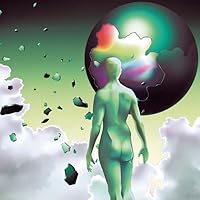
Timothy Leary was so far ahead of his time.
TURN ON
TUNE IN
DROP OUT
TURN ON
TUNE IN
DROP OUT
August 6, 2024
A lazy, poorly-written, typo-filled, short book. Tells you everything about psychedelics and Leary’s life that you already knew.
September 18, 2025
what the hell was this guy on when he wrote this?
September 9, 2011
I did some digging into Leary's background and I think it's very relevant to my review of this book, so here goes:
The CIA created LSD and promoted both LSD and marijuana as ways to mind control or brainwash the masses. They also drugged unsuspecting people with LSD for their experiments. The promotion of such drugs, however, ultimately backfired with the effect of people rebelling and using them to deprogram themselves, and Leary was using it in therapy for people who were diagnosed with terminal illnesses so they could be at peace with their impending deaths.
Leary includes vivid, mystical poetry with his philosophical musings. The psychological connection to LSD becomes clear: The pineal gland in the brain produces DMT (the "spirit molecule") when one is dying, and DMT has a psychedelic effect much like LSD, and elicits dreams. Some people even take DMT while peaking on LSD.
For all his own personal journey of psychedelic exploration, Leary was interned in an insane asylum. It was thought he was brainwashed, since he made a complete 180 in his view regarding LSD. There's convincing evidence that prior to that he was a CIA agent, or at least was funded by the CIA. It doesn't really matter, though, because the message is still great. The most important takeaway is his motto,"Create your own religion."
Finally, Leary writes about how marijuana is enlightening on the physical and emotional level (it also slows down time), while LSD is enlightening on the cellular and even the DNA level. Very, very inspirational stuff.
This is a small book, but incredible nonetheless.
The CIA created LSD and promoted both LSD and marijuana as ways to mind control or brainwash the masses. They also drugged unsuspecting people with LSD for their experiments. The promotion of such drugs, however, ultimately backfired with the effect of people rebelling and using them to deprogram themselves, and Leary was using it in therapy for people who were diagnosed with terminal illnesses so they could be at peace with their impending deaths.
Leary includes vivid, mystical poetry with his philosophical musings. The psychological connection to LSD becomes clear: The pineal gland in the brain produces DMT (the "spirit molecule") when one is dying, and DMT has a psychedelic effect much like LSD, and elicits dreams. Some people even take DMT while peaking on LSD.
For all his own personal journey of psychedelic exploration, Leary was interned in an insane asylum. It was thought he was brainwashed, since he made a complete 180 in his view regarding LSD. There's convincing evidence that prior to that he was a CIA agent, or at least was funded by the CIA. It doesn't really matter, though, because the message is still great. The most important takeaway is his motto,"Create your own religion."
Finally, Leary writes about how marijuana is enlightening on the physical and emotional level (it also slows down time), while LSD is enlightening on the cellular and even the DNA level. Very, very inspirational stuff.
This is a small book, but incredible nonetheless.
This entire review has been hidden because of spoilers.

September 25, 2019
A rambling, incoherent mess of the book that is also insightful, eye-opening, and mind altering all at the same time. While these juxtapositions can sometimes lose you, it also makes getting back such a dope trip homie.
This effect is probably because Leary has a knack for casually dropping some bonkers concept completely out of left field. Like the idea that all inorganic and organic matter on Earth live in synergistic self-sustaining relationship based on the unspoken oath that they will find a way to keep some sort of life alive on what is essentially just a sentient rock whose intelligence as well as relationship with the universe can not be comprehended by basic bitches like us...
Ultimately, your gut just tells you "what the fuck did you just read bro?" and you try to move on just because you can't comprehend the knowledge bomb he just dropped on yo face.
However, once you have time to reflect, and get back into the motions of life, you will start to find ways in which "Your Brain is God".
Also https://youtu.be/dQIqo6CIhGM.
This effect is probably because Leary has a knack for casually dropping some bonkers concept completely out of left field. Like the idea that all inorganic and organic matter on Earth live in synergistic self-sustaining relationship based on the unspoken oath that they will find a way to keep some sort of life alive on what is essentially just a sentient rock whose intelligence as well as relationship with the universe can not be comprehended by basic bitches like us...
Ultimately, your gut just tells you "what the fuck did you just read bro?" and you try to move on just because you can't comprehend the knowledge bomb he just dropped on yo face.
However, once you have time to reflect, and get back into the motions of life, you will start to find ways in which "Your Brain is God".
Also https://youtu.be/dQIqo6CIhGM.

March 18, 2020
Collection of essays abut psychedelics, mysticism, and personal/societal development. Not bad in any way but extremely forgettable. A fun short read (this kept me satisfactorily occupied for a cool spring day during the 2020 Covid lockdown) but Leary's desultory rambling — which could be a good micro review of the book in and of itself — doesn't impart any sort of weight.

July 27, 2008
some very interesting ideas, and even one good legal defense of hallucinogenics
March 5, 2013
He's got the right idea but sloppy writing.
May 29, 2014
Don't bother with this book if your looking for a great Leary book try "high priest" that books fantastic. This felt extremely rushed and uninspired.

October 30, 2016
Total nonsense. Refers to his own writing as "brainwashing."

October 28, 2017
Inspiring and uplifting. This is my first time reading anything by Leary, but I'm excited to dive into more of his works in the future!

June 25, 2023
argumentative basis bad pretty dumb tbh
Displaying 1 - 29 of 29 reviews