REVIEW OF EDTION ILLUSTRATED BY LISBETH ZWERGER, TRANSLATED BY ELIZABETH D. CRAWFORD
Well, textually speaking, Elizabeth D. Crawford's English language translation for Hansel and Gretel (1991), it for the most part very nicely and verbally delightfully follows and totally mirrors both contents-wise as well as with regard to narrational cadence and flow Jakob and Wilhelm Grimm's Hänsel und Gretel tale from their 1857 edition of Kinder- und Hausmärchen, with Crawford thankfully not toning down and removing the obvious and also the only hinted at violence, the horror of famine, of two children abandoned in the woods to die by their cruelly selfish stepmother and weak, easily manipulated father, an evil cannibalistic witch luring children with gingerbread and other sweets, except that Elizabeth D. Crawford's text in Hansel and Gretel for some reason does not show Hansel and Gretel (after them defeating and basically roasting the evil witch) returning home to their thankfully now windowed father, that the cruel stepmother who had wanted her husband to leave Hansel and Gretel in the forest is now thankfully deceased (and indeed, which is how Jakob and Wilhelm Grimm do specifically end their Hänsel und Gretel).
Oh and by the way, even though there is only a very basic and pretty limited amount of biographical information on the Brothers Grimm and their oeuvre included in Hansel and Gretel (barely adequate and which I for one consider rather a folkloric lack, as a detailed author's note on the Brothers Grimm and on Hänsel und Gretel and its genesis, how it was collected etc. would make Hansel and Gretel much better and also considerably more interesting), because in Hansel and Gretel, there certainly exists an evil stepmother, this factoid totally indicates that Crawford most definitely and obviously is translating the Grimms' Hänsel und Gretel story from the 1857 edition of Kinder- und Hausmärchen, since in the earlier, since in the 1812 edition of Kinder- und Hausmärchen, it is in fact and creepily Hansel and Gretel's biological mother who wants to get rid of her children, and that Jacob and Wilhelm Grimm in fact only ended up changing the cruel mother to a cruel stepmother for their 1857 edition because of increasing parental complaints.
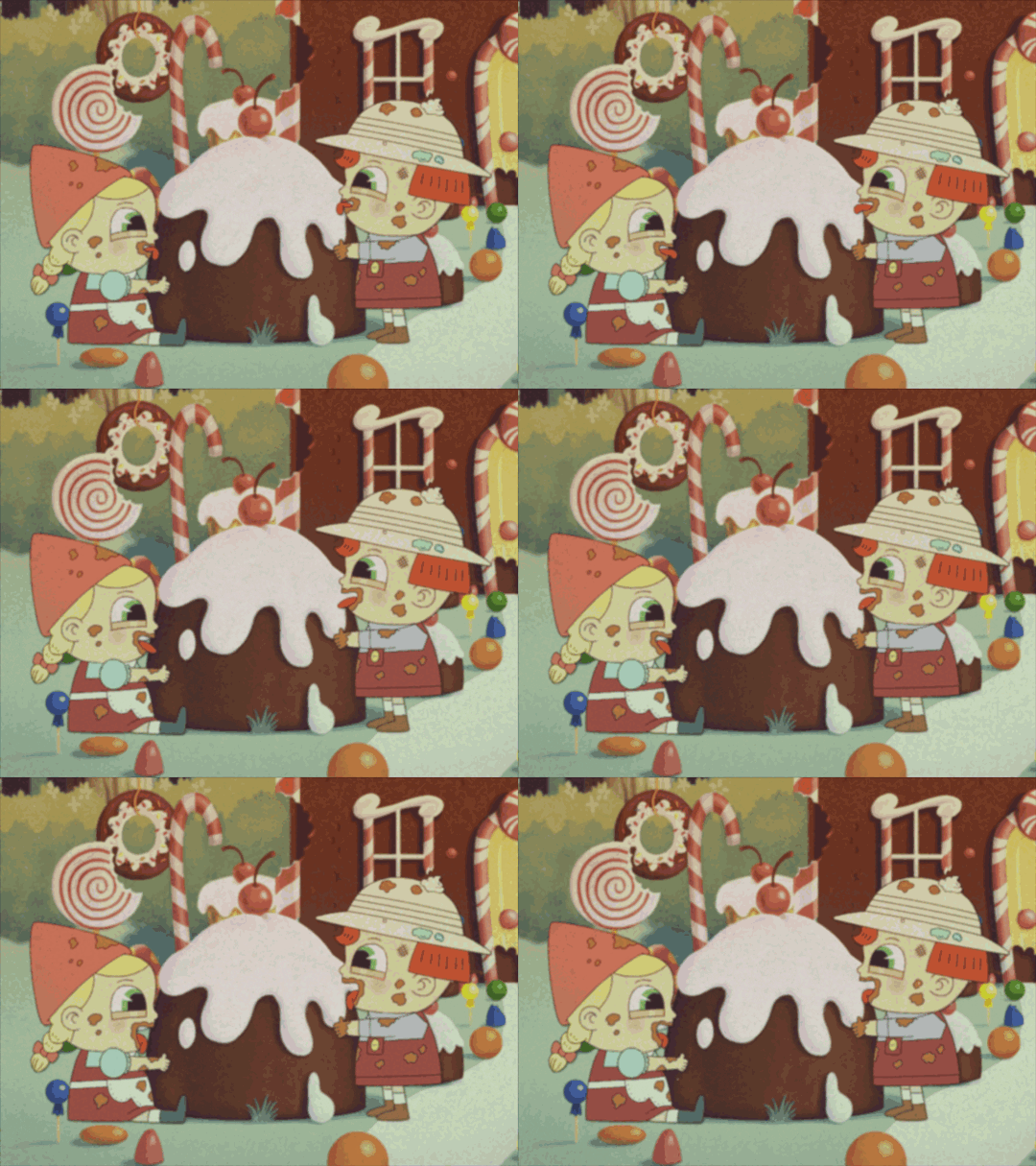
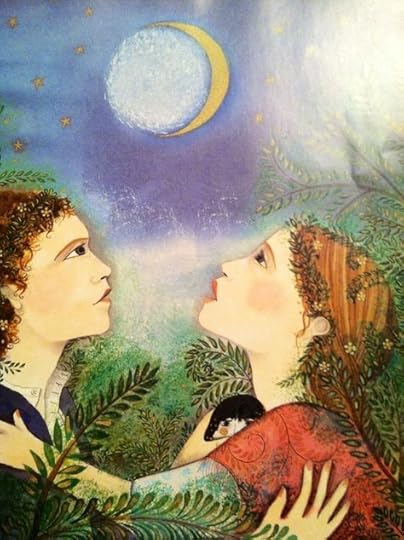
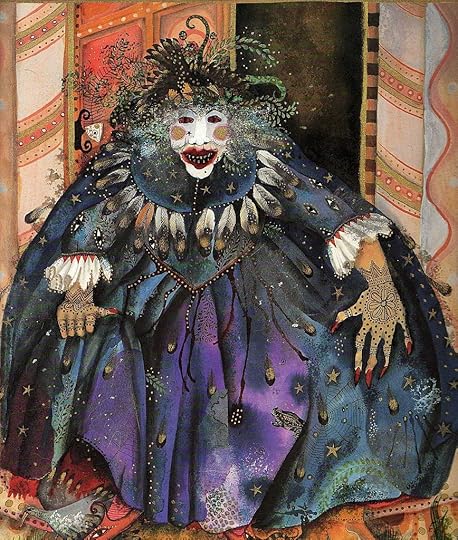
However, albeit what Elizabeth D. Crawford textually provides with her very good and very readable translation of the Brothers Grimm in Hansel and Gretel is solidly four stars for me (and no, not yet five stars, as no detailed and expansive author's note for Hansel and Gretel does aggravate and chafe just a wee bit), I am indeed rather majorly visually frustrated regarding one of Lisbeth Zwerger's accompanying illustrations for Hansel and Gretel. Yes, Zweger's artwork for Hansel and Gretel is generally aesthetically adept and nicely descriptive (and I like how Hansel, Gretel, the parents and even the gingerbread house the witch uses as bait so to speak are all in my humble opinion nicely and also realistically rendered and as such a successful visual mirror of the presented text, no, no, no, how Zwerger has illustrated the evil witch in Hansel and Gretel makes me kind of shake my head with and in frustration.
For since the witch in Hansel and Gretel manages to quite easily trick Hansel and Gretel into accepting her dubious and dangerous hospitality and her gingerbread house etc., it would to and for me be much more realistic if Lisbeth Zwerger would visually render her witch as deceptively pleasant looking on the outside and horribly but invisibly evil and with an ugly and dangerous soul on the inside, and that Zwerger making the witch in Hansel and Gretel look warty, evil and scarily ugly looking, with a really creepily nasty face, this does make it rather strange and also a bit defying belief that in Hansel and Gretel with Lisbeth Zwerger's evil witch certainly looking the part of an ugly and frightening harridan, she so easily lures Hansel and Gretel with promises of a warm house, a comfortable bed and sufficient food. Because or me, it simply would make much more common sense if the witch in Hansel and Gretel would be depicted like a kindly grandmotherly type and then revealed both visually and verbally that internally she is rotten rotten rotten to the core (and that yes, I wanting the latter regarding Zwerger's visual depiction of the evil witch and not getting this in Hansel and Gretel, having the witch right from the onset so to speak look horridly evil, this has indeed made me lower my rating for Hansel and Gretel from four to three stars, although I still do recommend the general combination of Elizabeth D. Crawford's translation of the Brothers Grimm and Lisbeth Zwerger's pictures).