Poetry. Fiction. Latino/Latina Studies. Spanish language edition of SILENT A PARTIAL REMEMBRANCE OF A PUERTO RICAN CHILDHOOD, translated by Elena Olazagasti-Segovia. "The original English version of this book was well received, and Olazagasti-Segovia's Spanish translation will most certainly be popular not only among Puerto Ricans but also with other immigrant groups who know the apparent dichotomy of living in two different and opposing cultures. Chapters trace the author's changes from childhood to adolescence in a life divided between long stays in her mother's native Puerto Rico with her colorful extended family and long, lonely winters in New Jersey while her absent father serves in the U.S. Navy. Each phase poses different challenges, but the author as a young girl manages to meet the demands of womanhood and family without losing her own identity. Latinas, specially young adults who have gone through similar experiences, will identify with the author, for her lovely book is a mirror where each of us may see our own reflection, although slightly altered by personal experience. This very enriching work is recommended for public libraries, especially those with young adult collections"--Carmen J. Palmieri, Library Journal.
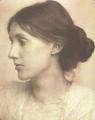
Judith Ortiz Cofer (born in 1952) is a Puerto Rican author. Her work spans a range of literary genres including poetry, short stories, autobiography, essays, and young-adult fiction.
Judith Ortiz Cofer was born in Hormigueros, Puerto Rico, on February 24, 1952. She moved to Paterson, New Jersey with her family in 1956. They often made back-and-forth trips between Paterson and Hormigueros. In 1967, her family moved to Augusta, Georgia, where she attended Butler High School. Ortiz Cofer received a B.A. in English from Augusta College, and later an M.A. in English from Florida Atlantic University.
Ortiz Cofer's work can largely be classified as creative nonfiction. Her narrative self is strongly influenced by oral storytelling, which was inspired by her grandmother, an able storyteller in the tradition of teaching through storytelling among Puerto Rican women. Ortiz Cofer's autobiographical work often focuses on her attempts at negotiating her life between two cultures, American and Puerto Rican, and how this process informs her sensibilities as a writer. Her work also explores such subjects as racism and sexism in American culture, machismo and female empowerment in Puerto Rican culture, and the challenges diasporic immigrants face in a new culture. Among Ortiz Cofer's more well known essays are "The Story of My Body" and "The Myth of the Latin Woman," both reprinted in The Latin Deli.
In 1984, Ortiz Cofer joined the faculty of the University of Georgia, where she is currently Franklin Professor of English and Creative Writing. In April 2010, Ortiz Cofer was inducted into the Georgia Writers Hall of Fame.
In 1994, she became the first Hispanic to win the O. Henry Prize for her story “The Latin Deli”. In 1996, Ortiz Cofer and illustrator Susan Guevara became the first recipients of the Pura Belpre Award for Hispanic children’s literature.
In "Silent Dancing," the story that gives this collection its title, author Judith Ortiz Cofer describes a home video that was recorded sometime during her youth in Paterson, New Jersey. The only color recording of her childhood, the video pans across women in red dresses before standing still as these women and their men dance toward the camera lens, moving in and out of focus. As an adult rewatching these scenes, Ortiz Cofer wishes she could access more than just the images of these family relations whose lives have forked away from her own in the intervening years. What circumstances brought these relations from Puerto Rico together on this particular night in New Jersey? What would they say about themselves and one another?
In the story, the dance is a vision that reappears in the author's dreams. She plays the role of the stationary camera with her eyes wired open as people who have moved away a long time ago or have died rotate toward her, voicing their inner thoughts, their fears, their regrets. As the name of this collection, "Silent Dancing" reinforces some of the themes that bring all the poems and stories together. It highlights the difficulties of writing about childhood, which we tend to remember as a series of disconnected images and flashes of strong emotions that are difficult to corroborate with "the main witness[es]" -- our parents. It also speaks to growing up surrounded by a large of family but feeling separated from the core of that family because you are lighter skinned, because you live half the year in another place, because you are increasingly understanding your own experiences in a different language. Ortiz Cofer's poems and stories are grounded deeply in her own childhood, but the insights they share are universal. It is no wonder that so much of this book is reprinted in textbooks and treasured by teachers and students across the United States.
As you may know, Ortiz Cofer died a couple of months ago -- of cancer, I believe -- at the criminally young age of 64. With the news of her death still recently in mind, I found myself feeling a rush of thoughts and emotions as I turned the pages of Silent Dancing. Written over the late 1980s and first published in 1990, the book bears some of the marks of a young writer still developing her voice, including repetitiveness, anxious references to literary forebears like Virginia Woolf, and (as other reviewers have mentioned) some of the author's least memorable poetry. It also plants the seeds of themes and story-lines that the author would develop, with arguably even greater success, in 1994's The Latin Deli and various collections for young readers. However, now that she is gone, the book's imperfections feel less like weaknesses than endearments--welcome peeks behind the curtain of the author's development. In any event, whether or not we have personally felt the social and psychological fractures of growing up Puerto Rican, we should be thankful that Ortiz Cofer decided to spend her career exploring them in her writing. Silent Dancing is a great collection, a wily hodgepodge of fictionalized memoir and verse, and it will outlive us all.
I enjoyed this memoir, but I do think the poetry was its weakest aspect. I liked Ortiz's instinct to marry the two mediums, and I liked the way she juxtaposed prose narrative with related verse. Nevertheless, the paired poems sometimes were so repetitive that they seemed, to me, expendable -- they rarely introduced new material.
The strongest point of the text, for me, was its inquiry into the nature of memory and the accuracy of memoir. Ortiz's relation of the fire incident, presented so differently from the recollection of her mother, encourages questioning of Silent Dancing, especially when coupled with the preface. At times, I wondered why Ortiz hadn't simply called this book a work of fiction, especially as her personal experiences were intertwined with urban legends and the stuff of neighborhood myth. Obviously, that was partly her point: truth is subjective. But having raised that question, I wanted Ortiz to look more deeply at those subjectivities and seeming contradictions within her family. At the very end of the text (SPOILER) she suggests that her father, whom she had presented earlier as being a flawless family man, might have been seeing another woman on the side. Her mother, who she idealizes at times, can also be viewed as being neglectful and obstreperous. It felt to me that Ortiz was teetering on the cusp of asking deeply interesting questions about the values and behaviors of the people in her life, only to draw back before anything too controversial had been clearly stated.
3.5 this is just a solid, short, memoir-ish memoir. is not great but is also not bad, i really like the interwoven folktales. the poems unfortunately failed to hit for me, but nevertheless i’m grateful for the opportunity to read a book that’s less than 900 pages and not about the worst most unpleasant people on the face of the earth.
First published in 1990, Silent Dancing is a lush, melancholy remembrance of growing up a bicultural Puerto Rican in the '60s. The young girl and her little brother are shuttled--by the circumstances of their parents' lives--between Paterson, NJ, and the island territory of Puerto Rico. This is a collection of creative nonfiction and poetry, of imaginative explorations of memory, attempting to get at a personal truth.
The narrative seemed slow going at first, with many of the anecdotes in the individual essays reappearing in other essays, but I came to feel as if I was just among the family, hearing familiar stories being shared yet again. Also, there seemed to be an incredible leap of chronology in the final stories, from when young Ortiz Cofer is living her quinceaneara year, to when she's an adult with a family of her own and we're suddenly caught up with all that has transpired in the intervening years.
Though the stories are mostly set in the '60s, the political and cultural realities of a Latino family, the isolation and racism suffered, seemed altogether current. I will admit that while not much happens, there's no big dramatic story, other than the quietly observed back and forth between cultural identities, the details were just so rich that it still manages to be a compelling read.
This is a wonderful book if you're teaching a First-Year Composition course. Her stories focus on the culture of the Puerto Rican women of her childhood: her grandmother, her young mother, her aunts and cousins. The stories are empowering for women, but they aren't damning in any way towards men. This book draws you in with Cofer's cuentos, and while it's not a difficult book to understand, there's no lack of significant material for critical analysis in your classroom. Her images are finely crafted, as she describes her grandmother's house as looking like "a great blue bird, not a flying sort of bird, more like a nesting hen, but with spread wings" (Cofer 23). In two of my favorite lines from one of her poems, titled "Quinceanera," the speaker is a fifteen year old girl who states that she is "wound like the guts of a clock, / waiting for each hour to release me" (lines 23-24). Cofer's prose is seductively "accessible," drawing you deep into the stories of her childhood and her coming of age before you realize that they've affected you forever.
In the beginning, I felt Cofer was trying too hard to imitate Woolf's style of writing so I rolled my eyes at times. Throughout the course of her folkloric autobiography, however, I began to see that that was not her intention at all. I was engaged during her simple stories and colorful descriptions, I can even say that they were very comforting to read. Some of her short poems did make me roll my eyes a bit the way I did in the beginning but, for the most part, I enjoyed reading her stories (at the end revealed to have been more swayed by the faults of memory and imagination then factual accounts of her life) because they felt hearty.
"Silent dancing" refers to an old silent movie that Judith Cofer's uncle filmed at a family party in Puerto Rico. Taken in the early 1960s, it appears the people are gyrating to nothing.
Cofer grew up spending half of her time in Puerto Rico when her Navy father was at sea and half in Paterson, New Jersey, when the ship was in port in New York. Although,the family spoke Spanish at home, she excelled in school in both places and in two languages. Although her father was Puerto Rican, he always spoke to his children in English.
It is an interesting book that compares an isolated U.S. life to a fmily filled PR existence.
A delightful exploration of cultural clashes from a Puerto Rican/New Jersey childhood. Ms. Ortiz-Cofer writes from the clear perspective of a child balanced between two worlds - one of cuentos, a plethora of aunts, uncles and family, bright colors and emotions, and a world of grey isolation. A very moving journey.
This book is a mix of poetry and short stories that depict Cofer's life in Puerto Rico and the U.S. She intertwines Spanish with English as she shares stories from her own childhood and those she remembers being told by the women of her family.
I really wanted to enjoy this book, and there were parts of it that reminded me of home in PR, but overall, the book seemed a little too disjointed. There wasn't one specific storyline, rather,the author jumped around from story to story.
The feeling of not being here - or there - with half your heart belonging to one place and the other half belonging to the other, and for completely different reasons… of wanting to live your own particular way, but having others tell you to live another particular way - this may be a roller coaster of emotions familiar to most, if not all of us. The immigrant experience, however, compounds this, no matter where you’re coming from. Silent Dancing: A Partial Remembrance Of A Puerto Rican Childhood is the autobiography of Judith Cortiz Cofer. She tells the story of her childhood lived between two cultures: Puerto Rico, her birthplace and place of familial ties, a place of rural abundance, and a city in New Jersey, where Spanish was spoken at home, and English in school, where Puerto Ricans lived cramped in old buildings abandoned by previous Italian and Irish immigrants, where a mother refused her own assimilation into American culture, but encouraged her daughter to “fit-in”.
Cofer’s father was a soldier in the United States army during the 1950s, which explains her nomadic childhood. To many, Cofer explains, her family was seen as wealthy and privileged to be able to move “freely”. And Cofer did feel privileged, with nice clothes, more than enough food, and a house that was built by her family’s own hands generations before. Thus begins Cofer’s rich descriptions of Puerto Rican domestic life. What was it like to live in one house with two generations of family? What are Puerto Rican grandmothers and mothers like? And Puerto Rican fathers? The women would tell stories, Cofer writes, which were usually embellished, and so she grew up in a household full of storytelling. Folktales were told to her too, and filled her mind with ideas of what life is; not ideally, but as it truly is: a world of unfaithful men, of weak women, and zealous Catholicism… and even more. Cofer writes striking poetry between each chapter. Her poetry does not glorify her life experiences, but instead uncovers the harsh realities of survival, which were passed down to her. She writes:
“Blood tells the story of your life in heartbeats as you live it; bones speak in the language of death, and flesh thins with age when up through your pores rises the stuff of your origin..."
Silent Dancing is a coming-of-age story that is familiar in many ways, and it is worthwhile reading in order to gain knowledge of the differences in coming-of-age for a Puerto Rican girl. Cofer, it seems, was not particularly protected from the world, but rather was “thrown” into it, and never once did she cease to be brave in the face of chaos and sadness. Individualized difficulties for that precious time between childhood and adulthood are examined through Cofer’s eloquent poetry and prose.
If you like fast-paced, character driven memoirs, you may want to read this one. It’s insights into the culture and geography of Puerto Rico are personal and intimate and the immigrant experience of becoming Puerto Rican-American in New Jersey may be a way for a reader to connect. Of note is her admiration for the works of Virginia Woolf, who influenced her to write Silent Dancing.
Similar Authors and Works include Americanah by Chimamanda Ngozi Adichie, for its descriptions of the experience of living between two cultures, The Unknown Americans by Cristina Henriquez, for its exploration of Hispanic culture in the United States and In The Country: Stories, for its depiction of emigrants to many different countries from the perspective of Filipino culture.
Relevant NonFiction Works and Authors include Puerto Rico In The American Century: A History Since 1898 by Cesar J. Ayala: the first English language book about Puerto Rican history from the turn of the 19th century to today. Puerto Rican Diaspora: Historical Perspectives by Carmen Whalen and Victor Vasquez, for its insights on colonization, citizenship, and migration. Puerto Rican’s Fighting 65th U.S. Infantry: From San Juan to Chorwan, for its exploration of Puerto Rican soldiers in the United States military.
This autobiography is different in the sense that while it follows a linear progression there are noticeable gaps as it leaps over years and the reader may at first find themselves feeling a sense of disorientation at the start of each chapter as they attempt to figure out where and when they are at during the narrator's life. However, I felt that these effects were entirely appropriate in a book that focuses on the narrator's sense of displacement and disorientation as she transverses between Puerto Rico and the United States and attempts to recall the formation of her personal identity. The emphasis on recollection is especially important to this text because above all this story struggles with the idea of the reliability of memory in recalling one's past. At many points the narrator tells the events as she remembers them as well as how these events are remembered by others. This attention to memory and the issues with formulating a coherent self which is required by the genre was something I found very interesting and made me appreciate this book a lot more.
Each chapter of the book is followed by a poem which often adds an additional layer of understanding to what has been revealed in the chapter. By additional layer I mean they will often elaborate on some point raised during the chapter which had not been fully developed. While I at first found them to be a bit extraneous, after a while I began to see them as fitting in with the idea of a life distilled. If these individual chapters attempt to concentrate fragments of life into discrete episodes while hinting at the changes that have occurred and are to come, poetry--which is language at perhaps its most concentrated--in a few lines echoes the depths which bare prose alone could only explain with a multitude of words.
Overall, I thought this book was an interesting experiment in autobiography and the story of Cofer's experiences makes for a good compact read.
A great look at immigrants and the push and pull of living in two different worlds. The author grew up in Puerto Rico and Paterson, NJ. She tells of the cultural conflicts as well as how each experience shaped her.
I loved the poetry of the book...I did not like the vignette-style organization. I was reminded of Sandra Cisneros, but no one can do vignettes like her. I found the stories in Silent Dancing disjointed and, while each isolated story was interesting, I never got a very good grasp of the narrative as a whole.
A very worthwhile read because it's hard to find 2nd generation immigrant experiences and Judith Ortiz Cover captures the reality of straddling two worlds beautifully.
This book envelopes you into its two worlds...Puerto Rico and Paterson, New Jersey. The author explores her early life in a series of "ensayos" - which she explains are different than the English word "essays". For her, the "ensayos" are more of rehearsals or studies - like a musical etude. Cofer's genuine voice lifts off the pages and offers pearls of wisdom on living as a woman. If you read her later YA novel An Island Like You, you can see the seeds of those stories beginning in this book.
Rather than being a full novel with a singular plot, this is a mostly true narrative made up of a bunch of separate experiences throughout the narrator's childhood as she struggles with her personal identity while growing up intermittently in Puerto Rico and the States, never becoming fully immersed in one culture or the other. It's a good coming of age tale from the perspective of a bilingual childhood.
It was quite interesting reading the life of a Puerto Rican who has lived in both the United States and Puerto Rico due to her father being in military service. I understood her need for privacy when living in a close group of family members. I love the story telling from grandmother to mother to daughter...
This is one of those books you read and years later you still remember it fondly...something hit your heart. I adore Judith's style of writing and I really connected with her references to Puerto Rico. I'll have to find this one and read it again.
This book is beautiful and tender. I feel nostalgic for a past that's not my own when I'm reading. I'm also a Spanish learner so her explanation of the "feeling" or connotation of Spanish words and phrases was nice.
A book that teaches, through singing Poetry and ballroom dancing prose, how to travel the avenues of memory and make Art from the particulars of one's personal life.
some of this works, some doesn't. A couple of chapters are surprisingly honest while others seem to cover up. I wonder if Cofer was writing with her mother over her shoulder?
This was such an interesting read. I was gifted it years and years ago and just let it hang on my shelves. Finally decided to pick it up and I’m so glad I did!
I don’t know Judith Ortiz Cofer myself but reading her memoir essays also felt familiar. She’s a Puerto Rican poet and artist and I’m very curious to read more of her stuff and learn more about her. I loved the poems she had between essays and just the all around feeling of the collection.
I’ve been to Puerto Rico twice, once when I was too little to notice, and once in the summer between 7th and 8th grade. But I have such vivid memories of the smells and sites and feelings of it that I felt transported as I read this. Judith Ortiz Cofer spent half the year in Puerto Rico and half in New Jersey and was never Puerto Rican enough for her peers there and never American enough for people in New Jersey. While I’ve never shuttled between places like that I’ve felt this being in between. I’m not Latina enough for my Puerto Rican and Mexican relatives and yet the white people I grew up with knew I was Latina and didn’t like it. So I understood that feeling Cofer was describing.
Y’all know how I feel about memoirs and this was no exception. I loved spending time in her mind and her world. Learning about her childhood and her family and just being allowed to experience what she experienced was very special.
I’m so glad I read this slim volume finally and will be looking into reading more of her work.
Incredible memoir. I am a sucker for good storytelling, folklore, the struggles of immigration and diaspora, and mother-daughter relationships. The blend of poetry throughout the short stories was incredibly impactful and complementary to the narrative structure even though some were repetitive and I normally don’t enjoy poetry. Also surprisingly intersectional in its range from queerness to colorism economic inequality, etc in a simple and effective manner. Some of the stories are definitely going to stick with me. Such a compelling and witty introspection/reflection into how memory is structured, cultural assimilation, and familial dynamics and developments.
This is classic creative nonfiction. It's part memoir and part personal poetry. I like it. It is very interesting to read about her Puerto Rican experiences and her experiences and challenges in New Jersey. I really enjoyed her inclusion of Spanish words throughout the book. This is a super quick read. I read it for a book club I'm planning to attend tonight.
This was a short, elegiac memoir of a woman who grew up between two worlds: Puerto Rico and New Jersey. I enjoyed it, but it was short, and I wanted more from the author. Overall good but short and sweet.