Jump to ratings and reviews
Rate this book

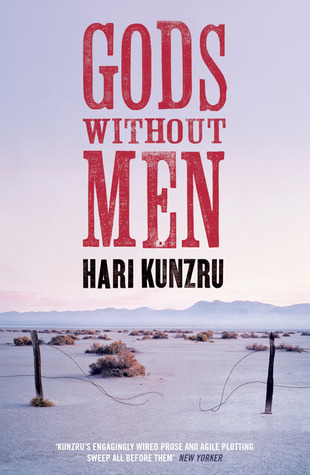
Gods Without Men

Rate this book
Viscerally gripping, and intellectually engaging, Gods Without Men is, above all, a heartfelt exploration of the search for pattern and meaning in a chaotic universe.

In the desert, you see, there is everything and nothing... It is God without men.
- Honoré de Balzac, Une passion dans le désert, 1830

Jaz and Lisa Matharu are plunged into a surreal public hell after their son, Raj, vanishes during a family vacation in the California desert. However, the Mojave is a place of strange power, and before Raj reappears inexplicably unharmed - but not unchanged - the fate of this young family will intersect with that of many others, echoing the stories of all those who have traveled before them.

Driven by the energy and cunning of Coyote, the mythic, shapeshifting trickster, Gods Without Men is full of big ideas, but centered on flesh-and-blood characters who converge at an odd, remote town in the shadow of a rock formation called the Pinnacles. Viscerally gripping and intellectually engaging, it is, above all, a heartfelt exploration of the search for pattern and meaning in a chaotic universe.

383 pages, Paperback

First published August 4, 2011

258 people are currently reading
6827 people want to read

About the author

Hari Kunzru

45 books989 followers
Hari Mohan Nath Kunzru (born 1969) is a British novelist and journalist, author of the novels The Impressionist, Transmission and My Revolutions. Of mixed English and Kashmiri Pandit ancestry, he grew up in Essex. He studied English at Wadham College, Oxford University, then gained an MA in Philosophy and Literature from Warwick University. His work has been translated into twenty languages. He lives in New York City.

Ratings & Reviews

What do you think?
Rate this book

Friends & Following

Create a free account to discover what your friends think of this book!

Community Reviews

5 stars
868 (19%)
4 stars
1,744 (39%)
3 stars
1,256 (28%)
2 stars
405 (9%)
1 star
114 (2%)
Displaying 1 - 30 of 624 reviews
Profile Image for Lori.
308 reviews96 followers
February 19, 2018
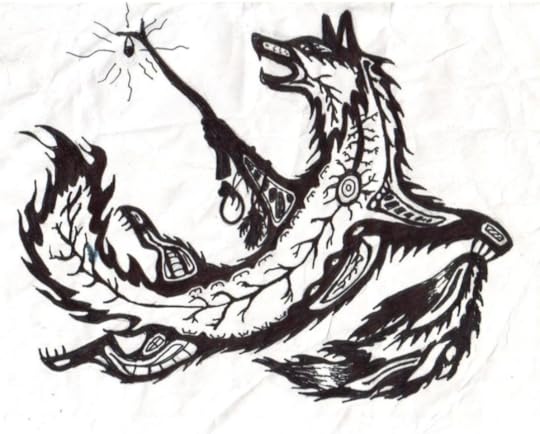
This is all about Coyote. While there a lot of interesting characters in this beautifully written story, they all revolve around the trickster. He needs people. By hook or by crook, his shabby bad self will have worshippers. He’s the genii loci of the Pinnacle rock-formation in the Mojave Desert. So, he keeps coming up with ploys to bring followers to him and his place. This is a Coyote story. And, Coyote asks his penis for advice because it is the smarter of the two.

It’s there before the chapters; he warns you. Coyote goes into the desert to cook pseudo. He blows himself up and dies. A spirit animal comes along and brings Coyote back to life. The spirit animal gives him some good advice. Coyote laments his missing body part then he makes a replacement, new hands from a cholla cactus. He runs through this cycle three times: he makes a mistake, he dies, someone comes along, he is revived and advised, he laments and, he replaces a missing body part. He always needs somebody to help him and he always gets what he needs.

In addition to Coyote, there are nine fictional characters and one historical character, the missionary Fray Francisco Hermenegildo Tomás Garcés. If it weren’t for Coyote connection to the land, you could argue that the desert was an additional personality. I especially liked Nicky Capaldi is a scruffy drug-addled rock star. He is sympathetic on the order of Sméagol while stumbles over a cactus in the dark. The guy is too overwhelmed by the hostile looks from other customers to go into Taco Bell. I felt a little guilty because I didn’t like Dawn very much. I have hope for Laila the Iraqi teenager. Jaz and Lisa are American tourists with an autistic child, Raj. I forgot about Deighton until turned back up. All their stories circle and connect to the Pinnacles and Coyote.

The time period of the stories is from 1775 to 2009 although not in that order. Each appears perfectly straight-forward right up until you realize that it isn’t. Magic occurs in an everyday way that people can ignore or dismiss. Coyote is a moving target. He shifts appearance between man, god, and animal. During a manhunt in the 1920 storyline, Professor Deighton tries to pin down some of the myth by questioning the group’s tracker, Lobo.
”Why did you say we’re never going to catch him?”
“Like I said, he’s a true runner.”
“What does that mean?”
“In the old times, there were messengers who could cover two hundred miles in a day. True runners. They knew there’s more than one way to run.”
“I don’t understand.”

Lobo tells a story from his childhood about a young feller named John Smith who could run like this way. Seven league boots aren’t mentioned but you get the idea.
”So this John Smith was a shaman?”
“No, no, he never carried a stick, never had visions. He was just a man.”
“But he had a magic way of traveling.”
“Not magic. He never used magic. He just knew how to run.” .”
There is a glowing child in multiple timelines. While each witness is certain that the child glowed, none of them want to argue the case very loudly. It's an unusual and enjoyable read.

description
In the time when the animals were men

In the time when the animals were men, Coyote was living in a certain place. “Haikya! I have gotten so tired of living here-¬aikya. I am going to go out into the desert and cook.” With this, Coyote took an RV and drove into the desert to set up a lab. He took along ten loaves of Wonder bread and fifty packets of ramen noodles. He took whiskey and enough pot to keep him going. He searched for a long time and found a good place. “Here, I will set up-¬aikya! There is so much room! There is no one to bother me here!”

Coyote set to work. “Oh,” he said, “haikya! I have so many tablets of pseudoephedrine! It took me so long to get! I have been driving around to those pharmacies for so long--aikya!” He crushed the pseudo until it was a fine powder. He filled a beaker with wood spirit and swirled around the powder. He poured the mixture through filter papers to get rid of the filler. Then he set it on the warmer to evaporate. But Coyote forgot to check his thermometer and the temperature rose. It got hotter and hotter. “Haikya!” he said. “I need a cigarette-¬aikya! I’ve done such a lot of hard work-¬aikya!”
He lit a cigarette. There was an explosion. He died.
Cottontail Rabbit came past and touched him on the head with his staff. Coyote sat up and rubbed his eyes. “Honored Coyote!” said Cottontail Rabbit. “Close the door of the RV. Keep it closed. Do your smoking outside.”
Coyote began to whine. “Ouch-¬aikya! Where are my hands-¬aikya? My hands have blown off.” He whined and lay down and was sad for a long time. Then Coyote got up and made himself hands out of a cholla cactus.
He began again.
He ground the pseudo. He mixed it with the solvent. He filtered and evaporated and filtered and evaporated, until he was sure all the filler was gone. Then he sat down and began scraping matchboxes to collect red phosphorus. He mixed the pseudo with his matchbox scrapings and iodine and plenty of water. Suddenly the flask began to boil. Gas started to fill the air. It got in his eyes, his fur. He howled and scratched at his face.
He choked on the poison gas and died.
Gila Monster came past and sprinkled water on him. Coyote sat up and rubbed his eyes. “Honored Coyote!” said Gila Monster. “Use a hose. Stop your flask, fill a bucket with kitty litter and run the hose down into that. The gas will be captured. Trap it and watch it bubble and boil, there in the flask. Don’t breathe at all if you can help it.”
Coyote began to whine. “Ouch-¬aikya! Where is my face-¬aikya? I have scratched my face off.” He ran down to the river and made himself a face out of mud and plastered it over the front of his head. Then he began again. He crushed the pseudo and evaporated it. He scraped the matchboxes and bubbled the flask into the bucket of kitty litter. He mixed the chemicals and cooked his mixture and filtered it and added in some Red Devil lye. He watched his thermometer. He was careful not to breathe. He cooled the mixture down and added in some camping fuel and shook it up and jumped up and down for glee when he saw the crust of crystal floating on the liquid. He started to evaporate off the solvent but was so excited that he forgot to keep his tail out of the fire. He was dancing round the lab, lighting everything on fire with his tail.
The lab burned down. He died.
Southern Fox came past and touched him on the chest with the tip of his bow. “Honored Coyote!” he said. “You must keep your tail out of it! That is the only way to cook.”
“Ouch-¬aikya!” whined Coyote. “My eyes, where are my eyes-¬aikya?” Coyote made himself eyes out of two silver dollars and started again. He crushed the pseudo. He filtered and evaporated it, he mixed and heated and bubbled the gas. He filtered and evaporated some more, and then he danced up and down. “Oh, I am clever-¬aikya!” said Coyote. “I am cleverer than them all-¬aikya!” He had in his hands a hundred grams of pure crystal.

And Coyote left that place.

That is all, thus it ends.

Profile Image for Jenna ❤ ❀  ❤.
893 reviews1,840 followers
May 30, 2024
I'm not dyslexic (except, oddly, with sequences of numbers) but for some reason, my brain keeps reading the title of this book as Dogs without Men.

Perhaps this is because, unbeliever that I am, the other day I was singing along with Dolly Parton in "God Won't Get You", with a slight change to the lyrics:

Dolly: "But my cheatin' heart will tell on me tomorrow
If you think that God won't get you, well you're wrong".

Me: "If you think the dog won't get you, well you're wrong".

You gotta admit, my version has a much better visual.

Idiocracy Balls GIF - Idiocracy Balls GIFs
(Not my dog)

Due to this misreading of the title every time I opened the book, I kept waiting for a dog to show up. One never did. That's probably a good thing though, because author's seem to enjoy killing off pets, just to get a rise out of their readers.

Anyway, I digress.

The novel.

It's set in different timelines with several different characters, mainly in the present day with Jas, his wife Lisa, and their autistic son Raj.

Raj is non-verbal and goes missing while the trio are out in the desert near some rocks.

These rocks are central to the story, and where most of the plot takes place in all the timelines, including where some UFO believing cult set up camp in the early 1970s.

I don't want to say much and give anything away, though I didn't quite "get" all of it anyway.

It is written exceptionally well, as is the other book I've read by Hari Kunzru (Red Pill), and I was mostly really drawn into the story. A couple times I found it disorienting, the switching of characters and timelines, and as noted above, I didn't quite get it all and am confused by the ending.

In spite of those two things, this is still a 4.5 star novel for me. Rounding down since I loved Red Pill a bit more and that one got 5.
Profile Image for switterbug (Betsey).
936 reviews1,494 followers
March 26, 2012
There’s a sense of both turbulence and utter stillness in Kunzru’s latest novel, and a feeling of vastness and confinement. Spanning 250 years, (non-linearly), the story takes place largely in the xeric and sparsely populated Mojave Desert, at the high-energy Pinnacles, or three-fingered rock formations. The people who populate this novel tend to be restive fringe dwellers, a colorful cast of alien, isolated, and even immortal characters. A Franciscan priest, an anthropologist, hippies, drug addicts, a yuppie couple with an autistic child, a UFO cult, a fading rock star, the mythical Coyote.

The book opens with a short postcard sketch of the trickster Coyote doing bad, bad things. Coyote, interestingly, has many meanings other than wild dog—a clown, a sorcerer, a despicable person, a divine spirit, a romantic twilight voice on the wind, pirated works. All these meanings are relevant, either figuratively or metaphorically, to this story. The disparate characters from different years venture out or end up at the Pinnacles, where they feel an eerie, powerful force of energy, a transformative and potent, highly charged attraction. What is the meaning of this attraction? Read, seek, wander, believe, or disbelieve, and you will find more questions and demand less answers. The more pages you turn, the deeper you go into Kunzru’s vortex.

The ballast of the story is the Mojave; you will encounter its desert electricity as you read, see billions of stars in an endless sky, breathe life, taste death, smell the secrets of the universe, prick the spirits, absorb the infinite. And just as you are about to touch it, it flees, returns, and seduces.

This is for readers who are dazzled by the elliptical, pursue the intuitive, and relish the unknown. This is an exquisitely interpretive story where you can spread your fugitive wings, and soar, and soar again.

In the desert, you see, there is everything and nothing... It is God without men.
- Honoré de Balzac, Une passion dans le désert, 1830
Profile Image for Lisa (NY).
2,138 reviews824 followers
March 7, 2022
[3.5] Gods Without Men jumps between timelines ranging from 1775 to 2009, landing on an assortment of strange characters. I was frequently confused. All of characters are connected by the power of the Mojave desert and their search for a greater meaning. I was captivated by Jaz and Lisa and their autistic son Raj, the core of the book, and resented being torn away to go back in time. But Kunzru's hypnotic and wise writing kept me reading, frustrated but glad for the experience.
Profile Image for Richard (on hiatus).
160 reviews213 followers
April 25, 2018
Gods Without Men is a book of many stories, spanning hundreds of years from the 1700’s until 2009. The narratives are involving, often gripping and peopled by characters you largely care about. They cover a wide variety of themes from stock market manipulation, UFO’s, the Iraq war, colonisation and hippy cults, to autism and a myriad of human relationships.
This episodic work is anchored to a barren, unforgiving but beautiful area of the Mojave desert and a specific pinnacle of rocks ........ a blank canvas that humans over the ages have projected their spirituality and beliefs.
The stories are connected in a David Michell (Cloud Atlas, Bone Clocks) sort of way, by little unexpected links, doors and bridges that I constantly found surprising and enlightening.
I enjoy books that cover current affairs, history, religion and science and that are exciting and moving ........ Gods Without Men scored well on all counts. Also, unlike some, I found the ending really effective.
Fab book!
Profile Image for FrankH.
174 reviews13 followers
September 20, 2012
The title is lifted from text in a Honore Balzac short story, but the vibration here -- resonating with themes embracing UFO-ology, quant stock-trading models, cultural clashes and all manner of odd latter-day convergences -- is a long way from 19th century France. In another, more recent era, Gods Without Men might have been labeled 'druggy', edgy, Pynchon-like; today, the author Kunzru seems to be saying, we don't need the drugs to induce the drug-induced consciousness: Just start connecting the dots in this crazy world -- through history, across nations, from the pop clutter in our daily lives -- and we'll be off on our 'trip'.

The narrative, which oscilates across a concentration of dates spanning centuries from the time of the Spanish Conquistadors, is unified by a piece of geography in the Mojave Desert, a mountainous rock formation called the Three Pinnacles, presented suggestively as -- take your pick, multiple choice allowed -- a divine gateway between life and death, a portal for outer space aliens or, at the least, a latency-producing, geophysical power source. Each temporal section has its own orientation to the Rocks and to sets of characters, with some overlap; from the 1920s, for instance, we get Deighton, the ethnologist, and his wife studying local indigenous American tribes; in the forties and fifties, there's Schmidt, settling in to look for extra-terrestrails than can bridge the Cold War divide, followed later by Joanie, Judy, Dawn and the other 'saucer people' arriving to make contact with the 'Ashtar Galactic Command'. And, in the new century, the author gives us Laila, a distraught, teenage Iraqi ex-pat, recruited by U.S. government to participate in post-invasion military exercises at the Pinnacles -- as role-playing Iraqi insurgents (beheading events included!). The core narrative in the group, however, is the post-millenial story of Jaz Matharu, a youngish Punjabi software quant working in New York, his bookish Jewish wife Lisa and their autistic four-year-old son Raj whose high-maintenance behavioral problems threaten the marriage. A 'healing vacation' finds them out there on the desert Rocks but then Raj goes missing -- does he wander off, suffer at the hands of a kidnapper, human or otherwise, or simply disappear? As the prolonged, unsuccessful search for the boy turns into a vituperative media circus, Lisa and Jaz fall into a hell of connubial guilt and blame.

Too much 'fringe' for your taste? Across the timelines, the correlations, linkages -- what Jaz call 'rhymes' -- begin to add up. Was the glowing boy befriended by Judy in 1957, just before her disappearance, the same glowing boy fathered in the twenties by the native American Mockingbird Runner, the lover of Eliza, Deighton's wife? Is this linked somehow to the glow seen by Laila during the war games in 2009? And if the quants like Jaz can find a relationship in 2009 between Southwestern home repossesions and the number of avatars in Asian on-line game worlds, who are we to ridicule the moon-beamers from an earlier time? Kunzru uses the plight of the Matharus as the emotional center of the novel, then weaves in the off-beat events, characters and themes by going back and forth, linking them across the sections to make the ever-deepening connections to the main story. And it's the author's pitch-perfect attention to the detail in each piece that binds the credible with the incredible, the fringe with the prosaic. Take the zany, delusional quality of UFO tribe from the fifties, for instance: it's perfectly conveyed by text that self-documents the way semi-technical jargon can gull seekers of knowledge:

The actual circuitry has been designed from the labs or Araltar, the Magnetician for this quadrant..It's based on the violet ray and elemental ray, focused on a crystal whose tip penetrates the sheath of the chamber in which the Oracle is secured. The violet ray is the carrier of the multi-plexed etheric communications...the elemental ray decodes into mental vibrations of a suitable level for processing by the human mind (Was Kunzru a UFO guy in an earlier incarnation?)

But how different is this mumbo-jumbo from the jargon of the talk shows on which Lisa and Jaz appear in 2009, Raj still unfound? The author cunningly demonstrates the way media converts private anguish into public commodity:

We're so glad, Our hearts. Such a difficult. Tell me...Well, Sally he reminded me of my cousin Nate made feel beautiful like a woman you know how important that is for a mom well Sally I'm glad you asked because it was a cry for help you have to appreciate autism affects everyone parents carers we all live with my levels of stress were through the roof.. I know your viewers understand how hard understand how very hard to come here today and admit alcohol drugs obesity gambling abause has been a problem in my life but now with the grace of God and my husband by my side. My husband. My....Jaz shifted in his seat. The host said something. He said something. The host said something else. All eyes were on her; the witch Lisa Matharu, the woman who didn't cry for her son

Later, of course, the UFO community runs afoul of the law in the eighties, as unsavory characters with names like 'Wolf' and 'Coyote' peddle methedrine and hearken us back to the old Indian tales, recorded by Deighton in the twenties, when the desert 'animals became men'. It will be a music album produced by the UFOers and purchased on impulse by Laila at a vinyl record shop in 2008 that winds its way, through a series of correlations, to the denouement with Raj.

Gods Without Men ends with a substantive epilogue that contrives to get the Matharus back out on the Rocks. I found it to be unsatisfying but the interaction between the altered husband and wife that got them there again moving and persuasive.

A crazy, crazy-good novel.
Profile Image for Brenda.
1,516 reviews67 followers
October 31, 2012
I frankly don't see what the big deal is about this book. I understand the concept Kunzru was saying. I really do. But I hated this book. I finished it and all I could think was I wasted my time. Frankly, I didn't care about any of the characters. His style was stupid. He introduced us to huge amounts of characters, gave them elaborate backstories that explained how they got to wherever they were, then never mentions them again. What's the point? I now know about Dawn, the woman who joined a counterculture movement and fucked and sucked whoever she was told to. Fantastic. I know about an old monk. I know about an Iraqi girl who paints herself with too much makeup. I know about a British rock star who doesn't get along with his bandmates. How the hell does any of this relate to the main story of Jaz and Lisa and their son Raj? Oh, because all these people are lost in the desert where there may be gods or aliens or something. It's a stretch to make this work, and the whole bouncing back and forth between the years and characters just made me care less. I read the whole thing. The ending doesn't justify the meandering and pointless flow of the whole book. Great, Lisa finds her god because her son was returned from being kidnapped. Jaz thinks it's not really his son. Maybe Raj is actually possessed by aliens. Or perhaps he's the new prophet. Frankly, I don't care, and this book won't stick in my mind past writing this review.
Profile Image for Steven Godin.
2,782 reviews3,373 followers
March 2, 2017
Beautifully written, thought provoking and highly original, just a few ways to describe Kunzru's perplexing novel. Mainly set in the blistering heat of the Mojave desert around a rock formation known as the pinnacles, that strangely draws people to it's location for mysterious reasons. You really feel like you are actually there in the blazing sun the vast and desolate landscapes. The further you get into it, the more captivating and page-turning it gets, and by the end I was left with a great sense of wonder. I only wish certain characters were given more development during the story, which moves around in time, and changes when you least expect it. Fans of David Mitchell will surely find this novel worthy reading, a great read from a writer with much promise.
Profile Image for Ken Feucht.
66 reviews1 follower
August 12, 2012
If Hari Kunzru released a sequel to "Gods Without Men," I would read it in a second. I enjoyed reading the stories of several characters across time focused around a rock formation in the Nevada desert. It's just that the stories didn't end. The main story is sold as being about a couple whose son disappears in the desert and returns "changed." The problem is, the son returns in the last sixth of the book. His story is never really explored.

The same is true of a teenaged Iraqi girl whose back story is fleshed out leading to ... nothing. Another tale of a soon-to-be-washed-up rock star just terminates mid-book. So many themes are set up, just to be left hanging. The various stories look to be heading towards a climax that never comes.

I liked reading this book, I just would have liked it to have an ending.
Profile Image for Liviu.
2,518 reviews706 followers
April 6, 2012
Gods without men is a very fascinating book though it left me a little dissapointed in the end as I expected more coherence.
It is easier to set up an intriguing premise and throw in more and more complications and tantalizing stuff but harder to either bring some sense of completion or just keep things rolling but performing a magic trick on the reader so he or she is happy enough with the local resolutions.
David Mitchell did it in his masterpiece Cloud Atlas to which Gods without men compares - though here the unifying thread is a magical desert location as opposed to the story discovering story of Cloud atlas while the narrative range has breadth but still does not reach the Mitchell polyphony - and this book comes close but ultimately the tapestry remains unfinished
This being said the book is a joy to read and the various storylines read quite authentic for their times.
Overall a highly recommended novel though there were moments of sheer brilliance that left me expecting another Cloud atlas masterpiece and the novel stopped a little short of that
Profile Image for George Ilsley.
Author 12 books314 followers
May 16, 2024
With a cover blurb from David Mitchell, it is not surprising that this novel first evokes The Cloud Atlas. However, this novel skips back and forth and around and it can be hard to keep characters in mind.

This book also posed a challenge to the marketing department. It is most often described as being about an autistic boy lost in the desert, and yes, this does happen. On page 190. Obviously the novel is about much more than that, and I suspect the marketing department was scared of mentioning "UFO cult".

Really, this ambitious novel is about our perception of what is "alien" and those mysteries and intangibles which lurk at the edge of perception and comprehension.

Kunzru (who is undeniably brilliant and one of my favourite contemporary authors) make a brave choice here in preserving the mystery of the autistic boy lost in the desert. We, the reader, are never to know what actually happened, and the struggle of the boy's father in dealing with this great unknown is a kind of mirror for the reader's experience.
Profile Image for Steffi.
1,121 reviews270 followers
March 26, 2020
Zweifellos ein toller Roman, doch an White Tears kommt er meines Erachtens nicht heran.

Im Zentrum steht ein Ort. Eine seltsame Felsformation in der kalifornischen Wüste. Die Pinnacles, die drei Finger Gottes, oder wie auch immer Menschen diesen Ort nannten. Mal werden hier Indianer missioniert, später dann erforscht. Dann werden Aliens begrüßt, treffen sich Hippies. Verschwinden Kinder. Werden Drogen konsumiert.

Das ist sehr spannend zu lesen, aber auch anstrengend. Es gibt unglaublich viele Zeitebenen und immer wieder trifft man Personen, die man aus einer anderen dieser Ebenen kennt. Ich blickte da nicht immer durch und das trübte hier und da das Lesevergnügen. Dabei erinnerte mich das von der Konstruktion ein wenig an den von mir geschätzten Roman Der größere Teil der Welt von Jennifer Egan.

Und es ist ja auch ein kluges Buch. Immer wieder geht es um Kriegstraumata, um die Stigmatisierung von Ethnien, um Spiritualität, um Sinn, um die Probleme im Umgang zwischen Menschen mit unterschiedlichen kulturellen Hintergründen.

Ja, doch lesenswert.
Profile Image for Baba.
4,067 reviews1,511 followers
May 20, 2020
There's a butte, called The Pinnacles, located in the Mojave Desert; this is a centuries spanning story of some of the inhabitants and visitors to the nearby town and from the 20th century, military base. Most of the story focus on the 21st century, but has ties that go all the way back to the 18th! A mixed marriage with an Autistic offspring, a depressed British rock star, an Iraqi refugee and Goth(!) searching for identity, young people in the 60s' looking for more, a 'scientist' at the turn of the century seeking answers from the Native Americans, and throughout, UFO sightings! Some of the characters are just darling (like the Iraqi Goth), whilst others are a bit too linear. Overall Kunzru brings together numerous stories and shows the impact they have on others, and the future. The main story that holds it all together is the parents and their autistic child visiting the town, and what ensues.

On a more personal level, to me the book had a lot to say on the American Dream, and how those living the dream treat, or should I say mistreat other people aspiring to realise their dreams. He is unwavering in describing the horrendous treatment of the local Native Americans, and doubles down on how the town treats outsides who arrive as part of the 1960s counter culture. He brings it right up to date with how media and social media's quest for more creates usually negative stories, especially about women. I feel this is a great 21st century book. However it did drag in places especially some of the historical stuff. 7 out of 12.
Profile Image for Janet.
Author 25 books88.9k followers
June 12, 2025
Having long adored and several times read Kunzru's novel My Revolutions--about a Vietnam-era political act that went south and its repercussions upon its idealistic protagonist, I decided it was time to try one of his other books, and randomly selected this one.

Gods without Men is a novel constructed with a multiplicity of protagonists and timelines--some story lines of which return and some of which peter out like a dust road in the desert. The only thing the various stories seem at first to have in common is location-- the high desert of Southern California around 29 Palms, and the distinctive formation of rocks called the Pinnacles.

The stories are mostly pinned at 2008, a time anchor from which it ducks and weaves wildly back and forth, hitting the 1770's, 1947, the 50s, 1880s, 1970s, reeling in time and sweeping around an implied or explicit connection to UFOs, a subject I always love. There's the founding of a 1950's UFO cult, also who doesn't love a rundown desert motel? Plus aging rockers, old hippies, soldiers, intransigent investigators of the language of the native peoples, someone sending a report to Spanish overlords in the Alta California era. There are young believers, plus missing children... but I grew increasingly impatient to see how and when these stories would interrelate and amplify each other.

The individual stories are fascinating in their own right--but sadly, very few of them pay off or come together for a larger whole. The novel does eventually deliver a protagonist--though I miss the resonance of the larger themes in many of the other stories. It might be a genre problem--the multiple protagonists make endings difficult, and we're left to tease out the connections ourselves.

Yet it's a book I read clear to the end, because--as I found in My Revolutions--Kunzru is such a damn good writer.
Profile Image for Jennifer.
98 reviews21 followers
April 18, 2012
I loved every last crazy component in this one - the hippie cult making drone music to contact aliens, the old Indian legends that may or may not have come to life, the British rock star trying to get the Laurel Canyon thing, the NY family caught between cultures and stock market crashes, the droll parody of an American military base with an Iraqi girl having to play a fictionalized version of her old life ... every story could've been a full novel on its own, but together they create a time-tripping and era-skipping fantasy about fanatical and alternative beliefs in how communities are tied together. Hari Kunzru adopts so many different voices and takes so many different sides in this collection of outcasts, each of them offering droll humor and poignant insights. I have to admit a bias for his setting, too - Joshua Tree and the surrounding towns. That is definitely a place that invites strange/unexplainable shit to happen, the perfect thread weaving together outcasts and weird innovations over the ages.
Profile Image for Judy.
1,959 reviews458 followers
March 8, 2012


What could a UFO hippie cult, a British rock star, a Spanish Franciscan priest, the son of a Sikh and his autistic son have in common? The Mohave Desert, for one thing. A search for meaning that connects the earthbound physical plane with the spiritual, for another. In his fourth novel, Hari Kunzru confronts head on the quandries of modern life while walking a fine line between irony and emotion, between serious and lighthearted, without missing a step.

He opens with a piece of flash fiction involving Coyote, Trickster of the World, attempting to make crystal meth. With a little help from his friends Cottontail Rabbit, Gila Monster, and Southern Fox, Coyote succeeds. The author succeeds in purveying a recipe for meth right there in his novel. Dangerous!

Jumping frenetically around in time with incidents from 1947 to 2008 to 1778 to 1958 to 1969 to 1920 and so on, Kunzru reveals the power of a god-like force, emanating from a rock formation called The Pinnacles, to a variety of characters. These people share the quality of standing to one degree or another outside what would be thought of as normal or mainstream.

When any author goes after the big ideas he or she has to anchor the story somewhere. Kunzru anchors his by means of these characters. Jaz Matharu, a math whiz, successful beyond his wildest dreams in terms of income and marriage, carries with him the fatal flaw of personal uncertainty and the Achilles heel of his origins. An American born son of Sikh immigrants, Jaz married Lisa, a stunning beauty of white American liberal sentiments and together they produced the autistic Raj. By the age of four, the child has ruined the idyllic love and life of this New York City couple, driving a deep wedge between their cultural differences.

The cult members, the rock star, the priest and other characters frame the story. The desert itself serves as another anchor. Even readers who have never experienced the searing desolate miles of the Southwestern American desert will feel its eerie power and sense the unease found there.

While on vacation in the Mojave, Jaz and his wife intersect with the history and characters already introduced in the story. When little Raj disappears in the midst of his parents' marital meltdown, the power and disquiet of the location become the forces that will be either the destruction or the salvation of their family. I found it fitting that Kunzru left me wondering whether destruction or salvation was the result of these forces in the final chapter.

This is not a nice, good family saga about people working out their issues. Nor is it a neatly wrapped up story with a hopeful ending. It is as full of strange goings on as is daily life in the 21st century. Along with a large dose of entertainment, Kunzru made me look around and wonder through a different lens than I usually employ.
Profile Image for Sofia.
72 reviews67 followers
April 17, 2012
The best novel I read in a long time and I doubt it'll be topped by anything else this year. I can't believe this book didn't get more attention. I mean, if you like Jennifer Egan and/or David Mitchell you should not miss this.
Kunzru does the whole novel of ideas across time and continents thing as Mitchell and his writing has the same refinement if you know what I mean. He also reminds me of Egan with his talent for writing multiple characters in unique and pitch-perfect voices. He steers away from 1st person the vast majority of the time--which takes away a little of the extra heart you find in Egan when she does 1st person. However, he's a master of the 3rd person, making it personal enough that you believe you're in the character's head but infusing the whole text with a fine irony that reminds me of--you've guessed it, Mitchell. Plus he makes the Californian desert as alluring and mysterious and sexy as your most exotic travel destination.
I'm already excited for whatever Kunzru comes up with next.
Profile Image for Tuck.
2,264 reviews252 followers
May 30, 2012
an incredible novel of modern times usa. a filthy rich physicist slash wall street trader and his writerly stay at home wife and their autistic boy take a trip to mojave desert to sort their shit out because family is disintegrating. they end up in what turns out to be a power center of the universe (who knew?) where novel bops back and forth from 1950's cult leader building a communications device to talk with all the helpful aliens who want to tell us earthlings how to live and 1500's spanish presidio slash church and how that power center fucks with the euros and helps the indians and 1970's flower power cult who use the powercenter as a love in and the brit indie rock dude who is out in the desert trying to decide whether to stay with his band or just kill himself and.......
lots of characters drawn for lovabality and uniqueness, story lines nicely tied together (about 500 years worth) very sympathetic treatment of indians, lawmen, hippies, lron hubbards, even damn wall st. scum bags are likable. i predict, though i don;t know why this novel isn't sweeping the nation at this very mo, this will be a classic of early 21st usa lit.
Profile Image for James Murphy.
982 reviews25 followers
August 18, 2013
You don't often think of Moby-Dick in connection with the Mojave Desert. However, the white nothingness suggested by the whale is present in the vast empty waste of cactus, sand, wind, sun, and sky. The novelist Don DeLillo is present, too, because Hari Kunzru's Gods Without Men touches on many of the same themes DeLillo concerns himself with: a world defined by signs, some of them seen as sacred, paranoia, a connection between earth and sky, a connection between this world and the Land of the Dead, the face of God, the secrets of the universe which can be understood as fundamental knowledge, a computer seen as divine intelligence, and alchemy. A site in the desert marked by a spectacular rock formation known as Pinnacle Rocks is the setting for action at various points in time between 1775 and 2008 in which the novel's many characters are seduced by the mysteries they perceive there. All these histories, from a Spanish missionary to a hippie saucerite cult to a British rock star to finally a New York markets trader and his family, are combined to finally all stand together in a search for a God or gods who believe in them.
Profile Image for David.
1 review9 followers
October 4, 2013
If there is a sequel to this book, I won't bother reading it. If you're 250 pages in and new characters are still being introduced and half developed, you're doing something wrong. In my opinion not one of the characters, time frames, or narratives were ever fully explained or finalized. It as if the author got bored with developing certain characters and moved on to others only to do the same, over and over. This is the first review I have posted here, but it just goes to show you how frustrating this book was to get through.
Profile Image for Z..
320 reviews87 followers
July 13, 2023
UFOs, coyotes, angels, biracialism, missing children, marriage, myth, immigration, autism, cults, rock 'n' roll, guilt, faith, fame, infamy, heartbreak, murder, money, meth, war, grief, and the connectedness of things, all against a Mojave desert backdrop. A complex and at times challenging novel, with many characters, eras, and hard subjects covered (some perhaps a tad problematically), and I'm half-inclined to agree with the reviewer who said the parts are better than the whole; it's certainly neither as devastatingly perfect as White Tears nor as readable as Red Pill. But few contemporary writers get America like the British-born Kunzru, and even fewer are as expansive and fearless in their thinking or as confidently polished in their presentation. At the moment, no other novelist consistently impresses, engages, and inspires me the way he does. All I want to do when I finish one of his books is pick up another right away.
Profile Image for William Thomas.
1,231 reviews2 followers
April 6, 2013
Welcome to the brave new world of literature. Hari Kunzru squeezes himself into the Nu-Nu Literati by beat-boxing out what is mostly snippets of the life stories of, well, one too many people and throws in the odd sci-fi quirk for good measure, just so he can be named in the same sentence as Salman Rushdie when we compare this to something like Shalimar the Clown. Is this what you wanted, Hari? For me to put your name in the post-Gaddis, post-Vollman, post-Pynchon elite? Right there next to that worthlessly hyper-modern Pulitzer Prize winner Jennifer Egan? Or maybe compare this to DFW's Broom of the System. Actually, that one may just be dead-on, that one right there.

Wait a second. Aren't I forgetting the New New crown prince David Mitchell? There. I think I may have gotten all the name comparisons out of the way now. I think.

So, I said this is mainly snippets of the life stories of one-too-many people. That's pretty accurate. What Kunzru does here is play a little game of Six Degrees of Separation- much the same way Egan did in Goon Squad and Mitchell did in Cloud Atlas- and little else. If you're looking for a plot, you'll wind up with literary blue-balls, so don't get into this one if you need a moral or an actual ending with a climax and falling action an this, that an the other. It ain't happening. But, on the bright side, Hari is a fascinating writer and one of the strongest I've ever read in his pitch-perfect characterization. Even though we have 5,6,7,10 whatever number of characters and their perspectives, each individual voice is represented without overlap and without a hint of the others. This is a book with MPD and has no idea that it is housing so many unique voices. And so like the granddaddy of modern lit William Faulkner, Hari abandons a plot for an overall feeling, a mood, captured distinctly in each voice he writes. And like Kafka, it often lays bare the absurdity of our own existence and our interactions with one another.

At the heart of this book, it seems to me, lies a story about the disconnect of every person on earth. That we cannot express ourselves or our feelings or ideas to one another because each of us is trying to convey our own emotions and ideas at the very same time. All of us radio transmitters, none of us receivers. And I liked that. I loved that. Even if I'm wrong about that part, that's something I took from it and loved. Right along with his brilliant inner dialogues and monologues, even if the prose was nowhere near poetic.

Grade: B
Profile Image for Danny.
42 reviews4 followers
March 20, 2012
"I've been through the desert on a horse with no name, it felt good to be out of the rain."

The lyrics to that song might as well be playing in the background as you read Gods Without Men, because it's all about the desert.

In the middle of the Mojave there's a butte topped by three spires of rock called the Pinnacles. It's the sort of a place that has a power all its own, and the characters in this novel find themselves drawn there. Skipping through time, from Spanish missionaries in 1778 to a burned out British rock star 2009, Hari Kunzru's novel weaves together the lives of people affected by this desert formation.

What is this power? Is it the trickster god Coyote trying to come out on top, extraterrestrials communicating with hippies in geodesic domes, or simply the beauty of a modern National Park? When a young autistic boy disappears near the Pinnacles, then reappears just as mysteriously, the media begins paying attention to this little patch of desert. Will they uncover the truth or simply add to the confusion?

Silhouetted against this central mystery are the ways these characters try to make sense of their own realities. Some turn to religion, some to complex mathematics, some to anthropology, some to interdimensional beings, some to drugs, and some to their own creative juices. By the end of the book you begin to wonder if they are all still wandering in the desert, or if, like in the song, they've made it to the sea.
Profile Image for Magdelanye.
2,014 reviews247 followers
May 4, 2019

Be in the moment. Walk the path that leads in the direction of your dreams. Instead of imagining the worst, bring to mind the best. Go about your business with a light heart and a mind full of love....Once you can let your joy balloon up to the surface, you are halfway towards a new kind of consciousness.... p115

This brilliant romp of a novel crisscrosses the centuries, delightfully illuminating the New Age cliche that everything is connected, especially ancient power spots and people who share the same kind of delusions.

But what was new? The war had always been going on somewhere. It just changed faces and locations. p313

I think the real question is whether God believes in me. p p136

You either went after your monsters or they went after you. p304

I am sure the only reason people everywhere aren't raving about this is the conspiracy against intelligent fun.

You can't just rummage about like you're at at a yard sale. You have to pay attention. There are certain things you can't look at directly. You have to trick them into revealing themselves. p134

Profile Image for Kim Horner.
Author 1 book5 followers
May 15, 2012
With development and coherence, this could have been three really good novels. As it stands, it feels like notes for three good novels and one average episode of the X-Files.
Profile Image for Mehrsa.
2,245 reviews3,580 followers
January 24, 2021
Immediately upon putting this one down, I picked up the next Kunzru book. He is for sure not for everyone, but I really loved his prose and the depth of the characters and the use of the mythos of the coyote to tell the story.
Profile Image for Marxist Monkey.
41 reviews6 followers
July 29, 2012
It might be too strong to call this a masterpiece. Yes, that would be too strong. It might be that my experience of this book has been too strongly effected by my own mild experience of alienation and exile over the past four months. It might be that the accident of my having just read Murakami and Eugenides and Riley has led me to exactly the place where this book could hit as hard as it did.

What is it about? The longing for meaning. The anxiety of parenting. The illusion of meaning and the illusion of freedom and the violence that comes from all our strongest desires. The violence that comes from failing to understand what is in front of your face. The violence that comes from the search for patterns. The violence that comes from throwing off the search for patterns. The violence that comes from fearing other people. The desperate hope to be saved from all of it.

Beautifully structured in its passage across time, evocative of the desert of the real, prismatic in its ability to fracture moments into colors of the past and future, this book might push you towards a new humility.

What is it about? Two parents who lose a child. The crossing of cultures. War. Survival. Myth. Visions. Deserts. Blank death. And something about the eternal that continues no matter what we do.
Profile Image for Leif Quinlan.
334 reviews19 followers
February 14, 2023
I liked Gods Without Men almost a lot and I was fully engaged for the entirety of the story but it was definitely still "minor" work. This is my second Kunzru (White Tears - which was unique, outrageous, and absolutely incredible - was my other) and even though GWM wasn't quite great, Kunzru definitely is. Where the comp to Pynchon and DeLillo here originally seems like a lazy, "well, Pynchon writes big stories with lots of timelines, locations, and characters and Delillo has a book where some of the story takes place in the desert and some in big cities - there you go," I finished GWM thinking it was actually pretty astute. This book has nothing of Pynchon's free-wheeling zanniness, nor his perfectly original American syntax, and while it is also missing DeLillo's intensity and distance, it bounces around in an admirable imitation of Against the Day and holds up as a little brother to Underworld
Displaying 1 - 30 of 624 reviews

Can't find what you're looking for?

Get help and learn more about the design.