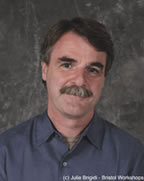
Why this shape and not that? Why steel instead of concrete or stone? Why put it here and not over there? These are the kinds of questions that David Macaulay asks himself when he observes an architectural wonder. These questions take him back to the basic process of design from which all structures begin, from the realization of a need for the structure to the struggles of the engineers and designers to map out and create the final construction. As only he can, David Macaulay engages readers’ imaginations and gets them thinking about structures they see and use every day — bridges, tunnels, skyscrapers, domes, and dams. In Building Big he focuses on the connections between the planning and design problems and the solutions that are finally reached. Whether a structure is imposing or inspiring, he shows us that common sense and logic play just as important a part in architecture as imagination and technology do. As always, Macaulay inspires readers of all ages to look at their world in a new way.
David Macaulay, born in 1946, was eleven when his parents moved from England to Bloomfield, New Jersey. He found himself having to adjust from an idyllic English childhood to life in a fast paced American city. During this time he began to draw seriously, and after graduating from high school he enrolled in the Rhode Island School of Design (RISD). After spending his fifth year at RISD in Rome on the European Honors Program, he received a bachelor’s degree in architecture and vowed never to practice. After working as an interior designer, a junior high school teacher, and a teacher at RISD, Macaulay began to experiment with creating books. He published his first book, Cathedral, in 1973. Following in this tradition, Macaulay created other books—including City, Castle, Pyramid, Mill, Underground, Unbuilding, and Mosque—that have provided the explanations of the how and the why in a way that is both accessible and entertaining. From the pyramids of Egypt to the skyscrapers of New York City, the human race’s great architectural and engineering accomplishments have been demystified through Macaulay's elaborate show-and-tells. Five of these titles have been made into popular PBS television programs.
This book has all the details (and drawings) to answer the questions you’ve asked while looking in wonder at a bridge or skyscraper. From the Hoover Dam, the Golden Gate Bridge and St. Paul’s Cathedral, you’ll see how many recognizable landmarks were built.
I borrowed this from the library but I’ll be adding it to my home library! And, I’ll be trying to find the PBS series that goes along with this book - it sounds really good.
Ages: 10
Content Considerations: nothing to note.
**Like my reviews? Then you should follow me! Because I have hundreds more just like this one. With each review, I provide a Cleanliness Report, mentioning any objectionable content I come across so that parents and/or conscientious readers (like me) can determine beforehand whether they want to read a book or not. Content surprises are super annoying, especially when you’re 100+ pages in, so here’s my attempt to help you avoid that!
So Follow or Friend me here on GoodReads! And be sure to check out my bio page to learn a little about me and the Picture Book/Chapter Book Calendars I sell on Etsy!
David Macaulay takes the reader on a tour of some of the really big civil engineering structures of our time. Building Big has sections on Bridges, Tunnels, Dams, Domes, and Skyscrapers. Each part of the book describes the design and construction of from four to ten outstanding examples of the structure highlighted. The examples in each category are described in chronological order with some going back to the time of ancient Rome. The drawings that accompany the text are excellent at focusing on the details and techniques described. The integration of text and graphics is wonderful. In each case, Macaulay describes the design objectives, the interplay between the structure and the environment, and the engineering solutions used to bring the structures into being. This is a wonderful book for anyone interested in structural engineering and design. I have not seen the related PBS video series, but I can say that the book stands on its own very well. Highly recommended.
Companion book to the PBS series of the same name. Teaches the basic concepts of building five big structures: bridges, tunnels, dams, domes and skyscrapers. Gives a minimum of four specific examples of each with numerous drawings to illustrate architectural concepts and principles. It's a great book to read, browse, dip into or use for quick reference, especially for a non-tect like me!
This is an amazing and very interesting book for mg readers and older. There was obviously a great deal of research necessary to complete this book, and the illustrations are great. The reader gets to learn about the brilliant construction and features of bridges, tunnels, dams, domes, skyscrapers. A glossary of a list of words is included in the back.
Bridges: Ponte Fabricio; Iron Bridge; Britannia Bridge: Garabit Viaduct; Firth of Forth; Golden Gate Bridge; Ponte de Normandie
Tunnels: Two Ancient Tunnels; Hoosac Tunnel; Thames Tunnel; Holland Tunnel; The Channel Tunnel; The Big Dig
Dams: Ita' Dam; Hoover Dam; Aswan High Dam; Itaipu Dam
Domes: Pantheon; Hagia Sophia; Sehzade Mosque; St. Peter's Basilica; Les Invalides; St. Paul's Cathedral; United States Capitol; Astrodome
Skyscrapers: Reliance Building; Woolworth Building; Chrysler Building; Empire State Building; John Hancock Center; World Trade Center; Sears Tower; Citigroup Center; Petronas Towers; Commerzbank Frankfurt
Chapters on bridges, dams, and tunnels are dramatically eye-opening. How do you build such a large structure on water or deep underground? The author went through detailed mechanics in a simple, understandable way to quench your curiosity. The book was miraculously constructed with well-written text, clear, magnificent illustrations, and even touches of humor. Chapters on domes and skyscrapers are less exciting but equally high quality, focusing more on design instead of ways to construct them, which is reasonable because they are built on ground—kind of imaginable. Great read; full respect paid to the author. Anyone with any trace of interest in design and engineering would love the book.
A very involved book that I loved, but it left me in the dust at points. It is a companion book to a film series that I will look into. I was thinking that my "how does it work" grandson might be intrigued by this, but this book is beyond him at this time. For now I will stick to the Make it Work! book that is more hands on and age appropriate.
Grade/Interest Level: Middle School (Grades 6-8) Reading Level: Lexile 1260L Genre:Information Book
Main Characters:NONE Setting:all over the world POV:NONE or author (informational text) I originally became interested in this book because of the PBS series “Building Big”. I had only seen a few episodes of the show at the time I heard of the book, but found the show engaging and interesting and thought the book would be the same. It was! The book is considered to be juvenile or young adult literature because of the simplicity of the text and how it is written. This book explains how bridges, tunnels, dams, domes and skyscrapers are built and gives an explanation of the mechanical principles involved. There are wonderful illustrations in this book and David Macaulay describes such things as the Empire State Building, Hoover Dam, and The Golden Gate Bridge. He teaches about how they were built and what the principles were used to hold the structures up. I would use this text within the classroom to teach students about structural concepts which can then lead into discussions about historical landmarks throughout the world. (i.e. pyramids, Big Ben, The Eifel Tower, and the Twin Towers). This book is especially informational and useful for Chicago and CPS students since our city has the largest skyscraper in the United States and several others. This would be a fantastic additional text to talk about the skyline of Chicago and its history in terms of buildings.
There’s not really much I can say about Macaulay’s latest book, except that it’s just like all his previous books, and just as interesting and entertaining. His first book was Cathedral, a mix of how-to and the author’s precise and extraordinarily detailed artwork (all in pencil) which became a hit television special on (I think) PBS, but he’s done similar slender architectural history volumes on Roman city planning, a medieval castle, New England water-powered mills, what’s under the streets of New York City, and many others. Kids probably know him better as the author of the How Does It Work? books. And there’s also the slyly hilarious Motel of the Mysteries, which requires a bit of background in the history of archaeology to truly appreciate. This volume is also meant to accompany a television series and is divided into sections on bridges, tunnels, dams, skyscrapers, and other “big” architectural themes.
David Macaulay put together a fascinating look at the design considerations and build process for some of mankind's largest structures: bridges, tunnels, domes, and skyscrapers. His illustrations add just enough detail to make the text comprehensible, with just enough humor to make the read interesting.
Слооожно. Я снова себя школьницей почувствовала. Перед прочтением думала, что узнаю много нового и интересного о всяких достопримечательностях, о том, с какими сложностями и событиями они были связаны. А там голые инженерные факты, рассказанные простым языком, но от этого не становящиеся более интересными.
A book about large buildings and structures. The author describes such things as the Empire State Building, Hoover Dam, The Golden Gate Bridge. It talks about how they were built and what the principles are that hold it up. The discussions are accompanied by drawings and diagrams.
Awesome book -- PBS's 2000 companion series (can be found online via file-sharing) solidly reinforces concepts. The interactive combo of book + PBS series is an unprecedented engineering/architecture--learning experience.
I love how the author gets the reader to really think about why something might be built and what was it built out of. I like how he also tells of the planning that went into different structures that we use today. Great for those students who are engineers
Good for: - a text set on differ run careers -a focus on engendering (as it relates to the new science standards) - I would not use this book as a whole class read aloud -students interested in architecture -to point out graphs and diagrams
We have also been watching the series of Building Big dvd's (Skyscrapers, Bridges, etc.) hosted by this author. He is also the author of The Way Things Work.