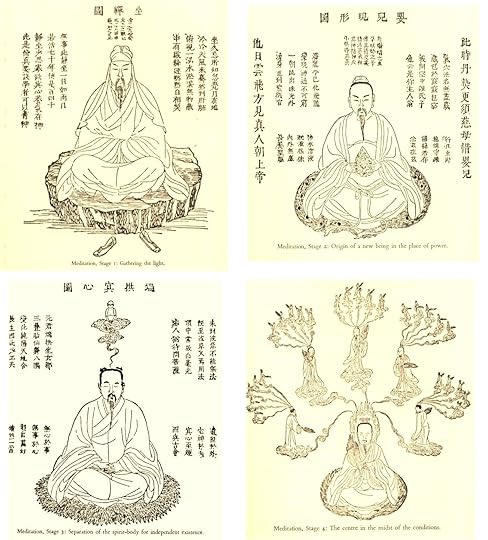
Extracted from Volumes 10, 11, 13, and 18. Includes Commentary on The Secret of the Golden Flower, Psychological Commentary on The Tibetan Book of the Dead and The Tibetan Book of the Great Liberation, Foreword to Suzuki's Introduction to Zen Buddhism, and Foreword to the I Ching.
Carl Gustav Jung (/jʊŋ/; German: [ˈkarl ˈɡʊstaf jʊŋ]), often referred to as C. G. Jung, was a Swiss psychiatrist and psychotherapist who founded analytical psychology. Jung proposed and developed the concepts of extraversion and introversion; archetypes, and the collective unconscious. His work has been influential in psychiatry and in the study of religion, philosophy, archeology, anthropology, literature, and related fields. He was a prolific writer, many of whose works were not published until after his death.
The central concept of analytical psychology is individuation—the psychological process of integrating the opposites, including the conscious with the unconscious, while still maintaining their relative autonomy. Jung considered individuation to be the central process of human development.
Jung created some of the best known psychological concepts, including the archetype, the collective unconscious, the complex, and synchronicity. The Myers-Briggs Type Indicator (MBTI), a popular psychometric instrument, has been developed from Jung's theory of psychological types.
Though he was a practising clinician and considered himself to be a scientist, much of his life's work was spent exploring tangential areas such as Eastern and Western philosophy, alchemy, astrology, and sociology, as well as literature and the arts. Jung's interest in philosophy and the occult led many to view him as a mystic, although his ambition was to be seen as a man of science. His influence on popular psychology, the "psychologization of religion", spirituality and the New Age movement has been immense.
This collection of essays is the best book I've come across dealing with the integration of Eastern knowledge to the Western mind. Jung's ideas and interpretations of the great mystical traditions of the East are extremely valuable in these modern times where yoga and mindfulness are no longer niches in the West, but common and widespread. This book made me reconsider the way I've been consuming Eastern philosophy somewhat uncritically and unaware of my own psychological conditioning, being brought up in Europe. I also realized that I have been underestimating the influence Christianity has had on our so-called 'secular' society, which is actually founded upon Christian values. I highly recommend this book for any Westerner who is interested in Eastern thought.
Muito me intriga o que Jung teria a dizer hoje sobre os estúdios de yoga encontrados em qualquer esquina no ocidente e sobretudo frequentados por cristãos.
P.S. Jung teve a pachorra de mencionar um dos livros do Huxley que não li?
This is a wonderful collection of mostly introductions and forwards by Jung to various Eastern Texts from the Book of the Dead to the I Ching. It covers a wide range of "eastern" topics and styles, and gives Jung's unique approach to the texts. It is apperant by reading this how Jung's ideas on Eastern thought evolved through his career - starting with very sceptical optomism at the beginning, to an all out embracal of I Ching towards the end. It is refreshing and exciting material. Very good collection.
Creería que Jung puso el título en singular -igual pasa con la versión alemana- porque, en esta serie de artículos publicados con anterioridad, se marca y señala un evidente paralelismo entre oriente y occidente. Ahora, por desgracia Jung no profundiza mucho en cada religión estudiada sino que parece realizar un mapeo de las principales religiones en Asia y, con ellas, las características que ellas tienen en común.
Notable chapters: - Psychological commentary on The Tibetan Book of the Dead - The Dreamlike world of India - Psychological commentary on The Tibetan Book of the Great Liberation - Foreword to Suzuki’s Introduction to Zen Buddhism - The Holy Men of India - Foreword to the I Ching
Después de haber leído "Psicología y religión" me quedé con ganas de más, así que me descargué este libro a ver qué tenía para decir Jung respecto a las religiones orientales. Como era de esperarse, sus ideas me maravillaron.
En esta obra se compilan algunos prólogos que el psicólogo escribió para libros diversos como el tomo de I Ching de su amigo Wilhem. Además se incluyen algunas conferencias que dió respecto a este tema, y algunos comentarios personales respecto a sus viajes a la India y a su percepción de estas culturas.
A grandes rasgos, lo que Jung plantea es que el mundo no sólo está dividido geográficametne en "oriente y occidente", sino que la forma de pensar, la identidad psicológica y la forma de percibir el mundo de las personas pertenecientes a uno y otro hemisferio son muy diferentes. Discierne así entre la "mentalidad europea" (materialista y extravertida) y la "mentalidad oriental" (espiritual e introvertida).
Todo el recorrido que hace explicando y buscando afirmar su teoría es alucinante y da mucho qué pensar. Sin embargo, en comparación al libro que mencioné al principio, este me pareció más redundante y un poco más tedioso de leer. Aún así, vuelvo a repetir, me hizo reflexionar mucho sobre algunas ideas que había formulado en el pasado y que no había terminado de cerrar aún.
Debo aclarar que, además de lo anteriormente mencionado, el punto que le resto también va de la mano con algún que otro comentario machista que encontré en el texto. Entiendo que Jung vivió a principios del siglo XX y demás, pero, ¡hombre, no era necesario!
a bit of a strange read - comprised almost entirely of prefaces and introductions to other books, mostly sacred texts from china and india. i'm not too familiar with these texts, so my enjoyment of this book is definitely dampened as a result. i like that jung was so wary of just importing wholesale decontextualised ideas of yoga and so on; there's a particular quote about the pointlessness of doing yoga in mayfair or 5th avenue which i find quite funny. for a german writing mostly in the 30s and 40s, he has a very open idea to these ideas serving the purpose they were designed for for the people they were designed for. but there's a dark side to this too, this kind of dangerous orientalism that divides the 'western, christian mind' and that of the 'oriental' as if they were fundamentally different. granted, he doesn't say that one can't learn from the other, but he seems to be quite careful about it. he stresses often that he is inexperienced and unknowledgeable in this field, and although it's interesting hearing him draw parallels between eastern philosophies and religions and his own psychoanalytical theories, a lot of the time it falls flat due to this.
اگر دلتون میخواد یک کتاب به فارسی سخت بخونین شک نکنید همین کتابه انقد ترجمه کتاب سخت بود جدا از اینکه مطالب کتاب سنگینه این ترجمه هم باعث میشه کتاب سنگین تر بشه اما واسم خیلی جالب بود که یونگ میگه شرق شناسی کار انسان اروپایی نیست میگه ما فقط ظاهر ماجرا رو میبینیم و این حتی برای انسان اروپایی مضر هم هست، انگار پی بردن به عمق تفکر شرقی از سخت ترین کارهای دنیا باشه
ستاره ای به این کتاب نمیدم چون قطعاً کتابی که کار یونگ باشه 5 ستاره کمش هم هست اما من باید با برداشت خودم از کتاب بهش امتیاز بدم که با توجه به این ترجمه و این متن سنگین نمیتونم حق مطلب رو ادا کنم با ستاره ها پس این ستاره ها باشه تا شاید یه روزی که بیشتر دونستم بهتر بتونم قضاوت کنم، اما وقتی کتاب رو تموم کردم داشتم با خودم فکر میکردم تا حالا چند تا کتاب خوندم که برای درک بهترشون نیاز به کلی مطالعه جانبی بوده؟ راه حل چیه؟ کاش مترجم یا نویسنده ی اصلی یا انتشارات کتابهایی که بهتره قبل یا همراه یا بعد از این کتاب مطالعه بشن رو توی مقدمه یا بخشی از کتاب ذکر میکردن اینجوری مطمئناً کمک بیشتری به خواننده اثر میشد
Carl Jung's book is a captivating journey into the Swiss psychologist's valuable thoughts and reflections. Jung blends Eastern thought with his analytical psychology, exploring the interconnections between the individual psyche and Eastern philosophical traditions. Although his writing may not be easily accessible, his ability to weave together these connections is remarkable.
The book follows a logical structure, guiding readers through various Eastern philosophies and demonstrating how they can be integrated into the understanding of the human psyche. Jung's unique vision transcends cultural boundaries, building bridges between East and West.
However, I have reservations about giving it a full rating compared to the "Red Book", which stands as an unreachable beacon. The "Red Book" offers unparalleled depth and intensity, creating a transformative reading experience beyond all expectations. While this essay is brilliant, it cannot compete with the evocative power of the "Red Book".
A collection of short essays/introductions to Eastern philosophical texts. This is going to require multiple rereads I think, to pick up on all of the gems of ideas. Now that the West has picked up on Eastern philosophy and brought morsels of it into the mainstream in the forms of yoga and mindfulness, we could all do well to read Jung who warns us of attempting to stumble into a philosophical system we are not psychologically hardwired for. I am interested now to explore some Christian mysticism and see where some of the ideas of the collective unconscious are developed in our own cultural history.
While it may not be the most captivating read, it does have its moments of profound insight that make it worth the effort. The central theme of the book revolves around the contrasting perspectives of Western and Eastern spirituality. Jung delves into the notion that when a Westerner prays, they tend to direct their focus outside, towards a higher altar or deity. Conversely, an Eastern person's prayer is portrayed as an inward journey, seeking the divine within themselves.
Neste livro, o autor lança um olhar ocidental sobre alguns fenômenos religiosos do Oriente e sua importância psicológica; o Livro Tibetano dos Mortos e da Grande Libertação, Ioga, Meditação, Zen-budismo e I Ching.
This book has been a journey through some representations of Eastern thought with the psychology of Jung. I read it to get a psychological perspective of what I find many Westerners take in an unnatural way (in my opinion): modern yoga. I practice yoga and read about its philosophy. Having lived in Asia and befriended non-travelled Asians I am always curious about their ways, for example their not asking of 'why' as much as we do... the Eastern ways in my experience are still there in spite of much Westernization in some areas. Western countries can learn from Eastern thought; I wanted to understand how and what are the obstacles because I don't think we are learning the deeper meaning of the teachings of yoga in spite of it having become a main stream offering in all major cities. Of course the essays in the book are old but amazingly, we have not changed that much.
Reading Jung changed my life. It takes time reading psychology, but once one reaches a certain point, it is like a tsunami of revelation on human nature. The horror of Jung, he is right on everything he talks about. It will take years for me to comprehend the implications of Jung’s writings. Freud is easy, Jung is hard. Jung is hard because he is right. In a way, I want Jung to be wrong, staying within Freud’s psychology is easy.
Utterly amazing book, and very unique perspective from a psychological point of view. Jung attempts to explain the abstract concepts of Eastern religions in an unbiased manner.
Excelente coletânea de textos de uma das maiores autoridades em psicologia de todos os tempos, sobre um tema fascinante, a psicologia e a religião orientais.