Jump to ratings and reviews
Rate this book

Paycheck

Rate this book
Electronic engineer Jennings cannot remember the last two years working for Retherick Construction. His payment is a bag of clues and essential aids for his future quest for the truth: code key, ticket stub, receipt, wire, half a poker chip, green cloth scrap, and bus token. The Special Police pursue, and he is on the run for his life.

30 pages

First published June 1, 1953

39 people are currently reading
1174 people want to read

About the author

Philip K. Dick

2,005 books22.4k followers
Philip Kindred Dick was a prolific American science fiction author whose work has had a lasting impact on literature, cinema, and popular culture. Known for his imaginative narratives and profound philosophical themes, Dick explored the nature of reality, the boundaries of human identity, and the impact of technology and authoritarianism on society. His stories often blurred the line between the real and the artificial, challenging readers to question their perceptions and beliefs.
Raised in California, Dick began writing professionally in the early 1950s, publishing short stories in various science fiction magazines. He quickly developed a distinctive voice within the genre, marked by a fusion of science fiction concepts with deep existential and psychological inquiry. Over his career, he authored 44 novels and more than 100 short stories, many of which have become classics in the field.
Recurring themes in Dick's work include alternate realities, simulations, corporate and government control, mental illness, and the nature of consciousness. His protagonists are frequently everyday individuals—often paranoid, uncertain, or troubled—caught in surreal and often dangerous circumstances that force them to question their environment and themselves. Works such as Ubik, The Three Stigmata of Palmer Eldritch, and A Scanner Darkly reflect his fascination with perception and altered states of consciousness, often drawing from his own experiences with mental health struggles and drug use.
One of Dick’s most influential novels is Do Androids Dream of Electric Sheep?, which served as the basis for Ridley Scott’s iconic film Blade Runner. The novel deals with the distinction between humans and artificial beings and asks profound questions about empathy, identity, and what it means to be alive. Other adaptations of his work include Total Recall, Minority Report, A Scanner Darkly, and The Man in the High Castle, each reflecting key elements of his storytelling—uncertain realities, oppressive systems, and the search for truth. These adaptations have introduced his complex ideas to audiences well beyond the traditional readership of science fiction.
In the 1970s, Dick underwent a series of visionary and mystical experiences that had a significant influence on his later writings. He described receiving profound knowledge from an external, possibly divine, source and documented these events extensively in what became known as The Exegesis, a massive and often fragmented journal. These experiences inspired his later novels, most notably the VALIS trilogy, which mixes autobiography, theology, and metaphysics in a narrative that defies conventional structure and genre boundaries.
Throughout his life, Dick faced financial instability, health issues, and periods of personal turmoil, yet he remained a dedicated and relentless writer. Despite limited commercial success during his lifetime, his reputation grew steadily, and he came to be regarded as one of the most original voices in speculative fiction. His work has been celebrated for its ability to fuse philosophical depth with gripping storytelling and has influenced not only science fiction writers but also philosophers, filmmakers, and futurists.
Dick’s legacy continues to thrive in both literary and cinematic spheres. The themes he explored remain urgently relevant in the modern world, particularly as technology increasingly intersects with human identity and governance. The Philip K. Dick Award, named in his honor, is presented annually to distinguished works of science fiction published in paperback original form in the United States. His writings have also inspired television series, academic studies, and countless homages across media.
Through his vivid imagination and unflinching inquiry into the nature of existence, Philip K. Dick redefined what science fiction could achieve. His work continues to challenge and inspire, offering timeless insights into the human condition a

Ratings & Reviews

What do you think?
Rate this book

Friends & Following

Create a free account to discover what your friends think of this book!

Community Reviews

5 stars
446 (17%)
4 stars
962 (38%)
3 stars
900 (36%)
2 stars
155 (6%)
1 star
21 (<1%)
Displaying 1 - 30 of 222 reviews
Profile Image for Bill Kerwin.
Author 2 books84.3k followers
January 5, 2022

First published in Imagination (June 1953), “Paycheck” is a science fiction classic. Although not strictly a tale of time travel (it is really a tale of time “retrieval”), it presents a genuinely original idea of how other time periods might be utilized to affect the present. What makes it such a classic story, however, is that it communicates a revolutionary concept (“time scooping”) through an exciting, straightforward narrative of an almost fairy tale purity.

Computer “mechanic” Jennings returns from two years of working for Rethrick Construction with his two years of memory—as stipulated by contract—permanently erased. When he attempts to receive his paycheck of 50,000 credits, he receives instead an envelope containing: a piece of wire, a bus token, a ticket stub, a piece of cloth, half a poker chip, a code key, and a package receipt. It turns out that he himself requested that he receive the contents in lieu of payment. At first he is appalled, and angry, but, as soon as he exits the front door of Rethrick Contruction, he begins to discover very good reasons to be thankful for his past self’s strange gift.

I wish I could give this story my highest praise, but unfortunately it concludes in a sappy, romantic fashion which, although perhaps suitable for the pulps, mars both its power and folktale simplicity. But still, it is a small blot in an otherwise fine story, and I heartily recommend it.
Profile Image for J.L.   Sutton.
666 reviews1,247 followers
October 31, 2019
"What the hell have I been doing the last two years?" After being contracted for a job for two years, Jennings’ mind is wiped clean. Had he sold those two years for a 50,000 credit paycheck? Not satisfied with this, he accepts the strange terms of the contract, that he apparently devised, that allows him to exchange that paycheck for a handful of apparently worthless trinkets. Jennings looks to these trinkets as clues that will help him understand what happened during those two years and allow him to profit more than the 50K Credit. “Paycheck” is a quick and interesting short story from PKD. 3.5 stars
Profile Image for Howard.
2,111 reviews121 followers
September 14, 2024
4 Stars for Paycheck (audiobook) by Philip K.Dick read by
Keir Dullea.

This was an interesting exploration of memory loss and knowing that you can help your future self succeed. You just have to trust in your past self.
Profile Image for Tristram Shandy.
875 reviews264 followers
July 19, 2017
Ticket for a Ride

Paycheck is an early story by Philip K. Dick, written in 1952 and published one year later, and while it is clearly meant to entertain its readers with its Hitchcockian “innocent man on the run” motif, only to be slightly marred by its jarring pat ending, it also has a somewhat prophetic quality.

Our protagonist, an engineer called Jennings, has just finished a two-year employment with athe mysterious company Rethrick Construction and instead of the huge payment he has been expecting he receives seven seemingly worthless little everyday objects. According to his contract, all his memories from the past two years have been erased from his mind, but he is told that it was actually he who wanted to be given these objects instead of monetary payment. At first, he is dismayed and does not know what to make of it all but he soon finds himself the target of the Secret Police – the U.S. has become an authoritarian state during those two years – who want to force him to disclose what he had been working on. He sees his only chance to find out what he worked on for his former employer, blackmailing Rethrick Construction into giving him permanent shelter from the police, and lo! suddenly those mundane trinkets he received prove of immeasurable value.

Like The Variable Man the story spends a lot of energy on the chase of the protagonist (and I could almost picture Cary Grant in the role of Jennings), but the story is about more than just providing quick thrills. Dick pictures a future in which the individual has lost all his rights and finds himself jammed between an all-powerful state and big companies serving their own interests, the only ones to have resisted the state’s claim to absolute power.

”When an individual person was defenceless, a business was not. The big economic forces had managed to remain free, although virtually everything else had been absorbed by the Government. Laws that had been eased away from the private person still protected property and industry.”


Sounds familiar?

”’[…] An individual has no place to turn to, anymore. No one to help him. He’s caught between two ruthless forces, a pawn between political and economic powers. And I’m tired of being a pawn.’”
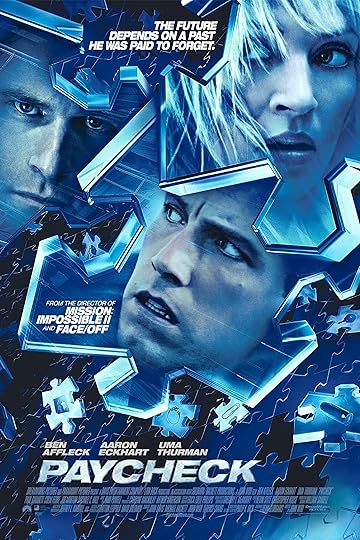
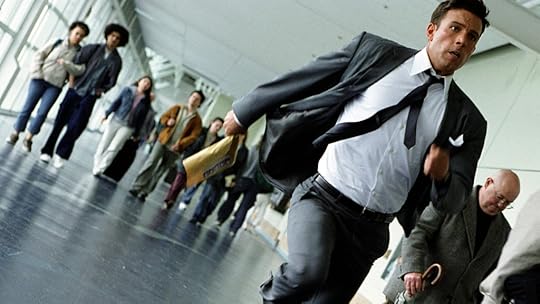

Ditto? One may have the impression that Dick’s story is set in a society the writing of which is on the wall. Add to this Dick’s concept of time scooping and a suspenseful “man on the run” plot, and you have a good example of intelligent and entertaining science fiction. I don’t know whether the movie lives up to the story because Ben Affleck always makes me not to watch the movie.
Profile Image for Jim.
Author 7 books2,089 followers
February 22, 2020
As usual, PKD had a really neat idea that he couldn't quite bring off properly. If you ignore the large holes in the story, it's fun. Since it's short & doesn't get weird, it's better than most of his other works. The best part is the power structure in the world he imagines. The fascist government police force can do what they like to private citizens, but their power is stymied by corporations; the direction we're rapidly heading today. They don't bother the Mafia, either. Corruption still has its place.

The story is dated by the programming of the device. It's back to the days where mechanics ruled the computer world, but that's forgivable & easily ignored as was the method used for memory erasure. The device itself is excellent. It's not omnipotent, but has excellent limits.

Well worth reading in any format. As usual, the movie of the same name (2003 starring Ben Affleck & Uma Thurman) was better.
Profile Image for Alexandra .
936 reviews362 followers
July 7, 2016
Paycheck ist eine Reihe von 12 Kurzgeschichten von Philip K. Dick, von denen nur 8 wirklich gut sind. Wenn Ihr das Buch bereits daheim habt, ist es durchaus mit 3,5 Sternen zu bewerten und lesesenswert, wenn nicht, gibt es eine weitaus bessere Alternative für Euch: Besorgt Euch "Der unmögliche Planet", eine Sammlung von 30 der besten Kurzgeschichten Dicks, denn bis auf zwei Geschichten sind alle guten Stories dieses Buches auch dort versammelt und noch viel mehr guter Stoff als Draufgabe. Aber nun die Übersicht, damit Ihr Euch selbst ein Bild machen könnt:

1. Paycheck - gut - nur in diesem Buch
2. Nanny - grandios - auch im unmöglichen Planeten
3. Johns Welt - mittelmäßig - nur in diesem Buch
4. Frühstück im Zwielicht - langweilig - nur in diesem Buch
5. Kleine Stadt - vorhersehbar, mittelmäßig - nur in diesem Buch
6. Das Vater Ding - grandios - auch im unmöglichen Planeten
7. Zwischen den Stühlen - grandios - nur in diesem Buch
8. Autofab - grandios - auch im unmöglichen Planeten
9. Zur Zeit der Perky Pat - grandios - auch im unmöglichen Planeten
10. Allzeit bereit - mittelmäßig das Ende passt gar nicht - nur in diesem Buch
11. Ein kleines Trostpflaster für uns Temponauten - sehr gut - auch im unmöglichen Planeten
12. Präpersonen - grandios und fürchterlich - auch im unmöglichen Planeten

Also wenn Ihr die Wahl habt, nehmt den unmöglichen Planeten.

Lediglich um Geschichte 7 wäre mir wirklich leid. Diese Story erinnert mich ganz frappant an unsere derzeitige Wahlsituation in Österreich. Zwei völlig verfeindete Lager stehen sich unversöhnlich gegenüber: Die Puristen und die Naturalisten. Das groteske an der politischen Situation ist, dass es vordergründig hauptsächlich um Achselschweiß und Mundgeruch geht, die Naturalisten (eher die Landbevölkerung) lehnen es ab, sich die Schweißdrüsen entfernen und sich die Zähne richten zu lassen. Don sitzt zwischen den Stühlen, denn er lebt nach dem Motto "Leben und leben lassen" und will Toleranz üben. Leider hat er nicht mit dem Fanatismus beider Parteien gerechnet.

Zum Cover möchte ich dieses Mal auch etwas schreiben. Selten ein so deplaziertes, schlechtes Bild gesehen. Auf der Vorderseite prangen doch tatsächlich wie bei einem Filmplakat die Gesichter der Hauptdarsteller von Paycheck: Ben Affleck, Uma Thurman und noch irgendein Schauspieler, den ich nicht kenne. In Anbetracht der Tatsache, dass Paycheck genau ein Zwölftel des Buchinhaltes ausmacht, weil sie einfach nur eine unter vielen anderen Kurzgeschichten ist, stellt somit dieses fürchterliche Cover nicht nur eine Beleidigung für mein Auge, sondern auch noch eine glatte Themenverfehlung dar. Da lobe ich mir die uni-färbige Heyne Ausgabe der restlichen Dick'schen Romane (leider bereits vergriffen).

Profile Image for P.E..
964 reviews755 followers
March 25, 2020
Un recueil de nouvelles dont certaines ont inspiré des romans !


Liste des nouvelles :
La clause de salaire = Paycheck
Nanny = Nanny
Le monde de Jon = Jon
Petit déjeuner au crépuscule = Breakfast at Twilight
Une petite ville = Small Town
Le père truqué = The Father-thing
Là où il y a de l'hygiène = The Chromium Fence
Autofab = Autofac
Au temps de Poupée Pat = The Days of Perky Pat
Le suppléant = Stand-by
Un p'tit quelque chose pour nous, les temponautes = a Little something for us tempunauts
Les pré-personnes = The Pre-Persons
Profile Image for Stephen Cagle.
42 reviews5 followers
April 8, 2012
This is a very short story, so it will be a short review.

Paycheck is clear, clean writing. It actually fits in quite comfortably with The Minority Report by PKD as both deal with the ability to see events that have not occurred yet. I suppose the technology in Paycheck exceeds that in Minority as they are also capable of "reaching" into the future, not just observing it from the past.

The book was a little dry. Anachronisms littered the story like punchcards in a modern data center (terrible). It also suffers from the Deus Ex Machina problem of having a guy who knows the future providing you tools to deal with the present. Whatever. It is good, very short, and a fun read. Nothing profound, but fun.
Profile Image for Nicole.
Author 5 books48 followers
November 27, 2020
I saw the movie based on this story when it first came out and liked it. I recently watched it again; and although Uma Thurman's character was sillier than I remembered, I still enjoyed the movie.
The movie took the basic ideas of the story and made things more complicated and tense. This story is more cynical than the movie version; the main character is much less likeable. The story's narrative is repetitive, which reflects the way people think; but the repetition started getting on my nerves. And then there's the casual sexism typical of something written in the 1950s.
27 reviews
July 12, 2009
Too funny! Didn't realize this was a collection of short stories and was wondering how the different parts would eventually come together. Figured out the truth on chapter 5 - duh!
Profile Image for Amy.
829 reviews169 followers
January 29, 2024
This one started better than it ended. I man comes off of several years with an employer only to find that they've erased his memory and he's supposedly accepted several "trinkets" instead of money for all the work he's done. It seems a little fishy until the trinkets start to come in handy (things like half a poker chip and a bus ticket). About at the halfway point, the story gets less interesting, and I'm still a little vague about what a time scoop is, although I can guess about the time mirror.
Profile Image for Wolfkin.
273 reviews27 followers
July 29, 2020
great fun little short story. I love a good mystery myself so this was right up my alley
Profile Image for Jairo Fruchtengarten.
334 reviews8 followers
May 22, 2020
É bom iniciar essa resenha assumindo que não sou um entusiasta de livros de ficção científica, e não gosto muito de livros de contos. Acho que um conto não consegue desenvolver a complexidade de nenhum personagem nem de qualquer trama a ponto de te envolver muito na narrativa, resumindo-se a uma estória bem contada ou não; e ainda, tenho certo preconceito com a temática de ficção científica, que não desperta grande interesse (culpa de Star Wars...hehehe).

Apesar de tudo conspirar contra, a sinopse de “O Pagamento” me fez apostar nesse livro, uma coletânea com outros 11 contos de  Philip K. Dick que abordam temas como viagem no tempo, implementação de inteligência artificial, e a vida num mundo pós-guerra, onde a presença dos robôs é uma realidade.

Posso dizer que essa série de contos mostrou-se um bom livro de ficção científica pra quem não gosta de ficção científica! Algumas estórias são bem interessantes (talvez por não se aprofundar muito...), e mostram uma visão criativa de um futuro distópico. Não têm personagens marcantes nem desfechos surpreendentes, mas te fazem refletir na crítica social sutilmente incluída ou pela competente abordagem de curiosos conflitos éticos.

São nesses contos que o livro te ganha, como “O Pagamento”, “Mundo de Jon”, “Cidadezinha” e “Café da Manhã no Crepúsculo”. Pena que nem todos os contos mantêm o ritmo - sendo alguns deles bem ruins.
Profile Image for Peter.
790 reviews66 followers
September 12, 2017
Read as a part of Minority Report and Other Stories

I have watched the movie of the same name that's based on the premise in this short story, but I only vaguely remember it now. It wasn't the best of movies and I think it might have been due to a similar issue as this story: it's hard to have tension when you know that every step the protagonist makes has already been planned for. While it was fun having the protagonist figure everything out, it was just hard to feel worried for him knowing from quite early on that his past-self set him up to succeed.

The core idea is once again very clever though and I can appreciate why this author is regarded as one of the best sci-fi writers ever. However, his execution of the story and especially the weak ending here were disappointing. The story otherwise was fun as we got to experience the solving of the puzzle of the trinkets, despite some plot holes and a lack of information behind the sci-fi elements.
Profile Image for Jacques Bezuidenhout.
386 reviews20 followers
November 4, 2017
Read as part of Minority Report and Other Stories.

Another short that had a movie based on it. First published in 1953.
I think one has to understand with these shorts that not a lot of time is spend on developing characters. There is a plot, and limit time to get through it.

With Paycheck (don't think I've actually seen the movie) there were quite a few twists, which was nice. The whole short reads like a puzzle. And that is exactly what it is.

Very enjoyable.
Profile Image for Alice.
Author 39 books50 followers
August 22, 2018
Some of these stories are a little dated and predictable now, but still a pleasure to read. Standouts were the title tale, Paycheck, a pacy time travel adventure; The Days of Perky Pat, in which adult survivors of a global crisis use the technology given them by kindly aliens not to rebuild their planet, but to re-enact the past with dolls; and The Pre-Persons, which I can recall from a collection I gave my dad years ago and impressed us both at the time.
Profile Image for Alexis Rogers-Esparcia.
106 reviews4 followers
January 1, 2018
I needed something quick to listen to on the way home from work. I was so surprised by how awesome this was. I got wrapped up in the story immediately. It was a fun and exciting read. Great if you want something short and fun. I love science fiction so this was perfect!
Profile Image for Grace Crandall.
Author 6 books55 followers
April 9, 2021
I had vague memories of watching (and enjoying) the movie they made based on this premise. I still enjoy the premise quite a bit, but couldn't get past the way the narrator really, really sounded like Zapp Brannigan.
Profile Image for Terry.
443 reviews1 follower
September 30, 2020
If you know the future can you prepare correctly?
Profile Image for Colby Holloway.
349 reviews18 followers
August 8, 2023
Oh man, why did no one tell me Dicks short stories are so much better than his novels. I’ve been meandering though pages of confused and disoriented monologues when I could’ve just been flipping through psyched out thrillers!
Profile Image for Nicolò Grasso.
220 reviews5 followers
August 26, 2022
My first foray into the sci-fi works of Philip K. Dick, and it was a lackluster first impression. PAYCHECK is a novella with intriguing concepts but without a clear idea of what to do with them. A blend of time travel and visions of the future make for a fun enough thriller, but its themes of free will and choice do not amount to much and will be explored more in-depth with THE MINORITY REPORT. Also, the ending is too sappy even for its time!
Profile Image for Nina {ᴡᴏʀᴅs ᴀɴᴅ ᴡᴀᴛᴇʀ}.
1,151 reviews78 followers
May 24, 2019
4 stars might be generous since I don't love the majority of these short stories, but I'm just biased because, strangely enough, I really enjoy Philip K. Dick's works!

So, the stories in this collection are:
"Paycheck"
"Nanny"
"Jon’s World"
"The Little Movement""
"Breakfast at Twilight"
"Small Town"
"The Father-Thing"
"The Chromium Fence"
"Autofac"
"The Days of Perky Pat"
"Stand-by"
"A Little Something for Us Tempunauts"
"The Pre-persons"


And my favourite stories were Paycheck, Nanny, Jon's World, and The Pre-Persons. Why do I like these?

Paycheck is a clever look at time travel - or in this case, time scooping, where on could use a special mirror device to look forward into the future and then use the special claw device to scoop up something from that point. I love it. The story not only gives us action and tension, but also brings forward the question of having the power and ability to look forward into the future. It's definitely PKD all over it.

Nanny is not my favourite because I love it. I like it because the ending notes frustrate me. It's a thought provoking story about the consumerism, marketing practice, the violence loving/competitive nature of some facets of society, and materialism. The problem with this story is I kept thinking, what about the children? How will they deal with attachment when their Nanny is constantly in a live or die situation??? And the amazing thing is, parents don't consider this for their children - a great contrast to society now where we're deeply concerned with who we leave our children in the care of - instead they're more concerned off buying bigger and better. In doing this, they do in some ways protect their children, but risk having to buy another. It becomes almost barbaric!

Jon's World is a sad little story. It's also about time travel, but also about a father who lobotomises his own child (there is so many socially unacceptable things about this) child before he goes on a mission back in time to save the Earth from technological apocalypse (not unlike Terminator's Judgement Day). He does it to his child because Jon is getting worse - his vision's, or his father thinks--hallucinations. But when he goes back in time and with his partner completes the mission, while accidentally killing an important key figure, and then returns back to the future. It's in the new present that he realises he had made a mistake. That the world that they had come back to was the world his son had been seeing all along. He attempts to go back, but he's stopped by his partner.

And The Pre-Persons is obviously a statement about abortion, the age acceptable for killing an unborn child, and what it means. I like this one because of this statement. Especially the part when a highly qualified man with a Stanford degree makes the pound van take him to the pound along with all the other children who don't have a D card - as if they were merely stray cats or dogs (in this stories, stray cats and dogs aren't even collected, just killed, while loose children are designated as 'strays' that have to be collected for a price). He does it to make a statement, and it does, getting into the papers the same day.

But, as always, I enjoyed PKD's works. They've always got something to say, even the not so great ones - I didn't really have much to say about Perky Pat or the Father-Thing.
Profile Image for Jeffery Moulton.
Author 2 books24 followers
June 23, 2014
It always amuses me when I hear people talking about Philip K. Dick movies. They often assume, usually incorrectly, that he was able to foresee this amazing future and they stand in awe of his prescience. The Minority Report was a good example. After seeing the movie, I heard several people talking about how amazing it was that Dick imagined such advanced computer technology way back in the 50s and 60s, never realizing that the computers in the original story actually generated punch-cards and were... well.. computers from the 50s and 60s. They were nothing like what viewers saw in the movie.

Paycheck, which is one of many short stories written by PKD, is similar. It is incredibly dated, especially its attitudes towards government and the sexes. PKD was very much a product of the 50s, and his bias and suspicion towards government in general comes through his stories. The one is no exception. Even more, his attitude toward genders is very apparent. It makes for some interesting reading from an historical perspective, but it can also be just a little uncomfortable when the male characters make overtly chauvinistic comments and references that just wouldn't fly in today's world. He's writing from his worldview in the context of the time, so you have to cut him some slack, but it made me glad that we've come a least a little further than that.

That being said, the story is interesting. Like every PKD adaptation I've ever seen, the movie is significantly different from the written story. While maintaining the core of the idea, it expands and goes places PKD never imagined. Also, like other PKD adaptations (notably The Minority Report), the ending flies directly in the face of the ending in the story. As if the filmmakers decided to do the exact opposite of what PKD wrote. Again, this is a product of the times. Dick's endings are often more forgiving of corporations and other entities that are not in vogue these days. Keeping the original endings just wouldn't work today, so the filmmakers have to make changes.

In the end, I thought the story was worth reading. It is rife with interesting tidbits that appear anachronistic in today's world but paint a fascinating picture of that time period. The 3-star rating was mostly because... well... I just didn't love the story. Like I said, it made me a little uncomfortable sometimes, but more than that, I got to the end and asked "so what?" without a good response.

I recommend the story to any PKD fan and to anyone interested in that time period and classic science fiction.
Profile Image for Storm.
2,324 reviews6 followers
April 19, 2025
Collected in The Collected Stories of Philip K. Dick 4: The Minority Report. A few pages into the story I realized this one has also been adapted into a science fiction movie starring Ben Affleck, which I have watched not realizing this too, was based on a Philip K. Dick story.


The premise is a little convoluted. An electronic mechanic, as part of his job, is given a bag of seemingly worthless objects as his paycheck, apparently authorized by himself prior to his brain wipe (part of the job). Seeing that if he had taken stock he would have been rich he isn't too happy at himself. Then he is picked up by the Special Police, who are investigating his employer Rethick, and suddenly an item comes in useful in helping him escape.


Now he's running for his life, realizing that the "worthless" objects are the key to unlocking his recent past, and ensuring that he has a future. Each of the random objects end up being instrumental in some way when he's put in a tight spot begging the question - how did the past him know what would be needed? And now we have amnesia, and possibly either precognition or time travel of some sort.


I love how author Philip K. Dick said the inspiration for this story is how some seemingly random items can change in their value depending on circumstances, and he wrote this story to prove that point. I liked the story, but not as much as some of his other works because I felt the ending was a little too rushed and convenient. Note: the movie had a better ending, that was way more satisfying.
Profile Image for Alex Shrugged.
2,753 reviews30 followers
March 24, 2021
This story has about as much to do with the movie as the short story "The Adjustment Bureau" had to do with it's own movie, that is, the same general ideas were carried through, but the exact events in the short story did not map very well into the movie. However, both the short stories and the movies were really good in their own rights.

The story: Jennings finds himself unemployed after his contract, but he is also missing his big paycheck to compensate for 2 years of his life gone and his memory erased. Instead he has an envelope with trinkets. They are certainly not worth the paycheck he was due. Yet, as the story progresses, he finds that each of the trinkets has a special purpose, and in fact, they are each saving his life as he tries to figure out why he sent himself this stuff instead of his money.

Any problems with this story? Yes. This is a classic science fiction story. That means that an "electrician" is more than simply a guy who wires up lights. He can wire up a spaceship, a computer. He is in essence an engineer.

Secondly, what he does to worm his way back into the company would not make sense unless he believed that the company (and especially those running it) were basically good people.

Thirdly, the science part of the science fiction didn't make a lot of sense. Of course, it didn't make much sense in the movie either so I guess that is a wash.

Any modesty issues? None that I recall. Jennings did have a girlfriend that he was depending upon to make his plan work, but I don't recall it being a very close relationship. It was getting there, though.

I'd read this story again.
Profile Image for Robert.
2,190 reviews148 followers
April 11, 2024
So my man was just out there writing these high concept sci fi stories 70+ years ago?
Displaying 1 - 30 of 222 reviews

Can't find what you're looking for?

Get help and learn more about the design.