Jump to ratings and reviews
Rate this book

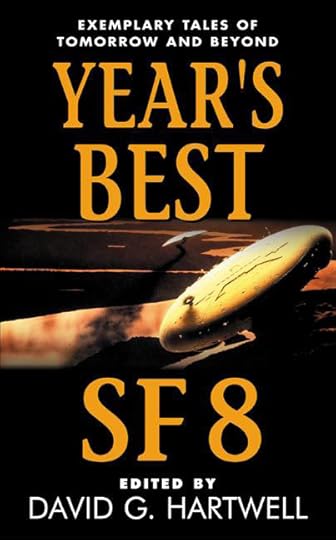
Year's Best SF 8

Rate this book
The astonishingly possible is once again showcased in a breathtaking volume of the best short form SF the past year had to offer. Contributed by some of the most revered and exciting voices in the genre -- and compiled by acclaimed editor and anthologist David G. Hartwell -- these stories of wonder and terror, astounding technologies and miraculous discovery, stretch the imagination into realms and universes never dreamed of before. Each tale is a dazzling gem, rocketing readers across light years and into unknown dimensions -- exploring the intricate cultures of alien races and the strange, secret workings of the human mind. And together they form an unparalleled whole -- a collection of luminous visions that shines more brightly than a newborn sun. New tales

512 pages, Mass Market Paperback

First published January 1, 2003

Loading...
Loading...

About the author

David G. Hartwell

117 books97 followers
David Geddes Hartwell was an American editor of science fiction and fantasy. He worked for Signet (1971-1973), Berkley Putnam (1973-1978), Pocket (where he founded the Timescape imprint, 1978-1983, and created the Pocket Books Star Trek publishing line), and Tor (where he spearheaded Tor's Canadian publishing initiative, and was also influential in bringing many Australian writers to the US market, 1984-date), and has published numerous anthologies. He chaired the board of directors of the World Fantasy Convention and, with Gordon Van Gelder, was the administrator of the Philip K. Dick Award. He held a Ph.D. in comparative medieval literature.

He lived in Pleasantville, New York with his wife Kathryn Cramer and their two children.

Ratings & Reviews

What do you think?
Rate this book

Friends & Following

Create a free account to discover what your friends think of this book!

Community Reviews

5 stars
40 (23%)
4 stars
78 (45%)
3 stars
45 (26%)
2 stars
7 (4%)
1 star
0 (0%)
Displaying 1 - 19 of 19 reviews
Profile Image for Michael Fierce.
334 reviews23 followers
January 15, 2017
description

I admit, I only read 4 of the 23 short stories within.

However, I thought the 4 I read were fantastic!

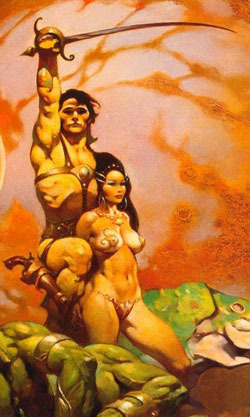
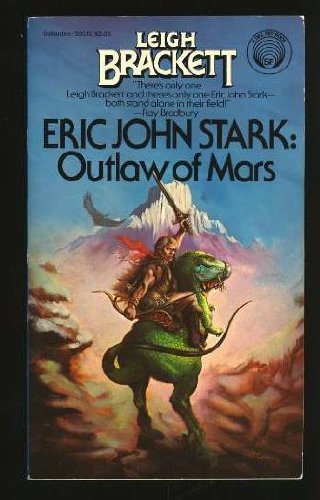
The first 2, Snow in the Desert, and The Lost Sorceress of the Silent Citadel, were Planetary Romances (akin to Space Opera), set on Mars ~ descendants of Edgar Rice Burroughs John Carter series of books.

  description
Both are noticeably influenced and inspired by Leigh Brackett and her wonderful Eric John Stark novels.
description

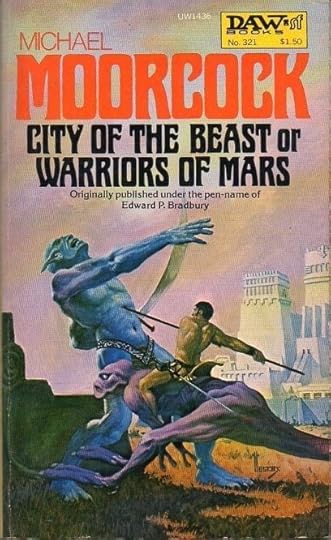
Snow in the Desert, by Neal Asher, is a really cool story that tips its hat to Michael Moorcock's own Eternal Champion fantasy stories and to his Michael Kane Martian novels, and is about an albino *gunslinger* named Snow, a man who seems to have everyone after his balls, as he faces the harsh, unrelenting, day-to-day survival of the Martian environment, around him.

  description

I understand Snow in the Desert, is a part of Asher's Polity universe, I plan to delve more into, and hope he will write further adventures with Snow. Addictively entertaining world and characters. I really like Neal Asher's style!

The Lost Sorceress of the Silent Citadel, by Michael Moorcock, similar in style to Snow in the Desert, centers around Captain John MacShard, a Half-Martian, and a *gunslinger* himself, hired to track down a local merchant's kidnapped daughter and return her, if possible. And though he is in possession of one of the most powerful handheld weapons known, he must face an adversary, possibly older than not only his own self, but his own kind.

description

I love Michael Moorcock and have read dozens of books by him. I've never read any of his Martian Planetary Romances though, and am not sure if this character is featured in any of his Michael Kane novels or related. I've been wanting to read those anyway, and this sparked some new interest to do so, and hope more tales of Captain John MacShard exist.
  description
Although I have more of an addictive reading to Planetary Romances & Space Operas, I really liked the other 2 I read, as well.
Shields of Mars by Gene Wolfe, is also a descendant of the Martian Planetary Romances, but, while the others were more brethren to the ERB space fantasies, this one was more of a kissing cousin. It's about a man and his *dog*, or, more rightfully, 2 co-workers, who are faced with a life-changing dilemma, that not only goes against their pride and inherent feelings of responsibility, but, by being instructed to abandon their post, also threatens to destroy their livelihood and the place they call *home*. Quirky, funny, fun, and a bit touching.

I've been a fan of Gene Wolfe for years and have really enjoyed all but 1 of his books. And while this felt very different to me in story, in tone, it reflected many of the themes interwoven throughout his books.

Flight Correction by Ken Wharton, is about a family residing in the Galápagos Islands, having arrived there via space elevator, who are currently vexed over a problem concerning a disturbance in the magnetic fields above the islands, that threaten the survival of a flock of Albatross. On the surface it seems sort of like the beginning to a Michael Crichton novel, but under the exterior it's a story more akin to the writings of Philip K. Dick though set in a unique setting and in a more lighthearted vein. A brilliant, albeit, quiet achievement, and one that will have me researching the author's work to find more good reads.

I'm sure this collection has several more good stories but I'm not sure if I will ever get to them. There are 2 more I'm looking forward to reading;

Halo by Charles Stross, is part of his Manfred Maxx sci-fi series. Stross, as most know, has become very popular with his Laundry Files series - sort of a comedic poorman's James Bond vs. Lovecraftian Horror - of which I'm a huge fan of! :)

&

The Seasons of the Ansarac by Ursula K. Le Guin, famous for her Earthsea novels, and one of most amazing writers in the world imo. This one is evidently about a species of alien Le Guin modeled after Osprey.

I was thoroughly entertained and give this a 5 based on 4 stories I found fun, memorable, and each one a standout in the sub-genre it's related to, and worth reading again.

All 4 stories reviewed range from Recommended to Highly Recommended!
Profile Image for Peter Tillman.
4,143 reviews494 followers
May 2, 2022
"A Slow Day at the Gallery" (2002), by A. M. Dellamonica, reprint from Asimov's
Online at https://curiousfictions.com/stories/2...

I think I'll let the author speak for herself on this one:
"This short story is one of the Slow Invasion series, a collection of snapshots depicting humankind’s effort to join a wider community of spacegoing races. It’s about trade-offs and difficulties involved in being, in each of these relationships, the lesser among very unequal partners."
http://alyxdellamonica.com/2018/02/a-...

Good story, recommended: 3.5 stars. Review prompted by seeing the author's blog post. Then I noticed where it had been reprinted.

Here's the TOC for the anthology, which is a good one: http://www.isfdb.org/cgi-bin/pl.cgi?5...
Memorable stories include
• In Paradise • (2002) • short story by Bruce Sterling. Romance of a plumber and a Persian princess! 4.5 stars, from memory
• Slow Life • (2002) • novelette by Michael Swanwick. A surprise discovery on Titan. 4 stars. Online at http://www.lightspeedmagazine.com/fic...
• Coelacanths • (2002) • novelette by Robert Reed. I liked this story a lot. Good for a fast-acting sense-of-wonder recharge! 4.5 stars. My 2002 review: https://www.sfsite.com/04a/co125.htm
• Ailoura • (2002) • novelette by Paul Di Filippo. "Puss in boots" as space opera! Cool. 3.5 stars on reread. I've since re-read this one again (elsewhere) & liked it even more. Is it online? No, but his reviews for LOCUS are always worth reading: https://locusmag.com/tag/paul-di-fili...

I'll be back (sometime) to add more story comments. OK, I have the library copy on hand now....
Profile Image for Dogg.
27 reviews
August 31, 2010
If you are looking for variety in science writing these are extremely good. I liked the short biography before each story, so that if the author's style appeals to you, then you can look up their other books or collections. I definitely liked "Lost Sorceress of the Silent Citadel" by Micheal Moorcock, but I think my favorite was "Snow in the Desert" by Neal Asher. I think the next time I am in a used book store I will check out some of his other work.
Profile Image for Joseph.
73 reviews6 followers
June 19, 2016
My favorites:
"Knapsack Poems"/E Arnason,
"At Dorado"/G.A.Landis,
"The Seasons of the Ansarac" Le Guin,
"Ailorura"/Di Fillipo,
"Grandma"/C Emshwiller,
"Afterlife"/ Jack Williamson
"Patent Infringement"/ Nancy Kress.
Profile Image for Kevin.
219 reviews3 followers
October 16, 2019
1 • Bruce Sterling: "In Paradise" (Originally in F&SF, 2002)
1st story enjoyable about disconnecting and running away with a hot young Muslim girl.
Sort of just wish fulfillment.
2 • Michael Swanwick: "Slow Life" (Originally in Analog, 2002)
2nd story about telepathic connection with ‘slow life’ at the bottom of a Titan ocean, which had never considered plurality, or death, but which caught on fast. Enh.
Also sort of just wish fulfillment.

3 • Eleanor Arnason: "Knapsack Poems" (Originally in Asimov's, 2002)
no notes
4 • Geoffrey A. Landis: "At Dorado" (Originally in Asimov's, 2002)
no notes
5 • Robert Reed: "Coelacanths" (Originally in F&SF, 2002)
Robert Reed’s story was too ambitious, establishing and then tying together far-future offshoots of humanity. Good try but a big fail. Even throwing in a little boy on his first date with a girl to his secret spot, a pet leopard, and a mother sacrificing herself for her children, it was too much work for the reader’s minimal payoffs.
6 • Ken Wharton: "Flight Correction" (Originally in Analog, 2002)
The story about the bitter nano-engineer living beneath the space elevator in Ecuador that he had hoped to work at was good. It was about real people with personal issues, but also about science, and not just as a setting, but as their careers and faith. Now that’s SF! Best quote, “Birds are hard data!” Cool science: bucky tubes have different conductivity properties according to how they are rolled. And the back up fibres in the space elevator lines, being under less constraints, could move about, affecting their conductivity. And the magnetic effects could affect bird navigation.
7 • Robert Sheckley: "Shoes" (Originally in F&SF, 2002)
very short, but sort of fun
8 • Charles Sheffield: "The Diamond Drill" (Originally in Analog, 2002)
very short, about fooling a diamond detector machine.
9 • Ursula K. Le Guin: "The Seasons of the Ansarac" (Originally in The Infinite Matrix, 2002)
Read most 181113. Describes a human species which has a similar life pattern to that of a certain Osprey. They even have beaks. A story?
Finished 11/20. She closes with a sexy bit of a proud masculine dance by an old male.
10 • Richard Chwedyk: "A Few Kind Words for A. E. Van Vogt" (Originally in Tales of the Unanticipated, 2002)
Just a poem, about his alzheimer’s when he got his lifetime achievement award
11 • Charles Stross: "Halo" (Originally in Asimov's, 2002)
On 11/20, just starting, about cybernetically enhanced pre-adolescent girl. When he threw in some Muslim orbiting Jupiter it began to get confusing and tiring. But I do like how it is mental enhancements primarily, doing research, analyzing fine details about other people like pupil dilation and pulse, security and hacking. Kind of fun when a ML routine advises the 8 year old directly to her mind against further argument based on mother’s body temperature.
on 190123 carried on with that. Couldn’t recall the start. It was rich with invention and densely worded. The upshot was that the imam was unexpectedly young and wise and the girl upgraded herself enough to leave for negotiations with super-intelligent aliens, and brought the imam to be her conscience.
12 • Terry Bisson: "I Saw the Light" (Originally in Sci Fiction, 2002)
Start to finish 190130. Very well written, sort of sad and wistful, not very sciency. The gist was that humans were like dogs to an alien species, that our minds froze up with love for them, and they decided they had to leave us alone to let us mature.
13 • A. M. Dellamonica: "A Slow Day at the Gallery" (Originally in Asimov's, 2002)
190201 Human treats a nice alien very badly because the alien race offended him about a Monet painting. Vivid, engaging, moving, but unsatisfying.
14 • Paul Di Filippo: "Ailoura" (Originally in Once Upon a Galaxy, 2002)
190201 A fairy tale like story about the youngest son, a favourite of his father, is framed for his father’s murder by his siblings and step-mother, so heads out to make his fortune with his loyal but aging cat ‘beastient’ nanny. Enjoyable. Lots of throw-away sf modern sf tropes.
190217 carried on. Aristocrat has a Baya Yaga walking house. Not Baba Yaga. Cat servant throws down with pig-based Beastient paramour. It’s just a thing Beastients do when they meet. No blood, just dominance.
190221 finished. Disappointingly simple ending
15 • J. R. Dunn: "The Names of All the Spirits" (Originally in Sci Fiction, 2002)
190221 Out past the Oort cloud, do run-away AIs hide? Will it matter to a prospector who saves travel costs by catapulting his spacesuited body (striding), and misses.
190303 finished. A sort of film noir cop turned up hoping to stop conspiracies with AIs.
16 • Carol Emshwiller: "Grandma" (Originally in F&SF, 2002)
190303 Apparently Carol was the hot model for her H’s fantasy artwork on various novels. They were both authors and she won a bunch of prizes for feminist stuff. In this, Grandma was a fading, half senile superhero, still idolized by her granddaughter caretaker, who tackled more modest ‘saving’ of small critters.
17 • Neal Asher: "Snow in the Desert" (Originally in Spectrum SF, 2002)
190303 started.
190307 loving it, sort of futuristic duster with lady cyborg sexing and albino amputee gunfighter. Part of ‘runcible’ universe. Researched, and ‘runcible spoon’ is nonsense word by Edward Lear, in several of his works including ‘Owl and the Pussycat’. That inspired many homages, but this use is an homage to ‘ansible’, coined by Ursula Le Guin, but notably by Orson Scott Card.
18 • Greg Egan: "Singleton" (Originally in Interzone, 2002)
When I returned to it, I didn’t recall anything, so started over.
It went down much better the second time, I began to recognize his slightly bitter academic humour. It is a bit episodic, with a bit about trying a huge frothy wall to clean air, a bit about risking himself to save a victim of a beating, and then it sort of settles into a thing about how he doesn’t like the idea of his parallel selves in the many-worlds theory having misfortune whenever he has good fortune. So he decides to raise an AI like a child, but shielded from any quantum particle interactions during any decision making.
The adoption process is next. They try to make the AI behave just like a child, so also try to give it a life experience just like a child, even transferring it to larger and larger bodies. The scene where he unpacks the first 5 bodies is vivid and touching.
The next episode is after his AI, simulating puberty, had rebelled and run away, after his wife and he split up, to cover more ground, and are still searching for her after many years.
A startling cyber-punk hunt and fight scenario is played out, and then the ending, with his ‘child’s’ take on the quantum shielding notion.
19 • Robert Onopa: "Geropods" (Originally in F&SF, 2002)
What a cool idea, that a team of elderly (or other) people could jointly meet the requirements for legal competence! I mean, he’s kind of confused, thinking physical disabilities make any difference, but maybe they could, once this idea was implemented.

It’s a feel-good story, played for laughs. They expose a scuzz bucket to his wife and they meet an all woman geropod, and two paralyzed people disappear miraculously.
20 • Jack Williamson: "Afterlife" (Originally in F&SF, 2002)
OMG, this bastard is in his 90’s, but it’s a pretty solid story about a colonized planet having wasted all its resources and returned to religious extremism and a sort of 19th century level lifestyle. A con-man or messiah turns up from advanced Earth, promising eternal life.
21 • Gene Wolfe: "Shields of Mars" (Originally in Mars Probes, 2002)
extremely good. I got weepy. About a human and his buddy alien being the last 2 employees on an oxygen making plant and in the company town supporting it.
The ‘shields’ is significant in a very surprising way of injecting plausible hope at the end.
22 • Nancy Kress: "Patent Infringement" (Originally in Asimov's, 2002)
Satirical story in the form of a collection of letters and memos about a drug company’s response to a man who says his genes earned them billions of dollars.
23 • Michael Moorcock: "Lost Sorceress of the Silent Citadel" (Originally in Mars Probes, 2002)
just started. Pretty weird about some bad ass raised on Mercury, begged for help in a bar on Mars.

WTF!? Ancient Martian cities? Oceans? Bought from Venus? Then evaporated by their gods?

I think this is either far in our past or in our future, as there are distinct species of humanity too.

Anyway, the attempt to terraform Mars created a seductive plant and water intelligence that lures and traps humans. And a savage acid-filled breed of humans tortures and eats humans for sport.

A ghost of a Martian god appears to be manipulating the bad ass, who was born from an egg, apparently with some blood from the gods.

It got all 60’s weird where the power of his masculine insistence on freedom contended with the goddess’s irresistible feminine temptations of compromise and entrapment.

In the end, it seemed like sort of a bridge between other stories to explain how his gun got so powerful.
This entire review has been hidden because of spoilers.
Profile Image for Nicholas Whyte.
5,417 reviews208 followers
January 6, 2010
This is Hartwell's selection of the best stories of 2002: of his 23 choices, I think I count precisely one which made it to the Nebula shortlist, and two which were Hugo nominees (one of which, Michael Swanwick's "Slow Life", won). That year's double winner was Neil Gaiman's Coraline, which I guess is excluded from Hartwell's collection as fantasy rather than science fiction.

I liked very much almost all of Hartwell's selection. The one that really got under my skin was A.M. Dellamonica's "A Slow Day At The Gallery"; two others that had stuck in my mind from first reading were Charles Stross's "Halo" and Greg Egan's "Singleton". There were unfortunately a couple of mawkish stories about cute old people, which I note is a disturbing and not particularly funny or interesting trend in American sf these days. All the others are very good. Worth returning to.
Profile Image for christopherdrew.
109 reviews
May 8, 2020
I could eat anthologies like candy. Stand-outs in this one include: Knapsack Poems by Eleanor Arnason (for its sheer weirdness), Ursula K Le Guin's Seasons of the Ansarac, The Names of All the Spirits by J.R. Dunn, and Singleton by Greg Egan. 9/10 would def eat here again.
Profile Image for Patricia.
591 reviews4 followers
December 6, 2018
This is not going to be a very good review. I have over indulged in SciFy short stories and they are beginning to merge. And it is not a genre I find easy. I need to read and reread to become comfortable and then I even start to enjoy them. Sometimes.
So in my notes I found In Paradise by Bruce Sterling moderately interesting and the same with Patent Infringement by Nancy Kress. I enjoyed Slow Life by Michael Swanwick a lot more. It has a light and chatty style but it is about a woman conducting scientific research on one of the moons of Jupiter and it is also confronting and scary. I must look for more Michael Swanwick.
Profile Image for Mike.
14 reviews
September 9, 2021
Another brilliant collection

Brilliant stories in this one. As with the previous hartwell collections, I think terry carr would have been proud. Definitely a good read
Profile Image for Kathryn.
417 reviews31 followers
September 7, 2013
David G. Hartwell edited "The World Treasury of Science Fiction", so in my mind the man can do no wrong. That said, this is the third in the "Year's Best SF" series that I've read, and I've yet to be really bowled over by any of them.

Not a BAD collection by any means. A.M. Dellamonica's story "A Slow Day at the Gallery" built up very smoothly from a tourist outing in an alien city to something unsettling. I think Paul Di Filippo's story "Ailoura" could have used a little more editing, but I loved the premise. If you can hang on to the thread of the story logic in Geoffrey A. Landis's "At Dorado" then you'll be rewarded by a nice little kick at the end. The rest of the stories were just okay, and I'm SORRY, but most of what I've ready by Gene Wolfe and Michael Moorcock has done absolutely NOTHING for me, so their stories came across as blah. I'll just go hand in my sci-fi geek card now...

So the collection as a whole probably wouldn't have gotten even three stars, but Ursula Le Guin's "The Seasons of the Ansarac" is one of my favorite short stories EVER. It's a shame I'd already read it in two other collections before this one...
Profile Image for Bill Borre.
661 reviews4 followers
Currently Reading
May 26, 2024
"Shoes" by Robert Sheckley - Ed buys a pair of smart shoes with an empathy circuit from Goodwill. The shoe does its best to improve Ed's living conditions and even impersonates him to invite over a girl who helps charity cases that Ed doesn't particularly want to date. Ed gives the shoes to her so she can donate them and lies to her he'll call her as he revels in his despicable life.

"Patent Infringement" by Nancy Kress - Jonathan hires a lawyer to sue a company that develops a flu medication based upon his genetic information without compensating him.

11-16-2014
This entire review has been hidden because of spoilers.
Profile Image for Eli.
247 reviews2 followers
April 22, 2011
Hard to grade a collection of stories by different authors without grading each story individually. I am not going to do that. But I did enjoy most of the stories quite a bit. I like that SF stories tend to cover the idea and leave out a lot of the character development (where many SF writers are less than stellar).
1,670 reviews12 followers
Read
August 22, 2008
Year's Best SF 8 by David G. Hartwell (2003)
Profile Image for Dan Clore.
Author 11 books48 followers
October 2, 2016
Stories that I especially enjoyed included:

Eleanor Arnason, "Knapsack Poems"
Gene Wolfe, "Shields of Mars"
Michael Moorcock, "Lost Sorceress of the Silent Citadel"
Displaying 1 - 19 of 19 reviews