Maria Savva's Blog

June 18, 2013


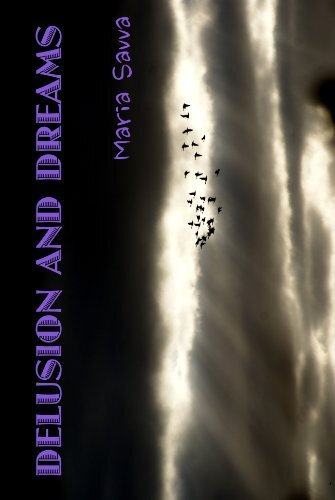
For today's stop on the blog tour for my new release Delusion and Dreams, I've brought you back here to my blog so I can tell you a bit more about how the collection came to be. I've added a reminder about the tour-wide giveaway, at the end.


******

A while back, I found some short stories I had written, saved on my computer. I had initially written them as entries for short story competitions, but then forgotten about them. Most were written in the early to mid noughties. I was thinking of putting them together as a collection and publishing them.

Then, I found some more old stories on a floppy disk (which I must have written in the late ’90s). Of course, I didn’t have a floppy disk drive, so I purchased one from Amazon in the hope that the format would still be compatible with modern computers. I managed to salvage two or three of the old stories from the floppy disk, but some were unreadable, so they’ll have to wait until I’m more technologically able to find a way to read them.

So anyway, I now had quite a few stories that could be collected together for a book.

Not all of those stories made it into the selection for Delusion and Dreams, and I wrote some new stories for the collection. So here’s how each story found its way into the new collection:

Delusion and Dreams - Part I - This story was one I’d written a few years ago, and I found the handwritten version among some papers in a drawer when tidying up one day. I really liked it when I read it, so typed it up.

Hair Today, Gone Tomorrow - This is a new story, written this year. Originally, someone sent me a message on Goodreads saying they were looking for comedy stories for a new anthology. I’ve never written a comedy, as such, before. Although many of my stories and novels contain some humour, I’d never written a story intending it to be a comedy. So, this story was a challenge I set myself. It turned out to have quite a bit of serious stuff mixed in with the comedy element. It also turned out to be too long to submit to the comedy anthology, at almost 5000 words, so I put it in Delusion and Dreams instead.

Happy New Year - This is probably the darkest story in the collection, crime fiction, and is a new one that I wrote specifically for the collection.

Friends and Neighbours - This is one of the old stories I found on my computer. I edited it a bit, but it’s basically in its original form. It had been originally written for a short story competition, in the mid noughties, I think.

Delusion and Dreams - Part II - This continuation of the story was written specifically for this collection. When I read the original short story, Delusion and Dreams, I was inspired to write more. The characters in this story all have such interesting backgrounds, so I thought it would be nice to explore those in more detail.

Getting Away With It - This is one of the oldest stories in the collection, found on a floppy disk. I edited it slightly, but it’s more or less the same story. It was originally written for a short story competition.


Friends and Neighbours - Revisited - This is a new story, written for this collection. It was inspired by the older story, Friends and Neighbours. I wanted to show the story from the point of view of Jill’s neighbours. It’s a dark story, more in keeping with the direction my writing is going.

Seeing is Believing - This is another of the old floppy disk stories. Again written in the late nineties for a competition (I used to enter a lot of short story competitions years ago, and found it was a great way to keep my imagination and creativity active). I edited the story slightly for this collection, but again, it is still the same story as the one I found on the disk.

Delusion and Dreams - Part III - another new story, written as a continuation of the series.

Merry-go-round - This was an old story found on my computer. Again slightly edited for this collection.

Courage - This story was originally written as the “yellow” story for my short story collection Pieces of a Rainbow. But I wasn’t happy with the story in the form that it was in when I originally wrote it back in 2009, so I didn’t include it in that collection. When I found it again on my computer, I thought it would be a good story with a bit of editing. So that’s what I did. I edited it and it’s now one of the stories in this collection.

Delusion and Dreams - Part IV - The final part of the story. Written this year, for this collection.

I hope you'll enjoy the stories.

Here's a reminder of all the stops on the tour, and the links so you can catch up!

31st May: Darcia Helle's blog: http://quietfurybooks.com/blog/2013/0...

1st June: Interview on J. Michael Radcliffe's blog.: http://michaelradcliffe.wordpress.com...

2nd June: Seumas Gallacher's blog: http://seumasgallacher.com/2013/06/02...

3rd June: BestsellerBound Recommends blog! http://quietfurybooks.com/bestsellerb...

4th June: Savannah Rayne's blog: http://savannahrayne.blogspot.co.uk/2...

5th June: The Secret Writer's blog: http://thesecretwriterblog.blogspot.c...

6th June: K.B. Walker's blog: http://nutsandcrisps.wordpress.com/20...

7th June: Pinky Pollock's blog: http://pinkypollock.blogspot.co.uk/20...

8th June: Kathleen Valentine's blog: http://www.kathleenvalentineblog.com/...

9th June: Ben Ditmars's blog: http://niceoldspice.blogspot.co.uk/20...

10th June: Helle Gade's blog: http://hellegade.wordpress.com/2013/0...

11th June: Bitsy Bling Books: http://bitsybling.blogspot.co.uk/2013...

12th June: Jaime McDougall's blog: http://inkyblots.com/guest-author-mar...

13th June: Merita King's blog: http://meritaking.com/2013/06/12/delu...

14th June: Jenny Hilborne's blog:
http://jfhilborne.wordpress.com/2013/...

15th June: Wendy Laharnar's blog: http://wendylaharnar.blogspot.com.au/...

16th June: Claire Voet's blog: http://clairevoetauthor.blogspot.com....

17th June: Orchard Book Club's blog: http://orchardbookclub.wordpress.com/...

There are a few more stops to go:

19th June: I'll be at author Geoffrey D. West's blog, with a guest post about my other short story collections.

20th June: I will be at Angela Turpin's blog where I will be telling you what I'm working on now...

21st June: The final stop in the tour. I'll be at Mark Rice's blog with another excerpt from Delusion and Dreams.

Don't forget to enter the giveaway. You could win a signed paperback copy of Delusion and Dreams as well as runner-up prizes of Kindle/e-book copies of great books by some of my favourite authors! The details and entry form are at the following link a Rafflecopter giveaway


Good luck!
0 comments
Twitter_icon  ·   • 
Published on June 18, 2013 11:04 • 102 views • Tags: blog-tour, delusion-and-dreams, maria-savva, short-stories

June 15, 2013

One of the discussions at last weekend's conference revolved around how the digital age has facilitated many collaborative projects pushing the boundaries of technology and narrative.

Projects that were mentioned were:

1. Watershed, a cultural cinema and digital creativity centre in Bristol UK.
Watershed is a cross-artform venue and producer, sharing, developing and showcasing exemplary cultural ideas and talent. They produce work that cuts across film, music, theatre, design, visual art, and the creative and technology sectors.

The media studio is involved in development and research into new digital technologies.

Sandbox is a programme the studio has developed. Slingshot's 2.8 Hours Later game came out of the Sandbox programme: http://slingshoteffect.co.uk/ourgames...

Last year Sandbox worked on a project called REACT: a collaboration between the Universities of the West of England, Bath, Bristol, Cardiff, Exeter and Watershed Arts Trust.

There were 8 collaborations within the project around the theme of books and print.

Two of the projects highlighted at the conference were:

Writer on the train
This app offers short stories or a piece of writing relevant to the train's location: http://www.react-hub.org.uk/books-and...

These pages fall like ash
http://pagesfall.com/
http://www.watershed.co.uk/whatson/41...

The idea behind this project was to give the reader a collaborative reading experience.

2. The Writing Platform

Author Kate Pullinger spoke about The Writing Platform, "a website and program of live events dedicated to arming writers with digital knowledge". The Writing Platform is a free online resource for all writers and poets emerging, established, not yet published, traditionally published and self-published ­ who are looking for neutral and best practice information about writing in a digital age in order to inform their practice and career choices.

3. A Million Penguins

Kate Pullinger also spoke about a project she was involved in called, 'A Million Penguins', which was a collaboration between Penguin and De Montfort University. It ran for 5 weeks in 2007, and the experiment was to find out the answer to 'can a community write a novel?'. It was on a wiki, and there were no rules. Anyone could write and edit it.

15,000 people worked on it, and a total of 80,000 people registered and read it.

The project was subject to vandalism, however, lots of it was deleted. One person logged in and changed all the nouns to 'banana'.

The conclusion was reached that, 'no' a community cannot write a novel.

Two years later, Kate Pullinger was involved in, Flight Paths: A Networked Novel. There were 100 participants.

Following on from that, she wrote a novel which was another stage of this project. That novel will be released next year.

4. Memory Makes Us

Kate Pullinger mentioned this new project that is a collaboration with if:book Australia. Here's a bit more about that project: http://www.futureofthebook.org.au/cat...

This project explores the role of memory in writing and reading. Submissions are still being accepted (until early July).

5. Brandon Generator

Nico MacDonald of Media Futures mentioned Brandon Generator, and stated that the boundaries of publishing are blurring.

Brandon Generator is an interactive story experience, created by Edgar Wright and Tommy Lee Edwards.

Here's a bit more about that project: http://www.wired.com/underwire/2012/0...

6. World War II Timeline App

Another interactive online story experience. More details can be found here: http://agant.com/app.php?appID=ww2

7. Creating Worlds: Black Crown

Random House's interactive adventure story involving choices by the reader that open up the narrative: http://blackcrownproject.com/s

8. Call of the Cthulhu

Based on the sci-fi novel, taking the existing narrative and finding a new way of developing it. http://redwaspdesign.wordpress.com/

9. The Harper Collins BookSmash Challenge

This competition has $25,000 in prizes and there are 3 months left to submit: http://booksmash.challengepost.com/

The challenge: Use imagination and technology to build software that goes beyond the traditional ways we read and discover books.

10. Zombies, Run!

https://www.zombiesrungame.com/

A digital narrative/game where you run away from zombies. This project was funded through Kickstarter. There were donations of $73,000 in the US.

This shows how popular these types of apps are.

11. Writing Research and Development: Lisa Gee and Contentment

Software to enhance storytelling:
http://getcontentment.com/

www.lisagee.net/

*********************************************************************************************

It was interesting to learn about all these collaborative projects. I hadn't heard of any of them before. As Nico MacDonald said at the conference, this is an exciting time in publishing. Collaboration is taking place in different ways. There is a lot of innovation. It will be interesting to see how much further these types of things develop.

June 13, 2013

One of the panel discussions at the recent TLC conference was about literary values. How has the digital age changed literary values?

A definition that was put forward of 'literary fiction' was: writing that uses language in an interesting way, re-invents language in a way, challenges the world. I think a quote from author Hilary Mantel was that literary fiction provides us with "news from the world".

There was a lively panel discussion on this subject. There definitely seem to be two camps: those who think self-published writers should be burned at the stake, and those who welcome the innovation and change that has been forthcoming from the diversity and wealth of new fiction and non-fiction flooding the market with the digital revolution.

Personally, I think this an exciting time for literature in general, and if we as self-published authors make the most of it we can enhance the publishing industry.

One important point that was raised was that with the ease of self-publishing, it is very easy for writers to publish 'too quickly'. I agree with this. You can write a story today and upload it onto Amazon Kindle tomorrow. In most cases that story will be in need of editing.

Editing is such an important part of the publishing process. New writers often don't appreciate how important it is. It's an easy trap to fall into: new writers are keen to publish their masterpieces to the world, but it is so important to hold back, take time to make sure the work is as perfect as it can be before it's published. The reason self-published writers are getting a bad reputation is because of those who are too eager to push the button and publish.

I am strong supporter of independent writers and I know there is a wealth of talent out there. But--and it's a big BUT--lots of authors cut corners when it comes to editing and this leads to all of us getting a bad name.

For example, one of the panel members at the conference, Andrew Franklin, of Profile Books, stated that the "overwhelming majority" of self-published books are "rubbish". He said being a self published writer is like standing naked in the pitch dark. He said a "miniscule number" of self-published writers will break out and succeed. He called the self-publishing world "deeply corrupted", referring to how it's possible to buy Facebook 'likes' and friends. He said to compare self-published books to traditionally published books, is like comparing Alcopops to good quality wine. While I totally disagree with all of that and feel he went a bit too far, worryingly I can see why he said it.

I read a lot of independently published books because I want to support indie authors, but some of the books make me wonder if writers are taking themselves seriously. There is no excuse for publishing a sub-standard book. If you're a traditional publisher or a self-published author, you must make sure your product is the best it can be before you publish it.

The e-book and digital age is a great opportunity for talented authors and authors who care about their craft, who care about the future of literature, to carve a niche for themselves in an industry that was once beyond their reach. It makes no sense to bring down the industry by letting standards drop. All writers should get their books professionally edited and proofread before publishing. Anything less leaves the door open for critics such as Andrew Franklin to make such sweeping and derogatory remarks about self-published books.

I don't know how many times I have repeated myself about this issue, but it is an ongoing one. People can forgive maybe the odd typo in a 200 page book, but where you find a typo on each page or every other page, it is really off-putting. From my own experience of reading lots of indie books I do know that more writers are investing in an editor these days because I am finding less editorial issues. I hope that somehow the message is getting across to people that it's unacceptable to call yourself a writer and yet produce a book riddled with grammatical and typographical errors.

The message is: take your time and make sure you edit your work, get feedback from a proofreader or beta readers.

One of the other points that was brought up by editor Toby Lichtig in this panel discussion, that I agree with, was that in the old days of publishing there were gatekeepers i.e. editors who would decide whether a piece of work was ready to be published. With the ease of self-publishing, the gatekeepers are no longer there. This not only means that people can publish whenever they want, easily, but it means that writers are not being challenged to improve themselves.

Writers can only become better at their craft when there is criticism of their work. They are then forced to try harder, push themselves further. One of the concerns raised in the panel discussion is that with this ease of publishing writers won't be taking the time to develop their craft.

The other side to this argument is that perhaps what readers want from fiction is changing, perhaps the old 'literary values' are no longer a prerequisite. Maybe I am just a dinosaur holding pre-historic views about the need for good editing in fiction.

An example is the growth of fan fiction.

Fan fiction, for those who are not familiar with the term is where readers will go onto various forums/websites that have been set up to enable them to make up stories using their favourite characters from fiction. Probably the most famous recent example of where something like this made an impact is the 'Fifty Shades of Grey' series. That series started off as fan fiction on a fan fiction forum, where the Twilight characters were used to create a new story. That went on to be published by a major publishing house and sold millions.

Fan fiction is on the rise, whether we like it or not. The 'Fifty Shades of Grey' series, is an example, in my opinion, of traditional publishers letting 'literary values' slide in favour of making money from a popular fad. I haven't read (and have no desire to read) the series, but from what I have heard, it was badly edited, if indeed it was edited at all. One panel member, editor Sally O-J, made a good point that perhaps if it had gone to a good editor it would not have sold as many copies as it did. It was the flaws that maybe made it popular. An editor may have changed it and it would not have been what the readers of that particular fan fiction wanted.

So, we can see that it's not only self-published authors who sometimes skimp on editing, but why is it always self-published authors who are blamed for this lack of standards? Makes you think, doesn't it?

The panel discussion highlighted that literary values are changing. Most fan fiction, it was stated, leans towards the Erotica genre.

Sally O-J said that it is worth looking at fan fiction to see what people like reading. Trends seem to go out into the world from these fan fiction websites.

'Literary fiction' as a genre does not appear to be at the forefront of this new digital age, and I don't think that is only down to self-published authors. Readers are voting with their feet. One of the most popular genres at the moment is crime, and with the rise in fan fiction, Erotica and Fantasy fiction are more popular.

The panel discussed the new Kindle Worlds product. This allows readers and writers to publish fan fiction and get paid for it. Ready made characters from popular fiction of the past can be utilised to create new stories.

I'm on the fence about that really. As a writer I like to create my own characters so Kindle Worlds doesn't appeal to me at all. But with the success of 'Fifty Shades' this is obviously a market Amazon want to tap into. There's undeniably a large readership for this type of thing.

To sum up, I would say that there is still a divide between traditional publishers and self-publishers, with strong attitudes held by each side. The tone of the debate made me realise that there are still some in the traditionally published world that will never accept indie authors. However, it seems that the boundaries are blurring with the likes of E.L. James being published by a large publishing house, and fan fiction becoming more acceptable as a product with 'Kindle Worlds'.

Literary values are changing, it seems, but one good thing that seems to have come out of the new digital age is that more people than ever before seem to be picking up books, or e-readers, and reading. That has to be a good thing, right?

June 12, 2013

One of the comments at The Literary Consultancy's conference this year, was that 2012/13 has been a 'remarkable year of change' for publishing in general.

A panel of publishing professionals gave us their overview of the changes this year and how they are adapting.

Here are a few significant points that were made:

Gordon Wise, a senior literary agent at Curtis Brown talked a bit about how agents are now getting involved with assisted self-publishing for authors. The Amazon "White Glove" service was talked about. I had never heard of that before. Here's an article that explains a bit more about the idea behind it: http://paidcontent.org/2012/12/04/ama...

At the moment it seems to be geared towards helping authors who already have an agent becoming published with the help of the agency. I think the idea is also to help more well-known authors with maybe uploading their back catalogue of books, that many be out-of-print, onto Amazon.

Little is known about the "White Glove" service, but it's something that we may be hearing more about in the future.

***

Dan Franklin, who works at Random House Digital talked a bit about how the growth in self publishing has affected the larger publishing houses.

He said that e-books make up 23% of the publisher's revenue.

He said that authors demand much more from the publisher now because of the changing environment. They are working more towards author transparency, for example in respect of how royalties are paid. They are running social media tutorials for their authors because that is becoming more important for published authors.
Publishers are now obliged to provide more data to authors than before.
He also talked about how there are going to be mergers between publishing companies.
Interestingly, he believes that the words are more important when it comes to e-books and it seems the major publishers are not too concerned about evolution of the e-reading form.

***

Stefan Tobler, of And Other Stories, a small publisher, gave a bit of insight into the way they have met the challenges presented by the digital revolution.

The volume of e-books they sell is 5% of their total sales. They don't do heavy discounting on e-books. They were lucky that one of their titles Swimming Home was short listed for the Man Booker Prize. Before that, they had a book that was a bestseller, Down the Rabbit Hole.

They charge £10 for an e-book but with Amazon discounts their titles are about £4 in e-book format.

For more popular titles, Amazon will decide to discount to 20p - £1. What the publisher gets, it was stated, is much more than that. Amazon makes the decision to cut the e-book prices, not the publishers, yet Amazon pays the publisher much more than they get from sales.

***

A few other points of interest that came out of that panel discussion were:

1. Children's books are not very popular as e-books. Some people have said that they don't like the idea of children's books as e-books and prefer their children to have the experience of reading real books. One audience member said that she only buys children's books as e-books when travelling because it's easier to have the books on an e-reader rather than carrying lots of actual books.

2. The forecast is that sales of e-books will overtake paperback/hardback books by 2017.

3. One journalist in the audience stated that outside of London, in the UK high street bookstores are "practically dead".

I'll be posting more about this conference soon.

0 comments
Twitter_icon  ·   • 
Published on June 12, 2013 14:38 • 127 views • Tags: publishing, the-literary-consultancy

June 11, 2013

At The Literary Consultancy's recent conference, Writing in a Digital Age, there was a panel of experts looking back at the past year and developments in publishing. The panel included Steve Bohme of Bowker Market Research. He presented some very interesting statistics about how and why people buy books and e-books.

From interviews with the book buying public, Bowker has discovered the following:

1 in 8 books purchased in 2012 in the UK were e-books and this trend seems to be on the rise.

The figure changes to 1 in 6 of those were purchased for 'own' reading, which shows that when people buy as gifts it's more usual to buy the paperback or hardback copy.

In percentage terms, 13% of all books sold in the UK in 2012 were e-books, and in some genres it was higher. For example, for romance, crime, classic fiction, and true crime it was 20%.

The type of market where e-books have made little or no impact have so far been illustrated books, which only made up between 0-5% of the market.

So far it has been straight text e-books that have been gaining popularity.

Self published books

2% of all 3 million books (all formats) sold in the UK in 2012 were self-published. The figure is higher for fiction books, and hardly any children's books.

Of all e-books sold in 2012 in the UK, 1 in 8 were self-published (for adult fiction the figure is higher: 1 in 7).

Certain genres were more significant: Crime, sci-fi, fantasy, romance, humour.

Interesting statistics were them given as to how people discover books. The most popular ways were:

1. Familiarity with the author
2. Browsing in shops
3. Word of mouth
4. Request e.g. in a shop or library
5. Browse online (half as much as in shops)

For e-books, it is slightly different:

1. Repeat purchase from same author
2. Browsing online
3. Word of mouth (1 in 9)
4. Seen book on bestseller list
5. Read book before (so for example someone may have already read the paperback and then goes on to buy an e-book copy)

For self-published e-books, here's how they're discovered:

1. Browsing online
2. Have read another book by the same author
3. Recommendation/review - online
4. The book is in a bestseller list
5. Word of mouth

From these statistics, it was concluded that social media itself is not a massive driver... unless of course a recommendation of the book is seen on a networking site like Twitter or Facebook.

The initial data that Bowker has for 2013 seems to indicate that 7% of books sales may be influenced by following an author on social media.

When asked where people first saw a book, the answers for all books were that the reader was browsing for a book in particular. But for self-published books it was that a book was recommended, or they were browsing by subject.

When trying to find out why people buy a book, the results were as follows:

The determining factors for all books were:

1. Subject
2. Author
3. Price
4. The book is part of a series
5. Blurb
6. Gift
7. Because of a review

For e-books it is similar to the above, although another determining factor will be that the reader has read an extract from the book.

For self-published books, the order of priority changes when people were asked why they buy a book:

1. Price
2. Blurb
3. Subject
4. Extract
5. Author
6. Series
7. Review/Recommendation

So this seems to indicate that if a self-published book is cheap enough it will sell.

Pricing statistics for self-published e-books was then discussed. The results of the survey show that if a book is priced £2 or over it needs more promotion if it is to sell. The most popular price for e-books was just under £2.

Other statistics were that most book buyers are females, and it is older females who are more likely to buy self-published books, as they are the most avid readers.

For self-published books 3 in 5 are bought by people who read every day.

These statistics are perhaps not surprising to those who are involved in publishing, especially self-published writers, but they definitely give food for thought.

As publishers, whether traditional or self-published, it is important to know what type of things drive potential sales so that we can build a marketing strategy around that.

I'll be posting some more notes from this interesting conference soon.

6 comments
Twitter_icon  ·   • 
Published on June 11, 2013 13:54 • 210 views • Tags: bowker-market-research, e-books, sales, self-publishing, statistics, steve-bohme
Following the release of my latest collection of short stories Delusion and Dreams, I have a special promotion on all my earlier short story Kindle books. You can purchase each book for the price of $1.99/£1.32 for a limited time. remember, you don't need a Kindle e-reader to read Kindle books; with the free apps from Amazon, you can read the books on your smartphone, iPad, Mac, or PC.

If you're an Amazon Prime member, you can currently borrow Delusion and Dreams free from the Kindle Lending Library.

Pieces of a Rainbow Love and Loyalty (and Other Tales) Fusion Delusion and Dreams


Here's a bit about each book, and the links you'll need:

Pieces of a Rainbow

'Pieces of a Rainbow' is a collection of seven short stories, each one based on a different colour of the rainbow. You will find a full spectrum of emotions within the stories. Some are sad, some uplifting. There are not always happy endings, but the tales reflect the real world, and the forces of nature at work in our lives; sometimes beyond our control. The stories are diverse in style, and the characters, although fictional, are true-to-life. There is something for everyone in this inspired collection.

Amazon.com http://www.amazon.com/Pieces-of-a-Rai...

Amazon UK http://www.amazon.co.uk/Pieces-of-a-R...

Love and Loyalty (and Other Tales)

Love and Loyalty (and other tales), is Maria Savva's second collection of short stories. This is a diverse collection of stories, written over a period of ten years. Many of the stories were short-listed in various short story competitions. These are thought-provoking, memorable tales of life and love, luck and loss, deceit and lies, the unexpected and the true to life.

Amazon.com http://www.amazon.com/Love-Loyalty-Ot...

Amazon UK http://www.amazon.co.uk/Love-Loyalty-...

Fusion

Crime, passion, ghosts, obsession, hope, faith, and new beginnings-you will find all these things, and more, within these pages. A mixed collection of short fiction, by the prolific writer, Maria Savva, who has been praised for her story telling abilities by fellow authors as well as her fans. Sit back, relax, and begin your journey with a story of deep love, and follow through to read insightful tales reflecting our world today, but at the same time taking you away to a world of fantasy. Thought provoking and eventful stories written to entertain and inspire. Maria Savva's latest collection is sure to please, with haunting and psychological tales, blended with romantic and humourous ones. A diverse assortment, brought together by 'fusion'.

Amazon.com http://www.amazon.com/Fusion-ebook/dp...

Amazon UK http://www.amazon.co.uk/Fusion-ebook/...

I hope you enjoy the stories!

June 10, 2013

I attended The Literary Consultancy's conference at the weekend and really enjoyed it.

In the coming weeks I am going to be sharing some of the highlights of the conference with you, and also my thoughts on the event.

I'm hoping the series of blogs will be useful to writers and readers.

*******************************************************************************************


The first speaker at the event was Audrey Niffenegger, author of The Time Traveler's Wife.

I found her speech interesting and inspirational.

Audrey is a visual artist as well as a writer. She said most people's reactions in the publishing industry to the way the digital age is developing is "jumpy and alarmed".

The backdrop for her speech were various slides based on the history of typography and how the letters of the alphabet developed over the years and in different languages. I think she said the pictures were from Meggs' History of Graphic Design.

Audrey Niffenegger was trained as a visual artist and she said that the way she thinks of a book is in terms of putting images and words together. She was 40 when she wrote her first novel.

When she trained as an artist, she said it was all about expressing ideas, not going with the flow, not following trends, breaking new ground. She was inspired by Aubrey Beardley.

In Niffenegger's last two years at art school she wrote a book that was mostly pictures with a bit of text, The Adventuress. When she graduated she tried to get it published but it was rejected because it was too original and different. She went on to show it at an art gallery and sold a few copies.


14 years later she wrote another illustrated book, The Three Incestuous Sisters and sold only a few copies. In the process of doing that, she got involved with other people doing conceptual books. She and a group of other book artists, papermakers, and designers founded a new book arts centre, the Columbia College Chicago Center for Book and Paper Arts. The idea was to tie in art with computer, sound, film, video, interdisciplinary arts.

Tn 1994 they started offering classes and a couple of years later graduate dregrees (MFAs Master of Fine Arts). Many of the students were graphic designers. The idea behind the book art centre was to allow students to do what they want.

While working there as an assistant director, she was in charge of writing the catalogues describing the classes and she wanted to find ways of making the descriptions of the classes more interesting, so she started writing them more creatively and this made her mind think differently. It was around that time she started writing The Time Traveler's Wife.


The idea behind that novel, for her, developed by asking questions. She began to find that her own reality worked its way into the fiction, for example one of the characters in the book is a paper-making artist.

When she sent the manuscript out, it was rejected more than thirty times. Then an independent press picked it up and published it. At the time, that independent press MacAdam/Cage only had 14 employees. The novel has since sold 7 million copies and has been translated into many different languages, and of course there is now a film.

She found that the success of that book allowed her the freedom to experiment with other publishing. Her first book picture book, that had been initially rejected, was then picked up by Abrams and has sold well.

Audrey stated that the reach she now has, due to the success of that one book, has created opportunity. Her current project is a fairy tale that has been made into a ballet, Raven Girl.


The whole nature of publishing has changed since she first published The Time Traveller's Wife. She explained how when she signed the contract, the concept of e-book rights wasn't even considered, so she found she still owned all the rights. She didn't publish it in e-book for quite a while, wanting to wait for the right moment.

A great influence on Audrey has been her agent, Joe Regal. In 2011, he started a company called Zola Books, named for the writer Émile Zola. Audrey helped Joe set up the company. The idea behind it is that e-books could and should be better. The idea is also to bring the community together through social networking and partnering with independent bookshops and authors.

For The Time Traveller's Wife e-book, she is writing a sequel to go with it.

Audrey says that things that succeed are: "Useful, beautiful, friendly, and make themselves available to you." These are the ideas behind book production on Zola Books. She mentioned that there is an idea to make e-books available on 5 devices so that you can register on the site and move your e-book to any of your reading devices.

She believes that distribution is the most important thing when it comes to e-books.

She recommended a book, "The Gift" which is a study of creativity.

She says that she believes creativity has to be somewhere people can interact with it. She pointed at fan fiction as one of the most active ways this is happening lately, with readers becoming writers and back again.

In her book that is now a ballet, she has an idea to include sound and animation that would be an extension of the text. Although, she did say that she finds it distracting to listen to music with lyrics when she's writing. I do too. I know that there are some writers that can write and listen to songs at the same time, though.

Audrey's experience in the publishing industry is a good example of how much has changed, and at quite a rapid rate, over the past twenty years or so. What Audrey's students were once doing in the paper arts centre is now being done on computers and in digital form for e-books. Despite all the changes, she says that in the publishing world everyone depends on everyone else, and she doesn't see e-books as a challenge to paperbacks.

Audrey's speech affirmed to me some things that I already knew about the publishing world and writers in general, but it was good to hear it from a multi-million bestselling author. She has her feet firmly on the ground even after all her success, and I believe that is because she had to work hard to become successful and didn't quit.

**************************************************************************************

June 8, 2013

I have just come back from a two-day conference at the Free Word Centre.

The conference was organised by The Literary Consultancy, in partnership with The Times Literary Supplement.

I am very grateful to my fellow indie author, Laxmi Hariharan, for telling me about the conference and arranging a press pass for me so that I could attend the event.

I enjoyed the conference and learned a few things that I am sure will help in my ongoing publishing adventure. Highlights for me were:

1. The keynote speech by Audrey Niffenegger (author of The Time Traveler's Wife). I picked up a signed copy of her novel, Her Fearful Symmetry, which I am very much looking forward to reading.

2. Steve Bohme's statistics about book sales (Bowker Market Research).

3. The speech by Robert McCrum, an associate editor of The Observer, about his perspective on the change in the contemporary book world.

4. Audience Storytime, where we heard from some independently published authors about their experiences with self-publishing.

5. Canon Tales: Stories Behind the Book, where we heard from various industry professionals about their love of literature and their hopes for the future of literature.

I'm going to be reporting back on what I learned at the conference in a short series on my blog in the coming weeks. There was a lot of information about how the book world has changed with the digital revolution. There were discussions about self-publishing, editing, what works best for marketing both traditionally published and self-published books.

It was well worth attending the conference. I met a few fellow writers who I will be keeping in touch with too. All in all, it was an enjoyable experience, and an informative and entertaining couple of days.

I have taken some comprehensive notes of all the speeches and discussions and will be writing about those soon.
2 comments
Twitter_icon  • 
Published on June 08, 2013 10:56 • 117 views • Tags: agents, audrey-niffenegger, conference, digital, e-books, editors, indie, laxmi-hariharan, london, publishers, robert-mccrum, the-literary-consultancy

June 7, 2013

Kim Scott is celebrating the 1st anniversary of her book Regarding Ruth by offering her complete 4 book series FREE on Kindle! This offer runs June 7, 8 & 9 only so get yours while it lasts!

US: http://www.amazon.com/The-Ruth-Cherno...

UK: http://www.amazon.co.uk/The-Ruth-Cher...

CA: http://www.amazon.ca/The-Ruth-Chernoc...

0 comments
Twitter_icon  • 
Published on June 07, 2013 12:03 • 146 views • Tags: free, kim-scott, kindle, the-ruth-chernock-series

June 5, 2013

Darcia Helle has a new book out! That's always cause for a celebration. I was lucky enough to read the pre-release copy, and I couldn't put it down!

The new release is called Killing Instinct: A Michael Sykora Novel. It's the third book in her Michael Sykora series. I recommend you add it to your Kindle today.


When I read the book, I was fascinated, and if I'm being honest, a little bit terrified, by the goings-on in the dark underworld created in this book. When Darcia asked me what subject she should write about for a guest post, I suggested she tell us something about her research into this. Part of me was hoping it was entirely fictional, but I suspected that there was some truth in it. I will let Darcia explain, while I go and hide somewhere... (scary stuff)


Guest Post:


When I say the word Tor, what comes to mind? For me, it sparked the image of a comic book hero. I saw a cartoon character with big muscles and an intense expression. Maybe he’s wearing animal skin and holding a club, like a caveman. I could also place him in the future, holding a laser gun and wearing a fancy suit of thin armor with hidden weapons. Either way, the real Tor was not at all what I expected.

I stumbled upon the word several years ago while reading an article in The Atlantic. Or was it Rolling Stone? Whichever. That’s not the important detail here.

Tor is an open network you can download for your computer, which you then use as your web browser. It’s free. It’s confidential. It’s hidden. And it’s completely anonymous. In fact, the tag line Tor uses on their site is “Anonymity Online”.

These are some of the benefits listed on Tor’s website:

Tor's hidden services let users publish web sites and other services without needing to reveal the location of the site.
Individuals also use Tor for socially sensitive communication: chat rooms and web forums for rape and abuse survivors, or people with illnesses.
Nobody would be able to determine who was offering the site, and nobody who offered the site would know who was posting to it.


What Tor doesn’t advertise is the sordid side of this anonymity. Rape abuse survivors might use Tor to communicate, but so do rapists. So do drug dealers. And killers. You get the idea, right? Keeping websites off the grid means no one knows who or where these people are. It means sociopaths can connect and trade stories online, and the cops have no way to find them.

I’d had a vague sense of an Internet underground, but reading about Tor really flipped on the switch for me. My mind being a dark, twisted place means that switch didn’t shine light, it prompted ideas. That’s when the storyline for Killing Instinct was born.

Further exploration taught me about bitcoins. This isn’t change we carry around in our pockets; nor are they coins we use in a gambling casino. Bitcoins are digital currency. When used correctly, the transactions are completely untraceable. Anonymous. Want to buy designer drugs or hire a hit man? Log onto the Internet with Tor and pay with bitcoins. No one will know who you are.

This all led me to a place called Silk Road Marketplace, a website on Tor that sells everything you won’t find on Amazon. Silk Road was known for their designer drugs; a kind of candy store for drug addicts. Dig deeper and you’d find college acceptance papers forged so well they’ll fool the college. You’d also find prostitutes and hired killers.

All this gave me the ideal setting for some seriously disturbed characters.
Just a few weeks ago, I read that Silk Road Marketplace was shut down. No, the cops didn’t manage that. The site’s administrators shut the site down because they were being blackmailed by some unknown person looking for easy money. Silk Road’s administrators have offered a $5,000 reward to anyone with information on their extortionist’s identity. Kind of funny, in a way. It’s like the Old West has moved over to the Internet.

Given what I’ve learned, I doubt Silk Road has completely shut down. They’ve just changed their name and moved to a different dark corner of the Internet. I guess, in that way, they’re a bit like the drug dealers hanging out on city corners.

While Killing Instinct is fiction, the story could easily be playing out somewhere at this very moment. And that, for me, is the scariest part of it all.

********************************************************************************************

You can purchase Killing Instinct at all good retailers. Here are the main Amazon links:

Amazon.com: http://www.amazon.com/Killing-Instinc...

Amazon UK: http://www.amazon.co.uk/Killing-Insti...
11 comments
Twitter_icon  ·   • 
Published on June 05, 2013 15:12 • 771 views • Tags: darcia-helle, dark-fiction, fiction, internet, killing-instinct, new-release, suspense, thriller