

What do you think?
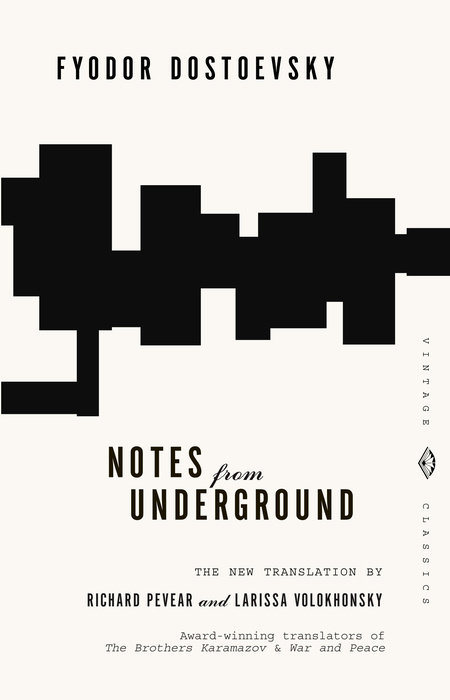
Notes from Underground
In 1864, just prior to the years in which he wrote his greatest novels — Crime and Punishment, The Idiot, The Possessed and The Brothers Karamazov — Fyodor Dostoyevsky (1821–1881) penned the darkly fascinating Notes from the Underground. Its nameless hero is a profoundly alienated individual in whose brooding self-analysis there is a search for the true and the good in a world of relative values and few absolutes. Moreover, the novel introduces themes — moral, religious, political and social — that dominated Dostoyevsky's later works. Notes from the Underground, then, aside from its own compelling qualities, offers readers an ideal introduction to the creative imagination, profundity and uncanny psychological penetration of one of the most influential novelists of the nineteenth century. Constance Garnett's authoritative translation is reprinted here, with a new introduction.
136 pages, Paperback
First published January 1, 1864
About the author
Fyodor Dostoevsky
3,522 books79.6k followers
Фёдор Михайлович Достоевский
(Russian)
Works, such as the novels Crime and Punishment (1866), The Idiot (1869), and The Brothers Karamazov (1880), of Russian writer Feodor Mikhailovich Dostoyevsky or Dostoevski combine religious mysticism with profound psychological insight.
Very influential writings of Mikhail Mikhailovich Bakhtin included Problems of Dostoyevsky's Works (1929),
Fyodor Mikhailovich Dostoevsky composed short stories, essays, and journals. His literature explores humans in the troubled political, social, and spiritual atmospheres of 19th-century and engages with a variety of philosophies and themes. People most acclaimed his Demons(1872) .
Many literary critics rate him among the greatest authors of world literature and consider multiple books written by him to be highly influential masterpieces. They consider his Notes from Underground of the first existentialist literature. He is also well regarded as a philosopher and theologian.
See also:
Russian → Фёдор Михайлович Достоевский
French → Fédor Dostoïevski
French → Fiodor Dostoïevski
Spanish → Fiódor Dostoyevski
Portuguese → Fiódor Dostoiévski
Works, such as the novels Crime and Punishment (1866), The Idiot (1869), and The Brothers Karamazov (1880), of Russian writer Feodor Mikhailovich Dostoyevsky or Dostoevski combine religious mysticism with profound psychological insight.
Very influential writings of Mikhail Mikhailovich Bakhtin included Problems of Dostoyevsky's Works (1929),
Fyodor Mikhailovich Dostoevsky composed short stories, essays, and journals. His literature explores humans in the troubled political, social, and spiritual atmospheres of 19th-century and engages with a variety of philosophies and themes. People most acclaimed his Demons(1872) .
Many literary critics rate him among the greatest authors of world literature and consider multiple books written by him to be highly influential masterpieces. They consider his Notes from Underground of the first existentialist literature. He is also well regarded as a philosopher and theologian.
See also:
Russian → Фёдор Михайлович Достоевский
French → Fédor Dostoïevski
French → Fiodor Dostoïevski
Spanish → Fiódor Dostoyevski
Portuguese → Fiódor Dostoiévski
Ratings & Reviews
Friends & Following
Create a free account to discover what your friends think of this book!
Community Reviews
Displaying 1 - 1 of 1 review

July 29, 2021
dostoyevsky tutuş adamzada orta barmak görkezýär.
Displaying 1 - 1 of 1 review