

What do you think?
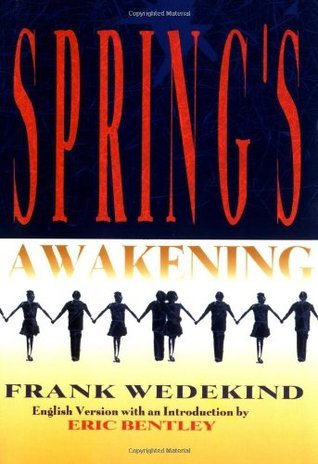
Spring's Awakening
Spring's Awakening is a tragi-comedy of teenage sex. Its fourteen-year-old heroine, Wendla, is killed by abortion pills. The young Moritz, terrorized by the world around him, and especially by his teachers, shoots himself. The ending seems likely to be the suicide of Moritz's friend, Melchior, but in a confrontation with a mysterious stranger (the famous Masked Man) he finally manages to shed his illusions and face the consequences.
126 pages, Paperback
First published October 1, 1891
About the author
Frank Wedekind
375 books83 followersFrank Wedekind was a German dramatist whose bold, unconventional plays reshaped modern theatre by challenging social norms and exposing the hypocrisies of bourgeois morality, especially around sexuality. Raised between Germany and Switzerland and drawn early to travel, performance, and satire, he lived an eclectic life that included work in advertising, time with a circus, and a celebrated stint as a cabaret performer with the influential troupe Die elf Scharfrichter. His fearlessness as both writer and performer made him a central figure in the artistic circles of Munich, where his sharp wit and provocative themes influenced a new generation of socially critical satirists. His early play Spring Awakening caused an uproar for its frank depictions of adolescent sexuality, repression, and violence, while his two-part “Lulu” cycle introduced a character whose rise and fall exposed society’s fascination with desire and destruction. These works challenged censorship, pushed theatrical boundaries, and later inspired films, operas, and adaptations across decades. Wedekind’s personal life was intense and often turbulent, marked by complicated relationships, creative restlessness, and brushes with authority, including a prison sentence for lèse-majesté after publishing satirical poems. His marriage to the actress Tilly Newes brought both devotion and strain, reflected in the emotional swings of his later years. Even near the end of his life, recovering from surgery, he returned to the stage too soon, driven by the same energy that fueled his art. His influence extended well beyond his death, resonating through the Weimar era and shaping the development of expressionism and later epic theatre. Many of his works were translated, staged, or adapted by major artists, ensuring that his confrontational spirit and fearless exploration of human desire would remain part of the theatrical canon.
Ratings & Reviews
Friends & Following
Create a free account to discover what your friends think of this book!
Community Reviews
Displaying 1 - 1 of 1 review

December 22, 2024
HELVETE vilket sorgligt slut!? I mean… Broadway musikalen slutar också sorgligt men inte på DEN HÄR nivån. Varje gång Moritz öppnade munnen ville jag bara gråta.
Hade tidigare lite svårt att placera den här pjäsen i genre och historisk kontext då den handlar om barn och så tydligt kritiserar vuxenvärlden (vilket inte var typiskt och inte känns som det borde funnits någon stor publik för). Efter att ha läst det där brutalt långa förordet makear den mer sense i koppling till den moraliserande och politiska rörelse den sprungit ur.
Side note: Att låta den maskerade mannen (en voice of reason) tala om moralitet som en produkt av dragkampen mellan plikt och fri vilja känns lite daterat? Varför får jag för mig att inte ens föräldragenerationen under 1890-talet tänkte så?
Anyway jag älskar att läsa om hur tungt censurerade och förbjudna pjäser förändrats i sin stageing genom tiderna från nedskrivning till idag och förordet did not disappoint.
Hade tidigare lite svårt att placera den här pjäsen i genre och historisk kontext då den handlar om barn och så tydligt kritiserar vuxenvärlden (vilket inte var typiskt och inte känns som det borde funnits någon stor publik för). Efter att ha läst det där brutalt långa förordet makear den mer sense i koppling till den moraliserande och politiska rörelse den sprungit ur.
Side note: Att låta den maskerade mannen (en voice of reason) tala om moralitet som en produkt av dragkampen mellan plikt och fri vilja känns lite daterat? Varför får jag för mig att inte ens föräldragenerationen under 1890-talet tänkte så?
Anyway jag älskar att läsa om hur tungt censurerade och förbjudna pjäser förändrats i sin stageing genom tiderna från nedskrivning till idag och förordet did not disappoint.
Displaying 1 - 1 of 1 review