

What do you think?
The Sea of Fertility #1
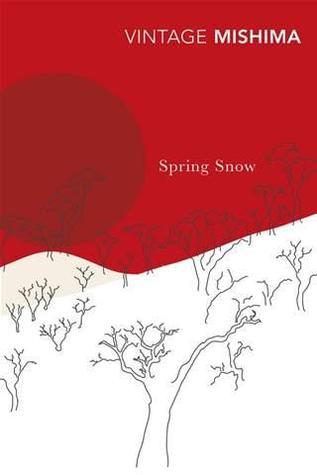
Spring Snow
Alternate cover edition of ISBN 9780099282990
Tokyo, 1912. The closed world of the ancient aristocracy is being breached for the first time by outsiders - rich provincial familes, a new and powerful political and social elite. Kiyoaki has been raised among the elegant Ayakura family - members of the waning aristocracy - but he is not one of them. Coming of age, he is caught up in the tensions between old and new, and his feelings for the exquisite, spirited Satoko, observed from the sidelines by his devoted friend Honda. When Satoko is engaged to a royal prince, Kiyoaki realises the magnitude of his passion.
Tokyo, 1912. The closed world of the ancient aristocracy is being breached for the first time by outsiders - rich provincial familes, a new and powerful political and social elite. Kiyoaki has been raised among the elegant Ayakura family - members of the waning aristocracy - but he is not one of them. Coming of age, he is caught up in the tensions between old and new, and his feelings for the exquisite, spirited Satoko, observed from the sidelines by his devoted friend Honda. When Satoko is engaged to a royal prince, Kiyoaki realises the magnitude of his passion.
389 pages, Paperback
First published January 1, 1967
About the author
Yukio Mishima
467 books10.1k followersYukio Mishima (三島 由紀夫) was born in Tokyo in 1925. He graduated from Tokyo Imperial University’s School of Jurisprudence in 1947. His first published book, The Forest in Full Bloom, appeared in 1944 and he established himself as a major author with Confessions of a Mask (1949). From then until his death he continued to publish novels, short stories, and plays each year. His crowning achievement, the Sea of Fertility tetralogy—which contains the novels Spring Snow (1969), Runaway Horses (1969), The Temple of Dawn (1970), and The Decay of the Angel (1971)—is considered one of the definitive works of twentieth-century Japanese fiction. In 1970, at the age of forty-five and the day after completing the last novel in the Fertility series, Mishima committed seppuku (ritual suicide)—a spectacular death that attracted worldwide attention.
Ratings & Reviews
Friends & Following
Create a free account to discover what your friends think of this book!
Community Reviews
Displaying 1 - 1 of 1 review

July 20, 2024
To je tisto. V tem je skrivnost /…/ Če boš to počel ves dan, se bo moral čas ustaviti. Ko pridem domov, si bom tudi jaz uredil sončno uro na vrtu. In potem bom ob dnevih, ko bom zelo zelo srečen, postavil služabnika zraven nje, da jo bo od jutra do noči zakrival s svojo senco. Ustavil bom čas, da ne bo več tekel (str. 279).
...
Če je fant naiven, seveda lahko v vsej nedolžnosti obožuje vlačugo. Kako hitro pa opazi, da je cipa in da je živel v iluziji, iz katere samo odseva njegova čistost, ali bo potem mogel to žensko ravno tako še naprej ljubiti? Če bo jo mogel, se ti ne zdi, da bo čudovito? To bi se reklo vzeti svoj ideal in po njem uravnavati ves svet. Kaj ni za to potrebna veliko moč? Temu bi se reklo imeti skriven ključ do življenja kar pri roki, mogoče ne (str. 39)?
...
Če je fant naiven, seveda lahko v vsej nedolžnosti obožuje vlačugo. Kako hitro pa opazi, da je cipa in da je živel v iluziji, iz katere samo odseva njegova čistost, ali bo potem mogel to žensko ravno tako še naprej ljubiti? Če bo jo mogel, se ti ne zdi, da bo čudovito? To bi se reklo vzeti svoj ideal in po njem uravnavati ves svet. Kaj ni za to potrebna veliko moč? Temu bi se reklo imeti skriven ključ do življenja kar pri roki, mogoče ne (str. 39)?
Displaying 1 - 1 of 1 review