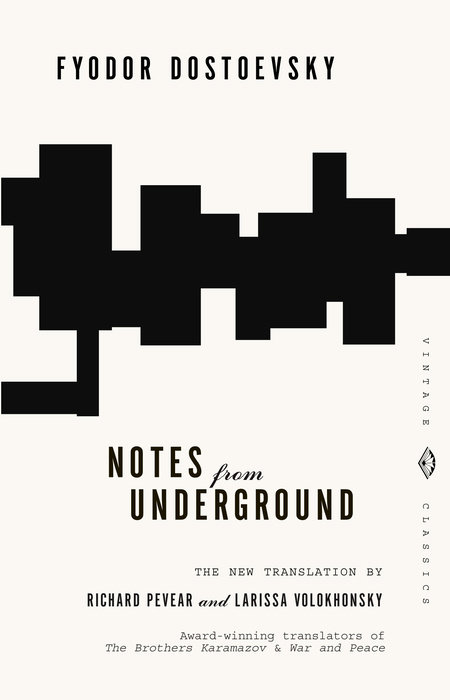
In 1864, just prior to the years in which he wrote his greatest novels — Crime and Punishment, The Idiot, The Possessed and The Brothers Karamazov — Fyodor Dostoyevsky (1821–1881) penned the darkly fascinating Notes from the Underground. Its nameless hero is a profoundly alienated individual in whose brooding self-analysis there is a search for the true and the good in a world of relative values and few absolutes. Moreover, the novel introduces themes — moral, religious, political and social — that dominated Dostoyevsky's later works. Notes from the Underground, then, aside from its own compelling qualities, offers readers an ideal introduction to the creative imagination, profundity and uncanny psychological penetration of one of the most influential novelists of the nineteenth century. Constance Garnett's authoritative translation is reprinted here, with a new introduction.
Works, such as the novels Crime and Punishment (1866), The Idiot (1869), and The Brothers Karamazov (1880), of Russian writer Feodor Mikhailovich Dostoyevsky or Dostoevski combine religious mysticism with profound psychological insight.
Fyodor Mikhailovich Dostoevsky composed short stories, essays, and journals. His literature explores humans in the troubled political, social, and spiritual atmospheres of 19th-century and engages with a variety of philosophies and themes. People most acclaimed his Demons(1872) .
Many literary critics rate him among the greatest authors of world literature and consider multiple books written by him to be highly influential masterpieces. They consider his Notes from Underground of the first existentialist literature. He is also well regarded as a philosopher and theologian.
Tak toto bolo také, že... prvých 20 strán som netušil, čo ten týpek mele... Ani sme sa nedozvedeli jeho meno. Potom som sa chytil, čo melie, potom zase nie... A potom bol dokonca aj dej, nie len monológ a bolo to až napínavé.
No aby som to zhrnul, bola to veľmi hustá kniha. 120 strán napikovaných asi 60 stranovým monológom a potom jednou odbočkou v tom monológu, kde sa odohrávala príhoda, keď mal tento náš rozprávač, antihrdina, asi 24 rokov.
Určite si potrebujem pozrieť nejaké eseje o tom, čo som vlastne čítal, lebo sa mi to ťažko dáva do slov. Viaceré témy, o ktorých som čítal neskôr v Zločine a treste a Bratoch Karamazovovcoch boli predostreté aj tu, v tejto "prvej existencialistickej novele".
Sám mám taký love-hate vzťah k Dostojevského štýlu písania. Chcem ešte prečítať Demon/Possessed, v češtine Besí. No má to 600 strán a cítim trošku averziu, keď si predstavím, čo ma čaká... Pretože už šípim, čo ma čaká.
I keď človek rozumie myšlienke, tak sa to dobre ani nečítalo ani nepočúvalo a hlavný "hrdina" vo mne akurát vyvolával zlosť a antipatiu na každom rohu, duševne a morálne troska a znovu, i keď ide o myšlienky existencializmu a čitateľ rozumie, čo chce autor povedať, v tejto forme je mi to až nechutné a možno je to dokonca zámerom, nemôžem dať 5* ani 4*, neprečítam si to znovu