

What do you think?
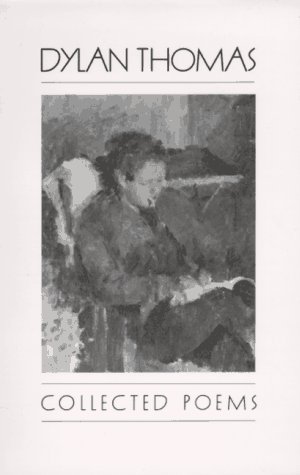
Collected Poems
A classic New Directions book revised for the 21st Century. Dylan Thomas (1914-1953) prepared this volume in 1952―the author's choice of the ninety poems he felt would best represent his work up to that time―and it was published by New Directions in 1953 as The Collected Poems of Dylan Thomas , shortly after his death. This book was then and remained, for all practical purposes, Thomas's "collected" poems and in that sense complete. However, with the 1971 publication of the 192 poems in The Poems of Dylan Thomas (also now available in a revised edition), Thomas's Collected Poems has naturally evolved to become Thomas's Selected Poems .
Thomas wrote his last poem, "Prologue," especially to begin this collection, and addressed it to "my readers, the strangers." Two unfinished poems are included in this "Elegy," prepared by Vernon Watkins, and "In Country Heaven," prepared by Daniel Jones―both Welsh poets were life-long friends of Dylan Thomas. Textual corrections discovered over the course of forty years have now been incorporated, and a complete index of titles and first lines, as well as a brief chronology of the author's life, have been added.
As it has for half a century, this book includes the best of Dylan Thomas's poetry―"Light Breaks Where No Sun Shines," "The Force that Through the Green Fuse Drives the Flower," "And Death Shall Have No Dominion," "Poem in October," "Do Not Go Gentle into that Good Night," "The Hunchback in the Park," "In My Craft or Sullen Art," "In Country Sleep," and Thomas's poignant reflection on his youth, "Fern Hill."
Thomas wrote his last poem, "Prologue," especially to begin this collection, and addressed it to "my readers, the strangers." Two unfinished poems are included in this "Elegy," prepared by Vernon Watkins, and "In Country Heaven," prepared by Daniel Jones―both Welsh poets were life-long friends of Dylan Thomas. Textual corrections discovered over the course of forty years have now been incorporated, and a complete index of titles and first lines, as well as a brief chronology of the author's life, have been added.
As it has for half a century, this book includes the best of Dylan Thomas's poetry―"Light Breaks Where No Sun Shines," "The Force that Through the Green Fuse Drives the Flower," "And Death Shall Have No Dominion," "Poem in October," "Do Not Go Gentle into that Good Night," "The Hunchback in the Park," "In My Craft or Sullen Art," "In Country Sleep," and Thomas's poignant reflection on his youth, "Fern Hill."
203 pages, Paperback
First published January 1, 1952
About the author
Dylan Thomas
633 books1,448 followersDylan Marlais Thomas (1914-1953) was a Welsh poet who wrote in English. Many regard him as one of the 20th century's most influential poets.
In addition to poetry, Thomas wrote short stories and scripts for film and radio, with the latter frequently performed by Thomas himself. His public readings, particularly in America, won him great acclaim; his booming, at times, ostentatious voice, with a subtle Welsh lilt, became almost as famous as his works. His best-known work includes the "play for voices" Under Milk Wood and the celebrated villanelle for his dying father, "Do not go gentle into that good night." Appreciative critics have also noted the superb craftsmanship and compression of poems such as "In my craft or sullen art" and the rhapsodic lyricism of Fern Hill.
In addition to poetry, Thomas wrote short stories and scripts for film and radio, with the latter frequently performed by Thomas himself. His public readings, particularly in America, won him great acclaim; his booming, at times, ostentatious voice, with a subtle Welsh lilt, became almost as famous as his works. His best-known work includes the "play for voices" Under Milk Wood and the celebrated villanelle for his dying father, "Do not go gentle into that good night." Appreciative critics have also noted the superb craftsmanship and compression of poems such as "In my craft or sullen art" and the rhapsodic lyricism of Fern Hill.
Ratings & Reviews
Friends & Following
Create a free account to discover what your friends think of this book!
Community Reviews
Displaying 1 - 1 of 1 review

July 1, 2025
Dylan Thomas pisał głównie o różnorodnych aspektach ludzkiego życia i ludzkich emocji. Jego twórczość była bogata i zróżnicowana. W wielu swoich wierszach i opowiadaniach Thomas eksplorował tematy miłości, tęsknoty i relacji międzyludzkich. Jego poezja często była pełna namiętności i emocji. Sięgał on do natury jako źródła inspiracji. Opisywał krajobrazy w sposób bogaty i malowniczy, czasem nadając im niemal nadnaturalną moc. Motyw śmierci pojawiał się u Thomasa w wielu jego utworach, a wiersz "Do not go gentle into that good night" to wyraźny przykład jego zainteresowania tematem umierania i nieuchronności ostatecznego odejścia.
Ponadto Thomas eksperymentował z duchowością w swojej twórczości, często łącząc elementy chrześcijańskie z motywami mitologicznymi i filozoficznym. Był także znany z eksperymentowania z językiem i dźwiękiem w swoich wierszach. Tworzył melodyjne, rytmiczne utwory, które były zarówno intelektualne, jak i emocjonalne.
Niestety w Polsce nie wznawia się jego poezji. Udało mi się z nią zapoznać dzięki egzemplarzowi z biblioteki.
Ponadto Thomas eksperymentował z duchowością w swojej twórczości, często łącząc elementy chrześcijańskie z motywami mitologicznymi i filozoficznym. Był także znany z eksperymentowania z językiem i dźwiękiem w swoich wierszach. Tworzył melodyjne, rytmiczne utwory, które były zarówno intelektualne, jak i emocjonalne.
Niestety w Polsce nie wznawia się jego poezji. Udało mi się z nią zapoznać dzięki egzemplarzowi z biblioteki.
Displaying 1 - 1 of 1 review