

What do you think?
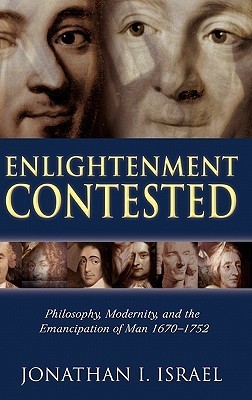
Enlightenment Contested: Philosophy, Modernity, and the Emancipation of Man 1670-1752
Jonathan Israel presents the first major reassessment of the Western Enlightenment for a generation. Continuing the story he began in the best-selling Radical Enlightenment , and now focusing his attention on the first half of the eighteenth century, he returns to the original sources to offer a groundbreaking new perspective on the nature and development of the most important currents in modern thought.
Israel traces many of the core principles of Western modernity to their roots in the social, political, and philosophical ferment of this the primacy of reason, democracy, racial equality, feminism, religious toleration, sexual emancipation, and freedom of expression. He emphasizes the dual character of the Enlightenment, and the bitter struggle between on the one hand a generally dominant, anti-democratic mainstream, supporting the monarchy, aristocracy, and ecclesiastical authority, and on the other a largely repressed democratic, republican, and "materialist" radical fringe. He also contends that the supposedly separate French, British, German, Dutch, and Italian enlightenments interacted to such a degree that their study in isolation gives a hopelessly distorted picture.
A work of dazzling and highly accessible scholarship, Enlightenment Contested will be the definitive reference point for historians, philosophers, and anyone engaged with this fascinating period of human development.
Israel traces many of the core principles of Western modernity to their roots in the social, political, and philosophical ferment of this the primacy of reason, democracy, racial equality, feminism, religious toleration, sexual emancipation, and freedom of expression. He emphasizes the dual character of the Enlightenment, and the bitter struggle between on the one hand a generally dominant, anti-democratic mainstream, supporting the monarchy, aristocracy, and ecclesiastical authority, and on the other a largely repressed democratic, republican, and "materialist" radical fringe. He also contends that the supposedly separate French, British, German, Dutch, and Italian enlightenments interacted to such a degree that their study in isolation gives a hopelessly distorted picture.
A work of dazzling and highly accessible scholarship, Enlightenment Contested will be the definitive reference point for historians, philosophers, and anyone engaged with this fascinating period of human development.
1024 pages, Hardcover
First published January 1, 2006
About the author
Jonathan I. Israel
56 books168 followersJonathan Irvine Israel is a British writer on Dutch history, the Age of Enlightenment and European Jews. Israel was appointed as Andrew W. Mellon Professor in the School of Historical Studies at the Institute for Advanced Study, Princeton, New Jersey, in January 2001. He was previously Professor of Dutch History and Institutions at the University of London.
In recent years, Israel has focused his attention on a multi-volume history of the Age of Enlightenment. He contrasts two camps. The "radical Enlightenment" founded on a rationalist materialism first articulated by Spinoza. Standing in opposition was a "moderate Enlightenment" which he sees as profoundly weakened by its belief in God. In Israel’s highly controversial interpretation, the radical Enlightenment is the main source of the modern idea of freedom. He contends that the moderate Enlightenment, including Locke, Voltaire, Montesquieu, and Rousseau, made no real contribution to the campaign against superstition and ignorance.
In recent years, Israel has focused his attention on a multi-volume history of the Age of Enlightenment. He contrasts two camps. The "radical Enlightenment" founded on a rationalist materialism first articulated by Spinoza. Standing in opposition was a "moderate Enlightenment" which he sees as profoundly weakened by its belief in God. In Israel’s highly controversial interpretation, the radical Enlightenment is the main source of the modern idea of freedom. He contends that the moderate Enlightenment, including Locke, Voltaire, Montesquieu, and Rousseau, made no real contribution to the campaign against superstition and ignorance.
Ratings & Reviews
Friends & Following
Create a free account to discover what your friends think of this book!
Community Reviews
Displaying 1 - 1 of 1 review
November 19, 2018
Jonathan Israel zet de lijn van Radical Enlightenment onverminderd voort. Iemand die zich ten doel stelt om de Verlichting te redden van de hedendaagse neiging om de verworvenheden (o.a. tolerantie, kritische houding, rationele argumentatie) ervan te ontkennen, kan niet genoeg gelezen worden. Het leuke van Enlightenment Contested is de verrassende (en verfrissende) debunking van een groot aantal heilige huizen. Israel zet de Gematigde Verlichting neer voor wat het is; een onhoudbare (en afgemeten aan de criteria die heden als richtinggevend worden beschouwd, onsuccesvolle) poging om rationaliteit en welke vorm van religieuze openbaring dan ook met elkaar te verenigen. Onder de mokerslagen van zijn kritiek sneuvelen een aantal reputaties die voorheen onaantastbaar leken. John Locke's gematigde toleran
tie wordt verworpen als onhoudbaar ten faveure van tolerantie volgens m.n. Spinoza, Bayle en Diderot. Israel toont aan dat op Newton's natuurkundig-theologisch systeem na 1700 al fundamentele radicale kritiek was (ook bijvoorbeeld door de gematigde Leibnitz), in weerwil van de bijna onaantastbare status van Newton op het continent. Ook de grote pleitbezorger van Newton, Voltaire, wordt door Israel in het rijtje van de Gematigden geplaatst. Dat Voltaire zich in de strijd om de publicatie van Diderot's Encyclopedie zich gedwongen zag dit radicale project licht knarsetandend te verdedigen, doet niet af aan de fikse deuk die het imago van deze voorheen exemplarische Verlichter oploopt. Israel is ook in dit 2de deel van de geplande triologie weer volstrekt helder wat zijn agenda is. In Enlightenment Contested polemiseert hij met hedendaagse anti-verlichters als MacIntyre, Taylor en Gray en toont aan waarom hun opvattingen over de Verlichting als legitimering van intolerantie en k
olonialisme getuigen van weinig historische kennis, gedateerde interpretaties en vooral het nalaten een onderscheid tussen de actuele geldigheid van de ideeen van de radicale Verlichting en die van de gematigde Verlichting te maken.
\nDe voornaamste kritiek op dit boek is dan ook vooral redactioneel van aard. In zijn ijver en streven naar volledigheid is er teveel overlap in het boek zelf en met Radical Enlightenment. Het wordt wel eens vermoeiend om bij elke theologische of filosofische haarkloverij die door Israel wordt opgevoerd weer die hele lijst van namen langs te zien komen. Dit gezegd hebbend, ben ik erg benieuwd naar deel 3. Hopelijk wordt daarin voldoende plaats ingeruimd voor de gedeelde wortels van de Verlichting en de Romantiek. Israel kennende zal daarin ruim voorzien worden. Deel 3, bring it on!
tie wordt verworpen als onhoudbaar ten faveure van tolerantie volgens m.n. Spinoza, Bayle en Diderot. Israel toont aan dat op Newton's natuurkundig-theologisch systeem na 1700 al fundamentele radicale kritiek was (ook bijvoorbeeld door de gematigde Leibnitz), in weerwil van de bijna onaantastbare status van Newton op het continent. Ook de grote pleitbezorger van Newton, Voltaire, wordt door Israel in het rijtje van de Gematigden geplaatst. Dat Voltaire zich in de strijd om de publicatie van Diderot's Encyclopedie zich gedwongen zag dit radicale project licht knarsetandend te verdedigen, doet niet af aan de fikse deuk die het imago van deze voorheen exemplarische Verlichter oploopt. Israel is ook in dit 2de deel van de geplande triologie weer volstrekt helder wat zijn agenda is. In Enlightenment Contested polemiseert hij met hedendaagse anti-verlichters als MacIntyre, Taylor en Gray en toont aan waarom hun opvattingen over de Verlichting als legitimering van intolerantie en k
olonialisme getuigen van weinig historische kennis, gedateerde interpretaties en vooral het nalaten een onderscheid tussen de actuele geldigheid van de ideeen van de radicale Verlichting en die van de gematigde Verlichting te maken.
\nDe voornaamste kritiek op dit boek is dan ook vooral redactioneel van aard. In zijn ijver en streven naar volledigheid is er teveel overlap in het boek zelf en met Radical Enlightenment. Het wordt wel eens vermoeiend om bij elke theologische of filosofische haarkloverij die door Israel wordt opgevoerd weer die hele lijst van namen langs te zien komen. Dit gezegd hebbend, ben ik erg benieuwd naar deel 3. Hopelijk wordt daarin voldoende plaats ingeruimd voor de gedeelde wortels van de Verlichting en de Romantiek. Israel kennende zal daarin ruim voorzien worden. Deel 3, bring it on!
Displaying 1 - 1 of 1 review