

What do you think?
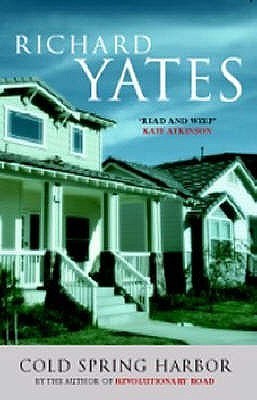
Cold Spring Harbor
When the Shepards' car breaks down in pre-War New York City, a chain of events is set in motion that will transform the lives of the beautiful but stupid Evan Shepard, his doomed lover Rachel, and both their families. Fated to play out the mistakes of their parents, Evan and Rachel quickly discover the betrayal behind the dream, and desperately try every avenue of escape, only to find that all paths lead back to the small Long Island coastal town of Cold Spring Harbor, and to each other. But if there is no better chronicler than Yates of the quiet tragedy of thwarted suburban lives, Cold Spring Harbor is a testament to the absolute necessity of dreaming; for Yates's protagonists, hope may be all there is.
178 pages, Paperback
First published January 1, 1986
About the author
Richard Yates
65 books2,329 followersRichard Yates shone bright upon the publication of his first novel, Revolutionary Road, which was nominated for the National Book Award in 1961. It drew unbridled praise and branded Yates an important, new writer. Kurt Vonnegut claimed that Revolutionary Road was The Great Gatsby of his time. William Styron described it as "A deft, ironic, beautiful novel that deserves to be a classic." Tennessee Williams went one further and said, "Here is more than fine writing; here is what, added to fine writing, makes a book come immediately, intensely, and brilliantly alive. If more is needed to make a masterpiece in modern American fiction, I am sure I don't know what it is."
In 1962 Eleven Kinds of Loneliness was published, his first collection of short stories. It too had praise heaped upon it. Kurt Vonnegut said it was "the best short-story collection ever written by an American."
Yates' writing skills were further utilized when, upon returning from Los Angeles, he began working as a speechwriter for then-Senator Robert F. Kennedy until the assassination of JFK. From there he moved onto Iowa where, as a creative writing teacher, he would influence and inspire writers such as Andre Dubus and Dewitt Henry.
His third novel, Disturbing the Peace, was published in 1975. Perhaps his second most well-known novel, The Easter Parade, was published in 1976. The story follows the lives of the Grimes sisters and ends in typical Yatesian fashion, replicating the disappointed lives of Revolutionary Road.
However, Yates began to find himself as a writer cut adrift in a sea fast turning towards postmodernism; yet, he would stay true to realism. His heroes and influences remained the classics of F. Scott Fitzgerald, Flaubert and short-story master, Chekov.
It was to his school and army days that Richard turned to for his next novel, A Good School, which was quickly followed by his second collection of short stories, Liars in Love. Young Hearts Crying emerged in 1984 followed two years later with Cold Spring Harbour, which would prove to be his final completed novel.
Like the fate of his hero, Flaubert, whose novel Madame Bovary influenced Revolutionary Road and The Easter Parade, Richard Yates' works are enjoying a posthumous renaissance, attracting newly devoted fans across the Atlantic and beyond.
In 1962 Eleven Kinds of Loneliness was published, his first collection of short stories. It too had praise heaped upon it. Kurt Vonnegut said it was "the best short-story collection ever written by an American."
Yates' writing skills were further utilized when, upon returning from Los Angeles, he began working as a speechwriter for then-Senator Robert F. Kennedy until the assassination of JFK. From there he moved onto Iowa where, as a creative writing teacher, he would influence and inspire writers such as Andre Dubus and Dewitt Henry.
His third novel, Disturbing the Peace, was published in 1975. Perhaps his second most well-known novel, The Easter Parade, was published in 1976. The story follows the lives of the Grimes sisters and ends in typical Yatesian fashion, replicating the disappointed lives of Revolutionary Road.
However, Yates began to find himself as a writer cut adrift in a sea fast turning towards postmodernism; yet, he would stay true to realism. His heroes and influences remained the classics of F. Scott Fitzgerald, Flaubert and short-story master, Chekov.
It was to his school and army days that Richard turned to for his next novel, A Good School, which was quickly followed by his second collection of short stories, Liars in Love. Young Hearts Crying emerged in 1984 followed two years later with Cold Spring Harbour, which would prove to be his final completed novel.
Like the fate of his hero, Flaubert, whose novel Madame Bovary influenced Revolutionary Road and The Easter Parade, Richard Yates' works are enjoying a posthumous renaissance, attracting newly devoted fans across the Atlantic and beyond.
Ratings & Reviews
Friends & Following
Create a free account to discover what your friends think of this book!
Community Reviews
Displaying 1 - 1 of 1 review

August 1, 2026
Visiškai neįdomi istorija. Tarsi ir apie kažką ir kartu apie nieką.
Displaying 1 - 1 of 1 review